Here we go again. Heavy sigh.

It’s Tuesday now, in case you didn’t know, though of course you might not be reading this on a Tuesday.  If by some bizarre set of circumstances my writing is still being read in the far future‒or even more improbably that it goes backward in time somehow or tunnels across to some other part of the universe that nevertheless has people who can read English‒there may not even be Tuesdays where and when you exist.

In case that’s the case, I will just say that in the 20th and 21st centuries‒and actually for quite some time before‒we divided the days into groups of 7, which we called weeks*.  There were roughly 52 of these in a year (52 x 7 = 364, one day and some change less than a full year).

In the English-speaking world we called these days Sunday, Monday, Tuesday, Wednesday, Thursday, Friday, and Saturday.  I could go into the etymology of those names, but that’s a bit of a pain.  Anyway, you’re the ones who are in some future, presumably advanced civilization; why can’t you look that stuff up for yourselves?

Anyway, our “official work week” ran from Monday through Friday, with Saturday and Sunday off.  However, that was far from the only schedule people followed, and in a form of evolution due to mutual competition, people vied with each other to work more days and longer hours for less pay, because other people were willing to do it.  Not to participate would lead one to be less likely to get or keep a job, and that could lead to destitution‒at least somewhat more quickly than does steadily working longer and longer for less and less, which is a kind of creeping but pernicious societal malaise.

Of course, other, parallel forces led to decreasing regulation of companies’ ability to “encourage” their workers to work more for less, and since in the short term** everyone works in response to their local incentives, people tended to allow these things to happen.  And lawmakers and regulators, subject to the inherently woefully dysfunctional political party system, became less and less incentivized to care about the needs and worries of those they nominally represented, and to whom they had sworn their service***.

They were happy to allow the fortunate wealthy and powerful to take advantage of the foolishly earnest and mutually (and self-destructively) competitive citizens, because they were rewarded for allowing it.

Everyone responds to local forces, of course.  Even spacetime itself responds to the spacetime immediately adjacent to it, as the electromagnetic field responds to the state of the field immediately adjacent to it, as demonstrated by the implications of Maxwell’s famous equations, which I’m sure jump right out at you:

Of course, the meaning of “local” is circular here, almost tautological, since the definition of local is merely “something that can affect another thing directly” more or less.

So it’s only too possible for a system to evolve itself into a state that is overall detrimental to those within the system.  Everyone, even the most seemingly successful, can be in a worse situation than they would be in otherwise, but it’s very difficult to see the way out, to get a “bird’s eye view” of the landscape, if you will.

One can therefore get stuck in situations where, despite the overall equilibrium being detrimental to everyone, any one individual taking action to try to move things in a better direction would make their local situation worse for them.

How is one to respond to such a situation?  Well, one can simply go along with it and try to do what’s best for oneself locally, and that is what most people do most of the time‒understandably enough, even though the overall situation may be evolving toward its own miserable destruction.

Or, of course, one could do what family therapists are often said to do:  effectively setting off a bomb***** in the middle of a difficult situation and seeing what happens when the dust settles, figuring that nothing is likely to be much worse than things are at a given present.  At least this allows for a new system to form, like the biosphere after the various mass extinctions.  Maybe it will become better than the previous one.

Maybe they all will always evolve toward catastrophe, to collapse and then be replaced by a new system.

It would be better if people could learn, and could deliberately change local incentives in careful and measured ways, adjusting settings to correct for and steer things away from poorer outcomes and so on, in ways that are not too disruptive at any given place or time.  That’s nominally what many of our systems are meant to be doing, but they don’t do a very good job at it.

Probably it would be better to do a hard reset.  But I’m not sure.  And it’s probably not worth the effort.  The odds of humanity surviving to become cosmically significant seem very low to me, and I’m not sure it would be good for the universe‒whatever that might mean‒if they do.

It’s probably all pointless, and I’m tired of it, anyway.  I don’t want to be part of this equilibrium or lack thereof anymore.  I want to make my own quietus.  Maybe “civilization” should do the same.


*Not to be confused with “weak”, which sounds the same but means more or less “the opposite of strong” and has little or nothing to do with divisions of time.

**And that’s pretty much the only term that comes naturally and easily to humans, for sound biological but horrible psychological and sociological reasons.

***If they were Klingons, they would surely be slain for their dishonor.  I don’t necessarily disagree with such an outcome morally, but practically, it would probably lead to increasing chaos****, so we understandably avoid it most of the time.

****It’s an open question whether such chaos is inherently bad.

*****Metaphorically, of course. At least, it’s usually metaphorical.

“And, to SLEEP, you must slumber in just such a bed.”

Well, it’s f*cking Saturday, and I’m going in the to f*cking office to f*cking work, because it’s not challenging enough for me to recover my limited mental equilibrium when I have two days off, so I should try to do it with one as often as possible.  Oh, and the one day I supposedly still have to take off is the day I have to do all my laundry, which means I have to go into the other part of the house and, more often than not, deal with their overly energetic and poorly trained dog‒and it’s a big dog.

I’m not afraid of dogs.  I like dogs, even very large ones.  But I have little sympathy for dogs that have not been trained, and who act like they’re still teething or something.  If it were my dog, I could rapidly train it out of the habit of putting its moronic jaws around peoples’ forearms, and it and I and others would be happier overall.

Maybe next time I’ll go out with suntan lotion or even pepper spray all over my arms, so it gets an unpleasant mouthful if it tries.

Honestly, sometimes I’m tempted just to slip it a few chunks of the rat bait/poison that I have.  It’s not the neurotoxin one, which is supposedly less harmful to people and pets than to rats.  It’s the super-coumadin, blood “thinning”, anticoagulant one.  To be honest, though, I would probably not be willing under nearly any circumstance to poison a dog, since the agency of such a creature is limited and its poor behavior is largely due to the humans in its life.

And yes, of course I have a big, multi-pound bag of rat poison.  Who knows, I might get peckish at some point and want it as a snack.  The holidays are upon us, after all, and it can be so hard to stay on a diet at this time of year.

Anyway, that’s just one possible nosh that I have for potential last meals.  I even have a couple of emptied out fiber capsules that I’ve refilled with broken glass pieces.  They would actually go nicely with the previously mentioned snack, wouldn’t they?  Like salted caramel, the two components could really enhance each other.  You might even call it synergy.

Enough about such tempting treats.  The point is, I’m going to the office today.  Then I’m heading back to the house.  Then I’ll be trying to rest if I can for the remainder of the weekend, though when I think of my own mind, I am inescapably reminded of Boromir describing Mordor:

That works pretty well to describe my very annoying brain/body.  I cannot seem to sleep very long, and I never feel like I sleep “all the way” if you will.  I am always somehow on yellow alert; I don’t know why.  It’s exhausting.  There are plain few upsides or effective distractions, and almost never any relief.

I don’t even know what I’m writing about right now, really.  I just feel a general, free-floating hostility and even hatred for most things in existence.  Sometimes I just want to wipe out the whole universe.  It can be done rather easily, at least from a certain perspective.

Incidentally, creating a new local source of the hypothetical inflaton field would probably not do the trick, assuming that inflationary cosmology is correct.  Most of the mathematical solutions to that possible situation indicate that, such a field would initiate a new, rapid, inflationarily expanding “universe”, but from the perspective of our universe the created bubble would just plop through and out of spacetime.  I haven’t done the math myself‒I am not adequately trained to do it at this time‒but I have this from more than one fairly reputable and reliable source, including people who actually do have the necessary expertise.

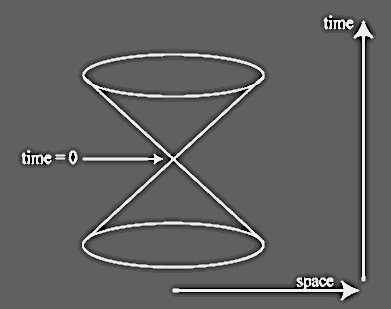
I’ve previously discussed vacuum collapse; if one could figure out how to trigger that‒assuming it is possible‒one could literally wipe out everything in the current universe.  Though, of course, it would take a long time, since it could only happen at the speed of light, so really, you’d only be wiping out everything in your future light cone.  There may be no way to destroy the universe that doesn’t effectively take a limitless time to accomplish.

On the other hand, when I spin around, it’s possible to view that action as the universe spinning around me while I’m stationary.  There are legitimate reasons why we don’t tend to think of it this way, but it’s a perspective that can be taken.

From that sort of perspective, when one dies (from one’s own point of view at least) the entire universe ceases to exist.  It’s very simple and thorough!  Of course, if there is an afterlife, that plan would fail, and one would be forced to go back to the drawing board.  But I’ve never encountered even borderline intriguing evidence or argument that might indicate an afterlife exists, unless you count things like a Poincare recurrence*.

So there is at least one reasonably reliable and plausibly achievable way to destroy the universe, from my point of view.  And the good thing about that is, from other points of view, the universe would still exist, and this would be no more contradictory than the fact that someone falling through the event horizon of a large enough black hole wouldn’t even notice it happening, but those far away would see the faller as never even quite reaching the event horizon.

Anyway, that theoretical stuff isn’t really very interesting for present purposes.  What matters is, at the very least, I can destroy the universe in a sense, if I so desire.  And every day it seems to become more and more tempting to do so.  This world is just so disgusting so often, and it’s not just humans that meet that description.

Ah, well.  Try to have a good day if you can for as long as the universe does exist.  After that, you’re on your own.


*Or the possibility of quantum immortality in the context of Everettian quantum mechanics.  But the various other possible alternate versions of me in such a theoretical quantum multiverse are not “me” even now, from my point of view‒not exactly, anyway, not in any sense that I can experience.  So future possible subsets of the wave function of the universe that contain randomly immortal versions of me are not worth taking into account, and they are vanishingly rare**.

**Though I suppose, as time goes by and all mortal things die, the quantum wavefunction of the universe might come to be dominated by such versions of…well, everyone.  None, however, would be able to interact with each other as far as I can see.

All ideologies are wrong

I don’t know if what follows will be clear or will convey my thoughts very well, but here goes.

I was in the shower this morning, thinking about nothing specific, and somehow I started feeling irritated, as I often do, at people who are dogmatic about ideologies and try to apply them to every possible situation or state of the world.  Then a connection of ideas clicked into position for me in the phase space of the mind, and I thought about the notion of scientific models.

There’s a famous quote about model-building/using in science that says, “All models are wrong, but some are useful.”  (I don’t recall who said it, but I’ll look it up before posting this and I’ll put it in the footnotes*.)  The statement refers to the fact that, to try to understand the world, scientists build models—not usually literal, glue-together type ones, though that occasionally does happen—and see how well those models replicate or elucidate facts of external reality.

They are all simplifications, as they must be, since only the universe itself appears to have enough processing power to simulate the universe fully.  Being simplifications, and reality being complex and prone to chaos (the mathematical form thereof, though the classical kind does occur as well) a simplified model can never be entirely correct.  But some of them are nevertheless quite valuable and useful—take General Relativity and Darwinian natural selection as two good examples—though we know they do not fully encompass every aspect of reality.

Some models are misleading, such as the old notion of the brain as a cooling mechanism for the blood, and some are simply not that useful, such as seeing the brain as a system of hydraulic tubes and valves of some sort.  And when you try to apply a model to a situation in which it doesn’t apply, it will give you wildly wrong (or “not even wrong”**) answers.

It occurred to me there in the shower that human ideologies are quite similar.  They are simplifications, models of the world.  Some are useful in some ways and to some degree, and some are about as applicable as the notion of a spherical cow (which, despite being the punchline of a physics joke, could in principle be useful somewhere sometime).  But it is as absurd to measure every event or occurrence or interaction against some finite ideology as it is to try to apply the germ theory of disease to the question of “dark energy”.

It’s absurd—if you’re being rigorous and serious—to think that the ideas of Karl Marx contain all that is needed to produce a good, fair, productive, and stable society.  But it’s just as absurd to think that laissez-faire, free-market capitalism will for its part provide everything that could possibly be needed for a robust and free and beneficent world, or that the ideas of “post-modernism” contain all that need be said about civilization.

The world is complicated, with many forces interacting at many levels, and no single idea, however personally attractive, can encompass all of it in a useful way.  Capitalism can encourage the production of great innovation and abundance, but it has no inherent justice, despite some popular belief and the works of Ayn Rand.  It can leave people utterly bereft and tortured and miserable through no fault of their own but bad luck.  It can also evolve into inadequate equilibrium states in which isolated, hoarded wealth sits still and does no one any real good while the whole of civilization collapses around it, just as biological systems can evolve into self-destructive states, like cancers, when an individual mutated cell becomes so successful at reproducing itself that it kills off the body in which it resides.

But if people are not rewarded for their work or their creativity or their acumen to some degree that is at least on some level commensurate with the value they produce, then people will stop producing.  Nature does not tend to evolve creatures that act purely to their own detriment without any “personal” gain of some kind  It’s not an evolutionarily stable strategy; such creatures are rapidly selected out.  Humans are no exception.

And history (and mathematics) has shown that economies are too complex to be planned by anyone or any group, and probably by any form of individual intelligence, no matter how advanced.  The information and knowledge required is too staggeringly vast.

It’s not merely political or economic ideologies that are limited and imperfect, either.  All religions fall into this same category.  Some have good and useful ideas, but only the indoctrinated could imagine that highly limited ancient collections of stories or poems or proscriptions and prescriptions can provide even vague guidance about all the things in the modern world, let alone the potential future world.  “Eastern” religions do no better than “Western” ones, though again, some are more useful and some are less so.

Of course, any ideology that is dogmatic is much more likely to be useless or detrimental than one to which inheres the potential for updating and improving itself.  It’s more or less mathematically impossible for a finite set of ideas put down on paper (or wherever) to have successfully discerned all that can be known about how to approach reality.

I think it would be much better if we thought of our various ideologies as models, hypotheses—theories*** at best.  Then we could have many options available to measure and address issues as they arise, and we could honestly assess whether the notions of, say, existentialism or deontology or utilitarianism best apply to a given moment or challenge.

Again, I’m not sure how well I’ve expressed my thoughts here, and I’m sure I could go on and on about this, trying to tease through it as well and thoroughly as possible.  I’ll spare you (and me) that for the moment.  But I think it was a useful realization.  Though I doubt even this has universal applicability in all possible worlds.

Have a good day.


*It was George Box, a statistician, who is credited with this particular phrase, but the idea had been expressed in terms of maps and territories in similar overall fashion previously.

**This expression is attributed to Wolfgang Pauli (of the eponymous exclusion principle fame), one of the early giants of quantum mechanics.

***In the scientific, not the colloquial sense.

“Cobwebs long since overrun by an old Wellington boot”

Welcome to a rare Saturday blog post.  You can’t say I didn’t warn you that I would be writing a post today.

Actually, of course you can say it.  You can say anything your mouth, lungs, and brain are capable of creating as a sound.  Think of Chomsky’s perfectly grammatical but nonsensical sentence, “Colorless green ideas sleep furiously,” or Stephen Fry’s even more nonsensical, “Hold the newsreader’s nose squarely, waiter, or friendly milk will countermand my trousers.

We are not constrained by nature to be truthful (or even sensible) in what we say.  Human society would probably work better overall if we were incapable of lying (at least actively).  It would take a bit of time to get used to it, and many people would have to learn just not to say anything most of the time.  But I think it would be better, certainly in a peaceful society‒which, alas, we have not yet achieved.

On the other hand, deception is a huge part of nature (the living part of it at least), in one way or another.  Especially when there are predators and prey and competitors for mates and for food and so on, lying‒in one sense or another‒is an extremely useful survival strategy and tactic, at least when done well and carefully.

It may be that, in a mature and peaceful civilization, lying is detrimental and to be discouraged‒indeed, to be eliminated if possible*.  But as long as there is not true peace and true freedom‒as long as there are people who will take advantage of and harm and victimize other people‒sometimes deception will be necessary.

It is, or at least it can be, analogous to the notion of using violence in self defense.  Pacifism seems all well and good on the surface, but when there exist people willing to use violence against others in aggressive, oppressive ways**, then pacifism is just a fatal vulnerability.  Pacifistic “resistance” can work if one’s opponent has a relatively strong moral code or conscience.  But against an actual psychopath, or a psychopathic ideology, non-violent passivity is just doing your opponent a favor.

And no, despite what V said, ideas are not bulletproof.  They can be bullet resistant, but enough bullets in enough brains‒for instance, the brains of every person who holds a particular idea‒can erase any idea as it is.  Some ideas are harder to wipe out than others, and some spring up anew in disparate places even after being eliminated, but enough destruction can obliterate anything that is not a fact of external nature***.

So, violence and deception are at times necessary in a society in which there are occasional psychopaths, or at least psychopathic behaviors.  But that doesn’t mean we should not aspire to create a society that is honest and peaceful.  It just means we cannot try to skip to the end by eliminating all capacity for violence and deceit in ourselves; that can only be done when (if) all potential threats have been quelled, and brought more or less permanently out of the realm of possibility.

Wow, I had no intention or notion to write a post centered on moral philosophy today.  And it was all triggered by my cliché opening sentences.  It’s quite strange just how stochastic my writing can be when I haven’t planned ahead.  And, of course, I never plan these posts ahead of writing them.

Also, in case it’s not clear, I don’t plan them retrospectively, since as I said yesterday, I am not capable of violating the laws of causality (such as by traveling faster than the speed of light in a vacuum).

I think that’s enough for a Saturday morning now, though.  I hope you’re all having a good weekend, whether it’s a holiday weekend for you or not (it both is and very much isn’t for me).

Until next time, please be well.  And, if you can manage it, keep being well even after next time.


*There can still always be a fifth-amendment style right not to speak and a right to privacy.  Unless and until there exists some form of communal mind, I think there are legitimate rights to privacy.

**Such people do exist, and they may exist as long as there are people, springing up de novo at times, because it can be an evolutionarily and game theoretically stable strategy to be a psychopath in a group of relatively honest people.  See:  POTUS.

***It can eliminate our knowledge of such things, but knowledge is an epiphenomenon.  The laws of physics themselves do not require humans to know that they exist in order to do so.  To believe that humans are the center of the universe (literally or metaphorically) or that the human mind creates reality is astonishing and contemptible hubris.

“These our actors…are melted into air, into thin air.”

Well, it’s Tuesday, and for reasons (or, rather, causes) that are unclear to me, I had a particularly poor sleep last night.  I just didn’t feel sleepy.  Even this morning, when I told myself I needed to buckle down and get some shut-eye at least, I was only “out” for a few moments.  I even felt, or worried, that I had overslept somehow, if that’s believable.  But when my eyes snapped inevitably open, I saw that maybe 15 minutes had passed.

Eventually, even someone as stubborn as I must give way to the brute facts of reality, so I gave up and got up.  Of course, even if one doesn’t decide to “give way”, it doesn’t change anything.  Reality doesn’t depend upon the approval or acquiescence of conscious beings, however they might like to flatter themselves that it does.  It simply is whatever it is.  That’s what makes it reality.

This is a good thing, of course.  If reality could simply be changed by the power of a mind‒for instance, my mind‒there would be many, many people who failed to signal or otherwise drove badly who would simply disappear, never again to be heard from by their friends and loved ones*.

In reality, though, if one wants to disintegrate someone, it’s a somewhat laborious and messy process.  As far as I can tell, there is no way to make something like a phaser from Star Trek that can just scatter someone into particles, or whatever it is that phasers do.  Trust me, I’ve thought about potential designs on and off over the course of decades.

You can’t shoot a beam of gluons because they self-interact and are not found outside the nucleus (or a quark-gluon plasma), which is why the strong force has such relatively short range despite having a massless force-carrying boson (i.e., the gluon).

One also cannot shoot W or Z particles, perhaps hoping to initiate some form of decay.  Those bosons interact with the Higgs field, and so they have mass‒quite a sizeable mass for force-carrying particles.  And the W bosons even have electric charges.  So they don’t have a range much longer than the size of a nucleon, if that.

One could accelerate neutrons; or rather, one could accelerate parallel and matched electrons and protons and set them to collide with each other and continue in their initial trajectory as newly formed neutrons (plus some neutrinos).  Depending on their speed, they might just break apart some larger nuclei (or raise the atomic numbers of some others, à la the S process and R process nucleogenesis such as occurs in supernovae and neutron star collisions).

This could do some damage, I guess.  One might even be able to make it lethal if it were strong enough; and it might be a delayed death, which could be useful for assassins of one kind or another, I guess.  But if you wanted to disintegrate someone, you’d have to cause a very large explosion, which would not treat you kindly if you were anywhere near.

If you could generate a beam of antimatter‒positrons or, worse, antiprotons or antineutrons‒you could certainly obliterate someone if you had enough.  But it would be an even worse explosion than the neutrons would give.  A person’s mass, annihilating with an equivalent amount of antimatter, would yield far greater explosive force than any nuclear weapon ever detonated (even the Tsar Bomba, which only involved the conversion of about 5 pounds of matter into energy, much smaller than any adult human).

So, yeah, instant disintegration by a ray gun (or a beam from the eyes like in comic books) using anything we currently understand is unworkable for various reasons.  Whether dark matter particles (if they exist) or even neutrinos (which do exist and do have quite peculiar properties) could be made to disintegrate someone is far from clear or promising.  In any case, they would be likely to lead to some manner of explosion such as mentioned above.

You wouldn’t want to do that in traffic.  The whole point is to delete people who needlessly make driving less safe for those around them!  You would cause more harm than good, by quite some margin, if you obliterated them, however satisfying it might be to turn an inattentive driver (and their car if they are alone**) into a small but very powerful explosive.

Wow.  I guess this is the sort of stuff that goes through my mind when I sleep very poorly, huh?  It makes me feel a bit like writing some on HELIOS.  I could explain why but that would give potential spoilers for the book, in case I ever write it.

Oh, well.  I hope you all have a very good day.  But do use your signals when you drive, for goodness’s sake.


*I know, I’m being unreasonably generous.  Of course, people who don’t signal properly when they drive don’t have friends, and it’s all but certain that no one loves them.  Whether they are, themselves, capable of love is open to debate.

**If they are not alone in their car, or on the road, it would be too dangerous to obliterate them in situ, in terms of collateral damage.  Perhaps the neutron beam that is only lethal after a delay would be useful for that after all, doing damage that only has its full effect over time.  One could similarly use X-rays or even gamma rays for that, but their penetrating power makes it much harder to avoid hitting innocent people.

“No need to get up-tighter”?

It’s Monday again, and though it is not raining down by me, I’m all but certain that it’s raining somewhere right now, so one could say “it’s raining again” without fear of being entirely wrong.  No matter how you might want to cut up spacetime based on “planes” of “simultaneity”, there is sure to be somewhere in the universe where it is raining now.

Actually, if the universe is infinite in spatial extent, one could probably prove that it is a mathematical certainty that it’s raining somewhere, since there are‒as far as we can tell‒only a finite number* of possible quantum states in any given region of spacetime, and some of these include rain.  Indeed, even if it were not raining on Earth, anywhere, in some given instant (an unlikely eventuality), the fact is that rain can happen in many places in many forms.  I’m led to understand that it sometimes rains neon in the atmosphere of Jupiter.

So, perhaps the song by Supertramp shouldn’t have been It’s Raining Again, but should have been It’s Raining Still.

I don’t know.  Maybe that wouldn’t suit the rhythm of the song.  Then again, it always was a song where the sentiments expressed in the lyrics didn’t quite match the upbeat character of the tune.  This was probably deliberate on the part of the band.

Oh, in case anyone was wondering, the reason there was no post on Saturday was that, indeed, we did not work in the office on Saturday.  We didn’t work out of the office, either, as far as I know.  Well, I know I didn’t work, so even if they worked, we did not work, so I guess I’m right there.

I did a fair amount of walking on Saturday, and nearly as much on Sunday, though Saturday’s walk was more interesting.  I walked in a “park” along a canal in south Florida, and found myself well down into Dade County before I found an exit from the park area that took me to a road on which I could get something to quench my thirst and a place to which to call an Uber (they have a hard time picking one up in a park alongside a canal).  I had walked about seven and a half miles, and I could tell I was getting a bit too much sun**, though my feet and ankles and knees seemed to be holding up okay.

On Sunday I went for another walk, during which I had enough sunscreen.  That was because on Sunday I took my walk solely for the sake of walking, unlike Saturday, on which I had a specific purpose, and my longer walk began on a whim after that purpose was achieved.

It wasn’t an interesting or noteworthy purpose, by the way.  I’m just not discussing it because it cannot have any bearing for anyone but me.

Let’s see, is there anything else going on that’s worth discussing?  Well, of course, there are things going on in the world, and in the universe, and so on, all the time, and probably many of them are worth discussing to someone, or would be, even if no one knows they are happening.  But, of course, pretty much anything that happens, no matter how locally momentous, is historically trivial, let alone cosmically trivial.

Probably there aren’t many things that aren’t cosmically trivial.  I suppose if inflationary cosmology is real and it started at some locus in spacetime, then that would not have been trivial.  But if there is eternal inflation, there’s a real question as to whether it started at all.

Of course, even then, with eternal inflation, the local drop of the inflaton field down to the vacuum state (or a pseudo-vacuum state) here in our bubble universe‒leading to the formation of our universe, all its matter and energy, and possibly the configuration of our natural laws and constants‒would seem to be significant.

But that would only be significant to us, the creatures in this bubble universe.  On the scale of the cosmos overall, it would be just one bubble universe formation in an endless sea of such bubble universes, each one no more striking than the cavitation bubbles that form and then collapse in water that’s starting to boil.  Indeed, if our universe is such that an eventual recollapse will happen, i.e., a “Big Crunch”***, then we really are a lot like a cavitation bubble.

I guess this has been a slightly odd way to start the week‒which is unfortunate, given that today’s date is an even number (24) not an odd one.  But I don’t think I’ve ever claimed not to be an odd person.  I think I’ve known that I was different and a bit peculiar‒perhaps more than “a bit”‒since I was very young.  That’s okay in and of itself.  If most people are “normal”, why the hell would anyone want to be normal?

With that, I wish you all an abnormally good day and week, and if you’re in the US, I hope you have a good holiday coming up, and that you are anticipating it with eagerness.


*It’s big, don’t be mistaken.  But the biggest finite number you can think of‒ever‒is no closer to infinity than is the number 1.  So, in a universe that’s infinite in spatial extent, all possible finite configurations will be instantiated somewhere‒indeed, they will be instantiated an infinite number of times.

**I hadn’t planned on such a long walk, so I was not prepared in that sense.

***Our best information right now seems to indicate that we are not going to recollapse, but that we will continue to expand, at an ever-increasing rate.  I suppose that would make us more akin to a bubble that fully forms and expands in boiling water, escaping from the liquid into the air above.  Such bubbles are no more important than the cavitation bubbles, though.  They’re merely different. 

Bing-bing-bing! Ricochet Robert.

I’m in a rather unusually bad amount of pain this morning, even for me, so please excuse me if my thoughts are somewhat incoherent or distracted or grumpy-seeming.  Though I don’t know how you would be able to tell if I’m grumpier than usual.

It’s Monday yet again, and it’s only been two days since my last post, not three, because I worked on Saturday, and on that day, I also wrote a very angry blog post.  I think some people might have found the degree of malice I expressed on Saturday disquieting or at least just not good, which I can understand.  I tend to think of such terrible things a lot more often than most people do (though I share them only infrequently); it’s one of the reasons I find my own company unpleasant.

But, of course, I’ve tried to compensate for my dark tendencies by doing as much good in the world as I’ve been able to do, such as by becoming a doctor.  I’ve never actually acted on any of my darkest impulses and dreams, except when I write horror stories, or when I write non-horror stories with horrible elements in them.

I guess maybe that’s one of the things that’s been therapeutic for me about writing fiction.  Maybe the trouble is right now that I don’t have a good outlet for my terrible thoughts.

Of course, I know that the idea of thoughts and emotions as “substances”, as if some manner of fluids, which can build up and need release is not merely incorrect, but is not even a good analogy for how emotions and other neurological states work.  This is part of why meditation is far more effective against stress and tension than is, for instance, the often counterproductive notion of catharsis.

Of course, sometimes things that work well for neurotypicals don’t work nearly as well for those on the autism spectrum*.  For instance, there is apparently some reasonable evidence that cognitive behavioral therapy, which often works quite well for neurotypicals with depression, is not as effective and can even be counterproductive for autistic people; we already tend to over-self-evaluate our cognitions, and so the tricks and workarounds of CBT often are not merely redundant but miss the issues entirely.

Along a line of possibly similar nature, I’ve written before about how meditation often serves to reduce my anxiety but at the same time worsens my depression.

And yes, in case you’re wondering, I think it’s all a matter of neurological states‒or neurohumoral states if you want to be slightly more precise.  I’ve spent nearly my whole life interested in such things; still, I have found neither evidence nor argument that has so far persuaded me that there’s any significant credence to the notion that humans are anything but temporary patterns of matter/energy, “spontaneously” self-assembled like any termite mound/colony or beehive/swarm**.

Once that pattern breaks because it can no longer sustain itself, due to injury or age or what have you, there is nothing more to it; it’s a hurricane that has passed.  There can be records and traces of its passing, and the damage it has done can linger for a long time, but there is no “afterlife” for weather patterns.

People are more complicated than hurricanes, at least in some senses, I will admit that.  But more intricate complexity doesn’t tend to make things more durable; it makes them more fragile, ceteris paribus.

Of course, all else is almost never equal.  Nevertheless, it’s often useful to consider complex matters as partial differential equations in more than one variable***; one explores the equation by holding all but one variable constant and differentiating or integrating along only one variable at a time.  As long as one thinks carefully about such things and never forgets that one is holding the other variables constant‒and by not forgetting, hopefully avoiding the oversimplification of one’s model of reality‒one can penetrate a great deal by recognizing when powerful tendencies persist even given the fact that other variables can influence matters.

For instance, the metallicity**** of stars influences the size at which they undergo certain levels of fusion, which is why it is thought that the earliest stars had different lifespans and luminosities relative to mass than later stars (like our sun).  But they still, overall, behave like stars, and the bigger ones shine brighter and last a shorter time than the less massive ones.  They are more alike than unalike, the narcissism of small differences notwithstanding.

Well…that tangent, or series of tangents, sure took me down unexpected paths!  But I guess that’s the nature of tangents; in any nonlinear but continuous function (even one as simple as a circle), there are a functionally infinite number of possible tangents.

I think that’s the right mathematical metaphor; isn’t it?  I guess it doesn’t much matter.  I’m just expressing my highly stochastic thoughts (I doubt they’re truly random) as they come.  But they would probably follow different courses if I did not express them in this fashion.

I hope your own thoughts are less troublesome to you than mine are to me and that you are at least at some degree of peace with yourselves and with each other.  You might as well be, though I know that’s not enough to guarantee it.  Still, do what you can, okay?


*Which I am, as you may know; I have written at least in passing about my recent, quite late, diagnosis.

**I don’t mean “like” here as “the same as” but rather “in the same fashion as”.

***My terminology is a bit sloppy here, but I’m not trying to be mathematically rigorous, I’m just trying to get my thoughts across with some clarity and accuracy.

****To astronomers/astrophysicists, a “metal” is any other element but hydrogen and helium (this no doubt irks chemists).  The earliest stars would have been almost entirely hydrogen and helium, certainly to start off.  Mind you, even later generation stars like the sun are still by far mostly hydrogen, but seemingly small “contaminants” can have noticeable effects on big systems, as in the fact that water vapor and carbon dioxide markedly affect Earth’s atmosphere and surface temperature despite being present in tiny amounts compared to nitrogen and oxygen.

“Turning and turning in the widening gyre…”

Well, isn’t this a surprise?

I’m writing a blog post on a Saturday for the first time in quite a while, because at the last minute, the boss sprang on us the notion that he needs us to start coming in on Saturdays again.  Things have been a bit slow the last few weeks, and a company with whom we had made a recent contract has apparently stiffed us a bit.  This is hardly our fault, of course—we had no input in the decision-making process—but we are going to be bearing the brunt of it.

Unfortunately, the coworker with whom I used to alternate Saturdays has already been picking up some shifts at his bartending job on Saturdays, so he cannot work, at least for the foreseeable relatively near future.  So, I’m going to be coming in on Saturdays, it seems.  Because, of course, he has a wife and young daughter to care for and with whom to spend time, whereas I have absolutely no one, so I am expendable.

I admit that I don’t do very much on weekends at the house, but if there was one good thing, it was that on Friday nights I could at least take some Benadryl and force myself to sleep in a little bit on Saturdays.  It’s not ideal rest, of course, if it’s achieved via well-known side-effects of antihistamines.  But it was the best I’ve been able to do, and that extra rest, however far from ideal, did me some good.

I can’t sleep in on Sundays, because I need to do my laundry on Sunday mornings, and I don’t want to have to go traipsing through the other parts of the house while the other renters are up and about.  That’s more stressful than getting up early.

I swear, there are times when I suspect that my boss wants me to kill myself.  If so, I wish he would just say so.  I’m amenable to the idea, especially if I could get some help to make it go easier.

This has not been a very good birthday week for me.  In fact, I don’t think I exaggerate by saying that the birthdays that passed while I was in PRISON were better than this week.  At least then, I could hold on to the delusional idea that, once I got out, life would be better.

Ha ha ha ha ha ha ha ha ha!!

I think more and more often—or, well, it feels as though that’s the case—that I ought just to embrace my innate nature as a destroyer and commit myself to the destruction of the entire human race.  We have no business contaminating the rest of the universe with our presence, or with the presence of our emissaries, if we create some AI-based self-replicating robots or whatever to send out.  We can’t even manage the minor issues of our current “civilization”; what business have we trying to colonize the galaxy, let alone the universe?

We could wipe out everyone—and probably lots of other species—with another mass extinction, and then nature has plenty of time to develop another technological civilization if it’s so inclined before the sun goes red giant.  Of course, whatever they might be could be no better than humans are.  There’s no reason, for instance, to imagine that any kind of animal currently alive on Earth would manage things better if they were suddenly granted the capacity to have a technological civilization.  But at least it would be out of our hands.  We would be laid to sleep like the children in the nursery rhyme prayer, dying before we wake.

We certainly are not awake now.  Look around you.  The most powerful nations (ever) on Earth are in the hands of collections of moral imbeciles.  As always, as Yeats pointed out, “The best lack all conviction, while the worst / are full of passionate intensity.”  There are logical, causal reasons for this fact, but they do not make it easier to stomach.

I hate this fucking planet.  I hate this fucking species.  In fact, I’m not fond of the universe overall, at the moment.  If I could imagine a way to trigger a vacuum collapse that would wipe out everything, I would consider doing it.  But that’s at best a hypothetical possibility.

I guess I have to start somewhat smaller.

Contrary to popular imagining, there is no danger in creating, for instance, a small black hole in a particle accelerator, even if we had an accelerator with that capability.  Small black holes disappear almost instantly, vanishing in flashes of Hawking radiation.  Even if they didn’t, a miniature black hole would almost certainly just sink to the center of gravity of the Earth and perhaps do a bit of extra heating of the core.

Black holes don’t magically suck things into themselves, they merely gravitate just like anything else of equivalent mass (which would be tiny indeed for one produced from a particle accelerator).  Yes, anything that passes the event horizon cannot escape, but for a subatomic black hole, that horizon would be unimaginably tiny.  Even a black hole with the mass of the whole Earth would only be the (outer) size of a pea.

One could and can, of course, create thermonuclear reactions without requiring a fission explosion (which requires rarer materials) to trigger it.  A network of lasers triggering local fusion in appropriately placed samples could direct that energy toward a lithium deuteride* core and generate enough heat to trigger a growing chain of explosions.  But such a “bomb” would need to be large and stationary.

Still, one could set up a dummy corporation with branches in numerous large cities throughout the world and build those bombs, maybe also setting them up in “research outposts” in Antarctica and/or the Arctic, to melt the polar ice caps.  Possibly putting some similar “research facilities” near the thin-points of various volcanoes and super volcanoes would also enhance the outcome.

Alternatively, one could use a particle accelerator to generate anti-matter and store it.  Now this would be quite a technical challenge, since one cannot store neutral antimatter easily—it annihilates if it touches any normal matter, and so it is generally stored in electrically charged forms such as positrons and antiprotons, in evacuated chambers, contained by powerful magnetic fields.  It’s not an efficient way to do things, but one could, possibly, store enough of it that, once one released the magnetic containment, one could unleash an explosion that would make the Tsar Bomba look like one of those little paper poppers we used to play with when we were kids.

There are other ways, of course, to do things.  I’ve mentioned before that it wouldn’t be all that hard to use rockets to redirect the orbits of large asteroids so they were more likely to collide with the Earth.  Or one could genetically engineer and mass-produce a more hardy and virulent form of anthrax (for instance) and disperse it aerially over major cities.

I guess the point is I’m not in a good mood, and it would probably be better for all of humanity, as well as for me, if I were to cease to exist.  I’m so tired of everything.

I hope you’re having a nice weekend.


*Although, for the lithium to be converted to tritium most efficiently, on needs a source of neutrons, which are handily provided by primary fission explosions in usual thermonuclear weapons.  I suspect one could arrange alternate sources with only minimal effort.

“What IS real? How do you DEFINE ‘real’?”

Well, it’s Friday again, as happens if one waits long enough, but it wasn’t Thursday here yesterday.  Okay, well, that’s an exaggeration, obviously.  I simply didn’t write a blog post yesterday because I was out sick‒I ate something that chose to take vicious, but thankfully temporary, revenge on me for having eaten it‒and when I don’t go to the office, I don’t usually do a blog post.

It would be a somewhat interesting universe if time were constrained in some fashion by my blog post writing, or even defined by it.  Of course, that’s pretty vanishingly unlikely, since it would not readily be able to explain all of history‒including my own life and memories‒from before I started writing my blog and before blogs even existed.

There are philosophical and mathematical prestidigitations that can be performed that can allow one at least entertain the notion that all those memories and all those historical records are in their present configuration by mere chance, but such arguments tend to bite themselves in the ass by destroying all basis for believing in any specific laws of nature, including the probabilistic/entropic ones that, in principle, allow for such things.

Anyway, here I am, heading to the office on Friday, the first “real”* day after Wednesday, though I’m still a bit beat.

Given that last fact, I hope you’ll excuse me if I’ve nothing profound or even interesting to say today.  It’s the tail end of a week that should or at least could have been one of reasonable celebration, if I were inclined to consider the fact that I have lived another year something to celebrate.  Alas, I don’t have any strong inclination to consider that so, and I guess that’s just as well, because it hasn’t been a very good week for me.  I feel exhausted, and this is only “first thing in the morning”.

I don’t think I actually am literally exhausted, in the sense of being completely and thoroughly used up, because I am, after all, going to work and writing this.  A car with no gasoline does not even start let alone move**.  Whereas I am still moving, and contrary to some popular sayings, one cannot keep moving out of spite or stubbornness or whatever similar notions might be applied.  I don’t mean to dismiss the power of stubbornness, let alone of spite, but they do not (and cannot****) allow one to violate the laws of physics.

I am simply very fatigued‒physically, yes, and also emotionally, mentally, even “spiritually”, however that last word might be defined.  I don’t know how close to the bottom of my personal tank I really am.  Goodness knows, I wouldn’t have been surprised to have died at least twelve years ago, or even twenty.  I did not die (as you might be able to tell), so in a certain sense, my surprise is that I am alive.  But it’s not much of a happy surprise.  I certainly don’t feel any giddy joy over the fact that I have gotten through all the nonsense in my life so far without it killing me.

Still, it would be churlish and pathetic of me (perish the thought!) not to admit that there are still moments and occasions of joy and even happiness (which John Galt described as a state of noncontradictory joy, and I rather like that interpretation of the word).  But it would be nice to have occasional truly pain-free days.

Oh, well.  The universe does not conform to anyone’s wishes nor bend to the best interests of any given individual or even all individuals‒not as far as I can see.  But if the world did bend to my will in such matters, then all my readers would have a wonderful day today, and that would be the start of a long‒perhaps unbroken‒string of wonderful days hereafter.

And heck, everyone else might as well have wonderful days, also.  For it is difficult even for the most prosperous to be reliably and persistently happy in a world where there is gross injustice and undeserved misery.


*If by “real” we mean “days defined by the writing, by me, of one of my blog posts”, and if by “me” we mean the first person objective singular pronoun referring to Robert Elessar, the author of this blog (among other things).  But, of course, we don’t mean such a thing when we use the word “real” and though I define “me” that way, you would probably define it differently, but in very specifically different ways.  This is all just me (the same “me” from earlier) being somewhat silly.

**Well…unless it’s an electric car (or even a diesel*** powered car).  Ideally, one probably doesn’t want any gasoline in an electric car.  Gasoline in an electric engine is just a fire hazard.  It’s not a good conductor, so it probably wouldn’t cause the engine to short out directly, but once ignited, the fire could create local ions/plasmas that could conduct electricity and thus, among other things, short out the workings of the motor.  That would probably be among the least of the problems such fire caused, though.

***I once knew a guy who modified an old diesel Mercedes so that it ran on peanut oil.  Due to economies of scale, it was actually more expensive to drive than other cars, but at least it ran on a renewable fuel, of sorts.

****This is definitional, in my view:  anything that actually happens is, perforce, allowed by the laws of physics.  If you find something that seems to violate the laws of physics as you know them, that’s just an indictment of your understanding‒of the events and/or of the laws of physics.  This isn’t a horrible thing; it’s a chance to learn something new.

If the vacuum collapses, everything gets messy

It’s Wednesday morning now, and I feel slightly better than I did yesterday, which should probably be no surprise.  I went back to the house last night, and I had a decent sleep‒for me, anyway‒and no major evening issues.  Now I am working my way toward the office.  It’s payroll day, so it should be at least mildly more hectic than most other days, but it shouldn’t be too unbearable.

Well, it shouldn’t be unbearable at all.  I mean, the state of being unbearable or not is a purely binary thing, isn’t it?  Either something is bearable or it is not.  If something is unbearable, then it cannot be borne.  So, saying something is not “too unbearable” is probably almost always nonsensical.  I suppose one could imagine something being only just unbearable, so that one could almost be able to bear it…but not quite, and one would finally be forced to succumb to whatever outcome that entailed, despite one’s possibly heroic struggles.

In some ways that sounds like it could be worse than something being thoroughly and unequivocally unbearable.  If one can see that something is truly unbearable, one will probably be less likely even to try to bear it.  One would not bother attempting to style out the brunt of a supernova; if one could not get far enough away, one would presumably just close one’s eyes and grit one’s teeth and take what comfort one could in knowing that the explosion will probably happen and obliterate one faster than any nerve impulse could propagate.

That’s one of the (tiny) comforts about the possibility of there being a “vacuum collapse” of the universe, in which the present “dark energy” vacuum state could, hypothetically, quantum tunnel down to a lower, truer vacuum state than the present one*, releasing that potential energy drop in such a way that wipes out all currently existing particles/fields.

This would erase everything in our visible universe (the “visible” part is deliberate and crucial; do you see why?**) in a sort of wave of collapse that starts at the site of the first state change, like the propagation of ice crystals forming in hitherto supercooled water.  But though it would be a shame, from our point of view, it would be one we would never experience, since the bubble of state change would expand at the speed of light.  It would thus be literally impossible to see it coming, because once you could see it, it would already be there, and you would be wiped away before you could possibly be aware that it was happening.

By the way, this possibility is “only” hypothetical; we aren’t even sure it could happen, not least because we’re not sure whether the vacuum state of the universe is as low as it can go or not, among other things.  But don’t worry:  if the vacuum collapse of the cosmos doesn’t kill you, something else will.

Even my truly immortal vampires in Mark Red might be wiped out by vacuum collapse.  I suspect they would, which might be a comfort to many of them, so to speak.  Of course, that would depend very much on how the “supernatural” forces in that book’s universe interact with the vacuum state and other quantum fields.  It’s not inconceivable that they might survive even that.  How’s that for horrifying?

These are odd thoughts for a Wednesday morning, aren’t they?  I mean, on a Thursday they wouldn’t be that odd, and even less so on a Friday.  On a Saturday they would be almost boringly predictable.  But on a Wednesday morning?  That’s just, well…odd, as I said.

I’m being silly.  My apologies.

I guess it’s more uplifting than is the prospect of universal Armageddon***.  Though, really, the Tao te Ching (in the version with which I am familiar) encourages us to embrace death with our whole hearts because that will help us to be prepared for most everything else we can encounter.

It does not encourage us to love death or to seek it; quite the contrary.  We are merely encouraged to accept it, not just intellectually but viscerally, to internalize***** it.  This is one of those curious circumstances in which the Tao to Ching and the movie Fight Club give the same advice, which is no indictment of that advice in either direction.

I try not to indulge in the vice of advice, but I will express my hope that every one of you who reads this post today or any of my other posts has a particularly good day, today and every day hereafter.

You’ve suffered enough already.


*This is analogous to what is thought to have happened when the “inflaton” field dropped down to a much lower energy level about 13.8 billion years ago, releasing the differential energy as the very hot soup of elementary particles that eventually became the universe we see.

**Okay, fine, I’ll explain.  It’s not just that the wave is expanding at the speed of light and so one would “see” it only as it hits.  But, given the current, accelerating expansion of the universe, the wave of change could never, even in principle, reach areas of the cosmos that are outside our cosmic horizon, because those places are receding from us faster than the speed of light/causality.  There is no causal influence from us that can ever reach them, or vice versa (assuming no wormholes or warp drives or similar).  Likewise, someplace beyond our horizon****** could be collapsing already, but we need never worry, because that collapse is not going to reach us (unless it changes the rate of overall cosmic expansion or even reverses it, which is not inconceivable.  We might then find ourselves in (or near) an anti-deSitter space, in which case, well…yeah).

***Not to be confused with the often misused**** term “apocalypse” which is basically just synonymous with “revelation”.  It’s become associated with the end of the world (and with lesser catastrophes) because one of the alternative titles of the book of Revelation is “The Apocalypse of Saint John the Divine” or whatever they called that nut bar.

****That rhymed, and it had a good rhythm too, both quite by accident.  I did that in yesterday’s or Monday’s post as well, but I didn’t call attention to it.  Can you find it now?

*****I would love to be able to use the term to grok it as in Heinlein’s Stranger in a Strange Land, but much as when Fuckerberg stole the term “metaverse” from me, likewise Elon Musk and the would-be tech boys who idolize him have arrogated the term “grok” and made it embarrassing to use.  Don’t even get me started on the disgusting theft of the word Palantir by Peter Thiel.  He deserves to be tortured interminably for the unmitigated gall he has shown in daring to use that term, but I would accept his immediate, painless disintegration and that of his company.

******Speaking of horizons, it is interesting to wonder what a vacuum state collapse would do to currently existing black holes.  I suspect they would basically be impervious to it, since the vacuum state is something that exists within spacetime, with the gravitational field as the backdrop of other quantum fields, but we don’t necessarily know enough about quantum gravity to feel very sure, as far as I know.  I suspect it might change the specifics of Hawking radiation at the level of the event horizon, and thus change the specific rate of black hole decay.  Also, I think in the first rush of particles generated by such a vacuum decay, most black holes would grow briefly with the influx of newly released energy all around them that had previously been bound up in the vacuum energy.  But that’s just my initial intuition.