This post relates somewhat to my regular post from earlier today.
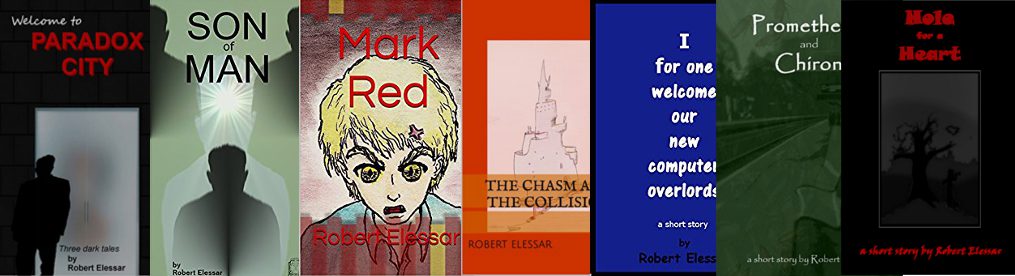
Here is a link to the book I mentioned.
This post relates somewhat to my regular post from earlier today.
Here is a link to the book I mentioned.

Hello and good morning.
I may be brief today*, because I am mentally fairly exhausted. Yesterday was a bad day for me, pain-wise and mood-wise. I’ve had large amounts of more than one kind of pain medicine on board, and I felt…well, I felt somewhat less pain in some places, but I’ve started to get some broader symptoms that I sometimes get when I’m taking too many NSAIDs for too long.
My thumbs and my knees and ankles and such are actually feeling wobbly and unstable as well as being generally a bit puffy and plenty sore. This isn’t really like an inflammatory kind of swelling; that would indeed be a failure of the Non-Steroidal Anti-Inflammatory Drug(s) I take, would it not? No, this feels more like a sense of having excess fluid in each joint, as well as in between them, and less tautness, less stability, and somewhat ironically, more pain, albeit of a slightly different character that usual. It’s quite frustrating.
Also, my back and hips and shoulders don’t feel much, if any, better than usual.
I’ve been wondering lately if I might have some form of relatively mild hypermobility syndrome, which often goes along with ASD it seems (some of the causative genes are probably the same, or at least tend to travel together through the genome).
I have long had certain slightly atypical flexibility issues or attributes**. For instance, I’ve always been able, with a bit of a pull, to put one or the other of my feet behind my head from a seated position. I can also scratch pretty much any part of my own back, and I have always been able to do this, though I sometimes need to pull one arm a bit with the other. Also, I have a hard time holding my head straight upright for very long at a time; it’s uncomfortable, and I need to lean it to one side or another pretty much constantly. Maybe that’s just a weird habit, I don’t know.
Of course, hypermobility can be associated with various kinds of chronic pain, and can certainly make other things worse. Unfortunately, it’s not something that can be cured, any more than autism can be cured (or any more than having a particular color of eyes or hair can be cured, though they can be masked, as by dyes or contact lenses).
I am far from sure about this tentative self-diagnosis, and I’m always leery of “second year med student syndrome”, but I think I am being reasonably objective here. Genetic testing would be required to confirm something like Ehlers-Danlos Syndrome, but I don’t meet the criteria for full-blown EDS***, and less full-blown syndromes may not easily (nor cheaply) be testable, or testable at all.
I suppose it doesn’t really matter much. I do not expect my baseline previous health to be recoverable in any reasonable sense. This is one reason I’m not too terribly worried about things like heart disease and infections and so on. Why would I want to live a longer life of the kind I now live? It’s like asking someone if they want the massive street construction project on their block, that’s slowing traffic and making terrible noise all day and into most nights, to be extended‒not by the workers doing more improvement, but just by working more slowly and being less efficient.
At least yesterday, in between doing payroll, processing deals on an unusually busy day, and trying to discourage my body from committing war crimes against itself, I remembered and indulged in a resource I haven’t used in a while: I got on bioarXiv and skimmed through the abstracts of some of the more recently uploaded papers in general biology, neuroscience, genetics, molecular biology, and such like. It can be kind of fun.
I don’t enjoy it as much as I do going to the original arXiv (hosted at my alma mater), which deals in physics, mathematics, computer science and the like. But the bio site requires less mental effort and is simpler in many ways. This is at least partly due to the fact that I am an MD, and I got my degree from one of the more research-oriented medical schools (we were required to do a publishable medical science research project as part of our degree) so the terminology is more or less at my fingertips. This probably would apply even more at medrXiv, at which I spend less time than the latter two.
ArXiv, the physics/maths/CS site, has oodles of interesting articles always up‒I have, for instance, downloaded a PDF of a paper by David Deutsch from there‒but most require more mental effort than on the other sites, because I don’t have as good a handle on some of the jargon, and I often need to review the mathematics involved, or more often try to absorb it for the first time. Still, it’s very cool, though it’s a real embarrassment of riches; it’s like being in the biggest candy store in the world, but having only three dollars to your name, and having to choose what to buy with it.
The potential opportunity costs are staggering, but I guess that’s a good problem to have.
Speaking of reviewing mathematics, I found a nice little YouTube channel by a woman from MIT who does good reviews of basic integration and more advanced techniques like integration by parts and trig substitutions and such like. I find her stuff much less sleep-inducing than the videos on 3Blue1Brown, though Grant has oodles of great videos, well-produced and in-depth but clear, about many topics in mathematics. Unfortunately, his voice is if anything too calm for me, and his animations, though superb, are if anything too smooth.
I think, also, that I learn better by seeing someone writing the stuff out‒possibly this engages my mirror neurons and thus makes more of my whole brain focused on what’s happening.
Incidentally, the lady mentioned above is not officially affiliated with MIT, she just went there. But you can actually “attend” lecture courses in various subjects in Physics, in Mathematics, in Economics, in Computer Science, and so on, from MIT at their YouTube channel. It’s truly remarkable, and if you’re just after learning the stuff but aren’t seeking an Official Piece of Paper™, it’s a tremendous resource! Stanford also has similar online lecture courses, as I think does CalTech.
I’m pretty sure Harvard does this also, but there’s no need for any of you to go slumming there. Why not just watch Baby Shark or something‒and Gangnam Style is actually pretty enjoyable. I know, I know, Steven Pinker is at Harvard, and he’s one of the most enjoyable (and thought-provoking) public thinkers in the world, but I don’t think he gives any of their online lectures.
Although, given the notorious grade inflation known to be rampant at Harvard, you might just get an official “A” from them simply by clicking on one of their videos.
Okay, I’m at the stage of taking cheap shots at Harvard (they do not deserve such disrespect, even though there really is a problem with grade inflation), so I’ll call this post to a close. I hope you’re all having a better week, year, decade, and life than I am having. Though, really, if you’re not reading preprint scientific papers for free online, how good can your life be?
TTFN
*I was not. Perhaps this is analogous to the situation that led to the famous quote about not having time enough to write a short letter‒only in this case, it is not time but mental energy that limits my concision.
**Some of these things are slightly curtailed now because I am too plump, but that’s a different issue.
***No, I do not refer to Ross Perot’s old company, Electronic Data Systems.

After my little test yesterday of the “writing a blog post directly on the app related to my WordPress account”, I considered writing this morning’s post directly on that app, just to see how it went. However, I don’t yet know how to keep track of my word count on that app*, and I don’t feel like doing any trial and error exploration this morning‒not of that, anyway.
So, I’m writing this instead on the usual Google Docs app. Google Docs has the advantage that when I write this document on my phone, it automatically saves to my Google Drive, and I can then readily open it up on any computer that has an internet connection. That’s fairly handy.
Of course, it means that I’m putting many eggs in the Google basket, but for these purposes, I’m okay with that. Also, when it comes to phone apps, Google Docs is so far the best word processor I’ve tried, as far as interface quality goes. The same cannot be said for the desktop app, but it’s perhaps better than it used to be.
I don’t really like to leave my fiction in Google’s hands if I can help it. I like having a hard copy, so to speak, of my fiction writing. So far, except for those which were written with pen and paper for the first draft, all my fiction has been written on MSWord (and even the handwritten ones were completed on Word). I used to recopy each file onto a thumb drive after a day’s writing, in addition to keeping it saved on my mini lapcom, so I knew I had at least two up to date copies. Then‒once it became a thing‒it would also auto-save onto my Microsoft OneDrive.
The inception of the latter made me think that maybe I could write everything on the Word app for smartphones. It auto-updates in a fashion similar to Google Docs. Alas, it’s not nearly as fluid and seamless as the Google app. If it were, I would probably use it, although‒the nature of Microsoft accounts being what they are‒I wouldn’t be able just to pull it up on the work computer, since it uses a different (boss-related) Microsoft account. So, I would have to send a file as an email or something no matter what.
I’m sure there are ways around that‒or, well, there may be ways around that‒but the phone app for Word just is too cumbersome for now. It’s not worth the effort.
Sorry, I know this is probably dreadfully dull to all of you. I’m impressed that you’ve read this far. You may know, I guess, that I don’t plan these posts out ahead of time, I just spew out whatever comes into my head. If you find it tedious or infuriating, just imagine how I feel! You, at least, could always navigate to another website. What am I supposed to do? I can’t even get away from myself by sleeping most of the time.
Anyway…
I’ve been doing a little bit of rereading of some of my fiction recently. For instance, yesterday afternoon, while waiting for my train, I finished rereading The Chasm and the Collision.
I still like it.
I have a hard time feeling good about things that I do (and am) but I think CatC is a good story, and I think its world is interesting and that the characters are good and so on. I think there are probably a lot of people out there who would like it. And, like I mentioned sometime earlier this week, it would be really cool to encounter fanfiction based on it.
Alas, I am not good at self-promotion. I don’t like myself, so it’s hard to find the will to promote my work, even when I like the work. It’s quite dispiriting, and the fact that I can only hold myself, and my nature, responsible for it doesn’t make it any easier to swallow that bitter pill.
Now I’m rereading Unanimity: Book 2, though I’m not sure if I’ll read it all the way through to the end. That’s another book that I think is good, though it is long, and some of the characters aren’t as likeable as in CatC. Of course, they’re not supposed to be likeable, when they’re not. It is a horror story, after all, and in many ways it is one of my two most horrifying stories. Weirdly enough, those two most horrifying stories are my longest and my shortest works.
On the other hand, my sister recently pointed out to me that‒ironically‒my most lighthearted story is The Vagabond, which is a sort of old-school, gonzo horror story. She’s right. I guess that lightness shows that I wrote it (originally) while in college and med school.
The heck with it, all of my stories are good. Some are better than others, and different people would surely prefer different ones, but I think they’re all pretty good. Even the stuff only published here like Extra Body (which is complete) and Outlaw’s Mind and The Dark Fairy and the Desperado (those two are not complete) are good. So read them. Read all of my stories. Tell your friends and families and even your enemies and strangers about them. Spread the word far and wide across the land. “Stop all the clocks, cut off the telephone, prevent the dog from barking with a juice bone”. Okay, well, maybe not that last bit, but do get the word out.
Thanks.
Okay, well, tomorrow I work, so expect a blog post tomorrow, whether you like it or not. I may do another test post this afternoon if I get a bit bored, mainly to see if I can sort out the word count stuff on the app for WordPress. If so, I’ll post it. If not, of course, I won’t. It’s funny how that works, isn’t it?
I hope you have a good day.
*I need to keep track of that because I can sometimes get quite carried away.

Well, as you probably know*, it’s Monday again. I’m not excited about it either, believe me, but I was given no input into the matter, so don’t blame me.
As you may also know, I did not work this last Saturday, because several unexpected absences concatenated (I’m not sure that’s good usage) to make it pointless for the office to open, so we did not open it. Instead, I took advantage of the day off and went on a bit of a trek.
I walked to the bank‒a new branch, or at least one I haven’t used in the past‒and then continued on a few more miles to the Yellow Green Farmers Market, which is quite a nice little place that’s only open on the weekends.
Just outside the market, I saw an amusing collection of signs that I suspect one would not ever see at a farmers’ market in the northeast. I’ll insert a picture here.

Anyway, I was neither openly carrying nor carrying concealed firearms, and I used no bike, scooter, or skateboard, so I was fine. I walked around a bit, had a lovely apple and ginger tea and three empanadas, then walked back toward the house by a different route. Finally, I got back to the Hollywood train station, where I decided to get an Uber the remaining distance back.
I had already walked several miles, and I was rather fatigued. I could also sense that I had gotten a bit sunburned (which I had). Anyway, in the end, I walked almost exactly ten miles on Saturday. This is based on agreement between my pedometer and the map estimate, so I think it’s reasonably accurate.
We used to say “close enough for government work” about things like that, back in the day, implying that governments don’t work very hard to get things too right. However, nowadays, in the US at least, I feel that it would be better to say “too close for government work” because accuracy and precision, let alone duty and beneficence, seem to be anathema to our current administration. Let us say as little as we may about competence. That bit is just deeply embarrassing.
Let’s see, is there anything else that’s at all worth discussing? I don’t know; “worth” is such a subjective concept. In my subjective assessment, much of what I do on any day, in any week, in any year is of no worth whatsoever.
Not everything falls under that umbrella. Everything I did that led up to my children being born is absolutely worthwhile to me. Nor jot nor tittle would I change of it. After that, though, things degenerated rapidly. Again, this is from my point of view, but that’s the only one I can actually have.
I can imagine other points of view. I can try to see things as if from another point of view, simulating other minds within my own. So can you, probably. It’s a very useful attribute shared by most naked house apes. I think my own capacity to do so‒which is not inherently very good, it seems, probably due to my ASD‒was greatly enhanced by reading a lot of fiction starting from when I was quite young.
Reading is very different from watching a movie or a TV show or even a play, because with reading one can more or less literally “hear” the thoughts of the characters‒and I think this is one of the truly great things about written fiction. I think if more people spent more of their lives, particularly in childhood, reading written fiction, the world would be, in consequence, a better place by most reasonable measures.
Unfortunately, for many people in the world, the only fiction they read is stuff like the Bible and the Koran. Not that there’s anything wrong with reading them per se‒I’ve read parts of one and all of the other, myself‒but though they are anthropologically interesting, they are not terribly well written, nor are they coherent, nor is there any unity to their styles.
This is a bit puzzling, given some of the things the books claim for themselves. Then again, politics frequently demonstrates that people don’t seem too worried about coherence and logic and quality, so one can say and claim almost anything one wants, and some people will embrace it.
DMX said, “Talk is cheap, motherfucker!” Aye, that it is. And yet, people will pay through the nose for it, and sometimes, the more worthless it is, the more eagerly they pay.
If given a choice between cheap but big and gaudy fake plastic jewelry and some truly valuable, rare gem that is subdued in character, people seem to pick the plastic nearly every time. They do this even when they know the difference. They cannot seem to resist the superficial bling.
Mind you, if it’s just for decoration, the superficial bling is okay as far as it goes. Especially if it’s going to be transient, like holiday decorations, the cheap and gaudy stuff can be ideal, because one doesn’t have to worry about damaging it; it’s all about a look, an impression, anyway.
But when one wants something durable, something useful, something with depth, it’s best to work with things that are not mere surface shimmer. One does not want to build factories and fire trucks and skyscrapers and farm equipment out of Papier-mâché, Elmer’s® glue, plastic beads, and glitter.
All right, I think that tortured chunk of rhetoric demonstrates that I have nothing further to say today that’s worth sharing. Probably that’s true every day, from midnight to midnight. Silence, I suspect, is probably my ideal mode.
*This is presuming** that most, if not all, readers tend to read my posts on the day they are released.
**I know, I know, when I presume I make a pres out of u and me. And right now, a pres is not a prestigious thing to be, though there was a time in the past when it was.

It’s Friday again. But it’s not just any Friday‒it’s the Vernal Equinox, the day when the line between the Earth and the Sun is orthogonal to the line of the axis of the Earth, and so the day and the night will be (effectively) of equal length. This is more fun in some ways than the solstices, because it’s the same for everyone, northern and southern hemispheres.
Of course, in the north it’s officially the Vernal Equinox, heralding the beginning of spring, whereas in the south it heralds the beginning of autumn. I don’t know, however, if it is officially called the Autumnal Equinox in the south. Probably it is. After all, I’m sure they have their “official” winter solstice on what is “our” summer solstice and vice versa. It would be a bit perverse for them to do otherwise.
It’s somewhat interesting to note, as Neil DeGrasse Tyson has pointed out with some ardor, that since, for instance, winter officially begins on the “shortest”* day of the year, the days actually get longer and longer through the winter (and the opposite happens in summer), until finally, on the Vernal Equinox, they break even with it and then daytime passes the night.
I wonder what Zeno would say about that race.
On a different topic, it’s quite rainy here this morning, and it’s a rather chilly rain, which is mildly unusual for south Florida. It occurred to me, seeing just how sloppy it is here at the train station, that I hope it will not be so rainy at my destination. What’s interesting about that is that it may not be rainy at all there, at work. And yet, it could still be raining heavily down here in Hollywood.
In the modern world, weather can seem to change much more rapidly than it really does because we travel through the weather, whereas throughout all of our ancestral time we would merely have seen the weather passing over us. It can give a somewhat misleading impression of how quickly the weather changes, even in Florida, where it can be raining on one side of a street and dry on the other**.
I recall when visiting my grandparents as a child, that there were times we would all be going somewhere in the car, and as we went along it would start to rain heavily, all of a sudden‒and then, just as suddenly, as we went along, it would stop. And then it would suddenly start again, and then stop again, and so on.
But even in south Florida (or, well, west central Florida back then) the weather doesn’t change like that if you’re sitting still. It changes quite rapidly compared to many other places, but not the way it seems to do when one is traveling in a modern vehicle.
For some reason, I feel as though there’s an analogy or insight available here with respect to special and possibly general relativity, but I don’t feel like trying to explore it right now.
I did bring my hardcover copy of General Relativity: The Theoretical Minimum, which is part of Leonard Susskind’s Theoretical Minimum series, with me when I left the office yesterday, thinking I might read it while on the train last night. I did not read it. There are too many distractions, it seems, for me to be able simply to flip my attention into focus on that, however much I really am interested in it. It’s frustrating.
I have read part of it, mind you, as well as parts of the other Theoretical Minimum series. I have all of them in both physical copies and on Kindle, so really, I didn’t need to bring the physical book. But it is a lovely hardcover edition, and I hoped that might make me more likely to read it, since reading a nice hardcover is much more pleasant than reading a Kindle book on one’s phone, though that can still be fun.
I also entertain the admittedly absurd fantasy that I might be reading the hardcover copy on the train some day and some other, like-minded person (preferably an attractive woman) might notice and be interested because she is into the subject as well, and so on.
This is particularly silly as pipe dreams go, because even if such an absurd event happened, I would definitely screw the whole thing up. I tend to be quite terse when strangers try to speak with me, even if they are beautiful women.
Looking back on my life, I’m sure that there have been several occasions in which someone was expressing interest in me, but I didn’t get it or got too anxious and froze up. Sometimes I figured it out soon after, and sometimes it took longer. There are probably some cases that I never noticed at all, even in hindsight.
Of course, I was married for fifteen years, during some of which I was in medical practice, and so such interactions would have had a different character. There were sometimes more flagrant and obvious “advances” in that time, because, well…doctor. But I never had any inclination to pursue them, even when I recognized them; I’m not the kind to want to cheat on a partner. Hell, I’m not even the kind to seek a new partner two decades after my wife divorced me (though I briefly tried a little).
I wouldn’t mind a nice relationship, but I know that I am difficult to handle in many ways (I try not to be, but I am weird, and not in some charmingly popular manner), and in certain senses, my standards are high, or at least they are fairly strict. For instance, someone who doesn’t read for pleasure is unlikely to be terribly interesting to me. It’s not impossible; there are other ways for people to be interesting and smart. But not liking to read would definitely be an entry for the “con” column, not the “pro” one.
I don’t know what I’m doing, going on about such nonsense. I am not going to have any more romantic relationships in my life. I am going to die alone, as is only appropriate and to be expected for something like me. And while I won’t say “it can’t happen soon enough for my taste”***, I do really feel impatient for it. I wouldn’t say I am “eager” for it, because that’s a positive feeling. I am just quietly desperate for it, like someone trying to find an exit from a (slowly) burning building.
Anyway, that’s enough for today. I hope you have a good one, and that you have a good weekend as well. Yes, I mean you.
As for me, well, I am to be working tomorrow as far as I know, so I will be writing a blog post tomorrow, barring the unforeseen.

*Of course, this is a bit of a misleading characterization. The day is the length that it is‒roughly 24 hours‒and does not change very quickly, for which fact we should all be grateful. It’s just the length of time in a given day during which the sun is above the horizon (so to speak) that varies.
**This is not an exaggeration. I have seen it myself on many occasions. It seemed to happen more frequently in the area where my grandparents used to live (Spring Hill, north of Tampa) than it does down here‒or maybe I noticed it more because I was a kid‒but it is very real and quite impressive when it happens.
***Except to say that I won’t be saying it.

It’s Tuesday now, and I’m writing this on my mini lapcom. I don’t know if I wrote any of my posts from last week on the lapcom*, but so far this week, this will represent 50 percent of the week’s posts so far.
Admittedly, that’s not saying much, and one cannot draw many conclusions from a two-item sample in which one is one way and one is another. To presume that they will continue to occur in a 50/50 ratio would be a major statistical/probabilistic error. At best, one can say that there are at least two ways in which my blogs can be written, since two have so far been sampled—and that is certainly true.
Anyway, speaking of twos, it’s Tuesday. It’s the 10th of March, of course, and the second full weekday in Daylight Savings Time, or in non-Daylight Savings Time, whichever one it officially is now. You can tell that I really don’t see the sense in the whole thing from the fact that I cannot even recall nor logically infer which of the two possibilities is correct. When I am actually interested in something, I tend to try quickly to dispel any ambiguities in my understanding if I can. With this, I really don’t care, because it’s all silly.
In fact, it’s so silly that I think that’s all that need be said about it. On to better things, or at least to other things. But, of course, the question now is: What other things should I discuss**? I don’t know, honestly.
I don’t know dishonestly, either, come to think of it.
Isn’t it weird how much of a habit it is to say things like, “honestly”, or “to tell the truth”, or “I swear”, or other similar words and phrases to try to emphasize the authenticity of our words? But they don’t do anything at all to confirm our truthfulness; epistemologically, they’re almost without content. If anything, the fact that we felt unsure enough to have to say we’re being honest might raise a so-called red flag in the mind of a given listener.
Does the fact that a person says “honestly” or “I’m not gonna lie to you” or any similar phrase actually provide any information about truthfulness, except for the fact that this person recognizes that truthfulness is valued, at least by the person to whom they are speaking? It doesn’t really demonstrate truthfulness, I think that’s clear.
Some might be inclined to think that the words actually indicate falsity, but that’s not true, either (ha ha). It may be the case, at times, that a person who is trying to deceive another may say “honestly” to reassure their interlocutor that their lies are true and also to relieve some of their own anxiety. But people who are telling the truth may merely want to recognize and emphasize that fact, and so use the same phrases. They may, for instance, realize that something true they are saying could seem improbable to some hearers.
If it were always a harbinger of a lie, then such a seeming reassurance would indeed be a reliable signal, but of the opposite state from that described in the message’s content. People would very quickly stop using it—the honest ones wouldn’t want to use it, since it always implies dishonesty, and the dishonest ones wouldn’t use it because it would be a dead giveaway.
Somehow, seemingly at least partly because it is an ambiguous signal, it stays in our discourse and is used automatically, more for emphasis and for rhetoric than for its prima facie purpose. I’m sure Steven Pinker could give a good explanation for why this is so, or at least part of an explanation. I know he’s come out with a recent book about mutual implicit knowledge and its nature (and its implications), but I don’t have it yet, and I haven’t read it.
I’ve read some of his other books and enjoyed them. I seem to particularly enjoy his work as audiobooks. I listened to The Better Angels of our Natures in audiobook format during my then-commute, using a Bluetooth enabled motorcycle helmet. That book is almost 40 hours long on audio, but I was sad when it was over. There was not one dull moment for me (of course, I was riding a very fast and non-armored conveyance at the time, so even if the book were to have become dull, there would have been other matters to keep me alert).
Okay, well, I’ve managed to meander about lexically—is that the proper term or not?—without any clear destination in mind, other than “at least 700 words”, and have written some vaguely coherent sentences about some distantly interrelated subjects. I hope I have at least mildly entertained you, the reader.
I know, hopefully there is more than one of you, but only one of you can be reading this at one time in one place. Now that’s a vaguely interesting thing to recognize: reading is only ever a solitary process. One can read alongside others, but one cannot share the process, even if several people are all listening to the same audiobook at once. Reading does not add in parallel, only in series.
With that little tidbit that some of you will recognize and others will not, I’ll call this blog post to a close. If there are no objections? No further business? Very well. [Smacks the gavel on the table] This blog post is adjourned.
*I did not.
**Certainly not those round Frisbee® things they throw competitively in the Olympics.

It’s Friday again, but that’s not much consolation, since the office is open tomorrow and I will be working, unless I am lucky enough to get very sick or very injured or to die or something.
As usual, I have no idea what would be good to write today. Actually, goodness—certainly in the moral sense, but possibly also in the sense of quality—probably doesn’t have much to do with my blog. Perhaps weirdness would be a better adjective/measure to relate to my writing.
I’m probably not an objective judge of such things. Then again, I don’t know of any fully objective judges. Still, there is some degree of variability involved in such things, as in nearly everything else made up of smaller, more fundamental parts that are interacting in complicated ways producing so-called emergent behavior. Nevertheless, cognitive biases are reasonably well studied, as are many emotional blind spots and the like. And it’s certainly true that I have a difficult time being objective about myself and about my work.
Oddly enough for such a self-despising person, I actually like my own writing, especially my fiction. When I reread my stories I don’t tend to see them as horrible or wretched or whatever traditionally happens with “artists” who look at their own work. I think at least some of that sort of thing is probably affected, since our society (perhaps semi-deliberately) looks down upon artists who think highly of their own art.
If only we did that with politicians; there’s an area where humility would be welcome and beneficial, I think.
Anyway, I tend to like my stories—I wrote them, after all, because I wanted to tell and thereby hear those tales—but I don’t necessarily think they’re great or good or decent from anyone else’s point of view. I honestly don’t know how good or how bad they might be from nearly any others’ points of view, except my sister’s, and she’s probably almost as prone to be biased about my work as I am.
Though, again, my attitude toward my writing is not akin to that oft-noted personal bias that leads more than 90% of drivers to think that they are in the upper 50% in ability (i.e., above the median), which is a mathematical impossibility* for them actually to be. I don’t think of my writing as better (or worse) than average or the median.
I don’t really compare my writing to anyone else’s. I just tend to like it. That’s probably a very good thing, because I have to edit it myself. Even these daily blog posts are run through three more times after my first draft. My fiction I tend to reread and edit seven times (that took a very long time with Unanimity). Why seven? Well, I had to pick a number, and once or twice is clearly too few, and thirteen would just be unworkable.
Also, with my fiction, I tend to follow advice Stephen King repeated in his book On Writing by working to reduce my final word count by at least ten percent by the time I’m done editing it. I used to try to do that here, but I sometimes add a bit during editing, so that becomes quite difficult and hardly worth the effort.
All that being said, it would really be nice to get some feedback on my writing, especially on my stories (from people who have read them). Of course, I would love it if someone loved my stories and told me so and told me why. The closest I think I’ve come is a review on Amazon of Welcome to Paradox City that was written by a former high school friend (he has since died of cancer, sadly) who had actually honestly bought the book for himself when it came out. He wrote that the three stories in that collection each made him wish they were the beginning of a whole book, basically implying that he wanted to know what happens next.
That’s a good thing about short stories—you can leave people hanging and that’s just “too bad” for them (though it can be enjoyable). Short stories also don’t have to have “happy” endings, which is good for me, since only one of the three in the above collection ends happily in any reasonable sense.
Of course, as I’ve noted before, my short stories are rarely short enough ever to have been, for instance, published in a magazine in the old days. The only real exception to this is Solitaire, which I don’t think any magazine would have published, because it is very, very dark indeed.
Okay, well, I guess I ended up writing something today, even if it was all just figurative omphaloskepsis. I don’t know whether you readers consider this good or bad or ugly, or how it compares in your estimation to posts like I posted yesterday and/or the day before. If you’re so inclined, please let me know.
And if you have actually bought and read any of my books, I do beseech you to leave me a review on Amazon (or wherever) if you get the chance. Thanks.
I’ll write at you tomorrow, barring—as always—the unforeseen.
*It is not, on the other hand, impossible for 90% of people to be above average (i.e., above the mean). I’m sure I’ve addressed this before, but imagine one had administered a test, and 100 people took it. Imagine that 90 of those people got 51/100 on the test, whereas the remaining 10 people scored zero. Then, the arithmetic mean (what people usually mean by “average”) would be (90 x 51)/100**. That goes to 4590/100, or a mean score of 45.9. So, 90% of those people scored above average. That’s not saying much, but it’s true.
** Yes I know I don’t really need the parentheses there, but I’m leaving them in for clarity.

Well, it’s Friday the 13th. That’s at least one good thing about today. And, of course, next month will also have a Friday the 13th, as I’ve noted previously (I don’t know specifically in which post I noted it, and I don’t really have the urge to go figure it out, so I’ll leave that to you to do if you’re interested).
It is slightly interesting to think about the fact that, on average, one of every seven Februarys will have a Friday the 13th, but not all of those will then lead to a subsequent Friday the 13th in March, because every 4th February will have 29 days*, by the Gregorian calendar, which is the one the world uses overall.
So, the total fraction of years with dual Fridays the 13th would be something like 1/7 minus a further ¼ of that one seventh—so 4/28 (i.e., 1/7) minus 1/28 (1/4 x 1/7), which leads us to the rough conclusion that only three out of 28 years will entail February and March each having a Friday the 13th. That’s slightly less than one out of every nine years. And since I’m 56, which is twice 28, I should have experienced about 6 such years in my life (perhaps counting this year).
Mind you, the numbers aren’t quite right overall. The Gregorian calendar waives the extra day in February on years that are divisible by 100, i.e., the turns of centuries. However, there’s a further exception to that: the turn of a millennium, like what we all just had in the year 2000, does keep its 29 days in February. So that brings the average closer to the raw number, but doesn’t account for the extra ones that happen at more ordinary turns of centuries.
Of course, the only turn of a century through which I have lived—and through which I am likely to live**—was indeed the turn of a millennium, so I guess for me, the fraction 3/28 should be fairly accurate.
I could, if I were so inclined, go back to the first year in which I experienced a February—that would be 1970 (AD or CE)—and work through them to find out just how many dual Fridays the 13th I’ve experienced. With modern computer-based calendars it would even be relatively easy. But I don’t think I am so inclined.
Okay, that’s enough of that for now. Actually, it’s probably too much of that, at least from any normal person’s (i.e., not my) perspective. On to other things.
I’m writing this post on my mini lapcom, and I wrote yesterday’s post on the lapcom as well; I am doing this partly to spare my thumbs, but also to try to encourage myself to use the lapcom more and maybe even to write fiction again. I don’t know whether or not that will happen, but it’s also just more natural for me to use the lapcom. I’ve been typing, in one way or another, since I was 11 years old, if memory serves. Clearly I have not been using a smartphone nearly that long, because they have not existed for that long.
Also, even when I saw the imagined future tech on Start Trek: The Next Generation of tablets with virtual keyboards, I thought they looked like a terrible idea. How lame, how unaesthetic, just to tap at a flat screen with no real keys. Also, the “keys” on such devices in the real world are too effing small to be used to type in any traditional way. Not but what one can get to be pretty speedy with them—I can zip along pretty well on my smartphone—but it’s nothing compared to being able to use one’s whole set of fingers to write.
Although, I’ve often touted the value of writing things longhand before retyping them into the computer, especially for fiction, because it can slow one down beneficially. I did that—because I had no choice, being at the time a guest of the Florida DOC—with Mark Red, with The Chasm and the Collision, and with the “short” story Paradox City. I don’t know whether they come across as better or worse or indistinguishable from the stories I have written directly onto the computer.
I would say that they might tend to be shorter, but Paradox City is a nominally short story that was about 60 hand-written pages long, so that didn’t make things much shorter. Also, I think The Chasm and the Collision is longer than Son of Man, but that may just be a function of the nature of those stories.
Certainly Unanimity is longer than anything else I’ve written, by quite a margin, but that surprised me as much as it might anyone else. I just started writing the story and it ended up taking that long to tell it. That happens. Outlaw’s Mind began as an idea for a short story, but there was definitely a lot there implicitly, even in the original idea, that made it unreasonable to plan to make it “short”.
Anyway, if any readers of this blog have also read my stories and have noticed any tendency toward difference between the initially handwritten and the entirely computer written (meaning written on a computer, not by a computer, unless one is referring to me as a computer) ones, I’d be pleased to get your feedback.
In other personal news, well…my pain is leveling off a bit, though my leg joints still feel loose and floppy and unstable, so I have to be careful, and I have my general persistent tension and neuropathic discomfort in my lower body. I’ve tried to adjust (and decrease) my workout a bit to compensate, and that seems to be doing some good, but I cannot go without working out, because that tends to make my pain worse.
My mood is pretty much as it usually is, but I’ll spare you that hellscape out of courtesy.
Tomorrow is Saturday, and I am not supposed to be working this weekend. If that changes—in other words, if I do work—I guess I’ll write a post. Though, really, I should try to get back into Outlaw’s Mind and finish what I had started earliest so I could then get on to newer things. And if wishes were horses, we’d all be drowning in manure***.
Tomorrow is also Valentine’s Day, but this is of no relevance to me, and that holiday hasn’t been relevant to me for more than 15 years, possibly quite a bit more. It is not likely to be relevant to me again this side of the grave (and even less likely to be relevant on the other side).
I hope you all have a good weekend, even those of you who have loved ones with whom you can revel in the romance of the holiday. It’s not your fault that you piss me off.
*This means, of course, that there will be some March Fridays the 13th in years where there was no February Friday the 13th. If my figuring is correct, those will be the leap-year Februarys in which the 13th falls on a Thursday.
**If I were to be alive in 2100, I would be 130 years old, which would make me even with the Old Took, and which would be substantially older than any human is known to have lived.
***And ironically, any wishes for the manure to go away would just make things worse!

It’s Friday. yay.
Today’s date (February 6, 2026 CE or AD) has a mildly amusing coincidence/repetition of digits, 2-6-26 in the shortened American version of the date layout. In the European system, the date would be almost palindromic (6-2-26) but that’s leaving out the zeroes in front of the day and month digits and ignoring the number of the millennium. So it’s not quite as cool as it could be.
Some might say that such numbers and the arrangements and the noticing thereof can never be “cool”, but such people are troglodytic idiots. They live in a world full of and shaped by complex ideas, by innovation and technology they could not have invented themselves, and which they don’t bother to try to understand because other people take care of and do all that stuff.
I’ve said before, many times (with sadness and regret and yes, quite a lot of anger) that if it were up to most people, we would all still be living in caves (the few who remain alive, at least). That’s metaphorical, mind you; very few humans actually ever lived in caves as far as we can tell. It’s just that the remains of those who died in caves (and their artifacts) are much more likely to endure to be discovered than the tools and remains of those who lived on the savannahs and such.
Anyway, the troglodytes have a quite common attribute, one that might explain a good deal about them: even though they may have the capacity to read, even though they may have been taught to read, they don’t choose to do it. It’s both sad and quietly horrifying.
Even those who claim to read just one book (e.g., the Bible, the Koran, etc.) don’t even really read those books. You can tell, because they clearly don’t live their lives respecting all the precepts of those books.
This fact can sometimes be bad, but more often than that, it’s just as well. Those books are horrific (and often just horrible, aesthetically). They also tend to be rather stupid by modern standards, but it’s hard to hold them too much to task for that. They were, after all, written from depths of profound ignorance about the universe. One cannot know a truth before it has been discovered.
Of course, if those books really had been written, or at least inspired, by an omniscient being or beings, they could reasonably be expected to be very smart books by any standards. Alas, they are not. Trust me, I’ve read many of them, as well as many other books that don’t claim to be the products of omniscience, but which would be far more convincing* if they did than those ancient compilations of legend and myth and mental illness that are the so-called holy books.
Ironically, the Tao te Ching is much wiser than the aforementioned holy books, and it was never said to be written by anything other than a man. It’s not perfect, of course, but it doesn’t really claim to be so. Perhaps some of its adherents think it’s somehow “perfect”, but that doesn’t really matter. After all, there are probably those who “think” Mein Kampf and The Art of the Deal are perfect.
Weirdly enough, some of these people would probably also say the Bible is perfect [Disappointed shrug and heavy sigh]. People are stupid. And there are none so stupid as those who refuse to think.
Sorry, I don’t even know how I got to dealing with this set of subjects today. It certainly was not planned. Then again, nothing here was planned, other than that I would write a blog post as usual, which is not surprising.
It’s not as though I have anything better to do with my life‒that is, nothing better other than to shut it off, I suppose. But so far, I am too much of a coward to do that.
I know, I know, there are those who (with truly very good intentions) will call continuing to be alive a “brave” choice, but though I appreciate such people’s kindness, that “choice” is very much the default. In a similar vein, it’s not brave to hunt, or to fish, or to farm, if hunting or fishing or farming is what you must do to survive. It’s just pragmatic.
I am not brave for still being alive. This is not to say that it would be brave for me to kill myself, either. But it also would not necessarily be cowardly.
Bravery in the usual sense is overrated, anyway. We can (and should) all be glad, of course, that there are people like firefighters, as well as honorable soldiers and honorable police officers. But if one stops to think about it, one can see that we should all very much wish to live in a world in which bravery was not required, a world where heroes are not merely not needed but are not useful.
It’s likewise with so-called leaders. If a society were functioning well, it would not need (or want) heroes or leaders, at least not in the traditional sense. In a well-functioning civilization, people would see their elected officials as their employees, as the public servants that they are. They are not, and should not be thought of as, leaders. That’s just a troglodytic way of thinking.
Alas, we are far from such a well-functioning civilization yet. Who knows if we ever shall achieve it?
I do know, however, that I will probably be working tomorrow, which means I will write a blog post, barring (as always) the unforeseen. Until then, I hope you each and all have a very good day by any reasonable criteria.
*Especially modern science books.

Well, first let me apologize for yesterday’s blog that largely concerned the weather, and in a trivial sense at that. It was rather lamentable, I know, with emphasis on the first four letters of that adjective.
On the other hand, I don’t apologize for having had my little bit of fun with the date. That may have been even less interesting to most of you than my jabbering on about the weather, but I like it. I fully expect that I will do such things again. For instance, in a similar vein, today is a bit fun because it is 11-12*, so the numbers are in appropriate ordinal sequence with no gaps.
That’s not very fun. More fun will be had (by me, anyway) on Friday, when it will be 11-14-25. If you don’t immediately see the fun there, it may help that a similar fun date next month will be available on 12-13-25. This fun also works with the European date order (but in both you have to leave out the digits that denote the century). Also, there were no equivalently fun dates in any month before October.
This is the most fun I’ve had on any kind of date in at least 16 years, I would guess. That’s an easy call, because I haven’t been on any date at all in at least that long. See what I did there with the multiple meanings of the word “date”? Of course you did. What do I think you are, a moron?
No, I do not think that. You are reading a blog post, so you are a reader, which gives you a serious leg-up, moronia-wise. You draw from the well of that greatest of all human inventions: written language. Your taste in reading material may be somewhat questionable, but I cannot legitimately complain about that.
Wow, I feel like I ought to be almost done with this post, but I’ve barely passed 300 words.
On to other things. I’m going to try to do a better job about science reading during my downtime in the office. It’s not that I’m completely slacking; I’m reading Shape by mathematician Jordan Ellenberg, and I just read his earlier book How Not to Be Wrong. I’ve read both before and/or listened to the audio books, but they are well worth rereading. He’s a great math professor, and has a gift for explaining potentially abstract concepts. I think he’s slightly better at this than Steven Strogatz, the author of The Joy of X and Infinite Powers, but they’re all good.
I also just yesterday gave in to an urge I’ve had for some time: I ordered a textbook I liked in med school but which we didn’t really get into as deeply as I would like: Principles of Neural Science, by Kandel et al. The edition I had was by Kandel and Schwartz, if memory serves, but Dr. Schwartz is no longer involved, it seems.

It’s a textbook, so it’s pricey, even in paperback, but I discovered that I could put it on a payment plan through Amazon, so that’s what I did. It arrives today.
I’ve also resolved, at least tentatively, to try to take the heat off my reading of my science books‒including the above newcomer‒by doing something I did when reviewing/studying in med school: I would get a text that I was reviewing, and I would pick a section to read/review by flipping a coin.
Actually, it was a series of flips, each one dividing the “remaining” part of the book in half. In other words, for the first flip, heads would mean I would look in the front half of the book, tails would mean the back half. Then the next flip would decide to which half of that half I would narrow things down further.
Anyone who has spent any time dealing with computers and/or binary numbers can readily recognize that, with 10 flips of the coin, one could choose a specific page in a 1024 page book. I guess every flip would count as a kind of “half-life” for the book’s pages. If one wanted, one could even choose one’s pages not with a coin flip, which is not truly random, but with a quantum event that has a 50-50 chance, like measuring whether a given electron’s spin is up or down.
Of course, I don’t have a Stern-Gerlach gate, so I would have to “farm out” that process. But I understand that there are apps that you can use that have their sources at labs where each decision is truly made by a quantum measurement.
It’s not terribly practical nor more useful for pickling book pages than is a coin flip, but if you’re a convinced advocate of the Everettian, “many worlds” version of quantum mechanics, it has the added “benefit” that each “flip” will divide the universe into two “worlds”, one where you choose from the earlier half, another where you choose from the latter.
Coin flips do not enact such splitting, not in anything but the trivial sense that every quantum level interaction potentially does so. The experience will be the same for you, though, except whatever glee you might derive from splitting the universe to choose a section to read.
Anyway, I’ll be trying to read my books, random section by random section. Believe it or not, this works for me. I don’t have to learn things in order, usually, and this method avoids me feeling bored while trying to trudge through a text in order.
Perhaps I do have some aspects of ADHD up in there in my brain.
Well, I’ve now passed my target length for this post by some margin, so I’ll call this enough for today. I expect to be writing another post tomorrow, but like everything else**, it is not absolutely certain. I hope you have a very good day.
*Only in the American style Month-Day-Year format, though. It is less fun in the European Day-Month-Year format.
**Yes, even death and taxes, in principle.
