In a better blog than this, I shall desire more love and knowledge of you

Hello and good morning.  It’s Thursday, and I’m writing this post on my lapcom.  I feel as though I ought write these posts only on the computer (not that smartphones are not computers, but cut me a little slack on this, please), and I would be more inclined to do so if Microsoft would stop making Aptos the default font!!!!!

If I could go back in time and change something, that’s one of the things I would be inclined to change.  If I found that there was one person mainly responsible for this new font, well…I don’t know if I’d go all Terminator on them and kill that person’s mother before that person was born, or kill the person when that person was a child, but something needs to be done to erase the stain of this horrible font from existence.

Certainly, if I were given* absolute power over the world, from this moment forward, one of the petty things I would do (I would try to keep the petty things to a very bare minimum, trust me**) is to eliminate that font from any and all standard computer systems anywhere.  I would probably allow for individuals to select the font if they really like it, but would not let them use it on anything but internal work between people who also like the font.

Also, I would probably mark people who chose the font freely for a visit from my secret police.

I’m kidding.  I despise the very notion of thought crime, let alone aesthetic policing in private matters.  This is even though some people’s quality of thought sometimes feels like a crime against nature.  But, of course, there cannot actually be crimes against nature.  Nature does not punish one for disobedience to its laws.  It’s simply not possible to do anything but follow them.

That’s one reason why I truly despise headlines like “The new finding by Hubble that breaks physics!” and whatnot.  Not only are they plainly clickbait, they are stupid clickbait.  I don’t know for sure if it’s just the headline writer or the writer of whatever the attached article might be who makes the headline in specific instances, but in either case, when I see headlines like that, I think that whoever wrote it really, clearly doesn’t understand physics very well.  Nor do they the nature of scientific discovery and advancement.  Because of that, I am far less likely to read the attached article (or watch the video) or even click on its link.

Nothing can break physics.  If you find something that seems to violate physics as you understand it, what you have found is not a violation of physics but rather a place where your understanding of physics is clearly incorrect.  This is far from a horrible thing.  This is how progress in physics (and in other sciences) is made:  by finding the places where our “understanding” doesn’t predict or describe what actually appears to be happening.  The world cannot be “wrong”, so our understanding of it must be, and will need to be revised.

That’s progress.

One should be hesitant to give too much “trust” to anyone who refuses to change their mind.  One of the best lines in a Doctor Who episode (not a truly great episode, maybe, but it has a wonderful speech by the Doctor) is after the Doctor has said to the “villain” (who goes by the human name Bonnie, though she is not human) “I just want you to think.  Do you know what thinking is?  It’s just a fancy word for changing your mind.”

Bonnie responds, “I will not change my mind.”

And the Doctor says, “Then you will die stupid.”***

This is simply true.  If you never learn that you were wrong about something, if you never update your credences or think about things in a new way, you will never learn anything new or develop any better understanding of the world than you did when you formed those credences.  Or, to paraphrase Eliezer Yudkowsky, if no state of the world can change the state of your retina and how you perceive that state, that’s called being blind.

I like to refer to Yudkowsky-sensei a lot, but that’s because he has said a lot of bright and interesting things, and he has said them well.  It’s also nice to know that there are some highly intelligent and thoughtful people in the world—clearly there are, or humans would long since has gone the way of the trilobites—because the idiots and the assholes make so much noise.

The best evidence I see for the fact that most people are good or at least benign (overall) is that civilization still exists, and has done so for a long time.  It is far easier to destroy than to create or even to maintain; the second law of thermodynamics tells us that things will fall apart even if we do nothing at all to break them (it says that more or less, anyway—that’s a bit of a bastardization of the proper, mathematical law, but it is related and implicit).

The fact that civilization still exists—so far, at least—seems to indicate that there must be a lot of people working to maintain and sustain and improve it, because we can easily see how much how many people seem to be trying to make it crumble****.

Assholes tend to make a lot of noise in the world, but they’re pretty much all full of shit and “hot air”.  It’s worth it to keep this in mind, because there have always been plenty of such nether orifices out there, spewing their flatus everywhere like perverse crop-dusters.  But the evidence strongly suggests that they are not the norm; they are just the noisiest.

I suppose that’s a good moral of sorts on which to end this post:  Be willing, even eager, to change your mind when warranted, and try not to let the assholes make you think the world is no better than a camp latrine (even if you’re one of the assholes sometimes, which you are, since we all are, sometimes*****).

Though, to be fair, I am hardly the person to be giving that last piece of advice unironically.

TTFN


*If you must be given absolute power, do you actually then have absolute power?  This is similar to the old song that says “Don’t ever take away our freedom.”  If you have to beseech someone not to take away your freedom, you’re not free, and if you have to be given power, your power is clearly not absolute.

**Or don’t, if that’s not in your character.  I’ve often spoken implicitly against the concept of trust, stating that I don’t feel that I can actually, truly trust any living person.  It’s calculated risks all the way down, which is empirically true if nothing else.  So, I can hardly scold someone if they don’t “trust” me.  Go ahead, form your own conclusions.  I do exhort you, though, to be as rational as possible when you form them, with your conclusions drawn as a consequence of the evidence and argument, not with your evidence and argument being curated based on your knee-jerk or at least hasty “conclusion”.

***He then proceeds to lay out the alternatives; he’s not making a threat, he’s making a point.

****When you read that, did you immediately think of your own least favorite political or other public figure, or perhaps of the people you encounter who disagree with your politics or religion or dietary preference or what have you?  Be careful.  Us/them thinking is not usually conducive to formulating true and accurate pictures of reality (though it did inspire at least one beautiful song):

*****We’re also all deuterostomes (I’m assuming only humans are reading this).  Look it up.  It’s kind of funny.

I had a good headline idea, but it slipped my mind

I was surprised by how much response I’ve received to yesterday’s blog (and that of the day before) as well as the number of comments.  It’s very gratifying, and I appreciate it very much.  Thank you.

As for today, well, I am really not sure what to write, because yesterday’s blog was‒from my viewpoint, anyway‒about as free-form and chaotic and tangential and stochastic (not to say redundant) as anything I’ve written.  But maybe that’s just the experience I had while writing it; maybe it doesn’t actually come across that way to the reader(s).  It’s difficult for me to know, because even more than reading, writing is a solitary thing.

That’s not to say that people can’t write together.  Back when I was a teenager, I co-wrote some partial stories with one of my best friends, and we did it sitting next to each other and talking things through aloud as we typed.  That was a pretty active and interactive collaboration.

Unfortunately, I don’t think we got very far with it.  We made much more progress writing silly computer programs in Basic on the Apple II+ my father had bought.  This was in the days before there were any ISPs as far as I know, though we did dial onto a couple of local “billboard” services from time to time with my dad’s old modem (I think it was 600 baud*, but it may be some even divisor or even a very small multiple of that number).

One time, I even had a conversation with a girl (!) who was helping run one of the billboards.  She was (supposedly) about my age, and obviously she was much more into computers than I was for the time.  There was never (in my regretful mind) any possibility of an ongoing interaction, let alone a physical meetup or anything, however.  Even then, though I was reasonably confident when within my local group of friends and teachers, I was painfully shy and awkward, and could never make conversation other than about specific topics.

Goal-directed interactions are okay, as they tend to flow naturally from the process involved.  This is why I’ve made nearly all my friends at school or at work.  Purely social interactions were never really an option for me, except with people I already knew quite well.  And having a successful romantic relationship was unfortunately not in the cards for me.

It still isn’t, as far as I can tell.  I suspect the problem is that there’s no other member of my true species on this planet.  I did come reasonably close, or so I thought for a long time, but I’ve been divorced now about five years longer than I was married, so I apparently wasn’t all that successful.

Okay, well, sorry about the weird, ancient info-dump.  It’s not nearly as cool as the data that’s coming in from the recently-activated Vera Rubin observatory.  That, at least, is the sort of thing that helps restore my faith in humanity.  Or, well, maybe it would be more accurate to say that it shifts my Bayesian credence slightly away from the “humans are without net redeeming value” end and toward the “humans may not be all that bad in the end” end.

The credence is still quite low, though.  By which I mean I’m closer to the first end than the second most of the time.

Things might be a little bit better if the sort of people who do things like setting up the Vera Rubin telescope, and who set up and launched and now use the James Webb telescope, and the members of the former human genome project, and the people who study cognitive neuroscience, were the sort of people working in government, writing and administering laws.  Generally speaking, though, the first type of people don’t tend to want to do the governing nonsense, probably not least because a lot of that business is not about everyone trying to do the best they can for the people they represent.

The people who want to do astronomy and mathematics and biology and geology and neuroscience and meteorology and so on are probably some of the best people to do those things‒not just from their point of view but also from the viewpoint of civilizational benefit.  Unfortunately, many of the people who want to go into government and politics tend to be some of the worst people for those jobs, from the point of view of civilization.

I can’t say they are the worst possible group for the job.  The truly disaffected and uninterested or the misanthropic and nihilistic might well do a worse job even than the lot who do it now.  This is despite the fact that most of those latter people act on shallow and immediate self-interest.  Self-interest can do the job adequately when the incentives are structured such that one’s self-interest is served by serving the interests of the people of one’s community/city/nation/species.

Those incentives are very tricky to manage, unfortunately.  It would be much better if we could find people who had real enthusiasm and curiosity and an actually somewhat scientific approach to government.  If only we could find a group as committed to seeing a truly and objectively well-run society‒in which everyone was better off than they would have been in nearly any other‒as the group who set up the Vera Rubin observatory was committed to actually getting the observatory done so they and we could learn ever more about the universe on the largest scales, things might be quite a bit better than they are.  Maybe not, but my credence leans more toward the “maybe so” end.

Alas, politics and government were not born of human curiosity and creativity‒the things almost entirely unique to the species‒but of the old, stupid primate dominance hierarchy/mating drives, which are evolutionarily understandable, but which don’t make for pretty, let alone beneficial, government.  Think about it.  Would you want to put a bunch of self-serving apes doing the jobs of government?

Oh, wait!  That is the group doing the jobs of the government!  Of course, it’s also the group being governed.  Uh-oh.  This could be boding better**.

Not that being recognized as an ape is an insult per se; apes are all that we’ve had available, and they’re the best that’s come along so far.  Some of them are really not so bad.  Some of them figure out ways to launch immense telescopes into space, not so very long after one of them first created the telescope.  Some of them figure out ways to cure and even prevent unnecessary disease.  Some of them figure out ways to turn simple manipulations of base-two arithmetic into information processing that can be scaled up to any kind of logic and information that can be codified.

Some of them just write blogs and sometimes write stories and songs and such***.  But hopefully, that’s not too detrimental an endeavor.


*A baud is a bit per second being sent over the phone lines.  Not a meg, not a K, not even a byte, but rather a bit‒a binary digit, a one versus a zero, on or off.  If you listened to the sound of the modem, you could imagine you could almost hear the individual bits.

**Tip of the hat to Dave Barry’s “Mister Language Person”.

***Though I have done my very small part in advancing human scientific knowledge, in that I am a co-author and co-investigator on an actual published scientific paper.

This is the blog this man’s soul tries

Well, in case some of you were starting to feel lighthearted and optimistic‒just a little more at ease with yourselves and the world after two whole days without reading my work‒here I am to write another blog post that will probably bring you down and make you inclined to wonder whether anything at all is really worth anything, or if you should just give it all up, especially the habit of reading this blog.

Congratulations.  It’s Monday again, the start of another work week.  Also, Daylight Savings Time has ended (or is it “begun”?) over this last weekend, so for a bit, a lot of people’s circadian rhythms are going to be slightly off.  That will contribute to an increased number of accidents, both minor and major.  There will also be increased rates of illness (again, both major and minor), and I believe there is even some evidence that men at least will suffer more heart attacks after the time changes.

And what are the other advantages of Daylight Savings Time?  I’m not aware of any actual other benefits.

Of course, like most of you, I’m starting my own work week today, and it’s going to be a long one; the office is scheduled to be open this Saturday.  By then, the shifted time measure will be mostly adjusted in everyone’s heads.  I’m speaking of things here in the US, of course; I honestly don’t know off the top of my head whether other cultures have adopted this weird custom.

Whence did it originate?  I’ve heard explanations and excuses at various times in my life, but they are not very convincing.  If you know‒with reasonably good credence‒please share that information in the comments below.  And like and share it if you’re so inclined, especially if you have a strong sense of irony.  Heck, like and share the song itself if you want to immerse yourself in a kind of meta-level irony, or something like that:

I don’t know what to discuss today, even more so than usual.  I’ve committed to trying not to dwell on, or at least to share, my negative thoughts and emotions and so on, since I’m sure they do very little other than make other people feel depressed (yes, certain kinds of mental illness can be rather contagious, in a sense at least).

I won’t say I would never wish depression on anyone; that’s ridiculous.  For instance, I would feel much safer in the world if this Presidential administration, and indeed most of its equivalents around the globe, suffered from enough depression to make them second-guess themselves and doubt themselves from time to time.  It almost ought to be a requirement for office that someone be prone to dysthymia at the very least, so they would feel less confident that their shit doesn’t stink, so to speak.

And no, I am not suggesting that the people of the world ought to put me in charge for the best chance to make the world better.  I used to dream of such things, and I had a very Sauron-like wish to control events in the world for the greater good.  It might still not be too horrible a notion.

But my inclination over time has become more negative, more Melkor/Morgoth like.  So if anyone is inclined to encourage and engender acts of chaos and destruction on a hitherto unseen scale, by all means, give me immense power.  I make no warranties or guarantees or even assurances that I will use such power wisely.

I’ll try, of course.  No one can be expected (fairly) to do anything more than that, no matter what Yoda said.

Goodness knows I’ve tried a lot, in a lot of ways, all throughout my life, literally for as long as I can remember.  By which I mean, I’ve tried to do my best to do good things and to be a good person‒a good friend, a good son, a good husband, a good father, a good doctor, all that.  You can probably tell by my current state‒solitary, lonely, divorced, professionally ostracized, in bad physical health, in horrible mental health, alone*‒how well I’ve done at all those things.

I’m not exaggerating when I say I’ve tried hard.  I’m not one to big myself up very much, but I have worked hard all my life, trying to be a good son, a good friend, a good brother, a good husband, a good doctor, a good father.  Yet despite my sincere efforts and my reasonably high intelligence, here I am.

I suppose a lot of the disappointing outcome(s) is/are related to my ASD, both the heart-based one and the brain-based one, as well as my tendency (probably related to the preceding) to depression and some degree of low-grade paranoia.

By “low-grade” there, I mean that I don’t literally suspect that there are malicious forces plotting against me or trying to control me; I honestly don’t think highly enough of humans (or any other beings) to expect them to be capable of such things.  It would almost be reassuring if they were.

No, I mean I just have a general, global sense‒not just intellectually, but in my bones as it were, in my deep intuitions‒that I cannot rely upon anyone or upon anything, other than the laws of nature themselves (whatever their final version might be).  I don’t “trust” anyone or anything, including (one might even say “especially”) myself.  Everything is a calculated risk.

This is of course literally true for everyone, but I think most people hide from that fact most of the time, usually (but definitely not always) without terrible consequences.  I don’t know if that’s worse or better.  It may be more pleasant, but I suspect it’s misleading, and has been responsible for, or at least it has contributed to, many ills the human race has brought upon itself and upon others.

Whataya gonna do?  I guess you’re gonna do whatever you must, as they say, since it’s not as though you can do anything other than what you do once you’ve done it, and so it was all along what you were going to do, and so it was what you must do (or must have done).

I hope you have a good day and a good week.  I’ve tried to withhold my depression and negativity, with at least some degree of success‒trust me, I’ve withheld‒and I will continue to do so, because sharing it is pointless, and asking for help is laughable.


*Now, that phrase had some redundant notions, didn’t it?

The painful truth – the truthful pain

Please forgive me if I behave or speak as though today were Tuesday.  I know that it is in fact Wednesday as I write this‒it’s anyone’s guess on what day of the week you might be reading it (though I suspect that, for the most part, if one doesn’t read my blog on the day it’s posted, one is unlikely ever to read it)‒but I didn’t write a post yesterday (Tuesday) so I may be a bit thrown off.

I didn’t write a post yesterday because I didn’t go to work yesterday.  And I didn’t go to work yesterday because of pain.  I had already been having a bad pain day on Monday, one in a long string of worse-than-average pain days.  Then, in the evening on Monday, while trying to reach for something in my room, I took a bad step on the tile floor and slipped and nearly fell.

I caught myself, as is implied by the “nearly” in that last sentence, but I wrenched my back significantly, and the night and morning and so on were particularly bad, and I hardly slept and I did not have the energy to go to work, or at least to do so and not spend all my time writhing and snapping at people.  So I stayed at the house.

Regarding chronic pain, I’m fond of quoting Ulrich’s description of Vermithrax from Dragonslayer:  “When a dragon gets this old it knows nothing but pain, constant pain.  It grows decrepit.   Crippled.  Pitiful.  Spiteful.”  I had to double-check and fix a few words to get the quote exactly correct, but the most important parts are always remembered correctly.  And the whole thing feels like it describes me pretty well.

I used to be much more pleasant and amiable than I have become since my chronic pain began.  Though I’ve had problems with depression since my teens and anxiety before that and ASD since I was born (in two different senses), I always tried to be polite and amiable and kind as much as I could.  I always figured that was the real position of strength:  not being in competition with other people but just trying to do your best while others do similarly.

But when one is in chronic pain, it is hard not to be grumpy (presumably even if one hasn’t lost almost everything one had worked to achieve through the first thirty plus years of one’s life, though I cannot know for sure).  I think there are people who have only known me since the time of the beginning of my back problem who would be surprised by how pleasant I was back in the day.

Though, there are those who read this blog who did know me in the past, before the aforementioned time, and maybe they would give a different report.  I can only share my own perceptions and perspective, and I could to a certain degree be mistaken about how I came across to other people.

I’ve never been all that good at knowing what other people think of me.  Because of that, I generally try just to take people at their word, and take those words to have their most straightforward meaning.  If someone hopes to hint at something and I don’t get it, that’s on themHints are overrated even when given and received by people who embrace the practice and consider themselves good at it.  There are too many possible variations and points of incomplete information.

Anyone who has saved and transferred a video file and has also saved and transferred word processor files should grasp the difference, at least if they have been paying any attention.  A video only a few moments long can, despite the latest compression algorithms, have a storage size that dwarfs the size of even, for instance, the word file for the unsplit book Unanimity.

Now, Unanimity is about half a million words long.  It’s certainly the longest thing that I have written.  But a video I did on my phone last week for minor fun, which was maybe 20 seconds long, takes up more than 16 meg, while the combined file size for the Kindle versions of both Unanimity: Book 1 and Unanimity: Book 2 is about 3.5 meg*.

That’s a few minutes of stupid and pointless video which will never be shared anywhere versus a work that took more than a year for me to complete, edit, and publish.

At least it’s fair to say that, from a useful information point of view, my book was and is much more efficient.  Though it requires enough shared experience for others to fill in meanings and images of things described, this is not a requirement that isn’t met by nearly every human on the planet.  Perhaps videos would be better for a truly alien species that was hitherto unfamiliar with human civilization.

Okay, well, that was a weird post, I guess.  I mean that in absolute terms, mainly; I don’t know if this post is much weirder or much less weird than my usual posts.  Possibly every potential interlocutor would have different things to say about that.

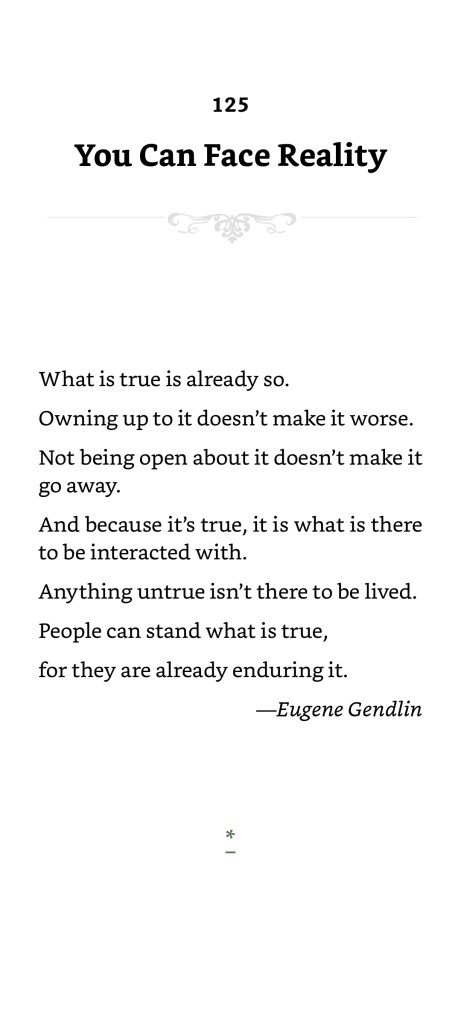
I guess that’s okay.  It had better be okay, if it’s true, because if it’s true, there’s nothing anyone can do about that, and they’re already living with it.  This is the Litany of Gendlin, as quoted by Eliezer Yudkowsky, of which I have a screenshot from his book Rationality:  From AI to Zombies, below.

Well, I hope you have a good day, whatever the truth is that you and all the rest of us are living.


*This is according to the AI summary of Google’s search for “Robert Elessar Unanimity file size”.  It’s almost certainly correct, because the info is part of the Amazon description of the book.  But it’s humorous to me that it’s easier to do an AI based web search to find the file size of my own novel than it is to look up the file, since I’m using my phone and don’t have direct access to the original at the moment.

This is not an attention-grabbing headline

I’m writing this post on my smartphone, even though I brought my lapcom with me yesterday evening.  I did not use my lapcom for yesterday’s post, such as it was.  I didn’t even write that post in the morning yesterday, or at least, I didn’t write the “first draft” of it then.

By the end of the workday on Wednesday, I didn’t feel like I was going to want to write a blog post on Thursday.  So I went to the site directly and just wrote the “Hello and good morning,” and the “TTFN” and set it to publish later.

I already knew what title I was going to want to use for it.  I wanted to use Polonius’s dithering, meandering jabber about brevity being the soul of wit, as a sort of left-handed self compliment about my own brevity in that post, and because, in the original form, it would have made the headline longer than the post, which would be ironically funny, in principle.

Then, yesterday morning, I got the urge to put my little “insert here” bracketed bit in the post, the better to convey how disgruntled and disaffected and self-disgusted I (still) felt, as well as how tired.  It did sort of spoil the joke about the headline being longer than the post, of course.  At least the older joke about Polonius still holds water.  Then again, that joke was made by Shakespeare, so we shouldn’t be too surprised if it has serious legs (though this raises the question of how serious legs could possibly hold water).

One thing worth at least assessing this week might be whether there is an aesthetic difference between this post (for instance) and the posts I wrote earlier this week, on the lapcom.  Writing on the lapcom is quite different for me in many ways.

On the lapcom, I generally have to work to stop myself before a post, or whatever, gets too long.  Whereas on the smartphone, that isn’t as frequent a problem.  Not that I can’t yammer on and on even with the smartphone, of course.  Some might say all I ever do is yammer on and on.  But anyway, I can’t write as “effortlessly” on the smartphone as I can on a regular keyboard*.

Sorry, I’m retreading a lot of old ground here, which I guess is better than retreading a lot of old tires. I know how to tread on the ground; indeed, I cannot recall a time when I didn’t know how to do that kind of treading.  Whereas retreading a tire sounds like something that requires special skills and equipment, both of which I lack.

I don’t know, I’ve heard of “retread” tires, but I don’t know if such things still abound, or if they ever did.  It sounds vaguely like a bad idea, like such tires might be more prone to blowouts.  But latex is a finite resource, and there aren’t very good synthetic alternatives, so maybe there’s at least some cost/benefit tradeoff (or treadoff?) there.

Ugh.  With that last joke, I probably convinced at least some of my readers that, yes, the world would be better off if I were dead.  Actually, I say that as if it were conditional, but it’s not.  It would be more in line with reality to say “the world will be better off when I am dead”.

There’s a quote by which to be remembered, eh?

I cannot say whether I will be better off when dead.  It’s probably a nonsensical question.  When I am dead, I will not be anything at all, not better, not worse, not uglier.  What happens to virtual particles after they have annihilated?  Nothing, and less than nothing, for they truly no longer exist, and in some senses they never existed.  Indeed, as physics goes, they probably never do exist; they are a shorthand description of what happens in quantum fields when perturbances in the fields have effects that do not rise to the level of actual, true particle production.

Or so I am led to understand.

From another point of view, it is possible for something to improve, at least in a sense, by ending.  I’ve mentioned this before, but if the curve of a function‒perhaps a graph of the “quality of life” or one’s “wellbeing”, to say nothing of happiness‒is persistently negative, then returning to zero is a net gain.  It can be a huge net gain, in fact.  This is related to the origin of my own version of an old saying, which I use with tongue definitively in cheek:  The one who dies with the most debt wins.

Now, of course, the integral, the area “under” that wellbeing curve would not be improved by the curve reverting to zero and stopping.  But at least that integral would not keep getting more and more negative over time.

Some might say, “well, the integral can become less negative over time, and might even become positive”.  This is, in principle, true.  And when one is younger enough, it’s relatively easier to tip the curve, and its integral, into positive territory.  But as the curve goes on, having been negative for a longer and longer time, it’s going to become ever harder to bring things to a net, overall positive integral, even if one could reliably make one’s curve positive (which one often simply cannot do).

Of course, the moment to moment experience (which is all the mind really gets) of an ascending curve could be pretty darn good, and might well be worth experiencing, even if it’s not enough to bring the integral into positive territory.  We are straying into the “peak-end” rule here, which was elicited regarding (among other things) colonoscopies but applies to much else in human experience.

Speaking of peak endings, I’ll mention in passing the curious fact that, no less than twice in the last week, the evening train service has been disrupted by someone either getting hit by or becoming ill next to the train.

Earlier this week, right by the station where I catch the train to go back to the house, there was a man who looked like he was probably homeless and had collapsed next to the train tracks not far from the station.  I saw him brought away, finally, on a stretcher.  He didn’t look physically injured‒certainly not in the ways I would expect someone who had actually been hit by a train to look‒but he did look cachectic, which is why I thought he might be homeless.

Then, last night’s commute was interrupted by what they call a “trespasser strike”, one that did not involve the train I rode but which always slows everything down.  I’m vaguely amused by the euphemism “trespasser strike”.  A “trespasser” here is a non-passenger who doesn’t work for the train company (or whatever) who is in the area adjacent to the tracks.  The “strike” part is probably self-explanatory.

I suppose it’s literally true, at least from a legal point of view, to call the person a trespasser.  But it’s amusing that the train people have to say something derogatory about a person hit by a train‒even if the person deliberately put themselves in harm’s way‒to sort of, I don’t know, assuage the company’s conscience.

But we are all trespassers, in at least some senses.  We are also, in other senses, all owners.  We are all innocent, and we are all, in some other senses, guilty.  “Every cop is a criminal and all the sinners saints.”  Above all, we are all very much just passing through, staying only a very short time.  We are all virtual particles.  Or you might say, we are all Iterations of Zero.

Have a good weekend.  I should not be writing a post tomorrow (in more than one sense).


*I wish I could honestly say that my use of a piano-style keyboard were as effortless, but I am terribly rusty with that, though I started learning it when I was 9, a rough 2 years earlier than when I got my first typewriter.

“Like”, “comment”, and “share” (if you feel like it)

I’m very tired this morning.  By which I mean I’m more tired even than usual.  My head is a bit foggy—more so than usual, again—and I feel like I just belong lying down inert, perhaps in an open-topped coffin.  I’ve occasionally thought that they looked like good places to sleep.  It seems a shame to waste them on people who are already dead.

It’s Wednesday today, and I don’t think I’m going to have anything nearly as thoughtful to say as what I wrote yesterday, which was at least rather “deep” if not particularly useful or helpful or interesting to any of my readers.  I did get an interested comment on my take on one of the reasons mindfulness is useful, and that’s always nice.  I’d love to encourage greater feedback from more of my readers, here on the site in the comments, but I don’t know what to do to encourage them [I decided just to do a little cajoling in the headline, in case that works].

Probably there is just some percentage of people who tend to comment, no matter the situation.  It’s a bit like the long-known “fact” (which may or may not be a true fact) that every advertisement, from flyers/mailings to commercials, actually elicit a response in only about two percent of people who interact with it.  I suspect it’s probably similar with things related to blogging and social media and the like.

One sees it most readily on places like YouTube.  The number of views of a video is almost always something like an order of magnitude greater than the number of likes (and often it’s larger than the number of subscribers), and that’s still larger, though by a ratio that’s not as clear to me, than the number of people who comment (let alone share).

My own YouTube videos (and those of my published songs) are poor examples, or perhaps one might say “poor samples”, not representative of the phenomenon as a whole.  I have a number of “views” on my music videos that is generally a couple of orders of magnitude larger than the number of “likes”, but I know why that is.

Almost all of those views are from me, because I put my songs in my YouTube music playlist, and so I have listened to them often, back when I used to ride my scooter to work and back.  I had a lovely Bluetooth enabled helmet.  I like to listen to songs and sing along in a car, or similar, when I’m on my way places*.  So I’ve listened to my own songs probably orders of magnitude more times than everyone else put together has listened to any of my songs.

It’s kind of pathetic, isn’t it?  I’m also the one who has bought more copies of my books—because I gave copies to the people in the office—than everyone else put together, I’m fairly sure.

As for this blog, well, I get a higher number of likes relative to number of readers than I do with anything else, and I even recently have been getting a comment or so most days, which is very nice.  There’s at least some interaction.  It would be nice if I could reach a larger audience, but I’m not terribly good at self-promotion.  I am pretty good at self-denigration, though.  In fact, I’m one of the best there is at it!

Ha ha.

Well, like the song says, it’s all just a drop of water in an endless sea.  Or, it’s all just spit in the ocean** as more people probably say.  My spit may be more purulent than average, but it’s all still just spit.

Anyway, I don’t know what else to discuss today.  I’m very tired and worn out and I’m in ongoing pain that only responds somewhat to all the mitigating things I try to do, at least so far.  I’ve been through a quarter of a century of trying, and I have not been passive nor uncreative nor ignorant in my attempts.  As those reading might notice, I’ve thought about this matter a lot.  You probably would also if you were in chronic pain for nearly half of your life (so far).  It has a way of garnering your attention.  It’s built that way.

It’s interesting to note that shortly after I’m sixty, if I’m still alive***, I will have been in essentially constant pain for half my life.  After that it will become a majority (unless I’m cured at some point along the way, of course).

I occasionally (not often, though, because it’s too disheartening) wonder what my life would be like, what I would be like, if not for my chronic pain.

Things would almost certainly be vastly different.  I cannot be certain that they would be better—there are probably at least a few things that would be worse.  But it seems likely that my life would be much better overall, if only because I wouldn’t have a huge chunk of my will and energy stolen by being in pain all the time.  That constant pain really does make everything else harder.

But no matter the state of the rest of my life, at least one thing would be true (by “definition” in this case), and that is that I would not be in pain every fucking day of my stupid useless life.

Surely that must be worth something.  It would not be worth not having my children exist, but almost everything else would be worth trading.  I sometimes think of it as parallel to a line from Me and Bobby McGee:  “I’d give all of my tomorrows for a single yesterday, holding Bobby’s body next to mine.”  It’s nice poetry, albeit a bit weird to think about temporally.  But in my case, I think of it as basically saying I would gladly give up some significant fraction of what would otherwise have been my future if I could be out of pain.

But, of course, my future is less valuable to me now at least partly because I am in pain.  If I were not in pain, ironically, the future would be much more valuable, since it would be at least somewhat less uncomfortable.  If I could be free of depression, and the tendency thereto, that would make things better still.  That might even constitute a future worth having.

Yeah, yeah, I know, wishes, horses, manure, beggars riding, dogs and cats living together, watermelon, cantaloupe, rutabaga, yada, yada, yada.  I’m wasting my time and yours.  And I’m writing too much, because I’m using the lapcom, and I’m not saying or doing (or being) anything at all worth saying or doing or being.  This is all just stupid.

I hope you all at least have a good day.  I would not mind if this were my last one.


*I can’t do it anymore because I don’t ride or drive anywhere anymore, so I am not “alone” when commuting anymore.  I’m also not alone at the house.  It’s really quite disappointing.  I like to sing.

**This is a bit amusing:  I made a typo when I first wrote that phrase, and it was rendered as “spit is the ocean”, which seems almost like some vaguely deep thought about how oceans are lived in, swum in, excreted in, and bled in by numerous living creatures.

***Right now that seems a horrifying prospect.

May the slope of your pain function always be negative

I’ve been thinking about something I wrote in my blog post yesterday.  I had thrown out the thought, in passing, about how it seemed as though all the things in my life that I still do are not things I necessarily do for joy or out of desire to achieve some goal, but rather they are things which are more painful not to do than to do, and so I do them.

There isn’t really a positive motivation—not the pursuit of happiness or improvement or fulfillment or enrichment.  It’s just that the feeling of stress and tension and anxiety (or whatever) regarding the prospect of, for instance, not going to work rapidly becomes worse than the equivalent feelings about going to work.

That’s not a great state of affairs.  Don’t get me wrong; it’s entirely natural.  I’ve written about this many times, this recognition of the fact that the negative experiences—fear, pain, revulsion, disgust, and so on—are the biologically most important ones.  Creatures that don’t run from danger, that don’t avoid injury, that don’t shy away from potential infection and poison, are far less likely to survive to reproduce than creatures that do those things.

We see clinical examples of people lacking some of these faculties—such as those with congenital insensitivity to pain—and while we might envy them a life without agony, it tends to be quite a short life.  Also, they tend to become immobile and deformed due to damage they do to their joints by not shifting position to improve blood flow.

In case you didn’t know, that’s one of the reasons you can’t stand completely still for very long; it’s not good for you.

But many of us, especially in the modern world, have some things that we do for positive experience.  Some of them are dubious, but food, sex, companionship/conversation, singing, dancing, all that stuff, are positive things.  Unfortunately, positive experience cannot be allowed—by biology—to last too long.

As Yuval Harari noted, a squirrel that got truly lasting satisfaction from eating a nut would be a squirrel that lived a very short—albeit fairly happy—life, and would be unlikely to leave too many offspring.

Maybe this is what happens to some drug addicts.  Maybe they really do get satisfaction or at least pleasure from drugs—and maybe that is what ends up destroying them.  At some level, that’s not truly in question, is it?  People who are addicted to drugs forego other pleasures and other positive things, but perhaps more importantly, they fail to avoid many sources of pain and fear and injury.

The reality is probably a bit of an amalgam, I suppose.  I would not say it’s a quantum superposition, though, except in the sense that everything is a quantum superposition (or, rather, a whole bunch of them).

This is one situation in which I think I’m right and Roger Penrose is wrong—a bold claim, but I think a fair one—in that I see no reason to suspect that the nature of consciousness either requires or even allows quantum processes, other than in the trivial sense that everything* involves quantum processes.  But there’s no reason seriously to think that (for instance) neurotubules can even sustain a quantum superposition internally, let alone that such a process can somehow affect the other processes of the neuron, many of which are well understood and show no sign of input from weird states of neurotubules, which act mainly structurally in neurons.

If deep learning systems—LLMs and the like—have demonstrated anything, it’s that intuitive thought** does not require anything magical, but rather can be a product of carefully curated, pruned, and adjusted networks of individual data processing units, feeding backward and forward and sideways in specific (but not necessarily preplanned or even well understood) ways.  No quantum magic or neurological voodoo need be involved.

I think too many people, even really smart people like Penrose, really want human intelligence to be something “special”, to be something that cannot be achieved except within human heads, and maybe in the heads of similar creatures.  Surely (they seem to believe) the human mind must have some pseudo-divine spark.  Otherwise, we oh-so-clever humans are just…just creatures in the world, evolved organisms, mortal and evanescent like everyone and everything else.

Which, of course, all the evidence and reasoning seems to suggest is the case.

Maybe, deep down, there isn’t much more to life than trying to choose the path from moment to moment that steers you toward the least “painful” thing you can find.

Please note, I’m not speaking here about some metaphorical continuum, some number line that points toward pleasure in one direction and pain in the other.  That’s at best a toy model.  In the actual body, in the actual nervous system, pain and fear and pleasure and motivation are literally separate systems, though clearly they interact.  Pleasure is not merely the absence of pain, nor is pain merely the absence of pleasure.  Even peripherally, the nerves that carry painful sensations (which include itching, as I noted yesterday!) use different paths and different neurotransmitters than the ones that deal in pleasure and positive sensation.

Within the brain, the amygdala and the nucleus accumbens (for instances) are separate structures—and more importantly, they perform different functions.  There’s nothing magical about their locations in the brain or the particular neurotransmitters they use.  Those things are accidents of evolutionary past.

There’s nothing inherently stimulating about epinephrine, and there’s nothing inherently soothing about endorphins or oxytocin, and there’s nothing inherently motivating or joyful about dopamine and serotonin.  They are all just molecular keys that have been forged to open specific “locks” or activate (or inactivate) specific processes in parts of other nerve cells (and some other types of cells).  It’s the process that does the work, Neo, not the neurotransmitter.

This brings up a slight pet peeve I have about people discussing “dopamine seeking” (often when talking about ADHD).  I know, the professionals probably use this as a mere shorthand, but that can be misleading to the relatively numerous nonprofessionals in the world.  The brain is not just a chemical vat.  Depression and the like are not just “chemical imbalances” in some ongoing multi-level redux reaction or something, they are malfunctions of complicated processes.  Improving them should be at least as involved as training an AI to recognize cat faces, wouldn’t you think?

But one can do the latter without really knowing the specifics of what is going on in the system.  It’s just sometimes difficult, and the things you think you need to train toward or with often end up giving you what you didn’t really want, or at least what you didn’t expect.

Maybe this is part of why mindfulness is useful (it’s not the only part).  With mindfulness, one actually engages in internal monitoring, not so much of the mechanical processes happening—no amount of mere meditation can reveal the structure of a neuron—but of the higher-scale, “emergent” processes happening, and one can learn from them and be better aware.  This can be an end in and of itself, of course.  But it can also at least sometimes help people decrease the amount of suffering they experience in their lives.

Speaking of that, I hope that reading this post has been at least slightly less painful for you than not reading it would have been.  Writing it has been less painful than I imagine not writing it would have been.  That doesn’t help my other chronic pain, of course, which continues to act up.


*With the possible exception of gravity.

**I.e., nonlinear processing and pattern recognition, the kind many people including Penrose think cannot be explained by ordinary computation, a la Gödel’s Incompleteness Theorem, etc.


Pain, pain, go away…and don’t come back some other day

I’m writing this post on my smartphone today, because I decided not to bring the lapcom back with me on Saturday.  I was very tired and sore and worn down from the week and felt that even that small extra weight was more than I cared to carry.

I got at least a bit of physical rest yesterday, but my mental rest was poor, and was somewhat disrupted by a few seemingly minor things that happened.  Worse, though, is the fact that I tried to sedate myself on Saturday night somewhat, but still woke up by two in the morning, after maybe four hours’ sleep.

It’s quite frustrating, as I’m sure you can well imagine.  I suppose it’s better than being one of those people who never seems to be able to wake up on time or to get places on time.  I don’t know how such people would have survived in the ancestral environment.  I suppose it’s just as well for them that they don’t live in such an environment.

So, anyway, I was both rather stressed out and unrested on my “day off” and now I’m no better rested, because I slept even less last night.  Also, my pain, which doesn’t like to become too boring (except in describing the character of the pain), has shifted its focus, and now it is my entire lower half (umbilicus down) that is achy and sore and doesn’t want to move.  Neither side is worse, but neither side is better*.  Although my left middle back and side are way more tight and sore than the right, and my left shoulder still has that weird, seemingly neurological, stiffness and pain.

It would be nice to be able to walk to the train this morning; the weather is not bad for it, and it would be a slight money-saver, though a time loser (but my time is mostly wasted time, anyway).  Unfortunately, I don’t know that I am physically up to the task, and I fear it might exacerbate my pain.  That’s never a good thing.

I wish I still had a scooter, or one of those electric scooters or bikes‒or better yet, that I could ride the bike(s) I have without having to fix their tires and such.  Maintenance of such things is really difficult for me, though; it’s not difficult to do as it were, i.e., the tasks are not in themselves particularly challenging physically or with respect to knowledge or dexterity.

It’s a matter of will in a sense.  Also, these kinds of tasks seem to do something akin to or analogous to creating an allergic reaction:  they make my mind itch horribly, and itching is, of course, a kind of pain, and my mind only has the reserves to deal with so much pain at any given time.

I seem able to regenerate less and less of that reserve each day‒either that or just my reserves are constantly being depleted at a rate faster than they can recover and so there are no “reserves”, just a base rate process that is in the net negative on average every day, and which will eventually run out and that will be that.

I don’t know what will happen then.  I’m honestly surprised that it hasn’t happened already.  Maybe it has.  Maybe this is me without any actual capacity to deal with anything other than those things which are more painful for me not to do.  Hmm.  That’s a vaguely interesting thought.

Whatever the best description is, I am very worn out.  More and more‒or so it seems right now‒I have no sense of any future for me.  I can’t even readily imagine my own future; I can’t see how a future can possibly happen that entails anything but quietly catastrophic dissolution.  And, of course, my pain doesn’t help my mood disorder(s) and my mood disorder doesn’t help it.  It’s another one of those cycles that has a vicious streak a mile wide.

Whenever I mention a vicious cycle, part of me nearly always thinks of the words “viscous cycle”, and I think vaguely about what might constitute a viscous cycle.  If any of you have any amusing thoughts about that, I would be delighted to hear them.  I could use a bit of a laugh today.

I’m really worn out, and it’s only Monday.  I don’t know why I bother.  I mean, I could give causal explanations, of course‒all things that happen in the ordinary world have causes‒and my descriptions would probably be fairly accurate and correct, though probably incomplete.  But as for reasons, that’s another matter.  Coming up with those is more difficult, and some of them are quite tortured.

In Man’s Search for Meaning, the author and psychologist Viktor Frankl points out the notion, not original to him but poignantly and painfully rediscovered by him in a profoundly visceral way in the concentration camps of Nazi Germany, that a person can endure nearly anything if they have a purpose, a reason, a meaning.  But such meaning is not always there to be found, and I don’t want to try to embrace a false one; and though it is possible for people to make meaning for themselves, my knack for that has worsened over time.

Again, the pain wears away so many things, as it has also stripped away so many people and so much property and so many accomplishments in my life.  I think I would be quite a different person, or at least there would be a real difference in balance in my personality, if I could be free of anything but more ordinary pain.

I wouldn’t even complain about being “comfortably numb”.  I know pain is biologically important, of course, but mine has gone well into the region of diminishing marginal returns, then rounded into negative marginal returns, and its net value crossed the x-axis downward a long time ago.  It might be nice to experience at least a brief period of having pathologically too little pain.  Even if it would make me vulnerable to injury and illness, I wouldn’t mind much.  It’s not as though I don’t crash up against illness and injury (in some sense) every day anyway.

Oh, what’s the point?  I’m sorry to bore you all with this nonsense.  I really should just call it quits, because this is at least as pointless as anything else I do, and that’s saying a lot.  It almost certainly does not do the world any net good, and I’m not sure whether it does me any good.

I guess I’ll keep doing it until it becomes more painful to do it than not to do it.  Or until I die, I guess.


*I sometimes like to indulge a clever paradoxical descriptive trick I picked up from Piers Anthony by saying something like “each leg hurt worse than the other one”.

Happy Valentine’s Day, you filthy animals.

Well, guess what.  It’s Saturday now, and I’m writing a blog post, which can only mean that I am working today.  At the last minute, the schedule of the office was changed and now we’re working.  And we’re supposedly going to be doing this now every other (meaning alternating ones) Saturday.  But, of course, I worked last Saturday.  And who knows how things will change in the future?  I’m pretty sure not even the boss knows, because he changes the specifics somewhat irregularly, though there are always colorably reasonable purposes behind such changes.

I suppose I could merely have said, “No, I’m not coming in this weekend.  I worked last weekend, I had to walk to the bank after work and I caused my knees and my pain in general to flare up badly, and that problem continues.  I need a fucking break.”  But, of course, I’m not really built quite that way.  I have been too strongly trained to operate on the approach that to shirk going to work is to be a jerk*.

So, here I am, at the office, and it’s the middle of the night.  That’s right, when it got to be time to leave, I was in too much pain to want to ride the train‒it’s not comfortable to sit in, and I usually have to go to the upper levels to find a seat, which is a little exacerbating and occasionally exasperating‒and I didn’t want to pay to Uber back to the house like I did on Monday and then Thursday for the above reasons, so…I stayed here in the office overnight.

I’m tired of being in pain, I can tell you that.  I wish it were the sort of thing one could simply “get used to”, but biology does not tend to select for creatures that can get used to and ignore pain.  That would defeat the whole usefulness of pain.  Make no mistake:  like fire alarms, pain was and is (and probably always will be) terribly useful.  And “terribly” has more than one legitimate meaning here.

The trouble is that in the modern world, we suffer from and yet survive injuries and disorders that would almost never have been survived by our ancestors, and we can live on with the consequences of these injuries and illnesses for decades, but our nervous systems don’t have any clear function that suppresses or diminishes pain after a while.  There’s no selection pressure favoring such a thing.  Even for our ancestors who might have survived to have chronic pain, that problem tended to develop after peak reproductive years had already passed, and so evolution literally could not and cannot detect the issue.

Indeed, it’s just barely conceivable, though by no means demonstrated, that it might be good for male humans who have injuries that hamper them to feel the pain worsen, to have it lead to them removing themselves from the population in one way or another.  When they can no longer be physical providers, in order to increase the share of resources for their offspring and their other kin, they can kill themselves, directly or indirectly, giving the genes they share with close relatives that harbor that tendency a selective advantage.  This is hypothetical, bordering on speculative, but it might make some sense.

This could also be related to female humans being better suited to endure long-term pain than males, since matrilineal support among human tribes is common***, but that’s getting ever more speculative.

Don’t get me wrong; the ideas are plausible.  But it’s just when one’s ideas are strongly plausible‒but not specifically tested or backed by clear and specific evidence‒that one must be especially harsh and strict with oneself.  It’s comparatively simple, and psychologically rewarding, to come up with plausible and logical hypotheses, but even if one is very smart, most of one’s hypotheses are going to be incorrect.  Whether you’re more Popperian or more Bayesian, the crucial usefulness of testing a hypothesis to try to refute it or to see how your credences shift is inescapable.

This mildly interesting digression doesn’t change the fact that I am in searing pain lately, and it doesn’t seem to diminish much for long.  I’m already prone to dysthymia/chronic depression (veering into the acute stage frequently) and anxiety with at least some obsessive compulsive patterns, all of it occurring in a nervous system that is…atypical from the start.

I hate the world.  I hate my body.  I hate the twisted mockery my life has become.  I hate large parts of my mind (but not all of it).  I hate being around people.  I hate being alone.  I really just ought to stop the whole fucking ride and get off.  I just need to work up the nerve and the commitment.  I’m getting there, believe me.

Anyway, I hope you’re having just a lovely Valentine’s Day.


*And to rhyme all the time is to act like a slime and be covered with grime**.

**I know, none of that makes sense.  It’s not really meant to make sense.  I just accidentally did some internal rhyming in a sentence and that stimulated me to do more of it.

***There are good biological reasons for this as well.  Mothers, and therefore maternal grandmothers, all know whether a child is their child or not, so it’s easier to know that it’s a good idea to spend effort and resources on those descendants.  Males, in general, can not be as certain.

“But see, amid the mimic rout, a crawling shape intrude.”

First of all‒first today, anyway‒I would like to apologize to anyone who feels disappointed that I did not write a blog post yesterday.

I’m sorry.

Okay, there, I apologized.

I don’t know if anyone actually missed there being a blog post to read from me yesterday.  Probably, I ought really to be apologizing on the days when I do write a blog post.  I know that I probably make a lot of readers feel like crap when they read my blog, no matter how good their intentions.

Then again, no one is forcing them to read it, are they?  If I could somehow make it so that people felt some powerful compulsion to read my blog, I would probably make a lot more people read it.  Heck, I don’t know that I would waste the effort on my blog; I’d be more inclined to make people feel compelled to read my fiction, if I could do that.  At least then I might eventually make some money from it, and more importantly, my stories would be read by more people.  Some of those people might even end up finding my stories to be some of their favorite stories.

That would be much more important than having more people read my blog, as far as I can see.  No one is going to read blog posts to their kids or talk about them with other people.  No one will wistfully pull a volume of my blog posts down from a shelf on a cool and rainy afternoon in autumn to pass a quiet day reading with a cup of tea or coffee or cocoa, maybe with a quilt or an afghan over his or her or their lap (perhaps with a pet dog or cat keeping the reader company).

It would be just barely possible that someone somewhere might do that with one of my stories if enough people knew of them.

Anyway, that’s that.

I didn’t write a blog post yesterday because I was out sick from work.  “Sick” feels like it’s not quite the right word, though.  “Sick” feels as though it should refer to someone suffering from something infectious‒a bacterial or viral or fungal disease.  Of course, I know that’s not the only way for a body to become compromised, but it’s the first notion that comes to my mind when I hear the word “sick”; much like Forrest Gump, I’m inclined to ask, “Do you have cough due to cold?”

This is not to imply that I was well.  I certainly was not well yesterday, not even for me.  The pain about which I wrote on Monday did not improve through the course of that day, and I left the office right after lunch time.  I tried to rest at the house; however, the pain (like the proverbial horrors) persisted.  It also did its really annoying thing where it shifts its focus from one side of my body to the other, probably as I compensate for that one side when it’s flaring, which this leads to increased irritation of the other side and then I compensate for that, and so on.

That cycle’s got a vicious streak a mile wide!  It’s a killer!  Look at the bones!

Anyway, at this moment, it’s my left side pain that dominates, from my shoulder and wrist and thumb and fingers (not really my elbow, oddly enough) down to my ribs, my back, my pelvis, my hip, my knee, and my ankle, down to the arch and ball of my foot, and to some degree my toes.

The right side still hurts, but it’s slightly drowned out by the left side.  That will probably shift, though.  It may do so sometime today.

I’ve been trying to medicate myself adequately with what’s legally available, but it all has limits, and lots of the available things have significant toxicity.  NSAIDS like Ibuprofen and Naproxen (and aspirin) can do some good, but they are hard on the kidneys and on the stomach.  I’ve been having a fair amount of nausea these last several days, probably at least partly because of these meds.  Acetaminophen is not anti-inflammatory and it is easier on the gut and kidneys, but it’s dangerous to the liver* in significant doses, and it doesn’t do much in less than significant doses.

So, yeah, that’s all that.  CBD seems to help a little bit, and I do use it, but it (plus its related compounds) makes me feel rather loopy.  This isn’t always a horrible thing, but it can make it hard to get things done.  And, unfortunately, since I am here alone in a civilization without much of a safety net, I cannot simply not get things done and try to rest and recover somewhere.  If I were independently wealthy, I suppose I might be able to do that‒or if there really were a great many people who bought and read my books, I might be able to have a less stressful lifestyle.

Alas, I am not independently wealthy, nor am I a bestselling author, nor‒as Théoden says to Aragorn‒am I as lucky in my friends as some are.  That’s not to say that I have not had good friends; I feel I have had some of the best friends it is possible for a person to have.  But I don’t really have then anymore; at least I don’t have them around.

I cannot blame this on anyone but myself, if blame is to be had.  After all, I am the common denominator of the whole situation.  Occam’s Razor suggests that I am probably the single biggest contributing factor in the fact that I have no friends, and no family, around me now.

I am not a good pony; I am not a good investment; I am not a good risk.

It doesn’t matter, though.  I’m just tired and worn down and in a great deal of pain, and it’s more annoying with every passing day.

People will tend to say they don’t want other people to take their own lives when their pain (physical, psychological, or both) is too persistently great.  But they don’t offer any actual help dealing with it, just trite clichés and moral homilies and pseudo-comforting nothings (“You would be missed”, “there are people who will miss you”, “there are people who would be sad if you were gone”, etc.**) that are not far removed from “thoughts and prayers”.

Whatever.  I guess we’ll all see whether or not I write a blog post tomorrow.  Or, well, I guess those who bother looking will see.  I will either see or I won’t, depending on the circumstances, but even if I don’t see, others may still see, if they look.

See you then.


*Its metabolism uses up glutathione (if memory serves) which is a scavenger of free radicals in liver cells.  When it gets used up, the radicals generated by the various stages of hepatic detoxification chew up the liver’s own cells.

**Really?  How would they even know?  If I stop blogging and posting tomorrow, as far as anyone but one or two people could know, it might be because I just quit blogging or got hit by a car or got abducted by extraterrestrials.  It would have no significant impact upon anyone.