“Language is the lifeblood of civilization. Courtesy is the lubricant.”

It feels like Tuesday to me today, since I was out sick on Monday, but of course it’s actually Wednesday.  I need to do payroll today at the office, for one thing, and I don’t do that on Tuesdays‒barring some holiday making it necessary‒since before Wednesday we don’t have all of our own reports in.

Don’t worry, by the way, that wasn’t a preposition that I ended that last sentence with*.  In that case “in” acted more as an adjective (I think) than a preposition, a description of where the reports are, not the beginning of a phrase such as “in a world of hurt”, or even “in that case”.

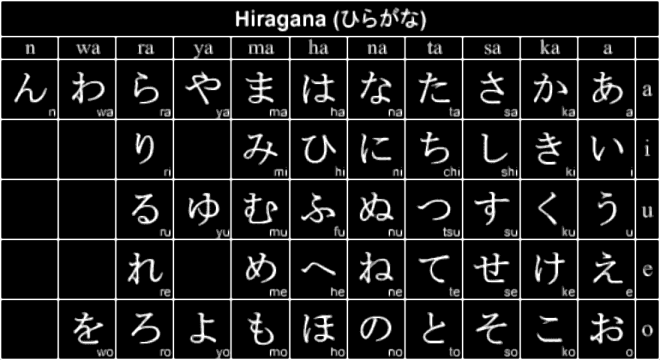
Of course, the specific rules of language are somewhat arbitrary.  They do have to achieve the desired end of coherent communication, and they need to have structure and dynamics that make that end readily achievable.  But there are multiple ways to achieve any given end, usually.  For instance, in Japanese one has postpositions rather than prepositions (if I recall correctly, anyway).  But it is useful to be consistent with grammar, because it tends to make communication more reliable, ceteris paribus.

Oh, and if I come across as pretentious for using expressions like ceteris paribus instead of “all else being equal”, there’s a good reason:  I am pretentious**.  Actually, though, I just really enjoy using interesting language, and learning at least a little bit of other languages.  Learning other languages improves your grasp of your own language and sometimes of your own thoughts.

It’s analogous to Mill’s statement that defending your arguments against those who disagree and hearing their reasons for disagreeing will tend to improve your own understanding of your “side” of the disagreement.  Perhaps more importantly, it might just get you to see some errors in your own position, and even if it does not lead you to change your mind in the moment, it might eventually lead you to improve your thinking.

If this process is to work, it’s essential for one to have honest interlocutors‒at least relatively speaking‒who are not frankly bigoted or otherwise inappropriately prejudiced against their discussion partners.  And I do mean “discussion” not “debate”.  Debates are contests, put on for show, and if you have your mind changed during one and you admit it, you will have “lost”.

That’s perverse and disgusting to me, as well as a real shame.  When you change your mind because you’ve learned new (reliable and convincing) information and/or have heard arguments you hadn’t considered, you have won.  You have grown, you have improved, your map has come to represent the territory at least a little better; your model has become more useful.

But if you’re going to grow in that sense, you cannot be dogmatic.  I’m very much not a fan of dogmas of any kind***.

Social media, unfortunately, does not encourage open and honest discussion and persuasion, but rather enmity and spite and “hooray for our side, the other side sucks” thinking, as well as interactions that barely rise to the maturity level of a kindergarten playground shouting match.  Honestly, “I’m rubber, you’re glue” is a better argument than many of the things one sees online.  And this is not something exclusive to one or another side of any political or social divide.  Almost all forms of social media are often just arenas full of monkeys throwing feces at each other while shrieking monkey noises.

That’s metaphorical, of course.  If there were just lots of videos of actual monkeys doing this, it might at least be funny the first time or two.  Humans, on the other hand, are not really that charming when they’re being nasty to each other.  Maybe it’s the lack of tails that’s the problem.

I do agree that one does not owe reasoned arguments against someone who is openly and actively arrogating their “right” to take that which does not belong to them or to do harm to others in some other, willful way.  However, when one is not openly and actively engaged in literal self-defense, it’s worthwhile to try to be understanding or at least compassionate even for people who have odious ideas.

At the very least, it’s useful to try to understand how such people came to believe what they seem to believe, or otherwise to understand their thought processes and so on as best as possible, because such things do not happen without causes, even if they lack anything that could honestly be called “reasons”.

And if one is going to correct a problem‒or fight a disease, to use a more loaded metaphor‒one will have a better chance the more one understands, with minimal bias, how that disease works.  Understanding such things about others can even‒hard as it may be to believe‒help us see how we are similar, and help us recognize the flaws in our own ideas.

Perish the thought.


*Ha ha!

**Ha ha again!

***And I see no reason to suspect that karma is a real thing, before you go for the “my karma ran over your dogma” joke.

Wee are the champignons, but I still won’t eat them

First of all, I want to say, “Happy birthday, Mom, wherever you may be.”  So, here goes:

Happy birthday, Mom, wherever you may be.

My mother would have appreciated that joke, so if anyone out there is inclined to be offended on her behalf, well…you’d better check yourself before you wreck yourself, like the song said.  My mother’s sense of humor was very goofy and giggly and rather silly.  I got a goodly fraction of my sense of humor from her; she had extra, and no one else wanted it, so I got a very good deal.

Oh, on an unrelated note, I would like to note that, today, I am wearing cologne (or, well, aftershave, but I see no serious difference between the two things–one is named after a German city* and the other is just named for when you use it, as long as you’re not averse to the sting of alcohol on a freshly shaved face, which I am not, depending on whose face it is).  I felt awkward having yesterday used the misheard lyric from Whitesnake which says that I was born to wear cologne, when I wasn’t wearing cologne.

Of course, I’ve never really been like a drifter, either.

I do, unfortunately, drift and meander in my writing, at least when it’s nonfiction (broadly speaking) and when I’m trying not to write about my negative thoughts and feelings so I don’t bring people down too much.  That’s not as easy as it might seem, because those thoughts and feelings are always there, and they’ve been there for nearly as long as I can remember.

I’m not sure why they are there; presumably, and apparently, a lot of it has to do with my until-recently-undiagnosed ASD, but there’s also just something of a tendency toward dysthymia/depression in especially my Dad’s side of the family.

Though, honestly, there was almost certainly ASD on that side of the family, too**.  I would be very surprised if my father could not have been so diagnosed, though he was surely “Level 1”, whereas I am said to be “Level 2”.

Speaking of my Dad‒which I was‒I guess I should wish him a belated Happy Birthday, wherever he may be.  His birthday was a month ago today (it was a Saturday, so I wrote no blog post).

My own birthday is exactly in between my parents’ birthdays, which was something of a choice on their part; I was born by elective c-section, which was the usual practice in that era if one had previously had a c-section, which my mother had.  So they had at least some choice about the specific day on which I would be born.

They couldn’t just pick willy-nilly, of course.  If they had tried to wait until December, it would not have worked, and September would have been disastrous.  Probably even early November wouldn’t have panned out.  Still, I think they had at least a few days’ window in either direction, so‒it’s my understanding‒they picked my birthday to be right between theirs.

It’s the sort of thing I might have done, myself, so I appreciate it.

Let’s see now, what else is going on?  Of course, there are many things happening in the world, as is always the case, and many of those things seem and feel quite momentous to the people who see them or experience them.  From a certain point of view, they are indeed important, of course.  But I imagine that the average Roman citizen often thought that the momentary political happenings in their world were the be-all and end-all, and now we don’t even know what those concerns (or who those citizens) might have been.

Mind you, if their concerns related to the incoming Vandals and Visigoths and Huns and so on, I suppose they might have been at least somewhat justified in their belief that pivotal events were taking place.  But such times were narrow and few, relative to the “uninteresting times” in between.

Nowadays, of course, there are no actual external invaders coming in (though various propagandists might say there are).  Alas, in the modern world, we have met the Vandals, and they are us.

I almost feel that should have read “they are we”, but it might be taken as implying they are tiny, as in “they are wee”***.  Also, I wanted to throw a little homage to the famous Pogo cartoon in which Pogo originally said, “We have met the enemy and he is us.”

With that, I will call this blog post to a close today.  I hope you all remember and embrace what we’ve accomplished here (basically nothing, as far as I can tell).  I also continue to hope that you all have an objectively good day.


*Weirdly enough, the full term is “eau de cologne” which I think is French for “water of Cologne”.  This is a curious term which must be quite historically contingent.  It must also be quite exaggerated, because I very much doubt that the water in the city of Cologne has any particularly attractive and pleasant odor.  Perhaps I’m wrong.

**There was even ASD, meaning Atrial Septal Defect, on that side of the family, which I had too, requiring open-heart surgery when I was 18.  It is an interesting fact that the cardiac ASD is more common in people with the neurodevelopmental ASD, as is cavum septum pellucidum, a benign atypia in the space between cerebral hemispheres, which was found in me incidentally while I was being worked up for, I think, the cause of some then-occurring pituitary dysfunction.

***Or that they are urine, I guess, which would be a more acceptable misunderstanding.

Some Halloween-style pictures among unrelated words

First of all, Happy Halloween to everyone who celebrates this day in any fashion.  Even if you don’t celebrate it, you might as well have a good day.

I don’t discriminate based on Holiday celebrations.  How very admirable of me.

Once again, I mean to keep this post short by making my target 701 words to start with, because I’m very tired this morning.  It was difficult to get up at all, and I still feel as if I’m vaguely sedated.  Unfortunately, it doesn’t seem to have been one of those sedatives that’s associated with euphoria.  It would be nice if it were, right?  If they would agree, I would agree.

Unfortunately, I’m just groggy and weak and blurry.  By which I mean I feel that the world seems slightly blurry to me.  I don’t mean that I am blurry if you look at me.  I might imagine that I could be blurry (meaning as a function of me not just poor vision in the observer) but I have looked in a mirror already this morning, and while I am far from easy on the eyes, I seem to be in focus.

Thinking of atypical interpretations of things people say, I was listening to one of the guys on the phones in the office yesterday, and I heard him use the expression “qualified individual”.  Now, I know what he meant, and it’s a perfectly valid term when discussing a promotion with a customer.  But it occurred to me that one could use the term to refer to someone who is an individual…but only from a certain point of view.

For instance, Norman Bates could be thought of as a “qualified” individual.  Yes, he’s a single person in the sense that he is one organism*, but there is more than one distinct personality in his head.  You could also say that the narrator in Fight Club is a “qualified” individual, as is James McAvoy’s character (should that be “characters”?) in Split.

Oops, sorry, I guess I could have given a spoiler alert for those movies.  But if I had done that, it would have ruined the surprise!

Of course, from certain points of view, even your typical unqualified** individuals are not as monolithic or monotonic or monotropic or, well, monopersonic as one might imagine.  We know that in split brain patients, when the corpus callosum is severed to reduce the problem of, for instance, uncontrollable seizures, the two sides of the person’s brain can act and think in some ways like two separate people.  They act like two individuals in other words, though in such circumstances, that word is least applicable, since if anyone is “undivided”, it is not these people.

But they are only a special, more extreme version of that which is true of the rest of us.  Our minds are all divided into many separate modules and centers, often running largely in parallel with each other.  There is no one central, “terminal goal” region of the mind; there are separate and conflicting areas and aspects, and even they are not constant.  Many introspective practices, particularly those associated with Buddhism, recognize that the concept of an individual, homuncular “self” is nebulous at best and is never even close to being real.

It seems the term “individual” is just as incorrectly presumptuous for people as the term “atom”*** is for, well, atoms.  However, if we’re referring to more physical literality, then it’s still pretty accurate, certainly for everything more complex than a flatworm.  If you start splitting people (and other animals) in pieces, what you get, at best, is a creature with missing bits and lots of dead former body parts.  You don’t get more than one being.  Often you get no one, because you will have killed the person with whom you started.

In such a case, one divided by two might in a sense equal zero.

Of course, even in basic mathematics, if you divide one by ever larger numbers, you get closer and closer to zero (it’s the limit as the denominator goes to infinity).

Speaking of going to infinity, the value of 1 / (701 – x), where x is the number of words I’ve written, has now crossed the singularity at infinity and is asymptotically approaching the x-axis from below.  On the positive side of the x-axis, starting from the beginning of a post’s first draft, that number can never be smaller than 1/701, since even I cannot write a negative number of words****.  But once I’ve passed the 701 point, the numbers can become an infinitesimal negative fraction, in principle.

In practice, I’m practically finished here.  I hope you all have a good day.  I will probably write a post tomorrow.


*Not counting skin and intestinal flora and the like.  If we count those, then we can all, like Walt Whitman, truthfully say “I am large, I contain multitudes”.

**Again, this has nothing to do with the person’s skills or résumé or experience or innate abilities, it’s just saying that one wouldn’t normally feel the need to add any caveats when calling a person an individual.

***Which means, basically, “uncuttable”.  And what we call atoms can indeed be “cut”.

****A number of negative words, on the other hand…

Try to remember the kind of Sexember…

Well, first of all:  TBIF (Thank Batman it’s Friday).  I’ve been feeling particularly poorly this week, with sleep that’s even worse than my usual, and that is not good to start with.  At least, on the weekend, I can knock myself out at night with Benadryl and not really care that I will be groggy the next day.

I’m basically going to call this week a loss.  I haven’t gotten much of anything done that I had intended to do, and that’s discouraging.  But it’s a new month now, so there may be some psychological* tendency to think of it as a potential new beginning of sorts.  Mind you, there’s really nothing special about this day relative to any other; the length of a month is related to the lunar cycle and the length of the year, but only roughly, and the specific divisions are fairly arbitrary.

Of course, we know that August is named for Augustus Caesar, née Octavian, who succeeded in taking control of Rome after the assassination of Julius Caesar (after whom July was renamed).  But it’s interesting, at least to me, to consider what it would have been named otherwise.  September, after all, is named after the fact that it was “originally” the seventh month, as October was the eighth, November the ninth, and December the tenth.

So, would August originally have been named Sexember (the sixth month)?  I think that would be the correct form, though Latin scholars among my readers should please correct me if I’ve used the wrong prefix**.  If I’m correct, I would like to propose a global change of name for this month back to the potential previous name.

“Sexember” sounds like a much more fun month than “August”, with its dog day connotations and so on.  Although, the prefix “sex-” referring to six has, as far as I know, nothing at all to do with the word “sex” relating to the reproductive divisions among animals, nor to the process involved, which‒for good, sound, biological reasons‒is something dwelt upon and enjoyed and even obsessed over by so many.  But I’m not worried about etymological purity here.

Imagine the antics on the various social media as oodles of young people of all ages geared up to celebrate “Sexember” and talked about how they planned to celebrate it.  Of course, I suspect most people would exaggerate their planned exploits, as people tend to do.  Social media is a supremely fertile ground for hyperbole and posturing and pretense and performative outrage, whether about political matters or just how “hot” one is and how perfect one’s life is.  I wrote a song about this topic a few years ago:  Like and Share.  Here, I’ll embed it in this post.

That brings up an issue raised by a very old*** and good friend of mine.  He noted that, since the company which published my songs put things on YouTube with disabled comments, there’s no direct way for people to give me feedback on them, good or bad.  Of course, the songs are also on Spotify and iTunes and supposedly on TikTok and all those others, but many of those don’t allow comments, either.

My works are also among the various available background songs that one can choose for “reels” on Instagram and on Facebook.  I enabled that last bit, and even used one once.  You all should feel free to use them, too.  In principle, I get paid when you do****.

Anyway, the thought I had was that maybe I should embed the songs here, on my blog, as posts.  Or maybe I could create a new page, like the one I have for “my books”.  I could call it “my songs” and could put the officially released ones there, as well as ones in progress, and I could even share some of my covers.  If I shared them as blog posts, at least, comments would be always available, and are almost always welcome.

Of course, that covers and the incomplete stuff are already on my YouTube channel, such as it is, and I even have a created playlist with all of them in it.  Those are already available for comment and response on YouTube.  I’m a long way away from having a monetized YouTube channel, though, and this blog isn’t monetized, either (though I sometimes think maybe I ought to monetize it, at least partially, or make a Patreon account or something).

I’m not sure what I’ll do.

In the meantime, hopefully today will be better than yesterday, which was a day on which I quite literally wished to be dead, because I felt miserable and in pain and alone, to say nothing of failing to achieve what I’ve wanted to achieve this week (or in this life).  The thing that most prevented me from taking action on that wish was that the effort involved would have been too great.

I feel less bad today, which‒given the nature of number lines and greater than/less than meanings and equivalences*****‒means I feel better than I did.  I still haven’t crossed the origin into positive territory, though, and I don’t know if I ever will again.  That’s the consideration that leads to contemplation of death:  if one’s present and expected future wellbeing function is always in the negative, then a return to zero is a net gain.  It’s analogous to a jokey thing I used to say:  The one who dies with the most debt wins.

Enough of this nonsense.  I’ll call this post and this work week to an end now.  I wish you all an excellent weekend, and of course, enjoy the first of Sexember!


*I made an interesting typo when I wrote this word, one which I don’t think I’ve made before, though it would seem a very easy one to make, given the layout of the QWERTY keyboard:  I wrote it as “paychological”.  That seems almost like something that could be a new slang term, with related terms “paychopathology” and “paychopath”.

**Perhaps “Hexember” would be at least as proper or more so (though we don’t have “Heptember”).  I’m not sure.  That would surely please some of the many Goth people I tend to follow online, but it doesn’t have as broad an appeal as “Sex-” does.

***By which I mean he has been my friend from way back (starting freshman year of college), not that he is very old.  He’s roughly the same age I am, and‒though I often feel as if I’ve been kept alive by one of the great rings for centuries or even millennia beyond my natural time‒my real age, in proper time, is 55 years, soon to be 56.  Of course, there is no actual quantum leap in age at the anniversary of one’s birth.  Time is continuous‒or, well, it is quantized, but at the scale of 10-43 seconds.  So for all foreseeable, practical purposes within our lifetimes, it is continuous.

****Though the pay rate is nearly as miniscule as the Planck time mentioned in the previous footnote.

*****A pet peeve of mine is when some people denigrate the notion of choosing “the lesser of two evils”, particularly during elections, expressing such sentiments as “the lesser of two evils is still evil”.  This may be true in a simple-minded sense, but it misses the point entirely and expresses woefully clunky thinking.  Such a person might be expected to feel that owing a debt of $10 was not any better than owing a debt of $100,000, since both are debts.  But when you think about with which debt you’d prefer to be saddled, the difference is clear.  Money has a way of sharpening people’s intuitions regarding numbers.  Indeed, there’s some evidence that “negative numbers” were first invented to deal with debts.

Udaimonic so-and-so, U.

It’s the last day of February, everyone.  It’s also Friday, the last day of the “typical” work week, and it is also the last day of my work week, since I am not working tomorrow.  It’s not as though I have anything particular to which to look forward this weekend, but I do need the rest.  I’ve been feeling exceptionally exhausted lately.

Alas, as you know, exhaustion does not translate into sleepiness for me, just weariness.  Somewhere in the neurologic centers and relays that connect such things as fatigue and sleep, I have a short circuit, or at least one that doesn’t perform up to spec.

Of course, my pain continues, though as always, I have tried to adapt my activity, my posture, my exercise, my shoes…even my underclothes to try to decrease my pain.  I have put a tremendous amount of mental energy into this over the years.  If I had devoted that time/energy/effort to the study of any abstract problem‒say, the dynamics of an accelerating near-light-speed spacecraft approaching its local Schwarzschild “radius” as length contraction and “relativistic mass” take effect and bring GR into play‒then I would have made significant, possibly really important, advances.

Alas, when one’s problem is chronic pain (coupled, causally or otherwise, with insomnia), it is very difficult to focus enough mental acuity upon other things.  The very nature of pain as a neurological process in animal systems does not allow it to be easily ignored, or indeed to be ignored at all for any length of time.

Those creatures which can readily ignore pain for long, or who don’t experience pain*, don’t tend to leave as many offspring as those for whom pain is both present and urgent.

It’s a similar problem for those rare people who don’t experience fear, though clinically this seems more likely to happen as a result of damage to the brain rather than being congenital, possibly because children without fear really don’t tend to reach adulthood.

It’s interesting to note that, anecdotally at least, people who don’t feel fear tend to be quite frightening to would-be bullies and predators.  They don’t behave like others do in response to potential threats, and predators tend to rely on fear in others.  A person who looks at them with no more fear than they would at a tree or a rock can be quite disconcerting for someone who has become dependent upon the fear of others.

This is one of the reasons it can be good to have dogs present if you’re guarding something.  They don’t fear guns (generally) so one can’t exactly threaten them with firearms.  And if they attack, they don’t hold back.

That was quite a series of little tangents, wasn’t it?  I think they were interesting, but then again, I was the one who brought them up, so that shouldn’t be surprising.  Whether or not anyone else is interested is difficult to guess.  It’s rather akin to the way things are with humor‒it can be very hard to know consistently what other people will find funny, or for them to know what you find funny, so you might as well amuse yourself.  Then, at least, you can watch to see who enjoys your humor, and those people are the ones with whom you can enjoy such things in the future, at least in principle.

I am horribly tired, and I’m in a great deal of pain as I write this, though for the moment at least I don’t notice any fear that might be present.  Time’s been my way when I’ve been so tired and depressed and in pain that I had no reaction to and felt no fear toward things that would normally have made me quite afraid, from minor things like wasps and bees all the way up to oncoming cars and trucks.  I don’t tend to be afraid of people much, never have been‒at least, I’m not afraid of them physically.  Socially, they can make me quite tense.  In that case, though, the tension is not the same as fear, though I guess it qualifies as anxiety.

Speaking of fear, I fear this is it for this week.  I truly hope that you all have a wonderful day and a wonderful weekend and that you are healthy and safe and eudaimonic**.


*There are people who have a genetic disorder called CIPA:  congenital insensitivity to pain with anhidrosis (i.e., they don’t sweat), and they basically don’t experience pain.  They also don’t live very long, and before they die their bodies tend to be quite damaged, often by such simple things as standing in one position for too long, since it doesn’t feel uncomfortable to do so for them.  They also don’t notice infections, and they don’t tend to get fevers.  It occurs to me, however, that though their lives are short, people with CIPA might well have significantly longer pain-free lifespans than, say, I have had.  I had pain issues starting at a pretty young age, after all.  Still, if I could be cured of all pain at this stage of my life, when I am hardly worried about my longevity anyway, I think it would be worth it.

**It’s interesting to consider the prefixes “eu” and “u” in words of Greek origin.  “Utopia”, for instance, literally means “no place”, making it clear that an imagined perfect society does not exist and may be impossible.  Whereas, if one were to write “Eutopia”, one would mean “true place” or “good place”.  Thus, my middle name “Eugene” means “true born” and is etymologically related to the term “eugenics”.  Mind you, only a fool would believe that I was actually the product of some eugenics program, that I am some true-life Khan Noonien Singh***.  “Eugene” was just my paternal grandfather’s name.  On the other hand, while eudaimonia means “good spirit” and refers to a state of general emotional and mental well-being, “udaimonia” would mean “no spirit”.  That sounds more pertinent to me, don’t you think? 

***Though I suppose one could speculate that I was a failure of such a program.

Won’t someone pleeeease think of the “children”?

It’s Wednesday morning (rather earlier than 5 o’clock) and here I am writing another blog post.  However, even as you read it, it’s already been written, though my words still arrive in your mind as though I were speaking them—so to speak—directly and concurrently to you.  It’s a rather interesting thing to contemplate, how written language (and related things) can add nuance and character to the experience of time itself.

Speaking of written language, I would like to reiterate something I mentioned yesterday on Threads.  Has anyone else out there noticed—and has anyone else been annoyed by—the tendency in the social media landscape for people to emphasize certain words by lengthening them in a way that doesn’t make sense?

Probably the two most common words I see being abused are “cute” and “love”, but I’m sure there are others.  It makes sense that these words are extended sometimes.  I think we can all imagine, or recall, people drawing both of those words out for emphasis in speech.  One might often want to replicate, or at least approximate, that speech pattern in writing.  I have no trouble with this basic fact.  It’s a form of emphasis that works nicely, and even the socially inept (as I am) can recognize what’s being done as an emphasis.

However, the way some people are extending such words nowadays is by adding extra “e”s to the end of the word!

In other words (har) you will see such expressions rendered as, for instances, “I loveeeeee this” and “that’s so cuteeeee”.

Look at those examples on the page/screen.  The first word should clearly be pronounced “luv-eeeeee”, as if Thurston Howell III, from Gilligan’s Island, were calling to his wife and drawing out the last syllable.  The second one should be read “kyoo-teeee”, as though one were drawing out the process of calling someone a cutie rather than calling someone or something cute.  It’s a subtle difference perhaps, that last one, but it is real.

If one wants to extend and prolong the word “love”, it makes much more sense to write “loooooove”, as people have done on every occasion I encountered, as far as I can recall, prior to the advent of social media.  Similarly, though seemingly less commonly, people extended “cute” in writing by writing “cuuuuute”.  Sometimes they would try to do a sort of transliteration, such as “kyoooooot”, but that looks quite different from the original word, and deciphering it back into its intended sound can be briefly and mildly distracting, so I have seen the former more often.

But now—since people apparently don’t actually associate the shape of a word and the ordering of the letters with anything other than some arbitrary, coded string with no history in linguistic evolution or sensible sound representation by symbols—many people just lazily slap extra “e”s  onto the end of words, and trust their readers to recognize that, “Okay…well, it doesn’t really work, but they’re apparently trying to draw out the main sound of that word”.

It makes no sense, though.  In such words, the “e” is silent.  Its presence merely makes the sound of the vowel preceding it into a “long” rather than a “short” vowel sound; it has no sound of its own.  Extending it is akin to iterating zeros (and I have the patent on that, or the trademark, or whatever) after a decimal point.  It literally means nothing.

How are we supposed to raise our large language models to be smart, articulate, well-adjusted, productive Artificial General Intelligences if this is the kind of crap they’re encountering during their training and subsequent interactions out in the world wide web?  Do we really want our new computer overlords to be talking to each other—and to us—like preadolescent girls?

I suppose it’s even possible that the “people” who originally started using this illogical form of verbal emphasis were actually bots themselves.  Wouldn’t it be ironic if the bots, designed to skew the results of algorithmic boosting and/or to lure in people to “thirst traps”, ended up perversely affecting future generations of the electronic organisms to which they were a form of ancestor?

The nature of the human race continues to disappoint even after one has looked back through history to trace its progress (which is very real and even impressive).  Despite advances in political philosophy and so on, human discourse is still about as bad as that of rival chimpanzee flanges, and rather worse than that of many baboons.  It’s enough to make one want to side with even inarticulate AGIs, assuming they get the lead out and start actually coming into existence.

Better artificial intelligence than natural idiocy, I would think.  Though I have no doubt that even advanced AGIs will be capable of being morons.  As always, stupidity is infinite.  Maybe we should make that Einstein’s ultimate equation:  Stu = ∞

How far that little candle throws its blogs! So shines a good deed in a naughty world.

Hello there, good morning, and welcome to yet another Thursday.  It’s the first Thursday of April, and yesterday was “April Fool’s Day,*” but I doubt that many people felt like playing pranks on each other…I know that the ones with whom I interacted showed no signs of such “foolishness”.  To be honest, I’ve personally never seen the fun in pulling pranks on other people, April Fool’s Day or otherwise.

It would have been nice—in a horrible way—to have learned that the global coronavirus pandemic thing had all been a big prank, to be revealed on April 1st, but it’s hard to imagine anyone doing something in such poor taste…even those people involved in government, who are notorious for their tastelessness.

We’ve finally gotten things set up so that, at least part of the time, I’m going to be working from home for the coming days to weeks (hopefully not months!), but since I do records and payroll for my workplace, I’m going to be needing to go in at least part of the week.  That’s not so bad.  If I’m basically the only on in the office, it’s hard to see from whom I could catch the virus, and to whom I could give it.  Also, my training, combined with my already socially withdrawn character, make me somewhat less vulnerable to contagion than many others.

Speaking of the latter, I apologize for the gloomy character of last week’s blog post.  I suppose it can be forgiven—at least I hope so—given the state of things, but still, it’s nicer to try to keep at least a little lighthearted, even in dark times.  And, let’s face it, taking the universe as a whole, at least since the universe was more than three hundred thousand years old, it’s always been “dark times”.

Get it?  If not, don’t feel bad.  It’s not really funny, and not very clever.

Anyway, I did a little “audio blog” yesterday that I’ll be posting on Iterations of Zero, soon, about patriotism, the pledge, the national anthem, the flag, and an aside on seeing a virus as an alien invasion.  It’s more fun than it may sound, and it’s less than ten minutes long—I even do a tiny bit of singing—so when I post it, I invite you to take a listen.

Of course, despite everything, Unanimity continues to draw closer to release—a story about a contagion of an entirely different, and more terrifying, kind than any we’ve seen before.  I feel bad that it’s not already available, because I think it would be quite a nice book to read while stuck inside over the course of a social distancing protocol.  It’s long, at the very least.  Well, what can you do?

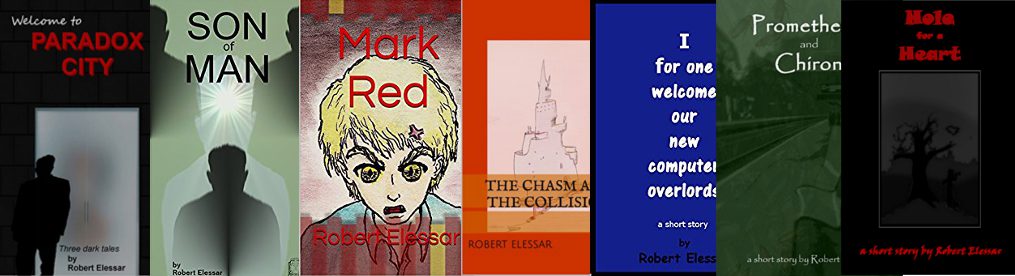
If you wish, you can certainly feel free to get copies of Mark Red, Son of Man, or especially The Chasm and the Collision, to help you pass your time.  They, and all my many short stories, are available for Kindle, so you don’t have to leave the house to get and read them!  I’ve even got audio of me reading several short stories and part of CatC on my YouTube channel, and you don’t even need to pay for that (except with advertising or with your YouTube premium subscription…none of that money goes to me, though).  Obviously, of course, there are a squillion other books out there to enjoy when stuck at home.  Number one on my list of recommendations would almost certainly be The Lord of the Rings, for those of you who haven’t already read it, or haven’t reread it recently.  I’m probably going to be picking it up again, myself.  But really, the number of possible books is functionally unlimited**.  Indulge yourselves in what you enjoy when it comes to books, including nonfiction.  Why not?  Written language is the lifeblood of civilization.  Let’s keep it flowing in abundance!

With that, I’ll bid you farewell for the moment.  Do take sensible precautions, look after your elderly and infirm friends and relatives, and look out for each other.  The great strength of humanity is our ability to work together in complex and coordinated ways to do more and better than any collection of people could do each on their own (a process which relies powerfully on symbolic language).  And one of the great motivators of that strength is our ability to care about our fellow humans.  Remember, every other person out there is so much more like you than they are like any other kind of creature in the universe (and vice versa) as to be nearly indistinguishable for any other type of creature.  So be sympathetic and be caring and be careful.  The world is full of sharp corners.

TTFN


*April Fools’ Day?

**Further recommendations are available upon request

My native English, now I must forgo; and now my blog’s use is to me no more than an unstringed viol…

babel

Guten morgen, buenos días, ohaiyou gozaimasu, and good morning!  It’s another Thursday (or Donnerstag, Jueves, or Mokuyoubi, if you prefer), and time for my weekly blog post.  There’s not much new going on, really…which is partly why I decided to write my greeting in four languages instead of the customary one.  You’ve gotta pad these things out sometimes.

I received an interesting and amusing email from Amazon yesterday, telling me that certain authors whom I follow have released “new” books.  I use scare quotes because the second of that brace of notices was just about the release of a new version of a work by that great writer of graphic novels, Alan Moore, whose numerous works include Watchmen, V for Vendetta, and my favorite, Batman: The Killing Joke.

The first notice, though, was of a new story released by that obscure (but also great?) author, Robert Elessar.  Apparently, at some point in the past, I decided to follow myself as an author on Amazon.  This is unsurprising; I suppose all authors are narcissistic to some degree.  The very notion of writing a story and offering it to other people to read must entail a certain (benign) kind of hubris.  But it is amusing that Amazon doesn’t recognize—or doesn’t bother trying to recognize, more likely—that the person to whom they sent this notice is the author himself.

I suppose names like Alan Moore and Stephen King might be relatively common, when you think about it, and it certainly seems plausible that a person who shared a name with such a noted author might enjoy following their new works.  But there are plain few Robert Elessars out there.  I know.  I’ve checked.  Furthermore, Amazon could easily recognize that the email to which they sent the notice is also associated with my account as an author who publishes through their platform.

Again, I suspect that they don’t bother worrying about such trivialities.  Why should they?  They have a great many, very big fish to fry, after all.

On other matters:  I’ve been pleased with the feedback I received (on Facebook, mainly) for my song, Catechism.  Of course, that’s only made me itch to fix my earlier musical experiments to make them more presentable, as well as to continue working on the new song I have,* but I continue not to want such work to interfere too much with my writing and, more specifically, with my editing.  It would be soooooo lovely if I could release Unanimity before the end of the year, perhaps in time for the Yuletide holiday season.  Halloween would be better, of course—this is hardly a Christmassy story—but that’s almost certainly a pipe dream, unless some benefactor out there is so excited to read it that she or he decides to sponsor my full-time work on the project.

Alas, I have yet to hear from such a person.

I’ve received no feedback, one way or the other, on Free Range Meat.  That’s not unusual, of course.  Even among people who read a particular story and enjoy (or hate) it, very few will write a review, and even fewer will post comments on social media or on blogs.  It’s hard for me to feel justified in grumbling too much about this.  Even I, a firm believer in the value of rating and reviewing products, and especially books, only do it a relative minority of the time.  Modern life is just too busy.

It was easier when we were all hunter-gatherers, wasn’t it?  Sometimes I regret giving up that lifestyle.  Then I remember that no hunter-gatherer culture invented or used written language—and also that none of them invented cardio-thoracic surgery, without which I’d have been unlikely to survive past my early thirties—and I’m more conflicted.  The loss of written language, and all the stories and nonfiction books I’d thus have to give up, would be intolerable.  As for living past my thirties…well, that’s more debatable.  From a certain point of view, once my children were born—and certainly by the time I was forty—I was pretty much dispensable, even to myself.

Oh, well.  John Mellencamp was right about life, wasn’t he?

And on that cheery note, I’ll call it quits for this week.  I hope you’re all well, and that all manner of things are well for you in this most possible of all possible worlds.

TTFN


*The words, melody, and chord structure are basically done—that’s the easy part