Dreams of a rational culture

I’m writing this on my mini laptop computer again today, because I got tired of the frustrating process of doing stuff on the smartphone.  Really, writing and texting and everything else via the smartphone is more often than not terribly annoying.  I know Steve Jobs got inspired by Star Trek: The Next Generation and wanted to make some version of a tablet with their touch-screen controls and all, but that was fiction.  If he wanted to make something more useful based on Star Trek, why couldn’t he have put some money into warp drive or something?

Of course, he was mainly a software guy, not actually any kind of physicist or true engineer or something, any more than Elon Musk or Jeff Bezos or Peter Thiel or any of these other successful billionaires and so on are.  Don’t get me wrong; I’m sure they’re all reasonably clever, and they’re decent at business, especially at business that doesn’t require them to manufacture things that require serious production and safety and stress testing and all that.

Well, okay, Musk does make cars that are often quite decent (from what I have seen) and rockets that are sometimes quite impressive (and often not).  But mostly what these really successful business people seem to be good at is marketing, AKA self-aggrandizement.  Likewise for successful politicians.

They don’t actually have to be exceptionally good relative to their competitors, they just have to convince enough people that they’re cool and clever, and that if those people want other people to think that they are cool and clever, they should buy their products or use their services or whatnot.  It’s all rather pathetic on their part, and even more pathetic on the part of the people who faddishly embrace them.

Again, don’t get me wrong; I like things about Amazon, for instance, especially the ability to get books that I never was able to find even in Barnes & Noble or Borders (RIP) or Books-A-Million.  And I publish through Amazon when I publish my own books (or, rather, when I used to do so) because of their reach, not that it did me any particular good—I, unlike the humans to whom I referred earlier, am not a natural self-promoter.

I wish humans were less enamored of having obnoxious, “flashy”, egotistical (often male) tribal leader types and instead focused on competence and level-headedness.  Just imagine if most of our politicians were not interested in bombast and attention and rhetoric and recognition and “importance” and were just mainly interested in doing a good job on behalf of the people who elected (i.e., hired) them.

I don’t know what point I’m trying to make here.  I never plan these posts out ahead of time, so they are very much just whatever pops out of my mind on any given day.  In a way, all of you reading are only slightly more surprised by what you read here than I am by writing it.

Still, I don’t think I’m alone in wishing people would be less flash and more substance.  Then we wouldn’t have brain-worm-dead people like RFK Jr. in charge of the nation’s healthcare and medicine organizations when he is not merely unqualified but is anti-qualified.  Ditto for the one who appointed him (and for the abysmally cowardly congresspeople who approved the appointment and the poor misled people who elected them all).

If people in general were less interested in seeing who “owns” or “destroys” someone else in mere “debate”, but instead were interested in seeking reliable information and solutions together, things would likely be better.  If we want to try to model things in our society after Star Trek, I wish we could try to instantiate some version of Vulcan philosophy and practice.  Mr. Spock is so much more admirable as a character than nearly every other person on the original Enterprise, and Captain Picard in TNG is almost Vulcan in his own character.

We shouldn’t, of course, seek to eliminate emotion; that’s hardly possible.  Emotion is what gives us impetus, and indeed, that may be its entire biological “purpose”.  But we can try to govern our passions (to quote Spock) to make them our faithful servants rather than our capricious and chaotic masters.  This is not impossible by any means.

Not that I am a master of my own emotions, especially my negative ones.  But I do not consider them to be anyone else’s major concern, and certainly no other person is responsible for them or to blame for them.  I try not to let them destroy me, though I am so inclined.  But if we could all put more emphasis on, for instance, Stoic philosophy, on Vipassana and Metta and similar meditation practices and some of the ideas from, for instance, the Tao te Ching, I think all the world would be better.

I guess for now, at least, it’s a pipe dream—whatever it is I’m “dreaming” about, that is.  Frankly, I’m not sure what I’ve written here today, so far, or if there’s any coherence to it at all.  If there is not, I can only apologize at this point, because I have no intention of starting this post over.  Hopefully I’ll be able to get through this day less down and discouraged than I was yesterday*.

The world is terribly annoying and disappointing and, yes. discouraging, and my own personal life is in some ways even more so of all three of those things.  I try not to let it defeat me, but perhaps that very determination to keep playing the stupid game of the stupid human race and the stupid universe is the very thing that should count as being defeated—being fooled into taking part in the pantomime that is “civilization” instead of making my quietus, or perhaps finding some other path.

I guess I have to figure that out for myself, as with most things for most people.  Please try to have a good day if you can.  It would be nice if someone could do so.


*Apparently, I was so plainly depressed that someone (or perhaps “the algorithm” itself) on Threads thought that I might need help, and I got another one of those “someone thinks you’re having trouble and might need someone to talk to” or whatever that message is, along with a link to the mental health/suicide hotline.  Frankly, I’m amazed that I don’t get such suggestions every day, since I spend at least part of each day thinking about dying—and not thinking about it as a passive thing.

Stupidity make me angry–especially my own

Once again, I am writing this on my smartphone.  Yesterday I didn’t even bother to take the laptop computer back to the house with me.  I was pretty much fed up with everything.  Though we had a successful day at work, there were multiple cases of people not paying attention to our guidelines and rules; but whenever I would bring them up, there was (and is) always an excuse to go around them‒sound familiar to anyone?‒and I repeatedly got overridden, leaving me to wonder why I bother.

I also hit the top of my head hard on the corner of my metal filing cabinet early yesterday, while reaching down to pick up a dropped pen.  It really hurt, and it left a cut, and I had a headache and a sore neck for pretty much the rest of the day.  Unfortunately, I don’t seem to have developed a subarachnoid hemorrhage, so I have to keep moving.  It sucks.

And, of course, there’s all the idiocy that is actively occurring in America and the rest of the world.  There might be some who would characterize certain things that happen and that people do as “sick” and/or even “insane”, but I don’t like to use such terms to describe the various moronic and submoronic things humans do that are not only detrimental but cause spreading suffering to others.

First of all, it denigrates people who are actually sick/have mental illness and other related disorders.  Such people (of which I guess I am one) rarely do much harm to anyone but themselves‒though sometimes, some of us wish to do harm to certain carefully chosen other people.

But also, it dignifies the idiots.  After all, insanity is a legal term that indicates someone does not know right from wrong or lacks the capacity to control their own actions.  Now, at a deep level, it is almost certain that none of us has free will, at least not in anything but the vaguest, most hand-wavy, compatibilist sense.  But there is a real difference between someone who has OCD and cannot help but wash his or her hands until they bleed and a person who selfishly and arrogantly assumes that they have the right and the power and the competence to try to run other people’s lives but who then don’t accept responsibility for the horrific messes they make.

Stupidity can be defined as doing something in such a way that it is worse than just random action‒like trying to get to the airport by driving around one’s residential block over and over again ad infinitum*, or to try to solve a Rubik’s Cube by just spinning one side over and over (again, ad infinitum).  And this is so often the distillation of so many things that humans do, especially when they group together in significant numbers.

It reminds me of a post I saw on Threads or X or Bluesky or one of those.  The person said that people are selfish when isolated, but that such selfishness doesn’t really work, that we only survive and thrive by drawing together and supporting each other, working together, caring for each other.  This is true, as far as it goes‒humans are the most social of the social primates, and their greatest power comes from their ability to work together, to cooperate, to communicate.  This is why written language is the wellspring and lifeblood of civilization.  And yet, I am also reminded of the line from the original Men In Black, which I will only paraphrase here:  a person can be smart, but people together are stupid, reactionary, panicky, dangerous animals.

Both of these things are true, at least within certain contexts.  This probably explains at least part of the appeal of Ayn Rand’s** focus on rational self interest‒which, in a large society, is going to, in its limit, come to be the same thing as rational altruism.  But it is strange to have those seemingly at least partly contradictory facts both be true, at least in a highly simplified outline of the social nature of naked house apes***.

It is terribly frustrating.  Even the most well-intentioned people, like the person who made that point about humans being social and needing each other (or at least many of those who agree with those sentiments) will often virulently demonize those who are on the opposite side of a given political spectrum or argument, not even trying to show compassion or empathy or understanding for those who disagree with them.

Likewise, those on the “other side” who seem to wallow in self-righteousness and yearn for authoritarianism will nevertheless seemingly believe that, for instance, they follow the teachings of a very socialistic, compassion-loving rabbi from 1st century, Roman-controlled Judea.

These are some of the things that make me angry, not just the persistent headache and my other, never-ending body pains and mental divergences.  And although anger can be energizing, it is also unpleasant and, as Radiohead said, “it wears me out”.

I can endure a lot, it seems, whether out of stubbornness or willpower or just my own form of stupidity, but there’s no clear reason to keep enduring when there’s no evidence of any available relief or any joy that lasts more than a few hours at a time before leaving me alone to stew in my own, solitary, odious juices again.

I really do hate the whole universe a lot of the time, and that time proportion appears to be growing as that time goes by, like the product of some perverse Dark Energy in my own psyche.  I don’t know what to do about it in my almost entirely empty life.

I say almost entirely, because there are just enough little rays of light to keep me fooling myself that I might one day return to a satisfying, mutual daily existence with people I love, only to have those hopes draw away like a will-o-the-wisp, keeping me eager and even desperate to follow them, but leaving me lost and stranded in the marshland of my mind instead of just escaping into oblivion.

Oh, well.  Life sucks.  No shit, Sherlock, what else is new?  Further clichés as thoughts warrant.

I hope you lot are in better mental states than I am, and that you each and all have a good day.


*To borrow an example, though I cannot right now recall from where.

**Do you think Ayn Rand might have been an undiagnosed autistic person?  Discuss.

***It reminds me of the “Riddle of Steel” as described in the movie Conan the Barbarian.  Early in the movie, Conan’s father tells him that you cannot rely on men or gods, but that you can trust steel.  But then, later, Thulsa Doom (played by James Earl Jones) reveals the punchline of the riddle:  Steel is not strong, flesh (i.e., a person) is stronger.  These contradictory truths engender and represent the vortex of seeming paradox through which people must try to navigate, to find the eye of the storm, the balance point at which effective action is possible.

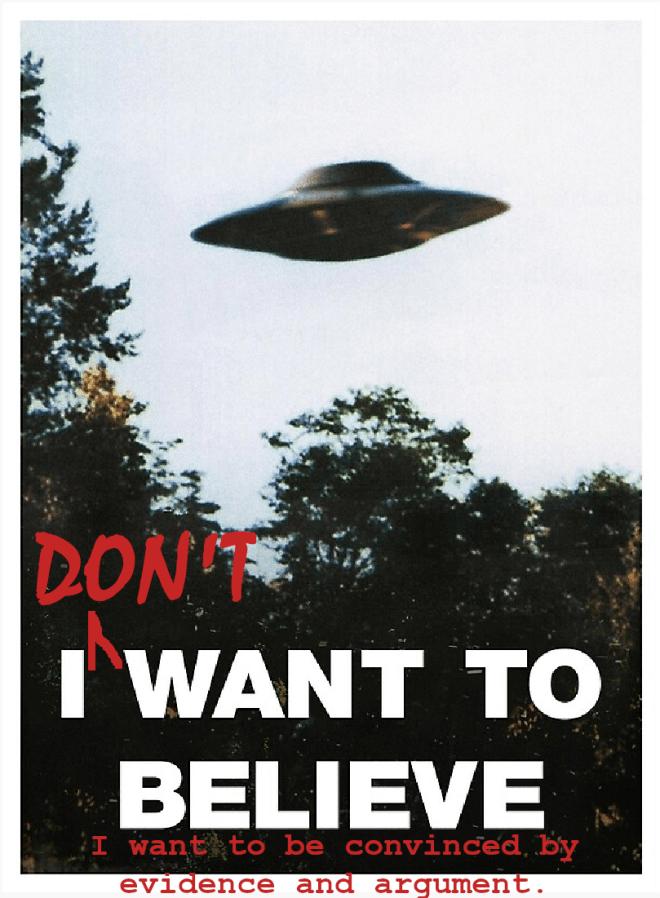
Dogmas are a disease, a cancer of the mind. Avoid carcinogenic thinking if you can.

I’m going to try to keep this brief this morning, so even though I brought the mini laptop computer with me when I left work on Friday*, I am writing this on my smartphone.  It does make my thumbs sore, or at least it highlights their inherent soreness and stiffness, but that’s part of what makes me tend to write less.  Or at least, I write more slowly; it is not always easy to get me to write less.

I’m choosing this partly because I am just very tired.  On Friday nights and Saturday nights, I can take a couple of Benadryl and so on to help me sleep‒I know it’s not truly good sleep, but just being unconscious for more than an hour or two at a time is such a relief‒but on work nights that’s no good.  So, especially after the artificially extended sleep on the weekend, I tend to have a bad sleep on…well, on every other night, really, but Sunday is the first such night in the work week.

Another problem, and part of my reason for worse sleep, is that I am having a bit of a flare-up of my back/hip pain, and that makes nearly every effort feel that much harder, including simply trying to sleep‒although that’s a somewhat different type of effort than many others.

So, yeah, if there’s anything noticeably different in my writing style today than in my last handful of blog posts, it may be because of the fact that I’m writing on the smartphone.  It may also be something else entirely, of course, or even a combination of things (this seems most likely).  Just because one idea seems to provide a good explanation‒a good story, if you will‒doesn’t mean it’s right.

That’s a common trap into which I frequently see people fall, and it always annoys me (especially when I’m the person).  Some situation will happen, some occurrence will occur, and someone will propose‒perhaps just to themselves‒some reason, some explanation for the event(s), and it will seem at least somewhat plausible, and at least physically possible, and it doesn’t have any glaring logical inconsistencies.  And that’s where they stop.  In their heads, that will be what they think of as the actual explanation for whatever it is they’re explaining.

Unfortunately, this is actually‒at best‒a hypothesis.

Now, if people just recognized that fact and kept the notion in their heads as a hypothesis, then this would be no problem.  All knowledge about the world is, in principle, provisional**.  There’s nothing wrong with having a hypothesis that you recognize as such.  All good science proceeds from speculation (first triggered and then confirmed or denied by observation and testing).

If one has relatively non-crucial concepts to address, one need not even be particularly bothered about confirming or denying one’s little hypothesis.  One can simply have it, tacitly implied, sitting there in potentia in the process of one’s mind.  Then if, quite by chance, one should encounter data or concepts or arguments that bear on the likelihood of that hypothesis, one can‒sometimes quite unconsciously‒adjust one’s hypothesis, or one can discard or replace it or even find oneself more confident in it.

This is all well and good.  But all too often, humans take their first plausible seeming notion and decide that they must now have the answer.  And then, depending on their emotional connection to the idea, if they encounter disconfirming evidence or argument, they twist away from it, dismiss it, seek out only pseudo-confirming ideas and evidence or even (shudder) just the company of other people who share their epistemologically suspect ideas.

These are such things as conspiracy theories are made on, or even religions (literal or figurative ones, including cultish forms of economic theories and philosophical ideas).  And when one does not update one’s ideas, when one is not aligned with reality, sooner or later, one will collide with it.  When one collides with reality, it’s never reality that is damaged.

If it were only the person who persisted in self deception that got hurt in the crash, it would still be tragic but at least at least it would be tolerable.  But as with literal crashes, the innocent are all too often harmed and made to suffer as a consequence of someone else’s poor judgment.

This is part of why I despise all dogmatic thinking.  I even coined an expression in relation to it:  Spay and neuter your dogmas!

Do not let them propagate.  Dogmas are among the most perilous of meme-plexes because they are so stiff and brittle and they tend to have sharp edges.  But even when they don’t, there is still the problem of going against reality.  One can imagine the real nature of the world as a kind of tunnel or pipe or tube‒in places it is very wide and in places very narrow.  In some regions, a fair amount of variability in course is tolerable within it, but sooner or later, if one is not moving parallel to the course of reality, one will hit a wall.

How bad the collision will be can depend on many factors; one can have a mere scrape, or a glancing blow, or one can have a true “crash and burn” situation.

Those are generally worth avoiding.

Okay, that’s it for today.  I feel a bit grumpy and curmudgeonly right now, largely because of my pain and poor sleep, but sometimes it leads to decent writing.  Whether that’s been the case today, I’ll let you be the judge.  I am not impartial.

Have a good one.


*In case it wasn’t clear, I did not work on Saturday.

**Even the old cogito ergo sum.  And don’t get me started on cogitum ergot hatto.

Viewing his progress through, what perils past, what crosses to ensue, would shut the blog

Hello and good morning.  It’s Thursday, and so it’s time for my “usual” weekly Thursday blog post.  Aren’t you lucky?

I was a bit surprised that yesterday’s post seemed to be rather successful, at least in that people commented on it, here and on social media (where I share it).  I don’t know if anyone else shared it—I encourage anyone who enjoys any of my posts to share it to your own social media, and of course, I encourage you to “like” it if you like it, though I’m falling afoul of my own cautionary song Like and Share by encouraging such activities.

Still, it would be nice if people could share my stuff or comment on it.  I’ll say again:  comments on social media aren’t as useful to me as comments here, on my main page.  Here is where all* the readers come together (over me, so to speak).  So, if one person makes a comment, it might be something that another person finds interesting or insightful, and they might comment back and even get a conversation going.

I don’t know.  I’m probably being unreasonable.  I usually am.  I just have a bit of a hard time sustaining conversation, myself, so I’m always hoping that other people will do so in response to the prompts of my random thoughts, like the ones from yesterday.

Here I’m using a rather constrained version of the term “random”; my thoughts are not random in any true, nondeterministic, quantum mechanical kind of way.  They’re just stochastic, as well as being occasionally sarcastic**, as in my third sentence above.  So, while in practice they are unpredictable, in principle, each follows directly from some individual cause or set of causes.

Of course, nowadays, many people creating “content” on the various social media ask for “likes” or “thumbs up” or whatever the specific equivalent on their site is, as well as sharing and subscribing when that applies.  They also often have things like Patreon accounts, or Ko-fi accounts or whatever (those latter ones allow people to send them small amounts—the price of a cup of coffee, for instance—to help support them), so that some of them can make an actual living by making their “content”.

Of course, it would be nice to make a living by making content, i.e., by these blog posts.  I suppose one can also write posts on Substack nowadays; they are set up to allow people to give paid subscriptions in addition to free subscriptions.

Actually, I think WordPress has instituted something along those lines as well; I’ve gotten notifications of some such things at some point, but I haven’t paid that much attention to them.  All the social media and search engine companies and streaming services are all changing things far too often, so I don’t even try to keep up.

This constant updating gives one (this one, anyway) the impression that the companies really don’t know what they’re doing, and that they haven’t made a good product before they put it out to the public, so they have to keep tweaking it.

I suspect, though, that it’s more that they think they have to keep changing things to keep up with all the competition.  It’s a bit as if seals and sea lions tried to grow tentacles because they saw that squid and octopuses have a fair amount of success using them.

It might be worth it to remind them (the software companies and the pinnipeds) that, while all improvement is change, not all change is improvement.  In fact, most potential change is at best neutral, and more often detrimental, especially in situations in which something is working at least reasonably well.

This is the root of the admission in the Declaration of Independence that prudence dictates that established governments should not be changed due to light or transient causes (something like that, anyway).  It’s also part of why I hate when organizations or people call for “change” without being more specific.  I have more patience with the label “progressive”, because at least it gives tacit recognition to the notion that progress (by whatever definition) is what we want, not mere random change.

It’s true that evolution by natural selection happens with random mutations and non-random survival, and that over time, progress can be made that way, but it is a grim, ungainly, blundering, low, ghastly, ominous, wasteful, and horribly cruel process (here I’m combining words from Edgar Allan Poe and Charles Darwin).  It’s better to use engineering principles rather than random trial and error if one wants to head more swiftly and surely in better directions***.

Anyway, I don’t have any direct way to monetize this blog, though there are probably ways it can be done.  And so, I keep going to work every day, as I am doing now.  If people want to support me, of course, giving “likes” and commenting and (if such a thing ever happens) sharing the link to the posts is also very nice.

Of course, if anyone wants to support me monetarily, they can certainly do so—in principle—by buying my published books and talking about them to other people (and rating and reviewing them on Amazon, for instance).  And, of course, they can play/stream my music on Spotify and YouTube Music and iTunes and so on.  Some of my songs are even available to use as background music for reels on Instagram and TikTok and Facebook.

But I am more or less certain that I’ve made a staggering**** net loss on my music.  That’s okay.  People have listened to my songs, and some people have said that they really like them.  I even had one work friend who was a former professional musician/singer/songwriter say that he thought if my song Breaking Me Down had been released (in a professionally produced version shortened for radio) in the seventies, it would have been a hit.

So, if you so desire, please do listen to my music, share my posts, buy and read my books, all that stuff.  I would be grateful.  And hey, if any of you out there think I ought to try to monetize this blog, please let me know.

It seems unlikely that anyone actually reads far enough even to let me know their response, but if that’s the case, well, I guess I don’t mind being a voice crying out in the wilderness—I’ve always felt that way no matter what.

TTFN


*Though it may be a bit much to use the word “all”, considering that I don’t exactly have that many regular readers—a few dozen at most, most days.

**Oh, noooo, I would never be sarcastic.  Batman forbid!

***Of course, there are many possible ways to think of something as “better”, so making that judgment should also be an important part of the process if one wants actually to make things improve in a way upon which most, if not all, can agree.

****As a matter of percentage in versus percentage out.  The actual amounts are not great in either direction.

Mind your vectors and terms of address

I’m writing this on my mini laptop computer again, because even though I find the extra weight of carrying it mildly annoying at the end of the day, at least sometimes the irritation of trying to write using my stupid smartphone is worse.

Although, since those two versions of me exist at different times, it’s hard to weigh their degrees of perceived irritation against each other.  In the morning, if I’m using my thumbs to try to type on a diminutive screen in a fashion that could be easily predicted to lead to some manner of repetitive stress injury, its all too natural for the “me” of that moment to hate the “me” of the previous evening who elected not to bring the laptop computer back with him.

But the “me” of the evening, when faced with the minor extra effort of the mini laptop, can feel very much overwhelmed and exhausted and think that the “me” of the following morning won’t find the process of writing using the smartphone particularly difficult.

The human consciousness clearly doesn’t have one, singular, constant terminal drive or goal as an imagined artificial general intelligence might.  I suppose one might think that the drive “to stay alive” would count as an ironically designated terminal goal, but that’s clearly not an accurate interpretation of the situation.

Not only are some people quite self-destructive and even actively suicidal—which you might credibly dismiss as dysfunction, not the lack of a dedicated system, though I think that would be imprecise—but there’s no good way to think that such a specific drive could evolve.  Evolution is blind to “death” as a concept or force, except as a failure, an accident, a lack, whatever you want to call it.

Before humans, as far as we can tell, no creature on Earth had a concept of “death” as the cessation of the biological processes of an individual organism.  Instead, there are proxies, such as the drive to avoid pain, and the related strong sensation of fear relating to danger and so on.

Similarly, there is no drive “to reproduce” in human (or other animal) minds.  Teens going through puberty don’t start feeling the literal desire to replicate their DNA in other bodies.  Instead, proxies for reproduction evolved, urges and drives that tended to lead to increased chances of reproduction, such as dominance hierarchy drives and displays in social primates such as humans, sexual attraction, and—of course—the pleasure of sex itself, with the reward-based drive to have it as often as feasible (with other inputs adjusting the strength of that drive and causing it to manifest differently in the two biological sexes and at different times and places).

The human brain—like probably all the other adequately complex brains on Earth—is a mélange of modules, with varying drives and processes that have evolved in parallel and sometimes independently, and also developed ways of interacting with each other.  Of course, at the root are the automatic drives that are all but undeniable—the respiratory drive, the thermoregulation drive, and so on.

There are even drives that are neurological in a broad sense, but that are so fundamental that they cannot be interdicted by the rest of the nervous system, only adjusted—I’m thinking here mainly of the heartbeat, the driver of which is in the sino-atrial* node and the Purkinje system of the heart, which is sort of a cross between muscle and nerve tissue.

The upshot is, if you ever feel that you’re “of two minds” on some particular subject, you’re probably not just speaking metaphorically, whether you know it or not.  Your final actions are produced by what I see as the final vector sum (and it can be quite small in the end or it can be huge in magnitude and surprising in direction) of all the drives or “pressures” in the brain that have any effect on decisions about behavior.  Then the action caused by the final behavior feeds back on the system**, changing the lengths and directions of some (perhaps sometimes all) of the contributing vectors, causing changes in the inputs and thus changes in the final vector sum of behavior.  Lather, rinse, repeat as needed, ad nauseam if not actually ad infinitum.

Please don’t imagine this as the sum of physical vectors in real spacetime.  The number of possible dimensions of such mental/neurological vectors is huge.  For all I know, there might even be spinors and tensors and matrices involved, but I don’t think those are necessary for my vague model.  “Simple” higher dimensional vectors probably do the trick.

What a curious set of things about which to write that was!  I had originally intended to start this post with some version of The Simpsons’ “Hi, everybody!”  “Hi, Dr. Nick!” exchanges, perhaps then noting that I could change “Dr. Nick” to “Dr. Robert” and thus reference both The Simpsons and the Beatles at the same time.

But then I might have noted that, although the Beatles song is so titled, “Dr. Robert” is not the way anyone has ever referred to me in actual practice.  It would be, honestly, a little weird for someone to refer to their physician as, for instance, “Dr. Joe” or “Dr. Judy” or whatever, certainly in our culture.

Mind you, there was that tendency for a while (it may still be prevalent) to have kids speak to adults such as teachers and daycare workers and people of that sort using their “title” and then their “given name”, such as “Miss Barbara” or “Mister Jimmy”.  I have always thought that was weird.  I mean, just imagine someone trying to address a certain prominent fictional character as “Dr. Hannibal”.

Alas, that all ended up being a discussion not worth having, except as an afterthought.  Though it’s debatable whether any discussion at all is actually worth having—including the discussion about whether any discussion is worth having.

You all can discuss that if you want; feel free to use the comments below, and to share this post to your social media platforms or what have you.  When you do discuss it, remember to define your terms ahead of time, and stick to them rigorously—i.e., the meaning of “discussion”, and of “worth”, and so on—so that you decrease your chances of getting involved in semantic games and misunderstandings and sophistry.

Whatever you choose to do, please try to have a good day.


*The “sino* in that term relates to its location in what’s called the sinus of the heart, and the “i” in it is a long “i”; it has nothing to do with China, though an identical prefix is sometimes used to mean “related to China”, but in this case with a sort of short “i” sound…or, really, a long “e” sound.

**And there are surely numerous other feedback loops all along the way affecting many, or perhaps all, of the vectors.

“It’s just the kind of day to leave myself behind”

Well, it’s Tuesday, isn’t it.

Note that I ended that sentence with a period, despite the fact that it seems to be in the form of a question.  That’s because I didn’t really mean it as a question; I had no desire to imply that I wasn’t sure what day of the week it was.  I’m reasonably certain that today is Tuesday.

I’m not absolutely certain, of course, because outside the realms of self-contained systems of mathematical or logical axioms and rigorously defined and applied operations, there can be no true certainty, only higher or lower credence.  Real-world probabilities never reach zero or one.

Mind you, some things are so likely as to be practically certain, and there’s not much point in worrying about whether they are true unless and until some completely new evidence and/or argument makes itself known.  Such is my conviction that today is Tuesday*.

No, I was expressing a sort of resignation about the fact that today is Tuesday.  I would have said it in a sardonic tone had I been speaking aloud.  It’s not that Tuesday is an especially bad day of the week necessarily, notwithstanding the Beatles telling us that Tuesday afternoon is never-ending.  No, it’s just that Tuesday is still practically the beginning of the week, but I am already tired from Monday, and it’s a long way until the weekend, especially if one works on Saturday, which I am going to do, as far as I know.

That last statement has a lower credence than I give to the fact that today is Tuesday, but it’s still well above a 50% chance.

I know, I know, why am I writing this inane nonsense?

It’s just stream of consciousness.  I’m not planning it out, except to the extent that something I’ve written already makes me think of something else I want to write next.  But I have no particular chosen topic today, obviously.  Not that this is atypical.  I almost never have any plan when I start writing blog posts; I just start writing.  Sometimes I’ll just start with an inane phrase, like I did today, and see where that takes me.

Oddly enough, I think when I do have a particular topic in mind—such as in my short-lived series My Heroes Have Always Been Villains—people don’t seem to enjoy my posts as much.  Or, at least, I don’t get as many “likes” or views.  Maybe some people read and “like” them via social media or something, but if so, whatever they’re doing doesn’t reach me as feedback.  I don’t really see comments or responses that aren’t done here on my page.

Of course, as you may already know, the initial purpose for this blog—in this incarnation—was to try to promote my fiction by interacting with potential readers.  Boy was that a dud of an idea!  [No question mark ==> rhetorical, but not really a question].

More people read and have read this blog than ever read any of my books, unfortunately.  It’s rather discouraging, and it’s a large part of why I haven’t been writing fiction for a while, and the last thing I wrote, Extra Body, I just published here.

While I always write the stories I want to write and that I will enjoy (or whatever one might call the process) there really is a rapidly diminishing marginal return as one writes books that almost no one is even aware of, let alone purchases, let alone reads.  And as you know, I have no stomach for self-promotion.  Sometimes I envy narcissists, at least for an instant; then I remember that I tend to find them disgusting (though just a smidge of narcissism can be endearing in the right circumstances).

I also am not very good at interacting with people who might help promote my work, let alone at asking for that help.  I’m pretty good at the creative stuff, or at least I’m tolerably good at it.  I can write, I can draw, I can do music (playing and singing) and other similar stuff.

I’m also pretty good at science and math, and not just in a rote learning sense; I’m pretty creative there, too.  I once invented my own “number” which I call a “gleeb”, the symbol for which was a combined cursive g and b:

The nature of a gleeb is that, if you multiply it by zero, you get one (in other words, a gleeb is the “forbidden” or “undefined” result of 1/0).  That may not seem to make sense, but while I was “up the road” I even worked out some of the algebra and properties of such a number, and it turned out—to my inexpert analysis—to be logically consistent, at least.

I’m not saying it’s useful.  As far as I can tell, it’s not.  But it was a bit of mental fun and exercise, perhaps the intellectual analogue of playing hacky sack.

I’ve also occasionally thought of ideas in physics and in medicine that I thought were interesting, and which later I discovered had actually become areas of research or therapy (the therapy bit is in medicine, not in physics…as far as I know, there are no therapies in physics, despite the fact that there is such a thing as physical therapy**).

But I am not good at putting myself forward or putting myself out there or calling attention to myself.

Okay, well, I guess that’s enough meandering nonsense for the moment, though such nonsense can sometimes be fun.  Hopefully, Tuesday afternoon will not become some bizarre event horizon in which we are stuck forever.

Of course, the person going through the event horizon doesn’t experience the process as eternal; only the distant observers “see****” them slowing and slowing and coming finally, asymptotically, to a complete standstill.  The person who goes through, if they are looking backward, might see the whole history of the universe playing out before them—at least until tidal forces spaghettify them—but they will not experience time stopping.  Think about it:  how could one experience time stopping?  The passage of time is inherent in the process of experience, certainly as we know it.

I hope you have a good day.


*And even if it weren’t, I could just call it Tuesday and say that I have my own way of naming the days of the week, and it would be no more arbitrary than the one in use here in the US and elsewhere.

**This is as opposed to psychotherapy, of course, but it also can lead one to imagine such things as ethereal therapy or conceptual therapy or metaphysical therapy.  What would that last one be***?

***See, I ended that sentence with a question mark; it really was a question, though mainly a rhetorical one.

****I put that in scare quotes because as a person (or whatever) gets closer and closer to an event horizon, any light or other signal leaving them, heading outward, gets red-shifted to longer and longer wavelengths, so it becomes harder and harder actually to see them.  In the end, we cannot truly observe them stuck there forever, because the wavelength of the light leaving them approaches infinity.

Monday morning, wearing down

Well, it’s Monday again.  Time keeps marching on without respite, as it is apparently wont to do, “progressing” in the direction of increasing entropy, whether time is a fundamental aspect of the universe or an emergent phenomenon.  In either case, there doesn’t seem to be any sort of time stream or time vortex like in Doctor Who, but rather a process that simply is a linear dimension with some “entanglement” (not to be confused with quantum entanglement) with the dimensions of space, such that motion and acceleration in space changes one’s “motion” in time, in an updated version of the Pythagorean Theorem.

For those of you who like to share the joke about “Yet another day when I didn’t use a2 + b2 = c2” you’re really depriving yourself of a deep understanding of something that turns up in and governs a ridiculous number of the things and processes in the physical reality in which you live.  Consciousness—despite clever but tortured sophistry (in my opinion) by some prominent philosophers of mind—in no way appears fundamental to the universe*.  On the other hand, the Pythagorean Theorem, which was neither invented nor discovered by Pythagoras, applies in all levels of dimensions, however many you might conjure, and with the modification to make it reflect velocities, it applies to spacetime as well.

There can be no readily conceivable brains** in two spatial dimensions, but Pythagoras nevertheless applies.  In one dimension, it doesn’t really apply, but in one dimension there are no triangles of any kind, so it doesn’t make much difference.  It’s difficult to imagine how consciousness could possibly occur in one dimension (notwithstanding the seemingly one-dimensional paucity of ideas held by so many people, especially in politics).

Anyway, enough of this nonsense.  Well, it’s not nonsense, but it is rather pointless meandering of random thoughts that interest no one but me, and will probably lose me readers.  Weirdly enough, people seem to come and read more often when I write about my depression and self-hatred and anxiety and ASD and how there’s absolutely nothing going on in my life that makes it worth living.

Well, rest assured, all those things are still present and active and driving me toward an early grave, which in some senses will be a release, or at least an escape of sorts.

I keep trying to think of things to engage myself and my interests, but so far to no avail.  I think about asking my boss to give me back my black Strat to play at the office, or I consider bringing in another guitar, or maybe even getting a portable keyboard or something, but when I think of any of them, I cannot even imagine doing anything but sort of staring at them as if I don’t even know what their purpose is.  I don’t play my guitars or my keyboard at the house, either.

It’s likewise with even fiction, other than silly Japanese light novels that take a day or so to read (not continuous time).  I think I like them mainly because of the social interactions of the characters, many of the main ones of whom are somewhat socially awkward.  It can feel, however briefly, that I have a social group of some sort, as I read the stories.  Of course, that means that once I’m done reading there is a comparative let down, which sometimes makes me feel worse than I did before.

I tried to read some of Feynman’s Lectures on Physics, but I lost interest almost immediately, though he was a brilliant and engaging teacher.  I also tried to read some of Anthony Padilla’s Fantastic Numbers and Where to Find Them, which is also very good and fun; if you’re interested in who he is, you can check out the YouTube channel Sixty Symbols, and sometimes Numberphile.  He shows up in both places fairly often.  But in any case, though I like his book (I’ve read it before) it has not been able to grip me.

I’ve also tried to start reading Stephen King’s novella The Life of Chuck, since it’s now a movie and is getting positive reviews.  At least Stephen King is almost always an engaging read.  But I’m not sure I’m getting into the story.  Quite a while ago, I started the first story in If It Bleeds, the collection in which the above novella appears, but I couldn’t get into it at all.  When I can’t even get into reading Stephen King***, things are looking bleak.

I did watch the rest of the latest series of Doctor Who, and it was pretty good, and quite surprising at the end, but Batman only knows when the next series is going to happen, and there will only be a handful of episodes if it keeps up as it has been.  That’s too little too late for me to use as motivation for continued existence.

I don’t know what to do.  I really don’t know.  I feel very lost and, more importantly, very much without any internal impetus.  I can’t even listen to songs I like, let alone try to sing along (or play) without feeling like I’m going to cry, though I don’t understand why.  I’m at the end of my rope (I have two, and both are tied into nooses, just for “fun”).

Anyway, that’s enough.  Sorry to bother you with my crap again, but in my mind, you asked for it by complaining about my tedious math and science stuff.  I hope you have a good day.  Unless you’re lucky (or I am) I’m sure to be back again tomorrow with another blog post.


*The only reason I can discern why some people think consciousness is fundamental to the universe is that consciousness is fundamental to human experience—indeed, one could say that it is human experience—and of course, such people seem tacitly or implicitly to think humans are the measure of all things simply because that is what they are.

**The degree of interconnectivity is just too low.  Connections between 2D neurons would be terribly limited, as would room for such things.  I suppose that, since we can always map anything three-dimensional onto some two-dimensional surface, à la Bekenstein-Hawking black hole entropy and the holographic principle, we could construct a sort of brain in 2D, but that’s a tortuous process, and seems quite unlikely.  Of course, 4D would give us even more available connectivity than 3D—also there are no knots or tangles in 4 spatial dimensions—but there are other issues with 4 (macroscopic) spatial dimensions that would seem to get in the way of life as we know it, such as the nature of gravity (and other forces) and the rate of such forces’ diminishment.  For instance, the force of gravity (and electromagnetism, etc.) in four dimensions would fall off at a rate proportional to r3 rather than r2, and there are apparently no stable orbits in such situations.

***What’s worse, I cannot even get into reading Tolkien.  I’ve tried.  When neither Stephen King nor Tolkien, nor even well-written science books, can engage me, something indeed has happened.

Thoughts on real versus virtual keyboards, books, and quantum teleportation

It’s Friday, and I’m writing this post on my mini laptop computer, because although yesterday I forgot it and had to use the smartphone, it was really quite nice the other day to be able to type for real and not tap around on some simulated keyboard with no aesthetic appeal, on which one cannot feel the keys responding to one’s touch (and which gives this one arthritic pain in the base of his thumbs).

I remember when the notion of such a virtual keyboard first appeared to me—this was in Star Trek: The Next Generation.  I thought the idea seemed terribly unsatisfactory despite being very clever.  I mean, I recognized the efficiency of it, but when the characters would read books and such things on their little portable “tablets”, it seemed almost heartbreaking.

Obviously, in a star ship in deep space, they’re not going to have room for a vast physical library such as the virtual one they clearly have in the ship’s computer.  It’s much like the fact that I have many more books in my Kindle library than I have in my physical living space (though I used to have way more physical books than I have current Kindle books).  But something is lost a bit, nevertheless, at least for me, with such virtual collections.

Actually, it just occurred to me:  in Star Trek, they use replicators to make their food and so on, applying the transporter technology to reproduce scanned items that include food.  Why could they not use that to replicate books as needed, then scan them away when they were done?

Of course, the quantum mechanics of potential real world transporter-type technology is such that you couldn’t mass produce anything from “scanning” any one particular item; as part of the required entanglement process for quantum teleportation, one destroys the quantum states of the particles in the original item (or person, if it’s a person, so Dr. McCoy was right to be leery of the transporter).

Also, the entangled particles used to reconstruct the item by creating a new set of particles in identical quantum states to the original, could not be kept in their transitional states indefinitely; such states are not inherently stable.  Even if they could be maintained thanks to advanced technology, once they were used to recreate the original item or person, those entangled particles would also have their own quantum states irreparably altered, and could not be used to make another copy.

You can never make more than one copy of a thing sent by quantum teleportation, The Enemy Within notwithstanding*.

Still, maybe the people in TNG could “scan” a bunch of real books, as if about to transport them using the ship’s transporters, and just…save them for later.  You couldn’t make multiple copies, again because the originals would not still exist after being scanned—as I noted before, such scanning destroys the initial quantum states of all the constituents of the scanned item (or person).  But they could just be singly stored in the “buffer”, saving the quantum state of the entangled particles used to apply quantum teleportation.

But wait, I hear you say, storing all those books “in transition” would entail a tremendous amount of stored quantum information that would need to be maintained in its entangled state indefinitely, at presumably great cost in data and energy.  Not only that, one would have to have the equivalent of the mass of those items in the ship at all times, no matter** what.

You are very clever, and you are, of course, correct; it wouldn’t be efficient in any sense, and would add to the power requirements of the ship.  Also, in any serious disruption of the ship’s stability and power—such as happens in nearly every episode, so more than twenty times a year on average—much of that quantum information would probably be lost.

Maybe it really doesn’t make practical sense to try to do such a thing.  After all, I’m the person who has bemoaned the incredible data wastage necessary to store audio, let alone video, files rather than the much more efficient written word.  And I have not changed my mind on that set of subjects.  I could record a video, or even an audio, of me reading the words of this blog post, and it would have a file size in the hundreds of K at least; for a video, it would probably be many megabytes in size.

Meanwhile, my average blog posts, as stored in Word, are 16 to 20 K in size.  It’s quite a difference.  Even just using the RAM of this small computer (4 gigabytes) I could load up as many as a quarter of a million blog posts (assuming nothing else were in the random-access memory, which in not the way things work).  That’s about 250 million words.  Even I am unlikely to write that much during my lifetime.

More importantly, with the written word no one has to look at my ugly mug (though I will admit that my voice is absolutely lovely, so it might be worth hearing any audio file I produce…Ha-ha, just kidding).

Anyway, as I noted, it’s Friday, and I’m almost certain we’re not working tomorrow—I’m inclined to say that, even if the office is open, I’m not working tomorrow, but I tend not to follow through on such ultimata, because I’m a pushover—so there won’t be another post until Monday, at the earliest (barring, as always, the unforeseen).

I hope you all have a good weekend, but at least I know, as I pointed out yesterday, that you will have the best weekend you possibly can, since whatever happens becomes inevitable as soon as it happens, and it may have always been so (if quantum superdeterminism is correct).  Of course, that means you will also have the worst weekend possible.  But for most weekends, that’s a comfort.  For most such weekends, you could honestly say, “Well, if that was the worst weekend I could possibly have had, it’s not so bad.”

Usually, you could honestly say and feel that.  And it’s very likely that this weekend will be one such usual weekend.

Have a good one.


*In any case, that episode is really more of a fable than anything truly science fiction.  It assumes a bizarre kind of dualism between body and mind and a further, cleanly divisible dualism even in the mind itself, which in the episode is split into discrete but very broad personality aspects that can be separated out into different bodies.  It’s an interesting exploration of the tension between aspects of a person’s character, and engages speculation about whether a dark/violent side is a necessary aspect for a good leader.

**No pun intended, but I’m leaving it.

Crystallized thought and civilizational axle grease

It’s Friday, and I suspect I will be working tomorrow, and if I do, I will probably write a blog post.  Further bulletins on that subject as events warrant.

I’m really, really exhausted.  I think the events of the past few weeks are finally just catching up to me, now that I don’t literally have constant tension and discomfort from the stent, which truly made me unable to rest for more than an hour at a time, maximum.  Yesterday at work was really rough; by the end I was just lying my head back limply in my seat and kind of staring and trying to doze off‒at which I succeeded for a few minutes at a time.  But I certainly haven’t recovered.

I wish I could spend about 24 hours straight just sleeping in a comfortable bed in an air conditioned room with no interruptions.  Oh, and I would want plenty of water and other beverages to drink.

Well, my portable AC unit is supposed to arrive today, and if I’m lucky, maybe I’ll even have the energy to set it up and turn it on this evening.  I hope I will.  It would be a shame not to be able to take advantage of it.

I really hope it works well.

As for everything else, well, I have no idea, really.  I certainly feel no urge or drive to create anything, unless you count this blog as a creative endeavor, which I’m not sure I do.  Maybe if I get the AC in and running I’ll have more creative energy.  I don’t know.  I’m somewhat pessimistic, but that’s more down to my character than to a balanced assessment of the situation.

I still have my overarching plan about either losing weight and diminishing my chronic pain or else…well, you know, but I haven’t made much headway yet on that, because a number of events have gotten in the way.  These last few weeks even my upper body workout in the mornings has been erratic; it’s hard to keep my discipline up.

I wish there were some patron out there, perhaps some manner of “sugar mama” or whatever it would be, to sponsor me in doing some creative endeavors.  On the other hand, I wouldn’t want such a person to have the rights to any intellectual property I produced, so it’s not as though I would just welcome and work for anyone.

It would be nice to have some help, though, on a regular basis.  But, of course, I know I have no right to expect that nor do I in any possible sense deserve it.

Of course, the very concept of “deserving” things is one that I find vague and nebulous, and often without substance.  I can understand it in a situation in which one has been part of a contract and one has fulfilled one’s agreed upon end of the bargain‒then such a person deserves the payment (or whatever) to which they agreed in the contract.

Other than that, though, I think the term is usually vacuous, at least the way most people seem to use it, as in, “You deserve someone who treats you like a queen/king” or some such sentiments.  Really?  Someone deserves that?  How so?  What service did that person perform for the world or what attributes do they embody that make them deserve such treatment?

I don’t think most people actually really ever think about it when they say such things.  And yet, they fill themselves and each other with these concepts of entitlement without basis, and this leads them to a cycle of letting the “perfect”* be the enemy of the good.  It’s a kind of narcissism, in a way, and as usually seems to be the case (to an outside observer such as I am) such attributes almost always bring misery to the person who embodies them, and often to those around them.

I do wish people would be more careful with their words‒even in private, impromptu interactions to some degree.  Language is crystallized thought, and sloppy language doesn’t merely reflect sloppy thought; it engenders it.

But, of course, while language, especially written language, is the lifeblood of civilization, courtesy is the lubricant**, without which the machinery of civilization grinds itself down and rapidly ceases to function well, if at all.  Thus, it’s worth applying the principle of charity to other people when interacting, rather than trying to pounce on any potential cause of offense, or to “pwn” them (as they used to say) or to “destroy” them in a discussion.

Besides being hyperbolic (and inaccurate in other ways) such notions surely miss the whole point of a discussion (or, Batman forbid, a debate) which should be about interacting with others’ thoughts and trying to improve one’s own (and mutual) understanding and to try to achieve an ever-improving understanding of the reality in which everyone exists.

It’s frustrating.  But so are many other things, I suppose.  I wish there were more rewards to compensate for the frustrations, but it’s been a long time since that has been anything approaching a balance for me.

Whatever.  I hope you all have a good day, and a good weekend, whether or not I write a post tomorrow.


*Another word that is almost always vacuous.

**I know, I’m mixing metaphors here, but I’m doing it with full and deliberate awareness, so I hope it’s not too grating.

That small model of the barren earth which serves as paste and cover to our blogs

Hello and good morning.

Well, I forgot to bring my mini laptop computer back to the house with me last night, so I am writing this post on my smartphone.  At least that should tend to keep the post brief, I guess.

It feels a bit weird not to be discussing my kidney stone, doesn’t it?  Oh, wait, I guess I just brought it up, so to speak, didn’t I?  Although, you don’t want to bring up a kidney stone in any literal way, of course.  But it does seem that mine must have passed, since the symptoms are almost completely resolved.  It feels weird, in a way, to be able to go a long time between trips to the restroom!

There’s still pretty much nothing else going on in my personal news.  No creative endeavors are underway at all.  I thought about asking my boss if he could bring my black Strat back, but I haven’t felt much other than chagrin at the thought.  I imagine it sitting idle by my desk, mocking me with my apparent inability to do anything at all engaging or creative.

I don’t know what to do with what’s left of my life, if anything.  Why would I try to achieve anything of consequence when humans are, overall, so stupidly unable to recognize almost anything sensible about the world and their place in it, such as it is?  They are so small and provincial and tribal‒though perhaps it’s hypocritical of me to characterize them as such when I am expressing general misanthrope toward them, which is a sort of tribalism/xenophobia/prejudice in and of itself.

Still, I wouldn’t say that all human beings are any one thing other than human beings, and that’s just a tautology.  I don’t like to generalize about 8+ billion beings, except in the obvious, trivial ways.  Though humans are, overall, far more alike than they are unalike, there is nevertheless tremendous variation in their specifics*.  No two humans who have ever lived have been exactly the same; even identical twins have different development and local environments that make them diverge, at first subtly, but with growing potential difference, rather like the progression of a chaotic system.

Two first-degree relatives can diverge more, of course, or at least they are more prone to do so.  And two “unrelated”** humans can diverge still more.  Nevertheless, the phase space through which their trajectories may wander, while functionally limitless in certain dimensions, is nevertheless a tiny sliver of the phase space of all mammals, or of all vertebrates, or of all animals, or of all eukaryotes, or of all terrestrial life.  And we don’t even know what other possibilities may be available.

I guess my overall point is that I do not feel like a part of this species, or even of this biosphere.  I feel other.  I do not feel a sense of connection to the people or creatures around me, not in any deep and persistent way.  Maybe I used to feel that; I can’t recall right now.  Maybe I’ve just degenerated over time.

Oh, well.  I guess for the moment I will go through the motions as I have been and try to see if it gets easier.  I don’t expect it will, but I guess it’s technically possible.

TTFN


*Not in the biological sense of the word, though that ends up being a nice coincidence.

**I put the “scare” quotes around the word because of course all humans are related, and not in some absurd, Adam and Eve mythological way.  Indeed, all life on Earth is related‒yes, even octopuses.  It’s very unlikely that a life form that didn’t arise on Earth would be able to digest any form of sustenance here, because biological material, and the enzymes that break it down, are highly specific in their characteristics and interactions***.

***That’s why I currently inhabit this cumbersome, irritating body, despite all its failings****.

****I don’t really think that I’m an extraterrestrial consciousness trapped in a human body, of course.  That’s just a metaphorical way to express how I feel*****.

*****Or is it?