Had I but pens enough, and time…

Here we go again, again.  It’s Monday‒the last one in April this year‒and I’m writing another effing blog post.

I keep trying weird little things in the hope that they engender or otherwise encourage something positive in my life.  For instance, after briefly using a blue Bic® Round Stic™ pen on Friday, I realized that I had on some level missed writing with them.

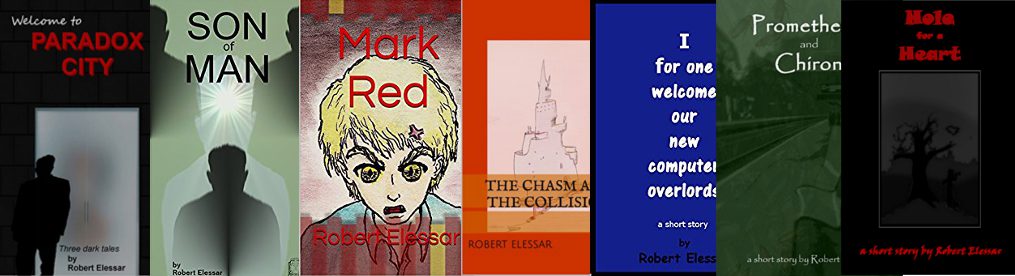
I wrote Mark Red and The Chasm and the Collision, and the “short story” Paradox City all with blue and/or black medium Bic™ Round Stic® pens.  These were the only ones available through commissary up at FSP.  After a while, the guys who did tattoos would just give me new ones to use as long as I gave them back when empty/traded an empty one for the new one, so they could use them to make tattoo guns, and I went through such pens pretty quickly.

I thought to myself (since I have trouble thinking to anyone else*) that maybe if I started using these pens regularly again, I might help give myself the energy to start doing some new fiction writing.  So, I ordered a box of them, which is at least quite inexpensive, and I have one in my pocket now.

It’s a fairly childish notion, perhaps, but just because something is childish does not mean it’s wrong or bad.  Adults get rid of too many childish things‒sometimes on the advice of effing Saul of Tarsus of all the pathetic losers to whom to listen‒and adopt too many “adultish” things that are no more sensible, not as rewarding, and are reliably productive of negative outcomes.

Of course, some childish things do need to be left behind.  Ideally, one does not want to keep believing in Santa Claus or monsters in the closet or that stepping on a crack will break your mother’s back any longer than one must.  Wetting the bed is also worth stopping as early as one can.

But it can be good for one to keep asking questions about how things work and what they are and what they do and how they got to be the way they are, and being delighted in seeing and learning new things, and enjoying simple games and going outside and stuff like that.

Anyway, I doubt this particular choice of pens will actually get me to write any fiction again, but maybe it will at least feel good to use them again for a while.

As you know, I have at least a few stories, such as Outlaw’s Mind and The Dark Fairy and the Desperado that I have started that I’d like to finish, and I have some other stories on the back burner that I’d like to start and write.  If I could just find a patron to support me while I write, so I didn’t have to do anything else, I could probably do it.  But despite its name, even Patreon doesn’t really work that way.

People who support “creators” on Patreon pay regular, specified amounts and expect regular, piecemeal output (like daily blogs, for instance, though being the intellectually stunted populace that we are, people more often seem to want video stuff).  If I put up a Patreon, or a “Go fund me” thing (whatever the proper term for that is) I doubt that I would get a lot of people supporting me and just waiting while I work on a long form writing project.

If anyone wants to do that, and is able to do it, let me know.  Just remember, I’m slightly paranoid, so I will probably suspect some scam at first if you approach me‒unless I already know you, of course.

All of this is really just fantasizing, obviously.  I might as well request that the person who wants to be my patron for writing fiction is also a beautiful woman who is just my type (whatever that might be) and who wants to be in a long-term relationship with me.  Oh, and also, she owns a dragon, as well as an FTL spaceship.  Hey, maybe she’s a Time Lord and has her own TARDIS!

Actually, if I had the use of a TARDIS, it would probably distract me completely from writing fiction.  But I probably wouldn’t spend as much time (har) just traveling and having adventures as most of, for instance, the Doctor’s companions do.  I would want to learn how this technology works!

I don’t understand why none of the people who enter the TARDIS and gape at the whole “bigger on the inside” thing don’t right then and there ask how it works!  (Occasionally some do so, rather halfheartedly).

And when the trite little, dismissive answers such as Nardole gives are offered, they should say, “No, no, I mean how does it actually work?  What is the science and technology involved, how is it carried out and maintained?  What is the physics underlying it, how was it discovered, how was it harnessed?  Do you have any primers on that, any online courses, any textbooks, even any ‘how does it work’ for kids books?  And for that matter, how does the time stream and everything work, how is it traversed, what is the physics behind the functioning of the TARDIS?  We’ll get to the biology of regeneration in due time, but I want to understand all this.  To Hell with going and fighting Daleks or whatever, you can literally do that whenever you feel like, because you have a time machine!”

I guess it wouldn’t be a very fun show, just to watch someone studying Time Lord science and technology, but in real life, if I had access, I like to think that’s how I would spend a lot of my time.  And I think I think correctly.

All right, that’s enough stupid fantasizing for today, wouldn’t you say?  None of those or any other good things are likely to happen to me (some are far more probable than others, but none are worth betting on).

I am much more likely to keep developing new and harder to control pain and more frequently recurring and persistent pain and greater and greater frustration and despondency and depression until finally, at long last, it kills me.  Then, at least, everyone in the universe overall will be just a little bit happier.  On average, anyway.


*Though in a certain sense, this blog is an instance of me thinking to other people.  But that requires the other people to be active participants, and it certainly cannot be done all day every day or any such thing. 

Discussions of my “first draft” styles and a bit of shameful self-promotion

I wrote yesterday’s post on my miniature laptop computer‒what I call a “lapcom” if you remember, and even if you don’t‒and today I am writing this on my smartphone, because I didn’t feel like lugging the lapcom when I left the office.  It’s not done deliberately (by me), but I am curious about something.

You see, to my surprise, yesterday’s post appears to have been rather popular and successful.  I say “to my surprise” because to me it felt rather disjointed and erratic and like it didn’t go anywhere.  I’m not sure why that is or to what it is in response, or indeed, whether it was merely a fluctuation in a chaotic system and had nothing whatsoever to do with any particular thing I had done.

Still, as you may know, I do feel that I write differently when using different tools for doing it.  On the lapcom, I tend more easily to run off at the page, if you will, because typing on a word processor is just so easy and natural for me.  That doesn’t necessarily make the writing better, though.  I fear that I get too verbose sometimes.

And, of course, writing on the smartphone is less fluid, more cumbersome.  It also tends to exacerbate the arthropathy in my thumbs, for what are probably obvious reasons.

Pen and paper‒for first drafts, anyway‒ is certainly my most long-standing method of writing, and I don’t think I tend to get quite as carried away with that as with typing.  I suspect, but don’t by any means know for certain, that the things I write by pen and paper‒the fiction, at least‒are somewhat better, or at least more fun, than what I write on either a phone or a computer.

Here’s a bit of a rundown.  The following stories I wrote by hand in the first draft, having no other options:  Mark Red, The Chasm and the Collision, and my long short story Paradox City.  I also wrote my stories House Guest and Solitaire with paper and pen, the latter in one sitting, the former way back in high school.

I wrote the first draft of Son of Man at least partly on a very small smartphone that I really liked.

The Vagabond is a bit of a mixed bag.  I started it while at university, and finished the first draft while in med school.  Part of the first draft was written by hand (i.e., with pen on paper) but most of it was written on a Mac SE using the good old word processing program WriteNow.  Does anyone out there remember that one?

The rest of my stories, at least the published ones, were written on mini laptop computers (well, some here and there would have been on full-sized ones) from the beginning.  Most notable of these, perhaps, is Unanimity, which is very long.  But many of my “short stories” were written on regular keyboards, including the other two stories in Welcome to Paradox City, and my “short” stories, Prometheus and Chiron, “I for one welcome our new computer overlords”, Hole for a Heart, Penal Colony, Free Range Meat, and In the Shade, the latter of which‒like House Guest‒appears only in my collection Dr. Elessar’s Cabinet of Curiosities.

Oh, right, and of course Outlaw’s Mind, Extra Body, and The Dark Fairy and the Desperado have all been written (so far) on the lapcom.

If anyone out there has read a sampling of some of these, or all of them, and can give me any considered feedback on any overall difference in quality between the means of writing, pros and cons, I would certainly appreciate it.

And if any of you haven’t read any of the above, well…what are you waiting for?  If you’re a fan of fantasy/sci-fi/horror, you might like some or all of my stuff.  If you’re not sure where to start, by all means, I’ll give you recommendations based on your personal preferences, if I can.

I suspect that The Chasm and the Collision would have the broadest popular appeal, especially for people who like the Harry Potter books and similar stories.  Son of Man is probably my purest science fiction story, but this is not “space opera” type science fiction.  “I for one welcome my new computer overlords” is basically science fiction*, too, in case the title didn’t clue you in.

Everything else is horror of one kind or another.  Most of my horror is supernatural in one sense or another, and I veer into the borders of Lovecraft’s universes in at least two stories**.  Mark Red is supernatural and in some senses horror-adjacent, since it involves vampires and so on, but it’s really more a teen/young-adult supernatural adventure, a story originally intended to be a manga.

My darkest story has no supernatural elements in it at all.  That’s Solitaire; it can be had in stand-alone form for Kindle, and it also appears in the middle of Dr. Elessar’s Cabinet of Curiosities.

Well, that’s been about as much self-promotion as I think I’ve ever done here before.  I didn’t really intend to do it, but once I got going on discussing my various story drafts, it just seemed to go that way.  I hope I haven’t been too insufferable.  I’m really not a raving egomaniac, though I may be some other type of raving maniac.

I hope you all have a good day.


*And I guess Extra Body is sort of light-hearted sci-fi.  It’s even somewhat comical, as my story If the Spirit Moves You is a sort of supernatural comedy (expect no laugh-out-loud moments, though, since they are dry comedy at most).

**The Death Sentence, which appears in Welcome to Paradox City, and In the Shade, mentioned above and in my other collection.

Thoughts on real versus virtual keyboards, books, and quantum teleportation

It’s Friday, and I’m writing this post on my mini laptop computer, because although yesterday I forgot it and had to use the smartphone, it was really quite nice the other day to be able to type for real and not tap around on some simulated keyboard with no aesthetic appeal, on which one cannot feel the keys responding to one’s touch (and which gives this one arthritic pain in the base of his thumbs).

I remember when the notion of such a virtual keyboard first appeared to me—this was in Star Trek: The Next Generation.  I thought the idea seemed terribly unsatisfactory despite being very clever.  I mean, I recognized the efficiency of it, but when the characters would read books and such things on their little portable “tablets”, it seemed almost heartbreaking.

Obviously, in a star ship in deep space, they’re not going to have room for a vast physical library such as the virtual one they clearly have in the ship’s computer.  It’s much like the fact that I have many more books in my Kindle library than I have in my physical living space (though I used to have way more physical books than I have current Kindle books).  But something is lost a bit, nevertheless, at least for me, with such virtual collections.

Actually, it just occurred to me:  in Star Trek, they use replicators to make their food and so on, applying the transporter technology to reproduce scanned items that include food.  Why could they not use that to replicate books as needed, then scan them away when they were done?

Of course, the quantum mechanics of potential real world transporter-type technology is such that you couldn’t mass produce anything from “scanning” any one particular item; as part of the required entanglement process for quantum teleportation, one destroys the quantum states of the particles in the original item (or person, if it’s a person, so Dr. McCoy was right to be leery of the transporter).

Also, the entangled particles used to reconstruct the item by creating a new set of particles in identical quantum states to the original, could not be kept in their transitional states indefinitely; such states are not inherently stable.  Even if they could be maintained thanks to advanced technology, once they were used to recreate the original item or person, those entangled particles would also have their own quantum states irreparably altered, and could not be used to make another copy.

You can never make more than one copy of a thing sent by quantum teleportation, The Enemy Within notwithstanding*.

Still, maybe the people in TNG could “scan” a bunch of real books, as if about to transport them using the ship’s transporters, and just…save them for later.  You couldn’t make multiple copies, again because the originals would not still exist after being scanned—as I noted before, such scanning destroys the initial quantum states of all the constituents of the scanned item (or person).  But they could just be singly stored in the “buffer”, saving the quantum state of the entangled particles used to apply quantum teleportation.

But wait, I hear you say, storing all those books “in transition” would entail a tremendous amount of stored quantum information that would need to be maintained in its entangled state indefinitely, at presumably great cost in data and energy.  Not only that, one would have to have the equivalent of the mass of those items in the ship at all times, no matter** what.

You are very clever, and you are, of course, correct; it wouldn’t be efficient in any sense, and would add to the power requirements of the ship.  Also, in any serious disruption of the ship’s stability and power—such as happens in nearly every episode, so more than twenty times a year on average—much of that quantum information would probably be lost.

Maybe it really doesn’t make practical sense to try to do such a thing.  After all, I’m the person who has bemoaned the incredible data wastage necessary to store audio, let alone video, files rather than the much more efficient written word.  And I have not changed my mind on that set of subjects.  I could record a video, or even an audio, of me reading the words of this blog post, and it would have a file size in the hundreds of K at least; for a video, it would probably be many megabytes in size.

Meanwhile, my average blog posts, as stored in Word, are 16 to 20 K in size.  It’s quite a difference.  Even just using the RAM of this small computer (4 gigabytes) I could load up as many as a quarter of a million blog posts (assuming nothing else were in the random-access memory, which in not the way things work).  That’s about 250 million words.  Even I am unlikely to write that much during my lifetime.

More importantly, with the written word no one has to look at my ugly mug (though I will admit that my voice is absolutely lovely, so it might be worth hearing any audio file I produce…Ha-ha, just kidding).

Anyway, as I noted, it’s Friday, and I’m almost certain we’re not working tomorrow—I’m inclined to say that, even if the office is open, I’m not working tomorrow, but I tend not to follow through on such ultimata, because I’m a pushover—so there won’t be another post until Monday, at the earliest (barring, as always, the unforeseen).

I hope you all have a good weekend, but at least I know, as I pointed out yesterday, that you will have the best weekend you possibly can, since whatever happens becomes inevitable as soon as it happens, and it may have always been so (if quantum superdeterminism is correct).  Of course, that means you will also have the worst weekend possible.  But for most weekends, that’s a comfort.  For most such weekends, you could honestly say, “Well, if that was the worst weekend I could possibly have had, it’s not so bad.”

Usually, you could honestly say and feel that.  And it’s very likely that this weekend will be one such usual weekend.

Have a good one.


*In any case, that episode is really more of a fable than anything truly science fiction.  It assumes a bizarre kind of dualism between body and mind and a further, cleanly divisible dualism even in the mind itself, which in the episode is split into discrete but very broad personality aspects that can be separated out into different bodies.  It’s an interesting exploration of the tension between aspects of a person’s character, and engages speculation about whether a dark/violent side is a necessary aspect for a good leader.

**No pun intended, but I’m leaving it.

Extra Body: Chapter 12

As Albert began the luxurious climb back to consciousness, he became aware that, during his sleep—a duration he didn’t yet know—Walter had indeed not finished unlocking the first lock on his door.  In fact, just after Albert had drifted off, Walter had found that his tension, his anger, his jealousy, and his hostility had all started to wane.  His nervous system quickly went from reckless agitation to a state of real calm, of equanimity.

Walter looked down at himself, kneeling before Albert’s door, holding and attempting to use a set of lockpicking tools he had once ordered from Amazon out of curiosity, but which he had never been able to master.  He pulled the torsion bar and the pick out of the lower lock, looked at them, and thought, “What am I even doing?” Continue reading

Extra Body: Chapter 11

Roughly an hour had passed since Albert had last left the bathroom.  He had eaten, and he had drunk his cup of coffee, and he was quietly scrolling through some of the stories on the Google news page, when a feeling of strange disquiet rather suddenly grew upon him.

He lifted his head from his contemplation of his home computer screen and looked around.  His small living space was fairly well circumscribed, and almost all of it was in view from any other point within it.  There really was no place for anyone or anything to hide—at least, nothing much larger than a spider or an occasional roach.

Nevertheless, he felt a sense of unseen threat, or at least some worry, developing.  He looked down at his forearms and was mildly surprised to see them riddled with goosebumps. Continue reading

Extra Body: Chapter 10

Albert awakened quite early the next morning, which wasn’t much of a surprise, considering that—as he now realized—he had gone to bed barely an hour after getting home from work and had fallen asleep not long after that.  At some point it seemed he had laid the book he’d been reading on his bedside table, though he didn’t recall doing so.

He looked at his bedside clock—a relic of sorts that he kept despite the fact that he could use his cell phone or computer for the same purposes it served.  It was just before six in the morning.  It was good that he hadn’t actually needed to get up in the middle of the night to check on the response to the question he was supposedly going to ask, based on what he had told Walter.  He had certainly not set any alarm. Continue reading

Extra Body: Chapter 9

Though he slept well—a fact that he relished, since he’d not always been a good sleeper, especially since his divorce—when Albert awakened, he didn’t have any new ideas about how to approach his situation.  He felt the pressure of being perched in the middle of a three-way conversation that was going at cross-purposes and at different speeds and that wasn’t easy to keep clear in his head.

He got up and took his shower pretty much as usual, deciding to use a bit of the shampoo from the newer, larger cup to wash.  He didn’t want to use too much, since he didn’t want to limit the surface on which the V-42 could write, but he felt it was good to test it, in a sense.  He didn’t really doubt that the reproduced—or new, or whatever you wanted to call it—shampoo was just as effective as the original, and that it would do the same good for him, but having the personal experience, he thought, would help him feel, rather than merely believe, that fact. Continue reading

Extra Body: Chapter 8

Albert was silent for the rest of the drive home, which was not terribly long.  He didn’t think anything clear or precise, just felt a vague sense of contemplation, something that he supposed was almost a Zen-like state.  He was a bit surprised that he was not more nervous than he was, but then again, he felt stronger, more confident, younger—those things had to affect his mental state and acuity, and not just in helping him remember JFK’s youthful medical issues.

Even if the shampoo didn’t directly influence his nervous system—and he didn’t see how it could affect it—just being healthier, feeling healthier, had to have knock-on effects that would improve other aspects of his health.  He thought that he recalled that he had been better at getting “into the zone” when he was younger, such as when he was studying in college. Continue reading

Extra Body: Chapter 7

That evening, as Albert was getting ready to leave for home, his phone chimed.  He looked at it and saw that it was Walter who, not waiting for Albert to call him, had decided to ensure the conversation and so had called Albert.

Slightly irritated, Albert accepted the call, not waiting for Walter to speak, and he said, “Hey, Walter, I’m just getting my things together to head out.  Let me call you from the car.  I can never seem to get the Bluetooth thing to connect right if I try to do it while I’m already talking to someone.”

In his turn, Walter also did not provide any pleasantries.  He simply said, “How long do you think it’ll be?”

This irritated Albert a bit more.  He could call Walter on his own time, when he wanted to call, and it was awfully presumptuous of the man to ask for time parameters.  Still, as he had reminded himself before, Walter had done him some real favors.  After a breath, he said, “Probably about five to ten minutes.” Continue reading

Extra Body: Chapter 6

When he got to his house and went inside, Albert felt hesitant to go into the bathroom and see if his second experiment had worked.  He took a bit of time changing out of his work clothes, turning on the TV, fumbling about with another microwavable dinner, and so on, but there was only so long he could put things off.  He had to use the toilet, for one thing, and he couldn’t put that off until work the next morning at the best of times.  He also needed to brush his teeth before bed, and then in the morning take a shower.  There was no way to avoid going into his bathroom, and so he went.

He walked into the small room and his eyes immediately went to the cup.  There, in it, was a modest amount of amber-orange liquid—and nothing else.  Albert looked at it, stopping where he was when he first saw it, though at that point his bladder was quite full.  He found that he was not surprised that there was more shampoo; he was past the point of disbelieving in the stuff, given what had happened.  But there was at least something about the situation that was a minor shock. Continue reading