Gravid questions of time and gravity (and labor)

It’s Monday, the first of September, which was “originally” the seventh month, but which is now pushed back to the ninth by the two “caesarean” months.  Speaking of such things, it’s also Labor Day in the US (I’m not sure about other countries) a day on which we celebrate labor by giving most people the day off.  This isn’t quite as perverse as it might sound.  After all, what woman would want to work while in labor?

Ha ha.

Anyway, my workplace is open today, though only for half a day.  It has become more and more common for nearly everything to be open even on huge holidays like New Years and so on, let alone “ordinary” federal holidays.  The reasons are fairly straightforward, and they have nothing to do with any kind of formal, deliberate, corporate conspiracy such as is imagined by so many naïve people on social media.

It’s just the same problem‒or situation‒that leads trees to grow tall when it would make much more sense for them all to stay closer to the ground and not waste so many resources on trunks and xylem and phloem, on getting water and nutrients from the ground up to their highest leaves*.  The trouble is, if all the trees were low but then one variant appeared that was slightly higher, it would have a significant advantage over its species-mates (and other species), so it would be more effective at reproduction, ceteris paribus.  Its offspring would come to dominate, unless and until yet other variants occurred that tended to grow even higher.  And thus the “arms race” would begin.

So in the human world:  if everyone else worked four days a week, but one worker was willing/able to work more days or longer days, especially if for the same or only slightly higher pay, then that worker would have a job advantage, (again, ceteris paribus).  And so competition leads at least some workers to strive to outdo each other to the extent they can, and so on, working for local, individual advantage that inexorably leads to less pleasant outcomes for everyone.  It’s just game theory applied to economics.

Anyway, that wasn’t what I wanted to discuss this morning.  I wanted to discuss two physics-related ideas I’ve had in the last few days.  The later one is just a bit of silly fun, but the other is more interesting to me.

The second one happened this morning (at about 2 am, when I was awake, because of course I was).  I put on a YouTube video of Star Talk in which a string theorist was the guest, and Professor Tyson asked her about the possibility of more than one dimension of time, and she said most such theoretical possibilities fall afoul of paradoxes and trouble with causality.

But it occurred to me, if there were a situation with time travel involving, for instance, the “grandfather paradox”, maybe the fact that preventing one’s grandparents from meeting makes one no longer there to prevent the meeting doesn’t necessarily unravel the universe, but maybe the paths and events correct and change each other in a closed, repetitive loop of time, interfering with each other** until only one, complete resonant spacetime line is there.

It’s analogous to a plucked string*** in which all sorts of vibrations and waves go back and forth between the fixed ends, but most waves/vibrations end up canceling each other out except the ones that fit an even number of times within the confines of the fixed string.  So maybe the actual events of reality could thus only be the ones that are resonant within that spacetime…whatever the hell that might mean.

Anyway, that’s the frivolous question; though it’s a bit fun, it probably doesn’t really have anything to do with our actual world (though it could…remember my thought a bit ago about forces traveling backward and forward in time and interfering until only a fixed number of outcomes resonate****?).

More interesting to me, really, was a question that occurred to me while I was reading Lisa Randall’s Warped Passages, a physics book (of course) and a particularly good one.  It was not really discussing the question that popped into my mind, other than that Professor Randall was reviewing the particles in the Standard Model.

We know that fermions cannot pile up one on another (cannot share quantum states), and that bosons can (e.g., in lasers).  We also know that massless force-carrying bosons such as gluons and photons travel at c, the “speed of light”.  The W+ and W- and Z bosons of the weak force do not because they interact with the Higgs field and so have “rest mass”.

Anyway, that’s not really the point.  The point is that gravitons, the hypothetical force-carrying particle of the gravitational field, are also massless bosons, and gravity travels at the speed of light*****.  But something popped into my head that had never occurred to me before and I’m not sure why:  do gravitons come in different frequencies?

We know that light has a limitless number of possible frequencies, across a very wide range, and that higher frequencies/shorter wavelengths are associated with higher energies per photon.  We also know that all matter radiates photons at a spectrum of frequencies that depends on temperature‒the so-called black body radiation.  Well, we also know that all matter “radiates” gravitons, or at the very least it all interacts with the gravitational field.  What if matter gives out gravitons in a spectrum that depends on total mass?

What would it mean for a graviton to have higher frequency or lower frequency?  Would that entail a stronger (and weaker) gravity?  Or would it correspond to something else entirely?

Of course, I know that gravitational waves are of varying frequencies depending upon the source‒that frequency and intensity (amplitude) increase as, for instance, two mutually orbiting black holes get closer and closer, orbiting faster and faster, before they coalesce.  Is that analogous to them producing large numbers of gravitons of those increasing frequencies?  Or are gravitational waves different types of things than “ordinary” gravitons?  Is ordinary gravity propagated by “virtual gravitons” much as the electromagnetic force is carried by “virtual photons”, which are really just mathematical shorthand for perturbations in the quantum field of electromagnetism?

I suspect that, because we don’t really have anything like a good quantum theory of gravity, there would be few clear answers to my questions about gravitons, but there may be constraints based on what we already know that would make my questions answerable or moot.

I mean, I know that “we” know that gravitons would be spin-2 particles, meaning that to rotate them 180 degrees would leave them unchanged******.  I don’t know how this or other aspects of gravitons would affect possible frequencies, though.  Also, can gravitons be polarized in a manner analogous to light?  I’m not sure whether my graviton questions are sensible or pertinent or utterly off the mark.  If anyone out there is a physicist specializing in such things, please, if you can spare a moment, let me know?

This post has gone on for a long time, I know.  I could meander around much longer on these subjects, probably for pages and pages and pages, but that would be a bit much for a daily blog post, if it isn’t already.  Maybe because it’s a holiday, at least some of you will have the time and interest in reading such thoughts, but I don’t want to push my luck.

However, I welcome any comments on the above subjects if you have an interest, and especially if you have relevant expertise (though I welcome all interested thoughts).

In any case, please try to have a good day.


*A fascinating physical process that’s only possible because continuous liquids can actually have negative pressures.

**Not in any inappropriate way, just that they interact and waves can cancel out.

***Not a “superstring” or heterotic string or what have you, just for instance a guitar string or a cello string.

****This is not unlike Feynman’s path integral/sum over histories notion, really.

*****We know this is so because there was a neutron star merger detected by LIGO and VIRGO that was quickly looked at using “light” telescopes as well, and the timing matched up (As a silly aside, since gravitons are bosons and could thus in principle share quantum states, one might, in principle, be able to create a coherent beam of them…a GRASER or GASER if you will).

******Spin-1 particles basically return to their identical state if you rotate them 360 degrees.  And for spin ½ particles, you need to rotate them 720 degrees (!) for them to return to their prior configuration.  Once you’ve rotated them 360 degrees they’re kind of the opposite of their prior configuration.  If that’s hard to think about, just imagine traversing a Mobius strip laid out in a “circle”:  once you’ve gone 360 degrees, you’re on the opposite “side” of the strip than that on which you began, and you have to go another 360 degrees (so to speak) to get back where you started.  Neat, huh?

Oblivion is cold comfort, but it’s all the comfort I have to offer

Well, it’s Monday.  Meet the new week‒same as the old week.  There is nothing new or interesting happening, as far as I can see.  Nothing is new in my personal interactions with the world, and nothing is new in the world at large.  There may seem to be new things, and there are probably some details that are unique.  But then again, every snowflake is supposedly unique, but they’re all just flakes of snow, airborne ice crystals, and the overall behavior is nothing different despite all the trivially new specific flakes.  The phenomenon of snowfall is still just overall the same.

“So in the world,” as Shakespeare’s Julius Caesar said.  “‘Tis furnished well with men.  And men are flesh and blood, and apprehensive.”  He goes on the claim that he is unique in the next sentence, but immediately thereafter, Brutus, Cassius, et al, demonstrate that he too is merely flesh and blood like all the rest.

All the heroes, all the villains, all the ordinary people‒they are all functionally identical, despite all their trivial differences.  What percentage of the people who have ever lived are remembered at all?  A smattering, a handful, if that‒not even a rounding error compared to the total of all people who have lived.  And many of those we do remember are probably highly fictionalized and may not have actually existed at all.

What are the odds that Gilgamesh and Enkidu were real people?  How about Achilles and Hector?  For crying out loud, we know that even Richard III, presented as Shakespeare’s most thoroughgoing villain (perhaps matched by Iago) and deformed as well, was pretty much nothing of either sort in real life (or that’s what the historical evidence suggests).  He was simply defeated and then vilified by those who had defeated him, presumably to help justify their own actions.

And, by the way, who remembers them?

This sort of fact is part of why I sometimes refer to people (and other lifeforms) as virtual particles.  They pop into existence, persist for an infinitesimal period of time, and then literally vanish again, without a proverbial trace.

Well, actually, as with all virtual particles (which are not actually a thing but are merely mathematical and pedagogical tools) the collective effects of us virtual particles‒aka living things‒can have impacts on the world as a whole.  It’s even conceivable that, in just the right circumstances, as with the “real” virtual particles*, a virtual personicle can become actual.  I’m not sure what that would mean in the real world, though, and I’m not convinced that it has ever yet happened.

All this is part of why I have no patience for people who become fanatical about their particular ideologies and such.  They’re all just equivalent to some fanciful imaginary imaginings by a group of photons or neutrinos or what have you.

Don’t get me wrong, it’s perfectly reasonable for someone to approach their current affairs and ideas as “important” in their local** transient bailiwick, for some things to be important to them.  But it would be silly in a pronounced (but unfortunately not funny) sense for anyone to imagine that they had access to some final, consequential knowledge about the nature of the world and particularly about how people should behave.  If someone had such knowledge, I suspect it would be obvious to any intellectually honest person, including intelligent but disinterested aliens.

Humans and their dogmas are transient and transitory and ephemeral (and other synonyms as well) as are all other specific forms of life and ways of life.  Life overall is transient; as far as we can tell, it cannot even in principle go on forever.  That’s not just referring to individual lives, but to life as a phenomenon.  We could be wrong about this; there is much we don’t know, and in principle, our descendants could discover ways around the Second Law of Thermodynamics.  But that’s quite a big “if”, as it were.

Sorry to be such a downer; it’s just my nature, apparently.  Look not for comfort from me, as the ghost of Marley said.  It comes from other regions and is delivered by other ministers to other sorts of people.  Though, in this case, I’m not sure about what sorts of ministers and people would be involved, let alone what “regions” might produce such comfort.

In any case, I have no comfort, so I can offer none to anyone else; I cannot give what I do not have and what I do not even hope to have.  The best I can offer is to say that, well, oblivion seems to be the only viable alternative to discomfort offered by this universe.  It’s not much to offer, I admit, but it’s the best I have.  And, as pointed out above, as far as we can tell, it’s waiting for us all, eventually.

I won’t say that I look forward to it, because that really doesn’t make much sense.  But I am tired of trying to continue despite having almost no good reason to do so.

I hope you, the average reader, feel better than I do.  Batman help you if you feel worse.


*There’s an oxymoron.

**That “local” can, in principle, include the entire planet.  The point is merely that it is quite finite and limited.

Neither jot nor tittle, but just a title

It is Friday.  Friday it is.  I do not, though, plan to eat any green eggs and ham, nor do I intend to train Jedi.  I merely like to fiddle around with words.  I have also even been known to write and speak about cellos and violins and violas and basses‒wording around with fiddles, that is.

Anyway, this should be the end of the work week for me, so don’t expect a blog post tomorrow.  I’m not saying that there definitely won’t be one; it’s an outcome with a low probability, but it’s not zero.  In principle, the probability of any physically possible event happening is never zero.  But the odds can be so vanishingly small as to be zero for all practical purposes.

For instance, it’s physically possible for the entire Earth (the Moon included) to quantum tunnel to the Andromeda Galaxy, but I wouldn’t hold your breath.  I suspect that the odds of it happening are so low that the time scale between now and the evaporation of the largest black holes due to Hawking radiation (roughly a googol* years) would not even begin to make it likely to happen, even if it weren’t for the fact that the Earth and the Moon will have been so dead and so disintegrated by then that even the memory of their memory’s memories would have been long since lost to any mind that might still exist at that time…probably.

So, you can treat that Earth-Moon Andromeda tunneling as “impossible” for all practical purposes, but in principle, it could happen…

…right…

…NOW!

Okay, well, as far as I can tell, it hasn’t happened.  The sky is too hazy for me to see if the stars have changed, but I don’t think they have.  It would be quite something to experience the local stars of a different galaxy, but of course, if we tunneled into Andromeda, we might be in a relative star desert, or we might be in a place with too many stars for our long-term safety.  Also, if our solar system’s net momentum persisted, we would be unlikely to arrive in any kind of stable orbit of the center of that galaxy.

And, of course, I did not say the sun would come with us‒that would make the whole thing even more vanishingly unlikely‒so we’d all freeze in fairly short order, apart from organisms that use geothermal sources as the base of their food chains and energy cycles.  Those might survive for eons.

Anyway, it’s vastly more likely that I’ll work and write a blog post tomorrow than that we will quantum tunnel to Andromeda**, but it is still a very small likelihood***.  It may be less than one percent, I don’t know.  But it’s quite unlikely.

So, though it might be worth a quick glance to check in come the morning, especially if you were going to do that sort of thing anyway, I would not go out of your way, and I certainly wouldn’t recommend holding your breath.  I don’t think even a sperm whale could hold its breath that long, and I think they have the longest breath-holding record of any mammal (if anyone knows otherwise, please let me know).

In other news‒not that I’ve really given you any news so far‒my keyboard arrived safe and sound (so to speak) yesterday afternoon, so hopefully this morning I’ll be able to finalize the chords to Native Alien.  Then, maybe this weekend, I’ll record a little guitar-chord and voice demo so I don’t lose track of the song.

Then, next week, I can start working on a song based on the trigger “humility”.  I still have no clear conscious notion of an idea for such a song, but I’m not worried about that.  I know I can produce something (not the Beatles song).

I have to keep reminding myself that I don’t need to produce anything great as far as lyrics go‒I think the lyrics I have for Native Alien, which I shared the other day, are okay but not terrific‒I just need to get some words down.  I can always edit and alter things as the process evolves, just as the first draft of a story (or to a lesser degree a blog post) is just the beginning.

I’m also continuing with the circuit course on Brilliant, and I’m alternating reading that book Vector and The Lord of the Rings (yet again) and my own book, The Chasm and the Collision (also yet again, though LotR still holds the 2nd place record for my number of reads, well ahead of CatC and only bested in number of readings by The Chronicles of Thomas Covenant the Unbeliever).

All these are things that I can do alone, of course.  If there’s something to do that would require someone else’s participation, well, I’m shit out of luck.

I think that’s a phrase that applies fairly well to me, come to think of it.  And the word “alone” might as well have my picture next to it in the dictionary.  Though that might be confusing, since I can think of other words that would merit my picture even more than “alone” would‒words that would do their part to explicate just why I am alone, no doubt.

Batman knows I don’t want to hang around with me.

Anyway, I hope you all have a nice weekend, and if anything truly improbable happens to you, I hope it’s a very good improbable thing.


*That’s 10 to the 100th power, or a 1 followed by 100 zeros, in case you’ve forgotten whence the software company cribbed their name.

**Quantum tunneling is not rare on small enough scales, though.  It happens countless times every second in the heart of the sun, for instance.  If it did not, there would not be enough heat and pressure to overcome the coulomb barrier to fusion, and the sun would be some very large equivalent of a brown dwarf…or maybe it would contract more and get hot enough for fusion to take place without tunneling, but then I think the sun would be hotter and brighter and more short-lived, and I think it’s unlikely that the Earth would have produced any life, let alone humans.

***Think about it:  if you took something with odds of ten to the minus 120‒that’s 119 zeroes between the decimal point and the first non-zero digit‒and then made it a billion times more likely than it is, you’d still have odds of 10 to the negative 111th power, or 0.000000000000000000000000000000000000000000000000000000000000000000000000000000000000000000000000000000000000001.  This is a good reminder that relative risk (or probability) is not the same as absolute risk (or probability).

Chords in music and in time

It’s Monday again, the start of another work week‒that is, if your work week begins on Monday.  In the modern world‒and indeed, perhaps always‒there are many people whose work weeks start on days other than Monday.  I suspect, though, that the majority of people still work their week starting on Monday, at least in the West, though it may not be a large majority.  If anyone out there has easy access to any rigorous statistics on the matter, I would be interested to learn.  On the other hand, I’m not going to seek the information on my own, so it’s not a tragedy if no readers have it.  I like trivia, but this is definitely quite trivial, at least from my point of view.

I hope you all had a good weekend.  My own was not very interesting, and I felt tired, but then again, I did have a cold starting in the middle of last week, so I guess I was still recovering.  I feel as though that particular infirmity is reasonably well on its way.

I worked a little on the chords of last week’s song, Native Alien, though not very much.  At least at the house I have my keyboard, so I can play melody and chords at once to confirm which chords sound best to me.  Interestingly, it seems that the chord to start the song (at least the melody) will be a C major chord, which is the V chord of the key of F major (though if the song could be considered to be in D minor, it would be the VII chord).  This is not unusual, of course, nor particularly noteworthy.  It’s just interesting for me to recognize specific facts to which I didn’t pay attention when I wrote earlier songs, because I’ve thought more about music theory since then, probably because of the guitar.  It’s a curiosity for me.

Speaking of songs, today I plan to do another round of flipping coins to pick a basic topic, or subject, or trigger‒whatever might be the better term‒for another song (lyrics) for this week.  Of course, last week’s word, Earth, didn’t really become the subject of the song, just a takeoff point, but that’s fine.  The idea was just to give me some way to give myself a start.

In other news, I had a weird thought last night after watching one of Sabine Hossenfelder’s latest videos.  I wrote an email to myself about the thought so I wouldn’t forget it, and I’ll include that text here, so you‒yes, you‒can see what you think (I have edited this text for clarity and to correct typos):

“If the overall arrow of time is caused by the tendency toward increase in entropy from a lower to a higher entropy state (“Big Bang” to heat death, at the cosmic level), that could behave analogously to a current (like in the ocean, not a wire).  Meanwhile, locally*, we know that the laws of physics don’t appear to have any directionality time-wise.  So perhaps locally, matter and wave interferences in the sense of quantum wavefunctions can happen not just in space but in time itself and the future can feedback on the past, just not in such a large way that it would overwhelm the overall tendency (though maybe even that is not impossible).  The effect of such a temporally retrograde wave wouldn’t flow backwards so fast that it would override the current itself (probably).  However, that wave could still affect its predecessor, creating standing interference patterns in time and things along those lines that might be the source of so-called super determinism.  Think about this a little bit.”

That last injunction was intended for me, but if any of you want to think about it, you’re welcome to do so (it’s not as though I could stop you even if I wished to stop you, which I don’t).  Of course, if I’m going to really explore this notion, I’m going to need to bone up on my mathematical physics in a serious way, and it’s always hard to find the time.  That’s always been a bit of a weakness of mine:  I get very interested in something and develop skills in it because of my interest, then something else catches my attention, and soon all my energy goes there.  I don’t tend to forget the things I learned previously, at least, and sometimes when I return to them, I even find that I’m better than I was before (e.g., after not playing guitar for quite a while, when I picked it up again, certain songs or chords with which I had trouble before had become much easier).

Also, of course, the fact that I have to work for a living is another distraction.  I really do need some ultra-wealthy patron out there to provide me with living and intellectual resources so that I can devote my time to my wonderful pursuits without having to earn my living.  I also want world peace, world freedom…and a unicorn.

I guess in the meantime I should probably go back to using Brilliant dot org to spruce myself up in terms of mathematics and physics (and computer science in the meantime, why not?).  I have an annual subscription (supporting Sabine Hossenfelder, whom I mentioned earlier), so I might as well use it.  It’s a better use for my spare time than diddling around on social media.

Okay, well, I hope you all have a very good day, and that it is the beginning of a very good week for you.


*I’m using the colloquial meaning of “locally” her not the strict physics definition of locality.

The stochasticity of quantum interactions and the names of days of the week

It’s Wednesday today.  That’s a weird way to spell a day, and a weird way to spell a version of the name of the god Wotan or Odin, after whom the day is named (unless I am quite, quite mistaken).

Our days are peculiarly and seemingly haphazardly named here in the English-speaking West.  We’re not the only ones with inconsistent weekday names, but ours are certainly a strange hodgepodge.  Sunday and Monday are relatively straightforward:  they’re named for the sun and the moon.  Then, weirdly, we suddenly switch to Norse (!) mythology and name the next four days after four of the old Scandinavian deities.  Then, abruptly, we switch to a Roman god, Saturn, for Saturday.

This “names of the days of the week” thing was clearly not planned out.  It just sort of happened.  But that’s the way so many things occur in the real world—indeed, perhaps everything just sort of happens, and at multiple levels—not randomly but nevertheless stochastically and in a way that is functionally unpredictable, at least in its details.

The various quantum fields just sort of interact in ways that, at their lowest stable energy levels, give us quarks and gluons and electrons and photons and W and Z bosons and various neutrinos and a nonzero Higgs field that interacts with some (but not all) of the other fields.  The quarks and gluons just happen to form up stably into protons (and some neutrons, but neutrons are only stable within an atomic nucleus—they decay with a half-life of about ten minutes when existing freely).  And the protons happen to interact, via the electromagnetic field, with the electron field, and they stably pair up, and neutrons come into play “afterwards”, stabilizing larger atomic nuclei (though that’s not all they do).

Then, on large scales, the graviton field (if there indeed is such a thing, which is suspected but not certain) interacts with all the other fields, and where the density of stuff is slightly higher it pulls that stuff in towards itself, and where it is less, that rarefied stuff gets thinned out further as its components are pulled by neighboring stronger areas of gravity.

This process undergoes positive feedback—as stuff gets denser, its gravity gets more prominent, and that in turn tends to make the stuff get denser still.  And if there is any net angular momentum to larger collections of the stuff—and there almost always is some net angular momentum, since there’s only one way to have zero angular momentum, and there is a functionally limitless number of ways for it to be nonzero*—the stuff starts to rotate around a net common axis.

And then, of course, we get galaxies, and in those galaxies, we get stars, in which the interactions of the various quantum fields and gravity lead the protons and neutrons to get together into bigger clumps, some of which are quite stable (and the ones that aren’t stable simply don’t endure but transform into other states until they find ones that are stable).

Then stars run out of fuel, and the various field interactions and gravity produce various kinds of spectacular deaths, most of which involve scattering at least some heavier elements** out into the reaches of the galaxies.  Then we get next generations of stars, which (by the way) clump and develop angular momentum in a smaller but similar way to the galaxies.  And now, with heavier elements, we get planets, some of which are largely solid.

I think you know the broad strokes of the rest of the story.  If not, let me know.

Of course, this is a very general sketch of how stuff just came together to form the universe in which we exist, and there’s no indication that that is anything more than just small things—or esoteric things, really, such as quantum fields and their local perturbations—interacting with each other and making patterns on larger scales, much as water molecules can clump into fantastic patterns in the frost on windows or in snowflakes when they get cool enough.  Simple (well, relatively simple) rules at small scales can come together to produce surprising things at larger scales when they all interact at secondary, tertiary, quaternary and higher levels.

If you want to see how remarkable that tendency can be even in two dimensions, find a website that lets you play “John Conway’s Game of Life” and see how stable and active and interactive shapes can arise from even truly simple rules.

What was my point?  Sorry, I got distracted there for a minute.  Oh, right, I just meant to say that the things that happen and that all seem very real and important and even inevitable and fundamental are largely the products of stochastic processes interacting in ways that ultimately are far from being representable by any kind of linear equation.

It’s entirely possible and plausible that, if the rules of the quantum fields—or the specific types of quantum fields*** involved—were different, and thus interacted with each other differently, they might still accumulate into structures and functions on higher levels, and though they might produce a universe that would be all but incomprehensible to us, and in which we could not survive for an instant, they might nevertheless form structures and processes that could become what would have to be called “alive” and even “aware” and “intelligent”.

But in how many such universes would there be creatures that name the days of whatever passes for their weeks after various astronomical bodies (or whatever they have that is comparable) and random mythological figures from different places and times?

I leave it to the reader to speculate.


*There’s only so fast anything can be spinning, since no part of the spinning thing can exceed the speed of light.  Even black holes have a maximum angular velocity.  Nevertheless, both the angular velocity and the net axis of rotation can be more or less continuously variable.  If we can apply the real numbers—which ironically may not be possible in the real world—there is an uncountably infinite number of possible ways for angular momentum to be nonzero.  That makes zero really unlikely and unstable.

**Astronomers call any element but Hydrogen and Helium a “metal”, which is a very loose use of the term if you ask me.  I think many astronomers would agree, and sometimes I think I detect more than a tiny amount of embarrassment when they tell people that astronomical definition.

***Or the configurations of strings and branes if superstring/M theory turns out to be correct.

Thoughts on real versus virtual keyboards, books, and quantum teleportation

It’s Friday, and I’m writing this post on my mini laptop computer, because although yesterday I forgot it and had to use the smartphone, it was really quite nice the other day to be able to type for real and not tap around on some simulated keyboard with no aesthetic appeal, on which one cannot feel the keys responding to one’s touch (and which gives this one arthritic pain in the base of his thumbs).

I remember when the notion of such a virtual keyboard first appeared to me—this was in Star Trek: The Next Generation.  I thought the idea seemed terribly unsatisfactory despite being very clever.  I mean, I recognized the efficiency of it, but when the characters would read books and such things on their little portable “tablets”, it seemed almost heartbreaking.

Obviously, in a star ship in deep space, they’re not going to have room for a vast physical library such as the virtual one they clearly have in the ship’s computer.  It’s much like the fact that I have many more books in my Kindle library than I have in my physical living space (though I used to have way more physical books than I have current Kindle books).  But something is lost a bit, nevertheless, at least for me, with such virtual collections.

Actually, it just occurred to me:  in Star Trek, they use replicators to make their food and so on, applying the transporter technology to reproduce scanned items that include food.  Why could they not use that to replicate books as needed, then scan them away when they were done?

Of course, the quantum mechanics of potential real world transporter-type technology is such that you couldn’t mass produce anything from “scanning” any one particular item; as part of the required entanglement process for quantum teleportation, one destroys the quantum states of the particles in the original item (or person, if it’s a person, so Dr. McCoy was right to be leery of the transporter).

Also, the entangled particles used to reconstruct the item by creating a new set of particles in identical quantum states to the original, could not be kept in their transitional states indefinitely; such states are not inherently stable.  Even if they could be maintained thanks to advanced technology, once they were used to recreate the original item or person, those entangled particles would also have their own quantum states irreparably altered, and could not be used to make another copy.

You can never make more than one copy of a thing sent by quantum teleportation, The Enemy Within notwithstanding*.

Still, maybe the people in TNG could “scan” a bunch of real books, as if about to transport them using the ship’s transporters, and just…save them for later.  You couldn’t make multiple copies, again because the originals would not still exist after being scanned—as I noted before, such scanning destroys the initial quantum states of all the constituents of the scanned item (or person).  But they could just be singly stored in the “buffer”, saving the quantum state of the entangled particles used to apply quantum teleportation.

But wait, I hear you say, storing all those books “in transition” would entail a tremendous amount of stored quantum information that would need to be maintained in its entangled state indefinitely, at presumably great cost in data and energy.  Not only that, one would have to have the equivalent of the mass of those items in the ship at all times, no matter** what.

You are very clever, and you are, of course, correct; it wouldn’t be efficient in any sense, and would add to the power requirements of the ship.  Also, in any serious disruption of the ship’s stability and power—such as happens in nearly every episode, so more than twenty times a year on average—much of that quantum information would probably be lost.

Maybe it really doesn’t make practical sense to try to do such a thing.  After all, I’m the person who has bemoaned the incredible data wastage necessary to store audio, let alone video, files rather than the much more efficient written word.  And I have not changed my mind on that set of subjects.  I could record a video, or even an audio, of me reading the words of this blog post, and it would have a file size in the hundreds of K at least; for a video, it would probably be many megabytes in size.

Meanwhile, my average blog posts, as stored in Word, are 16 to 20 K in size.  It’s quite a difference.  Even just using the RAM of this small computer (4 gigabytes) I could load up as many as a quarter of a million blog posts (assuming nothing else were in the random-access memory, which in not the way things work).  That’s about 250 million words.  Even I am unlikely to write that much during my lifetime.

More importantly, with the written word no one has to look at my ugly mug (though I will admit that my voice is absolutely lovely, so it might be worth hearing any audio file I produce…Ha-ha, just kidding).

Anyway, as I noted, it’s Friday, and I’m almost certain we’re not working tomorrow—I’m inclined to say that, even if the office is open, I’m not working tomorrow, but I tend not to follow through on such ultimata, because I’m a pushover—so there won’t be another post until Monday, at the earliest (barring, as always, the unforeseen).

I hope you all have a good weekend, but at least I know, as I pointed out yesterday, that you will have the best weekend you possibly can, since whatever happens becomes inevitable as soon as it happens, and it may have always been so (if quantum superdeterminism is correct).  Of course, that means you will also have the worst weekend possible.  But for most weekends, that’s a comfort.  For most such weekends, you could honestly say, “Well, if that was the worst weekend I could possibly have had, it’s not so bad.”

Usually, you could honestly say and feel that.  And it’s very likely that this weekend will be one such usual weekend.

Have a good one.


*In any case, that episode is really more of a fable than anything truly science fiction.  It assumes a bizarre kind of dualism between body and mind and a further, cleanly divisible dualism even in the mind itself, which in the episode is split into discrete but very broad personality aspects that can be separated out into different bodies.  It’s an interesting exploration of the tension between aspects of a person’s character, and engages speculation about whether a dark/violent side is a necessary aspect for a good leader.

**No pun intended, but I’m leaving it.

Therefore the Moon, the governess of blogs, pale in her anger washes all the air

Hello and good morning.  It’s Thursday, the first of May*, the beginning of yet another stupid month.  They just keep coming, on and on and on, so irritatingly relentless that I find myself wishing for the elimination of the Moon and the destabilization of the Earth’s rotation and orbit just to break the tedium.

I know that would inconvenience a great many other people, though, so I’m not going to try to make it happen.  To be fair, it would be much “easier” to alter the Earth’s rotation than to shift the Moon.  A decent-sized asteroid collision at the right angle could alter both the rate of Earth’s rotation and its angle to the ecliptic.

Of course, such an impact would have devastating consequences for almost everything and everyone on the planet’s surface.  So that’s a win-win scenario!

I’m kidding.  But I often fantasize about wiping out all life as we know it, because none of it is truly benign and it’s all futile and will always be marked broadly by fear and pain and other suffering, because all those things are evolutionarily vital (in the literal sense).  I shouldn’t choose that for other people, though, so I probably would never do such a thing even if I could.

Thinking back to earlier, though, I’ve been pondering the question of just how one would move the Moon in its orbit, and I thought about the reflectors up there in the old Apollo landing sites, still used (last I checked, anyway) to measure the distance to the moon with great precision.

There have long been discussions about how to alter the course of an asteroid that looked to be prone to intercept the Earth.  One way might be to vaporize a portion of the asteroid, causing its “outgassing” to act almost as a rocket propellant, and by Newton’s third law (or, equally valid, by the law of conservation of momentum) the asteroid would shift its trajectory in the direction away from the artificial outgassing.

Well, what if one were to train powerful lasers at one site on the surface of the Moon**?   The fact that the moon is tidally locked with Earth means it’s constantly showing the same face to us, so one could keep focusing on the same portion of the surface.  One could study the albedo and absorption characteristics of the surface of the Moon to try to pick the best wavelength for causing “outgassing” of that surface, and that outgassing would propel the moon away.

It would be a slow process, since the Moon is big, and shifting its orbit significantly would require the delivery of quite a bit of energy, but that’s okay.  One could set up a single laser (or pair of them on opposite sides of the Earth, or more if one desired faster effects) perhaps solar powered and using ordinary telescope-style tracking equipment and software, to train the lasers always on the same point on the surface of the moon.

Gradually, the Moon would shift away from Earth (you’d need to keep adjusting your aim a bit), more quickly than it currently is, and eventually:  lunar liberation!

Of course, even given the abysmal state of science on Earth (and particularly in the US right now), people would eventually notice the Moon moving, and they might even notice the “outgassing”.  But a lot could be done before then.

If one wanted to have a much quicker effect, or rather, a more instantaneous effect, one could develop a large depot of antimatter, which we know how to make in particle accelerators.  Storing antimatter is challenging, of course; it must be kept within electromagnetic fields in high vacuum, since it will annihilate if it encounters its matter counterpart.

Still, with enough time and patience and care (and money), one could gradually accumulate a large stockpile of antiprotons and positrons, perhaps stored adjacent to each other so their mutual electrical attraction makes containment slightly easier.  Then, when one had gathered enough, one could launch it toward the moon in a fairly standard rocket‒it wouldn’t need to be manned, and it certainly wouldn’t need to return to Earth.

Release your tons (I would guess) of antimatter onto the surface of the Moon, perhaps at the center of “mass” of its face that points toward Earth, and watch the fireworks!  There would be complete annihilation of matter-antimatter in a release of energy far more extreme than any mere nuclear weapons could produce.  Heck, if you wanted to bypass the whole Moon process, you could just accumulate your antimatter here on Earth over time, maybe near some damage-multiplier like the ice caps or near a super volcano or something, and release the containment when you’re ready.

In a typical nuclear explosion, less than one percent of the mass involved in the reaction is “converted to energy”***.  In an anti-matter reaction, ALL of it would be converted.  Imagine releasing hundreds of times more energy per kilogram than the most powerful nuclear weapons.

Of course, antimatter is absurdly expensive to make, but economies of scale might help that.  It’s not as though one would be expecting a profit‒unless one went the Bond villain route and used one’s anti-matter bomb to hold the Earth for ransom, which is a thought.

That’s enough of that madness for now.

Speaking of madness, today begins “Mental Health Awareness Month”.  I would say that I’m already aware of mental health in a general sense, I just don’t have much personal familiarity with it.  Mental illness, mental dysfunction, mental dysregulation, these are things with which I am more personally acquainted.  I’m only too aware of them.  Physical health falls into a similar position.

All right, well, before I discuss more ideas about how to alter or eliminate all life as we know it‒I’ve many such ideas, I’m afraid‒I should draw to a close for the day.  In case you can’t tell, I’m not right in the head, am I?  So this is a sort of appropriate month for me, especially coming as it does right after Autism Awareness Month.  Batman only knows what will happen next.

TTFN


*Also known as May Day.  I wonder how that came to be used as a distress call, as in, “Mayday, mayday, we are going down!”

**Alternatively, one could, in principle, use a very large array of adjustable mirrors on Earth, and they could be shifted to reflect sunlight and focus the reflections on one spot on the moon, but to get a strong effect would require a worldwide collaboration or at least acceptance of these mirrors.  It’s hard to see that happening.

***I used “scare” quotes because technically it’s all energy to begin with, it’s just changing form.

I’m sorry, I don’t have the energy for a Shakespeare based title

Hello and good morning.  It’s Thursday, and though I don’t particularly feel like it, I’m writing a blog post because it’s Thursday.  This doesn’t necessarily mean I’m going to write one tomorrow or Saturday (assuming we* are open, which we probably will be, since it’s rare to be closed two weekends in a row).  As far as I know, I will not.

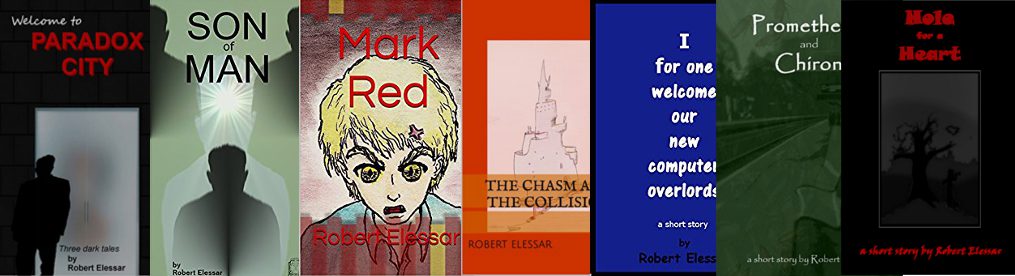
I don’t really have any energy or impetus to write much.  I’m trying.  I’ve been rereading my fiction to try to stimulate myself, but so far it’s obviously not doing the trick.  I reread first The Chasm and the Collision, then Son of Man, then The Vagabond, and just yesterday finished rereading Mark RedI’ve also reread a few of my short stories.  But, though I’ve enjoyed rereading my stuff as far as it goes, it’s not really doing anything as far as catalyzing any desire to write, whether fiction or nonfiction.

I think things would be much more positive if I were able to get a good sleep (at least one night) and especially if I weren’t in daily, increasing pain.  I’d be tempted even to try ketamine if I thought it would really help, though there are some cautionary examples in the mainstream media that would give me pause.  Heck, I’d practically be willing to try full-on PCP if I had good reason to think it would provide lasting relief without causing worse problems.

Of course, there’s the rub.  All of these things that can provide even temporary, real relief have a range of side-effects that would make my situation even worse than it is.  Yes, I freely admit that my life could get worse.  It’s almost always true that things could be worse than they actually are.  But that doesn’t mean they’re good.

I’m just so weary, so tired of every day being dominated by both physical and psychological pain.

Actually, I feel that the last adjective there should be “psychical” not “psychological”, since the latter term refers to the study of the psyche, and I don’t have pain or suffering that involves the study of my psyche, just pain in my psyche itself.  Still, the common usage, for what it’s worth, seems to lean toward “psychological”.  Then again, current common parlance refers to psychological problems as “mental health”, as in “Are you suffering from mental health?” which makes little sense.

I wish I could wrap myself in some kind of life-support cocoon and undergo some form of metamorphosis, like Adam Warlock in the comic books.  Hell, just being able to sleep for a while seems like it’s a ridiculous, superstitiously foolish notion, on a par with the expectations of the Heaven’s Gate cultists, who thought a space ship was coming to gather their souls (and was supposedly hiding in, I think, the tail of the Hale-Bopp comet).

I want to rest.  I want to stop being in constant pain.  It’s been going on for more than twenty years, and it’s tainted every aspect my existence.  It has contributed to everything from the breakup of my marriage, to my arrest and incarceration, and to my inability to sustain or create any kind of close relationship of any kind.

The people “closest” to me are hundreds to thousands of miles away, and I have no doubt that if they were physically closer, a kind of Uncertainty Principle-like process would occur, such as what makes the momentum/energy of, say, an electron greater and greater the more tightly you try to pin it down, until more and more of its wave function leaks out and the probability of it being elsewhere‒even on the other side of the universe, so to speak‒dominates over any local presence.

I’m probably not explaining that very well, I’m sorry.  But I don’t even have any will to watch science videos or to read science books or what have you, let alone to go into any rigorous discussions thereof.  I’m just making the point that I’m much better for other people from a distance than from up close, with the function approaching a singularity (of negative infinity) as the distance from me shrinks toward zero, rather like some logarithmic function.  This graph (of log base 2) demonstrates why, from a certain distance, it can start even to be pleasant to interact with me, though with diminishing returns…but woe betide anyone who drops below one unit of distance.

Okay, that’s enough for today.  It’s probably much more than enough.  I’m sorry to be so tedious; believe me, no one gets more tired of me than I do of myself.  At least all of you can just go read something else by someone else, or do something else entirely.  Not I.  I am stuck with being and enduring the miserable git that I am every waking moment.  And waking moments make up far too great a proportion of the times of my life.

Have a good day, if you can.

TT…FN, I guess.


*By we, I mean the office at which I work.  While I have no problem joining with you, my readers, into a collective, first person plural pronoun, I simply have no idea what y’all’s work schedules are.

But darkness and the gloomy blog of death environ you…

Hello and good morning.

If you’re a regular reader, you know what day it must be if I’m using that opening phrase.  It’s Thursday, the third one in December of 2024 AD (or CE if you prefer).  There’s only one more week until Boxing Day, so keep your training up!

You should probably take a rest on the day before Boxing Day‒“Boxing Eve”, if you will, though there are other names for the day, I’m led to understand.  In many places, people take Boxing Eve off from work, so it might be a good time to kick back and relax your body, to let it recover from your training.  Get a decent meal with plenty of protein, but abstain from alcoholic beverages* entirely.  And keep the refined carbs to a minimum.

Also, of course, you should not listen to songs like Baker Street, or Careless Whisper, or Turn the Page.  While it’s slightly controversial, many experts agree that one should avoid sax before a fight.  You might even want to avoid Feels So Good, by Chuck Mangione, for though he plays the flugelhorn, not the saxophone, the sound is similar, and science is not entirely certain which aspect of the sax’s sound interferes with boxing ability.

It may simply be that it leaves a person too relaxed and at ease to be at their fiercest.  So, perhaps one should just avoid soothing music altogether, and stick with environments that keep one hostile and alert.  Remember what Palatine said about anger:  “It gives you focus…makes you stronger.”

Fortunately, many people find the traditional Boxing Eve celebrations with family quite stressful and irritating.  You gotta hold on to that fury.

All right, enough of that silliness.

Next week is also the beginning of Hanukkah, the first night of which begins on Boxing Eve (also known as “Christmas”, which is a curious amalgam of Saturnalia and the Nordic Yule grafted onto the celebration of the birth of the founder of an obscure Jewish sect).  None of this stuff is really of any consequence to me, though; I’m not celebrating anything.  What cause would I have to celebrate, and with whom would I do so?  Nothing and no one.

I’m frankly discouraged that it looks like I’m going to be around to see a new year.  Of course, every day is, in principle, the beginning of a new year, just as every second begins a new hour, and every day is the last day of your life so far, for whatever that’s worth.  I wouldn’t think it would be worth very much, but who knows?  Worth is a very subjective thing.  It can be intersubjective, but unless you’re talking about things like food, water, air, and shelter, most values are related to the valuer and the culture such a valuer shares with other valuers.

Stepping farther back, even the seemingly inherent value in things like food, water, air, and shelter is predicated entirely on the needs of living creatures‒subjects, if you will.  Life itself is an entirely subjective value, at least in that sense.

Please note that I’m not saying that reality is subjective!  One’s personal experience of reality is, to some degree, subjective, but reality itself is what it is, not what individual persons believe it to be…unless those persons happen to believe it to be as it is, whether through luck or discerning thought and perception.

Anyway, this is all pointless.  I tend to try to cloak my inner darkness in humor and whimsy for other people’s sake.  This might fool you into thinking you’re seeing someone who’s not really unwell, not really so down, not really doing all that badly.  Similarly, an active accretion disk might make you think a particular astronomical object is inherently bright, staggeringly so even.  But that radiance is merely the conflagration of all the matter spinning and colliding and accelerating and trying to squeeze into limited, rotating spacetime before passing the event horizon.

With the exception of Hawking radiation‒which is smaller and fainter the larger the black hole‒the event horizon is a surface of absolute darkness, at least from the outside.

You might ask why there could not be something even darker than a lack of light, perhaps some form of antilight.  But, no.  Photons are bosons, and bosons are, in a sense, their own antiparticles, so the opposite of light is just light.  Under normal circumstances, bosons don’t self-annihilate, though they can destructively interfere, in a fairly straightforward, wave dynamics kind of way.

This blog post, and the blog itself, is in a sense my accretion disk.  It may be hot and sometimes bright, in an ordinary incandescent way, but so many things burn and flare, hot and bright and fierce and beautiful, even as they fall to ashes, never then to shine again, reduced to a state of maximum local entropy.

And, at the heart of the black hole‒at least in GR, avoiding quantum mechanical concerns**‒lies the singularity.  It’s appropriate.  The center is a singular entity‒like a singular person‒which does not entail anything but an end to time itself, the complete obliteration of anything and everything and everyone that it encounters.

No wonder people stay away from such individuals.

TTFN


*In some cultures, people tend to drink alcoholic beverages on Boxing Eve.

**Which you can’t really do, to be honest; see my point about reality not being subjective.

There’s the respect that makes calamity of so long blogs

Hello and good morning.  It’s Thursday, and so it’s time for another weekly blog post.  Last Thursday I was out sick, so I only posted a very brief, almost telegraphic announcement of the fact that I wasn’t going to write a “true” post that day, and I said that I might write a true post on Friday if I was feeling better.  Of course, I was not feeling better by Friday, so there was no such post.

I’ve nearly recovered from my acute illness—probably some respiratory virus, but nothing too terribly severe—and now I am more or less back on my normal schedule.

Speaking of being “back”, though, my back has been acting up severely this week, and in an atypical fashion.  I’m not sure what triggered it.  Possibly it’s just due to being sick, with the coughing and the lying around more than usual and so on.  Possibly it’s something else.  Anyway, I’ve had to go to a combination of near-overdoses on my various OTC pain medications, and that’s not wonderful.  It got so severe yesterday that I was actually saying out loud that, if it didn’t improve, I was going to have to find some relatively high parking garage nearby and jump off it.  I was not exaggerating, as I think was obvious to those around me.

It’s easy enough to wonder why I don’t do that anyway, given that there is very little in my life that’s positive, and what positivity exists is episodic, and it can’t make up for the constant negatives of pain and illness and sleeplessness and depression and so on.  The closest I come to any comradely activity is streaming YouTube videos of people reacting to songs or movies that I like.  It’s almost, but not quite, exactly unlike watching a movie with a friend who has never seen it before.

Speaking of paraphrasing or otherwise referring to The Hitchhiker’s Guide to the Galaxy, I’m most of the way through the first run of editing Extra Body.  There’s a long way to go, since I usually do as many as seven such iterations before considering my editing done.  I figure by that time I’ll usually have lost any proprietary affection for a story and it will begin to bore me, so it’ll be easier to cut out extraneous material.

That’s the principle, at least.  I don’t know how well it’s worked hitherto; I’m too deep inside the process to trust my evaluation.  I did at least transcribe the material I had written so far, in passing, on HELIOS, so that if/when I’m ready, I’ll be able to pick up writing that by hand in its first draft.

Extra Body is my first non-horror story in a while (unless you count the beginning I made on writing The Dark Fairy and the Desperado, which is certainly not horror, but is also certainly nowhere near done, if it ever will be).  It’s hard for me to tell if it’s a good choice to have reverted to a sort of lighthearted science fiction story set in the modern world, but at least I was able to squeeze the first draft out.

Of course, I’m paring down the word count as I go.  As I’m sure is obvious to all of you, I get rather wordy when I write, especially when I’m using the computer keyboard, since I type quickly and usually can do so more readily even than I can speak out loud.

I’ve been reading some more books about quantum field theory (and related subjects) lately.  It’s still very intro level stuff, of course, but either because recurrent exposure to increasingly technical material is gradually sinking into my head, or because I’m just getting a tiny bit “smarter” overall over time, I’m actually finding some of it more familiar and understandable than before.

I must say that I was a little bit proud of myself not too long ago when I was thinking about how complex numbers are represented using a two-dimensional plane, with internally consistent mathematics and whatnot, and I wondered if one could have three-part complex numbers.  I soon realized that only even-numbered ones would work, and then I learned that these were indeed a thing (i.e., quaternions) and that indeed only even-numbered versions of such things can work.  Of course, it’s very difficult to visualize something that has four dimensions, so you just have to do the math, and I haven’t started to work on or learn that seriously, but I played with some “higher order” complex-number multiplications a few times, which was how I saw that only even-numbered ones, with separate “imaginary” roots would work.

On a vaguely related note:  I was listening to Sean Carroll’s podcast yesterday evening.  He was speaking to Doris Tsao, a neuroscientist who specializes in facial recognition and processing centers of the brain, and she mentioned that the attributes of a face can be thought of as many-dimensional, in the sense that there are numerous “variables” that can be represented about any given face, and that they effectively comprise a higher-dimensional space.

Then she turned the matter around and noted that there are apparently those who consider using such things as faces as ways of intuiting mathematical or related systems with higher dimensions, thus representing them in ways that the human mind is capable of visualizing.  I though that was a fascinating notion*.

It reminds me little bit of the concept of the “memory palace”, a mnemonic/rhetorical tool that originated in ancient Greece (so I understand) in which one associates the aspects of, say, a speech one is going to give with imagined artifacts or decorations in some imagined hall or room, so that the aspects of that speech can more readily be remembered and brought to mind when needed.

There are several fictional characters, most notably Hannibal Lecter and the BBC’s Sherlock, who use rather exaggerated versions of these memory palaces.  The one described in Hannibal is more coherent than the one in Sherlock, but they both take great liberties with how the concept was originally used.  Nevertheless, for the longest time, thanks to the amusing tableau** Thomas Harris described for how Hannibal Lecter had “stored” Clarice Starling’s (fictional) home address, I could readily reconstruct her address at will.  I think I may still be able to do it.  It should be something like “#33 Tindall Ave, Arlington, Virginia, 22308”.  If anyone wants to check my recollection, that would be welcome.  I’m not certain I got it right.

I’ve usually found such mnemonics more trouble than they’re worth.  It’s easier for me to connect concepts in the real world, building mental models of the way things work rather than trying to memorize.  This means I probably don’t learn as quickly as some do, but I learn deeply when I do, and it’s easier to connect one model to another and to spot analogies and similarities and possible connections between systems that might at first seem unrelated.  That was quite useful in medical practice, as I’m sure you can imagine.

Oh, I almost forgot:  Welcome to the first day of August in 2024!

That’s all I have to say about that.

Apparently the summer Olympics are currently taking place, but I’ve been unable to muster any interest in them, though I used to love them, and I find that the manufactured controversies about some apparent misconstrual of the opening ceremony or some such (and the juvenile ripostes by political antagonists of the original misconstruers responding to the supposed offense) all serves simply to reinforce my feeling that not just the human race, but indeed all life of any kind, is a bad idea.  Thank goodness for the apparent inescapability of the second law of thermodynamics.

Anyway, I feel I’ve been meandering about here, randomly bouncing from topic to topic, without any consistency or coherency, so I’ll bring this to a close soon.  I fear that this once-weekly blog posting suffers from the fact that there are topics I probably would have brought up as solitary daily blog posts when I was doing them, but that I now want to try to squeeze in here.

I just can’t write (or edit) new fiction and write daily blog posts too, not while I’m forced to keep my day job.  If anyone out there wants to pay for my living expenses and support me so I can both write new fiction and write daily blog posts while still studying physics and programming and the like in the meantime, please, let yourself be known!  I’d be pleased to hear from you.

Otherwise, I’m pretty sure none of this is going to last very much longer.  My pain and dysthymia and alienation and insomnia are increasingly unpleasant, and there are fewer and fewer things in my life that compensate.

Here’s to Macbeth’s proverbial last syllable of recorded time.  L’mavet!***

TTFN


*It does come up against difficulties when considering the notion of orthogonal axes of vector spaces being able to be rotated into one-another.  It’s hard to see how one could intuitively consider rotating the variables of, say, eye size and cheek color into one another, or what an inner (or “dot”) product or cross product of two such variables could mean…though with the latter, it makes the use of the “right hand rule” an amusing invocation of a slap in the face…or at least poking someone’s cheek.

**Involving Jesus (age 33) marching along with a .308 Enfield rifle at shoulder arms, followed by J. Edgar Hoover in a tutu, followed by Clarice driving a “Tin Lizzy” model T Ford, going past Arlington National Cemetery.  Something like that, anyway.

***This is an expression I invented this morning, the counter-toast to the famous L’chaim, which in Hebrew means “to life”.  Then, being me, I jotted down some words for the first verse of a parody song of “To Life” from Fiddler on the Roof:


“To death!  To death!  L’mavet!

L’mavet, L’mavet, to death!

Here’s to the father I tried to be

Here’s to that travesty

Drink L’mavet, to death,

To death, L’mavet.

L’mavet, L’mavet, to death.

Death has a way of releasing us

Luring and teasing us

Drink L’mavet, to deeeeeaaaath…”

That’s as far as I got, but I did only work on it for about five minutes, so, it’s not too bad.