But if of ships I now should sing, what ship would come to me?

It’s Friday, September 22nd (in 2023 AD or CE…I don’t know what year it might be by Shire reckoning), and that day is the birthday of both Bilbo and Frodo Baggins, the primary characters of The Hobbit and of The Lord of the Rings*, respectively.  They are not close in age, though Bilbo had adopted Frodo as his heir.  In the first chapter of LotR, we find the two celebrating their mutual birthday, when Frodo is turning 33 and Bilbo is turning 111 (eleventy-one, as hobbits apparently say) with their combined ages coming to 144, a “gross”.  So, the age gap is 78 years, but it seems smaller because Bilbo’s life has been stretched by his ownership of the Ring.

An interesting thing to note (for me, at least) is as follows:  since 33 is clearly divisible by 3, and so is 111 (its digits certainly add up to a multiple of 3), then the difference between them, 78, must also be divisible by 3.  Which it is, of course.  78 is 3 times 26, 111 is 3 times 37, and of course 33 is 3 times 11 (which is, of course, 37 minus 26).  This also means that the combined total of 144 is 3 times 48, which it is.

That doesn’t work the same way in reverse, of course.  Just because the difference between two numbers is a multiple of 3 doesn’t mean the numbers themselves are (though if one is, the other is).  As a relatively extreme example, 137 and 149 are both prime, but their difference (12) is a multiple of three.  Obviously, no prime numbers (other than 3 itself) are multiples of 3, by definition.

On the other hand, the difference between any two primes, as long as neither of them is 2, is an even number, since all prime numbers larger than 2 are odd numbers (the even numbers all being divisible evenly by 2), and the difference of any two odd numbers is always going to be even.

Okay, sorry to bore you with all that.  I like trivia about numbers, and especially prime numbers.  I particularly like those primes that others disrespect, or at least I want to show them respect, as it were.  I think I’ve mentioned here before that I used to always try to put 13 gallons in my gas tank whenever I “filled it up”, back in the day.  It didn’t mean anything‒I have no suspicion that there are any mystical qualities to any numbers‒I just thought it was fun, to the point of my being disappointed when I couldn’t do it.

Anyway, today is a memorable day, at least for Tolkien fans (of which there are many), and tomorrow is the equinox, the start of Autumn in the northern hemisphere, and of Spring in the southern hemisphere.  Then, starting Sunday night at sundown, as I mentioned recently, is Yom Kippur.

So, this should be an auspicious weekend for embarking on momentous “journeys” of one kind of another.  But I’m stupidly going to have to wait, out of deference to my coworker.  He went home sick after lunch yesterday, but hopefully he will be in today**.  This is his weekend to work, and I have no desire to cover for him, because he obviously won’t be working next weekend, which would make three weekends in a row for me.

I’ve worked worse and harder schedules, of course, but I was younger then, and I had actual reasons for working and staying alive.  I was literally saving other people’s lives as well, and I was also relieving suffering, to the degree that I could.  Now, I’m a few decades older, and I have no particular reason to work even just to keep myself alive.  I’m not doing any good for anyone, least of all myself.  I’m almost certainly a net detriment to the people who have to interact with me‒this seems a fairly firm conclusion, given that most people have eventually wanted to get away from me, even people who love me, like parents and spouse and children.  I’m definitely not of much benefit to the world at large, either.

I plan to fast on Yom Kippur, which I usually do, though I’m not observant in any other way, anymore.  I think the fast is a useful, or at least interesting, thing.  Since it’s only 24 hours, it’s a full fast, meaning no food or water or anything else, though one is expected to take any medicine one usually takes.  The preservation of life supersedes all competing mitzvot.

Anyway, sorry, I’m being boring again, I think.  I meant to say that I may not write a blog post on Monday morning‒just as a little nod to the day‒or I may write one early, on Sunday, and put it up with a delayed publication time, so it will show up Monday morning.  Or I may just write one on Monday as usual.  It’s not as though I have any true, deep connection to any form of ritual or observance.  Why should I fool myself or anyone else?  I certainly don’t think any external, let alone supernal, aspect of the universe cares about my actions in any sense, or even about my existence itself.

I guess we’ll all have to wait and see what I do.  Maybe something will happen and take it all out of my hands.  That would be okay.  Or maybe I’ll lose my tenuous grip on what remains of my will to live and decide that I don’t care about inconveniencing anyone anymore.  I’ve spent a lot of time and energy in my life trying to make things as easy as possible for other people, and (as I said) to relieve suffering when I could.  It wears me out.  It has worn me out.  And it’s not as though it’s had much in the way of compensatory positive effects on my own life, though I guess I should never have expected to be rewarded or admired for things that were, in the end, my decisions carried out because they were what I thought I should do at any given moment.

The universe is uncaring, and humanity as a whole often instantiates that fact quite glaringly, though they do‒occasionally‒display behavior of a nicer, kinder type.  There often doesn’t seem to be enough of that aspect to go around, even on Earth, let alone on a universal scale, but then again, benevolence and beneficence are not substances, and there are no conservation laws concerning them.  They can, in principle, increase without limit.  They can also diminish and even vanish utterly.

If I had to bet on which I thought was more likely, all things considered, I would probably bet on the latter, but I would hope to lose.  I’m okay with losing things like that.  Hey, as the theme song from MASH notes, I’m going to lose at this game anyway.  So there’s not too much point, in and of itself, of trying to drag it out for its own sake.  It’s one thing if there are other variables, other pressures, other forces, other fields, other considerations‒those can make the game worth playing for as long as one is able.  But the game, in and of itself, is not necessarily an inherent good.

That was slightly cryptic, I guess.  Sorry.  I have a hard time saying clearly what I mean, partly because I’m often unsure, myself, and at other times because I simply can’t seem to express my feelings well.  Occasionally, I think I’ve done it reasonably well in my songs, like in this one, or this one, or cover songs like this one and this one and this one and this one.  But those don’t garner much of an audience***, so it doesn’t really matter, as anyone can see.

Enough!  I’ve already wasted too much of your time.  Have a good first day of Autumn tomorrow, enjoy your celebrations of Bilbo’s and Frodo’s birthday (you do celebrate it, don’t you?), and if you observe Yom Kippur, then g’mar chatima tovah and good Yom Tov.

bilbo frodo birthday adjusted


*Though, of course, while the title character of The Hobbit is indeed Bilbo Baggins, the title character of The Lord of the Rings is the villain, Sauron.  Just imagine if the Harry Potter books had been titled, for instance, He Who Must Not Be Named and the Goblet of Fire.  Actually, that’s not bad, is it?

**It turns out he will not.  He has some form of sinus infection.  When I got his text I actually started to cry a little; I hope he doesn’t call out sick tomorrow.

***Certainly nothing close to the size of the audience for The Rockford Files in its heyday.  Get it?  Garner?  Rockford Files?  Never mind.

Moods and moons and musings on mythology and morality via Middle-earth

I’m mainly over my weekend gastroenterological difficulty, so physically I’m definitely doing better than I was.  That can’t help but bolster my mood at least a bit, though the elevation bears all the hallmarks of being a supremely temporary state*.  Perhaps you think I’m being pessimistic, but I know myself and my moods reasonably well‒although I will freely admit that it is impossible to be fully objective about such things, given their very nature.

It looks like the moon is very close to its full state this morning, so if it’s not truly “full” now, then it’s one day before or one day after.  If I were a werewolf, I suppose this would be bad news for people around me.  However, I clearly am not a werewolf.  Nor is anyone else**.

I’m also not one who follows all the supposed names of the full moons and all that.  There’s nothing wrong with it, and if paying attention to whether it’s a harvest moon, or a hunter’s moon, or a sun myung moon, or whatever, makes you happy, then do please enjoy yourself.  The whole “super moon” thing is a bit more laughable, though.  The difference in angular size between the moon at perigee and the moon at apogee is too small to be detectable by the naked eye.  Sorry.  Also, by the way, the fact that the moon looks bigger when near the horizon is not even an optical effect***, but is merely an optical illusion.

The weather is slightly more pleasant right now than it has been, because we have a good, strong breeze, thanks to Idalia.  Other parts of Florida are having much worse weather, with the aforementioned hurricane and all, but that’s hitting the northwestern coast of the state, and will cross farther north and east.  We are on the real outer periphery of the storm’s effects down here; we just have more wind than usual, some intermittent rain (not truly unusual) and the very nifty spectacle of the fast-moving clouds all traveling in the same direction, following their course counter-clockwise relative to the center of the storm, hundreds of miles away.

I guess, from a Tolkien-based mythological perspective, a hurricane is sort of a partnership/game between Manwë and Ulmo, though those two don’t ever really come across as overly playful, and I guess they probably wouldn’t willfully do something to cause grief to the Children of Ilúvatar.  That might be more Ossë’s thing; he was apparently associated with storms and whatnot.  Of course, most unfairly, Melkor gets blamed for all the negative stuff‒burning heat and bitter cold immoderate and all that‒but Eru himself plainly and clearly said that everything comes from him.  “Thou shalt prove but mine instrument…” and all that.

Really, Melkor is just a convenient scapegoat so that people don’t get ticked off at Ilúvatar, who gets the credit for the good stuff and gets to foist off blame for the bad stuff, even though he is the one responsible for all of it.  Indeed, he’s the only one**** who could be responsible.

From a certain point of view, Melkor is the being in Ilúvatar’s creation that suffers the most.  He is given the greatest gifts of knowledge and of power of all the created beings in that universe, but he is fated, by his creator, to be disconnected, to be alienated, to feel an emptiness that his brethren don’t seem to share‒he lacks something, he is different, his thoughts are unlike those of his brethren (I can sympathize), and that torments him into becoming the original Dark Lord, the supposed source of all evil in Arda.

But of course, as openly admitted by the being himself, Ilúvatar is the source of all evil in Arda.  It may be worthwhile‒perhaps the gain in beauty and heroism and triumph and courage gained by those who live in his creation more than makes up for the suffering caused by and to the evil creatures.  But those evil creatures are still victims‒perhaps the greatest victims.

Ilúvatar could just have repaired Melkor (and Sauron, etc.).  He could have shown them his wisdom, the error of their ways, could have cured their dysfunction.  But no, that would be boring; that wouldn’t make a good story.  How could he have a heroic and triumphant journey for Frodo and Sam without sacrificing the soul of Sauron to endless emptiness and loneliness and bitterness and fear and hatred, and finally to being blown away into the Void, to suffer there forever (or at least until Ilúvatar decides it’s time to remake the world)?

And let’s not forget Melkor, with his feet chopped off and his head chained between his knees, floating immortally in the Void, with no respite from pain and suffering, no treatment or correction for the flaws and lacks that made him what he was, that Ilúvatar put there to make him an instrument for devising things of greater beauty.  He’s the clay mold around a bronze statue, broken and cast away once the metal cools.

Melkor can’t die, can’t sleep, can’t even change his form anymore.  No wonder he has always hated and envied the favored golden Children.  No wonder he hates Ilúvatar.

Okay, that was a weird digression, and of course, it’s all fiction, though it’s great and wonderful fiction.  But it is a way of highlighting a conclusion that I think is inescapable:  if there is/were a universe created by an infinitely powerful, omniscient, omnipresent being, then that being, and that being alone, would be responsible for all suffering, for all evil.  Everyone else is just a puppet by commission or by omission.

Fortunately(?), there is no reason to suspect such a thing, and I give it quite a low Bayesian credence (though not, perhaps, as low as werewolves).  That doesn’t mean that “free will” and “blame” and “retribution” make any more ethical or moral sense than they would have made otherwise‒they don’t.  But at least we can all cut ourselves and the universe a bit of slack, all the while recognizing that we’re on our own, no one’s going to help us, and it’ll be up to us to sink or to swim…or, maybe, to try to swim but sink anyway.

I don’t know what I’m getting at, but thanks for your patience.  Have a good day, please, if you’re able.


*It was.  Even as I’m editing this, my mood is crashing.  I don’t think it was some manner of self-fulfilling prophecy, but even if it was, I don’t know what I could have done to avoid fulfilling it.  My nature is what it is, while I’m alive‒which doesn’t go a long way to making me attached to that state of existence.

**While, in principle, one cannot really assign absolute certainty to some given proposition, this is a case where my Bayesian prior‒if prior it really is‒is well above 99%.

***Unlike, for instance the fact that, due to atmospheric refraction, we see the sun in the morning before it would technically be directly in view without such refraction, and continue to see it longer than it is truly in line of sight in the evening.  That wouldn’t happen if the Earth had no atmosphere, but then we wouldn’t really care because we probably would all be dead.

****Apart from Tolkien (the author), but I’m approaching this from the point of view of Arda being real, so we’re not going to address that.  Of course, it is a fact that the bad guys in the story are used by the author to create beauty that would not exist if it were not for the hardships and struggles of the heroes.  I know all about this.  I’ve tortured the characters in my stories beyond anything any real people could ever experience.  I guess no creator of any but the simplest of things can ever be truly innocent.

“I wonder why I’m shivering in such infernal heat.”

Happy Tuesday, everyone.  I guess this is, traditionally, the day of Mars, since the Spanish word for the day is “Martes”, which I think harkens back to the Latin name for the god of war (Mars…duh).

At times, I find it strange that there even ever was a god of war (mythically, I mean‒I know that there never was an actual god of war).  I guess, given the human race, it shouldn’t really surprise me.  Heck, I’ve even been led to understand that the good ol’ god o’ Abraham was originally a war god, but I have less provenance for that conclusion, so take it with a pillar of salt.

Incidentally, it’s also 7-11 in the American dating system, and that’s mildly amusing, given the name of the ubiquitous, quintessential “convenience store”.

As you might have noticed, I did not write a blog post yesterday.  Unfortunately, that’s not because I was dead, in case you were wondering.  I suspect death is, if not pleasant, at least not as unpleasant as the way I felt yesterday and the few days before (and is much how I feel today, though somewhat less so).

I started feeling ill on Saturday during the day, with that general achy soreness one feels when fighting an infection.  Then by Sunday I started having a modest fever, and yesterday I was just wiped out and in pain and my back pain was also acting up worse than usual.

I still don’t feel great today, but I need to go into the office before too much stuff gets backed up with which for me up to catch.  I’m not completely sure about the grammar of that last sentence, but I think you probably get my meaning.  I suppose it doesn’t much matter.

Anyway, I’m still under the weather, but I don’t have any symptoms that suggest contagion, so I’m going in.  I may have some low-level bacterial infection somewhere, but if so, it’s difficult to tell where without more localizing symptoms.  I suppose it’s possible I could have an infection in and around the hardware in my lower back, but I would expect the character of my back pain to change at least subtly in such a case, and it has not.

Maybe I just overdid things with my walking in the morning last week‒if my calculations are correct, I walked about 40 miles total, and in the reputedly hottest week on record, or something along those lines.  Maybe I just overexerted myself enough on too short notice to have given my body time to adjust.

If that’s the case, I may regret taking the days off yesterday and the day before.  But then again, it would be rather disappointing to walk myself into oblivion just locally.  How drab and dreary that would be.

I suppose, in a sense, such a thing would be appropriate for me.

So, all that and other lifestyle changes may have affected my resistance to some ailment, and maybe I’ve just been fighting some low-level virus or something.  If so, it doesn’t seem to be too horrible a one, or at least it’s not acutely too virulent.

It’s a bit sad to think, but I probably will die alone, when it happens.  Of course, in a sense, everyone dies alone.  Even if you die at the same time as lots of other people, perhaps in some massive catastrophe, you die alone, since it’s not as though you can share the experience with anyone else.

Of course, by that logic, everyone lives alone too.  But maybe that’s just an impression formed by someone who is probably on the autism spectrum and who has gone through a series of reversals* that have left him sundered, at least physically, from the people with whom he used to be able to connect.

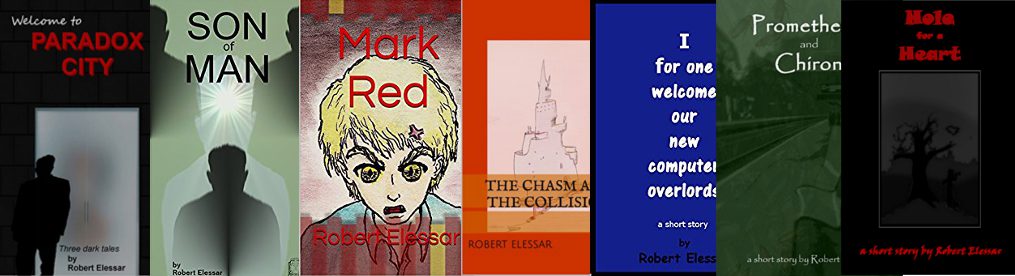
Anyway, the point I guess I’m making is that there is something non-futile, or so it seems to me, in dying with your loved ones nearby, for you and sometimes even for them.  I was very disheartened to have arrived too late for my final visit with my father, and could only say goodbye to him after he had died.  I was at least there for my mother’s final day or so, and I think she was aware that I had come.  She was quite out of it, but she interacted with me some.  I tried to start reading The Chasm and the Collision to her, which I had just published not long before…I think.  My recollection may be faulty here.  I have the impression that she just missed reading that, and I think it would have been her favorite of my books.

I don’t think I would have wanted my parents ever to read Unanimity.  It’s just too dark.

I think I may take an Uber to the train this morning.  It’s a bad habit, I know, but I’m still a little wiped, and the prospect of walking to the bus and then from the bus to the train is mildly unpleasant.  If so, I’d better leave soon.  I may write more of this once I get there.

And that’s what I’m doing, just for a short while.  I don’t want to make the post too long, but I figured I’ll let you all know that I got to the train station, and that I even got on an earlier train than I was expecting given that fact, because that earlier train was running late.  That’s a slightly amusing bit of irony, I think.  But I have a weird sense of humor.

Anyway, I’m glad I took the Lyft (not an Uber; my apologies to the branding and marketing people at Lyft) because even walking down the stairs from the bridge over the tracks kind of wiped me out and made me feel a bit breathless.  I wonder if I could have a low-grade lower respiratory infection without having a cough.  It does happen.  A low enough respiratory infection often doesn’t trigger the cough reflex; that tends to involve the upper airways.

Oh, well, who cares?  I’m probably fine, and if I’m not, well, it’s not the worst thing that could happen.  The only people really relying on me are doing so for business purposes, and those purposes can all be fairly easily adjusted.  I’m certainly not crucial or essential for anyone or anything.

Anyway, that’s enough for now.  I have over a thousand words of gibberish down so far, written on my phone.  I think for tomorrow I’ll try to remember to bring the laptop with me; my thumbs are getting sore.

Again, I hope you all have a happy “day of the god of war”, contradictory though that may seem.  Contradictions can be okay.  And at the same time, they can’t actually exist; they can only be spoken (or written, etc.) they can never be instantiated.


*I suppose it must have been an odd number of reversals, since an even number would have left me going in the original direction, and that’s clearly not the case.

It’s inspiring stuff for an otherwise mundane journey.

I’m starting this blog post a bit later than I usually do—roughly an hour later—because, as I planned yesterday, I have walked from the house to the train station, which is about 4.8 miles, it turns out.  It took me almost exactly an hour and a half, which I guess is a decent pace, though I used to walk more quickly.

I suppose with enough training I shall improve.

Now I’m at the train station (not the one to which I take the bus, but the one from which I always used to set off), waiting for the very train I would have caught had I taken the bus to the train this morning.  So I won’t be arriving at the office any later than usual, but I may be tardy in my posting of this blog entry.

While I walked, I listened to The Fellowship of the Ring on Audible.  It’s a brilliant book to which to listen while walking any distance, because the characters are walking, themselves.  When I started, they were in the Prancing Pony, first meeting Strider (my namesake)*, and by the time I’d gotten to the train station, Frodo had just been stabbed on Weathertop and they were getting ready to repack the pony and head off the following morning.

It’s inspiring stuff for an otherwise mundane journey.

I’m not wearing my Timberland boots today.  I fear that part of the issue with them is that they don’t fit my feet quite snugly enough, and so I slide around a bit in them, and of course, that can lead to blistering.  I’m not sure why the fit is overlarge, though.  I’ve looked at the various reviews and whatnot of those boots, and people generally say that they are true to size, or else a bit small.

Whereas, for instance, the Under Armor shoes I had are actually a bit snug at my usual size, and a pair a half size up seem a more comfortable a fit around my toes.  New Balance walking shoes, such as the ones I’m wearing today, and more or less just right.

I’m leery of trying a pair of Timberlands a half size smaller, not least because they are not cheap.  Though, of course, Amazon does have a try-it-on thing you can do, but if you don’t want to keep a pair you have to send it back, and that’s annoying.  I can’t deal with crap like that anymore; it involves interacting with humans I don’t know and changing my schedule and my routines and all that other stuff, and it’s just not worth the effort.

Maybe I’ll figure something out.  Possibly just the walking itself will strengthen my feet, or alternatively will make them swell enough that they fit the boots snugly.  I will admit, after wearing the boots yesterday, they already feel much more comfortable than they did before, but I did not walk more than about three and a half miles yesterday, total.

I’d like to find something out that is more or less ideal, but there may be no such thing in the real world.  Reality is extremely complex, with all sorts of high order equations interacting with other high order equations all over the place.  It may well be that the possibility of finding something ideally suited in all aspects for any given purpose is functionally impossible.

This is one reason I dislike it when people use the word “perfect”, because in most cases it’s a notion that isn’t even well defined, let alone achievable.  Unless one sets clear and specific and precise criteria, judging anything or anyone to be perfect is just rhetoric, it’s not reason.  Powerful rhetoric can be enjoyable, like watching a boxing match or a martial arts movie, but it absolutely should not be allowed to sway one in important matters that bear on facts of reality or choices of morality.

Should we really let our politics, let alone our judgments of the facts of reality, be shaped by the words of someone who is—effectively—the best name-caller on the playground?  The difference between juvenile remarks—“Neener-neener,” “Your mama,” and “I’m rubber, you’re glue” for instance—and the words in most political discourse and debate is one of degree, not of type.

Imagine if Wiles’s proof of Fermat’s Last Theorem*** had consisted of him saying, “It’s true ‘cause I said it’s true, now what are you gonna do about it?  My grandma knows number theory better than you do.”  Or perhaps he could have invoked the seemingly more mature arguments:  “Of course, my political opponent would be skeptical of my proof, even though it’s obvious to anyone of intelligence that it’s correct.  The members of that party don’t want you to have the freedom brought by knowing that no three positive integers a, b, and c satisfy the equation an + bn = cn for any integer value of n greater than 2.  That’s because it threatens their power structure, and their special interest groups and wealthy lobbyists.  My proof may, like Fermat’s, be too big to fit in the margins of a letter, but believe me, my opponent’s brains, together with his genitals, are more than small enough to fit in such a space.”

Would that be a convincing mathematical argument?  Would it have anything at all to do with the truth of any proposition whatsoever?

Why do people both use and fall for such manipulations?  I know, I know, they’re just a bunch of tailless, nearly-hairless monkeys; why would you expect them to be more reasonable than baboons?  But it’s so frustrating mainly because nearly all of them appear to have the capacity to be rational, contrary to popular belief.

The very use of language itself requires syntax, grammar, logic, all applied at quite a sophisticated and often abstract level.  Almost all humans are capable of language starting at a young age.  They have the wherewithal to be truly reasonable and sharp-minded, almost all of them, with but a bit of effort.  This makes it all the more irritating when they don’t do so.

One doesn’t get angry at a starfish for having no curiosity about astronomy (despite what we call it), or a worm for not grasping quantum mechanics****.  And what does a sea squirt need with philosophy, especially once it’s achieved tenure?  But humans nearly all have the capacity for exceptional achievements.

Though I suppose “exceptional” wouldn’t be the right word if everyone did it.

How did I get on this subject?  I don’t remember.  Anyway, that’s more than enough of a post for today, and as I write this last sentence, having arrived finally at the office (and having now walked just shy of six miles already), I still need to do my editing.  So I’ll call it good.  I don’t think I’m going to be working tomorrow.  It would be good, after my first day of longer walking, to have a day of relative rest.  Then, next week, I shall do my walking, about 12 miles, every day.  That’s not too bad for a start, but not as much as my eventual hope.

We’ll see what happens.


*That’s Aragorn, of course, but for those of you who have only seen the movies, you may not know that his name as king of Gondor, in the fullness of time, was Elessar Telcontar.  Elessar means “elfstone” and refers to the green gem given to Aragorn by Galadriel, whereas Telcontar means, more or less, “strider”**.

**If ever I were to assume a supervillain name of some kind, I might replace my current last name with “Melkor”, because it would lead to possibly the most egotistical concatenation of name meanings ever.  My first name, Robert, apparently means “bright fame” or “bright glory”.  My middle name, Eugene, of course means “true born” or “well born”, as in “eugenics”.  And my counterfactual last name, Melkor, would mean “He who arises in might”.  That’s a heckuva collection of names.  And, of course, I’m a doctor by training and by degree, so that just makes it all even mightier.  “I’m Robert Eugene Melkor, MD.  You can call me Dr. Melkor.  Bwa ha ha ha haaaa!”

***Which, to be fair, should be called Wiles’s Theorem.

****Though they are good at tunneling.  Ha ha.

Words, and spice, and a futile device…that’s what this blog post is made of

Well, it’s Friday again, and so tomorrow is Saturday, in the system by which we name our days.

The days themselves don’t know or care about what we call them, anymore than all the various plants and animals and fungi in the world care—as far as anyone can tell—what we call them.  Our names of things are solely for our convenience, to make communication easier and more streamlined—paintbrush handles of thought, as I think Eliezer Yudkowsky described them.

But, of course, having finite minds, as surely do all creatures, we tend to get so used to thinking of things by their names that we think the names and the things are interconnected in and of themselves, and even that the names have inherent power.  This is akin to all the old magical ideas that knowing someone’s or something’s true name gives you power over them in some mystical fashion.  It’s also related to our (depressingly) current notions of names or other words being capable of causing actual, physical harm, and being taboo—even words that are basically innocuous.

I can certainly understand why people might want to avoid using a term that’s been almost exclusively associated with historical injustice, oppression, and literal violence; that’s just a matter of trying to be polite, as far as I can see, and politeness is rarely a bad thing, as long as people don’t get too carried away.  But the tendency of humans to get hung up on some mystical (and fictional) power of names often becomes a problem, and is the error of thought which required the creation of the formerly popular and very important corrective, “Sticks and stones may break my bones, but words will never hurt me.”

That’s very true—unless you’re dealing with Paul Atreides or some other Bene Gesserit person.  Alas, those are fictional beings.  I say “alas” not because I think that it’s too bad that we don’t have the Bene Gesserit and so on, but because it would be great if there really were people/creatures like the Guild Navigators, with the ability to fold space thanks to long exposure to the spice mélange.  That would be tremendously useful for space travel, obviously.  In our world, though, “He who controls the spice controls the universe” just refers to KFC and Colonel Sanders’s secret original recipe for fried chicken, which is tasty, but is not going to get us interstellar travel, at least not anytime soon.

Similarly, as far as we know, in our particular brane-world, there are no orcterlolets, with their ability to manipulate space directly (no spice needed).  And if Simon Belmont is real in our universe, he’s keeping his knowledge and abilities quiet, probably wisely*.

Anyway, coming back to the subject of the day and days, I hope you all are going to have a good weekend, and that you get some time off from work and so on.  I’m going to work tomorrow, unless some highly unusual situation develops, and so I will be writing a blog post tomorrow.

In case you couldn’t tell, I’ve been using my laptop all this week to write, and it’s definitely helping my thumbs, though they are not fully recovered yet.  I will say, even I am struck by how much faster and more eloquently I “speak” when typing than in any other fashion, including actual speech, as far as I can see.  As you may know, I’ve tried to work on doing “audio blogs”, since more people seem to like to listen and to watch things than to read—see yesterday’s post for my lament about that fact—but it’s not nearly as natural to me.  I did find it gratifying to read aloud my last post from Iterations of Zero, which I turned into a “video” on YouTube and embedded here, but that’s as much because I really was trying to get that message out…yet again, perhaps for the last time, after so many, repeated failures.

Apparently, I’m not very good at making myself clear.  Then again, the reason for that, and the emphasis on that reason, was a big part of the point of that last IoZ blog post and the fact that I read it aloud and shared it in different format.  I’m probably wasting my time, though.  Even if someone actually gets the point I’m trying to make, why on Earth would anyone act on it?  Why would anyone even try to save the prisoner in my thought experiment?

Let him die, I say.  He’s a worthless little piece of shit, anyway.  I hate him.

With that, I’ll wrap up this rather bizarre and somewhat short Friday blog post.  I didn’t have any agenda going in, and I think I’ve achieved that agenda nicely, and in fewer words than I usually take to do it.  If you’re spending the weekend with family and/or friends, please do your best to appreciate your time with them.  Make the most of it.  Don’t take them for granted.  Take nothing for granted.  The universe only makes one promise to everyone—and we can’t even be completely, mathematically, epistemically certain of that one.

5755364526_jail_cell_336x264_xlarge


*The immediately preceding few sentences were references to my “fantasy” adventure book, The Chasm and the Collision, in case anyone was confused more by them than by references to Dune.  To learn more about what those references mean, you should buy and read my book!  Heck, buy them all!  They will change your life, I promise you…at the very least in the sense that you will own several more books than you had owned previously.  That’s technically a change, right?

“No more work to-night; Christmas Eve, Dick! Christmas, Ebenezer!”

critic


Okay, well, it’s Friday at last, and it’s “Christmas Eve eve” as I sometimes say.  It turns out that the office apparently isn’t going to be open tomorrow, which surprises me‒as is obvious, I guess.  I still could find out otherwise, I suppose, but I doubt it.

I’m writing this on my phone again, and I have been doing so most days this week.  I think I used my laptop on one of the days, perhaps Tuesday, but not on Wednesday, when I wrote my long and rather irritating post full of self-congratulation for deeds of the past that have no relevance to my current life.  That long-winded blather was from my phone, if you can believe it!

I actually slept comparatively well last night; I only finally woke up at about 3:50 this morning, which for me is about a two-hour lie-in.  I’m not even waiting for the first train of the day; I’m waiting for the second one!

I’m surprised that I slept quite so well yesterday, because I had an unusually bad day for pain‒or perhaps it would be better to say it was a good day for pain and thus a bad day for me.  The pain was focused in my right lower back down through my hip to the ankle and the arch and ball of my foot, but spreading up through to the upper back and shoulder blade and arm, and nothing that I did or took seemed to make more than a transient difference.

I was walking around the office like Richard the Third most of the day, when I was up.  We did get some very lovely cookies from my sister for the office‒she sends such packages often and they are beloved by all, and justly so‒but I couldn’t enjoy them as much as I wish I could have, because I was in a lot of pain and severely grumpy.

They were/are amazingly good, though.

I am still in a bit of accelerated pain this morning, but then I’m basically always in pain.  It’s not yet as bad as yesterday, at least, so keep your fingers crossed, please.  Or don’t if you’d rather not; I hardly think it actually has any effect on any outcome other than the configuration of your fingers.

I suppose it’s just a way for me to express my anxious hope mixed with fear and tension, and to invite some kind of shared emotional support from readers.  Though, of course, for that, it doesn’t make all that much sense, since how would I even know if any of you are crossing your fingers?  I suppose you could leave a comment saying that you are, but the very act of typing a comment must make it at least slightly less likely that your fingers are actually crossed, certainly while typing.

Anyway, I hope that my pain today is less than it was yesterday.  But even I personally will not be crossing my fingers, since I don’t think that gesture has any magical powers, so you shouldn’t feel obliged to do it, yourself, either.

Come to think of it, I don’t think anything has any magical powers.  My first thought about that is “more’s the pity”, but really, what would magical powers even be?  If they existed, they would be actual phenomena of nature, and would have some lawful underpinning and explanation.

That’s one thing I’ve always kind of been disappointed about in the Harry Potter books.  They take place in a school, and have genius characters like Dumbledore and Tom Riddle and Hermione, who surely would have curiosity toward the hows and wherefores of magic, yet there’s not even a hint of an explanation for how it works, why it works, what it actually is, or anything.  I think some touching upon that subject would have been very fun.

I mean, for instance, how does apparation work?  It involves a sensation of squeezing through something, but is that some form of hyperspace, or a wormhole, or what?  How do wands enhance or channel magical power from individuals gifted in magic?  How was that figured out for the first time?  Clearly people can do some magic without wands‒so, how necessary are they?

When did people begin to be able to do magic?  Clearly people haven’t always been able to do magic; there haven’t even always been people!  Was the ability to use magic some new, isolated mutation, like blue eyes, that spread through the population (as it surely would)?  Clearly it’s not some complex mutation, as it arises de novo in the human population, leading muggle-born witches and wizards to arise with some regularity.

Perhaps there is a complex of genes that, only when all present together (perhaps even only when homozygous) instantiate the ability to do magic.  Maybe most humans have some large fraction of the necessary genes‒after all, as I noted, the ability to use magic seems likely to have been a significant evolutionary advantage‒but it’s so easy to lose some necessary part of the biological (neurological?) machinery necessary through random mutation that most people are mutated slightly away from the complete set and so become muggles*.  Or, if born to witches and wizards they are given the derogatory term “squibs”.

I don’t recall how I got on this topic, but it is interesting, and I wish Rowling would at least have hinted at some studies or explanation, at least when discussing the Department of Mysteries.

Alas.

Anyway, since I apparently won’t be writing a post tomorrow, I would like to wish all of you who celebrate it‒in the words of the late, great hero, Dobby the house elf‒a very Harry Christmas**.  Maybe take a moment to read the Christmas scenes in the various Harry Potter novels.  Christmas at Hogwarts, for the students who stayed over the holidays, seems always to have been an interesting occasion, albeit not as fun as Halloween.  Halloween at Hogwarts would have been quite the thing to experience. The only close contender that readily comes to mind is Halloween with the Addamses.  That would be interesting!

I guess I’ll be back on Monday, then, though it is at least slightly possible that I could be wrong about tomorrow.  If I am, I’ll be writing a post, and it may be quite a grumpy one, though maybe not.  After all, what do I have to do with my time other than go to the office?  Not much, honestly.

Oh, well.

santa-whoand merry


*This raises the odd thought for me about what might happen if a cancer developed that, by chance, has a complete set of magical genes, in a muggle who had been almost complete.  Could one have a “magic tumor”?  I guess probably not, since it seems magic would be a collective function of many aspects of the nervous system, not a property of every individual cell.  Perhaps this is one reason why wizards can’t just fix visual impairment‒Harry Potter wears glasses, and no one ever even suggests that magic might be able to cure his vision. But the eyes are, quite literally, extensions of the central nervous system‒though the lenses aren’t, come to think of it‒and maybe tampering with the eyes through magic is particularly dangerous, or perhaps the nervous system always rejects such attempts.

**As an aside, I have to tell someone that, in the song Have Yourself a Merry Little Christmas, I’ve always tended to hear the line, “Faithful friends who are dear to us gather near to us once more,” as if they are singing, “…gather near to us one s’more”, and I think, “How are they going to share one s’more between a group of people?  I mean, it’s “friends” who are dear to “us”, which to me implies at least four people, total.  How can you split one s’more between four people?  Also, it would make a mess, with graham cracker crumbs and melted chocolate all over various hands and the floor and all that.  Anyway, I know that’s not what they’re saying, but every time I hear it, those thoughts go through my head.

The sweetest honey is loathsome in its own deliciousness. And in the taste destroys the appetite. Therefore, blog moderately.

Hello and good morning.  It’s Thursday again, so I return to my traditional weekly blog post, after having taken off last Thursday for Thanksgiving.  I’m still mildly under the weather, but I’m steadily improving.  It’s nothing like a major flu or Covid or anything along those lines, just a typical upper respiratory infection, of which there are oodles.  Most are comparatively benign, especially the ones that have been around for a while, because being not-too-severe is an evolutionarily stable strategy for an infectious agent.

An infection that makes its host too ill will keep that host from moving about and make itself less likely to be spread, to say nothing of an infection that tends to kill its host quickly.  Smart parasites (so to speak) keep their hosts alive and sharing for a looong time.  Of course, “smart” here doesn’t say anything about the parasite itself; viruses are only smart in the sense that they achieve their survival and reproduction well, but they didn’t figure out how to be that way—nature just selected for the ones that survived and reproduced most successfully.  It’s almost tautological, but then again, the very universe itself could be tautological from a certain point of view.

It’s an interesting point, to me anyway, to note that today, December 1st, is precisely one week after Thanksgiving.  Of course, New Year’s Day (January 1st, in case you didn’t know) is always exactly 1 week after Christmas.  It’s unusual for Thanksgiving to precede the first of December by a week, because the specific date of Thanksgiving varies from year to year (and, of course, if Thanksgiving were to fall on the 25th of November, December 1st would not be exactly one week later).  It’s an amusing coincidence; there’s no real significance to it, obviously, but I notice such things.

Anyway.

My sister asked me to write something about the vicissitudes of sugar (not her words), and though I don’t mean to finish the topic here today, I guess I’ll get started.  Apologies to those who are waiting for me to finish the neurology post, but that requires a bit more prep and care, and I’m not ready for it quite yet.  Life keeps getting in the way, as life does, which is one of the reasons I think life is overrated.

It’s hard to know where to start with sugar.  Of course, the term itself refers to a somewhat broad class of molecules, all of which contain comparatively short chains of carbon atoms, to which are bonded hydrogen and hydroxyl* moieties.

Most sugars are not so much actual free chains as they are wrapped up in rings.  The main form of sugar used by the human body is glucose, which is a six-membered ring with the rough chemical formula C6H1206.

glucose2

This is the sugar that every cell in the body is keyed to use as one of its easy-access energy sources, the one insulin tells the cells to take up when everything is working properly.  Interestingly enough, of course, though glucose is the “ready-to-use” energy source, it only provides about 4 kilocalories** per gram to the body, as compared to 9 kilocalories per gram for fats.

But the sugar we get in our diets is not, generally speaking, simple glucose.  It tends to be in the form of disaccharides, or sugars made of two combined individual sugars.  Sucrose, or table sugar, is a dimer of glucose and fructose, joined by an oxygen atom.

sucrose

Okay, I’m going to have to pick this up tomorrow.  I’ve gotten distracted and diverted by a conversation a few seats ahead of me.

There are two guys talking to each other at the end of this train car, and they are each seated next to a window on the opposite side of the train, so they’re basically yelling across the aisle to each other.  Their conversation is perfectly civil, and though they’re revealing a certain amount of ignorance about some matters, they are mainly displaying a clear interest in and exposure to interesting topics, from history to geography and so on.

At one point, one of the men started speaking of the pyramids and how remarkable their construction was, and I feared the invocation of ancient aliens…but then he followed up to say that, obviously, there were really smart people in ancient Egypt, just like we have smart people today who design and build airplanes and rockets and the like.  Kudos to him!

These men are not morons by any means.  They clearly respect the intellectual achievements of the past and present, and that’s actually quite heartening, because I think it’s obvious that neither one is extensively college-educated, if at all.

But why do they have their conversation from opposite sides of the train, so that everyone nearby has to hear it?  It’s thrown me off my course.

I’ll close just by saying that yesterday I finished rereading The Chasm and the Collision, and I want to note that I really think it’s a good book, and to encourage anyone who might be interested to read it.  The paperback is going for I think less than five dollars on Amazon, and the Kindle edition is cheaper still.  If you like the Harry Potter books, or the Chronicles of Narnia, or maybe the Percy Jackson books, I think you would probably like CatC.

CatC cover paperback

I’d love to think that there might be parents out there who would read the book to their kids.  Not kids who are too young—there are a few scary places in the story, and some fairly big and potentially scary ideas (but what good fairy tale doesn’t meet that description?).  It’s a fantasy adventure starring three middle-school students, though I’ll say again that, technically, it’s science fiction, but that doesn’t really matter for the experience of the story.

Most of my other stuff is not suitable for young children in any way—certainly not those below teenage years—and Unanimity and some of my short stories are appallingly dark (though I think still enjoyable).  If you’re old enough and brave enough, I certainly can recommend them; I don’t think I’m wrong to be reasonably proud of them.  But The Chasm and the Collision can be enjoyed by pretty much the whole family.  You certainly don’t have to be a kid to like it, or so I believe.

With that, I’ll let you go for now.  I’ll try to pick up more thoroughly and sensibly on the sugar thing tomorrow, with apologies for effectively just teasing it today.  I’m still not at my sharpest from my cold, and the world is distracting.  But I will do my best—which is all I can do, since anything I do is the only thing I could do in any circumstance, certainly once it’s done, and thus is the best I could do.

Please, all of you do your best, individually and collectively, to take care of yourselves and those you love and those who love you, and have a good month of December.

TTFN


*Hydroxyl groups are just (-OH) groups, meaning an oxygen atom and a hydrogen atom bonded together, like a  water molecule that lost one of its hydrogens.  This points back toward the fact that plants make sugar molecules from the raw building blocks of carbon dioxide (a source for the carbon atoms and some of the oxygen) and water (hydrogen and oxygen) using sunlight as their source of power and releasing oxygen as a waste product.  This was among the first environmental pollutants on the Earth—free oxygen—and it had catastrophic and transformative effects on not just the biosphere of the Earth but even on the geology.  The fact that the iron in our mines, for instance, is mainly in the form of rust is largely because of this plant-born presence of free oxygen in the atmosphere.

**A kilocalories is defined as the amount of energy needed to heat a kilogram of water by one degree centigrade.  We often shorten this term just to “calorie”, but that is actually only the amount of heat needed to raise a gram of water one degree centigrade (or 9/5 degrees Fahrenheit).  It’s worth being at least aware of the fact that what we tend to call calories are actually kilocalories.

A call for topics

It’s Monday morning yet again, despite my best efforts‒the beginning of yet another pointless work week in the dreary tail bit of the year, when the sun sets at 5:31 pm local time, thanks to the outmoded “daylight savings time”, making people like me, who are already dysthymic/depressive and are also subject to some seasonal affective problems that much more unstable.  Spread the word: daylight savings time causes significant morbidity and mortality* and does no one much, if any, good.

I’m writing this on my cell phone again, or “smartphone” if you will (though dumbphone seems like a better term given the way most humans use theirs).  I deliberately didn’t bring my laptop to the house with me over the weekend.  It’s not as though I’m writing stories anymore; I’m just writing this ridiculous blog.  So there’s no particular impetus to make the writing process easier for me, as using the laptop does.  I might as well use the smaller, lighter device when I don’t feel like carrying the heavier one.

I had a reasonably boring weekend, which I guess is a good thing.  I watched a few movies, and I went on some comparatively long walks‒I think I totaled about 12 miles over the course of the two days.  I also spoke with my sister on the phone on Sunday, and that was good.

That’s about it.  That’s the extent of my non-work life.  It’s the best I have to offer, and it’s as like as not just to get worse as time passes.  But I was able to force myself to get almost eight hours of sleep on Friday night and Saturday night, thanks to Benadryl and melatonin.  Oh, and of course, I did my laundry on Sunday, as I always do.

Sorry, I know this is really boring so far.  I don’t know what to tell you.  I didn’t really have any subject in mind for today, other than my brief diatribe about daylight savings time and depression/seasonal affective disorder.  Obviously, it’s a topic that affects me significantly (no pun intended), but there’s otherwise not much for me to say about it.

Eliezer Yudkowsky has an interesting bit of insight into it that he gives as an illustrative case in his excellent book Inadequate Equilibria, dealing with, among other things, the reasons why no one has done research on much stronger light-based treatments for SAD.  But you can’t expect depressed people to take initiative to do remarkable things to help themselves, since a major part of the problem with depressive disorders is comparative inability to take positive action.

If anyone out there has any requests for subjects or topics for me to discuss in a blog post, I’d be more than willing to consider them, though if it’s not a subject about which I have any expertise, I may not be able to do anything worthwhile with it.  Still, I have a fairly broad knowledge base regarding general science, especially biology and physics.  I like mathematics, though I’m not that deeply knowledgeable about esoterica thereof‒a regretted failure of my youthful imagination when I was in college.  Similar things could be said about the deep aspects of computer science; I wish I had known how interesting the subjects were back then and so had pursued them more than I did.

Of course, I have a fair amount of personal knowledge in the reading and writing of fantasy/science fiction/horror, though I haven’t read any new stuff in a while.  I haven’t even read any of my own books in a long time.  I think the most recent horror I’ve read was Revival by Stephen King, which was pretty good.  I haven’t read much if anything in the way of new fantasy since Harry Potter and the Deathly Hallows.  I’m reasonably well versed in slightly older comic book lore, especially Marvel.  And of course, The Silmarillion, The Hobbit, and The Lord of the Rings are among my favorite books.

I enjoy Shakespeare, but I don’t consider myself any kind of scholar of the Bard.  I like his works and his words in a fairly straightforward fashion.  I also like Poe quite a lot, as you might have guessed from my recitation videos of some of his poems.

Anyway, that’s a quick summary of some of the subjects upon which I might at least feel justified in opining.  So, if anyone has any suggestions or requests in these or even other, tangentially related subjects, I would appreciate them.  I like to feel useful or productive in at least some way, so I can justify my existence to myself.  It isn’t easy.  I’m a much harsher judge of my usefulness or worth than Scrooge at his worst, and I expect no ghosts of past, present, and/or future to visit me to give me some epiphany that changes my character.

It would be nice if some rescue mission were to happen to save my soul, but I don’t see it as plausible, and I don’t think anyone thinks it’s in their interest‒or anyone else’s‒to save me, in any case.  So in the meantime I’m just stumbling along like a wind up robot that’s been forgotten by the child that wound it up, legs moving and shifting until the mechanism breaks or the spring finishes untightening.  And damn, that’s an annoyingly efficient spring.


*I don’t have the data for this, but I strongly suspect that, if the sun set at least a little later‒say an hour later, even‒things would be slightly easier for people with SAD.  It might be difficult to tease out the statistics, but SAD doesn’t just kill by increasing rates of suicide, though I’m pretty sure it does that.  People experiencing exacerbations of depression have higher rates of numerous other illnesses and accidents beyond the obvious. 

“Where is the Power that protects beauty from the decay of life?”

It’s Friday, now, something which many people in our culture celebrate, since they’re about to enter the weekend, in which they can spend time with family and/or friends, and at least not have to work.

I’m not sure whether I’ll have to work tomorrow or not; my coworker is supposedly coming to the office today for the first time after his surgery, but it may be too much to ask of him to work on Saturday as well.  In any case, I think tomorrow would have been one of my scheduled days, but I could easily be wrong about that, and it’s not worth my trouble to try to figure it out.  I haven’t been trying to keep track.  I honestly hoped for it to be a moot point by now.

As you might have noticed, I’m still here and writing my blog today, the day after September 22nd.  It’s disappointing, I know.  I’m disappointed, myself.  But I did at least do some walking yesterday; more than usual, I mean.  I walked a total of about six miles, which is a halfway decent amount, though nothing like my target.

After writing about and thinking about the books I had read when I was younger, focusing yesterday specifically on Tolkien’s work, I nevertheless decided to go and start rereading Stephen R. Donaldson’s works, the ones I had read even more often than The Lord of the Rings by the time I had gone to college.  Somehow, I identified with Donaldson’s books much more than I did with Tolkien’s, though I think it’s clear that I love Tolkien’s work more.

But Thomas Covenant is definitely an anti-hero.  He’s no Frodo or Sam or Aragorn.  He defines himself by his disease (leprosy) because it is what he must keep in the forefront of his mind in order to prevent its progression.  Also, it’s what cost him his wife and child.  Then he gets brought to the Land, and he’s sure that he’s going insane, and that he can’t afford to let himself believe what’s happening, or he’s going to lose control of his life and his disease and truly go mad.

He does terrible things in the course of all this, but finally learns to find the center of the paradox of thinking that he’s dreaming and still believing in the Land, and ends up defeating Lord Foul.  I guess you would say, on the balance, he did much more good than evil.  But if you still hated him, I don’t think even he would have felt you were unjustified or wrong in it.  He doesn’t think of himself as any kind of hero, that’s for sure, and he doesn’t want other people to think that way, not least because it’s an overwhelming amount of pressure for any person but a narcissist to experience, which I suppose makes sense.

Anyway, when I first started reading Donaldson’s work, I remember feeling a weird kind of rebelliousness against the popularity of the first chronicles, and since the second chronicles had just started coming out, I began reading The Wounded Land, the first book of the second chronicles, before I had read the first.  It was an odd decision, and even I can’t quite recreate the mental state that led to it.  I don’t know if I wanted to get a head start or what exactly it was.  My friend Cindy had read, or was reading, the first chronicles and recommended them, if I recall, and maybe I wanted to get a head start on her?

That doesn’t feel quite right.

In any case, it wasn’t a terrible choice, because it gave me a sympathetic point of view with Linden Avery, the new co-hero of the second chronicles, who is a doctor who finds herself brought to the Land with Thomas Covenant this second time around, and she has no prior experience with it.  Also, The Wounded Land is one of the two best books in the whole series, from my point of view (the other one being The Power That Preserves, the last book of the first chronicles).

So, yesterday, I decided to start reading it again, and I got pretty far.  It’s as good, and as dark, as I remembered.  I have more awareness and familiarity with some of the things in it, like the fact that Linden is a doctor, but also with bitterness and loss and the like.  Somehow, though, I already felt connected with those parts of the books even when I was younger.  I don’t know why for sure.  Maybe it’s because I always felt like I was weird, even when I was exceptionally “successful”, in school and so on.

I certainly didn’t feel that I was like the other people around me; I’ve always felt like I was crazy in some way or other, and maybe that’s part of why I always was drawn to villains.  They were different, but they were powerful; people were afraid of them and didn’t want to mess with them if they could help it.  They were outsiders who worked to change the world to fit them, instead of having to change themselves to fit into it.

And Lord Foul was also the most eloquent villain I’d ever read, which appealed to my love of words.  He had curious turns of speech, though, saying things like, “Do you mislike the title I have given you?” to Thomas Covenant.  It’s almost as though English was not his first language, and he was putting words together in ways that made sense to him because they conveyed his ideas the way he wanted to convey them.  But he was also an actual character, unlike Sauron in LOTR, though he was only personally in the books for a few scenes, at the very beginning and the very end of both chronicles.

He’s also, as I mentioned yesterday, the purest villain, in that he simply hates all life and love, as it is put in the books.  It’s the core of his being, it’s the sum of his character.  It’s hard, at first, to understand how this might be so, how anything or person could simply be defined by hate that way.

Unlike with Tolkien, who has Morgoth and Sauron falling into evil and becoming hateful, it seems that Lord Foul was, in fact, fundamentally the dark side, or the dark counterpart, of the Creator of the Land.  He was cast into the Land when the Creator became enraged upon realizing that his “brother” or counterpart or dark side had tampered with the creation.  So Lord Foul is trapped in the Land, imprisoned with all the Creator’s stuff, unable to die, unable to escape except by destroying the “arch of time”, and so he hates everything about the Land and its world and everyone in it.  If he can’t get out, then he’s going to make the Creator suffer by hurting his creations, and ultimately by destroying them and escaping if he can.

I can sympathize more with that plight as time goes by.  I’ve certainly had many moments in which I feel that I literally hate everything and everyone in the world, the universe, and wish I could destroy all of it.  But, unlike Lord Foul, I don’t feel like I should do such a thing, that I have anything like the right to do such a thing, even though I tend toward nihilism.

But, of course, I can escape, unlike Lord Foul, if it comes to it, and it seems unfair to punish everything else just because I’m unhappy.  It might occasionally seem like it would be satisfying, but ultimately I’d feel it was unimpressive.  It would display a lack of self-control.  It would, in a way, be embarrassing, but I’d be embarrassed with myself more than in the eyes of anyone else.

It’s a weird state of mind (what a surprise).  But it’s one of the reasons I have no patience or sympathy with people who commit mass violence and the like, because—though I can certainly get inside the mindset that must have led them to want to destroy these people by whom they feel they can never feel accepted—I see it as a childish urge, the indulgence of a tantrum.  I have no respect for such lack of self-control, in others or in myself.  I find it more disgusting than I do the various other things that make me feel so outside and alien.  There is no excuse for it.

But Lord Foul’s situation is different, and anyway, he’s a fictional character.  Most of all, any good epic adventure needs a bad guy, the worse the better (so to speak) and he’s as bad as any I’ve read, while still being a real person in the books.  And I can sympathize with the Creator, too, who is clearly not some perfect, all-seeing, all-knowing being, but just an artist of sorts, who made something beautiful, and was frustrated that he couldn’t do so without there being evil within it.

Of course, there is also now a “last” Chronicles of Thomas Covenant, and I have read only a part of the first book of those, while I was away in Raiford, when only one or two of them had come out.  I think.  But now they’re all out, and I may, just possibly, skip back ahead to those to find out what happens.  I think, from hints I’ve gathered, that we get more understanding of the nature of Lord Foul, and the Creator, and all that in these books, which would be interesting.

Further bulletins as events warrant.  Assuming the Arch of Time doesn’t get broken in the meantime.  If it does, though, at least you’ll know that I was able to escape, and so it won’t be entirely sad.

[By the way, the title of this post is the first line of a song the Lords sing in the second book of the original Chronicles of Thomas Covenant the Unbeliever.]

Pursuing it with weary feet

Hello and good morning.  It’s Thursday morning, and this is not a pre-written post; this is one that I am writing now, on Thursday morning.

It’s September 22nd, 2022, and it’s the first day of Autumn.  It’s presumably the equinox, and—more importantly—it’s Bilbo’s and Frodo’s birthday.  This is the first time since I’ve been writing this blog that September 22nd has fallen on a Thursday, which isn’t too surprising.  After all, on average that should happen only once every seven years, and leap years might, depending on the year, increase that gap, though they could also decrease it.

Obviously, The Lord of the Rings and The Hobbit are very important to me, so I’ve varied slightly from my usual Thursday title format of using a slightly altered quote from Shakespeare.

By the way, when I speak of the importance to me of those works, I mean the books.  If anyone out there has only seen the movies, you cannot know what I’m talking about.  Don’t get me wrong, I think Peter Jackson did an awe-inspiring job on The Lord of the Rings movies.  And The Hobbit movies were tolerably okay.  But they were nothing like as good as the books.  I haven’t even watched any of the new Amazon series yet.  I’m not sure if I will.

My first exposure to Tolkien’s work was in the form of a record (vinyl, that is) with excerpted audio from the Rankin-Bass cartoon of The Hobbit (which was in many ways superior to Peter Jackson’s bloated trilogy* of movies made from that one book).  My brother and I used to listen to such records sometimes when we were going to bed for the night—we shared a room—and I can still remember the beginning of the theme song written for that cartoon:

“The greatest adventure is what lies ahead

Today and tomorrow are yet to be said

The chances, the changes, are all yours to make

The mold of your life is in your hands to break.”

I feel that’s rather appropriate to me right now, frankly, but it was evocative even for a little kid.  We also had a big, illustrated version of The Hobbit, filled with stills from the animation and pre-production artwork and concept artwork from the development of the cartoon, though I didn’t really know what they were at the time.  I just knew they were beautiful to me, and I enjoyed them before I ever actually read the story.

Of course, once I had read The Hobbit and then The Lord of the Rings, I was hooked.  By the time I was twenty, I had read The Lord of the Rings at least 21 times, and The Hobbit more than that.  I had also read The Silmarillion at least seven times.  These were not the books I had read most often, mind you.  That record goes to The Chronicles of Thomas Covenant the Unbeliever, which I had read, I think, 29 times by the time I was halfway through college.  I had meant to write a segment of my short-lived “series” My Heroes Have Always Been Villains on the antagonist from those books, Lord Foul, who is, I think, the purest villain in all the literature I’ve read in my entire life, at least among those who are actually characters with personalities.  If there were enough demand, I might write a post in MHHABV about him.

But Tolkien’s work is dearer to my heart, and so the fact that this day is the 22nd of September, and a Thursday, feels portentous to me.  It’s the sort of day one might sell or give away all one’s former worldly good and heads off on an epic journey, from which he may never return, and if he does, which will leave him profoundly changed.  I want to do that.  I want to escape.  At the very least, today I am going to begin working toward that escape, to begin to prepare the way home from Mordor.

I’m two years older than Bilbo and Frodo Baggins were at the start of their journeys, but then again, I’ve already been on my own horrible “adventure” for a long time now.  The sliver of the Witch King’s blade has been working its way toward my heart for ages, and it may already have pierced it.  I think I’ve mentioned before that I often—maybe most of the time—feel as though I’m a wraith like a Nazgul, like a mortal who keeps a great ring:  not dying, but not growing or obtaining new life, either, just continuing, though every minute is a weariness, untouched by the world of light except as a source of pain.

Anyway, I can’t continue like that, or rather, I don’t want to.  I suppose I could, if there were any good reason.  I’ve continued this far, and apart from the date and my own associations, there’s nothing actually different about today compared to any other day.  It’s just another rotation of a little, rocky planet orbiting a run-of-the-mill star in an outer spiral arm of a mid-sized galaxy, in what may be, for all we know for certain, just one of an infinite number of “universes”.

But for me, the date is significant, and so is the day, and maybe I can use that as an impetus to try to do something epic, at least from my own point of view.  I hope so.  Because I can’t stand things as they are, not much longer, no matter what.  I don’t want to stand them.  I don’t see any good reason to do so other than inertia.  Mind you, inertia is a strong thing, but entropy is stronger.  Entropy is inevitable, at least as far as anyone can tell, and we have good physical and mathematical reasons for coming to that conclusion.

In the meantime, though, I’ll end this blog post not with my usual Thursday sign-off, but with Bilbo’s words in Lake Town, when he didn’t even realize it was his birthday, combined with his jokey comment from a much later birthday, but switched in order.

“I don’t know half of you half as well as I would like; and I like less than half of you half as well as you deserve.

Thag you very buch.”

bag end trimmed with border

R rune


*I also much preferred the Rankin-Bass tune for the dwarves’ song in Bilbo’s house to the one in the Peter Jackson version, and partly because of their tune I can always remember pretty much that entire song/poem.  My favorite verse is:

“The bells were ringing in the Dale

And Men looked up with faces pale.

The dragon’s ire, more fierce than fire

Laid low their towers and houses frail.”