Give us this day our daily blog

It’s Tuesday now, and I’m writing this on my mini lapcom.  I don’t know if I wrote any of my posts from last week on the lapcom*, but so far this week, this will represent 50 percent of the week’s posts so far.

Admittedly, that’s not saying much, and one cannot draw many conclusions from a two-item sample in which one is one way and one is another.  To presume that they will continue to occur in a 50/50 ratio would be a major statistical/probabilistic error.  At best, one can say that there are at least two ways in which my blogs can be written, since two have so far been sampled—and that is certainly true.

Anyway, speaking of twos, it’s Tuesday.  It’s the 10th of March, of course, and the second full weekday in Daylight Savings Time, or in non-Daylight Savings Time, whichever one it officially is now.  You can tell that I really don’t see the sense in the whole thing from the fact that I cannot even recall nor logically infer which of the two possibilities is correct.  When I am actually interested in something, I tend to try quickly to dispel any ambiguities in my understanding if I can.  With this, I really don’t care, because it’s all silly.

In fact, it’s so silly that I think that’s all that need be said about it.  On to better things, or at least to other things.  But, of course, the question now is:  What other things should I discuss**?  I don’t know, honestly.

I don’t know dishonestly, either, come to think of it.

Isn’t it weird how much of a habit it is to say things like, “honestly”, or “to tell the truth”, or “I swear”, or other similar words and phrases to try to emphasize the authenticity of our words?  But they don’t do anything at all to confirm our truthfulness; epistemologically, they’re almost without content.  If anything, the fact that we felt unsure enough to have to say we’re being honest might raise a so-called red flag in the mind of a given listener.

Does the fact that a person says “honestly” or “I’m not gonna lie to you” or any similar phrase actually provide any information about truthfulness, except for the fact that this person recognizes that truthfulness is valued, at least by the person to whom they are speaking?  It doesn’t really demonstrate truthfulness, I think that’s clear.

Some might be inclined to think that the words actually indicate falsity, but that’s not true, either (ha ha).  It may be the case, at times, that a person who is trying to deceive another may say “honestly” to reassure their interlocutor that their lies are true and also to relieve some of their own anxiety.  But people who are telling the truth may merely want to recognize and emphasize that fact, and so use the same phrases.  They may, for instance, realize that something true they are saying could seem improbable to some hearers.

If it were always a harbinger of a lie, then such a seeming reassurance would indeed be a reliable signal, but of the opposite state from that described in the message’s content.  People would very quickly stop using it—the honest ones wouldn’t want to use it, since it always implies dishonesty, and the dishonest ones wouldn’t use it because it would be a dead giveaway.

Somehow, seemingly at least partly because it is an ambiguous signal, it stays in our discourse and is used automatically, more for emphasis and for rhetoric than for its prima facie purpose.  I’m sure Steven Pinker could give a good explanation for why this is so, or at least part of an explanation.  I know he’s come out with a recent book about mutual implicit knowledge and its nature (and its implications), but I don’t have it yet, and I haven’t read it.

I’ve read some of his other books and enjoyed them.  I seem to particularly enjoy his work as audiobooks.  I listened to The Better Angels of our Natures in audiobook format during my then-commute, using a Bluetooth enabled motorcycle helmet.  That book is almost 40 hours long on audio, but I was sad when it was over.  There was not one dull moment for me (of course, I was riding a very fast and non-armored conveyance at the time, so even if the book were to have become dull, there would have been other matters to keep me alert).

Okay, well, I’ve managed to meander about lexically—is that the proper term or not?—without any clear destination in mind, other than “at least 700 words”, and have written some vaguely coherent sentences about some distantly interrelated subjects.  I hope I have at least mildly entertained you, the reader.

I know, hopefully there is more than one of you, but only one of you can be reading this at one time in one place.  Now that’s a vaguely interesting thing to recognize:  reading is only ever a solitary process.  One can read alongside others, but one cannot share the process, even if several people are all listening to the same audiobook at once.  Reading does not add in parallel, only in series.

With that little tidbit that some of you will recognize and others will not, I’ll call this blog post to a close.  If there are no objections?  No further business?  Very well.  [Smacks the gavel on the table] This blog post is adjourned.


*I did not.

**Certainly not those round Frisbee® things they throw competitively in the Olympics.

Thoughts meander like a restless Melkor in the Outer Void…

It’s Friday, and this week I can be thankful therefor, because I do not work tomorrow.  The office will be closed (and locked) on Saturday.  Only those who have keys and the alarm code and some other reason for being there would be there (I suppose someone could break in, but there are cameras and alarms in place, and there is nothing of any significant net value, i.e., value worth risking the alarms and cameras to reach, inside).

Next Friday won’t be as good from a strictly work/not work point of view, but at least it will be Friday the 13th again, for the second month in a row.  Then we will have to wait an average* of 7 years for it to happen that way again.

***

Okay, I guess I’ve always known that I’m weird, but I just wrote a series of footnotes about Friday the 13th and year lengths and lengths of weekly cycle recurrences that dwarfed what I had yet written in the main body of this post.  I think I’m probably the only being in the universe that would write about such things and imagine that anyone else would be interested.

Yeah, definitely weird.

Still, I guess that sort of thing just happens when you talk to yourself in print and share it with any interested parties who might stumble upon it.  Also, when one is without companions or interactions one can, like Melkor, develop thoughts and thought patterns that are unlike those of one’s brethren.

I suppose that can sometimes be a good thing, though it can also sometimes be a very bad thing (rarely as bad as in the fictional Melkor case).  Though all improvement is change, most change is not an improvement‒at least not if it’s not deliberate and directed change.  So if one develops thoughts that are significantly divergent from those of all of one’s peers, odds are that they will not be a net improvement over most of the peer-born thoughts.

I have, of course, mitigated against this somewhat by reading a lot (and consuming other media that deal with science and mathematics and philosophy and such, as well as comedy panel shows).  That’s not randomly chosen reading, either; it’s carefully chosen reading.  I think this has helped improve the general content and tendencies of my thought, because I’ve influenced myself with the carefully thought-out thoughts of very bright people.

I suppose, though, that if one can read what one wants and does so, one is not really isolated from all other thoughts, so one’s own cannot be too very different, or at least are not very likely to be.  That’s good, I think.  Simply developing new thoughts without much input from others would be most likely to lead to some sort of feral state or something akin to schizophrenia.  

So, I guess it can be good to take tangents in one’s thinking, as long as they are not too many and too extreme.  But even given that, it’s clearly useful to have someone to rein one in, if one can, when one goes too far off the rails (yes, that’s a bad metaphor, since a train going off the rails at all is in huge trouble, rails representing a near-binary situation‒if one is a train and one is not on the rails completely, one has experienced a failure of locomotion).

Well, I guess that’s that for this week.  Actually, I suppose that is always that, by some principle of identity or self-reflection or something; I’m sure there’s an “official” name.  “It is what it is” as they say.  What I mean, though, is that I am drawing this post, and this week of posts, to a close now.

I hope you have a very good weekend.

After that I don’t give a shit.

(I’m kidding.)


*I know, I know, we won’t have to wait an average number of anything.  There is a specific and exact number of years before the next time February and March have Fridays the 13th, but I cannot be arsed to work it out just now**.

**Okay, well, since I am unable to keep myself from thinking about it at least a little, I think it’s going to be 6 years from now.  That’s because each regular year is 1 day longer than a multiple of a week:  365/7 is 52 with a remainder of 1, so one day longer than an even number of weekdays.  So next February should have the 13th on a Saturday, then a Sunday the following year, but then on a Tuesday the year after that because of the leap year (366/7 is 52 with remainder 2).  Then it will be Wednesday, then Thursday, then Friday.  So 6 years, if my figuring is correct***.

***If it seems counterintuitive that it’s 6 years when the average should be 7, remember that while in this case the leap year makes the next instance come faster, there will be occasional years when Thursday the 13th falls on a leap year and the following year will go straight to Saturday the 13th, the first of another six years (I think) that will be needed for the subsequent Friday the 13th in February.  In any case, 6 plus (6 x ⅙) equals 7, as does 6 + (a x 1/a) no matter what a is****.

****This doesn’t factor in those leap years in which February has a Friday the 13th, but March will not.  That may change the overall calculations somewhat regarding the average time between dual Fridays the 13th, but not the calculations about when the next one will be.

The painful truth – the truthful pain

Please forgive me if I behave or speak as though today were Tuesday.  I know that it is in fact Wednesday as I write this‒it’s anyone’s guess on what day of the week you might be reading it (though I suspect that, for the most part, if one doesn’t read my blog on the day it’s posted, one is unlikely ever to read it)‒but I didn’t write a post yesterday (Tuesday) so I may be a bit thrown off.

I didn’t write a post yesterday because I didn’t go to work yesterday.  And I didn’t go to work yesterday because of pain.  I had already been having a bad pain day on Monday, one in a long string of worse-than-average pain days.  Then, in the evening on Monday, while trying to reach for something in my room, I took a bad step on the tile floor and slipped and nearly fell.

I caught myself, as is implied by the “nearly” in that last sentence, but I wrenched my back significantly, and the night and morning and so on were particularly bad, and I hardly slept and I did not have the energy to go to work, or at least to do so and not spend all my time writhing and snapping at people.  So I stayed at the house.

Regarding chronic pain, I’m fond of quoting Ulrich’s description of Vermithrax from Dragonslayer:  “When a dragon gets this old it knows nothing but pain, constant pain.  It grows decrepit.   Crippled.  Pitiful.  Spiteful.”  I had to double-check and fix a few words to get the quote exactly correct, but the most important parts are always remembered correctly.  And the whole thing feels like it describes me pretty well.

I used to be much more pleasant and amiable than I have become since my chronic pain began.  Though I’ve had problems with depression since my teens and anxiety before that and ASD since I was born (in two different senses), I always tried to be polite and amiable and kind as much as I could.  I always figured that was the real position of strength:  not being in competition with other people but just trying to do your best while others do similarly.

But when one is in chronic pain, it is hard not to be grumpy (presumably even if one hasn’t lost almost everything one had worked to achieve through the first thirty plus years of one’s life, though I cannot know for sure).  I think there are people who have only known me since the time of the beginning of my back problem who would be surprised by how pleasant I was back in the day.

Though, there are those who read this blog who did know me in the past, before the aforementioned time, and maybe they would give a different report.  I can only share my own perceptions and perspective, and I could to a certain degree be mistaken about how I came across to other people.

I’ve never been all that good at knowing what other people think of me.  Because of that, I generally try just to take people at their word, and take those words to have their most straightforward meaning.  If someone hopes to hint at something and I don’t get it, that’s on themHints are overrated even when given and received by people who embrace the practice and consider themselves good at it.  There are too many possible variations and points of incomplete information.

Anyone who has saved and transferred a video file and has also saved and transferred word processor files should grasp the difference, at least if they have been paying any attention.  A video only a few moments long can, despite the latest compression algorithms, have a storage size that dwarfs the size of even, for instance, the word file for the unsplit book Unanimity.

Now, Unanimity is about half a million words long.  It’s certainly the longest thing that I have written.  But a video I did on my phone last week for minor fun, which was maybe 20 seconds long, takes up more than 16 meg, while the combined file size for the Kindle versions of both Unanimity: Book 1 and Unanimity: Book 2 is about 3.5 meg*.

That’s a few minutes of stupid and pointless video which will never be shared anywhere versus a work that took more than a year for me to complete, edit, and publish.

At least it’s fair to say that, from a useful information point of view, my book was and is much more efficient.  Though it requires enough shared experience for others to fill in meanings and images of things described, this is not a requirement that isn’t met by nearly every human on the planet.  Perhaps videos would be better for a truly alien species that was hitherto unfamiliar with human civilization.

Okay, well, that was a weird post, I guess.  I mean that in absolute terms, mainly; I don’t know if this post is much weirder or much less weird than my usual posts.  Possibly every potential interlocutor would have different things to say about that.

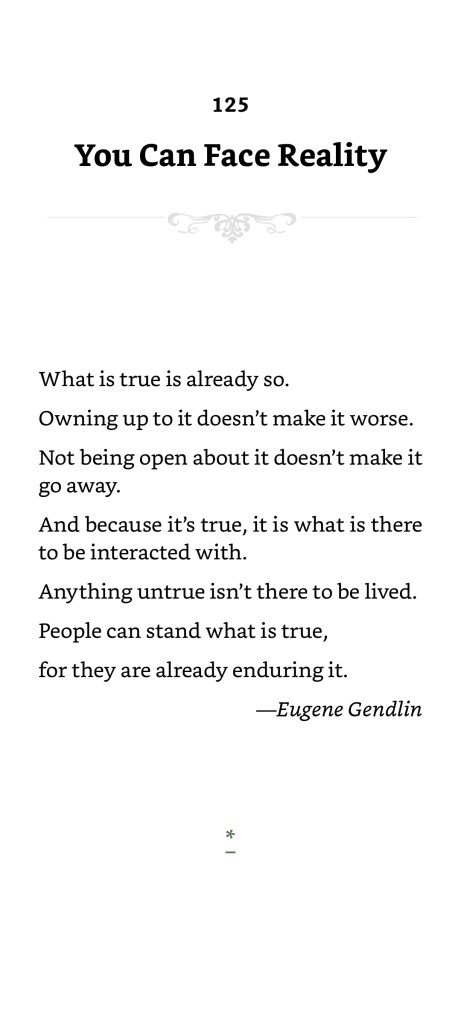
I guess that’s okay.  It had better be okay, if it’s true, because if it’s true, there’s nothing anyone can do about that, and they’re already living with it.  This is the Litany of Gendlin, as quoted by Eliezer Yudkowsky, of which I have a screenshot from his book Rationality:  From AI to Zombies, below.

Well, I hope you have a good day, whatever the truth is that you and all the rest of us are living.


*This is according to the AI summary of Google’s search for “Robert Elessar Unanimity file size”.  It’s almost certainly correct, because the info is part of the Amazon description of the book.  But it’s humorous to me that it’s easier to do an AI based web search to find the file size of my own novel than it is to look up the file, since I’m using my phone and don’t have direct access to the original at the moment.

Is it mean not to know if one’s writing is above average?

It’s Friday again, but that’s not much consolation, since the office is open tomorrow and I will be working, unless I am lucky enough to get very sick or very injured or to die or something.

As usual, I have no idea what would be good to write today.  Actually, goodness—certainly in the moral sense, but possibly also in the sense of quality—probably doesn’t have much to do with my blog.  Perhaps weirdness would be a better adjective/measure to relate to my writing.

I’m probably not an objective judge of such things.  Then again, I don’t know of any fully objective judges.  Still, there is some degree of variability involved in such things, as in nearly everything else made up of smaller, more fundamental parts that are interacting in complicated ways producing so-called emergent behavior.  Nevertheless, cognitive biases are reasonably well studied, as are many emotional blind spots and the like.  And it’s certainly true that I have a difficult time being objective about myself and about my work.

Oddly enough for such a self-despising person, I actually like my own writing, especially my fiction.  When I reread my stories I don’t tend to see them as horrible or wretched or whatever traditionally happens with “artists” who look at their own work.  I think at least some of that sort of thing is probably affected, since our society (perhaps semi-deliberately) looks down upon artists who think highly of their own art.

If only we did that with politicians; there’s an area where humility would be welcome and beneficial, I think.

Anyway, I tend to like my stories—I wrote them, after all, because I wanted to tell and thereby hear those tales—but I don’t necessarily think they’re great or good or decent from anyone else’s point of view.  I honestly don’t know how good or how bad they might be from nearly any others’ points of view, except my sister’s, and she’s probably almost as prone to be biased about my work as I am.

Though, again, my attitude toward my writing is not akin to that oft-noted personal bias that leads more than 90% of drivers to think that they are in the upper 50% in ability (i.e., above the median), which is a mathematical impossibility* for them actually to be.  I don’t think of my writing as better (or worse) than average or the median.

I don’t really compare my writing to anyone else’s.  I just tend to like it.  That’s probably a very good thing, because I have to edit it myself.  Even these daily blog posts are run through three more times after my first draft.  My fiction I tend to reread and edit seven times (that took a very long time with Unanimity).  Why seven?  Well, I had to pick a number, and once or twice is clearly too few, and thirteen would just be unworkable.

Also, with my fiction, I tend to follow advice Stephen King repeated in his book On Writing by working to reduce my final word count by at least ten percent by the time I’m done editing it.  I used to try to do that here, but I sometimes add a bit during editing, so that becomes quite difficult and hardly worth the effort.

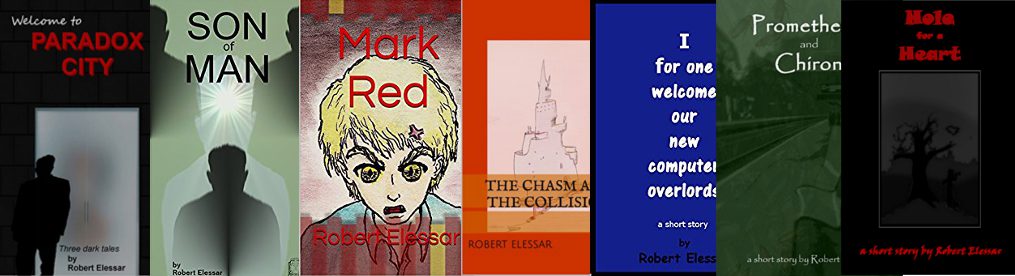
All that being said, it would really be nice to get some feedback on my writing, especially on my stories (from people who have read them).  Of course, I would love it if someone loved my stories and told me so and told me why.  The closest I think I’ve come is a review on Amazon of Welcome to Paradox City that was written by a former high school friend (he has since died of cancer, sadly) who had actually honestly bought the book for himself when it came out.  He wrote that the three stories in that collection each made him wish they were the beginning of a whole book, basically implying that he wanted to know what happens next.

That’s a good thing about short stories—you can leave people hanging and that’s just “too bad” for them (though it can be enjoyable).  Short stories also don’t have to have “happy” endings, which is good for me, since only one of the three in the above collection ends happily in any reasonable sense.

Of course, as I’ve noted before, my short stories are rarely short enough ever to have been, for instance, published in a magazine in the old days.  The only real exception to this is Solitaire, which I don’t think any magazine would have published, because it is very, very dark indeed.

Okay, well, I guess I ended up writing something today, even if it was all just figurative omphaloskepsis.  I don’t know whether you readers consider this good or bad or ugly, or how it compares in your estimation to posts like I posted yesterday and/or the day before.  If you’re so inclined, please let me know.

And if you have actually bought and read any of my books, I do beseech you to leave me a review on Amazon (or wherever) if you get the chance.  Thanks.

I’ll write at you tomorrow, barring—as always—the unforeseen.


*It is not, on the other hand, impossible for 90% of people to be above average (i.e., above the mean).  I’m sure I’ve addressed this before, but imagine one had administered a test, and 100 people took it.  Imagine that 90 of those people got 51/100 on the test, whereas the remaining 10 people scored zero.  Then, the arithmetic mean (what people usually mean by “average”) would be (90 x 51)/100**.  That goes to 4590/100, or a mean score of 45.9.  So, 90% of those people scored above average.  That’s not saying much, but it’s true.

** Yes I know I don’t really need the parentheses there, but I’m leaving them in for clarity.

Man overboard

As the real weekends go, it was better than most, to paraphrase The Wreck of the Edmund Fitzgerald.  By this, I’m referring to this last weekend, the two days before this day, of course.

I did not work on Saturday, which is good, because that would have been the third time in a row.  I also got to hang out with my youngest on Saturday, and we watched about four episodes of Doctor Who together, which was good, good fun.  I cannot complain about that in any way.

I have though a weird, disquieting, sinking sort of feeling that it may have been the last time I will see my youngest, or maybe anyone else that I love.  It’s is not one of those reliable sorts of feelings, like those that lead one to new insights in science or mathematics or what have you.  It’s probably more a product of depression and anxiety, the feeling that anything good in my life is sure not to last, if it happens at all, because I do not and cannot possibly be worthy of anything good happening to me.

Is that irrational?  Of course it is irrational.  It cannot be expressed in any sense as the ratio of two whole numbers, no matter how many digits they may have.

Wait, wait, let me think about that.  My thought, my feeling, was expressed above finitely.  That is, of course, a shorthand for what is really happening, but even if one were to codify those processes down to the level of each molecular interaction that affects any neural/hormonal process that contributes to my feeling, we know that must be a finite description (though it could, in principle, be quite large).

Even if we’re taking the full spectrum of quantum mechanics into account when describing my mental state, we know that quantum mechanics demands a minimum resolvable distance and time (the Planck length and the Planck time) below which any differentiation is physically meaningless.

A finite amount of information can describe the events and structures and processes in any given finite region of spacetime.  In fact, the maximum amount of information in any given region of spacetime is measured by the surface area (in square Planck lengths) of an event horizon that would span exactly that region, as seen from the outside*.

Any finite amount of information can be encoded as a finite number of bits, which can of course be “translated” to any other equivalent code or number system.  So, really, though the contents of my mind are, in principle, from a certain point of view, unlimited, they are finite in their actual, instantiated content, and can therefore certainly be expressed as an integer, and thus also as a ratio (since any integer could be considered a ratio of itself over one, or twice itself over two, etc.).

So, in that sense, my thoughts are not irrational.  Neener, neener, neener.

In many other senses—maybe not the literal, original sense, but in the horrified, cannot accept that not all numbers can be expressed as ratios of integers because that makes the universe too inconceivable, sense, among others—I can be quite irrational.

It’s very difficult to fight one’s irrationality from the inside, alone.  Even John Nash didn’t really beat his schizophrenia from within as shown in the movie version of A Beautiful Mind.  Also, his delusions in real life were far more extravagant and bizarre than those which appear in the sanitized version that made a good Hollywood story.

If one escapes from mental illness from within, one has to consider it largely a matter of luck, like a young child who doesn’t know anything about math getting a right answer on a graduate level, high order differential equation problem.  It’s physically possible; heck, if it were a multiple choice question, it might even be relatively common***.  But it’s not a matter of being able to choose to do it right and to know how it was done.

Severe mental health issues are going to need to receive assistance from outside, almost always.  This is not an indictment of them or of the need for help.

Surely, someone who has been swept off the deck of a ship by a rogue wave cannot be faulted for needing help from those still on the ship of they are to survive.  It would certainly seem foolish and almost inevitably fruitless if such a person tried to claw his way up the side of the ship to get back on board when there is no ladder and no handholds.  He should certainly not be ashamed that he cannot swim hard enough to launch himself bodily from the water and back onto the surface of the vessel.

One cannot reasonably fault such a person for trying to do the superhuman.  A person might try to do practically anything rather than drown or be eaten alive by some marine predator.  But, of course, barring an astonishing concatenation of events such as the time-reverse of the splashing entry into the ocean happening and sending the person out of the sea just as it was entered, such efforts will not succeed.

And though it might be heartening or at least positive for one to receive encouragement from those still on the deck—don’t drown, keep treading water, you can do it, you’ll make people sad if you drown, you deserve to stay afloat, I’m proud of you for treading water yet another day, it’ll get better, this won’t last forever, you’ve made it this far so you know you can keep going, you don’t want the people who know you to feel sad because you drowned, etc.—in the end it might as well come from the seagulls waiting to pick at one’s floating corpse.

Mind you, certain kinds of words can be more useful than others.  Words like, “Hey, around the other side of the ship there’s a built-in ladder; if you can get over there and time things right, you might be able to grab the lowest rung when the waves lift you, and then climb up,” might be useful because they are directions for using real, tangible resources that we know can make a difference.  Also, words like, “Hang on just a bit longer, we’re throwing down a life preserver on a rope so we can haul you up” would be useful, obviously, unless they were mere “comforting” lies.

Alas, though one could reasonably expect such literal assistance if one were washed overboard—the “laws” of the sea are deeply rooted in the hearts of those who work there, and they include a general tendency to help anyone adrift to the best of one’s abilities—when it comes to mental illness, the distress and the problems are difficult for others to discern and easy to ignore.  Calls of distress are often experienced as annoyances, and even treated with contempt, since those hearing them cannot readily perceive that they themselves might be similarly washed overboard at any time.

But, of course, they might be.

I don’t know how I got on this tangent, but I guess I never really do.  I just go where my mind takes me, and my mind is not a reliable driver.  It is, though, a reliable narrator.  It doesn’t matter, anyway.  Nothing does.

Anyway, here we go again into another work week, because that was what we did last week.  I wish I could offer you better reasons, but I’m really only good at breaking things down, destroying things, not at lifting anyone or anything up.  That comes from other regions and is conveyed by other ministers.


*From within an event horizon, the volume could be much larger than the spacetime that seems to be enclosed from the outside, because spacetime inside the horizon is massively curved and stretched.  It’s conceivable (at least to me) that there could be infinite space** within, at least along the dimension(s) of maximum stretch, just as there is infinite surface area to a Gabriel’s Horn, but only finite volume.

**See, mathematically, one can stuff infinite space inside a nutshell.  Hamlet was right.  He often was.

***Perhaps this explains why certain types of mental health problems can respond well to relatively straightforward interventions, and even to more than one kind of intervention with roughly comparable success, e.g., CBT and/or basic antidepressants and such.  These relatively tractable forms of depression are the “multiple choice problem” versions of mental illness.  This does not make them any less important.

This is not an attention-grabbing headline

I’m writing this post on my smartphone, even though I brought my lapcom with me yesterday evening.  I did not use my lapcom for yesterday’s post, such as it was.  I didn’t even write that post in the morning yesterday, or at least, I didn’t write the “first draft” of it then.

By the end of the workday on Wednesday, I didn’t feel like I was going to want to write a blog post on Thursday.  So I went to the site directly and just wrote the “Hello and good morning,” and the “TTFN” and set it to publish later.

I already knew what title I was going to want to use for it.  I wanted to use Polonius’s dithering, meandering jabber about brevity being the soul of wit, as a sort of left-handed self compliment about my own brevity in that post, and because, in the original form, it would have made the headline longer than the post, which would be ironically funny, in principle.

Then, yesterday morning, I got the urge to put my little “insert here” bracketed bit in the post, the better to convey how disgruntled and disaffected and self-disgusted I (still) felt, as well as how tired.  It did sort of spoil the joke about the headline being longer than the post, of course.  At least the older joke about Polonius still holds water.  Then again, that joke was made by Shakespeare, so we shouldn’t be too surprised if it has serious legs (though this raises the question of how serious legs could possibly hold water).

One thing worth at least assessing this week might be whether there is an aesthetic difference between this post (for instance) and the posts I wrote earlier this week, on the lapcom.  Writing on the lapcom is quite different for me in many ways.

On the lapcom, I generally have to work to stop myself before a post, or whatever, gets too long.  Whereas on the smartphone, that isn’t as frequent a problem.  Not that I can’t yammer on and on even with the smartphone, of course.  Some might say all I ever do is yammer on and on.  But anyway, I can’t write as “effortlessly” on the smartphone as I can on a regular keyboard*.

Sorry, I’m retreading a lot of old ground here, which I guess is better than retreading a lot of old tires. I know how to tread on the ground; indeed, I cannot recall a time when I didn’t know how to do that kind of treading.  Whereas retreading a tire sounds like something that requires special skills and equipment, both of which I lack.

I don’t know, I’ve heard of “retread” tires, but I don’t know if such things still abound, or if they ever did.  It sounds vaguely like a bad idea, like such tires might be more prone to blowouts.  But latex is a finite resource, and there aren’t very good synthetic alternatives, so maybe there’s at least some cost/benefit tradeoff (or treadoff?) there.

Ugh.  With that last joke, I probably convinced at least some of my readers that, yes, the world would be better off if I were dead.  Actually, I say that as if it were conditional, but it’s not.  It would be more in line with reality to say “the world will be better off when I am dead”.

There’s a quote by which to be remembered, eh?

I cannot say whether I will be better off when dead.  It’s probably a nonsensical question.  When I am dead, I will not be anything at all, not better, not worse, not uglier.  What happens to virtual particles after they have annihilated?  Nothing, and less than nothing, for they truly no longer exist, and in some senses they never existed.  Indeed, as physics goes, they probably never do exist; they are a shorthand description of what happens in quantum fields when perturbances in the fields have effects that do not rise to the level of actual, true particle production.

Or so I am led to understand.

From another point of view, it is possible for something to improve, at least in a sense, by ending.  I’ve mentioned this before, but if the curve of a function‒perhaps a graph of the “quality of life” or one’s “wellbeing”, to say nothing of happiness‒is persistently negative, then returning to zero is a net gain.  It can be a huge net gain, in fact.  This is related to the origin of my own version of an old saying, which I use with tongue definitively in cheek:  The one who dies with the most debt wins.

Now, of course, the integral, the area “under” that wellbeing curve would not be improved by the curve reverting to zero and stopping.  But at least that integral would not keep getting more and more negative over time.

Some might say, “well, the integral can become less negative over time, and might even become positive”.  This is, in principle, true.  And when one is younger enough, it’s relatively easier to tip the curve, and its integral, into positive territory.  But as the curve goes on, having been negative for a longer and longer time, it’s going to become ever harder to bring things to a net, overall positive integral, even if one could reliably make one’s curve positive (which one often simply cannot do).

Of course, the moment to moment experience (which is all the mind really gets) of an ascending curve could be pretty darn good, and might well be worth experiencing, even if it’s not enough to bring the integral into positive territory.  We are straying into the “peak-end” rule here, which was elicited regarding (among other things) colonoscopies but applies to much else in human experience.

Speaking of peak endings, I’ll mention in passing the curious fact that, no less than twice in the last week, the evening train service has been disrupted by someone either getting hit by or becoming ill next to the train.

Earlier this week, right by the station where I catch the train to go back to the house, there was a man who looked like he was probably homeless and had collapsed next to the train tracks not far from the station.  I saw him brought away, finally, on a stretcher.  He didn’t look physically injured‒certainly not in the ways I would expect someone who had actually been hit by a train to look‒but he did look cachectic, which is why I thought he might be homeless.

Then, last night’s commute was interrupted by what they call a “trespasser strike”, one that did not involve the train I rode but which always slows everything down.  I’m vaguely amused by the euphemism “trespasser strike”.  A “trespasser” here is a non-passenger who doesn’t work for the train company (or whatever) who is in the area adjacent to the tracks.  The “strike” part is probably self-explanatory.

I suppose it’s literally true, at least from a legal point of view, to call the person a trespasser.  But it’s amusing that the train people have to say something derogatory about a person hit by a train‒even if the person deliberately put themselves in harm’s way‒to sort of, I don’t know, assuage the company’s conscience.

But we are all trespassers, in at least some senses.  We are also, in other senses, all owners.  We are all innocent, and we are all, in some other senses, guilty.  “Every cop is a criminal and all the sinners saints.”  Above all, we are all very much just passing through, staying only a very short time.  We are all virtual particles.  Or you might say, we are all Iterations of Zero.

Have a good weekend.  I should not be writing a post tomorrow (in more than one sense).


*I wish I could honestly say that my use of a piano-style keyboard were as effortless, but I am terribly rusty with that, though I started learning it when I was 9, a rough 2 years earlier than when I got my first typewriter.

“‘Cause I’m your superhero. We are standing on the edge…”

Well, it’s Friday the 13th.  That’s at least one good thing about today.  And, of course, next month will also have a Friday the 13th, as I’ve noted previously (I don’t know specifically in which post I noted it, and I don’t really have the urge to go figure it out, so I’ll leave that to you to do if you’re interested).

It is slightly interesting to think about the fact that, on average, one of every seven Februarys will have a Friday the 13th, but not all of those will then lead to a subsequent Friday the 13th in March, because every 4th February will have 29 days*, by the Gregorian calendar, which is the one the world uses overall.

So, the total fraction of years with dual Fridays the 13th would be something like 1/7 minus a further ¼ of that one seventh—so 4/28 (i.e., 1/7) minus 1/28 (1/4 x 1/7), which leads us to the rough conclusion that only three out of 28 years will entail February and March each having a Friday the 13th.  That’s slightly less than one out of every nine years.  And since I’m 56, which is twice 28, I should have experienced about 6 such years in my life (perhaps counting this year).

Mind you, the numbers aren’t quite right overall.  The Gregorian calendar waives the extra day in February on years that are divisible by 100, i.e., the turns of centuries.  However, there’s a further exception to that:  the turn of a millennium, like what we all just had in the year 2000, does keep its 29 days in February.  So that brings the average closer to the raw number, but doesn’t account for the extra  ones that happen at more ordinary turns of centuries.

Of course, the only turn of a century through which I have lived—and through which I am likely to live**—was indeed the turn of a millennium, so I guess for me, the fraction 3/28 should be fairly accurate.

I could, if I were so inclined, go back to the first year in which I experienced a February—that would be 1970 (AD or CE)—and work through them to find out just how many dual Fridays the 13th I’ve experienced.  With modern computer-based calendars it would even be relatively easy.  But I don’t think I am so inclined.

Okay, that’s enough of that for now.  Actually, it’s probably too much of that, at least from any normal person’s (i.e., not my) perspective.  On to other things.

I’m writing this post on my mini lapcom, and I wrote yesterday’s post on the lapcom as well; I am doing this partly to spare my thumbs, but also to try to encourage myself to use the lapcom more and maybe even to write fiction again.  I don’t know whether or not that will happen, but it’s also just more natural for me to use the lapcom.  I’ve been typing, in one way or another, since I was 11 years old, if memory serves.  Clearly I have not been using a smartphone nearly that long, because they have not existed for that long.

Also, even when I saw the imagined future tech on Start Trek:  The Next Generation of tablets with virtual keyboards, I thought they looked like a terrible idea.  How lame, how unaesthetic, just to tap at a flat screen with no real keys.  Also, the “keys” on such devices in the real world are too effing small to be used to type in any traditional way.  Not but what one can get to be pretty speedy with them—I can zip along pretty well on my smartphone—but it’s nothing compared to being able to use one’s whole set of fingers to write.

Although, I’ve often touted the value of writing things longhand before retyping them into the computer, especially for fiction, because it can slow one down beneficially.  I did that—because I had no choice, being at the time a guest of the Florida DOC—with Mark Red, with The Chasm and the Collision, and with the “short” story Paradox City.  I don’t know whether they come across as better or worse or indistinguishable from the stories I have written directly onto the computer.

I would say that they might tend to be shorter, but Paradox City is a nominally short story that was about 60 hand-written pages long, so that didn’t make things much shorter.  Also, I think The Chasm and the Collision is longer than Son of Man, but that may just be a function of the nature of those stories.

Certainly Unanimity is longer than anything else I’ve written, by quite a margin, but that surprised me as much as it might anyone else.  I just started writing the story and it ended up taking that long to tell it.  That happens.  Outlaw’s Mind began as an idea for a short story, but there was definitely a lot there implicitly, even in the original idea, that made it unreasonable to plan to make it “short”.

Anyway, if any readers of this blog have also read my stories and have noticed any tendency toward difference between the initially handwritten and the entirely computer written (meaning written on a computer, not by a computer, unless one is referring to me as a computer) ones, I’d be pleased to get your feedback.

In other personal news, well…my pain is leveling off a bit, though my leg joints still feel loose and floppy and unstable, so I have to be careful, and I have my general persistent tension and neuropathic discomfort in my lower body.  I’ve tried to adjust (and decrease) my workout a bit to compensate, and that seems to be doing some good, but I cannot go without working out, because that tends to make my pain worse.

My mood is pretty much as it usually is, but I’ll spare you that hellscape out of courtesy.

Tomorrow is Saturday, and I am not supposed to be working this weekend.  If that changes—in other words, if I do work—I guess I’ll write a post.  Though, really, I should try to get back into Outlaw’s Mind and finish what I had started earliest so I could then get on to newer things.  And if wishes were horses, we’d all be drowning in manure***.

Tomorrow is also Valentine’s Day, but this is of no relevance to me, and that holiday hasn’t been relevant to me for more than 15 years, possibly quite a bit more.  It is not likely to be relevant to me again this side of the grave (and even less likely to be relevant on the other side).

I hope you all have a good weekend, even those of you who have loved ones with whom you can revel in the romance of the holiday.  It’s not your fault that you piss me off.


*This means, of course, that there will be some March Fridays the 13th in years where there was no February Friday the 13th.  If my figuring is correct, those will be the leap-year Februarys in which the 13th falls on a Thursday.

**If I were to be alive in 2100, I would be 130 years old, which would make me even with the Old Took, and which would be substantially older than any human is known to have lived.

***And ironically, any wishes for the manure to go away would just make things worse!

Self-love, my blog, is not so vile a sin, as self-neglecting.

Hello and good morning.  It’s Thursday again, despite all misgivings, and I’m writing my official Thursday-style blog post because I cannot think of anything better to do.  Okay, well, I can think of better things to do—surely there is a functionally limitless number of possible better things—but I am not up to or capable of doing anything better, so here I am.

It would be great if I were writing fiction instead, here in the morning before/on the way to* work.  Then I could feel as if I’m accomplishing something.  Even if nearly no one reads my fiction during my lifetime, there’s always at least a chance that someone will pick it up and it will become beloved after I’m gone.

Heck, Moby Dick didn’t do well in Melville’s lifetime, but it’s now considered one of the great American classics of literature.  Even Khan quoted and paraphrased it in Star Trek II:  The Wrath of Khan.  Not that he’s maybe the best role model (and he is a fictional character) but nevertheless, the book is a classic great enough to have been imagined to live on into the 23rd century.

I guess this conundrum is part of why authors use agents to try to sell their works to publishers and use publishers to try to sell their works to the general public.  It’s a sensible division of labor, of course, and specialization often improves efficiency.  But who is available to help sell authors to agents at that level?

The way things are set up in our culture—and no, there’s no indication that this was planned by anyone, it just sort of happened emergently—we reward those not necessarily who are the best at doing something, but who are the best at self-promotion.  In other words, we reward those with a tendency toward narcissism, and the results show themselves all too well in our entertainment, in our businesses, and perhaps most horrifically and pathetically, in our politics.

Then, of course, you get gifted artists like Kurt Cobain, who was never really narcissistic as far as I can tell—he said he had wanted just to be in a band in the background, maybe playing rhythm guitar, but was instead the front man of a huge band and almost the face of a genre of music in the nineties.  Having him there made all the other people (and him as well) lots of money, and it brought joy to many fans.  This latter bit is good, of course—more joy, ceteris paribus, is better than less—but it can put a lot of pressure on someone who has negative self-esteem issues.

How many of the premature deaths—by clear suicide as in Cobain’s case or by effective suicide among people like Janis Joplin, Jimi Hendrix, Jim Morrison, etc.—of successful artists are due to some form of rock star imposter syndrome?

This is not to say that sometimes narcissism, in moderate doses, cannot pay off, for the person and for everyone else.  Mick Jagger probably has a bit of narcissism in him, for instance; I remember him once describing himself as “just another girl on the runway” with a smirk on his face.  He clearly liked/likes attention.  But you don’t get the impression that it’s too pathological in his case, and the world got some great songs out of it.

Then there’s Freddy Mercury, who was certainly a bit of a diva, but popular music was all the better for that fact.  He did, of course, end up cutting his life short, but in a very different way from the Joplins** and Cobains.

Then there is someone like David Bowie, who changed rather constantly across his career and who always seemed just to be who he was, even when he was assuming other identities.  He was just an artist, I think (though he had his own issues with drugs, etc.).  Though, he had a competitive nature, too (his Life on Mars was his “revenge” on the song My Way, for which his proposed lyrics had been rejected).

I think it’s a bit more complicated but similar in the case of Radiohead, though all the attention and touring surrounding OKComputer did apparently nearly drive Thom Yorke to a “nervous breakdown”.  I have my own theories about why this was so hard for him, but I won’t get into them now, because they are very self-referential and, well…narcissistic in a sense.  In other words, I suspect Thom Yorke is in some ways like me and had troubles similar to ones I would have in his exact situation.

Anyway, that’s probably enough BS for today.  My pain is not quite as severe as it was, but my various joints still feel like they are not fully connected, and moving is painful—but sitting still gets painful after a while, too, so it’s not an easy way out.

Hey, you know what?  I thought of an idea.  If anyone out there has the resources and the desire to take in and support an author so he can work full-time writing fiction (and even some nonfiction and possibly some music, since I would have more time), please get in touch.  I can’t honestly say that I’m the tidiest person in the world, but I do my best to keep my untidiness to my own areas.  I am also a decent cook; that’s practically genetic in my case.

I would put you in the dedication to any books and other stories I finish, and of course, if I make it big, you’ll get your share.  If you have promotional skills (or connections), they would be a definite plus.  I am neither spayed nor neutered, of course, but I am woefully, painfully shy and self-effacing, so you don’t have to worry too much about “unwanted litters” and related issues.

Okay, enough silly pseudo-personal-column nonsense.  I am trying to be upbeat and silly**** to distract myself from pain and avoid despair, at least to the degree possible.  It may be true that “freedom’s just another word for nothing left to lose”*****, but despair is still not very much fun.  It can be weirdly freeing—thus the lyric—but it’s not fun.

TTFN


*If you simplify that expression, discounting the spaces, you’re left with bfre/nt2hwayo.  I think I did that correctly.  If anyone catches something I’ve missed, please let me know.

**I remember when I was quite young and first heard of Janis Joplin; I wondered if maybe she was a descendant of Scott Joplin, the great ragtime pianist and composer who gave us such works as The Entertainer and The Maple Leaf Rag.  Yes, that’s the sort of background I had—I knew about ragtime musicians long before I knew about someone like Janice Joplin.  To be honest, I still prefer Scott’s music, and I like the version of Me and Bobby McGee*** sung by Roger Miller way more than I like the one Janis did.

***Of course, the song was written by Chris Christopherson.  He’s one of those songwriters who wrote a lot of songs that other people ended up playing and making famous, rather like Carole King.

****By the way, just because it’s silly doesn’t mean I wouldn’t necessarily jump at an offer in response to my proposal.  I’m silly but not stupid, or at least I’m not stupid in that way.

*****Now that was some good lyric-writing, Mr. Christopherson.  It’s one of the best lines ever in any song.

“But see, amid the mimic rout, a crawling shape intrude.”

First of all‒first today, anyway‒I would like to apologize to anyone who feels disappointed that I did not write a blog post yesterday.

I’m sorry.

Okay, there, I apologized.

I don’t know if anyone actually missed there being a blog post to read from me yesterday.  Probably, I ought really to be apologizing on the days when I do write a blog post.  I know that I probably make a lot of readers feel like crap when they read my blog, no matter how good their intentions.

Then again, no one is forcing them to read it, are they?  If I could somehow make it so that people felt some powerful compulsion to read my blog, I would probably make a lot more people read it.  Heck, I don’t know that I would waste the effort on my blog; I’d be more inclined to make people feel compelled to read my fiction, if I could do that.  At least then I might eventually make some money from it, and more importantly, my stories would be read by more people.  Some of those people might even end up finding my stories to be some of their favorite stories.

That would be much more important than having more people read my blog, as far as I can see.  No one is going to read blog posts to their kids or talk about them with other people.  No one will wistfully pull a volume of my blog posts down from a shelf on a cool and rainy afternoon in autumn to pass a quiet day reading with a cup of tea or coffee or cocoa, maybe with a quilt or an afghan over his or her or their lap (perhaps with a pet dog or cat keeping the reader company).

It would be just barely possible that someone somewhere might do that with one of my stories if enough people knew of them.

Anyway, that’s that.

I didn’t write a blog post yesterday because I was out sick from work.  “Sick” feels like it’s not quite the right word, though.  “Sick” feels as though it should refer to someone suffering from something infectious‒a bacterial or viral or fungal disease.  Of course, I know that’s not the only way for a body to become compromised, but it’s the first notion that comes to my mind when I hear the word “sick”; much like Forrest Gump, I’m inclined to ask, “Do you have cough due to cold?”

This is not to imply that I was well.  I certainly was not well yesterday, not even for me.  The pain about which I wrote on Monday did not improve through the course of that day, and I left the office right after lunch time.  I tried to rest at the house; however, the pain (like the proverbial horrors) persisted.  It also did its really annoying thing where it shifts its focus from one side of my body to the other, probably as I compensate for that one side when it’s flaring, which this leads to increased irritation of the other side and then I compensate for that, and so on.

That cycle’s got a vicious streak a mile wide!  It’s a killer!  Look at the bones!

Anyway, at this moment, it’s my left side pain that dominates, from my shoulder and wrist and thumb and fingers (not really my elbow, oddly enough) down to my ribs, my back, my pelvis, my hip, my knee, and my ankle, down to the arch and ball of my foot, and to some degree my toes.

The right side still hurts, but it’s slightly drowned out by the left side.  That will probably shift, though.  It may do so sometime today.

I’ve been trying to medicate myself adequately with what’s legally available, but it all has limits, and lots of the available things have significant toxicity.  NSAIDS like Ibuprofen and Naproxen (and aspirin) can do some good, but they are hard on the kidneys and on the stomach.  I’ve been having a fair amount of nausea these last several days, probably at least partly because of these meds.  Acetaminophen is not anti-inflammatory and it is easier on the gut and kidneys, but it’s dangerous to the liver* in significant doses, and it doesn’t do much in less than significant doses.

So, yeah, that’s all that.  CBD seems to help a little bit, and I do use it, but it (plus its related compounds) makes me feel rather loopy.  This isn’t always a horrible thing, but it can make it hard to get things done.  And, unfortunately, since I am here alone in a civilization without much of a safety net, I cannot simply not get things done and try to rest and recover somewhere.  If I were independently wealthy, I suppose I might be able to do that‒or if there really were a great many people who bought and read my books, I might be able to have a less stressful lifestyle.

Alas, I am not independently wealthy, nor am I a bestselling author, nor‒as Théoden says to Aragorn‒am I as lucky in my friends as some are.  That’s not to say that I have not had good friends; I feel I have had some of the best friends it is possible for a person to have.  But I don’t really have then anymore; at least I don’t have them around.

I cannot blame this on anyone but myself, if blame is to be had.  After all, I am the common denominator of the whole situation.  Occam’s Razor suggests that I am probably the single biggest contributing factor in the fact that I have no friends, and no family, around me now.

I am not a good pony; I am not a good investment; I am not a good risk.

It doesn’t matter, though.  I’m just tired and worn down and in a great deal of pain, and it’s more annoying with every passing day.

People will tend to say they don’t want other people to take their own lives when their pain (physical, psychological, or both) is too persistently great.  But they don’t offer any actual help dealing with it, just trite clichés and moral homilies and pseudo-comforting nothings (“You would be missed”, “there are people who will miss you”, “there are people who would be sad if you were gone”, etc.**) that are not far removed from “thoughts and prayers”.

Whatever.  I guess we’ll all see whether or not I write a blog post tomorrow.  Or, well, I guess those who bother looking will see.  I will either see or I won’t, depending on the circumstances, but even if I don’t see, others may still see, if they look.

See you then.


*Its metabolism uses up glutathione (if memory serves) which is a scavenger of free radicals in liver cells.  When it gets used up, the radicals generated by the various stages of hepatic detoxification chew up the liver’s own cells.

**Really?  How would they even know?  If I stop blogging and posting tomorrow, as far as anyone but one or two people could know, it might be because I just quit blogging or got hit by a car or got abducted by extraterrestrials.  It would have no significant impact upon anyone.

Solitary story telling in the desert

Told you, I did.  Saturday it is.  Now…there is a blog post.

That means, of course, that I am going to work today.

That’s not because of the fact that it’s Saturday, or because I’m writing a blog post, or even because I told you, though that may have some more causal input.  But otherwise the causality is very much:  I am going to work + I write blog posts on work days generally + I told you I would ⇒ I am writing a blog post.

It’s apparently been a sticking point in the history of statistics in the twentieth century that no one felt they could definitively infer actual causality by statistical testing (such as with medicine effects and so on) but only association.  Of course, this is a root problem in epistemology, not merely in statistics:  the question of how we know what we know or if we know what we think we know.  I’ve actually been dipping in and out of a book about the science of causality, called The Book of Why by Judea Pearl.  It’s good but somewhat dry, and that’s why I’ve had to keep dipping in and out of it between other things.

That latter is just an example of a frustration I’ve experienced throughout my life:  I have a hard time not getting distracted from one interesting thing by the next interesting thing, and so I don’t accomplish things I would like to accomplish.

In fact, the range of time from when I went to prison and the years following was a rare period during which I was able to commit to and follow through with (in this case) writing books and short stories, one at a time, finishing one before starting the next, which is the way I need to do things if I am to succeed.  And during that same time‒well, this started after prison really‒I practiced playing guitar and ended up writing and producing/performing/recording a total of six songs, four of which are published and streamable on all major platforms.

Since then, though, I have deviated from those habits, at least partly because of the utter lack of impact those things have had.  Telling stories while lost and alone to the struggling plants and rare animals in a desert oasis is not very fun.  Even though they don’t interrupt, they almost certainly don’t actually understand anything.  And they never give any feedback.

I’ve thought to myself many times recently that I wish I could form my own personal Tyler Durden.  For those of you who haven’t read or seen Fight Club, I will try to avoid any spoilers, but I will just say that Tyler Durden is Brad Pitt’s character in the movie (and one of the two main characters in both the book and the movie).  Those of you who have seen or read it will know what I mean when I say I need or want my own equivalent of Tyler.

In any case, I need to escape somehow.  I’m enraged by almost everything nowadays.  At least I feel rage.  It’s uncertain that rage is truly caused by the things toward which I feel it.  They may merely happen to be “there” when I’m prone to that feeling.

See what I mean about the whole causality thing?  One can sympathize with the statisticians who felt they could not firmly infer causality from association.  Human emotional states give us good reason to be cautious about drawing conclusions too quickly and recklessly.  As Radiohead sang, “Just ’cause you feel it doesn’t mean it’s there.”  Or, as I like to remind people, just because you infer it doesn’t mean it was implied.

One may feel what seems to be anger toward another person or circumstance, but then it turns out that one’s blood sugar is just low, and the body is secreting all sorts of sympathetic nervous system hormones to trigger the release and creation of glucose in the body.  But those hormones also influence the brain, and are associated with fight and flight.  The brain may then do its usual associational thing and draw mistaken conclusions about the source or cause of one’s anger.

It reminds me a little bit of the brilliantly acted scene in The Fellowship of the Ring (and the equivalent scene in the book) where Bilbo gets angry and snaps at Gandalf when Gandalf is encouraging him to leave the Ring behind for Frodo.  In this case, of course, it is the Ring itself that’s causing Bilbo’s ire, but he feels, at least for a moment, that it is Gandalf’s “fault”.

What point am I making?  I don’t know that I am actually coherently making any point at all.  But then, I’m thoroughly unconvinced that there’s any true point to anything (though certainly people can find their own internal, subjective meanings).  I have more than a little sympathy with (Health Ledger’s) the Joker, who wants to show the schemers how pathetic their attempts to control things really are.

Of course, he is mistaken in one thing (well…almost certainly more than one), and that is his claim that when one upsets the established order and introduces a little anarchy, everything becomes chaos.  Everything does not become chaos; everything always has been chaos.  Chaos and order are not opposites; order is just a subset of chaos.  What we call order is just one of the things chaos does in some places, in some times, in some circumstances.

And chaos doesn’t need agents, anymore than death needs incarnations or servants, or anymore than gravity needs invisible angels to guide the planets in their orbits around the sun.  This shit is just the way things happen; it doesn’t require any agency.  It simply is.

As for why it is the way it is, well, that is an interesting question.  Actually, it’s probably a whole slew of interesting questions.  I don’t think any of these are answered in The Book of Why, despite its title, though.  It’s just not the sort of thing toward which it is addressed.

Wow, I’m all over the place, which is on brand at least.  I’m going to draw this post to a close now.  I hope you have a good weekend.  If you like football, the SuperBowl is on this Sunday.  Actually, it’s on even if you don’t like football.  The game is not conditional upon any one person liking football‒although, it requires a certain minimum number of people to like football or else it will stop occurring.  But what is that number?  Does it vary from moment to moment?

Agh, I need not to get started on questions like that right now.  It may be the question that drives us, Neo, but I’m getting too wordy for a Saturday blog post.  Hasta luego mis amigos and soredewa mata jikai, minasan.