Please eschew sour grapes, or at least don’t chew them…they’re sour.

I don’t really remember what I wrote yesterday; I remember that I was angry, but it wasn’t really about anything solid or sharp, more just a general sense of frustration and despair.  I really felt and feel at a loss, with no sense of meaning or purpose or deep value.

I can’t claim to think that feeling is unreasonable; the world provides plenty of evidence for the pointlessness of all things.  I suspect that most people just try to avoid thinking about it.  They distract themselves with religions and other ideologies and with social interactions, whiling away their time until everything finally breaks down and they die.

Some surely die in a state of bewilderment and fear, never having accepted or even having truly contemplated their own mortality.  Some probably find comfort in the aforementioned religious ideas or just in community.  Having the love of family and friends, especially if such people are with them near the end, must help relieve at least some of the dread and pain as things wind down.

It must be at least some comfort if, when one is dying, one has loved ones nearby, helping to provide reassurance or at least just company.  If one has loved ones who willingly and lovingly attend to them while they are dying, or even just want to be there with them, one must at least be able to think that one has done something right in life.

Anyway, I’m on my way into the office, still rather sick but definitely improving.  I’m coughing, but not as badly, and the goo I’m bringing up is thinning out and looking less like some weird, opaque resin made from peas.  I’m still far from optimal, but then, I only started getting sick about six days ago.  If I’m substantially over it by, say, Friday, well that will have been a decently circumscribed illness, especially considering just how badly I’ve been feeling.

Somewhat ironically, my illness at least distracted me‒temporarily‒from the degree of my back, hip, ankle, and shoulder/arm pains, and those are becoming more prominent again as the illness recedes.  This leads me to wonder to what degree interferons or “tumor necrosis factors” and other aspects of the immune response can have beneficial effects on chronic pain, or if indeed they can do so at all.

It might be interesting to do a retrospective study involving, say, people who were treated with strong doses of interferon (with ribavirin) for Hepatitis C, or even for cancers such as melanomas, and who came out the other end healthy, then to try to learn whether any of them had chronic pain before starting treatment, and how the pain responded to the treatment.  We could compare them to age (and otherwise) matched cohorts who did not receive any such interferon treatments but who had similar amounts of chronic pain and see if their courses differed in a statistically significant way.

Of course, those high-dose interferon treatments for Hep C had their own serious complications and side-effects.  For instance, they could trigger serious depression even in people with no previously known disposition to have mood disorders.  These outcomes were generally worth the risk, if one could thereby eliminate chronic Hepatitis C, which is associated with significant morbidities and pathologies, not the least of which are potential liver cancer and sclerosis.

Still, if I could go through, say, a six week course of such treatment and thereby reduce (or eliminate) my chronic pain, I think it would probably be worth it.  I’m depressed and suicidal anyway.

Of course, we’re a long way from such a study outcome, even if we had unlimited funding and could start the study tomorrow.  Money can help make a lot of things easier to do, but as Kansas pointed out in Dust in the Wind, money has no effect on time*, and some things just take time.

I don’t expect to see such a study done, let alone to be able to benefit from the results, and honestly, I don’t have a high credence that it would show clinically useful effects.  After all, my own pain is not diminished now as I’m getting over my illness; it’s just changing back to baseline.  And, unfortunately, taking a vacation from one pain to another only to come back to the original one is probably not something anyone would really seek out***.

That’s enough for today.  I hope you all have a decent one‒do please try, at least.  Someone should, and it would be nice if most such people were reader-types who like blogs rather than wealthy assholes who don’t give much of a shit about anyone else, though those are the people who seem most likely to have happy days most often.

Not that wealth means someone is undeserving of happiness; that’s a non sequitur, really‒sour grapes projected onto the world by those who resent and envy the wealthy (sometimes with good reason, sometimes without).

Do your best.


*Okay, if you had enough money, all in one place**, you might form a massive enough object that it would measurably slow the local passage of time.  Heck, you could make a “money black hole” if you could get enough of it together and compress it enough, and at the event horizon, time would stop (to an outside observer, anyway).  Of course, according to GR, a black hole is a black hole is a black hole, with only mass, angular momentum, and charge differentiating one from another, so it wouldn’t matter if the black hole was made out of money.  Quantum mechanics demands otherwise, though, and thus we have the famous “black hole information paradox”, which isn’t really a paradox, anymore than is the “Fermi paradox” (When you come to an apparent paradox or contradiction, that’s just an alert, saying “something you’re doing here is incorrect or incomplete.”)

**Even if you’re just storing that money as information, with no bills or coins, there is still energy associated with the information, always.  So enough information about enough money could still have gravitational effects.

***Then again, there is the phenomenon of deliberate self-harm, and I can tell you from experience, it is sometimes a way of diverting oneself from a pre-existing, chronic pain to another pain, one deliberately and personally chosen.  Does that count as a pain vacation?

Won’t someone pleeeease think of the “children”?

It’s Wednesday morning (rather earlier than 5 o’clock) and here I am writing another blog post.  However, even as you read it, it’s already been written, though my words still arrive in your mind as though I were speaking them—so to speak—directly and concurrently to you.  It’s a rather interesting thing to contemplate, how written language (and related things) can add nuance and character to the experience of time itself.

Speaking of written language, I would like to reiterate something I mentioned yesterday on Threads.  Has anyone else out there noticed—and has anyone else been annoyed by—the tendency in the social media landscape for people to emphasize certain words by lengthening them in a way that doesn’t make sense?

Probably the two most common words I see being abused are “cute” and “love”, but I’m sure there are others.  It makes sense that these words are extended sometimes.  I think we can all imagine, or recall, people drawing both of those words out for emphasis in speech.  One might often want to replicate, or at least approximate, that speech pattern in writing.  I have no trouble with this basic fact.  It’s a form of emphasis that works nicely, and even the socially inept (as I am) can recognize what’s being done as an emphasis.

However, the way some people are extending such words nowadays is by adding extra “e”s to the end of the word!

In other words (har) you will see such expressions rendered as, for instances, “I loveeeeee this” and “that’s so cuteeeee”.

Look at those examples on the page/screen.  The first word should clearly be pronounced “luv-eeeeee”, as if Thurston Howell III, from Gilligan’s Island, were calling to his wife and drawing out the last syllable.  The second one should be read “kyoo-teeee”, as though one were drawing out the process of calling someone a cutie rather than calling someone or something cute.  It’s a subtle difference perhaps, that last one, but it is real.

If one wants to extend and prolong the word “love”, it makes much more sense to write “loooooove”, as people have done on every occasion I encountered, as far as I can recall, prior to the advent of social media.  Similarly, though seemingly less commonly, people extended “cute” in writing by writing “cuuuuute”.  Sometimes they would try to do a sort of transliteration, such as “kyoooooot”, but that looks quite different from the original word, and deciphering it back into its intended sound can be briefly and mildly distracting, so I have seen the former more often.

But now—since people apparently don’t actually associate the shape of a word and the ordering of the letters with anything other than some arbitrary, coded string with no history in linguistic evolution or sensible sound representation by symbols—many people just lazily slap extra “e”s  onto the end of words, and trust their readers to recognize that, “Okay…well, it doesn’t really work, but they’re apparently trying to draw out the main sound of that word”.

It makes no sense, though.  In such words, the “e” is silent.  Its presence merely makes the sound of the vowel preceding it into a “long” rather than a “short” vowel sound; it has no sound of its own.  Extending it is akin to iterating zeros (and I have the patent on that, or the trademark, or whatever) after a decimal point.  It literally means nothing.

How are we supposed to raise our large language models to be smart, articulate, well-adjusted, productive Artificial General Intelligences if this is the kind of crap they’re encountering during their training and subsequent interactions out in the world wide web?  Do we really want our new computer overlords to be talking to each other—and to us—like preadolescent girls?

I suppose it’s even possible that the “people” who originally started using this illogical form of verbal emphasis were actually bots themselves.  Wouldn’t it be ironic if the bots, designed to skew the results of algorithmic boosting and/or to lure in people to “thirst traps”, ended up perversely affecting future generations of the electronic organisms to which they were a form of ancestor?

The nature of the human race continues to disappoint even after one has looked back through history to trace its progress (which is very real and even impressive).  Despite advances in political philosophy and so on, human discourse is still about as bad as that of rival chimpanzee flanges, and rather worse than that of many baboons.  It’s enough to make one want to side with even inarticulate AGIs, assuming they get the lead out and start actually coming into existence.

Better artificial intelligence than natural idiocy, I would think.  Though I have no doubt that even advanced AGIs will be capable of being morons.  As always, stupidity is infinite.  Maybe we should make that Einstein’s ultimate equation:  Stu = ∞

Maybe it’s signal. Maybe it’s noise. Maybe it’s Maybelline?

Well, it’s Tuesday, and I don’t know that I have anything of use or substance to say, or anything to say that isn’t mostly just noise.  Perhaps I’m just some peculiar source of radio static in the background of the universe.  Or perhaps…perhaps I’m just pretending that what I do is unplanned, when in fact everything is calculated and subversive.

Ha!  I wish.  My brain doesn’t work like that, and I’m not sure anyone else’s does, either.  Even John Von Neumann had to develop complex mathematics and sophisticated models to deal with the limited degree of uncertainty in highly simplified versions of one-on-one poker.  If he was so intrigued by what he‒possessing perhaps the highest general intelligence of which history is firmly aware‒could not fully model, then this is strong evidence that no one, now or ever, has really been in control of anything.

Of course, game theory has advanced since Von Neumann co-invented it, and it is certainly useful, but it is clear that, at best, it deals in probabilities and tendencies.  There is no Asimovian 2nd Foundation Hari Seldon psychohistory that can figure out the specific events of whole galactic civilizations well into the future, and I doubt there ever will be.

Of course, if we want to be trivial, we can predict the far future with some degree of confidence:  Eventually, unless our knowledge of the universe is deeply mistaken*, as entropy increases inexorably, new stars will stop forming, old stars will burn out (even red dwarfs), black holes will evaporate, and the universe will be a thin haze of elementary particles.  Indeed, if everything eventually reduces to massless bosons (e.g., photons) then in a very real sense, time will literally have no meaning, since photons, being massless particles, do not “experience” time.  From their point of view‒to speak very figuratively‒their entire existence is instantaneous.

Of course, going on to the very far future, given the nature of probability, new universes may arise.  Something like Penrose’s conformal cyclic cosmology may be the way things happen, or there may merely be a Poincaré recurrence of the universe.  Or maybe, as I’ve speculated previously, time is not one way, and our future might also be the future of another, far distant “big bang” but for which time/entropy increases in the opposite direction.

Also, of course, if civilization and intelligence persists and grows, which is not a small “if”, then who knows where technology will develop?  Our descendants could conceivably develop the capacity to do cosmic engineering, literally shaping the large-scale development of the universe, or even making new ones.

But I suspect they still will not be able to micromanage perfectly the interactions of innumerable agents in complex systems.  Some limits are fundamental, and I think this may be one.  This comes down to something related to my “Elessar’s First Conjecture/Theorem”, that no complex, intelligence can ever fully understand itself in detail, because to model a given complex system requires a system of greater complexity, which itself will need to be described, leading to an infinite regress.

And, of course, we know that in complex systems, in which interactions are stochastic and multivariate and nonlinear (and thus exhibit chaotic development) the specifics of future happenings will be unpredictable since to know them perfectly, we would need an infinite number of significant digits**, though in some cases‒like entropy‒we can make general predictions with high confidence.  

This is part of why “planned economies” fail, and almost certainly always will, unless they are stupendously lucky.  In any case, such luck will not last, just as neither strength nor good purpose will last in the presence of the One Ring.  This is also why most complex conspiracy theories are simply laughable.

People derive their models of the world to too great a degree from our ubiquitous visual entertainment, which has been around long enough to be deeply self-mimicking and self-derivative.  Gunshots and explosions don’t behave in real life the way they do in action movies, but action movies (and shows and videos) take their models of the world from previous action movies, much as an AI’s model of human speech and interaction, if derived from the internet, is going to be increasingly contaminated by the products of other AIs, and may end up veering far away from anything reminiscent of human interactions, at least if left to its own devices.

Maybe that’s an advantage of written fiction over movies and TV and other videos; it’s not presenting a simulation of some version of reality, it’s telling you a story, describing things, but you have to imagine them.  Meanwhile, if all your fiction is in words, your physical intuition of the real world‒and your psychological and sociological and economic intuition‒would be derived from real events, not the Machiavellian machinations of Manichean movie-based manipulators.

That was an interesting stream of consciousness, if I do say so myself (and I do).  Who could have predicted it?  Not I.  And I’m the one who wrote it.  Which goes to my point.

Please try to have a good day.


*This is always possible in principle, but for many aspects of cosmology, our credences can be justifiably high.

**I sometimes say that while knowledge can vary greatly, ignorance is always infinite.  This can be proven with a single, simple example:  the digits of pi.  There are an infinite number of them, and no matter how many we calculate, there will be an infinite number we don’t know.  Ditto for e and any other transcendental numbers, let alone all the other real numbers that have no specific designation, of which there exist an uncountable infinity.  And this is just one place where infinite information dwells, of which we will always have only finite knowledge.

Ticking away…

Well, it’s Friday here, now*, and I’m going to the office, so I figured I might as well write a blog post, since I do nothing else to express myself in any real way anymore.

I’m not sure how well this expresses myself, though‒I feel that either my main point in so many of these posts goes completely missed or misunderstood, or that people get it but don’t really take it seriously, or they are helpless, or both.  Either way I don’t have any right to feel slighted or disappointed, because I don’t have any right to think I deserve any help or response.  I’m just another ant in the afterbirth, and I’m one who‒if he even has some true colony or hill to which he belongs‒is separated from his own kind and puttering around alone.  Solitary ants don’t do very well.

I’m feeling physically slightly better than I did yesterday, so I don’t think I have anything like the flu.  It could be that this illness will be one of those mythical “you get better at first, then you get worse and die” illnesses, if there really is something like that in the world**, but I’m not going to hold my breath.

It would probably be reasonable for me to take the day off today as well, but if I did that, there would be so much work with which to catch up on Monday that it would be just…well, more stressful than I want things to be.

Also, of course, being by myself at the house isn’t really conducive to my mental well-being.  Not that anything apparently is conducive to that.  But at least when I go to the office, I can feel a bit useful and productive.  Otherwise, I just feel like some kind of tick or tapeworm or something, or maybe a fungal rash, stuck somewhere on the inner or outer epithelium of society, absorbing…something, I don’t know.

I don’t think, overall, that I do very much harm to the world.  Not that I don’t want to do harm‒Batman knows I have the urge to do all sorts of terrifically destructive things.  Like Hamlet, “now could I drink hot blood, and do such bitter business as the day would quake to look on.”

That inclination to be a destroyer has been at least a part of me for as long as I can remember, and I’ve always tried hard to keep it under wraps, or to give it safe outlets like RPGs and books and movies (and sometimes video games) and by writing horror stories.  My frontal lobes must bulge like Conan’s biceps, they’ve been working so hard for so long keeping my amygdalae under control or at least suppressed.

Anyway, it doesn’t look like my current illness is the pneumonia for which I was hoping, the one that would finally take all this bullshit off my hands, so to speak.  Who knows, maybe I’ll get a superinfection***.

Finally, some sad news:  the pale, cloudy gray stray cat I’ve been feeding for years now‒ever since my former housemate moved out‒has almost certainly died.  He was an old cat already‒especially for a stray‒and he had a tendency to get in fights from time to time, based on scars and a disfigured ear that he had as long as I knew him.

Anyway, he’s stopped coming around at all.  He used to spend most of his time just hanging around in the patio/“yard” area just outside my door.  I put out some old clothes for him to make a bed of, but he didn’t tend to use it.  Anyway, he’s been gone now for over a week, and I don’t think he’s coming back.

I called him Dorian (because he was gray) but he did show signs of his own rowdy-living past, so I guess any painting of him would still look lovely.

There are other cats who also come around for the food, of course, and even one who is fairly friendly.  But I am not going to put as much effort into feeding the other cats.  I can’t take any in because I’m allergic, so all I can do is put out food and such.  It gets mildly annoying sometimes, and it also attracts raccoons and opossums.  That’s not a terrible thing, but I don’t feel any particular urge to go out of my way to feed “wild” animals.

Anyway, that’s enough of that for now.  I’m off work tomorrow, so no post then.  I hope you have a good weekend.


*Which implicitly  includes the 4 axes of spacetime as its coordinate system.

**I suppose, in a certain sense, HIV was/is that, but only on a very long time scale.

***This does not refer to some amazingly powerful infection but to a secondary infection that occurs in the presence of an already existing infection, like bacterial pneumonia developing in someone with flu or RSV.

But darkness and the gloomy blog of death environ you…

Hello and good morning.

If you’re a regular reader, you know what day it must be if I’m using that opening phrase.  It’s Thursday, the third one in December of 2024 AD (or CE if you prefer).  There’s only one more week until Boxing Day, so keep your training up!

You should probably take a rest on the day before Boxing Day‒“Boxing Eve”, if you will, though there are other names for the day, I’m led to understand.  In many places, people take Boxing Eve off from work, so it might be a good time to kick back and relax your body, to let it recover from your training.  Get a decent meal with plenty of protein, but abstain from alcoholic beverages* entirely.  And keep the refined carbs to a minimum.

Also, of course, you should not listen to songs like Baker Street, or Careless Whisper, or Turn the Page.  While it’s slightly controversial, many experts agree that one should avoid sax before a fight.  You might even want to avoid Feels So Good, by Chuck Mangione, for though he plays the flugelhorn, not the saxophone, the sound is similar, and science is not entirely certain which aspect of the sax’s sound interferes with boxing ability.

It may simply be that it leaves a person too relaxed and at ease to be at their fiercest.  So, perhaps one should just avoid soothing music altogether, and stick with environments that keep one hostile and alert.  Remember what Palatine said about anger:  “It gives you focus…makes you stronger.”

Fortunately, many people find the traditional Boxing Eve celebrations with family quite stressful and irritating.  You gotta hold on to that fury.

All right, enough of that silliness.

Next week is also the beginning of Hanukkah, the first night of which begins on Boxing Eve (also known as “Christmas”, which is a curious amalgam of Saturnalia and the Nordic Yule grafted onto the celebration of the birth of the founder of an obscure Jewish sect).  None of this stuff is really of any consequence to me, though; I’m not celebrating anything.  What cause would I have to celebrate, and with whom would I do so?  Nothing and no one.

I’m frankly discouraged that it looks like I’m going to be around to see a new year.  Of course, every day is, in principle, the beginning of a new year, just as every second begins a new hour, and every day is the last day of your life so far, for whatever that’s worth.  I wouldn’t think it would be worth very much, but who knows?  Worth is a very subjective thing.  It can be intersubjective, but unless you’re talking about things like food, water, air, and shelter, most values are related to the valuer and the culture such a valuer shares with other valuers.

Stepping farther back, even the seemingly inherent value in things like food, water, air, and shelter is predicated entirely on the needs of living creatures‒subjects, if you will.  Life itself is an entirely subjective value, at least in that sense.

Please note that I’m not saying that reality is subjective!  One’s personal experience of reality is, to some degree, subjective, but reality itself is what it is, not what individual persons believe it to be…unless those persons happen to believe it to be as it is, whether through luck or discerning thought and perception.

Anyway, this is all pointless.  I tend to try to cloak my inner darkness in humor and whimsy for other people’s sake.  This might fool you into thinking you’re seeing someone who’s not really unwell, not really so down, not really doing all that badly.  Similarly, an active accretion disk might make you think a particular astronomical object is inherently bright, staggeringly so even.  But that radiance is merely the conflagration of all the matter spinning and colliding and accelerating and trying to squeeze into limited, rotating spacetime before passing the event horizon.

With the exception of Hawking radiation‒which is smaller and fainter the larger the black hole‒the event horizon is a surface of absolute darkness, at least from the outside.

You might ask why there could not be something even darker than a lack of light, perhaps some form of antilight.  But, no.  Photons are bosons, and bosons are, in a sense, their own antiparticles, so the opposite of light is just light.  Under normal circumstances, bosons don’t self-annihilate, though they can destructively interfere, in a fairly straightforward, wave dynamics kind of way.

This blog post, and the blog itself, is in a sense my accretion disk.  It may be hot and sometimes bright, in an ordinary incandescent way, but so many things burn and flare, hot and bright and fierce and beautiful, even as they fall to ashes, never then to shine again, reduced to a state of maximum local entropy.

And, at the heart of the black hole‒at least in GR, avoiding quantum mechanical concerns**‒lies the singularity.  It’s appropriate.  The center is a singular entity‒like a singular person‒which does not entail anything but an end to time itself, the complete obliteration of anything and everything and everyone that it encounters.

No wonder people stay away from such individuals.

TTFN


*In some cultures, people tend to drink alcoholic beverages on Boxing Eve.

**Which you can’t really do, to be honest; see my point about reality not being subjective.

It might be the pate of a politician, which this blog now o’erreaches

Hello and good morning, o dedicated reader(s).

I honestly don’t feel very much like writing today‒I feel extremely low even for me, very gloomy, very pain-riddled and dysthymic, my mood made worse by the diminishing daytime in the northern hemisphere‒but since I did my little throw-away non-blog last Thursday, I figured I might as well do something today.  I don’t know if anyone truly looks forward to my blogs‒it’s hard to imagine someone’s day being worse because they didn’t get any input from my thoughts‒but just in case someone does, I will write.  Or, rather, I am writing.

I don’t want anyone to think that my depression is unusually bad due to political events, and certainly not for anything parochial, provincial, local in time and space.  Cat forbid!

I’m sure that people throughout history have thought that whatever local politics was happening just then, at that moment, was Earth-shattering and of monumental importance.  But, of course, as Ozymandius reminds us, all the great people and events of the past, all the presidents and emperors and warlords and whatnots, are but headless, trunkless, disintegrating statues in a featureless desert.

Actually, most of them are never even that.  During the Cold War, admittedly, especially the latter part during maximum arms race and belligerence between the US and the USSR, it was possible for politics to engender the destruction of much of civilization (and I truly didn’t think the odds were good that we would avoid thermonuclear war for very long*) but even then the moment-to-moment politics was almost incidental.

The Cold War and its existential dangers lasted through numerous presidents and premiers, the former of various political parties‒Truman (D), Eisenhower (R), Kennedy (D), Johnson (D), Nixon (R), Ford (R), Carter (D), Reagan (R), all the way up to George H. W. Bush (R).  And, of course, on the other side, we had Stalin (C), Khrushchev (C), Brezhnev (C), Chernenko et al (C), and Gorbachev (C).  One might imagine that Bush, Sr. and Gorbachev would be truly celebrated historical figures, given their leadership positions at the end of the Cold War, but I don’t see a lot of evidence thereof.

Now, political stupidity** has, of course, caused havoc locally on many an occasion.  More people were killed thanks to the ideological idiocy of Stalin and Mao, for instance, than were killed in wars in the 20th century, despite the immensity of those wars.

But, of course, nearly all the people who died in and around the first world war at least (and most of those alive during the second) would have been dead by now, anyway.  And certainly, everyone who died unnecessarily during the French Revolution and the Napoleonic wars would definitely be dead by now, whatever might have happened.  And all the people slaughtered by the hordes of Genghis Khan would be dead now, no matter what.  And certainly anyone killed due to the mismanagement of even the worst of the Caesars would be dead now‒as dead as Julius Caesar, as they say.  And the people of Greece and Macedon and “Asia Minor” and Egypt and Persia and all those other areas would be dead now whether Alexander the Great had conquered his known world or not.

I recall a column that Michael Shermer wrote in Scientific American (back when it used to be worthy of his writing) called “Remember the 6 billion” (roughly the population of the world at that time).  His point was that, within the following 120 years at most, every single person then alive would die…and for the most part it would go entirely unnoticed, because new people are constantly sporulating to take the place of the ones that fall by the wayside.

The “Great Men” (and women) of history are mostly just names and caricatures; they have no effect on the long term structure of civilization.  We recall that Alexander was a brilliant military leader‒an artist in that realm, perhaps‒but his contributions to that field have no major bearing on modern life.

The ideas of Archimedes, for instance, have had much more durable effects, but that’s because they are discoveries about the nature of the universe, of reality and its underlying rules or tendencies, and so they are, in a sense, universal and universally discoverable by any intelligent civilization anywhere in the cosmos.  Ditto for Galileo and Newton, for Maxwell and Einstein and Schrodinger and Planck and their compatriots.

Not that we should not celebrate those achievements and discoveries, but they are in some senses nonspecific to any individual.  Even the work of Darwin, which may seem both specific (har!) and provincial, since it refers to life on Earth, is probably at least as universal as the work of Newton or Dirac or even Emmy Noether.  Natural selection applies to numerous things even within the higher orders of civilization‒languages, political systems, forms of transportation, the durability and character of bureaucracies, etc.  A form of it may apply to the formation of planetary systems and the potential origin of life therein, and even to the possible bubble universes of the hypothetical inflationary multiverse (or more specifically in Lee Smolin’s speculative notion of universe natural selection through black hole related cosmogenesis).

But politics‒well, it’s provincial in pretty much every way.  Can you imagine any truly alien race caring who got elected president or which party ran the poorer campaign, why one did better or the other worse?  Go canvas the dolphins for their opinions, or the octopuses, or the corvids, or ask a beehive or a termite mound or an ant colony.  Try to get them to give flying fuck at a tiny little that’s ass*** about the minutiae of human politics.

No, my depression, like my pain, is endogenous, or at least it is not trivially reactive.  It is always with me, a truly dark passenger (who often takes the wheel).  It’s probably a product of my atypical, alien neurology, but of course, I’m not anything like as alien as a cephalopod or hymenopteran or a cetacean.  I’m just humanlike enough to exist in the uncanny valley:  weird enough to be unsettling, but not weird enough to be interesting or cute or “beautiful” because of it.

So go ahead, catastrophize or hyper-celebrate about the latest political farce, not recognizing that a lot of what went wrong on all sides was that very tendency to demonize, to catastrophize, to overreact and to be self-righteous.

There is a saying that came into prominence sometime in my teens to twenties (I don’t recall the first time I heard it).  I initially found it irritating just because it was such a “new thing”, but I think its message has endured and even grown in value:  get over yourself.

Everyone needs to take this admonition to heart.  We are all just virtual particles, not-quite-really-real bosons that can carry some degree of information or “force” when there are enough of us around, but which all ultimately pop back out of existence before our presence can even really be noticed by any outside observer.

That’s okay.  It had better be okay, because it’s not optional****.  And if that state of the world, that nature of reality, is unnerving to you, don’t mind it too much.  It won’t trouble you for very long.  No one here gets out alive.

TTFN


*We still haven’t avoided it for very long.  It’s only been a danger for about, what, 70 years?  Really, it’s a little less than that since we’ve had truly civilization-ending amounts of sufficiently powerful nuclear weapons.  So, since I’m just now 55 years old, the threat of global thermonuclear war is only about a decade-ish older than I am.  It could almost be thought of as my eldest sibling.

**Redundant?

***I would not put it past dolphins to try such a thing.

****It’s a bit like free will:  You either have it or you don’t, but you don’t have any choice in the matter.

Doubt is called the beacon of the wise, the blog that searches to th’ bottom of the worst.

Hello and good morning.

It’s Thursday, and so it’s time for my “regular” weekly blog post.  It’s the first Thursday in October of 2024.  It’s also Rosh Hashanah, so for those of you who celebrate it, L’shana Tovah.

I haven’t been working on any fiction at all since my last report‒unless you count my façade of being a normal person or living a normal life, of course.  That’s doing what it does, and I continue to do it for whatever reason(s)‒perhaps habit, perhaps duty (to whom or what, though?), perhaps out of self-punishment or self-harm, I don’t know.

I wish I had something interesting to discuss.  I’m nearly done with Authority, the second book in the Southern Reach novels.  They are (so far) much better than the movie Annihilation was.  But they are disorienting, as I’ve mentioned before, and given my own chronic and worsening insomnia and pain, they make me feel as though I might not be experiencing my own life as what it really is.  Not that I actually think I’m being fooled or am hallucinating in any serious ways.  But I do feel disconnected, separate, as though I’m not fully within or fully a denizen of this universe, but of some nearby, partly overlapping one.

I’ve long suspected that it would be difficult to “gaslight” me, because I have always found my own memory and understanding (certainly of my experiences) to be better than that of anyone around me.  Yet I don’t “trust” myself, either, which means I tend to keep checking and confirming aspects of reality to test the consistency of my impressions.  It may smack of OCD a bit, but it means that, at least intellectually, I find my own take on reality to be more coherent and consistent than that of most people with whom I interact.  Though there are always things one can learn from others, too.  One just has to be rigorous and strict in assigning credences.

As Descartes pointed out, we can never truly be certain that some powerful enough entity has not pulled the world over our eyes*.  He famously came down to the conclusion, or rather the starting point, of cogito ergo sum‒“I think, therefore I am”, the point being that he knows, to his own satisfaction at least, that he is there and is thinking, because he experiences it even if all else is an illusion.

Of course, even subjectivity could be an “illusion” in some sense, in principle.  The characters in all my stories have thoughts and subjective experiences‒they “think” they exist‒but that subjectivity only exists when they are being read, or when I wrote them.

And of course, we could be within an immensely complex “simulation”, and “merely” be aspects thereof.  Such a simulation could be paused, say, and this could happen frequently or for tremendous periods of time up in the level of reality in which the simulation is being run, and as long as the simulation picks up right where it left off, no one here would ever have any way to notice or to know.

There could be a googol “higher-level” years between every Planck time in our universe** and as long as the simulation wasn’t changed, or was changed in ways that were logically consistent, there would be no way to see it from inside.  This is one of the implications of the “simulation hypothesis” or whatever the “official” term is, put forward by such notables as Nick Bostrum, who apparently has a new book out called Deep Utopia.  I have not read it; I never finished his book Superintelligence, because it dragged on a bit and I didn’t find it as challenging or revelatory as I hoped it would be.  Maybe if I started again, the experience would be different.

I am reading at least two other books, though.  I’m reading Yuval Noah Harari’s new book, Nexus, which is quite good so far, though nothing is likely to surpass his first book, Sapiens, which is one of the best books I’ve read.

I’m also working through Now: The Physics of Time, by Richard A. Muller.  He’s trying to describe his notion of the true source and nature not only of time’s arrow, but of time itself.  It’s reasonably good so far, but his arguments have not been as interesting or as impressive as I’d hoped they might be.  Still, I look forward to getting to the point in which he elaborates on his idea that not merely space is expanding, but time is also doing so, and this is the source of time’s arrow and the nature of “now” and so on.  It’s intriguing, and it’s far from nonsensical, considering that Einstein/Minkowsky showed that space and time are one entity.

I’m sort of on hiatus from Nate Silver’s On the Edge, which is a good book, but is quite long and in-depth, and some things he discusses are more interesting than others, to me.

Other than that, I continue to feel discordant, or hazy or separate, like everything, including me, is “a copy of a copy of a copy of itself”.  Last night, the feeling of being disconnected, rootless, and that I am in the process of disintegrating felt highly distressing***.  I wished I could find a way to feel connected with the daily, normal processes of my life, instead of feeling as though I am, for instance, one of the people exploring Area X and trying to understand it without much chance or hope of success.  Or perhaps it felt more that I am the analogy of Area X, I am the alien thing/environment in the more “ordinary” world, dropped here perhaps by accident, with no idea where I really belong or whence I really came.

Now, this morning, those notions are not gone, but the alarm associated with them is not as intense, replaced more and more by fatigue, a kind of learned helplessness.  As time goes by, I tend more and more toward apathy‒not acceptance but merely giving up, just not having the energy to continue to care.  I would like to connect in some way, to feel as though I belonged somewhere, but I am a Nexus 13 in a world of humans‒a world where, inexplicably, nobody seems ever to have manufactured such replicants, and yet here I am, making everything ever more drearily baffling.

Oh, well.  Maybe as the disjunction progresses, I will reach some turning point, and I will melt, thaw, and resolve myself into a dew.  Or maybe I’ll have to try Hamlet’s next mentioned option and make my own quietus as I intended to do on the 22nd‒I don’t believe in any “Everlasting” being, fixed canons or otherwise, that could prohibit “self-slaughter”.

Or maybe I will find some answers; or if answers don’t already exist, maybe I’ll create some answers.  It seems unlikely, given my personal experience and understanding, but the odds are not zero.  Though they may well be close enough for all practical purposes.

TTFN

rosh-hashanah-merged


*To borrow a lovely expression from The Matrix.

**Ignore Relativity’s problems with simultaneity for…well, for now.

***So many “dis” words.

And nature, as it blogs again toward earth, is fashioned for the journey

Hello and good morning.  It’s Thursday, and so:  here’s another blog post—meaning another regular, weekly, Thursday morning blog post.  Of course, people who receive notifications about my blog posts will have seen already that not only did I publish an impromptu entry on Monday, but also that, starting on Tuesday, I’ve been sharing a chapter at a time, three times a day, of Extra Body.

I finished the third editing run-through of that story by Tuesday morning, and I decided, “that’s good enough, I’m done with that, I’m tired of working on it, or on anything else”.  I considered just publishing it through Amazon, but that would have involved designing a cover and getting the formatting right for the paperback and e-book versions, and even then it would have been far from likely that anyone (except my sister) would read any of it, ever.  At least this way, maybe someone who is idly curious but wouldn’t go to the trouble of actually buying the book from Amazon (or other sources) might idly start reading it and even might read the whole thing.

Speaking of the whole thing, it will be completely published by Friday afternoon, which is when Chapter 12 is scheduled to go up.

I don’t know whether the story is any good or not.  I suppose that would depend upon the criteria one uses to judge the “goodness” of a story, and no two people would probably have precisely the same implicit criteria.  I say “implicit” because I doubt most people (or anyone, really) would actually apply any formal judgement criteria to such things.  I think it’s a much more “analog” process, a weighted neural network/high-dimension vector addition (or possibly vector calculus) sort of problem.  As such, it probably changes from day to day and even from moment to moment for every person.

It may be mathematically possible in principle for two people to have exactly the same judgment criteria about fiction*, but I suspect that there aren’t anything like enough people in all the universe—not just spatially but temporally, past and future—to have exactly the same mental state regarding how they judge and react to fiction at any given time, or even in their entire lifetimes (this discounts the potential “quilted multiverse”, if the universe is spatially infinite, in which all states would recur an infinite number of times).

I’m giving this more thought than it probably deserves.  I tend to do that.

On to other matters, or at least, let’s move away from that subject.

This Sunday will be the day of the Autumnal Equinox, the official beginning of Autumn in the northern hemisphere.  It’s also September 22nd (this is often the case with the Autumnal Equinox) and is thus the date of Bilbo and Frodo Baggins’s birthdays (according to Shire reckoning, anyway—I’m not sure precisely how that lines up with the Gregorian calendar, but I suspect Tolkien just kind of took them as roughly aligning, though the hobbits apparently took the 5 (and a quarter-ish) extra days of the year as a non-month in midsummer and had 30-day months for all the rest of the year).  That was also the day on which Frodo left Bag End to begin his long and arduous and torturous path to destroy the One Ring.

So it is an auspicious day in more than one sense, a day on which momentous or portentous things may begin or end or begin to end.

Though Frodo survived, of course, he never was quite the same after his journey, having suffered from the stab of the Morgul blade on Weathertop, and the bite of Shelob, and—most of all—the terrible effects of the Ring itself when it was at its most perilous, its most awake, and its most desperate.

The voice-over near the end of the movie The Return of the King really expresses Frodo’s sense of enduring damage and suffering:  “How do you pick up the threads of an old life?  How do you go on when you begin to understand there is no going back?  There are some things that time cannot mend.  Some hurts that go too deep, that have taken hold.”  How, indeed?

Nietzsche is famously quoted as having said that whatever doesn’t kill us makes us stronger.  In response to that, I would simply say to him, “syphilis”**.

There are many things that do not kill us that nevertheless wear us down, leave scars and damage and dysfunction in their wake.  Of course, one could reply that such things are killing us, they are merely doing it slowly, in a cumulative and collective fashion.  But if one is going to reach for that linguistic/semantic escape clause from the dichotomy of Nietzsche’s statement, then one is merely engaging in tautology.  If one says that anything that doesn’t make us stronger is, by our definition, killing us (even if only slowly), then saying that whatever doesn’t kill us makes us stronger is just saying the same thing.  No insight is gained.

In any case, things wear out and fall apart no matter what.  As far as we can see, that is a fundamental aspect of the nature of reality.  New things do arise, lives are born, stars form, perhaps new “universes” are constantly emerging in an eternal inflationary universe.  But mathematics dictates that all things eventually seek out the most entropic states—not out of any desire, any “telos”, just out of the tendency of the math of complex systems.

Things fall apart.  The center cannot hold.  And Darkness and Decay and the Second Law of Thermodynamics hold illimitable dominion over all***.

TTFN


*Though if the process is truly continuous, in the “real numbers” sense of continuous (quantum mechanics suggests this cannot be so), then there would be literally, uncountably infinite possible arrangements, and so it would be “infinitely improbable” for any two people ever to match exactly.  That seems appropriate, given the story being discussed.

**Perhaps the real “Montezuma’s Revenge”.

***This is a mashup of and paraphrasing of separate literary works, so I’m not surrounding it with quotation marks, but:  credit to Yeats and to Poe****.

****No, NOT the heroic pilot from the newer, Disney-Star-Wars films.  You Philistines*****.

*****This is, ultimately, a reference to the fact that the Philistines, according to legend, stole the Ark of the Covenant from the Temple of Solomon, and thus their name is used as an epithet referring to those who show no respect for sacred or artistic or cultural worth.

Glory is like a circle in the water, which never ceaseth to enlarge itself, till, by broad blogging, it disperse to naught.

Hello and good morning.  It’s Thursday, as you probably know if you’re reading this on the day it’s posted (if not, there’s only about a 1 in 7 chance* that it’s Thursday when you’re reading it).  This is to be a “typical” blog post, in the “old” style, but I don’t know how much difference that will make compared to other days‒except that I will not be giving you a report on today’s fiction writing, since there has been none.

I’m writing this post on my smartphone.  There are reasons I’m doing it thusly rather than on my laptop computer, but I won’t get into them right now.  I did bring my computer with me, intending to write this on it, but doing so can be mildly cumbersome at times.  It also doesn’t have illuminated keys‒those would have cost a lot more when I bought it‒whereas a smartphone perforce has luminous keys, since all its keys and other features are virtual.

Speaking of smartphones, I’ve recently been thinking about trying my hand at Instagram.  I don’t have the app on my phone, but of course I have an account (since Facebook gave everyone on Facebook an account).  I’ve even recently started following a few people on it.  I’m not particularly photogenic or anything, but I guess Instagram has wider reach than, for instance, blogs on WordPress.  This might give it an advantage as a way to promote my writing and maybe as a way to express other things.  I have no interest in TikTok, but maybe, since Instagram is already part of the Facebook platform, I could try it.

Of course, I have a YouTube channel, but that has never garnered me many views, and the process of making (and editing) videos for it is cumbersome.  I get the impression that there is in-app video production and editing via Instagram.  I know, giving my daily writing reports (for instance) via Instagram may seem like a betrayal of my commitment to the written word as the lifeblood of civilization, but it would be an attempt to promote my blog and more importantly my fiction, so perhaps it would be tolerable.  My soul is worthless anyway, so if I can sell it and get something out of it, maybe I should (METAphorically speaking…get it?).

I think you have to download the Instagram app into your phone to be able to upload videos, or at least I haven’t seen how to do it from a desktop.  But I haven’t looked very hard, either.  I think you can upload photos from the desktop.

Of course, I’m no fun to look at, so no one would come to my account because of my physical beauty…but I do look a little bit like the guy who reads all the signs in funny voices and inflections**, and that guy is hilarious and apparently quite popular (I would add a link, but I don’t know his account name).

I’ve occasionally thought of linking this account to Patreon, but it’s hard to imagine anyone paying even a dollar a month for my blog.  Likewise, I’ve thought about getting on Substack, but if I were to do that, I’d need to make a commitment to putting out more serious, or at least more thoughtful, material.  Also, long-term plans seem frankly comical for me, since I neither expect nor desire a long term.  I can barely get through a day, and I certainly cannot sleep through a night.

For instance, yesterday I had to leave work after lunch because everything from just below my diaphragm on down was in spasm and I was unable to make it resolve despite excessive aspirin and acetaminophen and so on.  Obviously, I did not get a good sleep last night, despite getting back to the house early.  At least the pain has been moderated a bit by my physical rest.

I guess even if I were to die today, given how bad my sleep has been for so many years, I’ve probably had as much “awake” time as a typical American man who dies when he’s 76.  Perhaps more.  I’d have to do the math.  Maybe I will.  Hang on a minute…

Okay, quickly and dirtily, and assuming that sleep change is lifelong and daily, a person who sleeps only 4 hours a day (which is often more than I sleep) will have reached as many waking hours as an 8-hours-a-day 76 year old person by the time the 4-hour person is 60.8 years old.  Of course, those years will be comparatively miserable and groggy and filled with the many consequences of sleep deprivation.  Frankly, 60 years is way too many.  I am not going to put up with 6 more years of this.  I don’t want to put up with 6 more days, and honestly, six hours is often barely achievable.  One of these days it won’t be.

In lighter news, I finally ordered some 6 x 9 spiral-bound “5 Star” notebooks and they arrived yesterday.  My plan is to transcribe into one of them what I’ve written on HELIOS and then continue writing the first draft there.  The ballooning size of Extra Body, and before that Outlaw’s Mind, has made me think I really need to do that.

Don’t get me wrong, neither of those stories could ever have been true “short stories” and I like what’s developed from them.  But I’m sure that my concision has suffered because it’s just so easy to write on the computer, and I get carried away, like someone with ASD who starts talking about a “special interest”.  Maybe that’s why I do it.

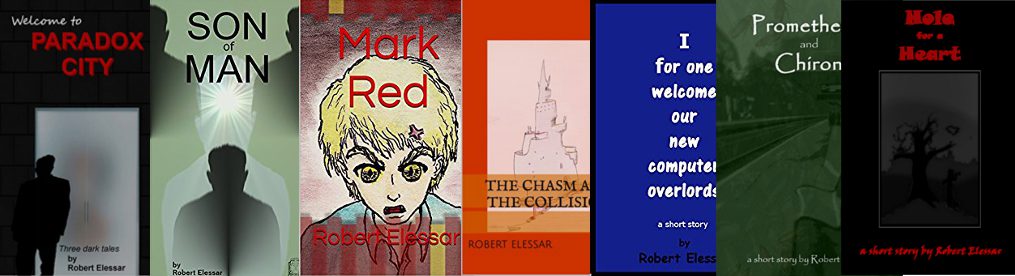
I wrote the first drafts of Mark Red, The Chasm and the Collision, and the borderline novella Paradox City on notebook paper, perched on my bunk, on a photo album-style book on my footlocker at just after lights-on (about 3:30 am) every morning at FSP West, and CatC is my sister’s favorite of my stories.  And you may already know that I wrote Solitaire all in one sitting, in a 6 x 9 spiral-bound notebook, while keeping my not-yet-girlfriend (also not-yet-fiancée, not-yet-wife, not-yet-ex-wife) company all night while she worked on a project for her summer job.  Also, parts of the original draft for The Vagabond were written by hand while I was in college and med school.  I finished it on a Mac SE, but those weren’t quite as handy and quick as modern laptop computers.

Anyway, I have this stupidly optimistic (and thus unrealistic) notion that I might actually write HELIOS in such a fashion.  We’ll see, but I wouldn’t hold your breath if I were you.

As always, I would welcome feedback in the comments below about any of the topics mentioned above‒especially about Instagram and the like.  Feedback here works best, in general, but obviously I don’t get very much of it whether here or in other venues, so I suppose I should be grateful for whatever I can get.

This blog post has felt quite long, but it’s actually not too terribly lengthy, so I guess writing on my smartphone has made a difference.  Imagine if I had to write this by hand before entering it into WordPress!  That’s not going to happen, of course, but it’s interesting to contemplate what it would be like.

I hope you all have a good day, and a good week, and month, and year, and so on.  Please take care of yourselves and of those you love and those who love you.

TTFN


*I say “about”, even though days of the week are evenly distributed, because there may be factors that influence the likelihood of someone reading something on any given day.  People may be more likely to read an “old” blog post on, say, the weekend than during the week, or on particular weekdays rather than others, and this distribution is likely to be multifactorial, so I cannot, in good faith, say the chance is exactly 1 in 7.

**I know this because once, I was watching one of that guy’s “reels” and someone came up behind me and asked if that was me in the video, or perhaps someone to whom I was related.

Very brief report: Monday, June 3rd, 2024 AD/CE

I only wrote a little bit this morning, because somehow I was moving quite slowly, even though I woke up plenty early.

Actually, that reminds me of a mildly amusing fact.  On Saturday, I got up and got ready and went into the office, since it was my weekend to work, and only after I was up and on my way did I realize:  I had completely forgotten to turn on my alarm for Saturday morning, which I had turned off for the previous, non-working weekend.  It’s pretty funny, in a rather sardonic way.  I almost never even hear my morning alarm, because I am almost never still asleep when its time for it to go off, so I shut it off preemptively.  I’ve been awakened by my alarm just once this year (so far) unless I am grossly misremembering.  And that was because I had such difficult getting to sleep that night that I had finally dropped off only barely before it was time to awaken.

Enough about that for now.  I’m sure you’ve all “heard” about my chronic insomnia ad nauseam, so I won’t bore you more with it now.

My block words today were only 751, but my net words were 763, so I must have added a net of 12 words to previously written portions of the story as I was editing it.  That’s about a 1.6% difference between the two measures, so much lower than the peak difference, but much higher than the nadir, which, of course, most individual samples in any data set will tend to be.

The total story length is currently 51,558 words.  I should be finished with the first draft sometime relatively soon, but I don’t think it will happen this week.

I hope you are all having a good month of June so far.  And I hope that you have a good day and a good week.  If my wishes have any effect–which seems unlikely–then you will.