How now, you secret, black, and midnight blogs!

Hello.  Good morning.

It’s Thursday.  It is, in fact, the 2nd Thursday in November, which means that, from the point of view of Thursdays in November, we are halfway to Thanksgiving (which in the US is the 4th Thursday in November).

Of course, we are not precisely halfway to Thanksgiving from the point of view of the days of the month of November overall.  Thanksgiving falls on the 27th of November this year‒14 days from today, of course‒so we are not quite halfway there as far as the days of November are concerned, but we are close to it.  If the month had started on a Friday, the halfway point in days versus Thursdays would be the same.

I think that the maximum disjunction would happen if the month began on a Thursday.  The 8th would then be the 2nd Thursday, and Thanksgiving would fall on the 22nd, which is quite a bit larger than 2 x 8.

Mind you, all this depends on starting one’s count in November.  That is not too unreasonable, but one could just as sensibly start counting Thursdays right at or after January 1st (let’s see, this year that’s 46/48 Thursdays, or about 95.833%).  If we did that, we would already be practically at Thanksgiving.  If we counted all days, we might be even closer still, percentage-wise.  Let’s see, 317/331, or about 95.770%.  Whataya know?  I was wrong, the Thursday one is “closer”.  I suspect this varies from year to year, but I’m not interested enough to check.

We could also begin our count at the beginning of autumn, which sort of seems appropriate.  Or, perhaps most sensibly still, we could start right after the previous Thanksgiving, beginning our counting on “Black Friday”.

Jeez Louise, I think I’m losing my mind, here.  Why am I writing about such nonsense?  I mean, yes, it’s interesting to notice how arbitrary and artificial human ways of counting days and things and so on are, so I suppose it’s somewhat edifying, and even could be mildly interesting for a moment.  But I nevertheless feel bad for wasting my readers’ time.

Though, I suppose, in a certain sense, one could say that all time is wasted‒“Plans that either come to naught or half a page of scribbled lines” and all that.

“Where do we come from?  The dust.  Where do we go to?  The grave.”

Of course, that last quote was not meant to be a general description of the human condition, but refers to Ray Bradbury’s “October People” in Something Wicked This Way Comes.  I’ve always thought that I’m an October person, since I was born in October.  Like Macduff, in the play from which Bradbury’s title above is taken, I was a C-section, though it would be a hyperbolic* to say that I was “ripped untimely” from the womb.  (Still, does my manner of birth mean I could defeat Macbeth?)

October is over now, in any case, and who** knows if I shall see another.

I don’t know if anyone has ever written about “November People”, but they don’t sound particularly scary nor particularly inspiring.  This assessment is not meant to refer to people born in November!  Several of my favorite people were born in November.

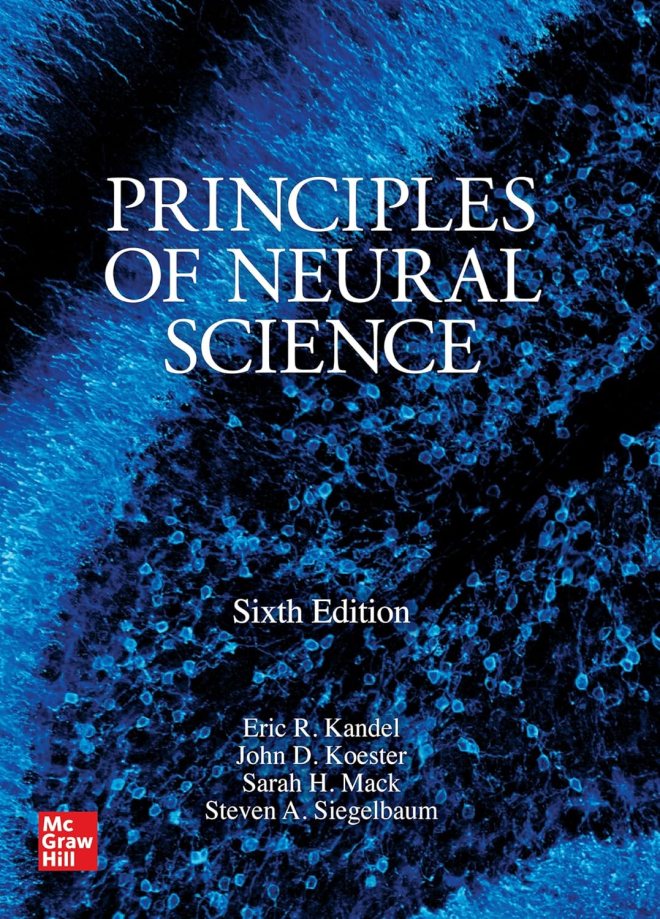
In other news, I did receive my Principles of Neural Science yesterday.  I used my dollar coins to choose a section, and I read it in the afternoon:  it was about neural firing and muscular activation during locomotion, briefly comparing lamprey with vertebrate, especially mammalian, locomotion patterns.

It may seem trivial, and I didn’t learn much that I didn’t at least implicitly know before, but the specifics are new, and all information has the potential to be useful.  We cannot know for certain ahead of time what knowledge might be most beneficial, just as we cannot predict the specifics of progress and invention.

As I said, I chose the textbook page via my coin-flipping process, using my three Sacagawea coins.  I keep a few dollar coins with Susan B. Anthony and/or the aforementioned Sacagawea with me at all times.

I carry such coins not so much for decision-making but because I like to roll them across my fingers when I want to “stop my hands feeling busy”.  I guess it’s a form of “stimming”, and I’ve been doing that particular one since college.  I taught myself to do it after I saw Val Kilmer, as Chris Knight, doing it in the movie Real Genius, which was one of my favorite movies.

Well, this has been a lot of pointless nonsense today, hasn’t it?  I apologize, and I guess I can try to mitigate my offense by at least trying not to produce too much of nothing***.  So I will draw this post to a close now.  I hope you all have a good day.  I will very likely write a post tomorrow, so you can look forward to that, if it’s the sort of thing to which you look forward.

TTFN


*You know, like non-Euclidean geometry.

**The WHO does not know, though with a bit of background information they could probably make reasonable predictions.

***According to the song, that can make a man feel ill at ease.  It can also, according to the same song, make a man abuse a king, which seems like it would be quite a rare situation.

“Though this be madness, yet there is method in’t”

Well, first let me apologize for yesterday’s blog that largely concerned the weather, and in a trivial sense at that.  It was rather lamentable, I know, with emphasis on the first four letters of that adjective.

On the other hand, I don’t apologize for having had my little bit of fun with the date.  That may have been even less interesting to most of you than my jabbering on about the weather, but I like it.  I fully expect that I will do such things again.  For instance, in a similar vein, today is a bit fun because it is 11-12*, so the numbers are in appropriate ordinal sequence with no gaps.

That’s not very fun.  More fun will be had (by me, anyway) on Friday, when it will be 11-14-25.  If you don’t immediately see the fun there, it may help that a similar fun date next month will be available on 12-13-25.  This fun also works with the European date order (but in both you have to leave out the digits that denote the century).  Also, there were no equivalently fun dates in any month before October.

This is the most fun I’ve had on any kind of date in at least 16 years, I would guess.  That’s an easy call, because I haven’t been on any date at all in at least that long.  See what I did there with the multiple meanings of the word “date”?  Of course you did.  What do I think you are, a moron?

No, I do not think that.  You are reading a blog post, so you are a reader, which gives you a serious leg-up, moronia-wise.  You draw from the well of that greatest of all human inventions:  written language.  Your taste in reading material may be somewhat questionable, but I cannot legitimately complain about that.

Wow, I feel like I ought to be almost done with this post, but I’ve barely passed 300 words.

On to other things.  I’m going to try to do a better job about science reading during my downtime in the office.  It’s not that I’m completely slacking; I’m reading Shape by mathematician Jordan Ellenberg, and I just read his earlier book How Not to Be Wrong.  I’ve read both before and/or listened to the audio books, but they are well worth rereading.  He’s a great math professor, and has a gift for explaining potentially abstract concepts.  I think he’s slightly better at this than Steven Strogatz, the author of The Joy of X and Infinite Powers, but they’re all good.

I also just yesterday gave in to an urge I’ve had for some time:  I ordered a textbook I liked in med school but which we didn’t really get into as deeply as I would like:  Principles of Neural Science, by Kandel et al.  The edition I had was by Kandel and Schwartz, if memory serves, but Dr. Schwartz is no longer involved, it seems.

It’s a textbook, so it’s pricey, even in paperback, but I discovered that I could put it on a payment plan through Amazon, so that’s what I did.  It arrives today.

I’ve also resolved, at least tentatively, to try to take the heat off my reading of my science books‒including the above newcomer‒by doing something I did when reviewing/studying in med school:  I would get a text that I was reviewing, and I would pick a section to read/review by flipping a coin.

Actually, it was a series of flips, each one dividing the “remaining” part of the book in half.  In other words, for the first flip, heads would mean I would look in the front half of the book, tails would mean the back half.  Then the next flip would decide to which half of that half I would narrow things down further.

Anyone who has spent any time dealing with computers and/or binary numbers can readily recognize that, with 10 flips of the coin, one could choose a specific page in a 1024 page book.  I guess every flip would count as a kind of “half-life” for the book’s pages.  If one wanted, one could even choose one’s pages not with a coin flip, which is not truly random, but with a quantum event that has a 50-50 chance, like measuring whether a given electron’s spin is up or down.

Of course, I don’t have a Stern-Gerlach gate, so I would have to “farm out” that process.  But I understand that there are apps that you can use that have their sources at labs where each decision is truly made by a quantum measurement.

It’s not terribly practical nor more useful for pickling book pages than is a coin flip, but if you’re a convinced advocate of the Everettian, “many worlds” version of quantum mechanics, it has the added “benefit” that each “flip” will divide the universe into two “worlds”, one where you choose from the earlier half, another where you choose from the latter.

Coin flips do not enact such splitting, not in anything but the trivial sense that every quantum level interaction potentially does so.  The experience will be the same for you, though, except whatever glee you might derive from splitting the universe to choose a section to read.

Anyway, I’ll be trying to read my books, random section by random section.  Believe it or not, this works for me.  I don’t have to learn things in order, usually, and this method avoids me feeling bored while trying to trudge through a text in order.

Perhaps I do have some aspects of ADHD up in there in my brain.

Well, I’ve now passed my target length for this post by some margin, so I’ll call this enough for today.  I expect to be writing another post tomorrow, but like everything else**, it is not absolutely certain.  I hope you have a very good day.


*Only in the American style Month-Day-Year format, though.  It is less fun in the European Day-Month-Year format.

**Yes, even death and taxes, in principle.

Some Halloween-style pictures among unrelated words

First of all, Happy Halloween to everyone who celebrates this day in any fashion.  Even if you don’t celebrate it, you might as well have a good day.

I don’t discriminate based on Holiday celebrations.  How very admirable of me.

Once again, I mean to keep this post short by making my target 701 words to start with, because I’m very tired this morning.  It was difficult to get up at all, and I still feel as if I’m vaguely sedated.  Unfortunately, it doesn’t seem to have been one of those sedatives that’s associated with euphoria.  It would be nice if it were, right?  If they would agree, I would agree.

Unfortunately, I’m just groggy and weak and blurry.  By which I mean I feel that the world seems slightly blurry to me.  I don’t mean that I am blurry if you look at me.  I might imagine that I could be blurry (meaning as a function of me not just poor vision in the observer) but I have looked in a mirror already this morning, and while I am far from easy on the eyes, I seem to be in focus.

Thinking of atypical interpretations of things people say, I was listening to one of the guys on the phones in the office yesterday, and I heard him use the expression “qualified individual”.  Now, I know what he meant, and it’s a perfectly valid term when discussing a promotion with a customer.  But it occurred to me that one could use the term to refer to someone who is an individual…but only from a certain point of view.

For instance, Norman Bates could be thought of as a “qualified” individual.  Yes, he’s a single person in the sense that he is one organism*, but there is more than one distinct personality in his head.  You could also say that the narrator in Fight Club is a “qualified” individual, as is James McAvoy’s character (should that be “characters”?) in Split.

Oops, sorry, I guess I could have given a spoiler alert for those movies.  But if I had done that, it would have ruined the surprise!

Of course, from certain points of view, even your typical unqualified** individuals are not as monolithic or monotonic or monotropic or, well, monopersonic as one might imagine.  We know that in split brain patients, when the corpus callosum is severed to reduce the problem of, for instance, uncontrollable seizures, the two sides of the person’s brain can act and think in some ways like two separate people.  They act like two individuals in other words, though in such circumstances, that word is least applicable, since if anyone is “undivided”, it is not these people.

But they are only a special, more extreme version of that which is true of the rest of us.  Our minds are all divided into many separate modules and centers, often running largely in parallel with each other.  There is no one central, “terminal goal” region of the mind; there are separate and conflicting areas and aspects, and even they are not constant.  Many introspective practices, particularly those associated with Buddhism, recognize that the concept of an individual, homuncular “self” is nebulous at best and is never even close to being real.

It seems the term “individual” is just as incorrectly presumptuous for people as the term “atom”*** is for, well, atoms.  However, if we’re referring to more physical literality, then it’s still pretty accurate, certainly for everything more complex than a flatworm.  If you start splitting people (and other animals) in pieces, what you get, at best, is a creature with missing bits and lots of dead former body parts.  You don’t get more than one being.  Often you get no one, because you will have killed the person with whom you started.

In such a case, one divided by two might in a sense equal zero.

Of course, even in basic mathematics, if you divide one by ever larger numbers, you get closer and closer to zero (it’s the limit as the denominator goes to infinity).

Speaking of going to infinity, the value of 1 / (701 – x), where x is the number of words I’ve written, has now crossed the singularity at infinity and is asymptotically approaching the x-axis from below.  On the positive side of the x-axis, starting from the beginning of a post’s first draft, that number can never be smaller than 1/701, since even I cannot write a negative number of words****.  But once I’ve passed the 701 point, the numbers can become an infinitesimal negative fraction, in principle.

In practice, I’m practically finished here.  I hope you all have a good day.  I will probably write a post tomorrow.


*Not counting skin and intestinal flora and the like.  If we count those, then we can all, like Walt Whitman, truthfully say “I am large, I contain multitudes”.

**Again, this has nothing to do with the person’s skills or résumé or experience or innate abilities, it’s just saying that one wouldn’t normally feel the need to add any caveats when calling a person an individual.

***Which means, basically, “uncuttable”.  And what we call atoms can indeed be “cut”.

****A number of negative words, on the other hand…

It’s a prime day for a (slightly) shorter blog post

Morning has broken!

Does anyone out there know a good, reasonably priced morning repair service or person?  I really don’t have the money or time to go pick out and buy a new morning.

Ha ha.

Sorry.  I know that’s quite a stupid joke.  Still, it should give you some idea just how tired I am.

I should have been able to get a decent sleep last night, but I did not.  That shouldn’t be anything new to me, but some days the effects of the insomnia seem to pile up far more than on some other days.  And today is one of those “pile up” days, it seems.

Thus, I intend to make this a relatively short blog post today if I can.  To that end, I’m setting my “target” number of words to be 701 instead of the usual 800*.  701 has the added advantage of being a prime number, which always makes things at least a little bit better from my point of view.

It’s funny how, as numbers get bigger, there seem to be fewer primes (they fall off as something like the natural log of the number range at which you’re looking, if memory serves).  And yet, there are an infinite number of them‒the same “countable infinity” as the natural numbers, “aleph nought”:

Also, we have the twin primes conjecture‒which apparently most mathematicians think is correct‒that there are an infinite number of primes that are with 2 of each other.

It has apparently been proven that there are an infinite number of primes separated by no more than about 500 or some such (it’s probably a lower separation now, but I haven’t looked into it in a while).  That may not seem like much of an accomplishment, but remember, we’re talking infinity here.  No matter how big the numbers get** you will never stop finding new sets of prime numbers that are no more than about 500 apart.

That’s not particularly useful to anyone but number theorists, I suppose, but it seems very interesting to me.

Incidentally, 701 is not part of a pair of twin primes, since 703 is not prime (it has four factors) and 699 is obviously divisible by 3.  And of course there is only one even prime (the number 2) because all other even numbers are divisible by 2.

Sorry, I know many people find these things boring, but I’m a fan of prime numbers.  In any case I’m trying not to be so negative in my blog posts, since I think it bothers a lot of people and may even be contagious at times.

It certainly doesn’t appear to do me any more good than does being a voice crying out in the wilderness, so to speak.  And despite the excellent biblical reference***, voices crying out in the wilderness usually are not heard or received by anyone or anything that can even understand them, let alone offer them any help.

I guess I can still talk about “imaginary” and complex numbers, because they just involve the square roots of negatives, but are not necessarily negative themselves****.  As long as I avoid multiplying them together, I should be able to steer relatively clear of negativity.

Ha ha, again.

I’m trying to try to avoid making other people miserable by expressing my own dark thoughts, so instead it seems I will make others miserable with my bad jokes.  You’re welcome.

Thinking about complex numbers makes me start feeling like I want to learn more about quaternions and spinors and so on, which seem truly fascinating, but about which I have only highly superficial knowledge.

It would be nice to learn more about them.  I probably will not, knowing me and my fatigued and distractible mind, but at least I can maybe be on the lookout for Numberphile videos about related subjects.  There’s at least one YouTube channel with a series on spinors.  Unfortunately, PBS Infinite Series stopped making new videos some time ago, but at least PBS Spacetime is still going strong, as are all of Brady Haran’s excellent channels.

And now, I’m over 701 (in the first draft), and so I’m done (for today at least).  I hope you all have a good day, and that your subsequent good days scale as the number of days, not as any logarithm thereof.


*I almost always go over my target, but at least it gives me a noteworthy place to decide it’s “time to wrap this up”.

**And there are described numbers so large that if you could memorize every digit of them, the information would be so concentrated as to turn your head into a black hole.

***It’s from the book of Isaiah.  John the Baptist supposedly quoted it and referred to himself as that voice, but then again, a lot of the writers of the “New Testament” shoehorned in references to supposed prophecy in the “Old Testament” to make the whole thing seem more sexy-cool (I guess).

****I just have to try to keep to the right upper quadrant of the complex plane.

Bing-bing-bing! Ricochet Robert.

I’m in a rather unusually bad amount of pain this morning, even for me, so please excuse me if my thoughts are somewhat incoherent or distracted or grumpy-seeming.  Though I don’t know how you would be able to tell if I’m grumpier than usual.

It’s Monday yet again, and it’s only been two days since my last post, not three, because I worked on Saturday, and on that day, I also wrote a very angry blog post.  I think some people might have found the degree of malice I expressed on Saturday disquieting or at least just not good, which I can understand.  I tend to think of such terrible things a lot more often than most people do (though I share them only infrequently); it’s one of the reasons I find my own company unpleasant.

But, of course, I’ve tried to compensate for my dark tendencies by doing as much good in the world as I’ve been able to do, such as by becoming a doctor.  I’ve never actually acted on any of my darkest impulses and dreams, except when I write horror stories, or when I write non-horror stories with horrible elements in them.

I guess maybe that’s one of the things that’s been therapeutic for me about writing fiction.  Maybe the trouble is right now that I don’t have a good outlet for my terrible thoughts.

Of course, I know that the idea of thoughts and emotions as “substances”, as if some manner of fluids, which can build up and need release is not merely incorrect, but is not even a good analogy for how emotions and other neurological states work.  This is part of why meditation is far more effective against stress and tension than is, for instance, the often counterproductive notion of catharsis.

Of course, sometimes things that work well for neurotypicals don’t work nearly as well for those on the autism spectrum*.  For instance, there is apparently some reasonable evidence that cognitive behavioral therapy, which often works quite well for neurotypicals with depression, is not as effective and can even be counterproductive for autistic people; we already tend to over-self-evaluate our cognitions, and so the tricks and workarounds of CBT often are not merely redundant but miss the issues entirely.

Along a line of possibly similar nature, I’ve written before about how meditation often serves to reduce my anxiety but at the same time worsens my depression.

And yes, in case you’re wondering, I think it’s all a matter of neurological states‒or neurohumoral states if you want to be slightly more precise.  I’ve spent nearly my whole life interested in such things; still, I have found neither evidence nor argument that has so far persuaded me that there’s any significant credence to the notion that humans are anything but temporary patterns of matter/energy, “spontaneously” self-assembled like any termite mound/colony or beehive/swarm**.

Once that pattern breaks because it can no longer sustain itself, due to injury or age or what have you, there is nothing more to it; it’s a hurricane that has passed.  There can be records and traces of its passing, and the damage it has done can linger for a long time, but there is no “afterlife” for weather patterns.

People are more complicated than hurricanes, at least in some senses, I will admit that.  But more intricate complexity doesn’t tend to make things more durable; it makes them more fragile, ceteris paribus.

Of course, all else is almost never equal.  Nevertheless, it’s often useful to consider complex matters as partial differential equations in more than one variable***; one explores the equation by holding all but one variable constant and differentiating or integrating along only one variable at a time.  As long as one thinks carefully about such things and never forgets that one is holding the other variables constant‒and by not forgetting, hopefully avoiding the oversimplification of one’s model of reality‒one can penetrate a great deal by recognizing when powerful tendencies persist even given the fact that other variables can influence matters.

For instance, the metallicity**** of stars influences the size at which they undergo certain levels of fusion, which is why it is thought that the earliest stars had different lifespans and luminosities relative to mass than later stars (like our sun).  But they still, overall, behave like stars, and the bigger ones shine brighter and last a shorter time than the less massive ones.  They are more alike than unalike, the narcissism of small differences notwithstanding.

Well…that tangent, or series of tangents, sure took me down unexpected paths!  But I guess that’s the nature of tangents; in any nonlinear but continuous function (even one as simple as a circle), there are a functionally infinite number of possible tangents.

I think that’s the right mathematical metaphor; isn’t it?  I guess it doesn’t much matter.  I’m just expressing my highly stochastic thoughts (I doubt they’re truly random) as they come.  But they would probably follow different courses if I did not express them in this fashion.

I hope your own thoughts are less troublesome to you than mine are to me and that you are at least at some degree of peace with yourselves and with each other.  You might as well be, though I know that’s not enough to guarantee it.  Still, do what you can, okay?


*Which I am, as you may know; I have written at least in passing about my recent, quite late, diagnosis.

**I don’t mean “like” here as “the same as” but rather “in the same fashion as”.

***My terminology is a bit sloppy here, but I’m not trying to be mathematically rigorous, I’m just trying to get my thoughts across with some clarity and accuracy.

****To astronomers/astrophysicists, a “metal” is any other element but hydrogen and helium (this no doubt irks chemists).  The earliest stars would have been almost entirely hydrogen and helium, certainly to start off.  Mind you, even later generation stars like the sun are still by far mostly hydrogen, but seemingly small “contaminants” can have noticeable effects on big systems, as in the fact that water vapor and carbon dioxide markedly affect Earth’s atmosphere and surface temperature despite being present in tiny amounts compared to nitrogen and oxygen.

Noisy events on the horizon of my attention span

It’s Tuesday, isn’t it?  Well, I guess it may not be Tuesday when you’re reading this, but it’s Tuesday as I’m writing it.  It’s the second day in the latest of a seemingly endless stream of utterly pointless “work weeks”.

Welcome to our world.  Welcome to our world.  Welcome to our world of noise.

That’s a paraphrase of the song that was (and may still be) sung by the dancing animatronic puppets in the main front area of the big F.A.O. Schwartz store that sits just by the southeast corner of Central Park in Manhattan.  I’m not sure why I felt like including it there, but it definitely expresses the sentiment I have that nearly everything in the universe is effectively “noise” in the information theoretic sense.  At the very least, the signal-to-noise ratio in the world is vanishingly tiny.

It’s not zero, mind you.  There’s some info hiding in all the nonsense.

Of course, whether something is signal or noise depends very much on what signal you’re seeking.  If you’re trying to detect gravitational waves, then nearly everything else around is “noise” in the sense that it is not evidence of gravitational waves, and is just going to make that evidence harder to find.  But if you’re an ornithologist, then at least some of that seeming noise might be the birdsong “signal” of a rarely seen species there in Louisiana, which I think is where the first LIGO observatory was constructed*.

And, of course, if you’re a seismologist, what you consider a significant signal would very much be noise to the LIGO people.  If there were a gravitational wave strong enough to be seismically significant, it would have to be from a very close and catastrophically violent event.

We don’t expect there to be such a thing any time soon.  And apart from such events, gravitational waves are so relatively weak‒gravity being by far the weakest of the “forces” of nature‒that so far they can only be detected from things like black hole and/or neutron star mergers, which are ridiculously violent events.

Incidentally, apparently recent observations of one such merger has given confirmatory evidence for Stephen Hawking’s black hole horizon theorem**.  That states that when two black holes merge, the (surface) area of the new, combined event horizon must be at least as large as the two prior event horizon areas combined.

In this, as in other things, black holes and their horizons act very much like the 2nd Law of Thermodynamics, and that is consistent with the Bekenstein-Hawking thesis that the entropy of a black hole is proportional to the area of the event horizon, as measured in square Planck lengths.  Indeed, the maximum entropy‒the maximum information‒of any given region of space is that which would be encoded upon an event horizon that would hypothetically enclose such a space.

As for the volume of a black hole within the event horizon…well, that’s harder to quantify.  The apparent radius, as judged from the sphere of the event horizon‒the Schwarzschild radius for a non-rotating black hole‒is almost certainly much smaller than the radius that would be perceived by someone within the horizon, for spacetime is very distorted there.  Indeed, I suspect that, at least by some measures, the volume within a black hole‒or at the very least the radius from the “center” to the horizon‒is infinite, with the “singularity” actually stretching down away forever.

Of course, an asymptotically infinite well of that sort need not always have infinite volume.  There is, for instance, the counter-example of “Gabriel’s Horn”, a shape made by rotating a truncated function (y = 1/x for x ≥ 1) around the x-axis.  This shape has infinite surface area, but it has a finite volume(!).  So you could fill it with paint, but you could never finish painting the inner and outer surface.  Weird, huh?

Of course, the dimensionality of things within a black hole’s event horizon is probably at least one step higher than things in the Gabriel’s Horn comparison, so the finite/infinite comparisons may not translate.

I’d like to be able to do a better job working that out with more than my intuition; that’s one reason why I own no fewer than four fairly serious books on General Relativity.

That’s not the only reason, of course.  I would also like to try to solve what happens to a space ship that accelerates near enough to the speed of light that its relativistic mass and relativistic length contraction puts it below its own Schwarzschild radius (at least in the direction of motion).  Also, how would that figuring be changed if the ship were rotating around the axis of its motion***?

Unfortunately, I rarely have the mental energy to put into pursuing adequate mastery of the mathematics of GR, and so I can (so far) just try to visualize and “simulate” the spacetime effects in my imagination.  That’s fine as a starting place, but even Einstein had to master the mathematics of non-Euclidean geometry and matrices and tensors before he could make General Relativity mathematically rigorous.

It’s almost certainly a pipe dream that I will ever get to that level of expertise.  My chronic pain and chronic depression (dysthymia) combined with the effects of my ASD (level 2****, apparently) and the effort that’s required for me to act “normal” enough to get along just really wear me out mentally.  It’s frustrating.  I have a stack of pertinent texts above my desk at work, where I hope they will entice me.  I even have a copy of my old Thomas and Finney college calculus text there too, so I can do some reviewing in that.

If only I were able to spend some time without pain and to get a good night’s sleep once in a while, I might even make progress.  I suspect that such things are not in the cards, however.

I would love to be dealt The Magician (in Tarot cards) but I fear that I am just The Fool.  Oh, well, that’s all just metaphorical, anyway.  It’s possible to predict the future, of course, but it is difficult, and it’s very unlikely that any set of cards‒however cool they may be‒is the way to do it.


*I remembered correctly.  It is in Louisiana.

**The theorem, being a theorem, is mathematically rigorous, but the question remains whether it describes the way our universe actually works.  That is always a matter of credences rather than “proof” in the mathematical sense.  In the real world, probabilities may come vanishingly close to zero or to one, but they never quite reach them.

***In Special Relativity, when something is traveling around a circle at a significant fraction of the speed of light, length contraction has the effect of “shrinking” the circle from the “point of view” of that which is moving at that speed.

****”Requiring substantial support” according to the official definition.  I do not have such support.

“The sun is the same in a relative way, but you’re older.”

Okay, well, here we are.  It’s Wednesday.  I don’t know what else there is to say about the day.  I guess…yeah, I don’t know.  It’s another day.  It’s a stretch of (roughly) 24 hours, the specifics depending on whether you’re using solar time or sidereal time or just the “self-contained” UTC time*.

UTC time is kept on a variety of clocks around the world and is based on the oscillations in the hyperfine transition frequency of the Caesium-133 atom.  That frequency has been defined as 9,192,631,770 Hz.  The international measuring community thing, whatever they call themselves, thereby agreed on defining the second as exactly 9,192,631,770 of those Caesium-133 oscillations.

Of course, oscillations of atoms, like all other processes that take time, slow down with increased spacetime curvature and with increasing speed relative to any given observer.  This is why the GPS satellites have to adjust their own time to account for both special and general relativity.  It’s pretty cool; you’re carrying proof of Einsteinian relativity in your smartphone.

You probably already knew that.

Then, of course, once they’ve decided on the precise value of a second‒knowing that the speed of light (or more precisely the speed of causality) is constant‒they then defined the meter as how far light travels (in a vacuum) in⁠ 1/299,792,458⁠ seconds (approximately 30 2/3 “vibrations” of a Caesium-133 atom).  Mind you, two observers moving relative to each other will see their meters as different each from the other, but c’est de la relativité.

It can be easy to imagine that definitions of units in science (and related fields) are not merely arbitrary but circular, almost tautological.  But really, given that these are attempts to codify specific attributes of reality itself, they would almost have to be self-referential with each other to be useful.

The length of a day is something that happens for real.  Thanks to the base 6 and 12 numbering system of the Babylonians, the day was long ago arbitrarily divided into 24 hours, each 60 minutes long, and each 60 seconds long, so a second was 1/(24 x 60 x 60) days or 1/86,400 of a day.

That worked well for a long time, especially since, before Galileo et al, humans couldn’t really measure time very precisely, anyway.  And then, until railroads allowed rapid travel between cities, it wasn’t necessary to worry too much about having the same time in different places.

But eventually that did become useful and necessary for many purposes, and eventually it was realized that a day wasn’t exactly what we were calling 24 hours, and indeed, that the length of a day varied slightly from day to day and year to year; also, a year isn’t a whole number of days long.  Also also, a day could be measured relative to the sun‒which is close enough that a day doesn’t end quite exactly after one full rotation since the Earth moves relative to the sun over the course of a day‒or with respect to distant stars, by which estimate a day comes closer to being exactly one complete rotation.

For most people most of the time, though, this precision, and that upon which it is based, are probably not merely irrelevant but unknown and unguessed.

Likewise, I don’t know how many people know about how Celsius made his temperature scale 100 degrees between the freezing and boiling of water at sea level pressure (a pretty reasonable choice, though I’m led to understand he initially had 100 assigned as the freezing point and 0 the boiling point!).

Then it was discovered that there existed a minimum possible temperature in principle, and they decided to set that scale, the Kelvin scale (named after William Thompson Scale**) using degrees of the same size as Celsius, but with zero defined as‒understandably enough‒absolute zero.

It’s all fairly interesting, if you’re in the right frame of mind.  But, alas, there’s every reason to suspect that all this information will be rendered moot and useless and perhaps even lost as the world winds down, or if life is replaced by artificial intelligence, or everything ends in some other way, as seems more than possible even in the relatively short term.

In any case, the laws of physics, as we know them, seem clearly to predict that the universe will tend toward ever-greater entropy and eventually all life, all structure will end.  Sometimes, I think it cannot happen soon enough for my taste.

Then again, there are cyclic universe proposals, such as Roger Penrose’s Conformal Cyclic Cosmology.  It bases its model on the fact that entropy, though always tending to increase, is not really an absolute quantity, not a substance, and that our universe’s “maximal” entropy may be the next universe’s low-entropy beginning, just on different scales; it doesn’t even require any “inflationary” burst of expansion to explain the uniformity of the CMB, I think.  I haven’t yet finished Penrose’s book about CCC, because though he is a stunningly brilliant mind, his writing can be a bit plodding and dry.

I guess it’s hard for any person to be good at everything, though Penrose has many strengths.  If memory serves, he invented a set of shapes which can be used to tile an infinite plane (in principle) with no gaps and no repeating patterns.  Supposedly this has been proven to the satisfaction of professional geometers, though I am not familiar with that proof.  Still, if it is a mathematical proof, then it is one of those rare things that we know to be certainly true, given its set of axioms.

It’s not necessarily useful in any practical sense, of course.  For instance, I think it’s probably true that any tiling system that can tile an infinite plane without repeating could not be used to tile a closed, finite, simple geometrically shaped portion of a plane‒such as a rectangular room.  I think you would always have to cut some of the tiles as they reach the wall, no matter how big the room is, as long as it is finite.  I do not know this for certain, that’s just my intuition.

Well, I guess I’ve wasted space and time enough here for now.  It’s no more wasteful than has been my entire existence, I guess, but also no less wasteful.  Or is it?  I don’t know.  In any case, for now I will stop wasting your time.

Please have a good day.


*Yes, it’s probably redundant to say “UTC time”, but the order of the acronym is sort of Yoda-esque‒it did not originate with an English term‒so I feel it’s tolerable to use it this way here.

**That’s a joke.  He was really William Thompson, the first Baron Scale***.

***I mean the 1st Baron Kelvin, of course, all joking aside.  A baron scale sounds like some long forgotten and unused (i.e., barren) bit of laboratory apparatus, left for eons, gathering dust in an abandoned world, like the broken statue of Ozymandius.  It’s very sad.

Is it a sine of the (space)times that we are where we are in the week?

TBIF* or TDIF**, either way, it’s Friday.  It’s the last day of the work week.  I started writing “It’s the end of the work week” (emphasis added), but I realized that, since it is early in the morning, and I am just on my way to work, this time could not accurately be called the end of the work week.  One could, in fact, say that 20% of the work week yet remains; that can hardly be called an end, any more than a B minus can be considered a perfect score (unless one radically changes the grading system one is using).

Such are the random things that spring forth from my brain via my fingers when I am writing my blog posts in the mornings (in this case on my laptop computer, which is literally on my lap***).  I’m sure you’re well aware of that, if you’ve read this blog for any length of time.  I don’t really know ahead of time what I’m going to write, unless I have a specific subject to address.  Even then I often address subjects in ways that surprise me.  This is because when I write I am really “thinking out loud”, although in this case, “out loud” is figurative.

Do my thoughts meander like a restless wind inside a letter box?  Well, they’re probably more like a restless discarded Cheetos® wrapper in the wind of a nearby tornado; one should almost certainly use a junk food metaphor when describing the way my thoughts spontaneously arise.  Not that I think my thoughts are “junk”, no more so than anyone else’s are.  I just think it’s rather appropriate to consider many of them as having a bit of a temporary amusing effect, but without any real nutritional substance.  Junk food has its place****, after all.

I don’t know what else to write today, but I’ve only written about 450 words so far, including the first four footnotes below.  I would say that I don’t want to shortchange you, the reader, but you’re not actually paying for this in any sense other than spending your time.  And since time cannot be used as legal tender—when you “spend” it, I don’t receive any from you—I guess I shouldn’t consider it to be shortchanging you.

In any case, whether you spend your time reading my blog or doing something else, your time passes all the same.  You could slow it down relative the those around you by accelerating to relativistic speeds, but you would still require the same amount of your “proper time” to read a blog post.  And to those watching you pass at some substantial fraction of the speed of light, it would seem to take you longer than it would take us.

Remember, from a particular, mathematically precise, point of view, you’re always moving at the speed of light—it’s just that most of your motion is through time.  This is part of why you cannot ever reach the speed of light through space:  As you tilt your motion vector toward faster motion through space, less of your motion is through time, until it would stop for you completely.

It’s a bit analogous to moving (say, driving or flying) in particular compass directions.  Imagine your default motion is all northwards, so there is no east or west component to your momentum, but that your momentum vector is always the same length, i.e., you speed in your direction of travel is constant.  If you start to veer eastward a bit, going at that same fixed speed now in a north-northeast direction (for instance) the component of your motion that is northward is smaller than it was*****.

As you veer more through northeast toward east-northeast and beyond, staying at your same speed but in your new direction, the component of your motion that is northward becomes smaller and smaller.  Finally, of course, if you go due east, there is no longer any component of your motion in the northerly direction.

This is close to being the same thing that would happen if you could somehow achieve the speed of light through space, except that the geometry of spacetime is (if memory serves) hyperbolic.  This means “relating to or described by hyperbolas”, it doesn’t mean that the geometry of spacetime exaggerates things all the time.

In any case, though, an object or person traveling at the speed of light (through space, so to speak) would cease to experience any “proper time”.

And with that, I think we’ve come to the proper time to bring this week of blog posts to a close, even if the work week still has a fifth of its time remaining.  I hope you all have a good day (whatever day on which you may read this) and then a good weekend (whenever the next one is for you) and a good week and so on and so on and so on.


*Thank Batman it’s Friday.

**Thank Doom it’s Friday (I suppose one could use TDDIF, Thank Doctor Doom it’s Friday, but that would eliminate the parallel with the more traditional version of the acronym).

***Does the term “laptop computer” imply that there could be a “lapbottom computer”?  What would the bottom of a lap look like?  Would it just be the “bottom”, in which case it really has nothing to do with the lap, since your lap disappears when you stand up, but your ass doesn’t?  If there is no lapbottom (i.e., if laps are instead bottomless) then why use the term laptop?  Why not just call it a “lap computer”?  If people wanted a foreshortened version of that, they could just call it their lapcom.

****That place is 7-11™.

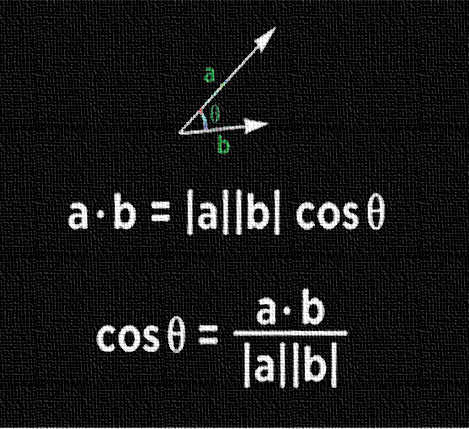
*****By how much?  Why, one only need apply the Pythagorean Theorem to the components of your momentum vector.  It’s dead simple.  If you prefer, you can use trigonometric functions, such as the cosine of the angle of your motion relative to full north, but mathematically there is no difference.

Only the truly continuous is infinitely divisible

Well, it’s Friday, the last day of another work week—the first full week of August (or Sexember, if you prefer) in 2025.  And here I am writing things that, so far, are not only trivial but banal.  Perhaps, as I go along, I will write something more interesting and surprising, but so far, I’m not impressed with myself.  I guess these things happen.

I did not end up riding my new bike back to the house last night, because there were thunderstorms in the area, particularly down by where I live.  I’m not too intimidated by riding a bike in the rain, but it’s a new bike, and its configuration is different than the type to which I am used, and it is slightly wobblier than my normal, so I felt it wasn’t a great idea to ride it five miles in the rain.  It turned out the rain was almost over by the time I got to my train stop, but it was nevertheless still quite wet and puddly, and I probably was wise-ish to avoid riding in it.

Still, it’s slightly frustrating.  Hopefully, today it won’t be an issue, because it would be a shame to miss the whole weekend with it by the house.  There are supposed to be thunderstorms today again, but they are expected earlier in the day than yesterday, and the weather is predicted to clear by early evening.  That should be fine, at least.

Of course, weather prediction is never perfectly precise—Chaos Theory being applicable and all that—but forecasts done for only twelve hours or so in the future are likely to be much more accurate than those for a day or a few days or a week ahead of time.  After about five days, trying to get too specific a forecast is a bit of a waste of effort, and it may always be.  One cannot, with finite computing power, calculate things to infinite precision, and without infinite precision, in the long term, Chaos makes one’s predictions ever more inaccurate.

Of course, that raises (not “begs”!) the question of whether reality is actually defined in any meaningful sense down to the level where limitless precision would apply.  In other words, are Real Numbers actually a thing that exists in reality?  That may seem a strange question, given that they are called “Real Numbers”, but that’s just a name, given by humans as a file heading if you will, a way to index the subject.  It doesn’t actually signify the reality of the real numbers, any more than those who call themselves “Conservative” in the current US are in any legitimate sense conservative by most agreed upon uses of that word.

Of course, all non-complex numbers are Real numbers, and all Real numbers can be considered complex numbers (just with a zero i component if they are only Real).  The counting numbers are still Real numbers, as are all the integers and fractions, and of course, all our best known “irrational”* numbers, like π and e.  But the vast majority of Real numbers cannot be specified by any reductive formula or algorithm, but have do be described digit by digit, forever—maximum information-type entropy.

So, to describe fully a “typical” specific Real number usually requires infinite information, with infinite precision.  But there’s a real (haha) question whether any portion of reality is defined so precisely, or whether that could even have any meaning.  As far as we currently know, the smallest distance that has physical meaning is the Planck Length (about 1.6×10⁻³⁵ m), and the shortest time that makes physical sense is the Planck Time (about 5.4×10−44 s), and so on.  These are very tiny numbers, but they are finite, not infinitesimal, and are certainly not infinitely non-repeating decimals.

But does the Planck Length (and Time) apply to actual, bottom-level reality, or is that merely a limit within the constraints of our current understanding?  We don’t know, for instance, how such things apply to gravity when it becomes strong enough for such scales to apply.

It’s mind-boggling, or at least wildly stimulating of probably inexpressible thought, that reality may be only finitely defined at every given point in space (which “points” themselves would only be finitely packed, so to speak, such that below a certain scale, the distance between two points would have no meaning) or that it may in fact be infinitely defined, down to the fully expressed Real Number level, and that indeed it may be infinitely divisible in the same sense Real Numbers are—and thus there would be, between any two points in spacetime, as many points as there are in ALL of spacetime.

Either possibility is wildly cool and difficult to represent internally—indeed, impossible to represent perfectly internally, but difficult even to contemplate roughly at any very deep level.  Is it any wonder that people like Cantor and Gödel were mentally ill, given the kinds of things they contemplated and explored?  I’m not saying those things were the reason for their illness; that would be a cheesy sort of magical thinking, redolent of an H. P. Lovecraft story.  But the contemplation of infinities and complexity and chaos is both sobering and intoxicating at the same time.

What do you know, I drifted into less banal areas after all.  I guess that’s a decent way to end the work week of blog posts.  I hope you all have an interesting and good weekend, without too many utterly unpredictable events (unless they’re good ones for you).


*Just to remind you, this does not refer to numbers that are in some sense crazy, just that they cannot be expressed as a ratio of two integers, no matter how large the integers.  That’s the original meaning of the word irrational, but the very fact that there existed such numbers seemed so horrifying to the old Pythagoreans—or so I’ve heard—that it almost immediately acquired it’s secondary, now more common, usage.

You flocks, you shoals, you fine emergent things

Well, it’s Tuesday morning, and I’m feeling a bit beat up and wrung out from yesterday, which was an extremely bad day, pain wise.  I really felt quite stiff and sore all day, and I couldn’t help walking with a limp.  It’s quite frustrating.  I do have potential assistance of a kind coming today, and hopefully that might make a difference.  We shall see.  I’ll tell you more when I have more information.

As for anything else, well, there’s really nothing else going on in my life.  I still haven’t done any work on new song lyrics, nor have I played the guitar or keyboard at all, nor sang.  I don’t even know what kind of shape my voice might be in at this point, but it’s probably pretty rough.

I think maybe I should drink more coffee during the day.  I used to drink it regularly when I was up north, but I’ve fallen off a lot since coming to Florida.  A big part of that is just that coffee is a hot drink, and hot drinks in Florida can be quite unpleasant.

But also, if I can reevaluate my own internal workings and decision-making memory‒which I can‒I tried to cut back on caffeine because I feared it was a major contributor to my tension and hostility and anxiety.  Well, you’ve read my blogs before (unless this is your first time), so it should be fairly clear that that particular intervention was not fit for purpose.  And one thing coffee has always done for me has been to be something to put in my mouth and stomach other than food.  That’s certainly worth a lot in my case.

Anyway, in the new office we have two refrigerators‒the boss brought in one from his garage that was not being used much‒and though neither has an ice maker, ice trays are easy.  So I can make iced coffee to take the sting off coffee’s hot nature.  I can’t directly take the sting off Florida’s hot and muggy nature, of course, but it’s bearable most of the time.

And in the long run, who knows how Florida’s specific climate will alter as the world’s overall surface temperature increases?  One might assume it will just get hotter and more humid*, but it’s best not to jump to conclusions.  Weather patterns are the archetypal chaotic system, and though climate and weather are not synonyms, there is a relation.

Many things interact to maintain specific local climates.  For instance, the Gulf Stream keeps the British Isles much warmer than they would be otherwise, being so far north, but it is not a fixed pattern in the Atlantic, but a product of confluences of various forces and feedback loops (as well as probably feed-sideways paths).  It has not existed forever.  It just feels like it has because human lives are so short, and human minds tend to be woefully parochial and provincial.  This is a source of so many human problems, not least the failure to learn obvious lessons from history.

But I guess there’s not much point in moaning about that lamentable fact right now.  I try to do my little part by writing about what I think are occasionally interesting and thought-provoking ideas, and by trying to learn about all sorts of things myself, from history and philosophy to biology and physics and mathematics‒and, of course, I’m technically an expert on medicine.  It’s as if I hope that by increasing my own knowledge about as many things as I can, I’ll be able to bring up the average and perhaps have some magical diffusion effect.

I don’t actually think that, of course, nor is that really my motivation for learning about various things and stuff.  I just like to understand and know things, to the degree possible, and I enjoy the process of learning them.  Physics is the most interesting subject to me in many ways because it is the study of the workings out of physical reality.  Everything else that happens is “simply” chaotic, emergent murmurations that happen on the surface of the underlying processes.

There is a question whether mathematics is even more fundamental than physics or is rather an invention of humans to describe and work with the patterns that are happening that are not guided by mathematics, perhaps, but simply produce it as an epiphenomenon.

I think Stephen Wolfram proposed something along those lines, based on “cellular automata”**, but though I have his book A New Kind of Science, I have not read it, because I have the Kindle edition.  It’s not really formatted for Kindle, so it’s basically just a PDF of the original book, and that can make it very difficult to read on one’s smartphone.

Such thoughts are quite entertaining and they can sometimes be productive.  I often wish more people were interested in them rather than, for instance, what some particular celebrity did to some other celebrity, or whether some particular advertisement can, with tortured logic, be “judged” to be inherently offensive and even evil, or just how horrifically to punish someone who agrees with only 99% of the things you believe, but disagrees on 1%.

Okay, I need to avoid getting started on that train of thought.  So, I’ll draw today’s post to a close.  Hopefully, by tomorrow I will have some relatively better news than I’ve had recently.  If so, I will probably share it with you.  In the meantime, try your best to have a good day.


*Particularly if sea level rises enough for a lot of the state to become submarine‒now that would be high humidity.

**The most well-known case probably being John Conway’s Game of Life, which is a “game” on a 2-dimensional grid of squares, with particular, simple rules about what happens to any given square depending on whether its neighbors are empty or not.  Remarkable, self-sustaining, and even traveling patterns form from these basic notions, similar to the way the flocking*** behavior of birds can be described with a few basic rules followed by each bird individually, requiring no communications other than just seeing where one’s nearest neighborings are.

***That sound like an epithet, does it not?