On Human Loyalty

Human beings pay lip service to a general admiration of and respect for loyalty and dedication, to unflinching devotion, to commitment to other people, or to ideals, especially in the face of great personal expense.  Unfortunately, they have never lived up to these or to any related notions.  They have not, by and large, exemplified any of these admirable traits, and even worse, they have neither rewarded nor admired those who actually do live by their nominal virtues.

Oh, they will reliably claim to provide such support and reward.  They will vociferously espouse their respect for those who at great cost commit themselves—to a marriage, to a job, to a family, to an ideal—but this so-called respect is worth less than the halitotic air with which it is voiced.

What humans really do to those who embody loyalty is to use them…and, more particularly, to use them up, like conveniently exploited, cheap natural resources.  The loyal spouse, the loyal worker…these individuals are taken advantage of and given a pat on the back and encouraged to continue giving their all until they finally keel over and succumb to inevitable exhaustion.  Then the user sheds a crocodile tear—or does not even bother to do this much—and moves on to the next disposable fool.

It has always been thus, throughout the history of humanity, and it’s probably true among many other animals as well (though an ethologist could probably shed more light on that supposition than I can).  Those who bemoan the laughable notion of some long-lost “good old days” are simply deluded.  This—the modern world in which we all find ourselves—is as good as it’s ever been for the human race, and it’s actually better than average, pathetic though that fact may seem.

Humans do not naturally treat each other with justice.  They do not treat each other with respect.  Instead, their nominal notions of fair play, their desires to, for instance, punish supposed malefactors, are generally born of wounded vanity…and of other such unremarkable, predictable primate behavioral drives.

Humans claim to respect loyalty, yet they lionize serial philanderers, they forget the misdeeds of those who have risen to the top through dishonest means, simply because they have made it to the top.  They reward and respect ruthlessness and disloyalty and then they have the temerity to bemoan the fact that those in power are despicable.  

They have only themselves to blame.  Their politicians, their businessmen, their entertainers…these are simply the people who have most successfully applied the ideals to which most humans actually ascribe, however much they may claim to admire those who have integrity, who have commitment.  Loyalty simply makes a person very convenient for others to harness, and the ethos of the loyal person usually keeps minor or nonexistent the cost of the eventual, inevitable betrayal.  Loyal, dedicated people do not, by and large, seek revenge.  Instead they sigh, they square their shoulders, and they move on, giving their loyalty to yet another undeserving person, purpose, business, or ideal, until the day they finally succumb to exhaustion and receive their only true reward: Oblivion.

Given these facts, it is very probable that the human race—as it is, at least—is doomed.  It seems unlikely that the species can endure into actual geological or cosmological time with it current innate ethos intact.  It must either change into something so different from its present incarnation that the term “human” would be the most unwarranted of insults, or it will continue to prance about in circles, its horde members screaming their baboon screams, pretending to admire integrity while stabbing each other in the back, until some eventual, inevitable natural catastrophe delivers its inescapable recompense.

In the meantime, the poor, deluded, misguided—but honestly admirable—humans who actually live with integrity will drag the rest of the odious species along, with the damnation of faint praise as their only, occasional reward, until inevitably they fall, one by one, their blood greasing the wheels of the driver-less vehicle which humans have misnamed civilization.

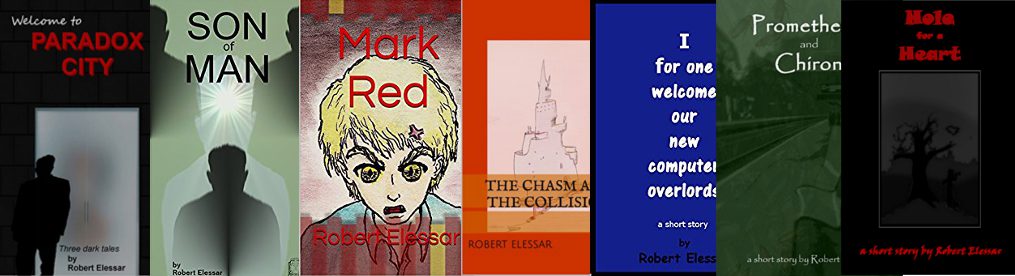
Welcome to Paradox City is now for sale on Kindle

41NTxG5cQJL._SX348_BO1,204,203,200_

Hello all!  I’m sorry there’s been such a delay since my last posting.  In addition to working on writing my new novel, preparing the editing for Son of Man, and working six days a week on my “day job,” I’ve been preparing for that which I am now announcing:  Welcome to Paradox City is now available on Amazon Kindle!  This is a brief collection of three dark tales, at least one of which is verging on being a novella, while the other two are just rather long short stories.  Though they are all “dark tales,” dealing with subject matter a bit too grim for daytime TV, one is a actually somewhat lighthearted, while the other two are…fully dark.

So, preparing that publication has been one of the things that’s slowed down the posting of the monthly chapters of Mark Red and The Chasm and the Collision.  I’m also continuing to work on new material, and getting the editing of Son of Man done, and looking for a good cover design.  It’s very busy, and I’m probably going to have to scale back to releasing only alternating chapters of Mark Red and CatC per month, instead of one each.

Welcome to Paradox City is available for only $2.99 on Kindle, and of course, 50% of the royalties will go to literacy charities such as RIF, as is always the case with works by Chronic Publications.  The more readers there are in the world—and the more reading those readers do—the better off we all are.  I’m convinced that this is an absolutely true correlation.

Hopefully Son of Man will be ready for publication within the next few months.  Certainly it won’t be very long before the last chapter of Mark Red is published, though The Chasm and the Collision has quite a bit more to go.  Give me your feedback, positive and negative.  I can take it!

Above all, thank you all for reading and following my blog, be well, and keep reading.

TTFN!

We Need to Socialize–Fully–the Criminal Justice System!

I’m not a huge fan of socialism in most things.  Not that there aren’t social programs that are good, in principle, to protect all citizens from the unpredictable vicissitudes of fate.  In general, regrettably, governments tend to do many things poorly and inefficiently (although, as someone who grew up in the Detroit area, I know that big corporations can often be just as lacking in that area as governments, and just as immune to internal correction).  However, there is one area of life in which I think it is a complete travesty that there is anything but complete socialization, and that area is the criminal justice system.

I can tolerate the use of privately employed attorneys in civil cases–though just barely, and arguments can be made that money unfairly sways matters even in such venues (Your comments on that notion would be welcome).  However, it is utterly unconscionable that private attorneys are ever allowed in the criminal justice system.

Our court system itself is of course utterly antiquated.  It has more in common with medieval jousting matches to determine guilt or innocence than it has with any honest attempt to find the truth of any particular matter.  In a typical court proceeding, the person who has the best attorney, or team, is the one most likely to win.  And that usually means that the person with the most money wins.  It’s not true universally, of course, but it is a strongly dispositive factor.  Consider the O.J. Simpson trial:  Would O.J. likely have been acquitted had he been represented by a public defender?  I think we can all agree that the answer is “No.”  Well, why should he have had any better chance of winning than any other man charged with murdering his wife and her friend?  Why should a person’s individual wealth have any bearing on the quality of defense they receive in a criminal case?

The argument can, and probably will, be made that make all defendants rely on the public defender’s office would simply mean that even those with money will face the same ridiculous miscarriages of justice, the same hobbled defense, as a non-wealthy person does when charged with a criminal offense.  To this, I say, “Good!”  Maybe if a few of the movers and shakers of society realize just how horrible the situation is for a non-wealthy person who is charged with any crime in America, they will see to it that changes are made.  Maybe they will see to it that defendants in criminal cases get at least as many resources applied to them as the prosecutor’s office has to bring to bear (and do recall that the prosecution has not only the power of their office, but also that the resources of all pertinent police forces are more or less at their disposal…something that certainly cannot be said for any defendant).

The hallmark of our criminal justice system is supposed to be that a person is innocent until proven guilty beyond a reasonable doubt.  Given that presumption, we must be scrupulous to err on the side of the defendant.  The state has tremendous, monolithic power, and can destroy the lives of citizens almost with impunity by means of simply bringing a criminal prosecution, whatever the outcome.  Given this fact, and the supposed basis of our criminal justice system, all biases should be in favor of the accused.  Clearly this is not the case; if it were, the United States would not have five times its share of the world’s prisoners based on population…the largest number of prisoners in absolute numbers and per capita.  This is to say nothing of the outrageous inequality in the application of criminal justice to minorities.  This would be at least partly rectified by having the wealthy receive the same defense as the poor, since minorities, in general, are less likely to be wealthy than their counterparts.

Of course, the privatization of prisons absolutely has to stop as part of this process.  It appears simply impossible for inappropriate bias not to be introduced into a system when a for-profit interest becomes involved in it (See the ACLU’s report from 2012 here).  In general, I see government itself as a necessary evil, but it is necessary, precisely because human nature has not yet reached a state of development where we can be trusted to do many things honestly and justly if our personal interests are engaged.  But when we give our governments certain powers, and those powers are then put at the disposal of private interests, who have their own monetary gain at heart rather than the achievement of actual justice, it is perfectly predictable for disaster to occur.

How comfortable would we all be if police departments were privately run?  What if the degree of one’s protection by law enforcement were overtly and explicitly dependent upon one’s financial power (as opposed to being only implicitly so, as it is now)?  How safe would you feel?  What if you had to pay a fee for services, or pay to become a member of some club in order to have the police investigate, say, your stolen car…or the murder of one of your family members?  I think we can all agree that this is not a system under which we would hope to live, where the power of law enforcement works only for the highest bidder.

So, why should the quality of a person’s defense against charges of crime be dependent upon the financial resources one can bring to bear?  Even if it were true that every person’s financial status were dependent upon the quality of their character and their personal ability, even if all fortunes were honestly and openly made in truly fair trade–a notion that veers away from mere fiction into the realm of wildest fantasy–there would still be no justification for giving the financially successful better defense against charges of criminal activity than a person who was not successful.  There is no data to demonstrate that financial success is inversely correlated with degree of criminality, and in reality, the correlation is often a positive one.

Of course, depriving individuals of the ability to hire their own criminal defense attorneys would further drain the budgets and other resources of our court systems; this would be a good thing.  It would help force us, as a society, to do a better job of prioritizing our application of police and prosecutorial (and thus also defense) resources–to decide how important it was, for example, to arrest people for possession of marijuana or even of more powerful drugs, when they have not taken any action that brings harm to any other person.  Needless to say, in applying such a policy, we must avoid the pitfall of simply increasing the use of plea bargaining to deal with such resource burdens, since that system is, by nature, biased and unjust, a criminal process in its own right (see my blog on the subject here).

The changes I call for are drastic, I know.  I don’t apologize for that, and I will likely continue to call for even more such changes as time goes by.  Our system is drastically malfunctioning, drastically inefficient, and drastically unjust.  It must be changed, overhauled, or completely replaced with something better, if we wish to have the right to continue to call America a free society.


The above post is actually a re-posting of an entry I originally posted in my other blog:  Justice the American Way, which can be found here.  I am reposting it here just be sure that those who want to read it and follow me here are aware of it.  I will only be doing this for a bit, however.  I want to try to keep my political philosphy/criminal justice postings separate from those about writing, publishing, and other generally more positive things.  That’s why I made the new blog.  If you are interested in such topics, by all means, do follow that blog.

I have an earlier post there–“In States Where They Lose the Right to Vote, ex-Felons Should Not Pay Taxes“–which I have not reposted here, but I invite you to read it, nevertheless.

On unrelated matters, Mark Red: Chapter 15 should be released next weekend, or possibly before.  Then, within a few weeks, I’m going to be releasing “Welcome to Paradox City:  Three Dark Tales.”  I’m excited about it.  I hope you’ll be excited, too.

TTFN!

An Anarchistic Thought Experiment

2000px-Circle-A_red.svg

In celebration of my joyous return to Florida, and my oh-so-entertaining dealings (already) with the bureaucracy of Broward County, I thought I would post something that I originally wrote some time ago…while I was “away,” in fact. It involved an invitation and discussion of a gedankenexperiment (did I get the German right?) that I considered for myself. I would like to invite all of you readers to consider it with respect either to Florida or to your own states, and tell me what you think might happen.

Ready? Here we go.

Albert Einstein famously used “thought experiments” to explore the implications of his theories of Special and General Relativity. This was necessary because actual experiments about many of the aspects of Relativity were simply not possible…and some of them may never be. After all, we can never truly get information back from inside an event horizon, at least as far as we know, so we have to consider what might happen to someone who plunged past one only in principle. In that spirit, let’s do our own thought experiment now, about what would happen if the government of Florida–at all levels, from the Governor down to the custodian who mops up the local DMV–were to disappear abruptly.

For humanitarian purposes, let’s stipulate that no harm has come to anyone in the government, but rather that–for inscrutable reasons of their own–a powerful alien race has suddenly teleported every member of every government body in the state to some other part of the country, along with their families, modifying their memories and giving them new, and better, sources of livelihood. Also, let’s imagine that an impenetrable barrier, a la Stephen King’s Under the Dome, prevents the federal government from stepping in to take any action. How would the people of Florida react once they discovered that all those in “authority” were suddenly gone?

It’s all but inevitable that, at least temporarily, a time of chaos would ensue. Some people would panic and be overwhelmed by paranoia. Others might celebrate the sudden lack of supervisory restriction by indulging in various types of crime. But the people of Florida are, to say the least, well-armed. In the ultimate spirit of “stand your ground” legislation, many citizens would defend themselves against celebrating criminals…at least the ones they deemed truly dangerous, such as thieves, rapists, murderers, trespassers, and the like. It would be silly to imagine that all such anti social miscreants would be eliminated during such a natural “purge,” but at least some of them would doubtless find that the law had protected them at least as much as it had restricted them.

Meanwhile, the average Floridian might discover that, when true, urgent needs have to be addressed, such manufactured “crises” as drug use, gambling, and even prostitution do not directly impact upon their own health, safety, and happiness. What vigilante has ever felt the urge to hunt down and kill someone who is smoking a joint in his own home, or playing a non-state-sanctioned game of poker? A new sense of perspective about such so-called offenses might very well come into being. Wouldn’t that be nice?

It’s inevitable, of course, that some fundamental new social agreements would have to be made, instituting a new form of proto-government. Some type of currency would also have to be chosen, though at first old-fashioned barter might rule the day. One thing is certain: Having a great deal of money in the bank, or tied up in overseas investments, would not yield one anything like the advantages they do in our current society. Also, without government entitlement programs, the health and care of those unable to care for themselves would likely be provided only by the goodwill of their families, their friends, and their neighbors. Thankfully, history has show that, in crises and natural disasters, many Americans (and other humans) do tend to look out for those who are weaker than they. Not everyone does it, but a surprisingly large fraction of people do. However, the criteria for being considered truly “disabled” by one’s fellow citizens, would likely become much stricter, without “other people’s money” paying the bills. It would be interesting to find out of things would be more or less compassionate than they are as things stand now.

Whatever new form of government the people might institute–and there would very likely be many conflicts and upheavals in that process–at the very least, some serious reassessment of priorities would likely ensue. In order to survive and thrive, the citizens would need to make cooperation and productivity the watchwords of their lives. If they didn’t, natural selection would likely do its ruthless but even-handed job and wipe them out.

It would take a great deal of time to explore thoroughly all the possible effects and ramifications of a sudden loss of government in the state of Florida. We can be sure that there would be at least some violence, and a great deal of disorder, fear, and heartbreak. Ultimately, though, there would have to be a return to a new equilibrium, if that term makes any sense, and it could be hoped–if one were optimistic–that the new government might be less intrusive, less authoritarian, and more streamlined than that currently in existence. It’s a historical truism that governments tend to increase in power, complexity, and self-justification over time; thus, however disorderly our alien intervention might temporarily make things, it’s possible that the complete loss of the current government of Florida might, in the long run, be very good for all honest Floridians not already in the government’s employ.

What are your thoughts? What are some of the things that you think would happen if aliens eliminated the government of Florida, or of your own state, if you’re not a Floridian? Would things ultimately become better, or would they be worse? Let me know.

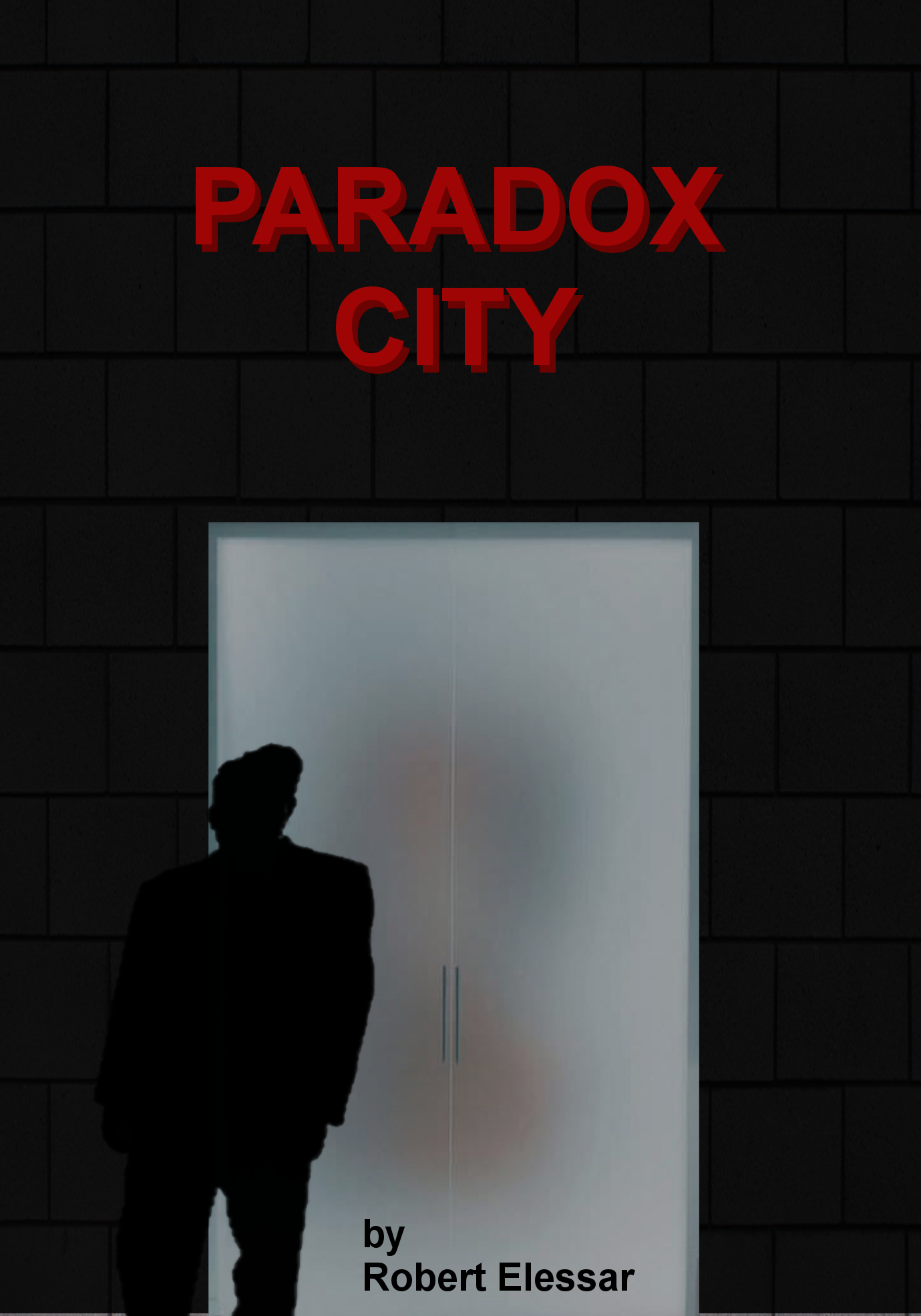
Paradox City cover design preview. The story itself will be published soon

Paradox City Cover2

Okay, as I promised a while back, here is a preview of the cover design for Paradox City, my story that is a little too long to be a “short” story but just below the traditional borderline of “novella” (it’s about 29,000 words long).  It has been completely rewritten, and is now in the editing process, so it will soon be available for purchase.  As always, when it is up for sale, half the royalties will go to literacy charities.

I actually plan to give you all a little teaser from the story, either right before it comes out, or when it comes out.  Oh, and just so we’re clear:  While Mark Red is oriented toward the young adult market, and The Chasm and the Collision is appropriate for anyone from pre-teens to the elderly, Paradox City is definitely not for very young readers.  Bad things do happen in this story…you know, profanity, adult situations, violence, nudity, references to Elvis singing Guns ‘n’ Roses songs…things not for the faint of heart.  One of the joys (for me) of the short story is that situations don’t always have to turn out for the best, or even for the better.  Bad things can happen to good (or at least benign) people without anyone receiving his or her comeuppance, or any deep philosophical treatment or explanation of what’s been happening.  While novels, by and large, have more good endings than your average strip-mall massage parlor, it’s perfectly okay for a short story to end in an ambiguous fashion.  Actually, that’s one of the most satisfying aspects to short stories:  They can leave you guessing, which leaves you thinking and imagining.

I love ’em.

Just in case anyone wants any recommendations on the matter, my personal favorite short story authors include Stephen King, Orson Scott Card, Edgar Allen Poe, H. P. Lovecraft, Ray Bradbury, Harlan Ellison, Robert E. Howard…just to name a few.  It’s fair to say that I’m much more excited when Stephen King is coming out with a new collection of short stories (as he is now) than I am about his novels*.

I suppose you can guess what my genre tendency of preference is in the short story world, based on that list of authors.

On a different subject, here’s advance warning:  Mark Red:  Chapter 13 is going to be out just in time for Halloween–partly by coincidence, and partly by design, like so much of the world.  In it, Mark’s nature as a newly-made demi-vampire is going to collide with some aspects of adolescence that would have made him very happy, if only…well, you’ll have to read it to see.

And on a different different subject, I am still taking feedback on the issue of “Son of Man:  Serial or novel?”  The final decision has not yet been made, and the rewrite is still very much in progress, so there’s plenty of time to put in your two cents.

Finally, I’m soon going to be posting another entry on the criminal justice system, informed by my own unpleasant and too-prolonged experience with it.  These articles take a little longer than regular blog posts, because I want to make sure they are products of serious thought as well as real research, when appropriate, not just my own personal experiences.  This is not a simple subject, and it deserves great care.

Thank you all for reading.  If you like what you’ve read, please feel free to “Like”, to “Comment”, and to “Share”, as well as to repost.  (If you make any money from doing so, just throw me a cut, okay?)  Oh, and by all means, follow me on FacebookTwitter, and so on.

TTFN!


*Which is not to disparage his novels.  While I don’t love them universally, many are among my favorite modern works of fiction.

An excerpt from “The Chasm and the Collision” to start you dreaming.

CatCCh2

Hello, everyone!

Since I gave you all a brief taste of Mark Red a few days ago, I decided to give you a little tidbit from The Chasm and the Collision:  Chapter 2, for you peruse.  To give you a little background, in the first chapter, Alex Hinton and his friend Simon Belmont, two middle school students, are coming home from school, and Alex thinks he sees something moving in his house, even though no-one should be home.  Simon, who is a bit of an anxious young man, thinks they should call for adult help before going inside, but Alex is a bit more reckless, and much to his friend’s consternation, he goes inside and runs through his house, inviting any prowlers to show themselves.  Of course, he encounters no-one, but he smells a wonderful smell in the dining room.  There, in a fruit bowl on the table, he and Simon find some unusual-but-delicious fruit, apparently put there by Alex’s mother.  They share it with their mutual friend Meghan Tewes (on whom Alex has a crush) and end up eating it all (Alex eating far more than the others do).

The rest of the afternoon passes more or less without incident, and then, that night, Alex begins to have a rather unusual dream.  And thus begins the except:


Soon Alex found himself drifting in a slowly-developing but vivid dream.  In it, he found himself rising from the ground and floating into a clear, twilit sky.  He experienced a very pleasant warmth spreading from his center out to his limbs and up to his head.  As the sensation reached his eyes, the scene beneath and around him began to change.  The blue-gray sky gradually shifted in color, taking on a reddish-orange hue, almost like that of a very vivid sunset, but the light spread more broadly and diffusely than seemed normal.  For one thing, the redness of the sky was not localized toward one horizon, but was spread across the entire sky.  There were many wisps of cloud, all with a reddish-purple hue that was rather similar to the color of the berries Alex had eaten earlier.

In his dream, Alex blinked as he realized that he was seeing more than one image at the same time.  He could see the normal twilight with which the dream began, gradually darkening into a starry night…but he found that he could, at the same time, still see the sunset-colored sky, superimposed on the normal one.  What’s more, he found that he could focus on one or the other as he chose.  It was rather like looking at one of those flat “Necker cube” images, or one of the optical illusion drawings that sometimes looked like a young woman and sometimes looked like an old woman depending on how one looked at it.

Alex turned his gaze downward, and beneath him he saw another overlapping set of images.  One part was his house, yard and the surrounding neighborhood, stretching out as expected to the rest of the city.  It was nighttime, so the scene was only by street lamps, but it was clearly visible, more so than Alex would have thought usual at night.  However, behind or beneath that tableau was a much less regular landscape, some of which was colored with a blue-green vegetation, other regions consisting of rocky, craggy ground, only a bit browner and darker than the color of the other sky.

Looking off now into the distance, Alex saw that the landscape—the unfamiliar one—suddenly came to an end, dropping off into the unseen at a precipitous edge, like the rim of a mind-bogglingly gigantic canyon.  He could discern no far side to the chasm, and even at a distance he could make out no hint of a bottom to it either.  There was only more sky, going down as far as the eye could see, but with a somewhat brighter light farther down.

Alex realized that he was moving, and soon found himself floating toward—and then along—the edge of the immense cliff.  Even from along the edge there was no sign of a bottom, only the red-orange color going on to infinity, as if this cliff were somehow a place where the edge of the world had broken off, leaving nothing beyond but sky.  Ahead, in the distance, far along the drop-off, he began to make out what at first looked like a bizarre outcropping of rock.  As he moved along, however, getting slowly but steadily closer, Alex realized that he must have been a very long way away from the shape indeed…and as it grew in his sight, he understood that it was not merely an outcropping or a projection from the cliff, but was in fact a gigantic—titanic—fortress, somehow carved from rock that matched the color of the ground.  Alex was further , astounded to see that the shape appeared to be connected to the main cliff face only by a single, narrow strip of rock, like a bridge, and was otherwise hanging in the air above the precipice, to which there was still no discernible bottom.

As Alex continued to approach the edifice, he realized that it must be bigger than any normal building he had ever seen.  In fact, it was bigger than a city block…no, it was bigger than most cities of which he knew.  It had spires and turrets and more bizarrely shaped projections and protrusions, as well as numerous scattered portals and windows.  Below, extending from the bottom of the gigantic structure, was what appeared to be a very large inverted tower.  At the lowest end of that was attached a cylindrical structure, more than twice as wide as the building to which it was attached.  This appeared to be the lowest point of the entire gigantic shape.  It was, however, soon lost from Alex’s sight, for as he floated forward he began to rise above the megalith and could only see it from the top.

It was irregular and multi-layered, like a city built on and around a high mountain-top, with spikes and towers that looked more like natural rock formations than works of craft.  Roughly in the middle of the whole expanse was a sharp, tall tower with a balcony and courtyard protruding from its edge near the top.

The balcony at first appeared small, but suddenly Alex began to swoop down toward it at what he could tell was tremendous speed…faster than any normal falling velocity…and the balcony only slowly grew larger.  As it did, Alex realized that the seemingly small projection must have been larger than the entire grounds of his middle school.

Alex plummeted ever faster toward the balcony.  He saw that in its center was a circular cultivated area, a garden of sorts, with many bushes and trees and flowers arranged throughout it.  In the center there was a raised pedestal from which grew a large bush, or small tree.  It was toward this pedestal and the plant growing on it that Alex accelerated.  As he raced downward, he got close enough to the tower and the balcony for perspective and sound to make him truly feel the effects of his descent, and he finally began to experience a surge of fear.  The ground on the balcony below him got closer and closer, rushing toward him more and more quickly.  

He passed the tallest of the nearby spires.

The circle in the center of the garden now filled his vision, and he could all but feel the sensation on the surface of his skin that he was about to rush into it with an impact that would surely shatter every bone in his body.

The tree was only a few feet away.  There was no avoiding it…

…and suddenly, Alex woke up.

Despite the cliché, Alex didn’t actually sit bolt upright in bed.  Instead his eyes popped open wide and he stared around himself in the dark of his own bedroom.  It seemed perhaps a little brighter than usual, as though it were nearly dawn, but when he looked over at his clock Alex saw that the time was only about 2:30 in the morning.

“Whoa,” Alex muttered to himself, “that was a strange dream…”

Before he could begin to clear his head and try to go back to sleep, Alex’s puzzled thoughts were interrupted by a very strange sound coming from outside.  It was something between a croak and a shriek…hoarse, and lower than any bird sound or other local animal that Alex could recall hearing, and it seemed to be quite some distance away.  It lasted for several seconds, and then it stopped.  Then, another few seconds later it started again, and this time it seemed louder than before, and the volume increased as the sound persisted.  Whatever was making the noise was quickly coming closer.

Now Alex did sit up in bed, wondering what in the world the sound was, and what was making it.  He didn’t know why he thought this, but he felt that the sound carried a strange undertone of pain…and, he also thought, of hunger.  It was very unnerving to have such thoughts about such a strange noise…and more than a bit frightening.

Rising from bed, Alex headed to his window.  He almost always left the drapes open, and tonight was no exception.  After walking the few steps to the portal, Alex looked outside, though he was far from sure that he really wanted to see that the cause of the noise was.  Still, he was unable to resist looking.

The ground below was brightly lit, though the moon was only about a quarter full.  In his own yard, Alex could make out only the usual well-tended grass and the few flowers in his mother’s small garden by the garage.

The noise started again, and seemed significantly closer, again lasting several seconds and then stopping.  More disquieting than that fact, however, was Alex’s realization that it was coming not from anywhere on the ground below Alex’s second-story room level, but from above…like something flying.

Alex’s mind flashed back to his recent dream experience, and with the combination of the memory and the sound, he almost felt like he was still moving through the air himself.

Turning his gaze upward, Alex was at least relieved to see only the normal sky, bluish-black and sprinkled with stars, the small moon lowering toward the tree line and a few minor wisps of cloud.  Alex scanned all that he could see above, but could make out nothing unusual.  What could be making that noise?

As if in response to Alex’s wondering, the sound came again abruptly, much louder than before…and this time it seemed to be coming from almost directly above him.  Alex actually flinched and ducked when he heard the noise drop in pitch as it passed overhead.  Then, looking out his window again, he saw something that made him reel back from the window.

A huge shadow, bigger than any bird Alex had ever heard of, had just passed over his house.  It was shaped almost like a manta ray—he had seen pictures of the gigantic ocean creatures, and those were what immediately sprang to his mind.  But this shape was in the sky.  

It had wings that spread from its entire length, but they were somewhat squared off at the ends, not triangular like a ray’s would have been, and it had a long tail that tapered out behind it as it flew directly over Alex and out away from his house.  It couldn’t have been more than a hundred feet in the air, and though Alex wasn’t sure exactly how big it was, it was certainly very large.

Was this still a dream?  Alex looked quickly but intently at his surroundings.  Though fear seemed to make everything sharper and clearer than usual, everything looked normal.  The only alien presence was the monstrous thing in the sky.

Watching the trailing form, Alex was astonished and horrified to see that, before it went very far, it began to turn.  He couldn’t make out any real features, but Alex thought that he saw a claw of some kind stretching out to the side underneath it as it banked.  Alex somehow knew, from the way it was arcing and the sharpness of its curve, that the creature was about to head back in the direction from which it had come…directly toward Alex’s house.  He wasn’t sure if it was just a coincidence, but some part of Alex felt as if the thing was looking for him…hunting for him.  Of course, he was also quite certain that he did NOT want the thing to find him.

Alex rushed to pull his curtains closed before the thing in the sky could complete its turnaround.  He barely made it in time, and half imagined he could see a horrifying face coming into view on the front of the creature before it was cut off from his sight by the thin cloth.  Once the drapes were closed, Alex actually ducked down onto the floor below the window level, not quite trusting the fragile curtains to hide him.

The sound ripped forth again, higher in pitch now and louder, headed back toward the house.  Alex clamped his eyes shut as though warding off a nightmare, half-expecting the sky-borne creature to come crashing through both window and wall, straight into his bedroom.

It did not do so, however, but instead the noise went passing overhead again.  Alex was only too happy to hear its sound drop in pitch again as it receded, then paused and repeated, shrinking and finally fading completely from his hearing.


Well, what in the world was that?  If you want to find out, you’ll have to read the book (of course)!  Please check it out.  You can get Chapter 1 here, and of course I recently published Chapter 5 as well.  All the chapters in between are also available, each for only 99 cents, with new chapters to be published more-or-less monthly.

Remember, 50% of all royalties go to literacy charities such as RIF, so you’ll not only be able to enjoy a modern, serialized, fantasy adventure, you’ll also be helping to share the joy of reading with people who might not otherwise be able to experience it.

As always, I would welcome your feedback, so leave a comment below, or a tweet, or a Facebook post, or a G+ comment.  Obviously I prefer something positive or at least constructive–who doesn’t?–but I can take whatever you can dish out, believe me.  And if my writing sucks, it’s clearly something I ought to be told, isn’t it?

And if you enjoy the excerpt, or this blog, or my writing, I’d be grateful if you’d share a link on your accounts as well, if you’re so inclined.

Thank you for reading!
Once More Unto the Breach, Dear Friends…

Once more

Okay, I’ve been putting off doing a post, because I kind of thought I wanted to have something profound to say after not having been around here for a while.  Then I decided, “What the heck? There’s no need to be so serious.”  I want to celebrate being back, and being able to post something, by actually posting something.  It’s not as though I haven’t been writing this whole time, in any case.  In fact, while I’ve been away, I’ve written two complete novels, gotten most of the way done on a third, and I also wrote a very long “short story”.

Those of you who’ve been paying attention (both of you!) will have noticed that chapters of my books have been published on Amazon for Kindle even while I’ve been away.  For this I owe thanks to my amazing and incredibly supportive sister, Liz, who showed breathtaking courage and tenacity by wading through my handwritten–often in cursive!–writing to retype it and publish it to Amazon.  But now I’ve been able to take that task off her hands.

Those of you who may not understand just what an undertaking that project was will do well to learn this:  Before I started using it, cursive was simply called “script” writing.  Only after people began to try to decipher my writing did it come to be known as “curse-ive”…and for good reason.

Okay, maybe that’s a mild exaggeration.  But it is only mild.

As for just why I have been away for such a long time…well, there will be more on that to come.  Suffice it to say that, like Gandalf, I was delayed because I was held captive.  I will be writing about that experience, about the things it has made me realize about the society in which we live, and the things which we so readily and thoughtlessly accept, which we should not, in the near future.  I’m sure you can’t wait.

There is going to be a shift in focus on this blog–one might actually say that it will be less focused going forward, in the sense that I am not going to attempt to tailor it narrowly about one particular topic or subject matter, nor even to keep it focused around narrow ranges of material.  Of course, I expect that I will continue to write about scientific and medical topics; these are two of the loves of my life, after all, and as the great Carl Sagan pointed out, when you’re in love you want to shout it to the world.  But another love of my life is writing fiction, and I am going to be discussing my ongoing fiction writing a fair amount, since it is the single most dominant fact of my life at the present moment.

I have been writing at least a thousand words a day (and usually more) at least six days a week for the past two years or so.  Thus the two and two-thirds completed novels and the seventy-five page “short story.”  I will publish the latter–called Paradox City–on Amazon as soon as it’s in shape to do so, and I am going to continue to publish serially the chapters of both Mark Red and The Chasm and the Collision as I get them in shape to do so as well.  I will begin to publish the third novel, Son of Man, the same way, as I get it ready.

I am doing this under the imprint of my own publishing company, which is called Chronic Publications, a company which I envisioned at least as far back as high school.  I am soon going to be incorporating it (as a Florida corporation), and carrying out my intention of giving half the after-tax proceeds to literacy charities.  As a writer, how could I do otherwise?  Without written language, civilization would not exist.  For anyone at all to be deprived of the joy of partaking in that fact in the modern world is unforgivable.

So that’s a little hint of the shape of things to come, at least as it pertains to this blog.  I hope to keep you entertained, perhaps to provoke some thought, and in any case, to indulge myself here.  If you like it, please share it (you don’t need to put a ring on it, though).  I really am going to try to make a difference in the world from here on in, so the more people I can reach, the better.

In the meantime, thank you for reading, if you are reading.  Well, if you aren’t you can’t experience my thanks, anyway, so I guess it goes without saying.  Trees falling in woods while no one’s listening, and all that…

TTFN:  Ta-ta-for-now!

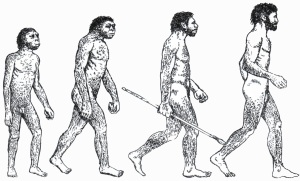
Walk Like A Caveman

There are many levels of irony about living in our modern, Western civilization.  One of the most striking, to me, is the fact that we find ourselves thinking that we have to “make time” for exercise.

Our ancestors–almost all of them–were never faced with this kind of problem, any more than are the millions of other species of animals living in the world.  Exercise is not a special task or chore for most creatures, it is part of the process of staying alive and being healthy.  Really, that’s what it should be for us as well.  We know that our bodies want to be used, they thrive with that use and become stronger and healthier, in general, the more active we are.  Yet, the progress of our civilization has, curiously, led us to alienate ourselves more and more from our natural, active natures.

Many of our modern conveniences were created to spare us from the “horrors” of physical labor.  Automobiles, escalators, elevators, tractors…these things are all, of course, truly remarkable and incredibly useful, but because we have them, we’ve gotten into the habit of relying solely upon them.  After only a little bit of time doing this, we realized that our sedentary, machine-driven lifestyles were often leading us to be terribly unhealthy.  Its not so much that our lives have been shortened…modern infection control, including vaccines, antisepsis, antibiotics and health codes have led us all to survive and even become unaware of the simple ailments that killed most of our forebears.  Our lives have instead been diminished, not in quantity but in quality.  It is wonderful to be able to drive hundreds of miles to see a distant relative at a moment’s notice.  It is NOT wonderful to have to drive to the corner store because we’re too out of shape to walk there.

In recent years we’ve learned that astronauts who spend very much time in space, without the need to fight gravity, rapidly lose bone density and muscle mass, and their hearts weaken as well.  To combat this tendency they have to use very clever means to engage their bodies and to keep those organs fit.  Yet we here on the ground, deep within Earth’s gravity well and not going through free-fall, often might as well be floating in orbit, for all the work we give our bodies.

Awareness of this issue has led to a huge industry of gyms, exercise equipment, supplements and how-to books about exercise.  We strive to fit time to go to the gym into our busy, modern schedules.  There’s nothing wrong with that, of course…I’m all for the gym.  But you don’t have to have a membership at the expensive local health club, nor even any special equipment, to keep your body as healthy as you can.  All you have to do is live just a little bit more like your ancestors did.

So, if you have to go to the store, and it’s not that far away…walk there instead of driving.  Obviously this won’t work if you have to buy a great many groceries at one time…but maybe multiple trips with smaller hauls spread throughout your week would be a better idea for your health, anyway.

If your local store isn’t QUITE local enough to walk to, well, then drive there.  Then, instead of jockeying around for the very closest spot you can find, park at the far end of the parking lot, and walk to the store from there.  It may not seem like very much, but if that’s so, then it also shouldn’t be very much trouble.

When you’re going into a building and need to go somewhere other than the first floor, why not take the stairs?  Walking up stairs is terrific, low-impact aerobic exercise and it keeps your quads nice and strong!  Okay, if you live in New York City and need to get to the 50th floor, walking ALL the way might be impractical unless you’re a marathoner with a lot of time on your hands.  Yet, even so, you can take the elevator up to two or three floors shy of your destination and walk the rest of the way.  Then you can do the same thing on the way down, which will, after all, be quite a bit easier than going up.

Also, if you live in a good enough climate, at least part of the year…ride a bike to work sometimes instead of driving.  This won’t be great if you have a sixty mile commute each way (again, unless you’re a distance athlete and have a rather flexible schedule), but if your commute is more reasonable, then biking is a great alternative.  It saves you gas money (a big deal in our current economic climate), and it produces less carbon dioxide than does an internal combustion engine…though it DOES produce some, since that’s one waste product our bodies produce just as our machines do.

All these simple measures can keep your body healthier and keep you feeling stronger.  They will probably also make you a bit thinner and shapelier, which is nice.  Still, feeling and being healthy is far more important than being thin…as any famine victim would gladly tell you if they had the chance.

In closing, the key to being physically fit and active in the modern world–and to feeling more alive and vigorous and strong–doesn’t have to involve expensive gym memberships, aerobic classes, treadmills and weight machines.  All those things are great, and I have nothing but praise for those who discipline themselves to make their bodies as healthy as possible.  Yet, even for those without the money and/or the time for the more advanced techniques, sometimes just letting go of a few modern conveniences can make you a little more like your robust ancestors…without the worrisome threat of infection and dangerous predators with which they had to contend!

The Treatment Trap

In America today, we rely far too much on pills and on procedures–on would-be “cures” for our problems–than we really should.

It may seem strange for a medical doctor like me to be saying this, but I have insight into the issue from multiple perspectives.  I’ve been one of the doctors who falls into the trap of trying to “treat” every issue rather than prevent or solve it, and I’ve been a patient who approaches things the same way.

The irony is that a great many of the health problems we face in the modern world–especially the most rampant and devastating ones, such as diabetes, high blood pressure, heart disease and their related problems and consequences–are governable simply by modifying our lifestyles.  Indeed, for many of us, these health concerns’ very existence AS problems is only CAUSED by our modern lifestyles.  I’ve already discussed in some earlier entries the mechanisms and effects of type 2 diabetes, a disorder which is becoming more and more endemic in our nation, and at younger and younger ages.  It’s absolutely clear why this is happening:  We are more sedentary and more overweight and we eat more rapidly absorbed carbohydrates than humans have ever done before in our existence.  What’s more, thanks to public health interventions and control of infectious diseases, we live long enough for these habits to matter more than they could have in the past.  We also know, quite well, many of the things that we can do to counter diabetes and its close relatives, hypertension and heart disease. Yet, instead, we allow our health to deteriorate and then rush to modern medicine to seek “cures” or at least treatments for the outcomes of our bad habits.

I suspect that this trap of habits was set for us, to some degree, by the brilliant innovation and success of antibiotics.  These are the quintessential medical cures:  When used against an infection caused by a sensitive bacteria, antibiotics actually CURE the problem (with the help of our own immune system).  To some degree anti-virals do the same, though they are more recent, and anti-parasitic agents are also analogous.

Unfortunately, most other kinds of medicines–unless you count the occasional Tylenol or Motrin to treat a tension headache or muscle soreness–don’t actually cure anything.  They simply “treat” it, governing the symptoms and consequences to some degree or other, but not addressing whatever underlying processes might be contributing to the issues.  In addition, they give the patient the illusion that the problem is now under real control.

There are, of course, times, when health problems are not soluble or easily controllable, and managing the symptoms and consequences is the very best we can do, at least for now.  So PLEASE do not think that I am advocating the elimination of Western medicine or that those being treated for chronic health conditions should just give up their pills and let nature take its course.  Yet with so many health problems, even if we have to resort to medication, we can also make lifestyle and behavioral changes that will mitigate our problems and decrease, though not always eliminate, the need for medications (and surgery, when applicable).

We all know, or should know, that taking medicine can be a double-edged sword.  Medications sometimes create new issues of their own.  The human body is an incredibly complex system–arguably the most complicated thing in the known universe, especially when you count the human brain–and when you manipulate such a  system in one way or location, unexpected consequences almost never fail to arise.  This leads to the horrible spectacle of patients receiving medication for one problem, but developing side-effects, which then need to be treated by other medications, and which cause toxicities and interactions that later have to be addressed.  The whole affair can become a vicious cycle of increasing biological chaos, like a metabolic Rube Goldberg machine.  In the elderly especially, it can sometimes be all but impossible to be certain whether new health problems are intrinsic or are caused by earlier treatments.

We try, of course, to mitigate and avoid this conundrum by studying medications as carefully as possible and learning what their possible side-effects are…but every human body is different, and that’s going to continue to be the case, since the number of possible genetically unique humans is vastly greater than the number of human beings who have ever lived.  So we can be guaranteed that the one expectation we can reliably entertain is the UNEXPECTED.

It is better by far to avoid developing problems whenever possible rather than trying to treat them.  This is true because it is simpler and more predictable, and also because it makes life better.  Rather than being a person who identifies themselves by their litany of ailments, for which they build their house-of-cards treatment regimens, we can work to maintain lifestyles that are GOOD for our health, that work with our natures, and that help us to think of ourselves as–and to feel like–healthy, vital and thriving human beings.

Medicines are indeed wonderful products of modern science and technology, and I strongly suspect that they have saved and improved many more lives than they have harmed, even despite what I’ve said above.  If I didn’t think that, I wouldn’t have gone into medicine.  Yet, it would be even better if we could avoid having the need for medications as often as possible in the first place.

I’m going to discussing more of this in future entries.  I’ll go into some fairly obvious lifestyle issues such as exercise and diet, but I’m also going to explore philosophical and psychological aspects of health that can make a great difference in not only how long you live, but also in how much you enjoy the time you have.

A life of a hundred years can be a tragedy and a life of a single day can be a triumph.  It all depends on what kind of life it is.

“I Am” (Soy) Isoflavones, and I (probably) Decrease the Risk of Prostate Cancer

I recently had a friend ask me whether eating and drinking soy products can increase the risk of prostate cancer; he had heard that it can, and that all men should avoid soy “like the plague.”

This question really surprised me, because most of the medical information I have encountered has tended to point in the opposite direction…and for reasons that made good, sound biological sense.  However, I know that good, sound, biological sense doesn’t always pan out.  This is why we have to do actual experiments.  After all the Universe is complex, and the human body is arguably the most complex thing we know of in it.  Often an expected biological effect of some dietary or medical intervention, that seems inescapable on its face, can turn out to be utterly undetectable or at least thoroughly confounded by other consequences.  So, bearing this in mind, I did a little reading, and I learned about at least one source of data that might have been behind what my friend had heard.

First, though, to get back to the believed protective effects of soy:  Soy products contain chemicals called flavones and isoflavones, which are part of a group of biological chemicals called phytoestrogens.  Now, “phyto-” is just a word root that means “plant,” and estrogens are, well…estrogens.  I think most people in America are at least passingly familiar with estrogens, especially given the current controversy over the required coverage of birth control pills.  So phytoestrogens are just estrogens from plants.  In human females (we often refer to them scientifically as “women”), estrogens are among the hormones that control fertility and related processes, and they are quite abundant.  However, in the male body–including that little devil, the prostate–estrogens tend to counter the natural effects of testosterone.

Testosterone is also, I suspect, a hormone of which most Americans are aware.  It is the substance, to paraphrase Dave Barry, that makes men take league softball seriously.  Its actions produce such male secondary sex characteristics as increased muscle mass, facial hair, deeper voices and bar fights.  It is also the hormone responsible for the fact that almost every man who lives long enough–if he isn’t testosterone deficient–will develop prostate enlargement (so-called “benign” prostatic hyperplasia, or BPH), with its lovely constellation of maddening symptoms.  The presence of testosterone can also stimulate the growth of many kinds of prostate cancer, and in fact some treatments for testosterone-sensitive tumors include drugs that directly block testosterone, such as bicalutamide (the name isn’t really that important).

It is thought that the effects of phytoestrogens in soy products are responsible for the protective effects that they may have against prostate cancer.  These effects are not tremendous, nor are they absolutely demonstrated, but they are probably real and the science is sound.  So whence comes the idea of soy actually increasing the risk of prostate cancer?

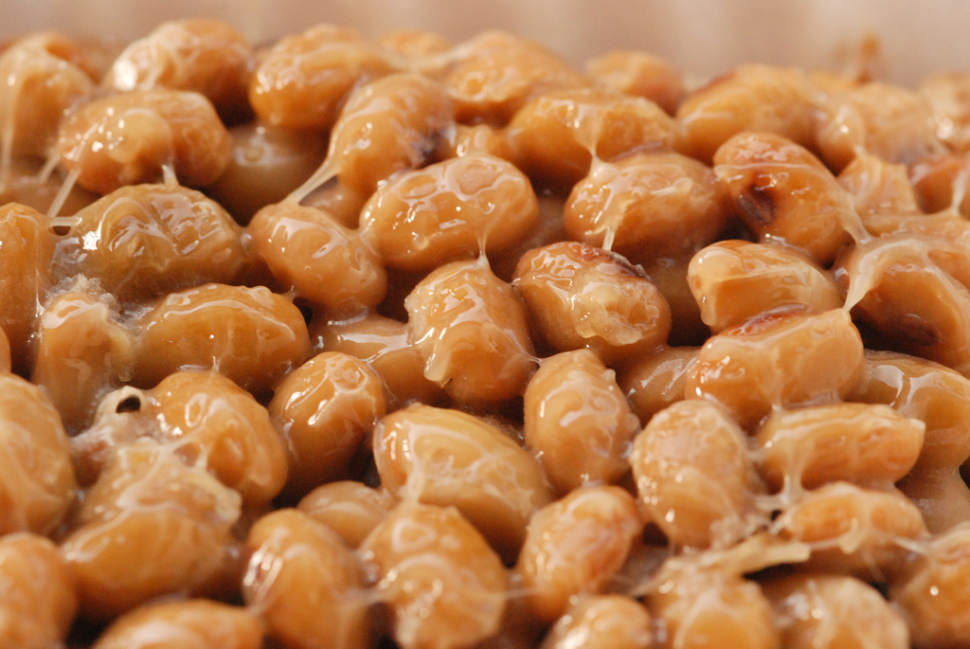
Well, I found out about a study in Japan that covered a number of different dietary sources of soy and its isoflavones on the risks of development of several subgroups of prostate cancer, including localized and advanced cases.  This was a good country in which to study those effects, because the traditional Japanese diet includes a number of soy staples, including tofu, miso and natto (a kind of fermented soybean concoction).Not too surprisingly, this study actually generally supported the idea that soy intake in foods (not necessarily supplements) reduces the risk of prostate cancer overall…but there was ONE little peculiar exception.

The study found that increasing intake of miso soup may be associated with a small increased occurrence of advanced prostate cancer in men 60 years of age and older.  Now this reallyis peculiar, because it seems very specific to miso soup, which raises the question of whether there’s something ELSE in miso soup that’s causing this measured increase.  Also, such studies are always inexact because there are so many potential variables that could be influencing the outcomes by other means.  In addition, the number of cases of advanced prostate cancer in this study, compared to the size of the study, was VERY small, which means the statistical connection is quite a bit less robust than it might be.

Nevertheless, I can at least tell my friend this:  Unless he’s eating a LOT of miso soup (and is over 60), he probably doesn’t need to curtail, let alone avoid, soy products.  In fact, he can probably indulge in all the soy milk, tofu and natto he wants, and if anything, it may decrease his risk of prostate cancer a little bit.  It’s even possible (though not clearly demonstrated) that it might reduce his future problems with prostate enlargement.  Of course, the trade-off is that he may find himself caring a little bit less about who wins a particular sporting event.  Still, having treated a good number of men suffering from prostate problems of various kinds, I can assure you, that would be an extremely small price to pay.