“And, to SLEEP, you must slumber in just such a bed.”

Well, it’s f*cking Saturday, and I’m going in the to f*cking office to f*cking work, because it’s not challenging enough for me to recover my limited mental equilibrium when I have two days off, so I should try to do it with one as often as possible.  Oh, and the one day I supposedly still have to take off is the day I have to do all my laundry, which means I have to go into the other part of the house and, more often than not, deal with their overly energetic and poorly trained dog‒and it’s a big dog.

I’m not afraid of dogs.  I like dogs, even very large ones.  But I have little sympathy for dogs that have not been trained, and who act like they’re still teething or something.  If it were my dog, I could rapidly train it out of the habit of putting its moronic jaws around peoples’ forearms, and it and I and others would be happier overall.

Maybe next time I’ll go out with suntan lotion or even pepper spray all over my arms, so it gets an unpleasant mouthful if it tries.

Honestly, sometimes I’m tempted just to slip it a few chunks of the rat bait/poison that I have.  It’s not the neurotoxin one, which is supposedly less harmful to people and pets than to rats.  It’s the super-coumadin, blood “thinning”, anticoagulant one.  To be honest, though, I would probably not be willing under nearly any circumstance to poison a dog, since the agency of such a creature is limited and its poor behavior is largely due to the humans in its life.

And yes, of course I have a big, multi-pound bag of rat poison.  Who knows, I might get peckish at some point and want it as a snack.  The holidays are upon us, after all, and it can be so hard to stay on a diet at this time of year.

Anyway, that’s just one possible nosh that I have for potential last meals.  I even have a couple of emptied out fiber capsules that I’ve refilled with broken glass pieces.  They would actually go nicely with the previously mentioned snack, wouldn’t they?  Like salted caramel, the two components could really enhance each other.  You might even call it synergy.

Enough about such tempting treats.  The point is, I’m going to the office today.  Then I’m heading back to the house.  Then I’ll be trying to rest if I can for the remainder of the weekend, though when I think of my own mind, I am inescapably reminded of Boromir describing Mordor:

That works pretty well to describe my very annoying brain/body.  I cannot seem to sleep very long, and I never feel like I sleep “all the way” if you will.  I am always somehow on yellow alert; I don’t know why.  It’s exhausting.  There are plain few upsides or effective distractions, and almost never any relief.

I don’t even know what I’m writing about right now, really.  I just feel a general, free-floating hostility and even hatred for most things in existence.  Sometimes I just want to wipe out the whole universe.  It can be done rather easily, at least from a certain perspective.

Incidentally, creating a new local source of the hypothetical inflaton field would probably not do the trick, assuming that inflationary cosmology is correct.  Most of the mathematical solutions to that possible situation indicate that, such a field would initiate a new, rapid, inflationarily expanding “universe”, but from the perspective of our universe the created bubble would just plop through and out of spacetime.  I haven’t done the math myself‒I am not adequately trained to do it at this time‒but I have this from more than one fairly reputable and reliable source, including people who actually do have the necessary expertise.

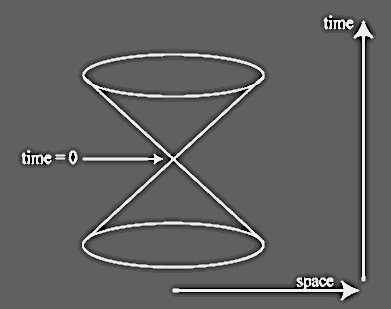
I’ve previously discussed vacuum collapse; if one could figure out how to trigger that‒assuming it is possible‒one could literally wipe out everything in the current universe.  Though, of course, it would take a long time, since it could only happen at the speed of light, so really, you’d only be wiping out everything in your future light cone.  There may be no way to destroy the universe that doesn’t effectively take a limitless time to accomplish.

On the other hand, when I spin around, it’s possible to view that action as the universe spinning around me while I’m stationary.  There are legitimate reasons why we don’t tend to think of it this way, but it’s a perspective that can be taken.

From that sort of perspective, when one dies (from one’s own point of view at least) the entire universe ceases to exist.  It’s very simple and thorough!  Of course, if there is an afterlife, that plan would fail, and one would be forced to go back to the drawing board.  But I’ve never encountered even borderline intriguing evidence or argument that might indicate an afterlife exists, unless you count things like a Poincare recurrence*.

So there is at least one reasonably reliable and plausibly achievable way to destroy the universe, from my point of view.  And the good thing about that is, from other points of view, the universe would still exist, and this would be no more contradictory than the fact that someone falling through the event horizon of a large enough black hole wouldn’t even notice it happening, but those far away would see the faller as never even quite reaching the event horizon.

Anyway, that theoretical stuff isn’t really very interesting for present purposes.  What matters is, at the very least, I can destroy the universe in a sense, if I so desire.  And every day it seems to become more and more tempting to do so.  This world is just so disgusting so often, and it’s not just humans that meet that description.

Ah, well.  Try to have a good day if you can for as long as the universe does exist.  After that, you’re on your own.


*Or the possibility of quantum immortality in the context of Everettian quantum mechanics.  But the various other possible alternate versions of me in such a theoretical quantum multiverse are not “me” even now, from my point of view‒not exactly, anyway, not in any sense that I can experience.  So future possible subsets of the wave function of the universe that contain randomly immortal versions of me are not worth taking into account, and they are vanishingly rare**.

**Though I suppose, as time goes by and all mortal things die, the quantum wavefunction of the universe might come to be dominated by such versions of…well, everyone.  None, however, would be able to interact with each other as far as I can see.

Another day, same old stories

Well, it’s Tuesday the 2nd (of December) and that two/Tue coincidence has to be worth something doesn’t it?  I suppose it would be better if this were February (the 2nd month), but perhaps it’s enough to note that the difference between the official number of this month (12) and its nominative number (10) is 2.  Anyway, having two twos might make more “sense” than having three of them.

Is that important?  Almost certainly not.  In 56 years of time and space, I’ve never encountered anything that was truly and objectively “important”.  But it is the sort of thing that engages my (admittedly rather odd) aesthetic sense, and this is my blog*, so I will indulge myself.

Anyway, it’s the second day of the work week, and I’m going to work.  The reason I go to work is, at root, nominally to keep myself alive and “thriving”, so I can…what?  Keep working?  I don’t have any other, deeper or longer-term reasons.  It’s fairly absurd when you think about it.  It’s a self-referential, almost tautological, ouroboros-like situation.

By the way, I don’t see any reason to think that this state of affairs is the product of some conspiracy‒centuries or even millennia long as it would have to be‒by the powerful to keep the masses toiling away for their benefit.  For one thing, as we can all plainly see (I hope) the powerful are at least as idiotic and moronic and clueless as anyone else, and they probably tend to be less self-critical, so they are more prone to do really stupid things without anyone protecting them from their own stupidity.

They no more really, actually control anything‒including themselves‒than a queen bee (or ant or termite) runs its hive/hill/colony.  The queen just happens to be the breeding female.  And even that is not a role based on any merit, other than being capable of developing active ovaries.  The queens are “chosen” randomly, as far as we can tell.

It’s all just shit that happens in a region of spacetime in which entropy is moving from low to high, as it tends to do, but in which there’s enough movement involved in the process to allow for locally highly complex phenomena based on carbon’s extraordinarily fecund chemistry, which occasionally forms self-replicating molecules that undergo natural selection.

But people tell stories about things.  It’s one of our strongest attributes, and it serves in us roughly the same “purpose” as the various pheromone trails and hive dances in the aforementioned ants and bees and termites.  Our stories allow us to act in concert with many other people, on a scale that puts even the social insects to shame.

We often believe that our stories are true, at least to some degree.  And some of them, in a limited sense, really are “true”.  But most of them are just stories, made up “just so” explanations of things we either haven’t figured out or that have a nature too complicated or too daunting for us to want to face them as they are.

As someone who has a penchant for creating stories, I can tell you, it’s quite easy to make up plausible-seeming, internally consistent tales about worlds and characters and events, real or otherwise, that have little to do with reality other than that it is a fact of reality that I made up those stories.

I consider all religions and all their related tales to be part of this phenomenon.  This is not an insult to them per se, and the tendency for people to take it as an insult or an attack belies the faith such people claim to have in their religions.  But people who really think a particular thing is true don’t have to defend it with anger, let alone violence.

Imagine if the classical physics people had crucified Planck for solving the “ultraviolet catastrophe” by positing that only certain chunks (quanta) of energy can be produced, or if they had burned Einstein at the stake for not only showing that light comes in such quanta but that matter is also finely divided***.

Science does also work with stories.  Every hypothesis is a story, and some of them can seem extremely compelling.  Some of them we really want to think are true.  And that’s why, ideally, science takes every such story and pokes the hell out of it, trying to show if and where it’s wrong, where it’s internally inconsistent, where it doesn’t match what actually seems to happen in the world.  It’s not perfect, but it does improve in an incremental, ratchet-like fashion, at least as long as we hold to the rigorous, ruthless, but honest criticism of those stories.

With that, I’ll draw the main body of this post to a close.  I have no idea why I’ve written what I’ve written, or at least I don’t know very well.  I doubt there’s any internal consistency or coherence to it, but I guess that supports my point.

Please try to have a good day.


[Aside: a thought occurred to me yesterday that, as we approach the era of humane, lab-grown meat derived from animal stem cells, what, if any, would be the moral implications of using human stem cells, taken from a volunteer‒I’m willing‒to grow meat in the lab and have people eat it?  There’s no risk of parasites or infections, assuming reasonable genetic screening, such as might explain an evolved revulsion for cannibalism.  There’s no one being harmed.  What do you think?  I’m not concerned with whether you feel it’s somehow “icky”; that’s just misfiring evolution-based taboos.  Do you think there is any moral reason not to grow and eat such meat?  If so, what are they?]


*There are many others like it**, but this one is mine.

**Are they really like it, though?  You tell me.

***These are two of the things Einstein demonstrated during his annus mirabilis (i.e., “miraculous ass”***) in 1905, the same year he published his paper introducing special relativity.

***That’s not really what it means.

“Shadows of the evening crawl across the years”

Well, it’s Wednesday morning‒insert your joke of choice related to the Beatles song She’s Leaving Home here‒and here is my blog post for the day.  I will not be posting tomorrow (barring the very much unforeseen), since today is Thanksgiving Eve* here in the US, and therefore tomorrow will be Thanksgiving.  I will not be working on Thanksgiving, so there is to be no “traditional” Thursday post.  I’m sure you’re all devastated, but hopefully you can eat yourself into a stupor tomorrow to flee from your sorrow and loss.

Speaking of stupors, I slept a bit better‒or at least a bit longer‒last night than the night before.  This is because, despite it being a weeknight/worknight, I knocked myself out a bit with an OTC sleep aid.  So, if I seem a bit odd today‒for me, I mean‒that’s probably why.

Of course, I’m well aware that the sleep induced by such medications is not proper sleep.  That’s a very interesting fact for someone who gets proper sleep on their own, but it’s pretty theoretical to me.  It’s a bit like quibbling by saying, “going through a wormhole to get to a distant part of spacetime quickly isn’t really going faster than the speed of light”.  Well, okay, if I can find ways to break the laws of causality** I will, but in the meantime, I’ll use the wormhole.

Likewise, sometimes I just want to be unconscious, and I have a hard time achieving it on my own.  Oblivion is such a relief when and if it happens (so to speak).  Yet, even when I do sleep, there’s always a background watchfulness in my head, a feeling that where I am is not safe in some sense, so I cannot completely relax.

I almost never wake up without some manner of start, i.e., a bit of a jump in place.  I don’t know why***.  Maybe this is just the way it is when you’re nominally a member of a species of pack hunters but you’re functionally completely alone, separated from whatever group(s) there were to which you belonged and surviving on your own as best you can.  The world is never fully safe for such a creature.

Well, the world is never fully safe, period, full stop.  No one here gets out alive, after all.  Nevertheless, natural selection tends to lead to the state where the only surviving organisms are descendants of those who feel fear and who feel pain and who try to stay alive indefinitely, even when that survival is pointless (biologically speaking, I mean‒I won’t get into the deeper philosophical questions that can apply, because that would take too much time and energy).

I’m going to bring this to a close here pretty soon, if I can.  My thumb arthritis is acting up, today, and writing this is more painful than it usually is.  Well, actually, I don’t know that “arthritis” is the proper word, since that implies a process that is primarily inflammatory.  It’s probably more precise to say “arthropathy”, which just means “something wrong with a joint”.  “Arthralgia” works quite well here, also, meaning just “joint pain”, but it’s pretty darn vague in its implications of any possible cause.

I suppose it doesn’t make a great deal of difference.

Anyway, I hope everyone who is celebrating has a truly wonderful Thanksgiving Day tomorrow, and that you spend a pleasant time with friends and family (and maybe some football).  I will be back on Friday, barring (as always) the unforeseen.  I work at a sales office, after all, and Friday is “Black Friday”, traditionally the biggest sales day of the year in the US.  Though, there has been a significant degree of “feature creep” or whatever the best term might be regarding that, so now the whole of this time of year is becoming an extended “Black Friday”.  Natural selection tends to encourage such things.

Anyway, I expect to write a post on Friday, so I will “see youthen.  Or at least you will see me.


*There is no such holiday, official or unofficial, as Thanksgiving Eve, but it’s still obvious what I mean by it.  Isn’t it?

**The speed of light in a vacuum being the speed of causality.  This appears to be a large part of why nothing can travel faster.  How could something move more quickly than causality?

***As far as I can tell, it’s not because of having gone to prison.  For one thing, my sleep problems started way before that pleasant interlude.  For another, I didn’t have any real problems with people starting shit with me in prison.  Apparently, I looked (look?) a bit nuts or something.  Also, honestly, I got along okay with people there, all things considered.

“Though this be madness, yet there is method in’t”

Well, first let me apologize for yesterday’s blog that largely concerned the weather, and in a trivial sense at that.  It was rather lamentable, I know, with emphasis on the first four letters of that adjective.

On the other hand, I don’t apologize for having had my little bit of fun with the date.  That may have been even less interesting to most of you than my jabbering on about the weather, but I like it.  I fully expect that I will do such things again.  For instance, in a similar vein, today is a bit fun because it is 11-12*, so the numbers are in appropriate ordinal sequence with no gaps.

That’s not very fun.  More fun will be had (by me, anyway) on Friday, when it will be 11-14-25.  If you don’t immediately see the fun there, it may help that a similar fun date next month will be available on 12-13-25.  This fun also works with the European date order (but in both you have to leave out the digits that denote the century).  Also, there were no equivalently fun dates in any month before October.

This is the most fun I’ve had on any kind of date in at least 16 years, I would guess.  That’s an easy call, because I haven’t been on any date at all in at least that long.  See what I did there with the multiple meanings of the word “date”?  Of course you did.  What do I think you are, a moron?

No, I do not think that.  You are reading a blog post, so you are a reader, which gives you a serious leg-up, moronia-wise.  You draw from the well of that greatest of all human inventions:  written language.  Your taste in reading material may be somewhat questionable, but I cannot legitimately complain about that.

Wow, I feel like I ought to be almost done with this post, but I’ve barely passed 300 words.

On to other things.  I’m going to try to do a better job about science reading during my downtime in the office.  It’s not that I’m completely slacking; I’m reading Shape by mathematician Jordan Ellenberg, and I just read his earlier book How Not to Be Wrong.  I’ve read both before and/or listened to the audio books, but they are well worth rereading.  He’s a great math professor, and has a gift for explaining potentially abstract concepts.  I think he’s slightly better at this than Steven Strogatz, the author of The Joy of X and Infinite Powers, but they’re all good.

I also just yesterday gave in to an urge I’ve had for some time:  I ordered a textbook I liked in med school but which we didn’t really get into as deeply as I would like:  Principles of Neural Science, by Kandel et al.  The edition I had was by Kandel and Schwartz, if memory serves, but Dr. Schwartz is no longer involved, it seems.

It’s a textbook, so it’s pricey, even in paperback, but I discovered that I could put it on a payment plan through Amazon, so that’s what I did.  It arrives today.

I’ve also resolved, at least tentatively, to try to take the heat off my reading of my science books‒including the above newcomer‒by doing something I did when reviewing/studying in med school:  I would get a text that I was reviewing, and I would pick a section to read/review by flipping a coin.

Actually, it was a series of flips, each one dividing the “remaining” part of the book in half.  In other words, for the first flip, heads would mean I would look in the front half of the book, tails would mean the back half.  Then the next flip would decide to which half of that half I would narrow things down further.

Anyone who has spent any time dealing with computers and/or binary numbers can readily recognize that, with 10 flips of the coin, one could choose a specific page in a 1024 page book.  I guess every flip would count as a kind of “half-life” for the book’s pages.  If one wanted, one could even choose one’s pages not with a coin flip, which is not truly random, but with a quantum event that has a 50-50 chance, like measuring whether a given electron’s spin is up or down.

Of course, I don’t have a Stern-Gerlach gate, so I would have to “farm out” that process.  But I understand that there are apps that you can use that have their sources at labs where each decision is truly made by a quantum measurement.

It’s not terribly practical nor more useful for pickling book pages than is a coin flip, but if you’re a convinced advocate of the Everettian, “many worlds” version of quantum mechanics, it has the added “benefit” that each “flip” will divide the universe into two “worlds”, one where you choose from the earlier half, another where you choose from the latter.

Coin flips do not enact such splitting, not in anything but the trivial sense that every quantum level interaction potentially does so.  The experience will be the same for you, though, except whatever glee you might derive from splitting the universe to choose a section to read.

Anyway, I’ll be trying to read my books, random section by random section.  Believe it or not, this works for me.  I don’t have to learn things in order, usually, and this method avoids me feeling bored while trying to trudge through a text in order.

Perhaps I do have some aspects of ADHD up in there in my brain.

Well, I’ve now passed my target length for this post by some margin, so I’ll call this enough for today.  I expect to be writing another post tomorrow, but like everything else**, it is not absolutely certain.  I hope you have a very good day.


*Only in the American style Month-Day-Year format, though.  It is less fun in the European Day-Month-Year format.

**Yes, even death and taxes, in principle.

“I turn the trouble of my countenance merely upon myself.”

I would like to apologize to anyone who was worried about me* on Saturday (and possibly through the rest of the weekend) because I did not post on that day.  One of our two weekend closers was unable to make it in because of serious personal things happening, and our newest fronter‒the only remaining active one‒also could not make it.  If we had opened the office, there would have been very little to accomplish, so the office did not open.

Thus, I had the weekend “off”, for whatever that’s worth.  I was at least able to get some rest and to get some walking in (trying to be careful not to overdo it).  It was all very boring, though.

I’ve chewed up and digested (and passed) a lot of the things that I do for distraction, like YouTube videos, and the Algorithm** cannot seem to grasp my desires and interests as well as it used to do.  It’s quite frustrating at times.  But I suspect the fault lies not in my algorithms but in myself.  I am running out of capacity to divert myself adequately.  To quote the Pink Floyd song One of My Turns, “nothing is very much fun anymore.”

It shouldn’t be so, of course (though what “should” be anything is quite debatable).  I have oodles of books in my Kindle and even a fair few “real” books.  I have a stack of science books above my desk including Spacetime and Geometry by Sean Carroll, and the whole “Theoretical Minimum” series by Leonard Susskind et al, and Quantum Field Theory As Simply As Possible by Anthony Zee, and even a text coauthored by Stephen Hawking called Euclidean Quantum Gravity.

These are all books I chose and in which I have real, serious interest, but I cannot seem to muster the focus to take them down and read them during breaks and down time.  I could even be using my membership to Brilliant to review things and to learn new things‒it’s a lovely service/site/app.  I also have a lifetime membership to Babbel that was surprisingly cheap, which I have hardly used at all.

This is all stuff in which I am seriously interested; no one is asking me to study this material, let alone making me do it.  But I cannot seem to focus on any of it.

I guess I’ve always done better, academically, when I was in a formal program, with quizzes and tests and discussions and so on.  But even in those situations, I often got distracted and sometimes had to forbid myself to do anything but classwork during the week.  Even then, my approach was never typical.

My ex-wife used to say that I was the only medical student she knew that never studied but still passed everything.  Now, that was a serious exaggeration; I studied in my way, but not when she was around.  Also, how many medical students had she known other than me?

Still, I don’t and didn’t study the way other people seem to tend to study.  I don’t memorize things, generally.  I make a sort of model or mechanism of the subject in my head, putting the pieces together, and though this might make me slower to learn initially, it keeps the knowledge in my head, because it’s not rote memorization, it’s more of a system or a construct.  I have a kind of picture or shape or edifice, and if I “look at it”, the answers are almost implicit.

It sounds sexier than it is, probably.

In any case, I’m fortunate that I can learn that way, because cranking through things has always been…well, not quite anathema to me, but I do have a hard time.

According to what I have read, between 30% and 70% of people with autism spectrum disorder also have diagnosable ADHD.  Now, I don’t know whether this might be behind some issues for me, but my studying, though relatively successful for me in the past, has never been very sensible.

For instance, the one thing common to pretty much all my notebooks in undergrad and in med school is that nearly every page was packed, not with notes from whatever the lecture was, but with doodles of varying kinds, some quite intricate.

Many of these doodles were dark (it’s me, after all) but there were also a lot of whimsical things.  For instance, in a lecture in anatomy class that included descriptions of the lactiferous duct, I drew an elaborate cartoon of a “lactiferous duck” which was a caricature of a mallard swimming along with a bottle of milk slung around its neck in the fashion of the stereotypical rescue Saint Bernard’s bottle of booze.

My friend Chivano thought it was pretty funny.  He was sitting next to me while I drew it.

Well…this has been a weird blog post, has it not?  And I’ve passed the 701 word target, so it’s time to draw this weirdness to a close.  Also, I’m not really interested in writing more at the moment.  It, like everything else, is in a superposition of boring and irritating.  It probably gets that from me.

I hope you all have a good day and a good week, and so on, and so on, and so on…


*See, I still occasionally write some fiction.

**As if there were only one.

If the vacuum collapses, everything gets messy

It’s Wednesday morning now, and I feel slightly better than I did yesterday, which should probably be no surprise.  I went back to the house last night, and I had a decent sleep‒for me, anyway‒and no major evening issues.  Now I am working my way toward the office.  It’s payroll day, so it should be at least mildly more hectic than most other days, but it shouldn’t be too unbearable.

Well, it shouldn’t be unbearable at all.  I mean, the state of being unbearable or not is a purely binary thing, isn’t it?  Either something is bearable or it is not.  If something is unbearable, then it cannot be borne.  So, saying something is not “too unbearable” is probably almost always nonsensical.  I suppose one could imagine something being only just unbearable, so that one could almost be able to bear it…but not quite, and one would finally be forced to succumb to whatever outcome that entailed, despite one’s possibly heroic struggles.

In some ways that sounds like it could be worse than something being thoroughly and unequivocally unbearable.  If one can see that something is truly unbearable, one will probably be less likely even to try to bear it.  One would not bother attempting to style out the brunt of a supernova; if one could not get far enough away, one would presumably just close one’s eyes and grit one’s teeth and take what comfort one could in knowing that the explosion will probably happen and obliterate one faster than any nerve impulse could propagate.

That’s one of the (tiny) comforts about the possibility of there being a “vacuum collapse” of the universe, in which the present “dark energy” vacuum state could, hypothetically, quantum tunnel down to a lower, truer vacuum state than the present one*, releasing that potential energy drop in such a way that wipes out all currently existing particles/fields.

This would erase everything in our visible universe (the “visible” part is deliberate and crucial; do you see why?**) in a sort of wave of collapse that starts at the site of the first state change, like the propagation of ice crystals forming in hitherto supercooled water.  But though it would be a shame, from our point of view, it would be one we would never experience, since the bubble of state change would expand at the speed of light.  It would thus be literally impossible to see it coming, because once you could see it, it would already be there, and you would be wiped away before you could possibly be aware that it was happening.

By the way, this possibility is “only” hypothetical; we aren’t even sure it could happen, not least because we’re not sure whether the vacuum state of the universe is as low as it can go or not, among other things.  But don’t worry:  if the vacuum collapse of the cosmos doesn’t kill you, something else will.

Even my truly immortal vampires in Mark Red might be wiped out by vacuum collapse.  I suspect they would, which might be a comfort to many of them, so to speak.  Of course, that would depend very much on how the “supernatural” forces in that book’s universe interact with the vacuum state and other quantum fields.  It’s not inconceivable that they might survive even that.  How’s that for horrifying?

These are odd thoughts for a Wednesday morning, aren’t they?  I mean, on a Thursday they wouldn’t be that odd, and even less so on a Friday.  On a Saturday they would be almost boringly predictable.  But on a Wednesday morning?  That’s just, well…odd, as I said.

I’m being silly.  My apologies.

I guess it’s more uplifting than is the prospect of universal Armageddon***.  Though, really, the Tao te Ching (in the version with which I am familiar) encourages us to embrace death with our whole hearts because that will help us to be prepared for most everything else we can encounter.

It does not encourage us to love death or to seek it; quite the contrary.  We are merely encouraged to accept it, not just intellectually but viscerally, to internalize***** it.  This is one of those curious circumstances in which the Tao to Ching and the movie Fight Club give the same advice, which is no indictment of that advice in either direction.

I try not to indulge in the vice of advice, but I will express my hope that every one of you who reads this post today or any of my other posts has a particularly good day, today and every day hereafter.

You’ve suffered enough already.


*This is analogous to what is thought to have happened when the “inflaton” field dropped down to a much lower energy level about 13.8 billion years ago, releasing the differential energy as the very hot soup of elementary particles that eventually became the universe we see.

**Okay, fine, I’ll explain.  It’s not just that the wave is expanding at the speed of light and so one would “see” it only as it hits.  But, given the current, accelerating expansion of the universe, the wave of change could never, even in principle, reach areas of the cosmos that are outside our cosmic horizon, because those places are receding from us faster than the speed of light/causality.  There is no causal influence from us that can ever reach them, or vice versa (assuming no wormholes or warp drives or similar).  Likewise, someplace beyond our horizon****** could be collapsing already, but we need never worry, because that collapse is not going to reach us (unless it changes the rate of overall cosmic expansion or even reverses it, which is not inconceivable.  We might then find ourselves in (or near) an anti-deSitter space, in which case, well…yeah).

***Not to be confused with the often misused**** term “apocalypse” which is basically just synonymous with “revelation”.  It’s become associated with the end of the world (and with lesser catastrophes) because one of the alternative titles of the book of Revelation is “The Apocalypse of Saint John the Divine” or whatever they called that nut bar.

****That rhymed, and it had a good rhythm too, both quite by accident.  I did that in yesterday’s or Monday’s post as well, but I didn’t call attention to it.  Can you find it now?

*****I would love to be able to use the term to grok it as in Heinlein’s Stranger in a Strange Land, but much as when Fuckerberg stole the term “metaverse” from me, likewise Elon Musk and the would-be tech boys who idolize him have arrogated the term “grok” and made it embarrassing to use.  Don’t even get me started on the disgusting theft of the word Palantir by Peter Thiel.  He deserves to be tortured interminably for the unmitigated gall he has shown in daring to use that term, but I would accept his immediate, painless disintegration and that of his company.

******Speaking of horizons, it is interesting to wonder what a vacuum state collapse would do to currently existing black holes.  I suspect they would basically be impervious to it, since the vacuum state is something that exists within spacetime, with the gravitational field as the backdrop of other quantum fields, but we don’t necessarily know enough about quantum gravity to feel very sure, as far as I know.  I suspect it might change the specifics of Hawking radiation at the level of the event horizon, and thus change the specific rate of black hole decay.  Also, I think in the first rush of particles generated by such a vacuum decay, most black holes would grow briefly with the influx of newly released energy all around them that had previously been bound up in the vacuum energy.  But that’s just my initial intuition.

Noisy events on the horizon of my attention span

It’s Tuesday, isn’t it?  Well, I guess it may not be Tuesday when you’re reading this, but it’s Tuesday as I’m writing it.  It’s the second day in the latest of a seemingly endless stream of utterly pointless “work weeks”.

Welcome to our world.  Welcome to our world.  Welcome to our world of noise.

That’s a paraphrase of the song that was (and may still be) sung by the dancing animatronic puppets in the main front area of the big F.A.O. Schwartz store that sits just by the southeast corner of Central Park in Manhattan.  I’m not sure why I felt like including it there, but it definitely expresses the sentiment I have that nearly everything in the universe is effectively “noise” in the information theoretic sense.  At the very least, the signal-to-noise ratio in the world is vanishingly tiny.

It’s not zero, mind you.  There’s some info hiding in all the nonsense.

Of course, whether something is signal or noise depends very much on what signal you’re seeking.  If you’re trying to detect gravitational waves, then nearly everything else around is “noise” in the sense that it is not evidence of gravitational waves, and is just going to make that evidence harder to find.  But if you’re an ornithologist, then at least some of that seeming noise might be the birdsong “signal” of a rarely seen species there in Louisiana, which I think is where the first LIGO observatory was constructed*.

And, of course, if you’re a seismologist, what you consider a significant signal would very much be noise to the LIGO people.  If there were a gravitational wave strong enough to be seismically significant, it would have to be from a very close and catastrophically violent event.

We don’t expect there to be such a thing any time soon.  And apart from such events, gravitational waves are so relatively weak‒gravity being by far the weakest of the “forces” of nature‒that so far they can only be detected from things like black hole and/or neutron star mergers, which are ridiculously violent events.

Incidentally, apparently recent observations of one such merger has given confirmatory evidence for Stephen Hawking’s black hole horizon theorem**.  That states that when two black holes merge, the (surface) area of the new, combined event horizon must be at least as large as the two prior event horizon areas combined.

In this, as in other things, black holes and their horizons act very much like the 2nd Law of Thermodynamics, and that is consistent with the Bekenstein-Hawking thesis that the entropy of a black hole is proportional to the area of the event horizon, as measured in square Planck lengths.  Indeed, the maximum entropy‒the maximum information‒of any given region of space is that which would be encoded upon an event horizon that would hypothetically enclose such a space.

As for the volume of a black hole within the event horizon…well, that’s harder to quantify.  The apparent radius, as judged from the sphere of the event horizon‒the Schwarzschild radius for a non-rotating black hole‒is almost certainly much smaller than the radius that would be perceived by someone within the horizon, for spacetime is very distorted there.  Indeed, I suspect that, at least by some measures, the volume within a black hole‒or at the very least the radius from the “center” to the horizon‒is infinite, with the “singularity” actually stretching down away forever.

Of course, an asymptotically infinite well of that sort need not always have infinite volume.  There is, for instance, the counter-example of “Gabriel’s Horn”, a shape made by rotating a truncated function (y = 1/x for x ≥ 1) around the x-axis.  This shape has infinite surface area, but it has a finite volume(!).  So you could fill it with paint, but you could never finish painting the inner and outer surface.  Weird, huh?

Of course, the dimensionality of things within a black hole’s event horizon is probably at least one step higher than things in the Gabriel’s Horn comparison, so the finite/infinite comparisons may not translate.

I’d like to be able to do a better job working that out with more than my intuition; that’s one reason why I own no fewer than four fairly serious books on General Relativity.

That’s not the only reason, of course.  I would also like to try to solve what happens to a space ship that accelerates near enough to the speed of light that its relativistic mass and relativistic length contraction puts it below its own Schwarzschild radius (at least in the direction of motion).  Also, how would that figuring be changed if the ship were rotating around the axis of its motion***?

Unfortunately, I rarely have the mental energy to put into pursuing adequate mastery of the mathematics of GR, and so I can (so far) just try to visualize and “simulate” the spacetime effects in my imagination.  That’s fine as a starting place, but even Einstein had to master the mathematics of non-Euclidean geometry and matrices and tensors before he could make General Relativity mathematically rigorous.

It’s almost certainly a pipe dream that I will ever get to that level of expertise.  My chronic pain and chronic depression (dysthymia) combined with the effects of my ASD (level 2****, apparently) and the effort that’s required for me to act “normal” enough to get along just really wear me out mentally.  It’s frustrating.  I have a stack of pertinent texts above my desk at work, where I hope they will entice me.  I even have a copy of my old Thomas and Finney college calculus text there too, so I can do some reviewing in that.

If only I were able to spend some time without pain and to get a good night’s sleep once in a while, I might even make progress.  I suspect that such things are not in the cards, however.

I would love to be dealt The Magician (in Tarot cards) but I fear that I am just The Fool.  Oh, well, that’s all just metaphorical, anyway.  It’s possible to predict the future, of course, but it is difficult, and it’s very unlikely that any set of cards‒however cool they may be‒is the way to do it.


*I remembered correctly.  It is in Louisiana.

**The theorem, being a theorem, is mathematically rigorous, but the question remains whether it describes the way our universe actually works.  That is always a matter of credences rather than “proof” in the mathematical sense.  In the real world, probabilities may come vanishingly close to zero or to one, but they never quite reach them.

***In Special Relativity, when something is traveling around a circle at a significant fraction of the speed of light, length contraction has the effect of “shrinking” the circle from the “point of view” of that which is moving at that speed.

****”Requiring substantial support” according to the official definition.  I do not have such support.

For they blog between term and term, and then they perceive not how time moves

Hello and good morning.  It’s Thursday, so of course I’m writing my “traditional” blog post, with my “traditional” salutation and ending.  I haven’t written the ending yet, but I will, and of course, when you’re reading this, I will have already written those four closing letters—like a vortex manipulator, it’s a kind of cheap and nasty time travel.

I’m writing this post on my mini lapcom, the device formerly known as a laptop computer (to me, at least), because I thought it would be good to write my traditional Thursday post on my traditional type of device.  It’s all very exciting, obviously.

Except of course that it is not exciting.  Nothing is exciting.  There are many worrisome and alarming and infuriating and disgusting things happening in the world and in my pseudo-life, but they are not exciting.

I can’t even feel one of my turns coming on.  Rather, I think I’ve been in “one of my turns” in a low-key way for quite some time now.

I’m very tired.

I wish getting out the lapcom got me fired up to write some new fiction.  I certainly have plenty of story ideas and plots and whatnots in the back of my mind.  But I have no energy to act on them.  By the end of any given workday, I can barely drag myself onto the train to go back to the house, to be honest.

Then, of course, there’s the current washing machine problem.  The machine has finally been delivered, but the old, broken machine is still in place, so the new one hasn’t been installed, and I’m not sure when it will be.  I’m eating into my savings, such as they are, buying new clothes in the meantime.

The need to buy new clothes is particularly irritating, because—quite apart from the expense—I had no desire to buy any, possibly ever again.  New clothes are for people who have a future toward which they look with at least some degree of positive anticipation.  I do not see my own future with any good feelings.

Speaking of the future and not having one and also writing fiction, I thought of an amusing, cautionary tale, a fable of sorts, recently.  Imagine a young man—this sort of story really only works with such a protagonist—who finds a literal genie in a lamp and is given the traditional three wishes.

For his first wish, this young man asks for the ability to stop other people (and things) in time, imagining/planning various nefarious deeds he might undertake while people are “frozen”.  The genie is puzzled and seems troubled, but he grants this first wish.  Soon, the young man finds himself in a situation where he wants to test the power, but when he turns it on a chosen target, as soon as he does, the person just…vanishes.

The young man summons the genie, saying the power didn’t work, panicking a bit about what happened.  The genie explains that the person for whom he stopped time vanished because they simply did not continue past the point in time at which they had been frozen.  So, they did not exist in any future time, and they never would.

The genie had wondered why the young man wanted that power, but he had granted it.  Unfortunately, this deed cannot be readily undone; they cannot bring the person out of the past using the young man’s power as it is.  To change that power and to bring the person back would require the use of the two remaining wishes.

Will the young man choose to do it?  Will he correct his error?  Or will he continue to have the power, now using it as a weapon rather than the for the lascivious means for which he had imagined using it?

I admit, it would be kind of interesting to have such a power.  It’s reminiscent of the ability to send people “away” that the main character had in Stranger in a Strange Land.

What would you do with such an ability?  I would probably use it in morally questionable ways, myself.  But there certainly are people about whom it can safely be said that the world would, overall, be better off if they stopped moving forward through time.

Incidentally, this process would not run afoul of the principle of conservation of energy.  That conservation principle, like all physical conservation principles, is dependent upon the symmetry of the system—this was demonstrated by the genius Emmy Noether in her famous theorem.

The conservation of energy is (or, rather, it would be) a consequence* of the time symmetry of the universe.  But the universe is not symmetric in time, not on large enough scales.  So, on large enough scales, energy (and thus also mass) is not conserved.  Locally it tends to be, because locally, time is symmetrical to a good approximation, rather as the local surface of the Earth is approximately flat on a small enough scale…or rather like the way a small enough portion of any continuous curve can be arbitrarily closely matched by a straight segment on a small enough scale.  This latter fact is the source of the power of calculus.

But just as one can have a local hill or curved shape on the surface of the Earth, one could—in principle—violate local conservation of energy given the right available manipulations.  Now, we in the real world cannot do such a thing, at least not right now, but presumably it would not be beyond the power of a genie.

Okay, well, that’s all pretty stupid, I know, but what do you expect?  It’s me, after all.

I hope you or y’all have as good a day as you possibly can, which you will have, since there is no other possibility.  That doesn’t mean it will be a good day.  It will merely be the best possible day you can have, even if it’s horrible.  Still, I do hope that for you, at least, it will be good.

TTFN


*An interesting term to use, given the current subject.  It has a relation to the order of things in time:  con (with) sequence (ordering of things).

“The sun is the same in a relative way, but you’re older.”

Okay, well, here we are.  It’s Wednesday.  I don’t know what else there is to say about the day.  I guess…yeah, I don’t know.  It’s another day.  It’s a stretch of (roughly) 24 hours, the specifics depending on whether you’re using solar time or sidereal time or just the “self-contained” UTC time*.

UTC time is kept on a variety of clocks around the world and is based on the oscillations in the hyperfine transition frequency of the Caesium-133 atom.  That frequency has been defined as 9,192,631,770 Hz.  The international measuring community thing, whatever they call themselves, thereby agreed on defining the second as exactly 9,192,631,770 of those Caesium-133 oscillations.

Of course, oscillations of atoms, like all other processes that take time, slow down with increased spacetime curvature and with increasing speed relative to any given observer.  This is why the GPS satellites have to adjust their own time to account for both special and general relativity.  It’s pretty cool; you’re carrying proof of Einsteinian relativity in your smartphone.

You probably already knew that.

Then, of course, once they’ve decided on the precise value of a second‒knowing that the speed of light (or more precisely the speed of causality) is constant‒they then defined the meter as how far light travels (in a vacuum) in⁠ 1/299,792,458⁠ seconds (approximately 30 2/3 “vibrations” of a Caesium-133 atom).  Mind you, two observers moving relative to each other will see their meters as different each from the other, but c’est de la relativité.

It can be easy to imagine that definitions of units in science (and related fields) are not merely arbitrary but circular, almost tautological.  But really, given that these are attempts to codify specific attributes of reality itself, they would almost have to be self-referential with each other to be useful.

The length of a day is something that happens for real.  Thanks to the base 6 and 12 numbering system of the Babylonians, the day was long ago arbitrarily divided into 24 hours, each 60 minutes long, and each 60 seconds long, so a second was 1/(24 x 60 x 60) days or 1/86,400 of a day.

That worked well for a long time, especially since, before Galileo et al, humans couldn’t really measure time very precisely, anyway.  And then, until railroads allowed rapid travel between cities, it wasn’t necessary to worry too much about having the same time in different places.

But eventually that did become useful and necessary for many purposes, and eventually it was realized that a day wasn’t exactly what we were calling 24 hours, and indeed, that the length of a day varied slightly from day to day and year to year; also, a year isn’t a whole number of days long.  Also also, a day could be measured relative to the sun‒which is close enough that a day doesn’t end quite exactly after one full rotation since the Earth moves relative to the sun over the course of a day‒or with respect to distant stars, by which estimate a day comes closer to being exactly one complete rotation.

For most people most of the time, though, this precision, and that upon which it is based, are probably not merely irrelevant but unknown and unguessed.

Likewise, I don’t know how many people know about how Celsius made his temperature scale 100 degrees between the freezing and boiling of water at sea level pressure (a pretty reasonable choice, though I’m led to understand he initially had 100 assigned as the freezing point and 0 the boiling point!).

Then it was discovered that there existed a minimum possible temperature in principle, and they decided to set that scale, the Kelvin scale (named after William Thompson Scale**) using degrees of the same size as Celsius, but with zero defined as‒understandably enough‒absolute zero.

It’s all fairly interesting, if you’re in the right frame of mind.  But, alas, there’s every reason to suspect that all this information will be rendered moot and useless and perhaps even lost as the world winds down, or if life is replaced by artificial intelligence, or everything ends in some other way, as seems more than possible even in the relatively short term.

In any case, the laws of physics, as we know them, seem clearly to predict that the universe will tend toward ever-greater entropy and eventually all life, all structure will end.  Sometimes, I think it cannot happen soon enough for my taste.

Then again, there are cyclic universe proposals, such as Roger Penrose’s Conformal Cyclic Cosmology.  It bases its model on the fact that entropy, though always tending to increase, is not really an absolute quantity, not a substance, and that our universe’s “maximal” entropy may be the next universe’s low-entropy beginning, just on different scales; it doesn’t even require any “inflationary” burst of expansion to explain the uniformity of the CMB, I think.  I haven’t yet finished Penrose’s book about CCC, because though he is a stunningly brilliant mind, his writing can be a bit plodding and dry.

I guess it’s hard for any person to be good at everything, though Penrose has many strengths.  If memory serves, he invented a set of shapes which can be used to tile an infinite plane (in principle) with no gaps and no repeating patterns.  Supposedly this has been proven to the satisfaction of professional geometers, though I am not familiar with that proof.  Still, if it is a mathematical proof, then it is one of those rare things that we know to be certainly true, given its set of axioms.

It’s not necessarily useful in any practical sense, of course.  For instance, I think it’s probably true that any tiling system that can tile an infinite plane without repeating could not be used to tile a closed, finite, simple geometrically shaped portion of a plane‒such as a rectangular room.  I think you would always have to cut some of the tiles as they reach the wall, no matter how big the room is, as long as it is finite.  I do not know this for certain, that’s just my intuition.

Well, I guess I’ve wasted space and time enough here for now.  It’s no more wasteful than has been my entire existence, I guess, but also no less wasteful.  Or is it?  I don’t know.  In any case, for now I will stop wasting your time.

Please have a good day.


*Yes, it’s probably redundant to say “UTC time”, but the order of the acronym is sort of Yoda-esque‒it did not originate with an English term‒so I feel it’s tolerable to use it this way here.

**That’s a joke.  He was really William Thompson, the first Baron Scale***.

***I mean the 1st Baron Kelvin, of course, all joking aside.  A baron scale sounds like some long forgotten and unused (i.e., barren) bit of laboratory apparatus, left for eons, gathering dust in an abandoned world, like the broken statue of Ozymandius.  It’s very sad.

“I’m falling down the spiral, destination unknown”

Well, it’s Friday morning, and I’m still fasting.  I’m also, once again, writing this post on my smartphone.  It is so hard not to take the easiest, lowest “action” route at any given time in any given moment, such as when leaving the office to go back to the house.  I guess I shouldn’t be too surprised by that; it’s what the laws of nature themselves do at every time in every place, following the “path” with the least local action.

That is local though.  Nature doesn’t necessarily come out with the most straightforward long-term pathway for things.  That would require it to see ahead, to be able to act at a distance, in a more literal and broad sense than even just the collapse of the wave-function*.  And so, likewise, for instance (please forgive me for being very loose with my analogies) I leave the mini lapcom at the office even though I will regret having done so the next morning.

And so, also, I will snack on and just eat unhealthy foods in too-great amounts, even though I will regret it later, and despite prior experience.  That prior experience can only change my action when its negative effect applies strongly enough in the moment of temptation.  But alas, it’s difficult to get to that point.

If I were somehow to get sick to my stomach‒or, well, even just nauseated‒every time I ate anything but the healthiest food, I would probably rather quickly stop desiring a lot of foods, because nausea is a very strong internal signal that leads to longer-term aversion in the human nervous system, a fact shaped by evolution to prevent someone from eating poisonous or infectious foods more than once (ideally).

Anyway…

I’m tolerating my fast so far with minimal trouble, which doesn’t surprise me.  Indeed, by the end of work yesterday, I felt very upbeat, at least physically.  I wouldn’t go so far as to say I was euphoric, but it was a feeling in the same genus, if not the same species.

However, I did not sleep well last night, even for me, which surprised me a bit.  I honestly expected I would probably feel sleepier than usual, just as a matter of energy conservation.  Of course, that would fly in the face of my own reasoning about the extra alertness and motivation engendered by food deprivation, at least up to a point.  So I should not be surprised, and if I am, that’s a sign of my own relative lack of thorough and rigorous thinking about what was happening.

Mind you, it’s only been 36 hours since I last ate something.  That’s not exactly earthshaking.  I’m sure that other states of mind and body would/will arise if I continue to fast.  I do feel a little floaty and disconnected already, but then my mind is weird even at the best of times.

One thing that fasting makes clear to me:  food really is practically the only thing that gives me any reliable dose of joy anymore, however transitory and however low the rebound takes me afterward.  There is nothing else in my life‒nothing of which to speak, anyway.

I don’t do anything for fun, I don’t really have any conversations with anyone (except my sister slightly less often than once a week), I don’t go anywhere for fun or inspiration or interest.  I watch semi-random YouTube videos and putter around on a few other social media just as distractions.  I haven’t even watched any sports or any other shows, not after the first regular season football week, because it rapidly got boring.  I don’t even play any of the video games I have.

I still do read some, but I’m running out of books in which I have any interest‒currently I’m most of the way through If Anyone Builds It, Everyone Dies.  After that, I don’t even know what I would want to read next.

It would be best‒not just for me but for everyone else in the long run‒if I could apply enough willpower to stop eating completely, forever.  Goodness knows that’s what I want to do.  I don’t know if I’ll be able to do it, though.  I mean, I will try, I am trying, and maybe after the first few days it will become easier.

So far, though, dealing with the dearth of activation in my nucleus accumbens is daunting.  I’m a miserable person even when I can stuff my face with food that I like.  Without food or music or creative writing or any other expression, it’s all very much a long, long road with no inn at the end or even any rest stops along the way.

I don’t know what to do.  Perhaps some epiphany will hit me.  I doubt it.  I suspect there is no deep, secret answer.  There’s only transient, pointless existence then a return to nonexistence; so I suspect, though I do not claim to know for certain.

Whatever.  It’s Friday, and the weekend approaches.  Who knows?  Maybe I’ll still be fasting by Monday for my next blog post.  I would like that.  I would also like it if you all have a very good day and a good weekend.


*That is what Einstein referred to as “spooky action at a distance”, not quantum entanglement.