Walking and thinking of the ups and downs of knowing what is or isn’t true

It’s Friday, but that’s not really a big deal for me, since I’m working tomorrow.  Honestly, though, the difference between leisure time and work time for me anymore is mainly just where I happen to be, since I don’t find any significant joy in either situation.  There’s not much I can do about that, other than just lay down and die, which has its appeal.

I walked to the train station this morning, having walked very little yesterday.  I made good time, and my ankles seem to be okay, more or less, which is nice.  I listened to parts of a couple of old podcasts while walking, one by Sean Carroll, the other by Sam Harris, and each one led me briefly to make a voice recording of a thought that came to me at the time.

First, the Sean Carroll one led me to make a rather bad play on words:  “It’s no exaggeration that to say that y equals one over x is to be speaking hyperbolically.”  It’s a silly play on the fact that “hyperbolic” can refer to an exaggeration or to the mathematical shape, a hyperbola.

Hey, I’m be here all week.  Make sure to tip your servers.

(Should you tip your local area network, though?  That’s a trickier question.)

So, that was the silly thought.  The more serious one came as I listened to Sam Harris’s podcast with Nina Schick, the author of Deepfakes: The Coming Infocalypse, in which they discussed the advent and potential impacts of the increasing ability to make (and the decreasing cost of) convincing simulated representations of real people’s voices and appearances.  Of course, among the potential issues being presented was that this will actually increase the deniability of inconvenient events for political and other public figures, but at root, to me, it brings to mind something I wrote some time ago in a blog post on the problem of attribution.

When one quotes a person who said something one thinks is worth repeating, it’s generally considered appropriate to give an attribution, to credit the quote.  But even before the advent of possible deep fakery, the tendency to attribute quotes is a problem because humans are so idiotically tribal.  If you say a quote comes from Karl Marx or from Ayn Rand, you will automatically gain free credit and presumptive agreement from one group and automatic dismissal, disdain, and even hatred from another.

That’s stupid.  It’s not who says something that makes it true or valuable or worthy of note; it’s the actual thing being said.  This is one of the reasons I dislike formal debates, and the techniques of rhetoric in general.  They all boil down to primate dominance displays‒manipulations rather than actual, useful reasoning and sharing of the best available information.

I remember back in the late 90s, when people were getting all excited about the burgeoning web and internet, and about how they were going to make information so much cheaper and more readily available.  I agreed that would be the case, but I also had real misgivings, because I knew that also meant that misinformation, disinformation, and noise would become ever easier to disseminate.  And now, of course, people can “see” things online that never took place, and which nevertheless will influence their sense of what is real.  But reality does exist, outside of any perceptions or biases, though we may always only imperfectly apprehend it.

I think people shouldn’t worry nearly as much about who said something as about what exactly was said and whether or not it was true or plausible or reasonable or rational.  I suppose that being aware of a source’s credentials and track record can make one better able to decide whether to pay any attention whatsoever to what they say or write‒we all have only finite time and attention‒but even so, you should think rigorously about what someone says, no matter who says it.  Your favorite person can be (and is) wrong about many things, and your most hated enemy can say things that are correct (sometimes about you).

Hitler and Stalin were both quite aware that 2 + 2 = 4 and that the sun comes up in the east (so to speak), but the fact that these odious figures accepted such truths doesn’t make the facts any less true.  And the fact that the son and nephew of beloved historical political figures claims (miserabile* dictu) that vaccines cause autism and Wi-Fi causes cancer does not for a moment gainsay all the research that has demonstrated that they do not and that it does not.

Maybe people should just stick to print media and perhaps even only to printed print media.  At least there’s some cost to its production and that might weed out some of the riff-raff.  Though, come to think of it, maybe it wouldn’t.  It’s not as though there haven’t long been whole bookstores full of psychic and supernatural bullshit, and large sections of such material selling quite well even in reputable emporia.

Maybe people should just use online media of various kinds as entertainment but not as sources of information and evidence for too many things.  Then again, there are very good science programs and other kinds of information online that are wonderful to behold, and that can be informative and thought-provoking.  Even some blogs are quite good (this is probably not one of them).

I guess, maybe people should just try to think carefully and rigorously, and to recognize their own fallibility and that of their idols, as well as the potential for their “enemies” to be right sometimes and to be often other than pure incarnations of evil.

Maybe pigs should grow wings and take a skiing trip to Hell.

I’m not optimistic.  But hopefully I’ll be dead before everything goes to shit.  Unless that’s already happened, and this is the dystopia.  After all, how does one know one is in a failed society from the inside?  I suppose there are objective facts to be noticed in such a case, but that’s the heart of the problem.

Heavy sigh.

1 over x adapted


*That was deliberate, not a typo.
Numbers and trains and colicky pains, those are of what this blog post is made

It’s Tuesday morning, August 8th, 2023.  I was writing out the numerical date combination as I saved this post draft, and of course writing that date, 8-8, is a tiny bit of fun, not least because it is the same whether in European or American configuration.

What’s also interesting‒to weirdos like me, anyway‒is that if you write 8-8-23, you can consider the fact that 2 to the 3rd power is also 8, giving you three 8s in a row, in a sense*.  It requires a bit of twisting to make it work, obviously, and just as obviously, you have to ignore the first two digits of the full year to make it even come close to working, but it can be done.

Such is the way with all such numerology (and bible codes and the like); they all involve tortured logic to the degree that you can find almost any sort of pattern you might want to create if you’re dedicated enough.  But those patterns are clearly all in the eye of the beholder.

There’s nothing wrong with seeing and finding patterns in things and being amused by them, but don’t imagine that those patterns are actually “real” in the sense that they are put there deliberately by someone or something other than the one who finds them.  To imagine that some other power is trying to communicate with, or about, you is called, if I remember correctly, “ideas of reference”, and can be a hallmark of delusional psychopathology.

People are prone to self importance, unfortunately.  Perhaps it’s a defense mechanism against the heartless meaninglessness of existence, but it is rather amusing and often pathetic.  Even Heath Ledger’s Joker in The Dark Knight falls prey to this, though he is fictional and certainly not sane in any ordinary sense.  He says that he is an “agent of chaos”…as if chaos would need an agent.  Trust me, it gets plenty of work without any help.

Especially in fantastical literature, from myths, to heroic epics, to horror novels, to comic books and the like, people are often claimed to be “agents of…” various things, such as Death, Evil, Good, “The Balance”, that sort of thing.  In the real world, though, forces of nature and philosophical ideas do not operate through nor do they require “agents”.  Just imagine someone claiming to be “an agent of Gravity”, or “an agent of Electromagnetism” or “an agent of the Fine Structure Constant”.  It’s rather laughable.

Anyway, I’m not writing this on the night before posting‒that would have been the 7th‒but am sitting at the train station to write it.  I got to the station for an early train, but it is in fact delayed almost to the scheduled time of the next train, which is absurd and pathetic.

They’ve only just now begun an announcement that it’s going to be late, now that it’s already five minutes past its due time, and they say it will be delayed 15 to 20 minutes (currently the tracker estimate is actually 22 to 23 minutes late).  Then they say, “stand by for more information”.  They always say that.  But more information never arrives.  It’s just some kind of boilerplate that sounds quasi-military or official and impressive but means nothing.

I don’t understand why there are delays so often.  It’s their own schedule.  In Germany or Japan the people running this show would have been fired long ago.  And this is one of the best run things I know in this part of the world.  It would be enough to make me fall into despair-oh, if I weren’t already there**.

I had a bad day yesterday.  Though I did walk to the train, and that was fine, by the time I got to the office, I started having worse, and new, pain in my left mid to lower back.  It was very spasmodic and squeezy in nature, and quite severe.  I suspect I might have been passing a small kidney stone, given the character and location of the pain.

At my request, my boss tried to get me some urinalysis stuff from the local drug store so I could see if there was any microscopic blood in my urine, but all they had was UTI tests.  I didn’t have a UTI, to no one’s surprise.  Though maybe, just maybe, there was a trace of leukocyte esterase, which might indicate a tiny few white blood cells such as might accompany slight bleeding.

Anyway, the only thing I could do was drink lots of liquids, which I tried to do, and take lots of OTC pain meds, which I did.  It seemed gradually to progress and decrease, and now mostly there’s just a small remnant ache, overlying my usual pain.  It’s too bad I didn’t hurt enough for me to go to the hospital, but all they would have done at most would have been to give me IV fluids and maybe some pain meds.  Probably not.  There’s nothing much to be done.  Life is pain, as the Dread Pirate Roberts said.

Well, they have canceled that late train‒apparently due to mechanical troubles‒and now it’s started to rain heavily.  The 540 train is going to be doubly crowded now.

I hate crowded stuff.

Then again, basically, I hate my life and I hate myself, which is the ironic, opposite counterpart of the mantra which, as I mentioned yesterday, I formerly tried to train into myself.  In the morning, I feel miserable about going to the office, and in the evening, I feel just as miserable about heading back to the house.  There’s nothing in either place that gives me joy, and sleep for me is neither very long nor unbroken nor restful.  I don’t remember the last time I slept more than 2 hours before I started waking up repeatedly, not at all refreshed.

At least at the office there are people with whom I can talk, though not really about anything in which I have any interest.  I can call my sister sometimes in the evenings, when she’s off work and I’m not too tired and I get off early enough.  Or on a weekend.  That’s good.  It’s infrequent, though, and my poor hearing is annoying when using cell phones.

Otherwise, my life is empty, as you all know by now, I’m sure, and there’s no prospect of anything new or good or interesting in the future.  What does one do with something once it’s empty?  Well, if it’s recyclable, I guess one can recycle it.  I am not a recyclable container, as far as I know, or if I am, I’ve already been recycled a few times, if you can call major, sometimes catastrophic life changes to be “recycling”.  The usual practice after recycling is done, I think, would be to throw the empty container away.

That’s enough blogging for today, I think.  It’s probably more than enough for any day or any lifetime.  I’m really sore, and I’m really tired.


*By the way, 8 to the 3rd power is 512, which astute readers will note is also 2 to the 9th.  This makes sense because 2 to the third is 8 (as noted), and taking 2 to the 3rd to the third is the same as taking 2 to the 9th.  It’s some minor fun with exponents, and with powers of 2 and 8, which certainly is pertinent to bits and bytes in computer science.  On the other hand, 8-8-8 is just negative 8, and 8-8-23 is just  negative 23, which is at least a negative prime number (so to speak), but otherwise, it’s all rather dull.  In any straight arithmetic process, 8-8 is always going to be zero.

**Here’s a bit of an amusing note: the 515 train is now expected to arrive 5 minutes later than the 540 train, which appears to be moving steadily and on time.  Did that train pass the other?  Did they switch official route numbers?  Why is the other one having trouble?***

***As we now know, it had mechanical problems.  Perhaps they need more, better, and newer cars and engines.  They could increase local gasoline taxes to fund them, thus providing disincentives for driving and encouraging more use of public transportation at the same time, all of which would be at least a bit good for the climate.  But people would whine about that, wouldn’t they, and no one likes to hear babies crying, so we give them pacifiers.

Here we go again.

It’s Monday again.

I don’t know how we keep allowing this to happen, but it keeps on doing it, over and over again, from the Monday on or immediately after the day we’re born until the last Monday on or before the day we die.  I don’t know about all of you, but I don’t really want to go back to work.

I’ll try to make this a comparatively short blog post if I can, unlike the weird one I did on Saturday, where I got off on a tangent about the number of possible blog posts one could write given a thousand words of length and a limited number of potential words after each previous one.  If you like that sort of thing, and you didn’t read it yet because you don’t read blogs on the weekend, do feel free to check it out.  I was writing off the top of my head, and I only briefly fact checked a few quick items, so there could be errors in specifics, but I think the reasoning was okay.

Yesterday, on the other hand, I suffered from ill-effects of something I had eaten Saturday, or perhaps some combination of things.  Anyway, I was feeling quite poorly, though thankfully whatever it was seems mostly to have worked its way through my system.  Fingers crossed!

Oh, and I don’t know if anyone anywhere has noticed, but for my last two blog posts, I added “tags” which are supposed to help people find what you write if they’re looking for material on given subjects.  It’s a part of that whole “search engine optimization” thing that’s been a big deal on and off, but which must surely change faster than even fashion and politics, given how the various things operating and interacting on the internet and the web are changing so quickly, and how new things become a big deal so quickly, and presumably will be altered and will warp and distort and mutate if they survive at all.  Remember Myspace?

And, of course, the advent of the various GPT-type things and their use in searching and in creating will no doubt change not only the structure but the content of the cyber-world.  Heck, soon most of the internet and web could be things written by LLMs having cobbled stuff together by interacting with other LLMs, and the humans who still go there won’t even realize that the base of the structure, founded in reality initially, has long since washed away, leaving only a cobweb of nonsense built on earlier layers of nonsense built on earlier layers of nonsense and so on.  And, unless there is some collision with actual, practical requirements of reality that forces natural selection to act on such things, it could go on existing for a very long time, all the while signifying nothing.

Of course, unless it is forced to solve problems for which there can be real world right and wrong answers, with consequences, I don’t know how it could develop into any kind of actual general, self-directed intelligence.  But I haven’t really thought about it all that much, and I am no expert.  I have read and listened to some of the experts in the area, and some of them impress me with their reasoning, and some strike me as rather foolish and simple-minded,  seeming to miss many points about how things can and do go wrong in reality.

I suppose it doesn’t make much difference what I think.  Anyway, servers produce so much waste heat and they use so much power, the whole WWW may become increasingly unworkable as temperatures rise and use of resources needs to be curtailed.  It may be more energy efficient and climate-friendly to build artificial intelligence using actual nerves, genetically engineered and powered by photosynthetic cells that remove carbon dioxide from the environment and are vastly more energy efficient than electronic circuits.

What are the odds that humans will avoid total catastrophe long enough for those few, those happy few, creative and intelligent individuals to figure out solutions to various problems and implement them?  Will the demagogues and the polarizing political fashionistas wreck everything too soon for it to be saved?

The clever and creative people are very impressive, and they never stop trying if they can help it, but it is much easier to destroy than to create.  The 2nd Law of Thermodynamics makes it just so easy for things to fail.

That’s not because the second law is some force acting on everything, some quantum field or curvature of spacetime.  It’s much more fundamental than that.  It’s simply the mathematics of probability and statistics, and it will apply in any system in which mathematics applies, which seems likely to be any possible universe.  There are simply vastly more ways for any system to be “disordered” than there are for things to be ordered in any particular way one might desire.  So, even the most well-constructed things will fall apart; even the most carefully balanced center cannot hold forever.

I guess I’m not an optimist, am I?  Nevertheless, I’m not a complete pessimist.  I think it is possible for the clever, creative people to create faster than what they create is destroyed, and to carry the mass of humanity and life itself forward into a future of cosmic consequence, the nature of which we cannot predict, because to predict it, we’d have to already know the things we’ll need to know to get there.  It’s possible.  But there are no guarantees, and there are so many ways for it not to happen.  It will require tremendous care by so many people‒as it has all along‒to avoid utter dissolution.

I don’t know if the odds make it worth the effort. But the clever people often don’t let that stop them.  And though most will fail, it doesn’t take very many clever, creative successes to move the world along.  They are just that powerful.

Maybe I’m more optimistic than I like to let myself believe.  That would be disgusting, wouldn’t it?  But I’m not dead yet, even though I often wish I were; I haven’t killed myself yet, though I think about it so very often and feel so bad so much of the time.  I’m stubborn, I guess.

I could really use some help with that‒not the stubbornness, but the depression and anxiety and pain stuff‒but I don’t have the energy and I don’t like myself enough to seek it out and to do anything more than cursorily try to help myself.  We’ll see how long I last.  Not long, I’ll bet.  But I’ve been wrong before.

With that, let’s quit this post.  Have a good week.  If I’m still alive tomorrow morning and going to work, I will grudgingly and grumpily write another blog post.  Damn it.

“People have this power–the numbers don’t decide”

It’s Saturday again, as I warned everyone would happen if we didn’t do something to stop it.  Unfortunately, no one appears to have listened, so, well…here we are again.

Of course, as I also warned you all, I am working today, and so, here I am writing another blog post, just like all the others.

Except it’s not quite exactly the same as all the others.  And, given the 1000 or so words per blog post, and the number of possible words there are available, even avoiding random jumbles of characters, the number of possible blog posts that I could write is probably far greater than the number of potential days I have left in any plausible human lifetime…or any plausible universal lifetime short of infinity, probably.

Let’s do some quick and dirty math.

I’m going to estimate very roughly, because I only have vague (but educated) intuitions, but let’s assume I start any given blog post with a choice from a list of maybe twenty words.  That seems like a decent ballpark figure.  After that, there are only a limited number of potential next words that would make any sense and that I might be inclined to use.  I’m going to cull that down to 10 options per each next word, and I’m going to ignore individual word probabilities and predominances relative to other words.  I’m also going to ignore the fact that I often write more than 1000 words per post.  We’re just being quick and dirty here.

So, with 20 first words, then ten to choose from for each next word, if we assumed more or less random sorting among those, we’d have a potential number of blog posts of roughly 20 x 10 to the 999th power, or 2 x 101000 possible blog posts.  That’s a staggering number of possible posts, each just a thousand words long.

How staggering is it?  Well, the famous number “googol”, is 10100 (ten to the hundredth power, or 10 times 10 times 10…repeated a hundred times).  It can be written as a 1 followed by 100 zeroes.  That number itself is roughly 10 to the 19th times as large as the number of baryons in the entire visible universe.  In other words, that’s ten billion billion times as many.  That’s more than a billion times the number of people alive on Earth now times the number of baryons in the universe.

But that’s just a googol.  A googol is so small compared to 2 x 101000 that if you subtracted a googol from 2 x 101000 the change would be so unnoticeably small that to notice it, one would require a precision far beyond the most precise measurement humans have ever made.  We’re talking about one part in about 10 to the 900th power.  That’s rounding off!

The best we’ve done as far as comparing experiment and theory goes is the magnetic moment of an electron‒or maybe it’s the fine structure constant, I’ll have to check on that (no, it’s the electron one).  That has been measured to agree with theory out to about the 12th decimal place, if I remember correctly.  As Feynman has said, that’s like measuring the distance between NYC and LA to the precision of the width of a human hair (which is far more precise than would in any case be useful or even applicable for such a distance measurement).

Anyway, the point I’m making is that the number of possible blog posts that can be a thousand words long with a few‒admittedly somewhat overgenerous‒constraints is staggering.  If I could write a blog post every Planck time for the rest of the life of the sun* I wouldn’t even make a dent, not a noticeable scratch or scuff in that number.  And you can’t really do more than one quantum event in any given Planck time, if I understand correctly, anyway.

So, I’m not going to run out of possible blog posts any time soon.  Even though I’ve probably overestimated the number of words I’m likely to use following any given previous word‒and I haven’t weighted the odds as would some GPT-like language model that creates text without thinking, based on huge numbers of things other people have written‒it’s still such a huge number that it’s too large really even to contemplate seriously.

And yet, time after weary time, I write blog posts about very similar things, such as my pain and my depression and the fact that I could really use some help from someone.  It’s very boring, I guess.  I apologize.  If you’re looking to diverge very much, I guess my blog might not be the ideal place for you.  But, of course, the huge majority of all possible blogs that would fit my above-listed criteria would be gibberish**, so we don’t want to get too caught up in those numbers.

It’s a bit like thinking about the human genome.  There are, I think, on the order of a billion base pairs in the human genome, and each “slot” has 4 potential nucleotide “letters” (adenine, guanine, cytosine, and thymine) so the number of possible genomes is about 4 to the billionth power, or 2 to the 2 billionth power…and every 210 is roughly 103 (210 being 1024),and 21000 is about 10300 so 2 to the billionth is about…1027,000,000, if my calculations are correct.  I’m not sure they are, but you get the idea.  It’s a big f*cking number!

Most of these orders of base pairs would not designate a human, nor even anything that could live at all.  So let’s whittle things down in truly draconian fashion and say only 10 to the 90th are potentially viable***.  That’s still far more potential humans than the number of baryons in the visible universe.

I think you can see that we’re never actually going to instantiate that number of humans, since each human is made of a substantial number of baryons…it’s something like 1027, but that’s just a ballpark figure****.  So, unless we find a way to generate a lot of new baryons, and fit them into the visible universe without causing the whole thing to collapse upon itself due to gravitational effects, the whole of actual humanity will always be a sea of unimaginably untapped potential.

I think we all kind of knew that, anyway, didn’t we?

Likewise, the number of actual blog posts I‒or anyone else‒will ever write before the heat death of the universe (assuming that’s the way things end) is embarrassingly negligible.  But we work with what we have.

And speaking of that, I guess I’d better mentally prepare myself for work, since I am already on the train.  I hope you all have a good weekend.  Whatever you do, it will probably be more interesting than anything I’m going to do.  Believe it or not, I find some consolation in that fact.


*It’s about 1060 Planck times:  1043 Planck times per second times 60 seconds per minute times 60 minutes per hour times 24 hours per day times 365.25 days per year times about 5 billion years.

**I mean even more so than my actual blog posts are.

***Don’t make the mistake of thinking that’s a reduction by 26,999,910/27,000,000. It’s way more of a reduction than that.  Don’t be fooled by the comparatively small numbers in exponents.  We’re taking a number that was 27 million digits long and making it only ninety digits long.  If you subtracted the second number from the first, it would be such a small change you’d have to look out well past the 26 millionth digit even to see a difference.

****Again, don’t be confused by the relative closeness of the exponents and worry that we’ll run out of baryons soon.  10 to the 27th is vanishingly small compared to 10 to the 81st.  In fact, curiously, 1027 x 1027 x 1027 = 1081.  Every single gram of hydrogen contains 6 x 10²² atoms, and obviously the number of grams of hydrogen in the universe is waaaaaaaaaaaaaay bigger than that!

Nor can I fortune to brief minutes tell, blogging to each his thunder, rain and wind

Hello and good morning.

I decided yesterday afternoon that I would try to write something a bit different for today’s post, rather than just another litany of my depression and despair, since I’m sure any dedicated readers are probably getting almost as tired of reading them as I am of experiencing them.  I cannot directly alter the fact that I experience them—if I could, I would—but I don’t have to make it an uninterrupted trail of goo for you all to slog through on a daily basis.

I came up with two, more or less unrelated, ideas, but I’m only going to focus on the first, which is nearer and dearer to my heart and mind, in any case.  It’s also been something I’ve thought about on and off for some time.  I do wonder what pertinent quote from Shakespeare I’ll find to alter to make the title, but of course, you who are reading will already know the answer.

Don’t spoil it for me, okay?  I want to be surprised.

Anyway, the idea I wanted to bounce around today has to do with the question of the discontinuity of reality at a mathematical level.

I’m sure many of you are aware that, from the perspective of quantum mechanics, there is no sensible differentiation in, for instance, location at any scale smaller than the Planck length, which is about 1.6 x 10⁻³⁵ meters, or in time below the Planck time, which is roughly 10-43 seconds.

There are various reasons for this, and I won’t try to get into them, but this is generally agreed upon by all the scientists who work in the field.  It’s part of why there is an upper limit to the number of possible quantum states within any given region of spacetime, defined, thanks to Bekenstein and Hawking, as the surface area of an event horizon surrounding that region as measured in units of square Planck length.

Thus, based on the best current understanding of the micro-world, the universe is not so much pixelated as blurry at the smallest scales.  Admittedly, these are very small scales—far smaller than we can probe currently, so we may, in principle, be wrong about some of it, and quantum gravity might change our understanding, but there are strong reasons for this assessment.

Now, mathematics—thanks to work threshed out by Newton and Leibniz, building on ground first broken (though no one quite realized it at the time) by Archimedes about two millennia earlier*—can deal with things that are truly continuously divisible.

Those of you who took high school level calculus (or higher) probably recall that a derivative involves finding the instantaneous slope, or rate of change, of a curve describing some function, such as the instantaneous acceleration being the rate of change of the “speed”.  The idea of it had to do with taking the slope of a line connecting any two nearby points on the curve and bringing them closer and closer together, taking the limit as that distance goes toward zero.

Analogously, integrating a function involves finding the area under a curve, and is in a way the opposite of a derivative.  This involves splitting the area under the curve into rectangles of fixed width at any given point along the curve (the height defined by the value of the curve at that point) and adding them together, then taking the width between the points to be smaller and smaller, until one approaches the limit of an infinite sum of “infinitesimally” narrow rectangles.

These processes are tremendously useful, and can describe the orbits of astronomical objects and the trajectories of ballistic materials, just to take two simple examples.  They are good for describing the universe in many ways, and they often produce useful and accurate answers and predictions to the best of anyone’s ability to measure.

But that raises my question.  Do we currently have the capacity to tell the difference between processes in the universe—say, for instance, acceleration due to gravity—being truly continuous or them being in a sense discontinuous?

We know that the Real Numbers are uncountably infinite, as a matter of pure mathematics.  Between any two nonidentical real numbers, however arbitrarily close together, exists an uncountably infinite number of more real numbers, as large—so to speak—as the number of real numbers themselves, a Russian doll in which every new doll revealed by opening the previous one has just as many dolls inside it as there were inside the original Russian doll…but even more unlimited than that.

This is, however, not necessarily relevant to reality**.  Just to demonstrate that fact:  we can calculate Pi (π), the ratio of the circumference of a circle to its diameter, to any number of decimal points we might choose, but it will never come to an end—it’s an infinite, non-repeating decimal number, one of the “transcendental” numbers.  Pi has been calculated to 62.8 trillion digits (as of 2021) but that’s not a number we could ever measure as the ratio of the circumference of any actual circle to its diameter.

I’ve read (from a reliable source) that only 39 digits of Pi are necessary to calculate the circumference of the visible universe*** to the fineness of a single hydrogen atom.  Now, a hydrogen atom is about 1033 Planck lengths across, according to a quick search, so that means, in principle, we’d only need Pi to 72 digits or so to calculate the diameter of the universe to the nearest Planck length.  That’s a fairly large number of digits, but it’s smaller than the order of magnitude of, for instance, the estimated number of baryons in the visible universe, and is smaller than the entropy “contained” in even a solar mass black hole****, unless I’m seriously misremembering.

So, finally, my question is, how well have mathematicians ascertained that aspects of reality can in truth be described by equations that are actually continuously variable, or whether we could ever tell the difference?

A computer, for instance, could simulate some model of a continuously varying system to a high degree of precision by taking each current state and then applying an approximation of the applicable equations to the next state, iterating each step in sequence, as if recapitulating the steps that led to the limit defining the derivative or the integral of a function.  This would be considered an approximation of the true function, of course, but one could, in principle, get arbitrarily close to the true function by taking one’s intervals to be arbitrarily small—solving, for instance, or at least simulating, the three (or more) body gravitational problem, by calculating, at each instant, the net effect of each object on all the others, calculating the acceleration, applying it, moving each thing a tiny step, then recalculating.

But what if it’s not the step-wise approach that’s the approximation?  What if the continuously differentiable functions we use to describe things like gravity and electromagnetism and the various quantum mechanical matters are the approximations?  What if reality is more Δx/Δt than dx/dt?

Obviously this is a simple enough concept to come up with, and I’m far from the first one to think of it.

My more immediate question is, has anyone demonstrated mathematically just how fine our measurements would have to be to tell whether, for instance, the orbit of a planet around a star follow a truly continuously differentiable path, or if it is just a step-wise, iterated process?  If one were able, for instance, to simulate the orbit of a planet, say, by iterating an approximation each Planck time, and reconfiguring the system at each step to the nearest Planck length, how long, in principle, would it take to be able to tell the difference between that simulation and a truly continuously differentiable motion?  Could there, given the constraints upon the nature of reality applied by our best understanding of quantum mechanics and the like, ever be any measurable difference?

I don’t know if this has been addressed by mathematicians.  It may not have any practical implications, since we’re a long way from being able to measure reality precisely enough—or so I suspect—to tell that difference.  But I wonder if it’s been worked out just how finely we would need to be able to measure to tell if reality is truly continuously differentiable.

If anyone reading is a mathematician familiar enough with this sort of question to give me an answer, I would love to hear it.  Or if you know a mathematician with appropriate expertise, or a physicist of similar expertise, I would dearly like to know if anyone has done any explorations from the mathematical (not simply the practical) point of view regarding this.

That’s it, that’s my subject for the day.  I feel that I’ve been very ham handed and brutally quick in the way I’ve gotten into the subject, and for that, I apologize.  I only have the time to write this between my shower and when I leave to go to the train station, so it’s a bit quick and dirty, as they say.

Obviously, I don’t have time or space today to address my other, unrelated question, which is about whether the legality and ubiquity of large-jackpot lotteries of various kinds has changed the general psychology of, for instance, the American people in a way that has decreased “average” ambition and work ethic, providing “bread and circuses” to the masses in a way that has at least contributed to the greater economic disparity between socio-economic levels in the nation (and the world) and the gradual dissolution of the middle class?

I wouldn’t dream of thinking it the only or even the dispositive factor, but I wonder if it might have contributed.

Maybe I’ll write about that tomorrow.  Weirdly enough, we may have a harder time coming up with definitive answers for that question than the one I tried to discuss today.  Mathematics and physics are easy, in a sense.  Biology, psychology, sociology, economics…these things are truly hard to model and describe in useful, predictive ways, because the systems are so complex, with so many variables, both dependent and independent.  Even weather, the quintessentially chaotic system, may be more tractable.

I hope this has been more interesting than my usual reflections and projections of gloom.  I also hope you all have a very good day, and maybe that you think a bit about what I’ve written.

TTFN

Domenico-Fetti_Archimedes fractal tiles


*What a Mary-Sue that guy was!  I mean, forget the whole acrimonious debate on priority between Newton and Leibniz regarding calculus, these guys were about two thousand years behind the Eureka Man!

**Though it could be, even if distance and time and not limitlessly divisible.  For instance, if the Everettian “Many Worlds” description of quantum mechanics is correct, the overall “space” of “universes” created at points of decoherence/branching could be infinitely and continuously divisible, making it a no-brainer as to how many potentially different worlds there might be in that space—not “real” space, but the orthogonal space that contains all the branches of the many worlds.  However, that might not be infinitely divisible, either.

***That’s everything that can, even in principle, be seen given the finite time light has had to reach us since the Big Bang.

****The Entropy is about 1077, but Entropy is proportional to the natural log (basically, taking a log is the opposite of raising something to a power) of the number of possible microstates in a system, so that number of states is e to the 1077 power, or e multiplied by itself 100000000000000000000000000000000000000000000000000000000000000000000000000000 times.

3 billion heartbeats, and what do you get?

Well, it’s Wednesday morning now, as one might expect, if one lives life linearly and ordinally, which is how I do it.  I’m writing this on my little laptop computer today, because my thumbs have been getting sore from the use of the smartphone for blogging—more precisely, the base of my thumbs and my first MCP joints on both sides hurt quite a bit.  Also, I just type faster on the laptop, and It’s easier for me to express myself, though why I ever bother doing that is not quite entirely clear to me.

I feel pretty rotten still—physically, I mean.  I still have body aches and soreness and weakness (or at least asthenia) and a general feeling of being slightly breathless.  I still had a very low-grade fever as of last night, but I checked my oxygen, which was 95-96% saturation, occasionally pushing up to 97%, and my pulse rate was in the high-90s to low 100s, a bit variable with respiration.  That’s actually slightly low for me.  All my life I’ve tended to have a rapid pulse, possibly related to the atrial septal defect with which I was born, which can affect the heart’s inherent pacemaker and conduction system because of its location.

Apparently, the average number of heartbeats in a lifetime for a human (or closely related alien) is about 3 billion.  This is more than that of most mammals, which hover a little below two-thirds that many, if memory serves.  That number is roughly consistent from shrews to blue whales.  Geoffrey West discusses some of this in his book Scale, which is really interesting, and I recommend it.  As for me, I haven’t read anything in over a week, really, other than a few blog posts.

I just did a quick calculation regarding my chronic, diagnosed “sinus tachycardia”*.  If my average heart rate were 110—which my pulse can hover near, at least some of the time—I should have lived to about 51.8 years.  I’m already slightly past that, but within the realm of rough experimental error.  If 105 were closer to my average, my expected lifespan would be about 54.3 years, which would mean I have less than a year to go.  I figured the first number by dividing 3 billion by 110, then by 60, then by 24, then by 365.25.  I then did the second one by replacing the 110 with 105 and repeating the whole thing, but it occurs to me that I could just have taken 51.8 x 110/105 and gotten the same answer more easily.

So, basically, if my pulse has been steadily tachycardic—which I can only infer roughly based on the moments in which I’ve actually measured it, since I obviously didn’t measure it in between—then I’ve already lived just about as many heartbeats as I’m expected to live, on average.

Of course, there are some big “ifs” there.  There have certainly been times when I’ve been more fit, and that has tended to slow my resting heart rate somewhat.  Also, let’s not be too quasi-mystical about all this; it’s not as though there is some ethereal hourglass that measures out not seconds but heartbeats in the platonic space of life and death.  It’s just a rough average.

If the world is deterministic, then of course, one does, in a sense, have a pre-programmed number of heartbeats before one dies, but there’s nothing about that number that would determine the length of one’s life; it would, indeed, be a consequence of the various things that determine the length of one’s life, just as would the length of that life in seconds.  It wouldn’t be a dispositive fact, merely an epiphenomenon.  It would be casual rather than causal, one might say.

This is all a bit silly, but in many ways it’s reassuring to me that, just maybe, I really have come to what will be the natural end of my expected life.  I’ve read that people on the autism spectrum have shorter expected lifespans than people not on the spectrum (the range is wide, apparently anywhere from 36 to 61 years, which seems pretty imprecise) supposedly largely due to the various difficulties with self-care and social support and the like.

One reads plenty of reported evidence that a key determinant of a long and “happy” life is the degree of one’s social support network—not necessarily its size, but certainly its quality.  Well, when one of the fundamental aspects of a dysfunction is difficulty with ordinary social communication and connection, one can expect a group to tend to have a poorer social support network and ability to self-advocate.  And, of course, the three major proximate causes of death are apparently—according to a quick Bing search—epilepsy, heart disease, and suicide.

As far as I know, I don’t have any form of epilepsy.  I do have a cavum septum pellucidum cyst in my brain, which was discovered by chance on an MRI done for other reasons.  It’s a benign finding, in and of itself, but it turns out to be slightly more common in people with ASD (the neurologic one, not the cardiac one) as does ASD itself (the cardiac one, this time, which I also had).

So, I do/did have at least one form of heart disease, though I don’t know whether it counts in the measure of what they’re describing as such causes.  I think the third thing in the list is by far the most likely cause of premature death for me, if “premature” is really the right word.  After all, my “social support network” is locally all but nonexistent, and is very limited on a distant scale.

Of course, sleep disorders—also apparently very prevalent in those “on the spectrum”—are significant impediments to a long and happy life for anyone, and my sleep has been disordered for a very long time.  As a case in point, yesterday I was so physically wiped out from work and feeling ill that I just took a ride from the train station to the house and tried just to shut off the light, take half a Benadryl, and go to sleep.  Then—to no one’s surprise, but to my frustration—I could not get to sleep until after midnight, and then I started waking up by no later than two in the morning, awakening on and off every ten to twenty minutes until finally there was no point in delaying anymore.

I don’t know why I’m discussing all this trivia.  Maybe I’m just to try to get the message out that, if I do die “young”** in the near-future, which doesn’t seem terribly unlikely, you shouldn’t think of it as something sad, as some kind of tragedy.  My life is pathetically empty, and rather unpleasant most of the time.

I would never say there aren’t people who have it much worse than I do.  Of course there are.  That will almost certainly always be true, by any set of criteria one might choose.  It’s also irrelevant.  There are people who die young who, based on the quality of their lives, would have been better off having died even younger.  And there are those who live very long lives who still could have lived even longer with great happiness and well-being, and so even after a century, such a death could be considered premature by some criteria.  Futility is in the eye of the beholder.

Anyway, I’m dragging this out, as I tend to do.  I just feel very tired, and very uncomfortable, and I don’t have any particular joy, or prospect of future joy, that makes me want to keep going and live longer.  I’m lonely and sad and uncomfortable and awkward and weird, living in a world in which I feel like an alien or a changeling or a mutant, or whatever.

Well, lets call that good for now, so to speak.  I’m going to get a Lyft to the train again today, because I’ve taken longer than I’d like to catch the bus, and anyway, I’m still just wiped out.  I’m going to try to time the train I take so that I get to my destination after the nearest CVS is open, so I can pick up some cold medicine***.  Maybe a decongestant will help me feel like I can breathe a little better.  Who knows?  But I need to do the payroll today, so at least it might help me stay awake for the time being, even if the decongestant effect doesn’t make much difference.  After that, I don’t think it really matters much.


*Nothing to do with the sinuses in one’s head, but with the sino-atrial node in the heart, the intrinsic pacemaker.  It means that one has a fast heart rate—tachycardia—but that its origin is at the usual source of the heartbeat.  It’s not an aberrant source or a reentrant tachycardia such as might occur when the conduction system of the heart develops a loop that keeps feeding rapidly back into itself and generating a truly and significantly over-fast heartbeat.  That can degenerate into more dangerous arrhythmias, whereas sinus tachycardia does not tend to do so.

**Scare quotes added because I do not feel young in almost any way, other than, perhaps, my ability to remain curious about various things in a way that seems unusual in other people somehow.  Many days I feel as if I’ve lived for centuries, but not in a cool, Anne Rice vampire kind of way.  Rather, I feel more like a mortal who has kept one of the Great Rings.  I’ve discussed that metaphor before and won’t bother going into it now.

***I did time it correctly, and the CVS was open…but the pharmacy was not, and will not be until 9 am.  Unfortunately, one cannot get real Sudafed—the decongestant that actually works without causing dangerous elevations in blood pressure—except at the pharmacy counter, and only in limited amounts, because some people have used it to make amphetamines.

This is a truly absurd and sub-moronic standard.  It’s harder for a law-abiding citizen in Florida to get a product containing pseudoephedrine than it is to get a gun, and all so the state can prevent a small minority of people from willingly taking a substance into their own bodies that no one is forcing them to use, just as some other people use beer or potato chips or Big Macs or ice cream…or tobacco.

And, of course, they aren’t actually preventing anything.  If they wanted to prevent drug use, they’d have to try to find out why life is bleak and empty enough for some people that they seek artificial sources of transient mood elevation (even though those sources are dangerous) and perhaps try to remedy or at least remediate the causes.  But, no, the same sort of people who would decry government overreach if corporate or upper-echelon income taxes were raised slightly, or if the government tried to ensure that people are vaccinated to curtail the spread of actual contagion to millions, and who would take up arms in open rebellion against any attempt to restrict gun ownership at any level, are willing to have the state keep people from using a comparatively safe medication for congestion and force them to use more dangerous ones—like oxymetazoline, which I am going to have to use, today.

The law truly is “a ass” and “a idiot”, and it’s written by people who are—and who are voted into power by—cretins and troglodytes who cannot even comprehend the nature of and the science behind the comforts and technologies which keep them alive and relatively safe.  If any readers here have any influence in this particular issue, please try to do something about it.  If necessary, just burn it all—the whole stupid planet—and let nature start over in some new state.  There are still a billion or so habitable years on Earth in which hopefully to bring an actually intelligent species into existence for the first time.

Though woe be heavy, yet it seldom sleeps, and they that blog see time how slow it creeps

Hello and good morning.

It’s Thursday, the long-standing day of what was my weekly blog, back when I was writing fiction that almost no one but my family members would ever read on the other days of the week.

I’m writing this at the house, because I decided to take the bus in to the train this morning, because I already feel over-hot and sweaty and, most importantly, quite mentally fatigued.  I thought I’d give myself a short break and do my walking in the evening today.  That way, at least, I don’t have to carry a change of clothes with me to the office and have it drying out in front of my little desktop fan most of the day.  Not that anyone complained—they didn’t.  But it’s mildly irritating.

I’m getting tired of doing this blog, especially the Thursday one, in which I use a Shakespearean quote that I’ve altered to squeeze in some form of the word “blog”.  Then again, I’m getting tired of doing pretty much everything.

I haven’t read anything at all this week, apart from the occasional snippet of a news article.  I have listened to some podcasts—mainly Sean Carroll’s Mindscape—so far this week.  His solo “AMA” podcasts are often better than the ones in which he interviews someone, though I’ve encountered some interesting people through the latter podcasts, and have bought books by them.  Still, I did that far more often for people on the Sam Harris podcast.  I’m not sure why that is.  Maybe I just have more in common thought-wise with Harris, or I tend to find his guests more interesting.

Still, I like the AMA’s for both of them, the ones for Carroll because he is a physicist, and so people ask him many physics-related questions.  He has more than enough expertise to address them, and he’s a good explainer and thinker.  I think in some ways that Sam Harris is a more careful thinker, a more methodical and cautious one; his long-standing meditation practice seems to serve him well in this.  He strikes me as almost Vulcan in character, though not in any straightforward, simplistic, “emotionless” sense.  In any case, I admire both men and like to listen to their thoughts and listen to their interactions with other intelligent people about interesting topics.

I have Sean Carroll’s textbook on General Relativity, Spacetime and Geometry, but I haven’t read very far in it.  It’s not that it’s too difficult; it’s well written, and everything so far makes good sense and seems clear.  But I just have a hard time forcing myself to go through it, or anything else, really.  I have the book at the office, like I have Zee’s Quantum Field Theory, As Simply As Possible, but I have to sit and actually read them, and there is no good time period during which to sit uninterrupted, even during my supposed lunch time.  And by the time I get back to the house—or early in the morning—I’m all but completely out of mental energy.

I also have Stephen Hawking’s book Euclidean Quantum Gravity (co-written with G.W. Gibbons) that supposedly goes into more detail on some ideas he mentioned in A Brief History of Time, and I’ve also hardly read any of that.  But, again, this week I really haven’t read anything, fiction or nonfiction.  I’m really running out of steam.  Nothing is very interesting.  Nothing is very fun.  I feel mentally exhausted, even though I’m getting more physically fit.  It’s just all very boring.

Maybe it would be better if I weren’t in pain every day, or if I had someone with whom I could really talk about things like physics and whatnot, on a regular basis.

I don’t know where I’m going with this.  Well, I’m going nowhere, of course, but that’s more long term.

Maybe I should just Uber to the office, so I don’t even need to walk to the bus stop.  Why not?  It’s not as though there’s any reason for me to save money.  I have no future for which to plan or prepare.

I feel a bit like Colonel Slade (I think that was his name) in Scent of a Woman, in that I might as well just spend whatever I have on minor diversions.  I have no interest in most of things in which he was interested, of course—no interest in Ferraris or escorts or fancy restaurants in Manhattan, or the Waldorf-Astoria.  I also have no interest in or expectation to find some high school student to walk me around—thankfully, I am not blind—nor to save my life in dramatic and touching movie-style fashion.

Also, of course, though I do appreciate and enjoy Jack Daniels whiskey from time to time—it’s probably my favorite hard liquor—I do not have a drinking problem, unlike the good Colonel, and I rather quickly get tired of alcohol on the occasions when I do drink it.  I could see myself getting habituated to Valium, in principle—the two times I actually took it, for medical reasons, are the only times in my life when I recall feeling “normal” and at ease in my skin—but I understand the nature of that process, and that such habituation would lead to feeling even worse in between doses.

In any case, I have no access to Valium (or any of its relatives), and have no intention to seek it out.  I wouldn’t trust “black market” Valium even if I knew where to look for it.

Of course, one might well ask, if I don’t really care if I live or die, what does it matter if I take something that isn’t actually Valium?  Well, if I were to be seeking Valium, it would be to try to experience that sense of feeling normal, perhaps for a third and final time in my life, and it would be terribly disappointing to get the wrong thing.  This is a situation in which it is better never to have loved at all than to have loved and lost, so to speak.

Anyway, I’m tired, and this blog post is already longer than I meant it to be.  This week has felt like a million years already.  So much for Pink Floyd’s line “every year is getting shorter”.  Of course, I understand that phenomenon, and I have experienced what is being described in the song.  But lately, time is moving more and more slowly, from a subjective point of view.  I’m dragging my feet, but the sun still just doesn’t keep up, and it certainly doesn’t feel as if it’s racing around to come up behind me again.

Of course, unless I’m secretly immortal, which seems ridiculously unlikely, it is certainly true that I am “one day closer to death” every day, as are we all.  But it still could be a comparatively long way off, at least if I leave it to its own devices.  If I do that, and experience life as I have been for so long, and if I live even only twenty more years (which would still have me die younger than either my mother or father, neither of whom had exercise habits or practices such as I do), it would seem a horrible semi-eternity.

I know, “semi-eternity” doesn’t actually make sense.  It’s akin to multiplying infinity times zero—it’s not a well-defined operation, mathematically.

I did invent a “number” in the past, which I called a “gleeb” for no particular reason, that when multiplied by zero would produce 1, making it, in a sense, “bigger” than infinity, or at least different.  I even worked out a little of the implicit algebra of the gleeb, during some down-time in the education department at FSP West.  It was silly, and it certainly wasn’t useful for any mathematical purposes, but when you realize that it implies that 1/0=gleeb, or 1/gleeb=0, and then start putting those identities into equations and the like, you can get some surprising and amusing results, such as that a gleeb raised to any positive power is just still a gleeb, and that the gleeb is, in a sense, the reciprocal of zero—though again, there’s no use or rigor to it.

Anyway, that’s that.  I want to go back to bed and try to go to sleep, but I’m not going to do that.  I work today, tomorrow, and Saturday, and it’s my coworker’s daughter’s first birthday tomorrow, so I wouldn’t want to interfere with his family’s enjoyment of that.  So, there it is.  I will need to survive until next week at least.  I don’t know if I’ll make it until next Thursday, but I expect I’ll at least write a post a day for the next two days, because that’s just me doing what I do every day.  I hope you have a good remainder of your week, whoever you are that is reading this.

TTFN

tardis-doctor-who

What are the odds that I’ll get out of this tunnel?

Well, it’s now Saturday‒the first Saturday of official summer in the northern hemisphere, (and of winter, in the southern).  I hope you readers out there have something fun planned with your families today and/or tomorrow.  You might as well.  If you can find an excuse to celebrate together, you should do it.

I am writing this post‒the first draft, at least‒on my smartphone, because I didn’t bring my laptop computer to the house with me.  Instead, I brought my hardcover copy of Quantum Field Theory, As Simply As Possible.  It was an odd decision, I think.  Recent history has not shown me prone to reading real books at the house when I’m off work.

I think maybe it’s wishful thinking.  I guess I figure that, if I want to read any of it at the office during my down time, I can fire up the desktop version of the Kindle App* and read it there.  Since it’s basically a pdf, the limitations of the desktop app won’t matter much, and it should be big enough to see and read on the desktop screen (though I haven’t tried yet).

If that doesn’t work‒assuming I even try it‒I can always just bring the book back.

Anyway, that’s not really what I want to write about today, but I’m not sure how much I should write about what I feel like discussing, because I worry about the possible reaction.  I also, oddly, worry about a lack of reaction.  Maybe part of me is hoping to raise an alarm.  Maybe this is yet another of my hundreds of cries for help, this one a bit more strident, since the others haven’t worked.  My mind is in a peculiar state, even for me.

Anyway, that thing I briefly mentioned near the end of the post yesterday…well, I decided to do some minor trial runs of it, with slightly live ammo, so to speak.  At moments when something particularly stressed me out, I just quietly did that little thing.

I won’t get into details.  It’s nothing very dramatic, really.  If it were a game of Russian Roulette (which it isn’t, at least not literally), it would be one using a single loaded chamber in a revolver with, I don’t know, maybe a hundred chambers in the cylinder.  Probably more, maybe slightly less, it’s hard to say.  But the risk involved right now isn’t very high.  Still, it accumulates, as risk does, when iterations are independent.

If the chance of something happening on the first try is 1%, or .01 (or 1-.99, which is the chance of it not happening) then if you spin the cylinder twice, the total chance of the thing happening is 1-(the cumulative chance of it not happening), or 1-(.99 x .99), or 1-.9801, or .0199.  That’s close to 2%, but it’s not quite there, and the new, added increments get smaller and smaller.  Otherwise, after a hundred goes you’d be certain to have something happen, and with independently randomized iterations, that isn’t the way it works.  After a hundred random tries at something in which each attempt gives a 1% chance of the event, your actual likelihood of the event happening once is about 63%, if my figuring is correct.  Someone please check my math**.

Now, if one is playing traditional Russian Roulette without spinning the barrel between each trigger pull, then by the end of six pulls, the odds are essentially certain‒barring misfires‒that someone will “win”.  Whereas if you spin the cylinder (randomly and fairly) each time, the odds are, let me see…about 66.5% after 6 tries.

The point I’m making is that it’s not a high chance, but it gives me some sense of control and possible “escape” each time, and I think that helped calm me a bit yesterday.  I even think I might have slept a bit better last night.  That might be just because I was feeling physically a little improved since the previous day, though.

I did wake up quite a number of times throughout the night, each time filled with frankly absurd anxiety about something, but I have no idea what.  That’s just what usually happens, though.  I also woke up once coughing my brains out from a reflux/regurgitation event, but I think I know the dietary indiscretion behind that, and I don’t mean to repeat it.  That’s a horrible feeling.

Anyway, I think I feel slightly more level…though it’s still very early in the day, and just thinking about it while (now) waiting for the train seems to belie that possibility, as I feel tension and anxiety building rather quickly.

It’s so frustrating.  I just can’t ever seem to feel in any way at ease or relaxed or at home.  I really do feel sometimes like I don’t belong on this planet, or even in this universe, like there’s been some meta-cosmic mix-up.  You would think that one would get more used to the world after one had been in it for a longer period of time, but that doesn’t seem to be the case.

Possibly at least some of my former ability to handle it was due to the presence of my family and friends, who could provide good examples and smooth out rough edges and act as allies who helped when I was at a loss.  When needing to rely solely my own resources, I think I just get worn down.  It also doesn’t help that, despite my having worked quite hard all my life to succeed and thrive in this place, and having achieved quite a lot, it just wasn’t enough, and everything all went to shit, largely due to me just not seeming to get other people and what they meant or needed or intended or what.

Maybe I was just unlucky.  My back injury and chronic consequent pain really set the boulder rolling downhill.  Without that, maybe I would have been fine.

That boulder has been rolling for a long time, now.  I’m on more level-ish ground than I was, but only because it’s nearing the bottom of the valley; most of its prior, impressive height has long since been lost.  If this were a metaphor for energy states of quantum fields, I’d say it’s approaching the vacuum state, or at least a pseudo-vacuum; I can’t see the shape of the whole curve.  Maybe at this point I’m effectively already in the vacuum state, and any seeming movement is just quantum jitters.

Sorry, I’m skipping from metaphor to metaphor like a grade-schooler playing metaphor hopscotch.  How’s that for a meta-metaphor***?  

Anyway, I’m not getting anywhere with this right now, except heading toward the office.  But maybe, just maybe, I’ve put in motion things that will give me a higher chance of quantum-tunneling to a lower, true ground state, where I can rest, or at least stop being constantly in pain and anxious and depressed and lonely and futile.  Or maybe‒there’s always that foolish hope‒someone will help me.  Though it’s hard to blame anyone for not doing so.  I’m a rotten person who isn’t really worth the effort.  I know I don’t like me.

Anyway, that’s enough of that.  I hope, again, that you all have a nice first weekend of summer.  Or winter.  Either way, if you have friends and/or family with whom to spend your time, please make the most of your opportunity.


*Which, by the way, sucks compared to the smartphone/tablet version, and is very frustrating.  If any of you out there are on the development team at Amazon for this, or have access to those who are, please let them know that they need to improve their product relative to the other versions.

**Don’t bother accounting for the possibilities of more than one occasion of the outcome happening.  We’re talking about Russian Roulette‒if one “event” happens, there will be no more spins.

***Since I used the word “like” I guess it’s technically a simile about metaphors.  That’s not as much fun, though.

Blog Post for June 20, 2023 (AD) – Tuesday

It’s Tuesday morning, and I’m beginning this post at the train station rather than on the train, because this time I timed things so that I arrived a few minutes after the 6:10 train passed.  That way, I didn’t feel the urge to chase after it, like what I described the other day.

This was somewhat deliberate, but it also had a lot to do with just how tired I already am.  I don’t talk about my insomnia all that often, probably for the same reason most of you don’t talk about breathing very often.  It’s just always there.  But last night was worse than many; starting at a bit before two, I “woke up” every five to ten minutes, looking up at the clock, as if I were worried that I might have overslept.  I don’t know what I’m worried about in such situations, honestly‒it’s not as though there would be any objective, dire consequences if I were late.  But, of course, the real problem is that I would be distressed and upset if I were to miss my schedule.  And because of that, I can’t seem to sleep.

So, this morning, I already feel fatigued and mentally worn down, and the day is just getting started.  Of course, yesterday by noon or so I was already mentally crashing at the office, and that was Monday after a full, two-day weekend!  The crash was acutely due to my usual frustration with the nominal rules of the way we do things in the office being ignored when convenient in the short term, but it’s really all a cumulative and complex process.  By the end of each day I’m worn down more than I was at the beginning, and by the next morning I haven’t really gotten quite back up to the level I was at the start of the previous day, perhaps partly due to my insomnia.

It’s not a precise, smooth curve, of course; there are day to day fluctuations, and even I am not always in my worst state of mind.  But overall, the trend is downward, and I think it’s fair to say that I am now palpably lower than I have been in a very long time, if not ever.

It’s a good thing that I can at least talk to my sister on the phone for an hour or so once a week.  But I’m so annoyingly stressed by social interactions that, even with my sister‒whom I’ve literally known all my life, and with whom I get along as well as pretty much anyone‒I have to schedule and plan the phone conversations ahead of time, and generally on weekend days when I’ve at least had a mental break.

It’s ridiculous and pathetic, I know.  I can’t give it any kind of noble or even sympathetic spin.  I’m disgusted by myself…but then, that’s my general attitude toward myself, anyway.  Not to say that there’s nothing about myself that I like, of course.  I like that I’m very curious, and that I can understand science and math and all that stuff rather well, and that I have a good memory, and that I can learn things well and more easily than many other people seem to be able to do.

Even when very depressed and moriphilious* I’ll find myself inescapably driven toward ordering‒or at least to consider ordering‒some book or audio book, perhaps by someone I’ve heard speaking on a science and/or philosophy podcast, or similar.  Also, as I think I mentioned yesterday that I was considering, I did order the hardcover copy of Quantum Field Theory as Simply as Possible.  I almost ordered the author’s textbook (especially when I saw that, among many other places, Cornell uses it), but I decided I would start with the bird’s eye view before going deeper, partly because I’m not sure I have the mathematics expertise really to grasp the deeper stuff in a strict fashion.

I may.  I’m pretty good at stuff like that, and I can build on my prior understanding with more ease than some can, because I don’t tend to learn things by rote.  I learn by a sort of model-building in my head, which means it can take me longer to prepare for a test, for instance, but once I understand something, I don’t tend to lose that understanding very quickly, and can apply it elsewhere and merge it with other matters.  So, if I can get the concepts of some physical theory, and the concepts of the pertinent mathematics, then the nitty-gritty, nuts and bolts of it is much easier then to master.  That’s nice.  I do like that about myself.

But I don’t really have anyone around with whom to talk about the things in which I’m interested at any very deep level.  And it’s hard to contemplate even seeking out such people.  I would be stressed out worrying that dealing with other, new, and potentially frustrating people would be too much effort, but also‒perhaps more so‒that I myself am an irritating person, and I can’t quite bring myself readily to inflict myself on other people.

Also, I would probably have to go through some online community‒perhaps some form of “discord” or whatever that app/system is, or some Facebook or Twitter group or some** such.  I’ve never been interested in trying to get into Reddit communities, and most of the other social media meetup type things are anathema to me.  I don’t even like gaming with strangers online.

Early on, back in the day, I got on a Yahoo! based depression support chat group, but mostly I just lurked, though I did make a very good online friend in one, who (among other things) introduced me to both Sailor Moon and Radiohead, so that was a tremendously lucky and great meeting.  I cannot thank that person enough, and we are still in occasional contact to this day.

But even things like that Yahoo! group have changed and no longer appeal to me.  And I have changed since then, too, of course.  I’ve been to prison, for one thing.  That’ll change you a bit.  Probably even a cushy minimum security Federal Prison changes people, and FSP West is most assuredly not such a place.

Anyway, enough nonsense for today.  Tomorrow is the Summer/Winter Solstice, for what it’s worth, so I’ll probably mention it then, unless I’m lucky enough to have something happen that makes me unable to write my blog post or anything else.  Or unless someone swoops in and rescues me from the verge of the event horizon.

That’s not gonna happen, is it?

Oh, well.  Have a good day.


*I just made that word up, I’m not sure if it really works.

**Here’s a mildly amusing typo:  I originally typed that as “sum such”.

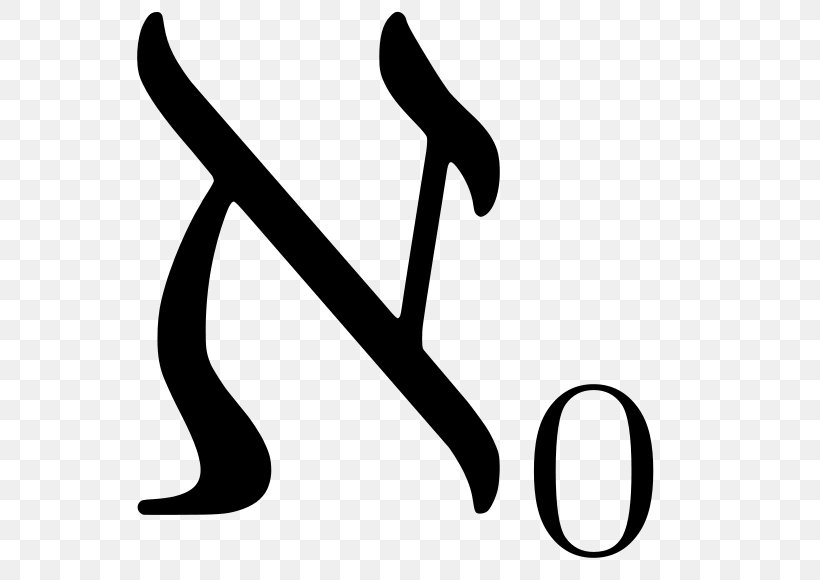
Aleph naughts, alphabets, infinite libraries, decks of cards, and monkeys

It’s Tuesday, the thirteenth day of the month of June.

I was going to try to avoid any commentary about the number two today—it gets to be two much, sometimes—but I do just want to start by saying that, if you subtract the digits in today’s date, the difference is two.

You could also, if you’re leaving out the first two digits of the year, look at 6-13-23 and say, “To get six, first you take one three, then a second three, and there you have six”.  I know, depending on how you read it (e.g. one three plus two threes), you might actually come out with nine, but that’s the risk you take with numerological interpretations.

This should hopefully alert any who might be susceptible that they should not to give credence to numerology or any other similar detected “codes” in unrelated things, like the old Bible code nonsense and so on.  The fact is, if you’re looking for patterns, especially if you’re not too picky about what patterns you seek, you can almost always find some.  It can be fun, but don’t fool yourself into thinking that there actually was some hidden message in the text or the number in the first place.  It’s all, almost certainly, in the eye (and mind) of the beholder.

Don’t feel too bad if you have occasionally fallen for such things.  No less than Isaac Newton himself, among the mightiest of minds the planet has yet known, got sucked into the whole notion of looking for hidden messages in the Bible.

Now, admittedly, he didn’t have the background of genius predecessors that we have nowadays from whom to learn lessons about signal and noise.  And though he worked out far better ways to calculate pi (than Archimedes’s method of exhaustion) and similar matters using infinite series, it may not have occurred to him that, since pi was an infinite, non-repeating number, if one looked far enough, long enough, one could find any given finite sequence of numbers one might want within it.  And that, of course, can be converted into any given sequence of letters, or whatever, using whatever translational code or cypher one might want.

I’m pretty sure I’m correct about that, but please correct me if there’s a flaw in my reasoning.  There’s certainly a ceiling*.

It’s a bit like the wonderful “Library of Babel”, based on a short story by Jorge Luis Borges, in which the algorithm can generate every possible string of letters in the modern version of the Latin alphabet, (AKA the English alphabet).  Using the program, you can search for any expression possible in the library.  In principle, it encodes everything that could ever be written (up to a certain length), though they are not generated until you search.  In other words, every paragraph (or at least subparagraph) in this blog post is already, at least implicitly, written there.

Of course, the vast majority of what’s in there is utter gibberish, mere random collections of letters and spaces and so on that would mean nothing to anyone.  But it’s sobering to think sometimes that, in potential, everything that could possibly be written could be generated somewhere in that computer code.  Does that mean that it is, in a sense, already written?  I suppose if one is a mathematical Platonist, one would probably be forced to say that it is there, in a real, albeit fuzzy-ish, sense.

This is nothing new.  It’s like the old notion of an infinite number of monkeys writing on an infinite number of typewriters.  Eventually, not only will they produce the works of Shakespeare, but they will produce every possible work that could be produced by typing in this alphabet and associated characters.  Indeed, if there really is an infinite number of monkeys and typewriters, they will produce each possible work an infinite number of times—in fact, they already will have done so, and will continue to do so, over and over again (usually in different places by different monkeys) forever.

Still, the vast majority of what they produce will be gibberish.  You’d have to look for a long time to find a bit of writing that is even arguably coherent, and much longer if you sought something specific.

It’s a bit like the “level one multiverse” implicit in a spatially infinite universe in which in any given region there are only a finite (however large) number of possible quantum states:  everything possible will be instantiated not just somewhere, but an infinite number of times.

To think about such things in “smaller” terms:  if you have an infinite number of decks of cards (no jokers), and they are all shuffled—each random sorting being one of 52! (approximately 8.06581752 x 1067) possible orderings—there will still be only a finite number of ways to order them.  It’s a big number!  Don’t, get, me, wrong!  It’s BIG!  It’s so big you can know to a mathematical confidence much more than secure enough that you could comfortably bet your life on it** that if you shuffle a deck thoroughly it will be in an order that has never existed before in the world.

But the number of possible orderings of shuffled decks is no closer to infinity than is the number one.  So in an infinite collection of shuffled decks, every possible sorting will appear an infinite number of times.

In fact, if you think about it, every possible ordering will somewhere be sitting next to multiple iterations of identical orderings, somewhere in that infinite selection (say if you had your decks all floating in some 3-D matrix).  Depending on how many duplicates you want to find you may need to “look” farther and farther, but even if you want a huge number of duplicate shufflings next to each other, if the space of shuffles is infinite, and is sorted randomly, you will be able to find that group somewhere.

It may even be the case—and here I’m not on completely certain ground, so any mathematicians out there please give me some feedback—that you can find a “region” in which there are an infinite number of repeated shufflings “next to” each other.  How could this be possible, when the set of decks itself is only infinite?  Well, infinity is weird, and strange things happen when you’re contemplating it***.

Perhaps thinking of a similar but more straightforward notion might help.

Of all the integers, only every tenth one is a multiple of ten, so there should be only one out of ten integers that meet that criterion of being a multiple of ten, if you’re looking for them.  Yet, the number of multiples of ten is equal to the number of integers in total!  If you don’t believe me, just knock the final “zero” off each multiple of ten and take a look.  You will have reconstructed the original integers!  So in any infinity, you may be able to find an infinite subset—say all on one row if your infinity is grouped in rows and columns and levels—that meets any given criterion or criteria, depending on how you sort it.

This fact is part of what gives rise to the so-called “measure problem”, which I won’t address just now, but to which I have linked.

I could go on and on about this—almost by definition—but I don’t have any intention of writing an infinite blog post, even if such a thing were possible in a universe in which entropy is always increasing.  But it can be fun to think about arrangements of letters and numbers, and information, and signals versus noise.

Unfortunately, after thinking about it, one can sometimes find the ordinary bits of everyday life rather silly and pointless and even worthy of despair—“the pale deaths that men miscall their lives”.  Maybe that’s part of why some great mathematicians were psychologically troubled.  Gödel, for instance, starved to death because he wouldn’t eat any food not prepared by his wife; he feared being poisoned, and eventually she either got sick or died (I don’t recall which).

His logic doesn’t seem very good—if you’re avoiding dying by poison but thereby inevitably die of starvation when your wife can no longer cook for you, you’re clearly not protecting yourself, except perhaps from a painful poisoning death, instead gaining a comparatively peaceful death by starvation.

Anyway, they say genius and madness are related.  They would say that, wouldn’t they, since they understand neither state.  But you lot are much smarter than they are.  And therefore, I hope you have a good, albeit finite, day.


*Ba-dump-bump.

**And you bet your life on MUCH riskier things every day, numerous times per day, make no mistake about that.

***And we’re just discussing the “smallest” infinity, Aleph Number Alef 0 Cardinality Mathematics Infinity, PNG, 565x580px ... AKA “Aleph nought” or “Aleph zero” or “Aleph null”.  It’s the so-called “countable” infinity, meaning not that you really could count the whole thing, but you could at least get started and make progress, as in “1, 2, 3, 4,…”.  When you turn to, for instance, the infinity of “real” numbers, you can’t even start counting, because between any two non-identical, arbitrarily chosen real numbers, no matter how close they are to each other, there is an uncountable infinity of real numbers between them!