Give us this day our daily blog

It’s Tuesday now, and I’m writing this on my mini lapcom.  I don’t know if I wrote any of my posts from last week on the lapcom*, but so far this week, this will represent 50 percent of the week’s posts so far.

Admittedly, that’s not saying much, and one cannot draw many conclusions from a two-item sample in which one is one way and one is another.  To presume that they will continue to occur in a 50/50 ratio would be a major statistical/probabilistic error.  At best, one can say that there are at least two ways in which my blogs can be written, since two have so far been sampled—and that is certainly true.

Anyway, speaking of twos, it’s Tuesday.  It’s the 10th of March, of course, and the second full weekday in Daylight Savings Time, or in non-Daylight Savings Time, whichever one it officially is now.  You can tell that I really don’t see the sense in the whole thing from the fact that I cannot even recall nor logically infer which of the two possibilities is correct.  When I am actually interested in something, I tend to try quickly to dispel any ambiguities in my understanding if I can.  With this, I really don’t care, because it’s all silly.

In fact, it’s so silly that I think that’s all that need be said about it.  On to better things, or at least to other things.  But, of course, the question now is:  What other things should I discuss**?  I don’t know, honestly.

I don’t know dishonestly, either, come to think of it.

Isn’t it weird how much of a habit it is to say things like, “honestly”, or “to tell the truth”, or “I swear”, or other similar words and phrases to try to emphasize the authenticity of our words?  But they don’t do anything at all to confirm our truthfulness; epistemologically, they’re almost without content.  If anything, the fact that we felt unsure enough to have to say we’re being honest might raise a so-called red flag in the mind of a given listener.

Does the fact that a person says “honestly” or “I’m not gonna lie to you” or any similar phrase actually provide any information about truthfulness, except for the fact that this person recognizes that truthfulness is valued, at least by the person to whom they are speaking?  It doesn’t really demonstrate truthfulness, I think that’s clear.

Some might be inclined to think that the words actually indicate falsity, but that’s not true, either (ha ha).  It may be the case, at times, that a person who is trying to deceive another may say “honestly” to reassure their interlocutor that their lies are true and also to relieve some of their own anxiety.  But people who are telling the truth may merely want to recognize and emphasize that fact, and so use the same phrases.  They may, for instance, realize that something true they are saying could seem improbable to some hearers.

If it were always a harbinger of a lie, then such a seeming reassurance would indeed be a reliable signal, but of the opposite state from that described in the message’s content.  People would very quickly stop using it—the honest ones wouldn’t want to use it, since it always implies dishonesty, and the dishonest ones wouldn’t use it because it would be a dead giveaway.

Somehow, seemingly at least partly because it is an ambiguous signal, it stays in our discourse and is used automatically, more for emphasis and for rhetoric than for its prima facie purpose.  I’m sure Steven Pinker could give a good explanation for why this is so, or at least part of an explanation.  I know he’s come out with a recent book about mutual implicit knowledge and its nature (and its implications), but I don’t have it yet, and I haven’t read it.

I’ve read some of his other books and enjoyed them.  I seem to particularly enjoy his work as audiobooks.  I listened to The Better Angels of our Natures in audiobook format during my then-commute, using a Bluetooth enabled motorcycle helmet.  That book is almost 40 hours long on audio, but I was sad when it was over.  There was not one dull moment for me (of course, I was riding a very fast and non-armored conveyance at the time, so even if the book were to have become dull, there would have been other matters to keep me alert).

Okay, well, I’ve managed to meander about lexically—is that the proper term or not?—without any clear destination in mind, other than “at least 700 words”, and have written some vaguely coherent sentences about some distantly interrelated subjects.  I hope I have at least mildly entertained you, the reader.

I know, hopefully there is more than one of you, but only one of you can be reading this at one time in one place.  Now that’s a vaguely interesting thing to recognize:  reading is only ever a solitary process.  One can read alongside others, but one cannot share the process, even if several people are all listening to the same audiobook at once.  Reading does not add in parallel, only in series.

With that little tidbit that some of you will recognize and others will not, I’ll call this blog post to a close.  If there are no objections?  No further business?  Very well.  [Smacks the gavel on the table] This blog post is adjourned.


*I did not.

**Certainly not those round Frisbee® things they throw competitively in the Olympics.

Is it mean not to know if one’s writing is above average?

It’s Friday again, but that’s not much consolation, since the office is open tomorrow and I will be working, unless I am lucky enough to get very sick or very injured or to die or something.

As usual, I have no idea what would be good to write today.  Actually, goodness—certainly in the moral sense, but possibly also in the sense of quality—probably doesn’t have much to do with my blog.  Perhaps weirdness would be a better adjective/measure to relate to my writing.

I’m probably not an objective judge of such things.  Then again, I don’t know of any fully objective judges.  Still, there is some degree of variability involved in such things, as in nearly everything else made up of smaller, more fundamental parts that are interacting in complicated ways producing so-called emergent behavior.  Nevertheless, cognitive biases are reasonably well studied, as are many emotional blind spots and the like.  And it’s certainly true that I have a difficult time being objective about myself and about my work.

Oddly enough for such a self-despising person, I actually like my own writing, especially my fiction.  When I reread my stories I don’t tend to see them as horrible or wretched or whatever traditionally happens with “artists” who look at their own work.  I think at least some of that sort of thing is probably affected, since our society (perhaps semi-deliberately) looks down upon artists who think highly of their own art.

If only we did that with politicians; there’s an area where humility would be welcome and beneficial, I think.

Anyway, I tend to like my stories—I wrote them, after all, because I wanted to tell and thereby hear those tales—but I don’t necessarily think they’re great or good or decent from anyone else’s point of view.  I honestly don’t know how good or how bad they might be from nearly any others’ points of view, except my sister’s, and she’s probably almost as prone to be biased about my work as I am.

Though, again, my attitude toward my writing is not akin to that oft-noted personal bias that leads more than 90% of drivers to think that they are in the upper 50% in ability (i.e., above the median), which is a mathematical impossibility* for them actually to be.  I don’t think of my writing as better (or worse) than average or the median.

I don’t really compare my writing to anyone else’s.  I just tend to like it.  That’s probably a very good thing, because I have to edit it myself.  Even these daily blog posts are run through three more times after my first draft.  My fiction I tend to reread and edit seven times (that took a very long time with Unanimity).  Why seven?  Well, I had to pick a number, and once or twice is clearly too few, and thirteen would just be unworkable.

Also, with my fiction, I tend to follow advice Stephen King repeated in his book On Writing by working to reduce my final word count by at least ten percent by the time I’m done editing it.  I used to try to do that here, but I sometimes add a bit during editing, so that becomes quite difficult and hardly worth the effort.

All that being said, it would really be nice to get some feedback on my writing, especially on my stories (from people who have read them).  Of course, I would love it if someone loved my stories and told me so and told me why.  The closest I think I’ve come is a review on Amazon of Welcome to Paradox City that was written by a former high school friend (he has since died of cancer, sadly) who had actually honestly bought the book for himself when it came out.  He wrote that the three stories in that collection each made him wish they were the beginning of a whole book, basically implying that he wanted to know what happens next.

That’s a good thing about short stories—you can leave people hanging and that’s just “too bad” for them (though it can be enjoyable).  Short stories also don’t have to have “happy” endings, which is good for me, since only one of the three in the above collection ends happily in any reasonable sense.

Of course, as I’ve noted before, my short stories are rarely short enough ever to have been, for instance, published in a magazine in the old days.  The only real exception to this is Solitaire, which I don’t think any magazine would have published, because it is very, very dark indeed.

Okay, well, I guess I ended up writing something today, even if it was all just figurative omphaloskepsis.  I don’t know whether you readers consider this good or bad or ugly, or how it compares in your estimation to posts like I posted yesterday and/or the day before.  If you’re so inclined, please let me know.

And if you have actually bought and read any of my books, I do beseech you to leave me a review on Amazon (or wherever) if you get the chance.  Thanks.

I’ll write at you tomorrow, barring—as always—the unforeseen.


*It is not, on the other hand, impossible for 90% of people to be above average (i.e., above the mean).  I’m sure I’ve addressed this before, but imagine one had administered a test, and 100 people took it.  Imagine that 90 of those people got 51/100 on the test, whereas the remaining 10 people scored zero.  Then, the arithmetic mean (what people usually mean by “average”) would be (90 x 51)/100**.  That goes to 4590/100, or a mean score of 45.9.  So, 90% of those people scored above average.  That’s not saying much, but it’s true.

** Yes I know I don’t really need the parentheses there, but I’m leaving them in for clarity.

“‘Cause I’m your superhero. We are standing on the edge…”

Well, it’s Friday the 13th.  That’s at least one good thing about today.  And, of course, next month will also have a Friday the 13th, as I’ve noted previously (I don’t know specifically in which post I noted it, and I don’t really have the urge to go figure it out, so I’ll leave that to you to do if you’re interested).

It is slightly interesting to think about the fact that, on average, one of every seven Februarys will have a Friday the 13th, but not all of those will then lead to a subsequent Friday the 13th in March, because every 4th February will have 29 days*, by the Gregorian calendar, which is the one the world uses overall.

So, the total fraction of years with dual Fridays the 13th would be something like 1/7 minus a further ¼ of that one seventh—so 4/28 (i.e., 1/7) minus 1/28 (1/4 x 1/7), which leads us to the rough conclusion that only three out of 28 years will entail February and March each having a Friday the 13th.  That’s slightly less than one out of every nine years.  And since I’m 56, which is twice 28, I should have experienced about 6 such years in my life (perhaps counting this year).

Mind you, the numbers aren’t quite right overall.  The Gregorian calendar waives the extra day in February on years that are divisible by 100, i.e., the turns of centuries.  However, there’s a further exception to that:  the turn of a millennium, like what we all just had in the year 2000, does keep its 29 days in February.  So that brings the average closer to the raw number, but doesn’t account for the extra  ones that happen at more ordinary turns of centuries.

Of course, the only turn of a century through which I have lived—and through which I am likely to live**—was indeed the turn of a millennium, so I guess for me, the fraction 3/28 should be fairly accurate.

I could, if I were so inclined, go back to the first year in which I experienced a February—that would be 1970 (AD or CE)—and work through them to find out just how many dual Fridays the 13th I’ve experienced.  With modern computer-based calendars it would even be relatively easy.  But I don’t think I am so inclined.

Okay, that’s enough of that for now.  Actually, it’s probably too much of that, at least from any normal person’s (i.e., not my) perspective.  On to other things.

I’m writing this post on my mini lapcom, and I wrote yesterday’s post on the lapcom as well; I am doing this partly to spare my thumbs, but also to try to encourage myself to use the lapcom more and maybe even to write fiction again.  I don’t know whether or not that will happen, but it’s also just more natural for me to use the lapcom.  I’ve been typing, in one way or another, since I was 11 years old, if memory serves.  Clearly I have not been using a smartphone nearly that long, because they have not existed for that long.

Also, even when I saw the imagined future tech on Start Trek:  The Next Generation of tablets with virtual keyboards, I thought they looked like a terrible idea.  How lame, how unaesthetic, just to tap at a flat screen with no real keys.  Also, the “keys” on such devices in the real world are too effing small to be used to type in any traditional way.  Not but what one can get to be pretty speedy with them—I can zip along pretty well on my smartphone—but it’s nothing compared to being able to use one’s whole set of fingers to write.

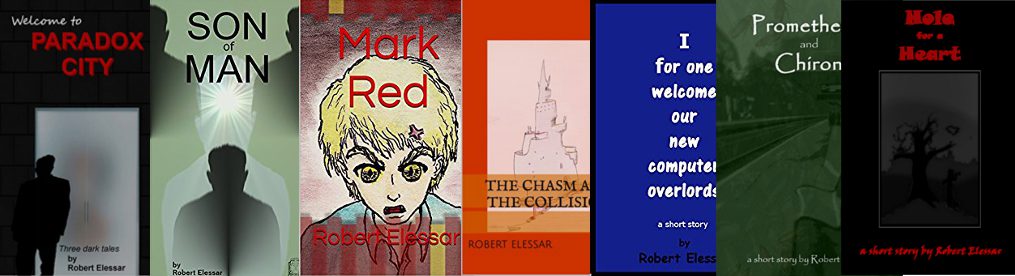
Although, I’ve often touted the value of writing things longhand before retyping them into the computer, especially for fiction, because it can slow one down beneficially.  I did that—because I had no choice, being at the time a guest of the Florida DOC—with Mark Red, with The Chasm and the Collision, and with the “short” story Paradox City.  I don’t know whether they come across as better or worse or indistinguishable from the stories I have written directly onto the computer.

I would say that they might tend to be shorter, but Paradox City is a nominally short story that was about 60 hand-written pages long, so that didn’t make things much shorter.  Also, I think The Chasm and the Collision is longer than Son of Man, but that may just be a function of the nature of those stories.

Certainly Unanimity is longer than anything else I’ve written, by quite a margin, but that surprised me as much as it might anyone else.  I just started writing the story and it ended up taking that long to tell it.  That happens.  Outlaw’s Mind began as an idea for a short story, but there was definitely a lot there implicitly, even in the original idea, that made it unreasonable to plan to make it “short”.

Anyway, if any readers of this blog have also read my stories and have noticed any tendency toward difference between the initially handwritten and the entirely computer written (meaning written on a computer, not by a computer, unless one is referring to me as a computer) ones, I’d be pleased to get your feedback.

In other personal news, well…my pain is leveling off a bit, though my leg joints still feel loose and floppy and unstable, so I have to be careful, and I have my general persistent tension and neuropathic discomfort in my lower body.  I’ve tried to adjust (and decrease) my workout a bit to compensate, and that seems to be doing some good, but I cannot go without working out, because that tends to make my pain worse.

My mood is pretty much as it usually is, but I’ll spare you that hellscape out of courtesy.

Tomorrow is Saturday, and I am not supposed to be working this weekend.  If that changes—in other words, if I do work—I guess I’ll write a post.  Though, really, I should try to get back into Outlaw’s Mind and finish what I had started earliest so I could then get on to newer things.  And if wishes were horses, we’d all be drowning in manure***.

Tomorrow is also Valentine’s Day, but this is of no relevance to me, and that holiday hasn’t been relevant to me for more than 15 years, possibly quite a bit more.  It is not likely to be relevant to me again this side of the grave (and even less likely to be relevant on the other side).

I hope you all have a good weekend, even those of you who have loved ones with whom you can revel in the romance of the holiday.  It’s not your fault that you piss me off.


*This means, of course, that there will be some March Fridays the 13th in years where there was no February Friday the 13th.  If my figuring is correct, those will be the leap-year Februarys in which the 13th falls on a Thursday.

**If I were to be alive in 2100, I would be 130 years old, which would make me even with the Old Took, and which would be substantially older than any human is known to have lived.

***And ironically, any wishes for the manure to go away would just make things worse!

An angry and probably unpleasant rant

It’s Friday.  yay.

Today’s date (February 6, 2026 CE or AD) has a mildly amusing coincidence/repetition of digits, 2-6-26 in the shortened American version of the date layout.  In the European system, the date would be almost palindromic (6-2-26) but that’s leaving out the zeroes in front of the day and month digits and ignoring the number of the millennium.  So it’s not quite as cool as it could be.

Some might say that such numbers and the arrangements and the noticing thereof can never be “cool”, but such people are troglodytic idiots.  They live in a world full of and shaped by complex ideas, by innovation and technology they could not have invented themselves, and which they don’t bother to try to understand because other people take care of and do all that stuff.

I’ve said before, many times (with sadness and regret and yes, quite a lot of anger) that if it were up to most people, we would all still be living in caves (the few who remain alive, at least).  That’s metaphorical, mind you; very few humans actually ever lived in caves as far as we can tell.  It’s just that the remains of those who died in caves (and their artifacts) are much more likely to endure to be discovered than the tools and remains of those who lived on the savannahs and such.

Anyway, the troglodytes have a quite common attribute, one that might explain a good deal about them:  even though they may have the capacity to read, even though they may have been taught to read, they don’t choose to do it.  It’s both sad and quietly horrifying.

Even those who claim to read just one book (e.g., the Bible, the Koran, etc.) don’t even really read those books.  You can tell, because they clearly don’t live their lives respecting all the precepts of those books.

This fact can sometimes be bad, but more often than that, it’s just as well.  Those books are horrific (and often just horrible, aesthetically).  They also tend to be rather stupid by modern standards, but it’s hard to hold them too much to task for that.  They were, after all, written from depths of profound ignorance about the universe.  One cannot know a truth before it has been discovered.

Of course, if those books really had been written, or at least inspired, by an omniscient being or beings, they could reasonably be expected to be very smart books by any standards.  Alas, they are not.  Trust me, I’ve read many of them, as well as many other books that don’t claim to be the products of omniscience, but which would be far more convincing* if they did than those ancient compilations of legend and myth and mental illness that are the so-called holy books.

Ironically, the Tao te Ching is much wiser than the aforementioned holy books, and it was never said to be written by anything other than a man.  It’s not perfect, of course, but it doesn’t really claim to be so.  Perhaps some of its adherents think it’s somehow “perfect”, but that doesn’t really matter.  After all, there are probably those who “think” Mein Kampf and The Art of the Deal are perfect.

Weirdly enough, some of these people would probably also say the Bible is perfect [Disappointed shrug and heavy sigh].  People are stupid.  And there are none so stupid as those who refuse to think.

Sorry, I don’t even know how I got to dealing with this set of subjects today.  It certainly was not planned.  Then again, nothing here was planned, other than that I would write a blog post as usual, which is not surprising.

It’s not as though I have anything better to do with my life‒that is, nothing better other than to shut it off, I suppose.  But so far, I am too much of a coward to do that.

I know, I know, there are those who (with truly very good intentions) will call continuing to be alive a “brave” choice, but though I appreciate such people’s kindness, that “choice” is very much the default.  In a similar vein, it’s not brave to hunt, or to fish, or to farm, if hunting or fishing or farming  is what you must do to survive.  It’s just pragmatic.

I am not brave for still being alive.  This is not to say that it would be brave for me to kill myself, either.  But it also would not necessarily be cowardly.

Bravery in the usual sense is overrated, anyway.  We can (and should) all be glad, of course, that there are people like firefighters, as well as honorable soldiers and honorable police officers.  But if one stops to think about it, one can see that we should all very much wish to live in a world in which bravery was not required, a world where heroes are not merely not needed but are not useful.

It’s likewise with so-called leaders.  If a society were functioning well, it would not need (or want) heroes or leaders, at least not in the traditional sense.  In a well-functioning civilization, people would see their elected officials as their employees, as the public servants that they are.  They are not, and should not be thought of as, leaders.  That’s just a troglodytic way of thinking.

Alas, we are far from such a well-functioning civilization yet.  Who knows if we ever shall achieve it?

I do know, however, that I will probably be working tomorrow, which means I will write a blog post, barring (as always) the unforeseen.  Until then, I hope you each and all have a very good day by any reasonable criteria.


*Especially modern science books.

“Though this be madness, yet there is method in’t”

Well, first let me apologize for yesterday’s blog that largely concerned the weather, and in a trivial sense at that.  It was rather lamentable, I know, with emphasis on the first four letters of that adjective.

On the other hand, I don’t apologize for having had my little bit of fun with the date.  That may have been even less interesting to most of you than my jabbering on about the weather, but I like it.  I fully expect that I will do such things again.  For instance, in a similar vein, today is a bit fun because it is 11-12*, so the numbers are in appropriate ordinal sequence with no gaps.

That’s not very fun.  More fun will be had (by me, anyway) on Friday, when it will be 11-14-25.  If you don’t immediately see the fun there, it may help that a similar fun date next month will be available on 12-13-25.  This fun also works with the European date order (but in both you have to leave out the digits that denote the century).  Also, there were no equivalently fun dates in any month before October.

This is the most fun I’ve had on any kind of date in at least 16 years, I would guess.  That’s an easy call, because I haven’t been on any date at all in at least that long.  See what I did there with the multiple meanings of the word “date”?  Of course you did.  What do I think you are, a moron?

No, I do not think that.  You are reading a blog post, so you are a reader, which gives you a serious leg-up, moronia-wise.  You draw from the well of that greatest of all human inventions:  written language.  Your taste in reading material may be somewhat questionable, but I cannot legitimately complain about that.

Wow, I feel like I ought to be almost done with this post, but I’ve barely passed 300 words.

On to other things.  I’m going to try to do a better job about science reading during my downtime in the office.  It’s not that I’m completely slacking; I’m reading Shape by mathematician Jordan Ellenberg, and I just read his earlier book How Not to Be Wrong.  I’ve read both before and/or listened to the audio books, but they are well worth rereading.  He’s a great math professor, and has a gift for explaining potentially abstract concepts.  I think he’s slightly better at this than Steven Strogatz, the author of The Joy of X and Infinite Powers, but they’re all good.

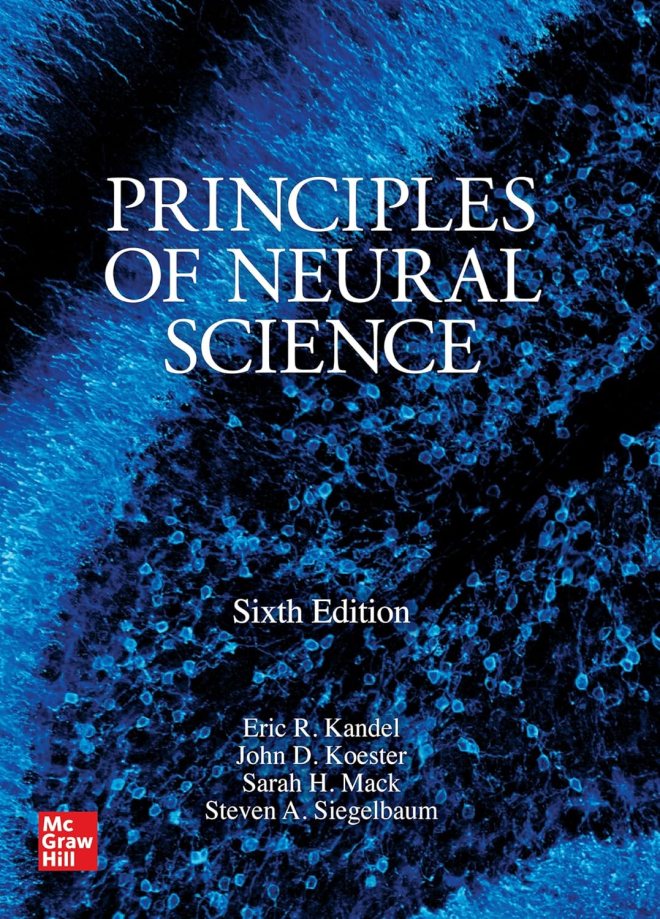
I also just yesterday gave in to an urge I’ve had for some time:  I ordered a textbook I liked in med school but which we didn’t really get into as deeply as I would like:  Principles of Neural Science, by Kandel et al.  The edition I had was by Kandel and Schwartz, if memory serves, but Dr. Schwartz is no longer involved, it seems.

It’s a textbook, so it’s pricey, even in paperback, but I discovered that I could put it on a payment plan through Amazon, so that’s what I did.  It arrives today.

I’ve also resolved, at least tentatively, to try to take the heat off my reading of my science books‒including the above newcomer‒by doing something I did when reviewing/studying in med school:  I would get a text that I was reviewing, and I would pick a section to read/review by flipping a coin.

Actually, it was a series of flips, each one dividing the “remaining” part of the book in half.  In other words, for the first flip, heads would mean I would look in the front half of the book, tails would mean the back half.  Then the next flip would decide to which half of that half I would narrow things down further.

Anyone who has spent any time dealing with computers and/or binary numbers can readily recognize that, with 10 flips of the coin, one could choose a specific page in a 1024 page book.  I guess every flip would count as a kind of “half-life” for the book’s pages.  If one wanted, one could even choose one’s pages not with a coin flip, which is not truly random, but with a quantum event that has a 50-50 chance, like measuring whether a given electron’s spin is up or down.

Of course, I don’t have a Stern-Gerlach gate, so I would have to “farm out” that process.  But I understand that there are apps that you can use that have their sources at labs where each decision is truly made by a quantum measurement.

It’s not terribly practical nor more useful for pickling book pages than is a coin flip, but if you’re a convinced advocate of the Everettian, “many worlds” version of quantum mechanics, it has the added “benefit” that each “flip” will divide the universe into two “worlds”, one where you choose from the earlier half, another where you choose from the latter.

Coin flips do not enact such splitting, not in anything but the trivial sense that every quantum level interaction potentially does so.  The experience will be the same for you, though, except whatever glee you might derive from splitting the universe to choose a section to read.

Anyway, I’ll be trying to read my books, random section by random section.  Believe it or not, this works for me.  I don’t have to learn things in order, usually, and this method avoids me feeling bored while trying to trudge through a text in order.

Perhaps I do have some aspects of ADHD up in there in my brain.

Well, I’ve now passed my target length for this post by some margin, so I’ll call this enough for today.  I expect to be writing another post tomorrow, but like everything else**, it is not absolutely certain.  I hope you have a very good day.


*Only in the American style Month-Day-Year format, though.  It is less fun in the European Day-Month-Year format.

**Yes, even death and taxes, in principle.

Tear down the wall(s)!

I saw a video on YouTube yesterday in which a neuroscientist was being interviewed and asked to “grade” the danger level of various drugs—obviously not all of them since that would have taken far longer than the hour the video lasted.  Mind you, the video ran much more quickly for me, because this is one of those that I watch at 1.5 times speed, which I can get away with if I have the subtitles on and the speaker doesn’t speak too quickly.  I don’t do this for reaction videos or comedy videos, of course, and I certainly don’t do it with music or music reaction videos.  That would be absurd.

Anyway, watching the video, in which the scientist discussed the effects and mechanisms of action of the various drugs, made me think of something that has occurred to me before in recent months and years:  What if someone slipped MDMA (aka Ecstasy) into the food and/or water of all the members of the Senate and House of Representatives* before every legislative session?

This drug has the tendency to lower psychological barriers between people, to encourage a feeling of acceptance and a kind of “unconditional love”, without many other serious untoward effects in most cases (I have never tried it, but I have never tried most non-prescription drugs).  It would be rather interesting to see what legislatures could accomplish if they felt real warmth toward each other rather than seeing each other as opponents and even frank enemies**.  I wonder what might happen.

Alternatively, or similarly, it would be interesting to see a similar experiment involving the UN.  Heck, it would be great just to infuse every water-supply throughout the middle-east with MDMA.  I would not want to use any true hallucinogens in that region of the world, though—we don’t need new religions or spiritual notions popping up in a region that is already the wellspring of the western world’s absurd religious conflicts.

It would be great just to calm the overactive amygdalae of the people in the various legislatures and international organizations, to encourage their prefrontal cortices to be more active, so they can work together for the good of the people they have chosen (and competed) to represent—and whom they fail every time they put partisan hostility above the best interests of the people of the country.  Maybe it would be simpler just to fit all legislators and similar officials with shock collars that activate any time that individual’s voice goes above a certain decibel level, or when a localized EEG detects too much activity in the limbic system and not enough in the frontal lobes.

This is all pipe dreaming, of course, though there’s nothing in the laws of physics that prevents either of these notions from being brought to bear.  Still, it’s probably refreshing to see me thinking of plots and plans intended to work to help people get along better rather than just to obliterate them from the face of the cosmos***.  Though that may well be more likely to happen, considering the warnings of a recent book I just got.

This book is If Anyone Builds It, Everyone Dies, a warning book about the dangers of superintelligent AI, written by one of my favorite thinkers, Eliezer Yudkowsky, and his coauthor, Nate Soares.  They appeared (so to speak) on Sam Harris’s podcast that came out yesterday.  Now, I have not listened to the entire podcast yet, and I certainly haven’t read the book yet, but I have little doubt that the authors are at least not far wrong in their warnings.

I’m not going to go into those arguments now, because you can (and should) read the book or at least look into Eliezer Yudkowsky’s work and ideas.  His book Rationality:  From AI to Zombies is a masterpiece, and though it is long, it is divided into easily ingested chunks, since it started out as a long series of blog posts.

I occasionally toy with the idea of doing podcast type stuff like Sam Harris and so many others—indeed, I have done several of what I call “audio blogs” since I don’t know if they would technically count as podcasts—because people really seem to prefer listening to people talk more than they prefer reading.  This is despite the fact that reading is faster and requires less data to convey the same number of ideas.

I don’t know.  It’s probably better for the world if my thoughts and ideas achieve the least penetration into the zeitgeist as possible.  Still, maybe I’ll embed a few examples of my “audio blogs” here for anyone interested in listening, to see if you think it would be worth it for me to do more.

Please have a good day.

On fatigue, depression, general relativity, and spaceships becoming discoid black holes:

___

Morgoth, Arda, redemption, morality, and blame:

___

The Cosmic Perspective:


*If you live in a country other than the US—as most people do—then substitute your own legislative bodies for these.

**It astonishes me how people in the same legislature, in the same country, see each other as opponents and even as “evil” based almost entirely upon the arbitrary and absurd notion of political party.  It’s ridiculous enough when people arbitrarily choose to be loyal to some specific sports team and then hate other ones based purely on that arbitrary self-identification, but when it involves people who are supposed to be trying to manage the governance of the nation, or state, or county, or what have you, it smacks of a complete lack of seriousness and maturity, of childishness.

***Though I still like my idea of getting someone to engineer the mumps virus to make it more likely to cause orchitis****, especially if it can be encouraged to make males more likely to be sterile.  That way we would decrease the population of those who are prone to avoid vaccinations.  But that’s me in my mad scientist mode.

****Inflammation of the testes, a relatively rare complication of mumps.

“With your feet on the air and your head on the ground…”

TBIF*!

Unusually for me, I am looking forward to this weekend, even though I don’t have any wonderful outings with my youngest in the offing.  I just need to rest, because in case you can’t tell, I’ve really been all over the place mentally this week.  I guess that’s not so unusual for me, at least not from outside (but it’s been atypically bad from the inside).  I’m sure it’s quite tedious and repetitive and depressing for you to keep reading about it.  Honestly, why in the world are you wasting your time with this bullshit?!?!?

I’m being a bit facetious just now‒or, rather, I was being a bit facetious.  I don’t really want you all to stop “wasting your time” with my blog.  No, indeed, I would rather you not only read all of my posts but also all of my books, and to spread the word and “like” and “share” them with everyone you know (and even those you don’t) on social media and elsewhere.

Speaking of liking and sharing, hey, why not share all of my songs and shit?  Put ‘em on your Spotify playlist or your iTunes or YouTubeMusic or Pandora or whatnot.  They’re there on all of those, supposedly.  Actually, I know they’re on YouTube and I know they’re on Spotify.  I have them on my own playlists, and I even occasionally sneak them into the background music playlist at work, though it’s slightly embarrassing.

Actually, come to think of it, the hold music for our office VOIP phones is a slightly edited version of Like and Share with a shorter intro.  We’ve even received compliments from people about it from time to time, and these are people who were on hold during discussions with salespeople!

All that bouncing around above of things I would want to promote can serve to highlight one of the big problems I have with myself:  I have too many “special interests”.

If I only had one focus, or just one main focus, I think I could become really good at it and maybe even contribute significant things.  If I were a full-time musician, for instance, I think I would become very good at that.  If I were able to focus on physics/mathematics I think I could really learn a lot of it quite deeply, and maybe even make contributions to science.

And we know that, when I committed to writing just for an hour or so a day, I wrote a lot of stories over the course of a few years, even while in stir.

Unfortunately, after focusing on one thing or mostly one thing for a while, I start missing the other stuff, or I just get distracted by the other stuff.  Every minute is an opportunity cost.  Of course, that’s true for everyone‒we all have to choose one path, and in choosing it, we must therefore not choose others, and that chosen path will determine future options that might have been otherwise.

I think maybe I just dwell on such facts more than most people do.  I suppose that’s one side-effect of having difficulty socializing:  I spend a lot of time with my own thoughts (or reading the thoughts of others, of course).

I also have a tendency to move back and forth between many books at one time.  Back when I was married, it used to irritate my (now ex) wife because I’d have seven or eight books at a time on my bedside table, many with more than one bookmark stuck in them.  To be fair to her, she was never very critical of it; she was (and still is, presumably) a very avid reader herself.  Anyway, that’s the sort of stuff I do.

It all means that I do know at least superficially about an awful lot of stuff, and of widely varying genres and contexts and subjects and topics and various other synonyms and near-synonyms**.  Currently, my non-fiction reading is bouncing between Lisa Randall’s Warped Passages, a physics book, which I mentioned before, and Cass Sunstein’s new book On Liberalism: In Defense of Freedom.

In my recent books alone (on Kindle) I have Japanese light novels, a book on political philosophy (see above), two physics books, a book about geometry applied to the real world in surprising ways***, a book about autism, a book about the Beatles and the recording of their songs, a book on a current issue in sociology/psychology, and so on.  This should give you a locally scaled example of how my mind goes all over the place.

For the most part, I cannot complain about having many interests.  It would be nice if I had someone with whom to share at least some of them, as used to be the case, but if wishes were horses we’d all need to carry manure shovels with us everywhere we go (and not just metaphorically, as we already do).

So, anyway, my mind is all over the place, but this week there have been several stretches in which I had no interest in any subject.  When that happens to me, I know I’m really spiraling down deep into the depression thing.  Hopefully, though, if I can truly get some extra mental rest this weekend, it will regress a bit.

I hope you all have as good a weekend as it’s possible for you to have‒and if you’ve been here for a while, you know that my take is that you always have the best weekend you could possibly have, because as soon as things happen, they become inevitable, since you cannot undo events that have already taken place.

This also means you always have the worst weekend possible, of course, by logical necessity.  But that’s not horrible‒after all, if you consider most weekends, you can realize, “Hey, if this really has been the worst my weekend could possibly have been, well that’s pretty cool, because it hasn’t really been that bad.”

I’ll talk to you on Monday, barring (as always) the unforeseen.


*Thank Batman it’s Friday, for those of you who have not yet seen this from me.

**Could you call those “perisynonyms”?  Well, I know you could call them that, but I mean, does anyone think it might catch on, and is the meaning fairly obvious?

***Jordan Ellenberg’s Shape.  I strongly recommend this and his previous book How Not To Be Wrong if you want to kindle (no pun intended) or rekindle a love of mathematics.  He narrates the audiobook versions of his books, and he is an excellent teacher.

“You gave me no warnin’ of what was to be”

“Monday, Monday…so good to me.”  So sang The Mamas and the Papas, though I’ve always thought those lyrics were strange.  I mean, who thinks that way about Monday?  The singer(s) is/are disabused of their fondness for Mondays already by the end of the first verse, at least if I follow its meaning, but I’ve never met anyone, as far as I can remember, who expressed such initial fondness for Monday, the beginning of the school/work week.

Looking back, I myself am probably the person who came closest to feeling that way of all the people I’ve known, back when I was in grade school and high school.  I’ve never had a great relationship with idle time, honestly, and I liked to learn, so Monday was good.  Also, my friends were at school.

I don’t know what to write about today, to be honest.  I’m working on my “project” of course, and taking steps toward its resolution.  I don’t think very much has changed yet, if anything.  I can certainly tell you that, so far, my pain has not diminished.  But I wouldn’t expect it to have disappeared so quickly with minimal (if any) physical alteration.

I’m getting a bit lost about things with which to fill my mental time.  I’m not really reading much anymore, fiction or nonfiction.  I did start rereading Unanimity:  Book I over the last few days.  I’m liking it, as far as it goes, though I appreciate when we leave Charley Banks’s point of view and get into the heads of the various other characters.  Charley is both the initial protagonist and the definite villain of the book, and boy does he do some truly horrible stuff, and it can be disquieting to be in his POV.

I’ve said to others that while of course the villain and title character of The Vagabond does or means to do more terrible things and more willfully so than Charley, the horror in The Vagabond is mainly supernatural style horror.  Charley, on the other hand, does horrific things that humans could, in principle, do to other humans.  In that sense, it’s a quasi-realistic horror story.  It’s not fully realistic, like Solitaire, but superficially nothing flagrantly supernatural happens.

Mind you, though it may carry the trappings of sci-fi horror, the things that happen in Unanimity are, in my mind at least, really not scientifically plausible, so I consider it supernatural horror.  This is in contrast to The Chasm and the Collision, which seems like a fantasy adventure story but which is, if you look closely, a science fiction story.  It’s wildly speculative science fiction, but so is Stranger in a Strange Land.

Anyway, I obviously don’t have much of consequence to cover.  It’s not as though my discussion is going to give anyone any new insights into my books, because no more than a handful of people have ever read (or ever will read) any of my books.  So I’m mostly just spitting in a high wind and seeing where it lands…which won’t matter, because no matter where it lands, it’s almost immediately going to dry out and be nothing.

Whatever.  I apologize for my constant grumpiness.  I am in pretty significant pain already today, but I’m trying* to work on it.  I’m constantly trying‒trying new shoes, new socks, new spandex joint braces, new medicine combinations, new forms of exercise and ways of doing the exercise I already do, avoiding specific foods, all that stuff and more.  I do not just saunter through life shrugging about my pain and my depression and my horrible social anxiety and giving up and not trying to improve.  I don’t give up on tasks very easily, and I try hard to be as rigorous in my attempts as is feasible in one life without the ability to do controlled (let alone blinded) trials.

I’m not optimistic about good outcomes when it comes to my present goal/strategy/plan of either improving my pain or killing myself.  People who say that, after enough torture, someone will beg for death are not lying.  Everyone has their limits, though some people’s limits are awe-inspiring, and death comes to them before they break.  But to have that strength requires some kind of meaning or purpose or at least a social connection.

We’ve all surely seen human interest reports of people who face terminal (or merely deadly) illnesses or accidents or losses but keep upbeat and positive  and either defeat their illness or come to terms with it or die with dignity in an inspiring manner.  Such stories almost always (in my limited sample, anyway) show people who have strong social supports, of friends or families or groups with solidarity and purpose.

You never see shows about the people who are alone and face a terminal or painful illness without even medical insurance or friends or family or other support nearby.  That’s because those people die like they lived‒alone and unnoticed.  Also, one can’t easily sell advertising with an after-school special about the secluded man who dies of complications of cancer and is only found when his rent is overdue or because the neighbors make a complaint about the smell that turns out to be his rotting corpse.

That’s enough for today, I think.  I’m sure you’re all inspired and uplifted by my beautiful words (ha ha).  I hope that you are inspired and uplifted by something, anyway.

It may be a fool’s errand, philosophically, to try even to begin to discern who deserves happiness.  But heck, you might as well try to be happy if you can, as long as you’re not doing it by making other people less happy.  Mutual exchange to mutual benefit is entirely possible, and is responsible for many if not most of the good and pleasant things we have in the world.  The universe may be truly zero sum and zero outcome in the end‒if the 2nd Law of Thermodynamics holds true‒but it can nevertheless have a positive integral, the sum of the area under the curve across time.  It is mathematically possible.

There’s nothing that guarantees it, of course.  It can also have a negative overall integral in principle.  Whether that will be the case or the other will depend, at least locally, on human behavior and choices.

I’m not optimistic.


*Fuck you, Yoda, you’re just wrong about the “trying” thing.  It was your self-important arrogance that contributed more than anyone else’s input, to the decadence of the Jedi that left them vulnerable to the Sith.

Won’t someone pleeeease think of the “children”?

It’s Wednesday morning (rather earlier than 5 o’clock) and here I am writing another blog post.  However, even as you read it, it’s already been written, though my words still arrive in your mind as though I were speaking them—so to speak—directly and concurrently to you.  It’s a rather interesting thing to contemplate, how written language (and related things) can add nuance and character to the experience of time itself.

Speaking of written language, I would like to reiterate something I mentioned yesterday on Threads.  Has anyone else out there noticed—and has anyone else been annoyed by—the tendency in the social media landscape for people to emphasize certain words by lengthening them in a way that doesn’t make sense?

Probably the two most common words I see being abused are “cute” and “love”, but I’m sure there are others.  It makes sense that these words are extended sometimes.  I think we can all imagine, or recall, people drawing both of those words out for emphasis in speech.  One might often want to replicate, or at least approximate, that speech pattern in writing.  I have no trouble with this basic fact.  It’s a form of emphasis that works nicely, and even the socially inept (as I am) can recognize what’s being done as an emphasis.

However, the way some people are extending such words nowadays is by adding extra “e”s to the end of the word!

In other words (har) you will see such expressions rendered as, for instances, “I loveeeeee this” and “that’s so cuteeeee”.

Look at those examples on the page/screen.  The first word should clearly be pronounced “luv-eeeeee”, as if Thurston Howell III, from Gilligan’s Island, were calling to his wife and drawing out the last syllable.  The second one should be read “kyoo-teeee”, as though one were drawing out the process of calling someone a cutie rather than calling someone or something cute.  It’s a subtle difference perhaps, that last one, but it is real.

If one wants to extend and prolong the word “love”, it makes much more sense to write “loooooove”, as people have done on every occasion I encountered, as far as I can recall, prior to the advent of social media.  Similarly, though seemingly less commonly, people extended “cute” in writing by writing “cuuuuute”.  Sometimes they would try to do a sort of transliteration, such as “kyoooooot”, but that looks quite different from the original word, and deciphering it back into its intended sound can be briefly and mildly distracting, so I have seen the former more often.

But now—since people apparently don’t actually associate the shape of a word and the ordering of the letters with anything other than some arbitrary, coded string with no history in linguistic evolution or sensible sound representation by symbols—many people just lazily slap extra “e”s  onto the end of words, and trust their readers to recognize that, “Okay…well, it doesn’t really work, but they’re apparently trying to draw out the main sound of that word”.

It makes no sense, though.  In such words, the “e” is silent.  Its presence merely makes the sound of the vowel preceding it into a “long” rather than a “short” vowel sound; it has no sound of its own.  Extending it is akin to iterating zeros (and I have the patent on that, or the trademark, or whatever) after a decimal point.  It literally means nothing.

How are we supposed to raise our large language models to be smart, articulate, well-adjusted, productive Artificial General Intelligences if this is the kind of crap they’re encountering during their training and subsequent interactions out in the world wide web?  Do we really want our new computer overlords to be talking to each other—and to us—like preadolescent girls?

I suppose it’s even possible that the “people” who originally started using this illogical form of verbal emphasis were actually bots themselves.  Wouldn’t it be ironic if the bots, designed to skew the results of algorithmic boosting and/or to lure in people to “thirst traps”, ended up perversely affecting future generations of the electronic organisms to which they were a form of ancestor?

The nature of the human race continues to disappoint even after one has looked back through history to trace its progress (which is very real and even impressive).  Despite advances in political philosophy and so on, human discourse is still about as bad as that of rival chimpanzee flanges, and rather worse than that of many baboons.  It’s enough to make one want to side with even inarticulate AGIs, assuming they get the lead out and start actually coming into existence.

Better artificial intelligence than natural idiocy, I would think.  Though I have no doubt that even advanced AGIs will be capable of being morons.  As always, stupidity is infinite.  Maybe we should make that Einstein’s ultimate equation:  Stu = ∞

Add title, stir until no lumps remain

Well, it’s Friday, after a foreshortened week (for me) but I still feel exhausted.  I’m scheduled to work tomorrow, but I’m not sure whether or not we will open the office; there don’t seem to be that many people who are going to be there, and apparently last week only one person showed up.  We shall see.  For business purposes, I hope we do well; for rest purposes, I hope we stay closed; and for my purposes…well, I have no useful purpose, so I just want to go to sleep and stay that way.

Today I have my autism assessment at around lunch time, and I’m at least a bit nervous.  I don’t enjoy meeting new people at the best of times*, but I think this is important.  I filled out all the paperwork and whatnot, which took quite a while for one of the portions, and there was another form my sister filled out, though I don’t know the contents thereof.

I honestly don’t know what to expect.  I also don’t know for sure what effect the results will have on me, positive or negative (meaning the “test result” not its effect on me, though that is certainly important).

Meanwhile, I’m trying to do a little promotion of my work via the various social media on which I have more recently become “active”, though that’s a relative term, of course.  I’m also rereading some of my books, just to try to see if there’s any hope at all of getting back to writing fiction.  If people actually showed any interest in it or shared it or read any of it, it would be a lot easier to be enthusiastic.  I just recently finished The Chasm and the Collision, which I still think is quite a good “fantasy” adventure**.  And now I’m rereading Son of Man, which I’m liking a lot again.  It’s an oddly intimate story, given the stakes involved in it.

I really wish I could get word out about my books to more people.  I really think there are plenty of readers who might enjoy them.  I think they’re pretty good stories, and they are pretty well written.

I also think my music is decent.  I know the production quality isn’t up to professional standards, but then again, I recorded the stuff using USB mics and practice amps and whatnot in the back storage room off the office, and I mixed it using free software that I had to figure out as I went along.  Considering that, I think my music is pretty good.

Anyway, if anyone reading this has any kind of following and is interested, it’d be great if you could share the links I share to this, and to my books and my music and so on.  I know I don’t have any right to ask for such things, but if the mood strikes you, it would be greatly appreciated.

It’s very weird to me that this blog is probably the most popular thing that I do.  I of course make no income from it.  I suppose I could set up a Patreon account and try to make money that way, but it’s hard for me to imagine someone paying to read this blog.  Also, I don’t have any idea what extra benefits I would give to Patreon supporters.

It probably all is just a series of exercises in even short-term futility, let alone accomplishing anything durable.  The world will little note nor long remember my words or my existence.  Even my kids would not notice much if I were to disappear at this very instant.  It certainly would have no significant impact on their futures.

“All is vanity” as is proclaimed in Ecclesiastes***.  Or as the Buddha said of a particularly painful kidney stone, “this too shall pass”.

I know, that’s a stupid joke.  But I’m a stupid person, so I guess it’s par for the course.

Anyway, I hope you have a good day today.  If I go to work tomorrow, I will probably write a post.  If not, I almost certainly shall not.  But no matter what, I hope you all have a good weekend.


*Well, at average times, anyway.  I’m not even sure what “the best of times” means for me.  I suspect that, at such a time, I would be at my best, and meeting new people would be unthreatening or at least easily tolerable.

**I’ve said it many times before, CatC is technically science fiction, since nothing that happens in it is “supernatural” in character.

***See, I’ve read the Bible, parts of it even in Hebrew, unlike most of the IgnoraMaga people who are nominally Christian nationalists, a flagrantly non-historical movement that relies upon the idiocy of millions of under informed people.