This is the title, not a deed

It’s Monday morning again, despite popular demand, and here I am again, writing a blog post to start the week (despite lack of more or less any demand).  Welcome!

It’s already stupidly muggy here in south Florida, even though it’s only the last day of the first week (the first seven day stretch, not the first Sunday through Saturday period) of April.  And, of course, the world is stupid overall.

But what else is new?  Individual humans can be quite intelligent (in my experience, often far more so than they would credit themselves to be) but humans in large numbers tend to be dragged down by the lowest common denominators or the weakest links or whatever other metaphor you want to use for the least impressive aspects of human beings, either between or within individuals (or both).

As for anything else, well, I’m steadily getting better from my bronchitis, which is certainly something I prefer to continuing to have it.  I’m also trying some newish shoes (not a new make or model, but a slightly tweaked size) that seems to be better for walking than some of my prior ones.

I haven’t read anything from any books in the last 10 days or so‒more or less since I started getting sick‒and though it’s weird, it may be a useful mental break.  To be honest, I’ve had a hard time getting into any books recently, whether fiction or nonfiction, and maybe I just need to clear my head before starting back into things.

Of course, I could go and do some Brilliant dot org stuff and really bone up on my STEM* knowledge.  I could also work on learning some new languages using Babbel, of which I am a subscriber.  I had thought about learning Russian‒women speaking Russian just sound really…good for some reason, and I thought it might be nice to be able to converse with such women‒but given recent politics and conflicts, it’s slightly awkward to be learning Russian right now.  I’d also love to learn more German, or maybe French, and I could use a bit of refreshing on my Spanish, which is rusty.

Unfortunately, Babbel doesn’t really have any Asian languages, or I’d want to use it to improve my Japanese.  I’m a fan and proponent of learning other languages‒I think doing so helps one understand one’s own native language better and to grasp the structure and nature of languages and of thought itself, or at least the logical conveyance thereof.

More likely and more seriously, I’ve been thinking about doing some more deep learning on, well, deep learning, neural nets, as well as general neuroscience and computer science.  I have some background in many of these areas‒for instance, we had a truly wonderful neuroscience textbook in med school that I really loved‒but I would like to understand more.  I’m also interested in complexity and chaos theory and information theory in general.

Who knows whether any of this will ever come to fruition or if I will ever learn enough for it to matter?  It would be nice to make some contribution to human knowledge in some way, and not just by random pontifications here on a blog that’s read by maybe 30 people on a good day.

This is probably all pie in the sky stuff, anyway.  I don’t know what I’m actually going to do, except that if I’m not able to improve my chronic pain significantly, then all other bets are off.  In the meantime, I almost want to put out an appeal for requests (or a request for appeals) from readers.  It’s the sort of thing people with YouTube channels (and similar) do by getting Patreon accounts, where people pay some nominal amount to be patrons and are supposed to get some form of extra benefits through that, like recommending movies to which to react, or asking “ask me anything” type questions, that sort of thing.

I guess I wouldn’t mind people asking me to write about certain topics or subjects‒it might be better than just shouting into the vacuum, hoping someone notices.  Maybe it would get me more readers.

So , if any of you have any requests about things you want me to discuss‒within reason, of course‒then feel free to mention it in the comments below.  And by below, I mean below here on the website robertelessar.com, not on the website formerly known as Twitter or on Facebook or Bluesky or Threads or whatever.  Maybe if I were doing this as a full time job, I could commit to monitoring such venues thoroughly, but unless there is someone out there who really does want to be my patron, then I can only do this in my spare time‒like now, while I’m commuting to the office.  So please, if you actually want to give me feedback, come here to do it.

Thanks.  In the meantime, I hope you have a good week.


*I recently saw someone recommend the STEM acronym be changed to STEAM in one video from Computerphile, I think‒maybe it was Bill Maher‒because the person was pointing out that we need to have exposure to the “arts” (and humanities in general) if we want people to get exposed to interesting ideas and creativity to apply to their science, technology, engineering, and math stuff.  The argument was well made, and I’m not going to do it justice here, just bringing it up.

Learning about science, troubles with reading and socialization, and (not) writing fiction

It’s Saturday morning, and boy was yesterday’s audio blog a little weird.  I think it’s not so much that I said anything particularly weird—certainly not for me—but rather the odd meanderings thing took, from musing on the fact that I’ve been losing any joy of any kind in my life, becoming more and more bored or even irritated by more and more things that used to be interesting, on to the various declining cinematic universes and finally to thoughts about General Relativity.

At least that latter part encouraged me to read some material and watch some relatively hard-core YouTube videos about General Relativity and its mathematics.  By “hard-core”, I don’t mean there was any graphic sex involved.  First of all, I don’t think they allow stuff like that on YouTube, but even more to the point, I don’t see how one could work such a thing into an educational video about matrices and tensors and stuff like that.  I mean “hard-core” as in being more in-depth than just a general information, analogy kind of educational presentation, and especially that it talked about the mathematics underlying the science.

Not that I’m against the more general stuff.  I certainly began all of my interest in science with general knowledge/information.  When I was a kid, growing up (which is what kids do if things go well), I had a whole bookshelf I called my “science shelf” full of various kid-level books about everything from biology to paleontology (there were lots of dinosaur books—my first career ambition was to be a paleontologist) to “how things work” kinds of books and so on.

I didn’t really start to have as much physics and astronomy related material until after Cosmos came out.  That show was the reason our family got our first color TV.  I also asked for (and received) a hardcover copy of the book for my 10th or 11th birthday (it came out in 1980, I think, so it should have been 10th), and I was very pleased.  That book and show really triggered my love of space-oriented and physics-oriented science, including—of course—cosmology.

I chose my undergraduate college precisely because it was where Carl Sagan was a professor, though I never did meet him.  I would have thought it presumptuous and appalling to try to seek him out and bother him with gestures of my admiration and thanks.  I tend to feel that way about inflicting myself upon anybody—friend, foe, or stranger.  I just feel that I don’t have any right to intrude upon anyone else’s life or time, and also that I frankly don’t know what to say if I do meet them.

It’s a bit sad, though.  By most accounts, Professor Sagan tended to be quite pleasant and positive toward people who liked his work, and he considered himself—according to him—first and foremost a teacher.  He certainly taught me a great deal.  Though his books are now somewhat out of date, they are mostly still great repositories of fact and interest, and they remain overflowing founts of wonder.  I feel confident in recommending them to anyone, most prominently Cosmos, Pale Blue Dot, and especially The Demon-Haunted World.

Of course, I’ve read a lot of his intellectual descendants since then, and his cousins as well in other fields (Stephen Jay Gould’s and Richard Dawkins’s books and collections about biology are wonderful, too, for instance).  One thing I like about listening to podcasts that focus on ideas is that the guests are often people who have recently (or not-so-recently) written books, and if the subject is interesting I can read their books to get more deeply into their work.  I first encountered David Deutsch and Max Tegmark (and many others) on Sam Harris’s podcast, for instance.

And, of course, I have also read books by Brian Greene and Sean Carroll (and others) about physics in general.  It was to The Big Picture that I turned yesterday after my audio blog, in addition to the aforementioned video, to review some of the mathematical basics of General Relativity.  From there, maybe I’ll go on to the YouTube videos of Leonard Susskind’s* real graduate level lectures at Stanford, and to reading Sean Carroll’s textbook.  I’d also like to read through Zee’s Quantum Field Theory, As Simply As Possible, which I’ve mentioned before (with the thought of going on to his textbook if I can).

I have Zee’s layperson-oriented book in hardcover, but the print is small, and it’s difficult to read.  Still, I took delivery yesterday of a new set of reading glasses that are slightly stronger than the ones I was using, so I hope they’ll make it easier.  I’d really prefer to learn by reading than even by watching videos.

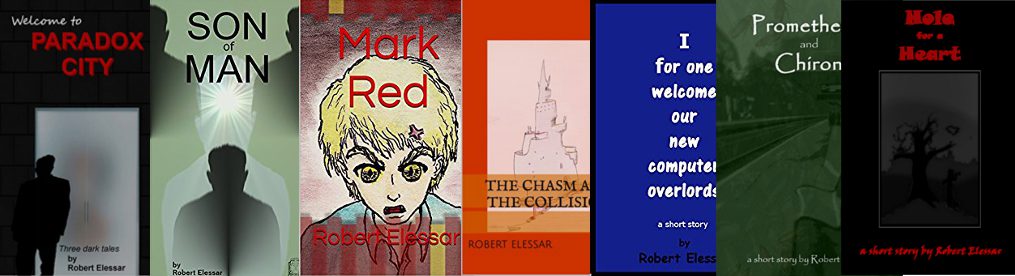
Of course, all this is probably just “pie in the sky” thinking.  My biggest difficulty is just summoning the will, the energy, to do these things.  It’s similar to the trouble I have with writing fiction.  I have quite a few story ideas I could write, but I have no drive, no desire to do the writing.  There’s no percentage in it, so to speak.  It’s not as though I have any fans out there telling me how much they like my books and want more.  I mean, my sister has read them all, and she liked at least most of them, and says she really liked The Chasm and the Collision.  That’s very nice, and I do appreciate it.  Apparently, though, it’s not the required stimulus for me to want to write more fiction.

Perhaps nothing would be.  Perhaps I’m just deteriorating too much, or have deteriorated too much.

Or perhaps it’s that I feel that a truly tiny minority even of people who engage with fiction do so in written form nowadays.  There’s too much competing immediate gratification out there, and primates—probably almost all life forms—are prone to fall for immediate gratification, and to someone else doing the imaginative work for them.

I fear that much of the general population has allowed their personal imaginations to atrophy, much as physical health atrophies when someone goes everywhere by car.  People even play Dungeons & Dragons online now, apparently.  That seems weird to me.  I don’t think I could really stand to play role playing games with strangers.  Playing them with my friends, as I did back in junior high and high school, for countless hours, was greatly enjoyable, and I think it did exercise and improve my imagination and my story-telling and story-creating “muscles”.

Oh, well.  I don’t have anyone with whom to do any of that stuff now, and I can’t even really imagine trying to find new people with whom to do it—see my above discussion about inflicting myself on people for part of the reason, but that’s not the only one.  I also don’t want to invest the considerable necessary stress and effort and anxiety into trying to find friends with whom I actually share interests—if such people even exist—and then have it all go sour or just go away as nearly every other relationship of any kind that I’ve ever had has done.  The juice, however delicious, is not worth that old vice-grip-on-the-testicles (and on all the joints and tips of one’s fingers) level squeeze.  The juice doesn’t last, anyway.

I’m on the train now, and I’m not exactly producing anything edifying, am I?  I’ll bring this week’s writing to an end, but I hope I’ll have the will to keep studying, at least.  And, of course, I hope most fervently and sincerely that all of you have a very good weekend.


*I also have his series The Theoretical Minimum in kindle and/or paperback and/or hardback form; his most recent one was about GR.  But I’ve had trouble reading physical books of any kind (let alone the Suss kind…ha ha) lately; I’m hoping my new reading glasses will help that.

He was a man. Take him for all in all. I shall not blog upon his like again.


Hamlet:  My father—methinks I see my father.

Horatio:  Where, my lord?

Hamlet:  In my mind’s eye, Horatio.

-Hamlet, Act I, Scene 2


It’s Thursday, October 4th, the day of my father’s birthday.  He would have turned seventy-nine today if he were still alive, but he died just under two years ago.  I don’t remember the exact date of his death, and I see no reason to memorialize it.

My father and I didn’t always get along; in many ways we were too alike to avoid butting heads, especially since one of the ways we were alike is a deep stubbornness.  But my father was an admirable man in many ways; he always took care of his family to the best of his ability, which was usually very good indeed.  He and my mother were married right up until the day he died, which is more than I can say about myself, and I admire them both for it.  That they were best friends and constant companions is an unarguable fact, and they got along as well as any long-married couple I’ve ever known.

It was from my parents—both of them—that I got my love of reading, and more indirectly, my love of writing, of making stories.  It was my father who received as a gift, and who proudly wore, a tee-short quoting Erasmus in saying, “When I get a little money, I buy books.  If any is left, I buy food and clothes.”  This wasn’t quite my parents’ literal attitude, but it was damn close.

I didn’t quite realize how proud and supportive my parents were of my love of reading and writing until in college I came to a point of crisis.

I had always intended—for as long as I thought about it—to become a scientist, though I’ve also always written stories, books, plays, and even screenplays (the latter too laughable to discuss).  By the time I was ready for university, I had decided that I wanted to be a physicist.  I went to Cornell as a Physics Major, and in my first year did quite well in all my physics and mathematics coursework (while also thoroughly enjoying my freshman seminars, first Fantasy and then Writing About Film).  But then, during the summer after freshman year, I underwent open-heart surgery to correct an atrial septal defect (quite a large one) that had only been discovered that year.

In later times, in medical school, I learned more about some of the central nervous system effects of open-heart surgery, and I even wrote a review paper on the nature of the (usually temporary) cognitive decline that heart-lung bypass in heart surgery frequently causes.  Its effects in triggering mood disorders such as depression (something for which I already have a familial and personal predisposition) are probably more widely known than the temporarily diminished mental capacity that comes to most people who have undergone such surgery.  The state of the art may have improved since 1988, but I doubt the problem has been eliminated.

Anyway, I returned to college at the beginning of sophomore year (only two weeks after my surgery!), and over the course of that semester and year, with the combination of a low-grade-sometimes-veering-into-high-grade depression and a dip in my mental acuity, I had a hard time keeping up with the higher level math courses (and the physics was getting into the intro to serious quantum mechanics and other areas, with matters requiring vector calculus, tensors, partial differential equations, and all that fun stuff).  I think if I’d just had the temporary cognitive impairment and not the depression as well, I might have muscled my way through, and brushed up on things once my mental clarity improved.  Alas, not only was I not so lucky, I also had no idea why I was having such difficulty; I felt merely that I was an intellectual and moral failure as a Physics Major.

I didn’t fail any classes or anything like that—I don’t think I got anything below a low B—but I could see myself having more and more trouble as I went forward, if things remained as they were.  At the time, I was already close friends with the woman I would eventually marry, and she had read some of my writing (and really liked it).  She talked to me long and hard about my options, and with her help, I came to the decision to switch majors to English.

I was mortified about this.  I felt that I was failing myself in some important way, and worse, that I was letting my parents down, but I didn’t see any alternative.  So I called them, and I very nervously told them the decision I had made…

They were practically ecstatic.  My father in particular said that he just thought that English suited me better, because I loved reading and writing so much, and was good at it.  They’d always been supportive of my love of science, too, of course, and had been behind me all the way in my goal to become a scientist, but they’d apparently thought that such a career wouldn’t fulfill me…though they were wise enough not to try to change my oh-so-stubborn mind.  I think my parents—and particularly my father—would have been prouder of having a son who was an author than of having a son who won the Nobel Prize in Physics.  I hadn’t ever thought of that before.  But the fact that they were so supportive of, and even excited by, my choice was an incredible, tremendous relief and encouragement.

I’ve occasionally wistfully looked back and wished I’d gone farther in my formal studies of physics and math, but…well, those are things I can study on my own, and I do so when the mood strikes me.  But as an English Major, I realized my deep and abiding love of Shakespeare (at one point I took two Shakespeare courses at the same time; that was fun!), and I learned of the works of Spenser and Mallory and Milton.  I read Paradise Lost (my personal nomination for the greatest English language work of all time), and innumerable other great works beside, ancient and modern.  I’ve never regretted those exposures.  Who would?  I also learned how quickly I can write at need, when I discovered that I’d mis-marked the due date for my honors thesis, and I had to write the whole thing in one weekend.  That was pretty stupid, but maybe I can blame it on the residua of my cognitive impairment, which thankfully seems to have faded completely in the intervening years.

Anyway, it was thanks to my parents’ support, and my father’s words—and the example he set—that I was able to feel good about my choice.  We had some pretty serious interpersonal problems in subsequent years, but eventually we put them behind us, and though I didn’t become an “official” writer directly after college (I went to medical school instead…go figure) I am finally now finally fulfilling my destiny, as the Jedi and the Sith are prone to say.*

I’m tremendously happy that my father lived long enough to see me publish my first few books, though I wish he’d been alive to read The Chasm and the Collision, since his advice had real, beneficial impact on its style.

And now I have my own version of his tee-shirt that reads, “When I get a little money, I buy books.  If any is left, I buy food and clothes.” It was a gift from my sister, and I come as close to embodying the words as my parents did, if not closer.  I’m more like my father, probably, than I am like any other person I’ve ever known.  I’m a little more playful than he ever was—he was quite a serious man most of the time, and he was exceeded in stubbornness only by his youngest son—but he’s still the only other person I’ve known who had the patience and desire to spend as much time in zoos and museums as I do.  He always loved to learn new things, and I consider that shared love (which also came from my mother) perhaps the greatest gift that I could ever have been given.

I miss him terribly, and my mother as well.  But as Arthur Bach said in the original movie, Arthur, “I was lucky to know him at all.”


*If there is such a thing as destiny, then surely it’s impossible to do anything but fulfill one’s destiny.