Blow, winds, and crack your cheeks…yadda, yadda, yadda

Well, it’s Wednesday morning, and it’s sloppy and wet, but the trains are running on time and so is most everything else here in southeast Florida, though the wind is a bit irritating.  Because of it, I was only able to write that first sentence while at the train station, then I had to close up the laptop to protect it from water damage, even though the train stations have roofs.

I’m sure it was a sensible decision for them to make the Tri-rail stations basically open-air with only an overhead covering.  This is south Florida, where it’s rarely so cold that heating is an issue, but on days like today—when it’s wet and windy because a hurricane is approaching the other side of the state*—I do curse the decision.  But I only curse it half-heartedly, because I can’t in good conscience really hold it against someone for doing something efficient and long-term sensible.

There are almost no courses of action, even ones that are clearly the best choices in the long term, that don’t have occasional drawbacks.  Life is complicated.  The universe is complicated, at least if you look at it very closely.  Actually, I guess you don’t have to look all that closely.

I thought about not riding the train today, but I couldn’t justify it.  The Tri-rail is running, and at a normal schedule, so I could hardly give myself an excuse for slacking off in any way.  Also, given the weather, there are a certain percentage of other people who will not go to work today, and that means the trains will be less crowded than usual—which, so far, mine is—and that’s kind of nice.  It’s not as though one gets any kind of extra service, since there is no “service”, but there’s less worry about not getting one’s usual seat, and it’s just generally less crowded.  I don’t know if this will be the case on the way home, but it is right now.

I was weirdly pleased to have a reason to get out my rain jacket, which is designed to be worn while riding on a motorcycle, and so is quite snug and water-repellant.  I don’t wear it much anymore.  I came close to wearing my long, black duster, which is also quite good against the rain (contrary to its name).  But the duster is cloth, and it’s heavier, so it’s likely to have been hotter to wear.  It is a very nifty coat, though, and I’m slightly sad that I don’t get to use it more often.

I got a slightly better sleep last night than the night before—maybe as much as four hours, though not continuous.  There were no issues with power or with cable, but then again, I didn’t honestly expect any.  This is south Florida.  The state and its utilities are far from beyond criticism, but rainy, windy weather—yeah, they’re pretty well used to handling that.

It’s a bit like Houghton, Michigan, which is on the upper peninsula of the upper peninsula of Michigan, and is where Michigan Tech is located.  They get absurd amounts of snow and cold every year, jutting as they do out into Lake Superior, but I’m told that Michigan Tech never closes for snowy weather, despite a reputed more than 16 feet of snowfall every year on average.

I can only imagine what would happen if any significant snow fell down here in the Miami area.  If any snow at all fell, it would be remarkable, but if it was a lot, well, it would be stunning in many ways.  One thing it would also be would be a problem for heating, since, basically, houses down here don’t have furnaces of any kind.  There are a few days early in most years where that actually becomes an issue, and it honestly gets too cold at night.  This is made worse by the fact that many of us don’t really have extra-warm blankets or the like.

And, again, here I am “talking about the weather” like the absolute cretin that I am.  I suppose that it can be excused a bit, given that there’s a hurricane passing near, but I’m embarrassed.  Still, embarrassment is a fairly normal state for me.  I’m almost always tense and anxious and uptight.

Twice in my life, while I was still a teen, I was given Valium, the actual name-brand pharmaceutical, for medical procedures—once for a heart catheterization, once when I had my wisdom teeth taken out.  I remember feeling ever so remarkably at ease and comfortable, even with my mouth full of gauze and blood, or with a wire going into my femoral artery and snaking up to my heart.  I wondered—and still wonder—if this is how some people feel all the time, or more of the time.  I basically have never felt anything like that way except on those two occasions.

I almost hit on the hygienist at the dentist’s office after my procedure.  I didn’t, but the fact that I even had the urge and would have been able to do it if I had so chosen is so unlike me that it’s astonishing.  And while I was having my catheterization, apparently the catheter bumped against some part of the conduction system of my heart and I had a very powerful double-beat, one so strong I could literally feel it up into my neck.  The cardiologist was plainly mortified and apologized sincerely, but I just smiled and said, “That was cool!”

This is how I knew I must never, ever get a prescription for Valium, despite chronic anxiety and stress.  It would simply be too easy for me to become psychologically dependent on it, for one thing, and for another, I know it would inevitably have diminishing returns, and stopping it would then make me feel worse than before.  That would be a true, ironic Hell.  No, thank you!

Drugs in general seem to affect me differently than most people, which may be a good thing.  I took opioids for chronic pain for some time, and they definitely worked to help the pain, but never for as long as hoped, and the side-effects were trouble, so eventually I had to wean myself off them, though not without some regret for the worsening pain.

I also do enjoy a rare alcoholic beverage—someone as tense as I am would be prone to, wouldn’t he?  However, I tend to feel rather unpleasant almost immediately after, and since my back problem, I’ve noticed that alcohol intake makes my pain flare up afterwards.

And I think I’ve mentioned the time I tried a hit of a friend’s marijuana hoping it would help my pain, but instead it left me vomiting for about two hours (and still in pain, though I was at least distracted).  THC is supposed to suppress nausea most of the time, for most people.  I really am alien, it seems.  At least, I’m atypical.

I will admit that mindfulness meditation does help my tension and anxiety in the short-term, but it seems to make my dysthymia and depression worse.  Maybe being too aware of my own thought processes makes me realize how unlikeable I really am, I don’t know.  It’s weird, but apparently there is some literature about Vipassana not being too useful for actual depression, though it may decrease the risk of relapse in people who are in remission.  I’m not up to date on the latest research, but it does disappoint me, because I’m fairly natural at meditation and self-hypnosis and the like.

Anyway, that’s enough for today, I think.  I’m getting close to my stop, and that seems like a good indicator that I should stop writing.  No, not for good—don’t get your hopes up—but for today, anyway.  I’m also, by the way, going to try to stop commenting at all on other people’s blogs and websites, after something that happened yesterday.  Apparently, I give minor offense or am rude, even when I certainly don’t mean to be, and then I feel both stressed and mortified as well as angry about being misunderstood.  Oh well.  Life is hard, but there are alternatives.  At least there’s one.  It becomes more enticing by the day.


*I added this footnote later to note that, as I walked from the train to the office, the clouds overhead were all moving consistently and rapidly west-northwest, which seems to indicate, if my reasoning is correct, that the center of the hurricane is still southwest of here, probably out in Gulf of Mexico for the moment, though I haven’t checked the reports yet this morning.

[Added note:  Since there’s a hurricane a-blowing, I decided to embed my cover of the Radiohead song “How to Disappear Completely” below, because the third verse includes the words, “Fireworks and blown speakers, strobe lights and hurricanes.”  I’ll also embed the original below that; it’s one of Radiohead’s most beautiful songs.]

“Where is the Power that protects beauty from the decay of life?”

It’s Friday, now, something which many people in our culture celebrate, since they’re about to enter the weekend, in which they can spend time with family and/or friends, and at least not have to work.

I’m not sure whether I’ll have to work tomorrow or not; my coworker is supposedly coming to the office today for the first time after his surgery, but it may be too much to ask of him to work on Saturday as well.  In any case, I think tomorrow would have been one of my scheduled days, but I could easily be wrong about that, and it’s not worth my trouble to try to figure it out.  I haven’t been trying to keep track.  I honestly hoped for it to be a moot point by now.

As you might have noticed, I’m still here and writing my blog today, the day after September 22nd.  It’s disappointing, I know.  I’m disappointed, myself.  But I did at least do some walking yesterday; more than usual, I mean.  I walked a total of about six miles, which is a halfway decent amount, though nothing like my target.

After writing about and thinking about the books I had read when I was younger, focusing yesterday specifically on Tolkien’s work, I nevertheless decided to go and start rereading Stephen R. Donaldson’s works, the ones I had read even more often than The Lord of the Rings by the time I had gone to college.  Somehow, I identified with Donaldson’s books much more than I did with Tolkien’s, though I think it’s clear that I love Tolkien’s work more.

But Thomas Covenant is definitely an anti-hero.  He’s no Frodo or Sam or Aragorn.  He defines himself by his disease (leprosy) because it is what he must keep in the forefront of his mind in order to prevent its progression.  Also, it’s what cost him his wife and child.  Then he gets brought to the Land, and he’s sure that he’s going insane, and that he can’t afford to let himself believe what’s happening, or he’s going to lose control of his life and his disease and truly go mad.

He does terrible things in the course of all this, but finally learns to find the center of the paradox of thinking that he’s dreaming and still believing in the Land, and ends up defeating Lord Foul.  I guess you would say, on the balance, he did much more good than evil.  But if you still hated him, I don’t think even he would have felt you were unjustified or wrong in it.  He doesn’t think of himself as any kind of hero, that’s for sure, and he doesn’t want other people to think that way, not least because it’s an overwhelming amount of pressure for any person but a narcissist to experience, which I suppose makes sense.

Anyway, when I first started reading Donaldson’s work, I remember feeling a weird kind of rebelliousness against the popularity of the first chronicles, and since the second chronicles had just started coming out, I began reading The Wounded Land, the first book of the second chronicles, before I had read the first.  It was an odd decision, and even I can’t quite recreate the mental state that led to it.  I don’t know if I wanted to get a head start or what exactly it was.  My friend Cindy had read, or was reading, the first chronicles and recommended them, if I recall, and maybe I wanted to get a head start on her?

That doesn’t feel quite right.

In any case, it wasn’t a terrible choice, because it gave me a sympathetic point of view with Linden Avery, the new co-hero of the second chronicles, who is a doctor who finds herself brought to the Land with Thomas Covenant this second time around, and she has no prior experience with it.  Also, The Wounded Land is one of the two best books in the whole series, from my point of view (the other one being The Power That Preserves, the last book of the first chronicles).

So, yesterday, I decided to start reading it again, and I got pretty far.  It’s as good, and as dark, as I remembered.  I have more awareness and familiarity with some of the things in it, like the fact that Linden is a doctor, but also with bitterness and loss and the like.  Somehow, though, I already felt connected with those parts of the books even when I was younger.  I don’t know why for sure.  Maybe it’s because I always felt like I was weird, even when I was exceptionally “successful”, in school and so on.

I certainly didn’t feel that I was like the other people around me; I’ve always felt like I was crazy in some way or other, and maybe that’s part of why I always was drawn to villains.  They were different, but they were powerful; people were afraid of them and didn’t want to mess with them if they could help it.  They were outsiders who worked to change the world to fit them, instead of having to change themselves to fit into it.

And Lord Foul was also the most eloquent villain I’d ever read, which appealed to my love of words.  He had curious turns of speech, though, saying things like, “Do you mislike the title I have given you?” to Thomas Covenant.  It’s almost as though English was not his first language, and he was putting words together in ways that made sense to him because they conveyed his ideas the way he wanted to convey them.  But he was also an actual character, unlike Sauron in LOTR, though he was only personally in the books for a few scenes, at the very beginning and the very end of both chronicles.

He’s also, as I mentioned yesterday, the purest villain, in that he simply hates all life and love, as it is put in the books.  It’s the core of his being, it’s the sum of his character.  It’s hard, at first, to understand how this might be so, how anything or person could simply be defined by hate that way.

Unlike with Tolkien, who has Morgoth and Sauron falling into evil and becoming hateful, it seems that Lord Foul was, in fact, fundamentally the dark side, or the dark counterpart, of the Creator of the Land.  He was cast into the Land when the Creator became enraged upon realizing that his “brother” or counterpart or dark side had tampered with the creation.  So Lord Foul is trapped in the Land, imprisoned with all the Creator’s stuff, unable to die, unable to escape except by destroying the “arch of time”, and so he hates everything about the Land and its world and everyone in it.  If he can’t get out, then he’s going to make the Creator suffer by hurting his creations, and ultimately by destroying them and escaping if he can.

I can sympathize more with that plight as time goes by.  I’ve certainly had many moments in which I feel that I literally hate everything and everyone in the world, the universe, and wish I could destroy all of it.  But, unlike Lord Foul, I don’t feel like I should do such a thing, that I have anything like the right to do such a thing, even though I tend toward nihilism.

But, of course, I can escape, unlike Lord Foul, if it comes to it, and it seems unfair to punish everything else just because I’m unhappy.  It might occasionally seem like it would be satisfying, but ultimately I’d feel it was unimpressive.  It would display a lack of self-control.  It would, in a way, be embarrassing, but I’d be embarrassed with myself more than in the eyes of anyone else.

It’s a weird state of mind (what a surprise).  But it’s one of the reasons I have no patience or sympathy with people who commit mass violence and the like, because—though I can certainly get inside the mindset that must have led them to want to destroy these people by whom they feel they can never feel accepted—I see it as a childish urge, the indulgence of a tantrum.  I have no respect for such lack of self-control, in others or in myself.  I find it more disgusting than I do the various other things that make me feel so outside and alien.  There is no excuse for it.

But Lord Foul’s situation is different, and anyway, he’s a fictional character.  Most of all, any good epic adventure needs a bad guy, the worse the better (so to speak) and he’s as bad as any I’ve read, while still being a real person in the books.  And I can sympathize with the Creator, too, who is clearly not some perfect, all-seeing, all-knowing being, but just an artist of sorts, who made something beautiful, and was frustrated that he couldn’t do so without there being evil within it.

Of course, there is also now a “last” Chronicles of Thomas Covenant, and I have read only a part of the first book of those, while I was away in Raiford, when only one or two of them had come out.  I think.  But now they’re all out, and I may, just possibly, skip back ahead to those to find out what happens.  I think, from hints I’ve gathered, that we get more understanding of the nature of Lord Foul, and the Creator, and all that in these books, which would be interesting.

Further bulletins as events warrant.  Assuming the Arch of Time doesn’t get broken in the meantime.  If it does, though, at least you’ll know that I was able to escape, and so it won’t be entirely sad.

[By the way, the title of this post is the first line of a song the Lords sing in the second book of the original Chronicles of Thomas Covenant the Unbeliever.]

Just Another Tuesday

It’s Tuesday morning again.  Another Tuesday.  This one is the 20th of September, in case anyone in the future is reading and wants to know what day this post was on, and is not reading this on the site proper, where the date is—I think—displayed above the post.  I’ll assume that anyone who cares about the date and is reading it today already knows what the date is, as well as the year.

There’s nothing really new to report, obviously.  As has been the case for a while now, I haven’t written any new fiction, haven’t done more than pick up a guitar, strum at it, and think about how shitty my playing sounds before putting it back down again.  Standard issue things to do, you know?

It continues to be dreary and rainy around here, though we have it easier than Puerto Rico, where the hurricane has knocked out power for the whole island.  That hurricane is not expected to head toward us at all, though it did just now really start to rain rather heavily.  The train stations are all covered though, so the rain doesn’t matter much unless it becomes quite windy, and right now there’s essentially no wind.

I thought it might rain as I was headed toward the train station—not just because this is south Florida and it’s been raining every day, so why should it stop, but because I could see tall, pillar-like clouds looming, even in the night sky, lit by reflected urban lights below.  They look nifty, but the shape of them, and the updrafts that no doubt exist within them, cooling all that airborne water, make it all but inevitable that rain will fall.

And now, as if conjured, the wind arrives, and speckles of rain are appearing on the screen of my laptop.  At least it’s somewhat refreshing.  If it becomes too prominent, I may have to pause and put the computer away to protect it.  But if that happens, none of you will be able to tell unless I tell you about it.  Weird, huh?  Well, no, not really I guess.  I think that’s just me—I’m the weird thing here.

Anyway, the rain is already slacking off some, and there’s only the tiniest of breezes remaining.  Further bulletins as events warrant.

I suspect that nearly all the noteworthy events in my life have already passed, though.  There’s very little else to say, though that doesn’t seem to stop me from saying it.  I “talk” to all of you, because I seem incapable of talking to anyone else.  That’s my fault, not anyone else’s.  I’m a faulty mechanism, what can I say?  I’m faultier than San Andreas.  I’m buggier than the Amazon rainforest*.  I’m not a very good device.  Not to say that I don’t have some remarkable design features, but none of them are really specific to me; they’re standard in the model.  The ways in which I am not standard seem to be associated with problems, which I guess is often the case.

Or maybe that’s all just egotistical in its own way, even though it’s fundamentally a case of self-loathing.  It’s probably just as arrogant to think that one is exceptionally bad or imperfect as to think that one is exceptionally perfect or good.  But there are more ways to be imperfect than to be perfect.  At least, it seems like that would be the case, though frankly, I’m not even sure what it would mean for a person to be perfect, and I’m not sure that anyone else knows what it means when they say it, either.  People use the word without really thinking about it, though to be fair, I don’t hear people referring to other people as perfect very often, and good on them that they don’t, since I don’t think anyone is perfect by whatever standard you might choose**.

Well, the train just arrived, but like yesterday (which I didn’t mention then) whoever is driving it today stopped way “sooner” than any of the other drivers do, and so I had to follow the other people who hadn’t gotten up off their asses early to wait for it to arrive, as I had, because I try to plan ahead.  Also, someone is sitting in my usual seat, which makes me unreasonably frustrated.  I know I have no claim on any particular seat or anything, but I try to do my stuff consistently so there are fewer surprises with which to deal, but that doesn’t seem to work.

Here’s an aside, though.  This is one of the trains that’s running the automated PA announcement system, which tells you which station you’re approaching and reminds you to check for your belongings before you get up and leave.  Then it says, “Please watch your step while you’re exiting the doors.”

Am I the only person who finds that last sentence irritatingly a-sensical?  “Exiting the doors” seems to imply that you were, until that point, inside the doors!  But no one is inside the doors.  The doors are barely three-dimensional; no ordinary, human-scale organism could actually be inside the doors.  Passengers are inside the train cars, they exit through the doorways, they don’t exit the doors!

If the person who wrote and recorded that announcement—which has annoyed me since the first time I heard it—is out there, can you please just come and kill me?  You’re one of the things that makes this planet so intolerable, and it would be just as well if you could help me leave it, since I’m looking to do that anyway.

I want to say that I feel like I’m losing my mind, but the problem, if anything, is that my grasp of reality is too persistent and consistent.  My weakness, if you will, is my relative inability to delude myself.  I can see the chaos (in the mathematical and poetic senses) for what it is, as well as the infinite stupidity*** of everything out there.

It sometimes seems that I can literally feel the yawning emptiness of the cosmos, but I know that’s an illusion.  I’m no more capable of truly conceiving of the infinite than is any other finite being.  But it does sometimes seem that I can feel it, just vaguely, looming above me and above everything, as well as beneath me, since “above” is a relative measure, and we are surrounded in all directions by mostly empty space.  Sometimes that’s even comforting.  You know, like the song says, “Freedom’s just another word for nothing left to lose.”

I don’t know what point I’m trying to make.  I don’t think there is a point, either to this post, or to anything else.  It’s just another post, just another Tuesday, just another meaningless instantiation of “atoms and the void”, to quote Democritus.

I wonder if that was his real name, “Democritus”?  It seems too coincidental to be what his parents named him.  I know “Plato” was a nickname; I’m not sure about Aristotle.

Oh, well, what does it matter?  He’s dead, and he’s been dead for a couple of thousand years.  I always knew he was smart****.


*Which I like better than the Microsoft rainforest or the Google rainforest.  Ha ha.

**Unless you choose some cheesy standard such as “perfect at being who you are”, but in that case, everyone is perfect, which is just another way of saying that no one is, so it adds nothing.

***No matter how large an intelligence is, as long as it’s not infinite, then its stupidity, or at least its ignorance, is always infinite.  I know, that’s probably an unreasonable standard against which to measure any intelligence or anything else, really, but I never claimed to be trying to be fair, just that I can recognize the endless abyss of lack that lies beyond the realms of anything finite that exists.

****Well, no I didn’t.  I haven’t existed always, for one thing; I’ve only been around for just shy of 53 years, though sometimes it feels like it’s been millennia.  Also, I hadn’t even heard of Democritus for the first ten years or so of my life, not until Carl Sagan talked about him in Cosmos.  So “I always knew” is just flagrantly inaccurate.  It’s a bit like how people say things like, “that email never came”.  I always want to say, “Never?  You waited until the end of time itself, and the email still hadn’t arrived?  I mean, never is a really long time.  If you wait an infinite amount of time, anything possible that can happen will have happened, so it seems truly impossible that the email never arrived.  EVERY email should have arrived if you waited long enough to legitimately use the word ‘never’.”  But I hold my tongue…usually.  It gets my fingers wet, though.

All talk is small—all facts are trivia

Well, it’s Monday morning again, now the 19th of September in 2022, and I’m again at the train station waiting for the train to bring me to work…though before I’m done with this post, I’m sure I’ll already be on the train.  I write pretty fast, but it’s rare that I finish the first draft of any blog post before the train arrives, unless it’s running quite late.

This is the last Monday of summer in 2022, for whatever that’s worth.  It’s still irritatingly hot here in south Florida, and more importantly, it’s muggy and has rained every day.  Yesterday morning there was an absolute torrent for a bit, then it slacked off for a while before sputtering on and off throughout the rest of the day and night.

Yes, I am writing about the weather.  I don’t know if that’s better or worse than talking to someone about the weather.  I’m not much good at small talk, so maybe writing about the weather is better.  It doesn’t make me feel stressed, at least.  Possibly there are people out there who wish that it did, so I wouldn’t write such things.  But, then again, unlike the case with small talk, there is no social pressure for anyone to have to read what I write, so it’s better, ethically, to write nonsense than to talk trivialities, because there’s no pressure on anyone else to go along with it or to respond in kind.

That is one of the issues with small talk, after all.  When someone starts talking to you about something in which you have no interest, or which you find irritating, there’s this weird social impetus at least to give a cursory listen to what they’re saying.  That’s a puzzling social dynamic, when you think about it.  Why do people feel pressure to interact with someone when that other person is not saying anything of interest?

But of course, people do feel that pressure, and so small talkers can impose themselves upon their…well, let’s call them their “victims” for lack of a better word, knowing that the victims will feel the urge to interact politely, even if they have no interest in the conversation.  The only people who would feel comfortable just ignoring the small talker are those who feel no moral or social obligations, who can just go off and ignore the first person with internal impunity, perhaps sadistically to initiate small talk with someone else, solely for the purpose of tormenting them, knowing that others feel the pressure to go along with it.

In other words, small talk rewards sociopaths.

For this, and for many other reasons, we should abolish it.  Also, it makes people like me feel ridiculously awkward, because for me, conversation is something that generally serves a purpose, one related to the subject of the conversation, so engaging in small talk is rather like watching an old-school television tuned to an empty channel and trying to discern what the meaning behind the static might be.

At least a percent or so of that crackling and hissing and “snow” comes from the cosmic microwave background, the leftover heat from the early universe, last propagated when the current cosmos was about 300,000 years old and it finally got cool enough for electrons and protons to bond into atoms, so photons could finally fly freely through space without hitting a stray charged particle every few instants and being scattered.  That’s an interesting fact, unlike most things to do with small talk.

Although, in a sense, the cosmic microwave background and what it implies or that of which it records the evidence, is not much more significant than the weather is.  In fact, on any given day, it’s probably far less crucial than the weather.  It can be useful to know whether to bring an umbrella with one (I always do, anyway), or whether one should bring a jacket (rarely necessary in south Florida in September), or if there’s a hurricane threatening*.

So, if small talk is a way of spreading seemingly trivial, but potentially consequential, bits of information from one person to another, to try to keep the whole group, or “flange”, in a state of preparedness, I guess that could be a good thing.  That is, it would be a good thing if you think it’s a good thing for groups of humans to be mutually connected and better prepared to protect themselves and each other from the elements.

Most days, there are at least a few moments when I would much prefer for a massive storm to come up and blow them all away.  But don’t be misled into thinking that I’m just a misanthrope.  I don’t think other animals, or plants, or fungi (or microbes) are any finer or more innocent or sweet or lovable than humans.  They aren’t.  Indeed, nature does not select for sweetness except as a means to an end.  A baby is sweet and cute because that fact manipulates the nervous system of adults to protect it and care for it.

All life manipulates and exploits and preys on other life in one way or another.  Even photosynthetic organisms compete with other such organisms for light, trying to out-produce and out-reproduce the organisms around them.  Nature, red in tooth and claw has been said to unnecessarily focus on violence as a description of the world, but in fact, it’s overly narrow.  Nature could be accurately described as red in tooth and claw and leaf and branch and fur and feather and shell and stem, and so on.

Even cooperation strategies are mainly ways of forming gangs to outcompete other gangs.  What’s more, they are all vulnerable to the defection of any member of their group—thus the horror of cancer, as individual cells in a body lose their inhibitions and start to reproduce without check, temporarily succeeding but eventually destroying the organism.

So, though there’s nothing inherently evil or wrong with life, from some moral point of view—since morality doesn’t have any meaning without life in the first place—there’s nothing particularly moral or good about life, either.  Life likes life, as a general tendency, and tends to make excuses for itself, which it would, and fair play to it, but it’s just a highly localized, complex epiphenomenon (or set of epiphenomena) that for all we know exists only on the surface of the Earth.

It may legitimately be true that we cannot rule out life existing elsewhere in the cosmos, and it may seem terribly unlikely that the only life in the universe is on Earth, but it’s very tricky to try to extrapolate probability from one solitary instance of a phenomenon.  It’s a pretty undisputable fact that nearly everything we can see in the universe is not hospitable to life as we know it.

Maybe the answer to the Fermi problem is that there is no sign of life outside of Earth because there is no life outside the Earth, and all that one would ever hear, if one were to listen to the cosmos forever, is static.  Not even small talk.  Life on Earth could be the true aberration, an abomination of sorts…except, of course, nature doesn’t do abominations, nature just does whatever it does.

I don’t know what point I’m trying to make with all this.  Maybe there is no point.  Maybe that, in fact, is the point.  Maybe I shouldn’t lament or bemoan small talk, because all talk is small talk when you get right down to it, and every fact is trivia, and all of history is just a “poof” of a random sound taking place in a wasteland…a pebble dislodged by the wind and rolling down a sand dune to rest a little lower than it had been, but without any purpose, without any goal, without any inherent or external meaning.

Anyway, what I’m really trying to get at is, the weather sure has been crappy lately, hasn’t it?


*As far as I know, there isn’t.  Not in the Atlantic, at least, not one that’s going to head toward Florida.  But I haven’t checked the hurricane center since Friday or Saturday, when there was just a tropical storm that was never going to hit us here unless something truly weird happened.

Surprisingly (for me) positive thoughts on a Saturday morning

[Note:  At the bottom of the post, below the footnotes, I’m including a thought that occurred to me between the initial writing and the final editing of this post, but which doesn’t directly relate to the post itself.]

Well, it’s Saturday morning (the 17th of September, a nice prime number), and I’m waiting at the station for the first train of the day, because I woke up before my alarm again and there was no point trying to go back to sleep.  I’m working again today, and I may be working again next Saturday as well, since I don’t know how long the coworker with whom I split Saturdays will be out with his recovery from surgery.

I can’t begrudge him the time off—surgery is no small thing, even if it was “minimally invasive”, to say nothing of the problem that required surgery.  I’ve had major surgery myself, open-heart when I was 18 and back surgery when I was about 35 (hopefully I won’t have another when I’m 53!).  I don’t remember how long my own laminectomy and fusion left me hobbled, because at the time I was already on temporary disability because of the injury, but it wasn’t a minor inconvenience.

That whole process contributed to the eventual catastrophic collapse of the life I had built, partly because I technically have “failed back surgery syndrome”, which means that, despite my back surgery, I still have chronic pain.  I think the term “failed” is a bit uncharitable, though, because my pain was reduced, it just didn’t come close to going away completely.  It’s there every day, and it has been for about 20 years (for those of you doing the math, I had the pain a good three years or so before I had the surgery, and I am currently 52).

Speaking of the collapse of my previous life, and the loss of so many things that were important to me, I sent an email to my son not long ago—I might have mentioned this previously—to the email address he had used the thank me for his last birthday present.  It was basically a long apology for all the things I screwed up with him (and his sister), and a reminder that I love him and always will, and of course that I miss him.  I didn’t know if he even regularly checks that email, so I asked his sister to let him know I had sent it.  He apparently does, and he’s seen it.

I don’t know what he thinks about it, since he hasn’t replied so far.  I don’t know if he ever will.  That’s up to him, which I guess is obvious.  What I mean is, that it wouldn’t be fair or right for me to expect, let alone demand, a reply from him.  I at least know that, if he wants to know what his father has been thinking and doing for the last quite some time, he can always come to this blog and read it.  I don’t know what he would think if he did that, but it is whatever it is.

I’ve always felt—at least, for as long as I’ve seriously thought about such things—that it’s important to remember that children don’t belong to their parents.  Parents belong to their children.  This is so for good, sound, biological reasons, and also for deep moral ones.  A parent can make the decision to have a child—or well, two parents can make that decision.  The child literally has no say in the matter, for the child does not even exist when the decision is made.  They cannot be held morally accountable for anything to do with that decision, and they cannot incur any obligation because of it.  Of course, good parenting and good socialization can mean that a child will be naturally grateful to the parents, and that’s nice when it happens, but it isn’t required.  It cannot, ethically, be required.  It cannot, in good conscience, be demanded.

That reminds me tangentially of the concept creep problem our culture has with the terms, “respect” and with “self-esteem”.  People cannot demand respect.  Respect is in the eye of the beholder.  Courtesy is presumptively expectable, since simple politeness is the lubricant of civilization, but respect can only be freely given if it is to be of any value at all.

Likewise with self-esteem.  It doesn’t make sense to encourage people to have just a general, free-form, positive self-image based on nothing; that leads to narcissism and all the problems it entails.  One should not feel “proud” merely of the fact that one exists.

A student who cannot seem to master math well should not necessarily feel proud of his or her math skills, though if that student has worked hard to learn as much as they can learn, they should feel proud about that!  And that person almost certainly has other strengths and abilities that they can feel good about, and of which they should feel proud.

Hard work is worthy of esteem, and thus of self-esteem.  But I don’t need to esteem my own ability to play basketball, for instance, and I shouldn’t, because I’m terrible at basketball.  On the other hand, I write reasonably well, and I write a lot.  I also have good skills at general mathematics and science, and I am deeply curious about the way the universe works, and have learned a lot about what people know about how it works, and how that knowledge has been gained.  I should feel good about that, at least.  I certainly enjoy it.

“Pride” in general is a tricky concept.  Its legitimacy depends on how one uses it, and what one means by it.  None of us made ourselves, obviously; we operate according to the laws of nature*, and we are shaped by our nature—our genes and other physical factors—and our experience, our background, our society, our upbringing, our education, and so on.  And in a sense, all of these things are also part of “our” nature.

A person may have the tenacity to work hard and improve themselves from an otherwise unpromising-seeming background, but even then, they did not create that tenacity—it was their luck, or their blessing, however you want to characterize it, that they had it.  There’s nothing wrong with that.  Use the assets you have to their best effect.

You can’t use assets you don’t have, after all.  It would be much easier, for instance, for me to get to work in the morning if I could teleport, or even if I could fly.  But I cannot, and there are no reasonable technological solutions to that lack right now, so I just don’t have that ability.  It would be the height of silliness for me to feel proud of myself for my ability to fly, since I cannot.  But I’m glad of my ability to learn and use the public transportation system in south Florida, and I’m grateful that it exists; I admire the people who put it into place, and I esteem the people who keep it running every day.

Maybe gratitude is a better notion and virtue than pride or self-esteem.  I know some religious systems place an emphasis on it, and I think that’s far from a bad thing.  It’s good to be grateful for the inherent and learned abilities that you have, and it makes sense to instantiate that gratitude by using those gifts to the best of your ability.  Otherwise, it’s not very impressive gratitude.

It’s the converse** of the situation in which a person apologizes for something, but keeps up the behavior that led to the apology.  That’s not much of an apology.  I often find myself saying to people, “I don’t need your apology, I want you not to do the thing you’re apologizing for.  If you apologize but keep doing the same thing, the apology is useless, and even insulting.”

Okay, I use words to that effect, adjusted to match the situation.  I hope you get the idea.

These are my thoughts for this Saturday morning, such as they are.  I hope most of you are looking forward to an enjoyable weekend, hopefully with some time spent with family and/or friends.  Be grateful for them, certainly, if you have them around.  No one is guaranteed to have them, and even if there were such a guarantee, with whom would you lodge the complaint if the guarantee were not met?  Feel good about the things you are good at, and feel grateful for the good things you have in the world, and show your esteem and gratitude by doing the best you can with both.

Those are good words, I think, and I’m astonished that I am the one who actually just wrote them.  The trick will be to live up to them!


*And of Nature’s God, if you believe in God, to paraphrase the Declaration of Independence.

**Or maybe the obverse—I’ve never yet been able to get those concepts clearly differentiated in my head.  Neither term may actually be the correct one, come to think of it.

[As noted above, here is my thought below the footnotes:  Is it ever possible for any kind of mind, whether natural or artificial, instantiated in hardware or software or both, to be complex enough to accurately model its own workings in detail?  As it becomes more complex, modeling its own function will also become more complex.  I suspect that this complexity will increase more quickly than the ability of the increasingly complex mind to parse it.]

Demonstrandum in the middle of nowhere

Good morning, everyone.  It’s Tuesday, the 13th of September, and I’m coming down with something again.  Meaning I think I have some upper respiratory virus, because I started getting mild chills overnight, and a low-grade elevation of my temperature, and my throat has that sore, itchy, irritated feeling that comes with fighting a virus.

I’m assuming it’s a virus—well, not truly assuming; I’m drawing a tentative conclusion based on experience and knowledge.  It doesn’t seem like a bacterial infection, those tend to be more localized, and I don’t think it’s a fungus, since those are rather rare and occur only in specific circumstances…and I’ve never heard of a prion disease that presents in this fashion.  Whereas I’ve had many iterations of “colds” throughout my life, and this feels a lot like most of them.

It doesn’t seem like Covid, but I suppose it could be one of the later variants, tempered down by my already-exposed immune system.  In any case, although I must go to work—that’s why I’m writing this blog post today—I am masking even more thoroughly than usual.

It’s remarkable that the wearing of masks was resisted so much by so many crybaby wusses in America.  People in east Asia have been regularly wearing masks when they get a cold since long before the first SARS virus.  It’s simple courtesy to recognize that, though you may have to go to work because there are people and things depending on you, it’s good to take some minor precautions to decrease the risk of spreading your sickness to the people around you.

I understand the spirit of independence, and I am glad to live in a country where the more common saying is, “The squeaky wheel gets the grease” rather than “The nail that sticks up gets hammered down”.  But it’s not independence or free spiritedness to refuse to take simple, easy precautions to reduce the chance of you spreading a disease to your fellow Americans (as the case may be).  That’s just being a spoiled and entitled ass-wipe.  And the only good thing to do with ass-wipes is to flush them down the toilet.

Anyway, that wasn’t what I was going to write about today.  Actually, I didn’t have anything specific in mind to write about today, which is why I know that wasn’t what I meant to write about today.  Logic.  If there exists no class of things: [Topics considered to write about on Tuesday, September 13th, 2022, AD] then {the inexplicable and inexcusable refusal to use masks when ill} cannot be a member of that class.  Quantum Electro Dynamics*.

Ah, Logic.  Ah, Reason.  Ah, Evidence and Argument.  How I pine for you in the human world.  Of course, I don’t hold it against anyone that they have emotions, even strong ones.  It’s not like people designed themselves, after all, and emotions exist for good, sound biological reasons.  They are the drives, the utility functions, of organismal behavior.  And they served humans well in the ancestral environment, else humans wouldn’t be around.

But reasoning minds have achieved much more; they are much more versatile and powerful, and modern civilization is largely due to their work, though motivated by those underlying emotions and their various, often-conflicting, utility functions.

But you’ve got to tame your elephant, to borrow Jonathan Haidt’s metaphor.  Otherwise it’ll run rampant and trample everything, and it won’t get you anywhere you really want to go, except perhaps by luck.  Train it.  Maintain discipline.  Reward it when it’s good and correct it when it’s not.  Don’t just be the rider of your older brain, be the pilot, be the driver.  It requires effort, obviously, but I think it’s probably worth it.

In other words, what I’m saying is, don’t trust your emotions to guide you—they’re not reliable.  Listen to them, notice them, but don’t trust them.  They developed to help make quick decisions about hunting and gathering, avoiding lions and hyenas, and interacting with a tribe of maybe forty or fifty people at a time.

Every complex animal in the world has emotions of some kind; anyone who doubts that is simply in denial.  Only humans (among species native to the planet) have human-type brains, with big, complex frontal lobes and complex, symbolic language with syntax and grammar and logic and all that jazz (sometimes literally).

But those brains are powerful—again, see Jonathan Haidt’s metaphor of the elephant and the rider.  If they are not managed, they can be horrifically destructive.  And if you get a herd of unmanaged elephant-brains** or brain-elephants, they can do a terrific amount of harm, especially if they’re armed with modern technology (most of which was not made or designed by people with no control over their personal elephants, but is nevertheless available now to the billions of people who could not have made it, and who don’t bother even trying to steer).

Anyway, this has all been meandering and peculiar, I guess.  As I said, I’m a bit under the weather.  It’s annoying to be in south Florida and to be both sweaty and chilly.  I wish I could just lie in bed somewhere, maybe have some Jell-O or something.

I must be feeling sick.  I don’t particularly like Jell-O.  But it is easy on the throat.

I wish I didn’t have to go to work today.  Though it’s not a wish I would waste on a genie if I found a magic lamp.  I’d probably ask for some kind of special, personal powers that I could use to achieve world peace…through my absolute dominion over everyone and everything!  Bwa-ha-haaaa!!

Again, anyway…that’s enough silliness.  I’m really not going anywhere with anything today.  I just wish I could rest for the day, but I can’t, so tough luck.  A person has to do what a person must do; willingly accepted duty, and a reasonable sense of honor, and a general sense of courtesy should guide one in one’s actions, if one wishes to be other than merely a jumped-up monkey throwing feces…or an idiot protesting against a simple health precaution, pretending to take a stand on principle when one is actually simply throwing a tantrum because one doesn’t want to do something sensible and healthful, like take a nap.

Naps are good.  So are masks in the right circumstances.


*Q.E.D. in other words—quod erat demonstrandum, “what was to be demonstrated”.  That’s my little nerdy joke, playing on the earlier nerdy “joke” that was the naming of quantum electrodynamics by physicists, shortening it to QED, because why would you not?

**The elephant is a metaphor of a powerful beast carrying around the conscious mind.  I am not implying that elephants themselves are destructive by nature, though of course, they can be.

Expression of depression as “indicator lights” for the state of a complex system

It’s Saturday, but I’m not in the park, and it’s definitely not the 4th of July.  It’s actually the 10th of September.  Oh, and this is 2022 AD (or CE).

I don’t think yesterday’s post was very well-received.  It was probably too dreary for most readers.  This is often the case when a relatively healthy person encounters the thoughts of one who suffers from depression.

I remember it being said in medical school that depression is, in a certain sense, contagious.  That’s not meant literally, of course, but it makes the point that, when interacting with someone who is depressed, one tends to feel one’s own mood pulled down.  In fact, it can sometimes be a diagnostic aid; even if the person to whom you’re speaking isn’t openly declaring depression, if you find yourself feeling depressed yourself after speaking with them*, they may be depressed in some clinically significant sense.

So, if people feel down after reading my writing, I apologize.  I don’t mean to bring anyone else into the fold, so to speak, or worsen the mental situation of someone who is already struggling.  There is a very small proportion of people in the world I think could be improved—from a societal standpoint anyway—by being depressed.

But it is true that, when I’ve read popular works about depression, and about the experience of depression, I don’t tend to get a strong sense of what the writers were feeling when depressed.  Most of the time, the works are written well after the particular bout of depression, and it can be hard to recreate the moods and thoughts that the condition engenders when one is not mired in it.  Just as one who is depressed can feel that the depression has always existed and always will, when one is out of depression it can (apparently) be hard to reenter the worldview that it entails.

Some of this is probably defensive.  Who, having successfully gotten past depression, would want to relive the experience?  I’d hazard a guess that the answer is “no one”.

I remember a time when, briefly, my (now-ex) wife went through a period of reactive depression near the end of a pregnancy, and shortly after it.  This is not an uncommon occurrence, though thankfully most women are spared.  Anyway, at the time, she said that she would never get angry with me when I was depressed again, that she understood now how terrible it was and how difficult, and how it’s not simply a matter of attitude or choice to feel it or not.  I’m quite sure that she meant it with all her heart.  Thankfully, her experience was short-lived, it responded to treatment and time rather rapidly, and she returned to her usual, extremely formidable and impressive self.  But she also lost at least some of her sense of empathy for the depression, unfortunately.

That’s okay.  I like her better when she’s healthy and joyful and fierce.

My personality—and probably my undiagnosed ASD, which contributes to the fact that I can’t convey emotion well, and have a hard time seeking or accepting emotional support—and the sheer persistence of the problem make me hard to bear for anyone, for very long, I think.  It makes me hard to bear even for me.  The advent of my chronic pain, and its affect on my ability to work well**, contributed to that difficulty mightily.

But maybe someone someday will find my musings when I’m depressed useful for at least getting into the mindset of someone suffering from depression.  Maybe not.  I think my thoughts are far from typical even for the depressed, though my tone is probably pretty “normal” for someone with longstanding chronic depression.  Maybe my words will be useful for people studying depression in adults with undiagnosed autism spectrum disorder, which I’m almost certain I have, having studied it now for a while since the possibility first revealed itself.

As a bit of a tangent, it’s rather frustrating to me that I recently saw a very good video that discussed the fact that it seems depression was never caused directly by a deficiency of serotonin, a so-called chemical imbalance.  The maker of this video clearly knows it was never this simple, but there is a popular notion that such a thing is the case, and that has always irritated me.  The brain is not some stew made of a big collection of ingredients cooking together in the skull, which doesn’t come out well if a particular ingredient is missing or is present in too-great quantities.

The brain is a huge and unimaginably complex information-processing system, immensely parallel in its structure, with a staggering amount of feedback and crossover between subunits of the system; even each individual neuron of the hundred billion-ish present is more complicated than one can readily grasp.  It has more in common with a vast weather pattern of sorts, influenced by both local and global environmental factors but also internally influenced by other parts of itself, so that some patterns become self-sustaining and destructive, like a hurricane in the mind that feeds and strengthens itself when conditions are right, and which cannot easily just be broken once it has formed.

So, serotonin was never some mere quantity that was deficient, like iron deficiency leading to anemia.  The nerve cells that signal using serotonin manufacture that neurotransmitter themselves.  It’s simply that part of depression is instantiated (in many) in the underactivity or poor responsiveness of certain parts of the brain that signal via serotonin, and increasing the activity in those regions can sometimes decrease the tendency of the system as a whole to get into the self-reinforcing state that depression is.

It’s rather like the notion that we could, for instance, decrease the likelihood of hurricanes by decreasing the amount of moisture in the local atmosphere.  It’s not that hurricanes are simply caused by high humidity, but just that the high humidity contributes to their production, and decreasing it could, in principle, decrease the likelihood of hurricane formation, or at least decrease their strength and thus their destructive effects.

I don’t want to push the metaphor too far, since the brain is obviously different from weather—for one thing, it is far more meticulous, precise, and in some senses (but not all) more complex and constrained.  There are roughly a quadrillion synapses in a typical brain, but it’s not just the number that really makes the difference, anymore than one can just randomly wire up a hundred billion transistors and make a supercomputer.  Weather is a bit more free form, though it involves a great many more atoms interacting than any one brain.  But analogies can point out similarities at different levels of various systems, and more usefully, they can help try to convey something of the sense, if not the specifics, of an idea.

But depression is a dangerous storm of the mind indeed; it’s frequently a terminal illness.  And one cannot simply slap a hurricane and yell “Snap out of it!” and expect it to have any effect at all.  We understand the nature of autism spectrum disorders even more poorly than we understand mood disorders—trust me, I’ve looked for good neuroscientific, neuroanatomical, structural, and functional investigations of the disorders without much satisfaction so far.  The interaction of mood disorders with ASDs is probably just going to make things still more complicated.  Unfortunately, the only computer with the processing power adequate to modeling the processes so far is reality itself, but we can’t just lift up the hood or look at the source code or whatever metaphor you want to use for that.  We have to figure it out as it goes along.

For that reason, it may not be such a bad thing for me to share my thoughts, however dismal they are and however gloomy and dispirited they may make my readers feel, when I’m in the throes of my malfunctions.  Think of them as indicator lights, or pressure gauges, or even a Windows™ Control Panel readout from the system.  At least they might give some insight into what the system is doing at that time, or what state it’s in.  It won’t necessarily allow one to prevent total system crash; some systems just have too many faults and bugs to keep running.  But maybe at least from an eventual mortality and morbidity conference point of view, they might be useful.

It would be nice to be useful.


*Assuming you weren’t already.

**As an aside, when I was in practice, I also found that I had great difficulty charting using Dictaphones or their equivalents.  This is partly because it was not at all how I charted during training, but I suspect it’s more related to my ASD.  I can write extemporaneously quite well, or at least quite handily, as these blog posts demonstrate, but speaking aloud as a matter of keeping records such as “SOAP notes” is very uncomfortable and even feels physically blocked at times.  Between that and my chronic pain, I had more than one occasion of getting far behind on charting, which caused frustration for my colleagues and my spouse alike.  I’m not lazy.  Not by a long shot.  I think it really was mainly an Asperger’s thing, but at the time I just hated myself for being so weak; I was motivated to do it, but just couldn’t seem to carry it off without it feeling like torture.

And if the cloudbursts thunder in your ear…

Well, it’s Friday again, but again, it’s not the end of the work week for me, anymore than Monday was a day off.  My colleague who was out with a back injury did have minor surgery earlier this week; he went home the next day, but he’s supposed to rest and recover for a while, and I’m not sure whether he’ll even be back to the office next week.  So, I’ll probably be writing a post tomorrow, since I’ll be going into the office.  It’s something to look forward to, if you look forward to that sort of thing.

I don’t know for sure what to write about today.  I mean, what I want to do is rant and rave and cry and all that, but I keep doing that over and over—at least that’s what it feels like—and it gets me no result whatsoever.  No matter where and when I do it, I seem utterly unable to convey to anyone how much I feel like I’m barely holding on by my fingernails and am about to fall.  I don’t know when my grip will give out, which is the nature of such dilemmas, unfortunately, and I cannot climb up on my own.

Well, falling is probably at least a sort of freeing feeling while it’s happening.  It’s probably not the worst thing to experience, especially if you’re facing upward so you can’t see the ground rushing to get in the way of you being able to follow your geodesic through spacetime.  Free fall is probably kind of cool, while it’s happening.  Unfortunately, in Florida there aren’t really any high places—it’s literally flatter than Kansas—so there’s no very high place to fall from, except a building in a city somewhere, I suppose, and that’s dreary and messy and inconsiderate.  One could sneak a ride on a rocket, I guess.  But even the Artemis thing is delayed for a bit while they fix some kind of leak.

Now that I think about it, is Artemis launching from Cape Canaveral?  I just assumed it was, but I’m not sure.

I have a new “housemate” moved in, and she seems benign enough.  At least she doesn’t try to bother me, presumably partly because of the language barrier, which is fine.  In a perfect world, it would probably be nice for me to practice my Spanish, but the world isn’t perfect, and I don’t want to have to deal with it.  I can’t deal with other people at all, anymore, except when I have a specific task to achieve, and preferably a script.  I don’t even use the kitchen or anything, I just stay in my room when I’m there, which is not very much of the time, really.

The really stressful thing is when I do my laundry on Sunday.  This last Sunday it was okay—she was just moving in, though.  Hopefully there’s no issue with it, because I don’t know if I can deal with even one more thing in the world, however slight or seemingly trivial.  I certainly don’t want to deal with anything new.

I don’t want to deal with anything at all.

I wonder if, some day in the future, this blog will be a case study in the deterioration and final catastrophic destruction of a middle-aged adult male with undiagnosed Asperger’s Syndrome and chronic depression (aka dysthymia) and chronic pain, who had his health, his marriage, his career fall apart, went to prison because he didn’t grasp the nature of human chaos but just wanted to try to help other people who had chronic pain, a person who doesn’t see his children anymore, and is riding out his last days in America’s flaccid penis*.

Probably not.  It’s not a very good story.  The world will not much more notice or remember my presence and then my absence than it notices the stupid little insects that land on the back of my neck while I wait for the train, which I then unthinkingly crush (the insects, not the train) because I get an itchy feeling there and go to rub/scratch at it.

We’re all tiny and evanescent.  I think I remember that Roger Penrose showed, in his book The Large, the Small, and the Human Mind, that on a log-log scale, going from the Planck length to the size of the accessible universe, humans are actually quite large…but if you can pick the way you represent things, what kind of graphing and scale you use, you can make things look more important than they might really be.  David Deutsch’s arguments in The Beginning of Infinity are much more compelling, but I think he would be the first to admit that there is no guarantee that human civilization is the beginning of an infinite (or cosmically significant, anyway) progression; we are entirely capable of stagnation and self-destruction.  I’m surely living proof of that.

I’m also a good demonstration of what Eliezer Yudkowsky points out, that the scale of intelligence that we should consider is not to compare very smart humans with not as smart humans, but use a scale that doesn’t depend on us as a point of departure.  Of all life on Earth, we’re at the top tier of braininess, and all reasonably healthy humans are only a few real numbers apart from each other on a measure of intelligence that goes from, say, a virus up to Albert Einstein.  But based on what we understand about the possibilities of information processing, there is no reason to think that the scale ends there.  What a horrible universe it would be if there were no possibility of intelligence significantly greater than that of modern humans!  Fortunately, it doesn’t seem to be the case.

Anyway, no matter how strong or smart or skilled you are, the space above you is always limitlessly greater—we’re all infinitely weak, infinitely stupid, and infinitely ignorant.  In many ways, that’s a great fact; it means there will always be more that we can learn, more ways that we can grow.  Improvement need never end, if improvement is what we keep trying to seek.  But in order to improve, one has to recognize that one has room for improvement, and humans often think too highly of themselves.  Humans are not the measure of all things, though they are understandably their own primary concern.

I don’t have any idea what point I’m trying to make.  There probably is no point.  There almost certainly is no point.  I don’t know what to tell you.  Try to have a good day.


*Florida.  I moved here largely because my wife was tired of living in cold climates, and I liked Florida when I was a kid and my grandparents lived here, so I happily went along with it.  And even after we were divorced, I’ve stayed here because my kids are here, and I long entertained the delusional notion that I might see them again, and would want to be nearby in case that happened.  LOL.  Things haven’t gone well for me here, though perhaps Florida is not to blame at any level.

The time is out of joint : O cursed spite, that ever I was blogg’d to set it right!

Hello and good morning, everyone reading this.  It’s Thursday again, and time for my more traditional, weekly blog post, that I’ve maintained for some years, unlike the daily one I’ve been doing in recent months.  I’m not sure how long I’ve been doing the daily one, now, to be honest.  It feels both like a short time—in that I can sort of remember the sense of when I started doing it and stopped writing fiction and stopped playing guitar—but also a long time in the sense that it’s difficult to feel the memory of it ever having been otherwise than it is right now.

All things can feel eternal sometimes.

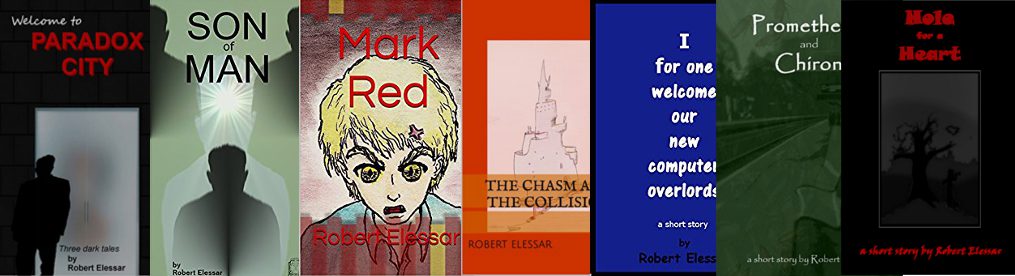
Speaking of writing fiction, last Saturday I wrote a post in which I reminded people of the YouTube “videos” of me reading the first nine chapters of The Chasm and the Collision, as well as three, I think, of my short stories.  I don’t know if anyone has listened at all, but if you have, I would greatly appreciate any feedback you might have to offer, and if you’re interested in having me read any more.

Anyway, because I posted about it, I decided to reread that book, and I’m not quite halfway through the reread—I’ve been interspersing it with reading the latest Richard Dawkins book, Flights of Fancy, and then I’m reading Emmy Noether’s Wonderful Theorem, which I got after mentioning her earlier this week.  I think CatC has stood the test of time, at least for me.  I don’t feel too uncomfortable recommending it as a family-friendly book, a “fantasy” adventure for the young and the not-so-young alike.  I don’t know if it’s my favorite of my books or not, but I like it.

I like most of my stories, really, which is good, because it’s hard to tell if many other people even read them.  If anyone has read any of my books, having bought them from Amazon, I’d really appreciate if you’d rate them.  I’m not asking you to write a review—I know that can be a pain—but you can give it a star rating with only the click of a mouse or the tap of a finger.

I try to remember at least to rate every book that I read, but only once I’ve finished them.  That probably biases my ratings toward the higher end of the scale, since if I dislike a book enough, I’m not going to finish it.  But, really, I don’t know if I’ve ever read a book that I’d give one star, not even Swan Song, which I did not finish.  Somebody worked for a long time writing each and every one of those books, and the mental effort is not small.

Also, if there was a book so bad (to me) that it would be likely to give it one star, I think I’d recognize ahead of time that it wasn’t something I was going to like, and just wouldn’t buy it.  But, if you have read any of my books and think they only are worth one star, then by crikey, rate them one star.

I kind of wish I felt like writing, because both Outlaw’s Mind and The Dark Fairy and the Desperado are well begun, and I like both stories.  I’m a bit more attached to the former, partly because I’ve been working on it longer (though DFandD as a story idea is quite a bit older).  If anyone would be interested, I could post at least the beginning bits of the latter story here, like I did with Outlaw’s Mind, so you can see how it is, but I haven’t edited it at all (except the quick reread of the previous day’s work before writing on any given day), so it may be quite raw.

Seriously, though, I doubt there’s anyone interested in any of it.  I don’t know why I’m wasting my time.

Not that there’s anything else to do with my time but waste it.  I certainly have nothing useful to do.  Every day I feel like I want to slice my own skin off, or beat myself around all my major joints with a hammer, or maybe just break and burn everything I own.  Yesterday, at a frustrating moment, I honestly came perilously close to smashing the guitar I have at work, but instead I was able to take some of my stress out by just snapping a pen in my hands.  It was a good snap; it broke into four apparent pieces, one of which I haven’t found.  I guess it went flying.

Sometimes several times a day, on web searches and on my phone browser and in my contacts, I keep looking at the site and the numbers of the suicide prevention hotline.  But I can’t bring myself to use it, not after what happened to me last time I did.  I really don’t want to be handcuffed or locked up again, not ever.  I tried very hard all my life to do and be good and to do “right”, or at least not to do “wrong”, to live a life where I wouldn’t have such things happen to me, and yet they did anyway, and I lost everything I had that I hadn’t already lost.  I don’t want a repeat of that.  It’s not fun.

Also, honestly, I feel like I don’t have any right to ask for anyone’s help or to use any public resources (or private resources) to help me, though I need it desperately.  I don’t have anything to offer in return.  I don’t really think I’m worth saving, and I don’t think anyone else really thinks I am either.  It’s certainly unlikely that anyone will pine for me when I’m gone.

Well, that’s enough of that.  At least, for what it’s worth, I don’t think it’s going to go on for much longer.  I’m barely getting through each day, frankly.  But the days do seem to last for such a long time.  That’s that subjectively confusing sense of duration I mentioned earlier.

I do hope that all of you are doing okay, and that you’re in the company of friends and loved ones, and that you enjoy doing things with them, even boring, everyday things.  Hold onto that shit.  Seriously.  Nothing else is as important.  Probably.  Though, what would I know?

TTFN

[Apologies, but there is no picture today.]

Screams that last long enough just end up sounding like murmurs

It’s Tuesday again, the day after Labor Day.  I wrote a surprisingly long post yesterday, considering I didn’t have anything at all in mind when I started.  Today, I’m not so sure.  I barely feel able to say or do anything at all.

The coworker with whom I share duties at the office is scheduled for surgery today, apparently, and he won’t be back at the office for a while.  This means I’m going to be doing extra duty, so to speak, for at least a few more weeks.  In a certain sense, that’s fine, because I don’t really mind working hard, and I want him to be okay and everything.  It’s not like I have anything better to do with my time.  On the other hand, I really just want to be able to “disappear”, if I feel that I have to, without causing too much inconvenience for other people, at least for people I like and/or with whom I work.

This coworker of mine has a new baby, and he (the coworker, not the baby…the baby is a girl) has been working a second job part-time at nights to make extra money, since his wife can’t work right now, being rather immediately post-partum and, of course, having a baby of whom to take care.  I had figured that, well, if I’m gone, then he can just take up more duties and a bit more time at the office, and he can make somewhere between his current pay and double his pay, or something like that.  Anyway, he would be ripe for a raise, especially since I wouldn’t be getting paid anymore.  That would be useful for him and his family, at least.  And, after an initial shock, I don’t think anyone at the office would actually miss me much.  It’s not as though I’m a pleasant or fun coworker.

But now I’ve got to push back at least some potential plans, and it’s very frustrating.  Still, there are 16 days until September 22nd, which is Bilbo’s and Frodo’s birthday, the day that Frodo sold Bag End to the Sackville-Bagginses and headed off on his quest to destroy the ring.  I’ve thought that would be a good day for momentous events to take place or at least to begin—momentous for me, anyway.  I don’t think anything I do will matter to anyone else in the world at all, except perhaps as a cause of a passing “huh,” followed by an oblivious carrying on with normal, day-to-day activities.

I’m tired.  I’m really tired.  I don’t have any good reasons to keep pushing myself, even though I continue to do it.  It’s madness; and though I’ve always been a bit mad, to say the least, I am very tired, and have diminishing motivation.  Right now I’m only moving at all because of habit, but maybe it’s a bad habit.  I don’t know.  I only know that it hurts, physically and otherwise.  Everything hurts.

Of course, we can fall back on the quote from The Princess Bride, that “life is pain…anyone who says differently is selling something.”  I would quibble with that statement, taken on its face, though that might surprise some people.  It isn’t correct to say that life is identical with pain, as the statement seems clearly to imply, particularly with the spoken emphasis on the word “is”.

I would say, rather, that life requires pain.  Without a sense of pain, living things would not avoid damage and injury, or death for that matter.  All life—even artificial life—that lasts for any considerable time must have some equivalent to a sense of pain, and it must be potent and unpleasant and very difficult to ignore, like a fire alarm.  And, like a fire alarm, it should be more prone to false positives than false negatives.  You would prefer your alarm to go off when you merely burn the toast than to have it less prone to go off during a real fire.

But there must be a differential.  If life was merely a constant, steady state of pain, then there would be no impetus to do anything at all.  The pain of hunger must be relieved, at least temporarily, by a good meal, or else no one will bother eating.  The pain of exhaustion must be assuaged, at least partly, by sleep, or else no one will find any reason to rest.

That’s the problem with chronic pain, really.  Our ancestors evolved the ability to feel pain in circumstances in which it could, for the most part, serve some benefit.  But in the modern world, we survive injuries that would have led to immediate or at least relatively short-term death in our ancestors.  But our nervous systems can’t be updated in real time to adjust their settings to the fact that, hey, you don’t actually have any debilitating or dangerous thing happening to you right now, so you can stop sounding the stupid alarm.  We can feel pain that lasts for years and even decades, and yet it doesn’t directly kill us.  That’s to say nothing of psychological pain, which also can last for a long, long time, and at times can feel eternal.

The whole system is not in equilibrium, so we shouldn’t be too surprised that it’s very maladapted in many ways.  It may never reach a long-term equilibrium again.  If technology and science keep advancing, if humans expand beyond this planet and from there spread out further, the state of life will be in constant flux, and it will never be able to reach a stable point at which things settle out, at least not for a long while.  Maybe that’s good; it depends on your criteria, I suppose.

But it means there’s no present, reliable, durable solution to pain-without-purpose, both physical and psychological.  If anything, it just keeps going and often growing.  I am stubborn, and I have a strong endurance, whatever that means, but it is finite.  Even mountains can be worn down in the end.  And I am no mountain.  Not even a mountain of doom.