“Father snores as his wife gets into her dressing gown”

It’s Wednesday now, in case you were wondering.  Yesterday during the day I felt very much as grim and gloomy as my blog post in the morning, if a bit less angry.  In the evening, though, I stuck to my plan to walk back from the train to the house, and I talked to my sister on the phone while I did.  That’s more than seventeen miles of walking in the past few days.  It helped that it wasn’t raining at all, and the evening temperature, while far from cool, was not as hot as it has been.  Also, there was something of a breeze blowing.

My new boots are working well; I had no blistering or worsening of pain or anything of that sort.  Only after I took them off did I feel that there was a very slight irritation in a spot on the ball of my left foot.  There’s no visible sign of anything, and since I’m going to be resting from long walking today, it should have ample time to recover from whatever minor issues it has.  I seem to be having, just maybe, a tiny bit less back pain‒or at least fewer bad exacerbations‒than usual, as I get in better condition and (I think) lose a bit of weight.

It’s a good start, but I’m a long way from being the way I wish I were, in either direction.

We had a heck of a day in the office yesterday, being very busy and with many successful events, so to speak.  That’s always a good thing, at least ceteris paribus.  There were, however, several times when I got stressed out* because of people not following the protocols or leaving out stupid things‒like a customer’s zip code, for instance!  Sometimes they don’t even put down the state, or they’ll write down what’s supposed to be the email address, but it seems to be only whatever must have come before the @ symbol.  It’s as if they imagine there’s really only one email server.  I know Gmail is big, but there are many others.

These people are almost all younger than I am.  They have grown up with this technology firmly in place all around them.  How is it that they can fail to know the basics of email?  It’s frankly astonishing.

I just realized it’s my father’s birthday today.  He knew more about computers than I, right up until the day he died, probably, but then again, that was his profession.  He certainly used email before anyone else I know.

He was a smart guy, and he worked hard.  If he had grown up somewhere other than a blue collar factory town, he probably would have done even more than he did with computers.  Of course, it’s hard to tell for sure; when you change one thing, usually many other things change as well.

He did all right, anyway.  He and my Mom, who had known each other since well before they were married, stayed together until he died.  I think it must be really nice to have one constant, steady and reliable companion for a lifetime.  Of course, in such situations, it’s often the case that, once one dies, the other soon follows‒which was the case with my parents.  That’s not a horrible thing, really, to be able to wind down and cash out, once one’s spouse is gone, because life just isn’t worth nearly as much without them.  In some ways it’s touching.

Living alone, and not having any good skill or ability at making new friends or new connections, is not touching.  Then again, most people are just frustrating and bizarre.  I don’t exclude myself from this judgment, even from my own point of view.  I usually find myself terribly unpleasant.  At least I’m familiar with myself, but that doesn’t necessarily mean I like me.  Most of the time I don’t.  And yet, as I’ve said before, there’s certainly no one else I’d rather be.  So I’m in a difficult circumstance.

There are, it seems, ways around all that.  But they require some courage, so it’s taking me time and effort to work my way up to it.  I certainly have no interest in trying to maintain the status quo in the absurd and pointless game of my daily existence.

People follow all these rules and customs and mores, but they’re all just ad hoc inventions, just crap that fell together all on its own.  And yet, people treat them as if they are important, just as they seem to think of the people in government as somehow different from themselves.  Would that it were the case.  But the people in government‒making laws, making decisions, making judgments, participating in bureaucracies and the like‒are all just flesh and blood creatures that eat and excrete like every other living thing.

Don’t be in too much awe of any human, or frankly of any other kind of creature, real or imaginary.  You would be a fool, in general, to revere any government figure much.  Most of them are narcissists and opportunists of one stripe or another, because that’s the sort of person for whom roles in government tend to select.  Often they are also self-righteous and hypocritical.  And yet, other humans beings who are no brighter (or dimmer) than their so-called leaders will follow and sometimes come near to worshiping such people.  It’s all rather pathetic.

Humans‒you can’t live with ’em, you can’t eat ’em (too many germs and toxins).

Anyway, that’s enough for now.  I’ll give you a break after yesterday’s quite long post.  All bitterness aside, I honestly wish you well, and I hope you have a good day.

And Happy Birthday, Dad, wherever you may be, even if you are nowhere but in the past.  You did a pretty good job, and you certainly took what you did seriously, seeing fatherhood as a duty, not as a privilege.  Would that more people would have that sort of attitude.  It wouldn’t solve all the world’s problems, but I suspect it would make many things better.


*I even had minor chest pains at one point.

Apologies, but this is a much darker and more erratic post than yesterday’s

I did not walk to the train this morning, because I’m planning to walk again this evening, on the way back to the house from the train station, and I don’t want to push things too fast and give myself frustrating negative outcomes.  Of course, I’m quite pleased to note that I’ve appeared to suffer no negative physical outcomes from yesterday’s walk at all.  My body appears to be adapting.

My body, that is, by which I mean everything outside the blood-brain barrier.  I guess I had a sort of negative outcome in that I got a slightly giddy feeling after my walk‒I think you could probably recognize that fact in my post yesterday, which was written starting right after the end of the walk.  It was a low-grade version of a runner’s high, which I used to get quite wonderfully when I was running regularly.  How is that a negative outcome, you ask?  Well, it’s quite temporary, unfortunately.  It lasted a few hours, but then, by the time work had been underway for a short time, it faded and disappeared, and I was left feeling thoroughly down and grumpy and gloomy.

I know that if I had eaten or drunk something with sugar or starch or whatever, it probably would have perked me up briefly‒probably more briefly than the exercise high‒and then I would have felt physically much worse afterward, and my energy would be lower, and I wouldn’t have the capacity to do my walks or anything of the sort for a while.  I know this; I’ve done those experiments, with as much rigor as I could bring to bear.  So, all the good feelings I have at ready disposal are short lived and have rotten side effects or withdrawal symptoms.

It’s quite frustrating.  But then again, nearly everything in my day to day life is frustrating.

For instance:  I’m almost due to renew my state ID card, and I tried to access the online system to do so, but it’s different than it was when I did it last (several years ago).  Though technology has advanced a great deal since then, the website for renewing IDs and driver’s licenses in Florida has become shit.  Anyone out there with any inside input with the people responsible for such things, let them know:  that website is shit.  SquareSpace could’ve done a better website for you 12 years ago, and I know because I used them.

Anyway, it also asked various questions to try to confirm one’s identity, but they were bizarrely worded, making it unclear what the correct answer should be, and also asked about things like what previous address was associated with this ID.  I think my previous address was at the work release center‒I certainly haven’t moved since then except to the house where I am now, because if I move (at least within Florida) I’m supposed to register my new address with the state, since, you know, I’m an ex-felon and they need to know where I am in case I’m prone to further felonies and all that bouncing bullshit.  But I wasn’t sure about the correct address, or the right answer to some other questions, and so wasn’t able to log into the system.

I swear, I am often tempted just to buy a bunch of bottles of charcoal lighter fluid and go to the Palm Beach courthouse, sit in front of it like a good Buddhist monk, pour the fluid over myself and set myself on fire.  Maybe I could livestream it with a message and a protest about things like the extortionate nature of the plea bargain system, and the absurdity of a criminal justice system that allows private lawyers of any kind‒which means that the affluent-to-wealthy will always have a better chance of being found not guilty, while the more or less indigent* are given to the hands of competent and hard-working but overworked and underpaid public defenders**.  Then, to save themselves the trouble of actually having to prove a case in court, the prosecutors offer some “plea bargain”, which includes the threat (yes, of course it is a threat) that if it’s not accepted they’ll pursue the greatest possible charges with the greatest possible penalties they can achieve.

And, of course, if the prosecutor loses this game of chicken, and they somehow fail to convince a jury that even one of their thirty or forty dubious-to-confected charges is true, then what?  They lose a case.  Part of the job.  You win some, you lose some.  Next!

But if the poor (in multiple senses) defendant loses****, well, he could face a minimum of fifteen years, by statute.  He would have no chance to see his kids before they were in their twenties!*****  So, though he has never willfully or willingly attempted to traffic in controlled substances in any sense, but was honestly (if naively and possibly “neurodivergently”) trying to help other people suffering from chronic pain, he decides to take the plea bargain, which will include the extensive time he has already served, and fuck what the legal system or society at large thinks of him.

He knows he’s innocent, that he had no mens rea whatsoever.  He knows when he was in that pain management practice that he even asked the PBSO officer who did inspections if there was anything that the practice for which he was working was doing wrong or what have you, because he didn’t want that.  He just wanted to try to help people who were in pain.  The deputy made no mention of anything.

So he took the plea.  He did it because he was threatened…by the prosecutor.  And prosecutors have terrible power, a great deal of it‒they also work with the police, as colleagues‒and in the course of their business, they destroy countless lives, with little to no risk to themselves.  The only saving grace for them is that, for the most part, I think most of them really do mean well and want to do good.

But meaning well‒believing you are right‒can still be dangerous, often far more dangerous than psychopathic malevolence and selfishness (My own failures while meaning well, as described here, at least mainly blew up in my own face and didn’t do too much collateral damage).

Psychopaths tend to try not to cause themselves too much harm or pain.  It’s people who are moral and tend to moralize, who believe that they are right, who are willing to sacrifice the lives and comfort of others for some imagined “greater good”.  Assholes.  Idiots.  Pathetic, delusional, driverless semi-trucks full of explosives and rotting garbage is what they are.

Anyway, that’s enough for today.  I’m sorry it’s swerved so far from yesterday‒but yesterday’s post doesn’t seem to have been too popular, anyway.  No one much likes to read about relatively pleasant times or thoughts (me included); the dark stuff is much more gripping, and that’s true for good, sound, biological reasons.

So, just to keep my options open, I am ordering and buying a decent supply of charcoal lighter fluid.  It wouldn’t take very much to get the job done.

Have a good day.  Please, if you can’t do anything else for me, please, at least have a good day.  Somebody should have one.  Why not you?


*Which I was, certainly after waiting in jail 8 months before being bailed out.  Remember, I had been working locum tenens after “temporary disability” and chronic pain and failing to be able to keep up with a few other positions, due to my back injury/surgery and pretty bad depression, even for me.  I’d been off work for more than a year and a half, maybe longer, before restarting, and I ended up giving away a fair amount of whatever I brought in.  I was never great at managing my life and finances and stuff like that.  This may be related to my possible ASD, I don’t know.  I’ve never been very good at caring for myself, though I’m okay at doing it for other people.

**Prosecutor’s offices also tend to have much higher budgets than public defender’s offices, a fact which certainly does seem to fly in the face of the supposed “presumption of innocence” hypocritically spouted by Americans who have never had the experience of a misfiring justice system***.  Imbeciles.

***The fact that private defense attorneys are allowed in the criminal justice system, by the way, contributes to  the fact that there are far more black men in prison than is predictable by population rates.  It is well known that the mean and median wealth (not to be confused with income) of black people in America is much lower than that of white people, for clear and obvious historical reasons.  Well, wealth is what you dip into if you need to hire a top-notch defense attorney‒very few people have the income to afford such things.  So, the criminal justice system, by allowing private defense attorneys, stacks the deck even further against the economically impaired, which disproportionately includes all minorities, and particularly black people on average, even if there is no active racism in any of the people or in the system itself.

****Because when a prosecutor throws all sorts of counts of things at the defendant, charging any prescription someone writes, for instance, as a count of “trafficking”, then jurors are going to be inclined to think that, if there’s so much smoke, there must be at least a little fire, no matter how much it flies in the face of the character the defendant has shown his entire life (jurors don’t know about the stage-effect smoke machines working behind the scenes).  And when the defendant has a bit of a wooden face and a monotone voice and isn’t good at expressing his emotions or even recognizing them in real time, but tends to be analytic and logical and rather esoteric, he’s unlikely to elicit sympathy from jurors.  So I was told even by my own attorney and her supervisor, among other things.

*****The idiotic irony here is that, despite the plea bargain, he still hasn’t seen his children so far since then, anyway‒by their wish and request.  So, he (I) might as well have just gone to trial, even if it might have meant spending fifteen or more years in prison.  What’s the difference?  Prison was not significantly worse than my current life.  I might even have written more books and stories there.  Maybe they wouldn’t ever be published, but that wouldn’t do much to change the number of people who have read them.  It would be no loss to the world, certainly.

Walking and thinking of the ups and downs of knowing what is or isn’t true

It’s Friday, but that’s not really a big deal for me, since I’m working tomorrow.  Honestly, though, the difference between leisure time and work time for me anymore is mainly just where I happen to be, since I don’t find any significant joy in either situation.  There’s not much I can do about that, other than just lay down and die, which has its appeal.

I walked to the train station this morning, having walked very little yesterday.  I made good time, and my ankles seem to be okay, more or less, which is nice.  I listened to parts of a couple of old podcasts while walking, one by Sean Carroll, the other by Sam Harris, and each one led me briefly to make a voice recording of a thought that came to me at the time.

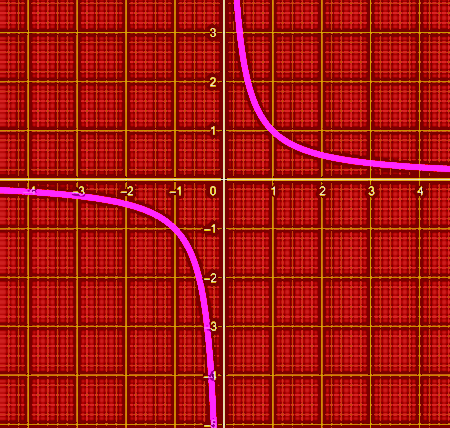
First, the Sean Carroll one led me to make a rather bad play on words:  “It’s no exaggeration that to say that y equals one over x is to be speaking hyperbolically.”  It’s a silly play on the fact that “hyperbolic” can refer to an exaggeration or to the mathematical shape, a hyperbola.

Hey, I’m be here all week.  Make sure to tip your servers.

(Should you tip your local area network, though?  That’s a trickier question.)

So, that was the silly thought.  The more serious one came as I listened to Sam Harris’s podcast with Nina Schick, the author of Deepfakes: The Coming Infocalypse, in which they discussed the advent and potential impacts of the increasing ability to make (and the decreasing cost of) convincing simulated representations of real people’s voices and appearances.  Of course, among the potential issues being presented was that this will actually increase the deniability of inconvenient events for political and other public figures, but at root, to me, it brings to mind something I wrote some time ago in a blog post on the problem of attribution.

When one quotes a person who said something one thinks is worth repeating, it’s generally considered appropriate to give an attribution, to credit the quote.  But even before the advent of possible deep fakery, the tendency to attribute quotes is a problem because humans are so idiotically tribal.  If you say a quote comes from Karl Marx or from Ayn Rand, you will automatically gain free credit and presumptive agreement from one group and automatic dismissal, disdain, and even hatred from another.

That’s stupid.  It’s not who says something that makes it true or valuable or worthy of note; it’s the actual thing being said.  This is one of the reasons I dislike formal debates, and the techniques of rhetoric in general.  They all boil down to primate dominance displays‒manipulations rather than actual, useful reasoning and sharing of the best available information.

I remember back in the late 90s, when people were getting all excited about the burgeoning web and internet, and about how they were going to make information so much cheaper and more readily available.  I agreed that would be the case, but I also had real misgivings, because I knew that also meant that misinformation, disinformation, and noise would become ever easier to disseminate.  And now, of course, people can “see” things online that never took place, and which nevertheless will influence their sense of what is real.  But reality does exist, outside of any perceptions or biases, though we may always only imperfectly apprehend it.

I think people shouldn’t worry nearly as much about who said something as about what exactly was said and whether or not it was true or plausible or reasonable or rational.  I suppose that being aware of a source’s credentials and track record can make one better able to decide whether to pay any attention whatsoever to what they say or write‒we all have only finite time and attention‒but even so, you should think rigorously about what someone says, no matter who says it.  Your favorite person can be (and is) wrong about many things, and your most hated enemy can say things that are correct (sometimes about you).

Hitler and Stalin were both quite aware that 2 + 2 = 4 and that the sun comes up in the east (so to speak), but the fact that these odious figures accepted such truths doesn’t make the facts any less true.  And the fact that the son and nephew of beloved historical political figures claims (miserabile* dictu) that vaccines cause autism and Wi-Fi causes cancer does not for a moment gainsay all the research that has demonstrated that they do not and that it does not.

Maybe people should just stick to print media and perhaps even only to printed print media.  At least there’s some cost to its production and that might weed out some of the riff-raff.  Though, come to think of it, maybe it wouldn’t.  It’s not as though there haven’t long been whole bookstores full of psychic and supernatural bullshit, and large sections of such material selling quite well even in reputable emporia.

Maybe people should just use online media of various kinds as entertainment but not as sources of information and evidence for too many things.  Then again, there are very good science programs and other kinds of information online that are wonderful to behold, and that can be informative and thought-provoking.  Even some blogs are quite good (this is probably not one of them).

I guess, maybe people should just try to think carefully and rigorously, and to recognize their own fallibility and that of their idols, as well as the potential for their “enemies” to be right sometimes and to be often other than pure incarnations of evil.

Maybe pigs should grow wings and take a skiing trip to Hell.

I’m not optimistic.  But hopefully I’ll be dead before everything goes to shit.  Unless that’s already happened, and this is the dystopia.  After all, how does one know one is in a failed society from the inside?  I suppose there are objective facts to be noticed in such a case, but that’s the heart of the problem.

Heavy sigh.

1 over x adapted


*That was deliberate, not a typo.

Bouncing tangents on walking, boots, pain, technology, science, politics, and probably other random stuff

Well, here I am again, writing this blog post at the train station after having walked here this morning.  I had intended to do this wearing a new pair of shoes of the same make and model (so to speak) as the pair I wore yesterday, but that pair, which was supposed to have been delivered yesterday evening, is instead delayed until this morning, after 8 am, which doesn’t do me any good whatsoever.  Anyway, it forced me to do an experiment walking in my boots this morning, which is what I did.

I had switched from my boots because I feared that they might have been responsible for last week’s rather extreme flare-up of my pain.  However, as I changed from them, I also changed chairs in my office.  That’s not a good way to do science, obviously:  varying two parameters at the same time.  It makes it hard to tell which one‒if either‒is having the dominant effect, if indeed there is one.  However, when dealing with severe exacerbations of already-maddening chronic pain, one can easily become impatient.

I’m not excusing it, but I am explaining it.

Anyway, I have come to the suspicion that, just maybe, it wasn’t the footwear at all but mainly the chair that was making things worse.  And now I’ve been forced into doing a better experiment.  If, after today, my pain gets significantly worse, that increases the credence that the boots are the problem.  However, if my pain level is stable‒and certainly yesterday’s walking didn’t seem to exacerbate it‒then maybe the boots aren’t causing any trouble.

I will say one thing about how quickly I’ve gotten into a state of readiness:  though I wore boots, which are heavier than the shoes I wore yesterday, I made slightly better time on my walk today.

Oh, I forgot to note that today is the first day of August‒named for Caesar Augustus (Née Octavian) who followed Julius Caesar (after whom July was named).  Welcome.  Summer is almost half over, at least by dates.  There’s nothing particularly interesting about the start of this month, other than rent and other bills being due, and the prospect of facing another long, dreary month with nothing interesting happening, other than bad things out in the world, which always seem to happen, anyway.

Of course, the US is more and more comically and tragically stupid than it used to be, but that’s been happening for a long time.  I remember when they canceled the Superconducting Supercollider in the late nineties, and I thought to myself, “That’s it, the United States’ days of being an intellectual and scientific and progress-oriented world leader are coming to an end.”

It wasn’t just my physics bias that led me to that conclusion, though that had its impact.  It was mainly the idea that, before, a large part of the ethos of the country seemed focused on constant improvement and leadership, in the sciences, in the arts, in technology, and in prosperity in general, including the traditional “American dream”.  But it turns out‒or so it seems‒that all of that seemingly intrinsic love of education and innovation and hard work was simply born of the post WWII era Cold War competition with the USSR.  We didn’t love these things for their own sake, not in general, not on average.  We just wanted to outcompete the “Godless Communists”.

Indeed, after the Soviet Union fell, the religious right poisoned the Republican Party more and more‒or so it seemed to me‒and turned their hostility inward on their own nation.  And some of the people on the left, without having to worry about being compared to the US’ enemies, became more leftish and pseudo-religious in their own Orwellian ideas.

Of course, most people were, and probably still are, much more centrist/moderate than you would guess, based on people in the news.  But now that we have no opponent against whom to unite, ideologically and physically, we can turn on ourselves more and more, and the most extreme voices aren’t curtailed out of the necessity of unity against a serious enemy.

China doesn’t present the same kind of opposition as the Soviets did, at least in our collective mind, probably because they’re far away and also they are our trading partners, and aren’t of European descent and are culturally different enough to avoid a metaphorical uncanny valley problem.  Also, they’ve not really openly declared any ideologically motivated intention to “take over the world” or to “bury the West”, at least not as far as I’ve heard.

That’s good, as far as it goes, of course.  The Cold War was dreadful;  I honestly grew up thinking that civilization was going to be destroyed by nuclear war at any moment.  When I was a teenager, my friends and I honestly and seriously thought about what we might do to survive after WWIII.  It wasn’t a joke.  And in my late teens, as part of a youth orchestra, I traveled to Lübeck, on the East/West German border, and got to see the fence line, the barbed wire, the mined “no man’s land” area and the machine-gun towers on the Eastern side‒not for keeping people out, but for preventing people from leaving.

That was pretty scary.

I don’t have high hopes for the future of the USA, but I don’t have high hopes for the rest of the world, either.  Our greater technology and abilities haven’t left the average person more respectful of science, because they don’t even understand the basics of the science that dominates almost every aspect of their lives.  Clarke’s Third Law states that any sufficiently advanced technology is indistinguishable from magic, but I wouldn’t have thought it would apply to the technology we have today.  Yet many people seem as incurious about real science‒and mathematics, and philosophy, and other fields of intellect‒as they would be about a world run by wizards.

There are flat-Earthers out there, for crying out loud, even though the refutations of that hypothesis are trivially easy to recognize, and many have been known for thousands of years!  There are people who have been so protected from deadly diseases by successful programs of vaccination (and sanitation and so on) that they actually think vaccines, and those who create them, are the enemy.

It really is depressing.  It’s like the fall of Camelot‒and I don’t refer to the JFK White House culture that people called Camelot, but the mythological Camelot related to the legend of King Arthur.  Though, come to think of it, RFK, Jr is a worthy spiritual heir of Mordred, in being the nephew of the man who declared the intention to have America land on the moon and yet who himself is now working toward the corruption and downfall of all for which his progenitors stood.

Oh, well.  I guess if the people in America and the rest of the world don’t wake up and drink some strong, black coffee and take responsibility for knowledge and growth and improvement, they will get what they deserve.  If they don’t change direction, they will end up where they’re going.  Unfortunately, they will take helpless innocents in vast numbers along with them.

Anyway, that’s my series of tangents for today, like a random plot of the scattering of elementary particles.  I hope it’s been worth your time.  Have a good day.

Here we go again.

It’s Monday again.

I don’t know how we keep allowing this to happen, but it keeps on doing it, over and over again, from the Monday on or immediately after the day we’re born until the last Monday on or before the day we die.  I don’t know about all of you, but I don’t really want to go back to work.

I’ll try to make this a comparatively short blog post if I can, unlike the weird one I did on Saturday, where I got off on a tangent about the number of possible blog posts one could write given a thousand words of length and a limited number of potential words after each previous one.  If you like that sort of thing, and you didn’t read it yet because you don’t read blogs on the weekend, do feel free to check it out.  I was writing off the top of my head, and I only briefly fact checked a few quick items, so there could be errors in specifics, but I think the reasoning was okay.

Yesterday, on the other hand, I suffered from ill-effects of something I had eaten Saturday, or perhaps some combination of things.  Anyway, I was feeling quite poorly, though thankfully whatever it was seems mostly to have worked its way through my system.  Fingers crossed!

Oh, and I don’t know if anyone anywhere has noticed, but for my last two blog posts, I added “tags” which are supposed to help people find what you write if they’re looking for material on given subjects.  It’s a part of that whole “search engine optimization” thing that’s been a big deal on and off, but which must surely change faster than even fashion and politics, given how the various things operating and interacting on the internet and the web are changing so quickly, and how new things become a big deal so quickly, and presumably will be altered and will warp and distort and mutate if they survive at all.  Remember Myspace?

And, of course, the advent of the various GPT-type things and their use in searching and in creating will no doubt change not only the structure but the content of the cyber-world.  Heck, soon most of the internet and web could be things written by LLMs having cobbled stuff together by interacting with other LLMs, and the humans who still go there won’t even realize that the base of the structure, founded in reality initially, has long since washed away, leaving only a cobweb of nonsense built on earlier layers of nonsense built on earlier layers of nonsense and so on.  And, unless there is some collision with actual, practical requirements of reality that forces natural selection to act on such things, it could go on existing for a very long time, all the while signifying nothing.

Of course, unless it is forced to solve problems for which there can be real world right and wrong answers, with consequences, I don’t know how it could develop into any kind of actual general, self-directed intelligence.  But I haven’t really thought about it all that much, and I am no expert.  I have read and listened to some of the experts in the area, and some of them impress me with their reasoning, and some strike me as rather foolish and simple-minded,  seeming to miss many points about how things can and do go wrong in reality.

I suppose it doesn’t make much difference what I think.  Anyway, servers produce so much waste heat and they use so much power, the whole WWW may become increasingly unworkable as temperatures rise and use of resources needs to be curtailed.  It may be more energy efficient and climate-friendly to build artificial intelligence using actual nerves, genetically engineered and powered by photosynthetic cells that remove carbon dioxide from the environment and are vastly more energy efficient than electronic circuits.

What are the odds that humans will avoid total catastrophe long enough for those few, those happy few, creative and intelligent individuals to figure out solutions to various problems and implement them?  Will the demagogues and the polarizing political fashionistas wreck everything too soon for it to be saved?

The clever and creative people are very impressive, and they never stop trying if they can help it, but it is much easier to destroy than to create.  The 2nd Law of Thermodynamics makes it just so easy for things to fail.

That’s not because the second law is some force acting on everything, some quantum field or curvature of spacetime.  It’s much more fundamental than that.  It’s simply the mathematics of probability and statistics, and it will apply in any system in which mathematics applies, which seems likely to be any possible universe.  There are simply vastly more ways for any system to be “disordered” than there are for things to be ordered in any particular way one might desire.  So, even the most well-constructed things will fall apart; even the most carefully balanced center cannot hold forever.

I guess I’m not an optimist, am I?  Nevertheless, I’m not a complete pessimist.  I think it is possible for the clever, creative people to create faster than what they create is destroyed, and to carry the mass of humanity and life itself forward into a future of cosmic consequence, the nature of which we cannot predict, because to predict it, we’d have to already know the things we’ll need to know to get there.  It’s possible.  But there are no guarantees, and there are so many ways for it not to happen.  It will require tremendous care by so many people‒as it has all along‒to avoid utter dissolution.

I don’t know if the odds make it worth the effort. But the clever people often don’t let that stop them.  And though most will fail, it doesn’t take very many clever, creative successes to move the world along.  They are just that powerful.

Maybe I’m more optimistic than I like to let myself believe.  That would be disgusting, wouldn’t it?  But I’m not dead yet, even though I often wish I were; I haven’t killed myself yet, though I think about it so very often and feel so bad so much of the time.  I’m stubborn, I guess.

I could really use some help with that‒not the stubbornness, but the depression and anxiety and pain stuff‒but I don’t have the energy and I don’t like myself enough to seek it out and to do anything more than cursorily try to help myself.  We’ll see how long I last.  Not long, I’ll bet.  But I’ve been wrong before.

With that, let’s quit this post.  Have a good week.  If I’m still alive tomorrow morning and going to work, I will grudgingly and grumpily write another blog post.  Damn it.

Something for the rag and bone man

It’s Friday morning, July 14th.  I strongly considered walking to the train station this morning to try to get back into that habit, since I’ve been sick this week, but then last night I had an especially horrible night’s sleep.  I think I got maybe an hour or an hour and a half total of sleep, not continuously, but spread out over the time between 10 and 3.  Now I feel surreal and slightly hallucinatory.  I really don’t even want to go into the office, but I’ve already missed one day this week (Monday), and I’m off this weekend, so I’ll try to trudge through today.

I don’t know what to do about this.  My sleep and other issues seem to be worsening, and it’s getting to the point where fewer and fewer things keep me wanting to do anything.  Most days, honestly, I half-wish I were dead, but today it’s more than half.  I’m so tired; I don’t know what to do.  But I’m not sleepy.

I think tonight, even though it gave me some trouble last time, I’m going to take one of those melatonin, as well as two Benadryl, just to see if it helps at all.  The research apparently shows that melatonin doesn’t do much other than to reset one’s sleep clock if one is off kilter, but maybe in some people—maybe in people with weird brains to begin with—it might help.  I don’t know.  Anyway, I don’t work tomorrow, so if I have a bad reaction and get a headache and all that, it won’t matter much.

It’s not as if I have any plans for Saturday.  I don’t see anyone or spend time with anyone, though I’m going to call my sister this weekend, and that’s a good thing.  I don’t go out or do anything interesting.  I’ve sort of half-decided I want to try to replace the inner tube in my bike and retry that again, maybe go for a ride.  That might be worth doing.  I have the necessary equipment, at least.  I don’t know if I’ll have the will to do it, but I’ll wait and see.

I had plans to talk about that second topic I raised at the end of yesterday’s lengthy post.  I’m referring here to my thought that, perhaps, having big jackpot lotteries and the like for people to play legally has actually done harm to the overall work ethic and productivity of the nation, because at least some people will console and delude themselves with the dream—and yes, it is a dream, since to a good, five-sigma approximation, no one wins the lottery—that they might get a windfall and never have to work again, and then they could get and have all the joys and comforts they envision.

I imagine—and this is conjectural—that when there is no lottery available, people can’t even dream of getting ahead or getting more comfortable other than through working hard and saving their money.

Like I mentioned yesterday, this is not something I would imagine is to blame for all, or even a lion’s share, of the diminishment of the middle class and the work ethic and whatnot.  There are many factors in the equation or the program or whatever you might call it that determines the economic and sociological structure and function of a society.

But I don’t think the lottery has been a good thing in any sense.  It doesn’t appear to have benefited public education at all, which was one of the things for which lotteries were supposed to raise money.  If anything, it might have given those in government an excuse to be able to cut some of the tax-based funding for education.

Certainly the public schools appear to have gone downhill even since I was in school, and I don’t think I’m just being a typical curmudgeon who thinks the younger generation is stupider than the youth of my generation were.  In fact, I don’t think they are stupider.  Probably they’re overall somewhat smarter—they certainly have less exposure to environmental lead than people did when I was a kid, and the general knowledge base of civilization has definitely increased.  But the education system in general appears to be much worse than it used to be, and what’s more troubling is that people seem not to care as much about education as in the past.  The respect for teachers and for schools and for getting an education in general seem to have declined significantly.

That doesn’t seem like a good way to run a society with an eye toward the future.  In fact, the future seems more and more bleak by the year.  Thankfully, of course, there are smart people out there, and some of them will be able to get educated in spite of the schools they attend, and when push comes to shove, these individuals will do their best to come up with new solutions to new and old problems, and they will carry the rest of the human infestation along with them, for better or for worse.

But if people in general were better educated—if they were taught even basic probability and statistics in high school, or even junior high, for instance—there would be much less of a market for con games such as state lotteries.  One sees people lining up almost every day in the convenience stores, spending absurd amounts of money (which they cannot afford) on slips of paper that they might as well use to blow their noses or wipe their asses.

I always told my patients that they should never make a special trip to buy a lottery ticket, because they were far more likely to be killed in a traffic accident on the way to the store than they were to win the jackpot.  I suspect this might be true even if they walk to the store, though at least then they would be getting exercise.  The odds of them getting injured are even greater than the odds of them getting killed, and in the USA, people with injuries that cause persistent diminishment of ability are going to have extra expenses and decreased productivity and lower quality of life for a long time, and our healthcare system is woefully inadequate.

And make no mistake, injuries that you have do cause chronic diminishment of your capacity—“you are still the victim of the accidents you leave”.

Nietzsche’s famous quote about “whatever doesn’t kill me makes me stronger” is just a load of bullshit.  Remember, the man died of neurosyphilis, but syphilis doesn’t progress to the nervous system very rapidly.  It didn’t kill him quickly, but it certainly didn’t make him stronger, neither physically nor mentally.  Exercise, practice, education, deliberate self-improvement—these things can make one stronger.  Accident and injury don’t tend to do that.

Not to say that a person can’t find wisdom and lessons even from horrible events, but to do that, one needs to be primed to look for such lessons in the first place.

Anyway, I probably could go on and on and off on tangents of various kinds related to this.  It’s frustrating to see people make excuses for why they don’t think they need to worry about educating their children, and at the same time to see people wasting their money on absurd gambles.  Gambling is only a winning industry for those who own the casinos or the lotteries (if them).  It is true that a very good poker player can make a living at the game, but only if there are worse poker players against whom they can play.  It’s a zero sum game.  There are no lions unless there are hinds; there are no wolves unless there are sheep.

Better to get educated, because knowledge can be shared and gained without real loss to the sharer.  Information can be reproduced now at very low cost—lower than it’s ever been before.  Education can be a positive-sum game, a mutual exchange to mutual benefit, which is the type of interaction at the heart of any functioning, productive economy.  If you get smarter, it doesn’t make me stupider; indeed, it often makes me smarter by feedback, for if you learn or create some truly new knowledge, then I can subsequently learn it.  More knowledge, more information, can benefit everyone.

But I doubt that it will.  I don’t have high hopes for the vast majority of humans.  As David Deutsch has pointed out, it certainly seems possible for the future of humanity to be a cosmically significant one, in the long term.  But there’s nothing that guarantees it.  It can easily go wrong, and most times throughout history, the production of knowledge has gone wrong, and has ground to a halt for centuries at a time and more.

Oh, well.  I’m too tired to do much but feel pessimistic about everything, anyway.  This blog is the closest thing to contribution to society that I do anymore.  I don’t know that it does me any good, though.

Anyway, I’m off to head to the train station now, for another depressing day of pretending that there is any point at all to continuing to strive to make a living.  I hope you all feel better, or at least better rested, than I do.

karloff-monster so tired

3 billion heartbeats, and what do you get?

Well, it’s Wednesday morning now, as one might expect, if one lives life linearly and ordinally, which is how I do it.  I’m writing this on my little laptop computer today, because my thumbs have been getting sore from the use of the smartphone for blogging—more precisely, the base of my thumbs and my first MCP joints on both sides hurt quite a bit.  Also, I just type faster on the laptop, and It’s easier for me to express myself, though why I ever bother doing that is not quite entirely clear to me.

I feel pretty rotten still—physically, I mean.  I still have body aches and soreness and weakness (or at least asthenia) and a general feeling of being slightly breathless.  I still had a very low-grade fever as of last night, but I checked my oxygen, which was 95-96% saturation, occasionally pushing up to 97%, and my pulse rate was in the high-90s to low 100s, a bit variable with respiration.  That’s actually slightly low for me.  All my life I’ve tended to have a rapid pulse, possibly related to the atrial septal defect with which I was born, which can affect the heart’s inherent pacemaker and conduction system because of its location.

Apparently, the average number of heartbeats in a lifetime for a human (or closely related alien) is about 3 billion.  This is more than that of most mammals, which hover a little below two-thirds that many, if memory serves.  That number is roughly consistent from shrews to blue whales.  Geoffrey West discusses some of this in his book Scale, which is really interesting, and I recommend it.  As for me, I haven’t read anything in over a week, really, other than a few blog posts.

I just did a quick calculation regarding my chronic, diagnosed “sinus tachycardia”*.  If my average heart rate were 110—which my pulse can hover near, at least some of the time—I should have lived to about 51.8 years.  I’m already slightly past that, but within the realm of rough experimental error.  If 105 were closer to my average, my expected lifespan would be about 54.3 years, which would mean I have less than a year to go.  I figured the first number by dividing 3 billion by 110, then by 60, then by 24, then by 365.25.  I then did the second one by replacing the 110 with 105 and repeating the whole thing, but it occurs to me that I could just have taken 51.8 x 110/105 and gotten the same answer more easily.

So, basically, if my pulse has been steadily tachycardic—which I can only infer roughly based on the moments in which I’ve actually measured it, since I obviously didn’t measure it in between—then I’ve already lived just about as many heartbeats as I’m expected to live, on average.

Of course, there are some big “ifs” there.  There have certainly been times when I’ve been more fit, and that has tended to slow my resting heart rate somewhat.  Also, let’s not be too quasi-mystical about all this; it’s not as though there is some ethereal hourglass that measures out not seconds but heartbeats in the platonic space of life and death.  It’s just a rough average.

If the world is deterministic, then of course, one does, in a sense, have a pre-programmed number of heartbeats before one dies, but there’s nothing about that number that would determine the length of one’s life; it would, indeed, be a consequence of the various things that determine the length of one’s life, just as would the length of that life in seconds.  It wouldn’t be a dispositive fact, merely an epiphenomenon.  It would be casual rather than causal, one might say.

This is all a bit silly, but in many ways it’s reassuring to me that, just maybe, I really have come to what will be the natural end of my expected life.  I’ve read that people on the autism spectrum have shorter expected lifespans than people not on the spectrum (the range is wide, apparently anywhere from 36 to 61 years, which seems pretty imprecise) supposedly largely due to the various difficulties with self-care and social support and the like.

One reads plenty of reported evidence that a key determinant of a long and “happy” life is the degree of one’s social support network—not necessarily its size, but certainly its quality.  Well, when one of the fundamental aspects of a dysfunction is difficulty with ordinary social communication and connection, one can expect a group to tend to have a poorer social support network and ability to self-advocate.  And, of course, the three major proximate causes of death are apparently—according to a quick Bing search—epilepsy, heart disease, and suicide.

As far as I know, I don’t have any form of epilepsy.  I do have a cavum septum pellucidum cyst in my brain, which was discovered by chance on an MRI done for other reasons.  It’s a benign finding, in and of itself, but it turns out to be slightly more common in people with ASD (the neurologic one, not the cardiac one) as does ASD itself (the cardiac one, this time, which I also had).

So, I do/did have at least one form of heart disease, though I don’t know whether it counts in the measure of what they’re describing as such causes.  I think the third thing in the list is by far the most likely cause of premature death for me, if “premature” is really the right word.  After all, my “social support network” is locally all but nonexistent, and is very limited on a distant scale.

Of course, sleep disorders—also apparently very prevalent in those “on the spectrum”—are significant impediments to a long and happy life for anyone, and my sleep has been disordered for a very long time.  As a case in point, yesterday I was so physically wiped out from work and feeling ill that I just took a ride from the train station to the house and tried just to shut off the light, take half a Benadryl, and go to sleep.  Then—to no one’s surprise, but to my frustration—I could not get to sleep until after midnight, and then I started waking up by no later than two in the morning, awakening on and off every ten to twenty minutes until finally there was no point in delaying anymore.

I don’t know why I’m discussing all this trivia.  Maybe I’m just to try to get the message out that, if I do die “young”** in the near-future, which doesn’t seem terribly unlikely, you shouldn’t think of it as something sad, as some kind of tragedy.  My life is pathetically empty, and rather unpleasant most of the time.

I would never say there aren’t people who have it much worse than I do.  Of course there are.  That will almost certainly always be true, by any set of criteria one might choose.  It’s also irrelevant.  There are people who die young who, based on the quality of their lives, would have been better off having died even younger.  And there are those who live very long lives who still could have lived even longer with great happiness and well-being, and so even after a century, such a death could be considered premature by some criteria.  Futility is in the eye of the beholder.

Anyway, I’m dragging this out, as I tend to do.  I just feel very tired, and very uncomfortable, and I don’t have any particular joy, or prospect of future joy, that makes me want to keep going and live longer.  I’m lonely and sad and uncomfortable and awkward and weird, living in a world in which I feel like an alien or a changeling or a mutant, or whatever.

Well, lets call that good for now, so to speak.  I’m going to get a Lyft to the train again today, because I’ve taken longer than I’d like to catch the bus, and anyway, I’m still just wiped out.  I’m going to try to time the train I take so that I get to my destination after the nearest CVS is open, so I can pick up some cold medicine***.  Maybe a decongestant will help me feel like I can breathe a little better.  Who knows?  But I need to do the payroll today, so at least it might help me stay awake for the time being, even if the decongestant effect doesn’t make much difference.  After that, I don’t think it really matters much.


*Nothing to do with the sinuses in one’s head, but with the sino-atrial node in the heart, the intrinsic pacemaker.  It means that one has a fast heart rate—tachycardia—but that its origin is at the usual source of the heartbeat.  It’s not an aberrant source or a reentrant tachycardia such as might occur when the conduction system of the heart develops a loop that keeps feeding rapidly back into itself and generating a truly and significantly over-fast heartbeat.  That can degenerate into more dangerous arrhythmias, whereas sinus tachycardia does not tend to do so.

**Scare quotes added because I do not feel young in almost any way, other than, perhaps, my ability to remain curious about various things in a way that seems unusual in other people somehow.  Many days I feel as if I’ve lived for centuries, but not in a cool, Anne Rice vampire kind of way.  Rather, I feel more like a mortal who has kept one of the Great Rings.  I’ve discussed that metaphor before and won’t bother going into it now.

***I did time it correctly, and the CVS was open…but the pharmacy was not, and will not be until 9 am.  Unfortunately, one cannot get real Sudafed—the decongestant that actually works without causing dangerous elevations in blood pressure—except at the pharmacy counter, and only in limited amounts, because some people have used it to make amphetamines.

This is a truly absurd and sub-moronic standard.  It’s harder for a law-abiding citizen in Florida to get a product containing pseudoephedrine than it is to get a gun, and all so the state can prevent a small minority of people from willingly taking a substance into their own bodies that no one is forcing them to use, just as some other people use beer or potato chips or Big Macs or ice cream…or tobacco.

And, of course, they aren’t actually preventing anything.  If they wanted to prevent drug use, they’d have to try to find out why life is bleak and empty enough for some people that they seek artificial sources of transient mood elevation (even though those sources are dangerous) and perhaps try to remedy or at least remediate the causes.  But, no, the same sort of people who would decry government overreach if corporate or upper-echelon income taxes were raised slightly, or if the government tried to ensure that people are vaccinated to curtail the spread of actual contagion to millions, and who would take up arms in open rebellion against any attempt to restrict gun ownership at any level, are willing to have the state keep people from using a comparatively safe medication for congestion and force them to use more dangerous ones—like oxymetazoline, which I am going to have to use, today.

The law truly is “a ass” and “a idiot”, and it’s written by people who are—and who are voted into power by—cretins and troglodytes who cannot even comprehend the nature of and the science behind the comforts and technologies which keep them alive and relatively safe.  If any readers here have any influence in this particular issue, please try to do something about it.  If necessary, just burn it all—the whole stupid planet—and let nature start over in some new state.  There are still a billion or so habitable years on Earth in which hopefully to bring an actually intelligent species into existence for the first time.

Independence Day is worth celebrating

Well, it’s Tuesday, the 4th of July, and in the United States, it’s Independence Day.  It’s often just referred to by the people of America as “The 4th of July”, rather like the holiday “Cinco de Mayo” in Mexico, but I strongly prefer to refer to it as Independence Day, because that way we are more likely to remember what is being celebrated:  The official beginning of the United States of America as an independent nation, as announced in the Declaration of Independence.

I’m a fan of the Declaration of Independence, and I encourage Americans at least to read it every year.  It isn’t very long, and if you want, you can sort of skim through the list of grievances.  But the idea of the Declaration is important.  To my knowledge, it was the first founding document of a nation that explicitly states that governments are not ends in themselves, but are means for the protection and support of the rights and well-being of the people of the nation.

I know these ideas weren’t original to the founders of the United States, but as far as I know, it was the first time they were declared, in an official document, as the reason for existence of a nation, of a government.  Not God, not kings, not some “greater good” that supersedes a person, but the rights of each individual person, and of all of them in total, are the point of a government.

And, of course, the stated “self-evident” truths are interesting:  “That all men* are created equal; that they are endowed by their creator with certain unalienable rights; that among these** are life, liberty, and the pursuit of happiness.”  Then follows the statement that people make—or tolerate—governments as a means to an end or ends; they are not ends in and of themselves, and if they’re not doing what they’re meant to do, or not doing their job well, it’s within the rights of the various people to change those governments and try to make something better, though this should not be done lightly.

Many people, quite correctly, point out that there is hypocrisy in the writing of the Declaration of Independence.  Many of the founders were slave-holders, and they all clearly had less-than-ideal attitudes toward women, and toward the rights of native Americans and so on.  This does not invalidate the Declaration of Independence, because the ideas expressed within it are bigger than any individuals of any given era or of any given outlook and set of prejudices.

The ideas in the Declaration of Independence are aspirational.  It’s not saying “this is what we are,” but “this is what we strive to become, what we think we should be.”

One does not hold it against someone if, on the day they begin a new diet and exercise regimen, they are not already paragons of physical heath and beauty.  The whole point of the regimen is to become better than one already is, and this, I think, is the spirit in which one should take the Declaration of Independence, (and the American Constitution)***.

We were not perfect then (the “we” is a bit presumptuous, since none of my ancestors, as far as I know, were in the US before the end of the 19th century) and we are not perfect now, but there is little room reasonably to doubt that we are better now than we were then, as individuals, as societies, as a civilization.

It’s going to require continuing effort, with strict rigor, to continue getting better, by whatever measure of “better” we might choose.  There is much work yet to be done.  Maybe civilization will never be perfect.  Perfection is a rather woolly concept anyway.

So it’s not unreasonable to celebrate Independence Day (though we now are quite close allies with Britain, from which nation we declared independence).  It’s not a celebration of enmity, but perhaps more analogous to the celebration of a child having left home and having become an adult in its own right.  Maybe that’s a condescending attitude, I don’t know.

But I’m a fan of the United States in terms of ideas and approaches, though there are many things about it that are imperfect.  I have no sympathy with anyone who would say, “My country, right or wrong”; that’s no better than saying, “My street gang, right or wrong.”  Loyalty should be earned, and I think that, at its root, the idea and practice of the United States, for all its faults and its continuing need for improvement, is worth at least provisional loyalty.

The USA has the capacity, and the inherent goal, to get better.  It doesn’t—at least when we are honest—claim to be perfect or divine (or even divinely inspired) or the best possible government that could ever be.  It carries, however, an implicit intent always to continue improving.  And that’s something worth celebrating.

So, Happy Birthday, USA (in the words of The Bears’ Almanac)!  Happy Independence Day.

happy independence day


*Note that here, of course, is an example of the greatest injustice in human history, the ages-long failure to recognize that the majority of humans (i.e., women) are fully human.  When I think of how many Emmy Noethers and Ada Lovelaces and Marie Curies and how many George Eliots and Brontës sisters and Mary Shelleys and so on were out there but never had the chance to become what they might have been, I want to weep.  It doesn’t seem unreasonable to suppose that the human race might be twice as scientifically and mathematically advanced and have twice as much great art and literature, if only women had not been repressed throughout the ages.  Nevertheless, we can’t hold the writers (mainly Jefferson) of the Declaration of Independence too blame-worthy, at least relative to others, in this failure.  As late as the 1960s, and in as forward-thinking a show as Star Trek, the opening invocation still said, “…to boldly go where no man has gone before.”  It took until the 1980s with TNG to correct that to “…to boldly go where no one has gone before.”  They continued to split the infinitive, however, so some progress still remains to be achieved.

**Please note the clear implication that these are not the only rights that are considered unalienable or self-evident.  Of course, George Carlin, in a famous routine, pointed out that, at least in a certain way of looking at things, you have no rights, because those rights can be withdrawn and are allowed to you by those in power.  However, this isn’t necessarily logically correct.  Just because rights are infringed, even for decades or centuries or millennia, does not mean that those rights might not exist.  From a certain point of view, all rights are human inventions, are “fictions” of a sort, but based on many reasonable foundations of morality, rights are implicit, and they accrue to individuals.

***Which, after all, contains the power to amend itself, like an AGI that can change its own code, and that power has been used more than two dozen times since the thing was created.  Inherent in its writing is the recognition that it is not a perfect document as it is, but it is an improvable document, and it can, in principle, work toward better and better government asymptotically.

Tsukiyomi no mori no ban’nin, hikage no shinshi, tsuki no tesaki ni narimashou.

It’s Monday morning again.  I can only think of two songs off the top of my head that provide fun references to the day, and I think I’ve used them both more than once, so I’m not going to do that here.  I suppose I could refer to the Carpenters’ song about Rainy Days and Mondays, but that’s a slightly gloomy and glum song, though pretty (and, to be fair, with some upbeat aspects), and I can do gloomy and glum just fine by myself, thanks*.

Yesterday was pretty uneventful, which is not a bad attribute for a day off.  I did my laundry, which was good, and I also got some rest‒I took several naps throughout the day, which, again, is good.  In all fairness, that’s pretty much what I do throughout most nights:  taking lots of short naps and waking up in between.  I even did that on Saturday night after taking two Benadryl before going to sleep.  In fact, I started having a hard time even dozing back off at about 4 am on Sunday.  But that’s just too early to be getting up and starting laundry, even for me.  So I toughed it out until about 6:30.

You’ve got to be hard on yourself sometimes.

Oh, I’m writing this post on my phone this morning, because I just felt too lazy to bring the laptop with me on Saturday.  There was no particular reason to avoid it.  I just didn’t want to bother.  I’m not sure what I’ll do today; I don’t want to force myself to decide in advance.

I’m somewhat disappointed to report that I don’t seem to have suffered any ill-effects, at least so far, of the little experiments that I began the other day.  It’s not impossible that some could accrue yet, but I think I shouldn’t get my hopes up.  It would be such a weight off if I could just start having a GI bleed or something.  Maybe I’m too half-assed about it.

Rat poison used to be primarily comprised of “super-coumadins” in diatomaceous earth**.  That might have been a useful option.  Nowadays, though, most rat poisons (I have checked) seem to be the new neurologically targeted stuff that’s highly specific toward rat nervous systems, and much less dangerous for humans and dogs and cats if they accidentally ingest it.  I know, that’s a good thing (unless you’re a rat or love rats).  But it’s disappointing if you want to have readily available options for encouraging your own self to bleed without a prescription.

Thank goodness aspirin was discovered millennia before the FDA or DEA and has never been used to “get high” by anyone***.  If it were discovered in the modern world, it would never be available without a prescription‒not in the US, anyway.  You even have to go to the effing pharmacy counter to get pseudoephedrine for your cold and allergy symptoms, because some people turned a certain amount of it into amphetamines of one kind or another.

Makes perfect sense, doesn’t it?  Let’s keep a useful and comparatively harmless medicine**** restricted in availability for people who want to use it for legitimate reasons, in order to prevent rare people from turning it into a product other rare people use because they like it.  Remember, illicit drugs aren’t forced on their users.  People buy them because they want them, just like people do with fast food and candy and beer and tobacco and fast cars and the like, none of which are without drawbacks.

Ah, to hell with it.  It would be nice to improve human civilization using reasoned action with actual measurement of end-points and serious attempts to obtain good data, with a goal of improving things overall, in general, for everyone.  But that’s not how humans are built, is it?

I really want to check out of this madhouse hotel.  It’s noisy and garish and smelly and loud, and it’s almost impossible for me to get a good night’s sleep in it.  And I can’t seem to find anything to do here that’s any fun.

Oh, well.  Maybe things will get better this week.  Try not to laugh; that’s me attempting my closest approach to cautious optimism.  I’m not very good at it.

Princess_Tomoyo


*The “pretty” part might be a personal deficiency in my work, I’ll admit, but sometimes you’ve got to let gloomy and glum just be full-on ugly, and not try to sweeten the hit.  I can do that.

**Coumadin is a brand name of warfarin, an anticoagulant that interferes with vitamin K dependent aspects of the coagulation cascade (is that factors 1, 2, 7, and 9, or am I misremembering?) and of course, diatomaceous earth is basically composed of bajillions of microscopic silica-based skeletons of ancient marine organisms (diatoms), which have tiny little spiky projections everywhere.  I believe that the idea was that the diatoms would make lots of little perforations in rat GI tracts, but I don’t know that it ever did much.  Super-coumadins are more than able to induce various kinds of massive hemorrhaging on their own.

***That factor seems to be the main issue with a great many of the drugs that are illegal, if not all of them.  If people can, at will, do something that will make themselves feel good, even if only temporarily, then what carrots and sticks can keep them being fully productive cogs in the spontaneously self-assembled machine?  Caffeine, on the other hand, is by far the most widely used and abused drug in the world but is quite legal‒and Starbucks is the world’s largest drug pusher, followed closely by Dunkin Donuts and then McDonald’s, or those were the rankings the last time I checked.

****The over-the-counter decongestants available are not as effective, are not as long-acting even in slow-release forms, and are associated with significant and sometimes acutely dangerous elevations of blood pressure, even at their usual dosages.  Blood pressure elevation is, generally, only a theoretic concern with pseudoephedrine; I never saw it actually cause secondary hypertension in anyone.

Random Saturday thoughts on loyalty, free expression, and the supremacy of Nature

I think I mentioned that I was working again this Saturday—which is today—making it two Saturdays in a row that I’m working, and thus that I would be writing a blog post today.  I might not have mentioned it yesterday, however, so I hope this doesn’t come as too unpleasant a surprise.  Of course, one has to wonder why anyone would bother reading the post if it were unpleasant to them, but some people can be very loyal, and that’s a trait that—up to a point—we want to reward and encourage, so if you are one of those people, I thank you.

Of course, truly blind loyalty isn’t generally a good idea.  For instance, I’ve never been a fan of notions such as “my country, right or wrong,” which surely would have been welcome in any totalitarian regime from Nazi Germany to Communist Russia (or to modern Russia, alas), back to the Roman Empire and so on.  It has no legitimate place in the United States, though there have been and are people who espouse it.

This is a nation founded on the principle that governments derive their just power only from the consent of the governed, and are in place only to secure their rights, such as those to life, liberty, and the pursuit of happiness.  It is also founded on the principle, stated in the founding document, that when governments become contrary to the rights and principles of the people, they should be changed…but that this should generally not be done for light or transient reasons.

So, maybe the guiding thought, far superior to “my country, right or wrong” should be one that gives one’s country the presumption of innocence in a sense, i.e., to grant the present government provisional loyalty, but not to give it carte blanche.  Unquestioning loyalty breeds not only abuse—for when no one is telling a person they might want to reconsider their actions and choices, they are liable to become more and more extreme over time, even if only because they have a wider phase space in which to meander—but also failure.

We can imagine and see this happening in Putin’s Russia—where the head of state is a man surrounded by sycophants who, out of self-preservation, will tell him only the best news about their readiness, the strength of their army and their economies, and will tend not to give him bad news for fear of being imprisoned or poisoned or falling to their deaths in a “freak accident” from some balcony.

There should always be openness to dissenting voices; they should certainly be allowed to speak, though I suppose one cannot be required to listen.  A heckler’s veto, or coerced disinvitation, or any other de facto censorship ultimately will rebound upon those who do the censoring, for they will, over time, become less and less aware of many of the facts of reality.  But, as Feynman famously said during the Challenger inquiry, Nature cannot be fooled.  It makes no exceptions.  It doesn’t care about ideology.  In its absolute implacability, it makes the Terminator look like Charlie Brown.  And, to bring in another saying that’s a cliché because it’s true:  Nature, to be commanded, must be obeyed.

Of course, you cannot do anything but obey Nature.  If you think you are disobeying it, you’re just obeying that part of it that allows you to delude yourself.  But survival and thrival (which apparently is not a real word, but I’m leaving it there, anyway) are generally best served by having accurate information.  And the quality of information, of ideas, is honed and improved by testing it against other, contrary ideas, seeing which ones are better supported by evidence and reason, which ones are more convincing, not just in quality of rhetoric—which is, after all, just a game of manipulation at its root—but in ability to convince the truly disinterested and dispassionate, and above all, in how well they match reality.

I’m not quite sure how I got onto this general topic and subject, but it’s clearly an area about which I’ve thought a great deal.  When I first read John Stuart Mill’s On Liberty about five years ago, I felt frankly impoverished that I hadn’t been introduced to it in my youth.  But, it’s not too late to have read it now (obviously), and it wasn’t as though freedom of speech as an ideal had never occurred to me before.  I just hadn’t quite encountered as well-made a defense of it.

I think many of the young and “educated” and in-education people these days have clearly not read it, or at least have not absorbed or considered it very carefully.  Oh, well, young people are always foolish.  The trouble is, foolish young people grow into older people who are still foolish, though usually in slightly different ways.  I do not exclude myself from this general pattern—not by a parsec or a Planck length.

Wow, again, I don’t know where this all came from, but it’s probably at least a little improvement over some of my other posts.  Maybe it’s partly because I fasted during the day yesterday—i.e., I ate no breakfast or lunch, and only ate anything once I’d gotten back to the house.  This was my general habit during the times in my life when I’ve been both most successful and healthiest.  It’s also, quite possibly, a more natural way for humans (and anthropoid replicants) to behave.  In ancestral days, food generally had to be hunted and gathered prior to eating (duh!), so those activities were pursued during the day.  A recently well-fed and satiated animal does not tend to get up and go hunting.  Better to let the digestive system do its work.

But when one has an empty belly, one is sharper and more motivated, at least up to a point—a belly that has been empty for a very long time, obviously, is not so great.  Though I kind of think it would be nice for me to try.  I have enough stored fat to last me quite a while, even if I ate nothing.  We’ll see what happens.  But it would be welcome if my mind became sharper than usual.  It’s not as though it could readily get much worse.

And, now, I’d better leave to head to the bus stop.  Thank you for your patience and your loyalty in reading my blog, and in particular, for reading this little rant for today.  Have a good remainder of your weekend, if you’re able.