
Meandering thoughts early on a Saturday morning

As I noted above, it’s early Saturday morning, and here in south Florida, it’s already 80 degrees (Fahrenheit) and muggy, despite it being the 11th of November.

The trees here don’t change color, there’s always mold and mildew and stuff like that, annoying insects are pretty much always out and about throughout the year, and I’m sure there are lots of other things worth reviling about the area.  I won’t even get into the politics and the general idiocy levels and the bureaucracies, because they’re probably not significantly worse here than anywhere else; they’re just different and weird, because it’s Florida.

I do enjoy being able to see the various reptiles that abound here most of the year.  You definitely don’t get many lizards in Michigan, even in the summer; you’ll see the occasional turtle here and there, and if you go into the woods, once or twice you might encounter a snake.  But it’s mostly mammals and birds (and various Arthropoda when the weather is warm) up there, and in pretty much all but the southernmost US states.

Mind you, Hawaii had no endemic mammals (if you don’t count humans) for quite a long time.  It’s the most isolated archipelago on the face of the Earth; how could mammals have reached it?  Birds, sure.  Insects—well, they can get almost anywhere*.  Amphibians—it’s more difficult, but they can hitch a ride on floating vegetation, as can many reptiles, since they don’t tend to require as much food and fresh water as mammals do.  But how would a population of mammals from the mainland survive an accidental trip to the Hawaiian islands?  It’s not impossible, but to my knowledge, until humans brought them, no other mammals had come to those islands.

Florida, on the other hand—that second most southern of the United States, and the most southern of the continental United States**—has been part of the mainland for as long as human beings have existed, as far as I know.  Plenty of mammals abound here, in addition to the various birds and reptiles and amphibians and insects and other arthropods.

It’s my understanding that, until quite recently, actual jaguars lived in Florida!  I’m not talking about the Jacksonville football team.  I’m talking about the actual, third-largest member of the cat family (and the largest in the western hemisphere).  I’m talking about that brilliant, beautiful predator that can casually fetch crocodiles from the waters of the Amazon to eat.  I’m talking about the member of the big cat family that, instead of going for the throat, like most big cats do, tends to jump down on the back of its prey and crush the prey’s skull in its immensely powerful jaws.

Death by jaguar would probably not be pleasant, but it would at least be stylish and cool.  And if a jaguar eats you, you become part of one of the most magnificent predators on Earth.  While it’s true that humans are better predators—they are pretty much the most powerful predators ever on the planet—there are plain few of them that could be described as magnificent and sleek and imposing.

There are no more wild jaguars in Florida, and there are probably no more wild Florida panthers, either.  Instead, we have this horrible proliferation of Naked House Apes, the vast majority of whom are far from inspiring either to look at or with which to interact.  They succeed by dint of science and technology, of ideas the vast majority of them could not begin to describe or explain.

How many humans who regularly use the GPS system could explain why the system has to account for both special relativity and general relativity, or else it would be utterly useless and inaccurate?  How many of them even understand what is meant by a logic gate, even as they carry around spectacularly sophisticated computers in their pockets, which they use to take selfies*** and watch idiotic nonsense on TikTok?

How many people can’t interact with an idea that requires more than 240 characters to express?

I could go on and on, of course.  And I’ll admit that all of those positive things and ideas—engines and mathematics and circuits and piping and roads and farms and houses and medicine and so on—came from people who at least appeared to be human (though one often wonders if there isn’t some deep level of difference within the species such that some minds are barely the same type as many others).  But those people, and their ideas, are exceptions to the general rule and tendency.

Even nowadays, when we see so many of the fruits of the brilliant ideas of the likes of Ada Lovelace and Emmy Noether and their sistren****, we have to realize that there is such an abundance only because those ideas are so potent—they persist, they spread, they lead to other, subsequent, consequent ideas.

The prevalence or rate of occurrence of brilliance is probably no greater than ever before, as a matter of percentages, but there are more people—thanks to the products of past genius—and the edifice on which they rest is so much vaster and more stable and powerful that newer, still achingly rare instances of genius can build on those monumental, cyclopean, Olympian structures and devise things and ideas that could, in principle, in the long run, change the face of the very universe itself.

I don’t know what point I’m making here, today.  This is almost free-association or even “automatic writing”.  I guess it’s a good way to pass the time while I’m on my way to the office, which is at least a nearly decent way to pass some of my time on the way to the grave.  But I’m impatient to reach my destination.  I don’t feel very well.  I wish I could rest.  I’m really, really tired, and yet I never seem to be able to sleep much.

Oh, well.  The universe was clearly not made for my comfort, so I have no right to feel slighted or misled by it.  Then again, rights themselves are a human invention (or, just possibly, a human discovery), as are laws and customs and social patterns and all that happy horseshit.  The universe at large does not recognize any rights at all, unless you want to count the right (as well as the absolute obligation) to follow the laws of physics, whatever their ultimate nature might be.

That’s enough of my random brain exudates***** for the time being.  I hope you all have an excellent weekend.


*There are apparently endemic midges in Antarctica!

**At latitudes that roughly match those of Egypt, apparently.

***And how many of them understand how LCD screens (or LED screens) are different from the old CRT screens of traditional TVs (or what those acronyms mean), and why some people predicted that color TVs would become “extinct” because the earlier ones relied on certain rare-Earth elements, and why that prediction was incorrect because clever people figured out there were other ways to do the same thing?

****It’s horrible to realize that the reason it’s comparatively easy to list the women who have made astonishing contributions to human knowledge and understanding—these two I just mentioned having done no less than, respectively, basically inventing computer science and programming before the computers had even been built and codifying and mathematically explicating how conservation laws in physics derive from fundamental symmetries—is because women have been prevented from even exploring their potential in such areas throughout most of history in almost every culture.  Interactions with humans throughout my life has made it quite clear to me that the average human female is at least as intelligent as the average human male.  This implies that, over the course of human history, to a good first approximation, half of all potential genius has been not merely squandered but prevented.  It’s heartbreaking and soul-crushing to imagine all the possible art and poetry and science and philosophy and mathematics and music and so on and so on that might have existed already had women not been systematically prevented from developing their skills and ideas throughout most of human history.  If anyone ever wonders why I get depressed, this is one of the reasons.

*****I think the replacement for the term “tweet”, as in a posting on Twitter, should be something like an X-cretion, an X-udate, an X-trusion, or maybe even an X-foliation.

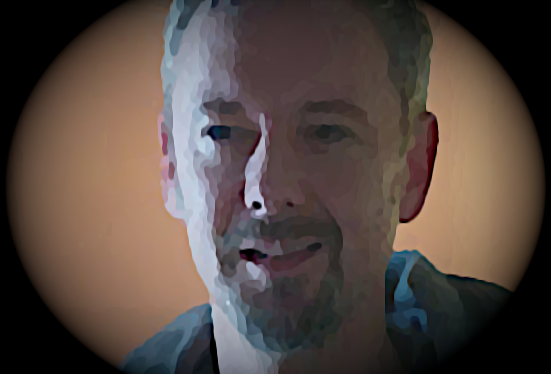
For the satirical blog says here that old men have grey beards

Hello and good morning.

It’s Thursday again, though it doesn’t feel like it should be, because I didn’t write or go to work on Monday.  I also haven’t been doing any significant walking since the end of last week, as I’ve been feeling quite physically low.

Unfortunately, my physical health doesn’t seem to be recovering much, yet.  I still have an irritating, dry cough, and my nose is stuffy, and I feel rather crappy.  But I slept well (for me) last night, getting almost five hours of sleep, and possibly a little bit more.  I didn’t wake up feeling particularly good, but I think that’s just mainly because I’m still sick.  It doesn’t seem like the sort of illness that will be life-threatening, but we can always hope.  After all, it’s possible for a simple viral upper respiratory infection to lead to a secondary bacterial infection that ends up becoming a lethal pneumonia.

Fingers crossed, everyone!

I haven’t shaved this week—I normally just have a sort of goatee (not a fancy one, just a straight, old-fashioned, The Master style goatee, as shown below), but occasionally I let the full beard grow out a bit.  It tends to be irritating because the spacing between whiskers on my cheeks is wider than on my chin and lips, and also the whiskers on my neck get irritating.  Obviously, it’s possible to muscle through that, but another problem I have is that, apparently, when I have a full beard I look quite amiable, and strangers start talking to me out of nowhere, much to my surprise and discomfort.

I never wore a beard at all while I was married.  My (ex-) wife thought my goatees looked “too aristocratic”, which I take to mean that they made me look vaguely villainous.  I was also in the Navy when she and I first met, and of course, I couldn’t wear a beard then.

I don’t know quite what the fetish is in the US armed services about being clean-shaven and having short hair; maybe it’s born from days of fighting lice, though being completely shaved would be better for that.  I’ve been shaved-headed before, and I found it quite pleasant in many ways.  If you roll out of bed late, for instance, no one can tell if you haven’t showered.  Apparently, I also look a bit like a real life version of Doctor Evil when my head is shaved, but less funny, more actually evil.  I’m okay with that.

My ex-wife also had an interesting attitude toward beards in general, which was her explanation for why she didn’t like them:  She always had the feeling that men with beards were trying to hide something.

Think about that.  If you’re a man who actually does grow a beard, that means you are genetically programmed with that secondary sex characteristic.  Without modern technology, once you hit puberty, you will start growing a beard.  Not all human males (or related alien species or replicants or changelings) grow beards, but for those that do, it’s just what happens when one doesn’t take other action, much as getting old is just what happens when one doesn’t die young.

What that means is that, when someone who would otherwise grow one does not have a beard, that is the more unnatural situation.  It requires regular (usually daily) effort to be clean-shaven for a post-pubescent man who grows facial hair.  That seems like a situation where people might be trying to hide something.  Specifically, they seem to want to hide the fact that they are adults, that they grow beards, and whatever comes with that.

Maybe they want to appear boyish and thus less threatening?  That couldn’t explain the military tendency, but that tendency is clearly only a modern affectation.  Traditional warrior classes tended to have beards.  Think of the Vikings, and the hordes of Genghis Khan, and the Spartans, and of course the many middle-eastern warrior peoples, from the Persians to the Ottoman Empire and beyond.

Also, of course, it’s pretty clear that every Abrahamic patriarch and/or prophet, from Moses to Jesus to Mohammed, all had beards.  Even King David almost surely had a beard by the time he whacked Goliath (it’s hard to imagine a hunting bandit, leader of a band of outlaws, being preadolescent and/or taking the time to shave every day).  Michelangelo made one heckuva statue of the young King as clean-shaven, but that doesn’t have to be any more true to life than it is literarily accurate to put pointy ears on hobbits and elves in Middle-earth*.  Also, of course, by most accounts, the illustrious (and sculpturious?) Mr. Angelo had quite the beard, himself.

It’s a bit weird, all of it.  Maybe the admiration for being clean-shaven harkens back to some not-so-secret preference of the medieval church higher-ups for prepubescent boys.

It’s probably at least partly just random, or at least stochastic, with the highly nonlinear equations of sociology producing weird eddies and fluctuations in local social mores that aren’t necessarily motivated by anything inherently logical.  But still, it seems rather silly to me for someone to think that men who simply allow their faces to do what those faces naturally do—i.e., grow beards—might be hiding something thereby.  It’s a bit like imagining that an apple tree is being slyly malevolent by growing fruit.

Still, the whole amiable appearance thing is a much better reason for me to avoid beards.  I feel very awkward and tense, engendering urges toward literal physical aggressiveness, when strangers talk to me.  Apparently, my tendency to grow “wizard eyebrows”, as my ex-wife described them (fondly) is not off-putting.  Perhaps when I have a full beard, I look like a kindly wizard too much.  Whereas with a goatee, I look more like a Warlock (which used to be my nickname in high school).

Now, if having a full beard encouraged beautiful, intelligent, interesting women to come up and talk to me out of the blue a lot, I might be less displeased (though I would almost certainly be at least as tense and anxious).  But that seems vanishingly unlikely.

Anyway, that’s enough nonsense for now.  I don’t have any idea what Shakespeare quote I might alter for the title to this post, but you will know by the time you read this.  Of course, yesterday’s title was an actual, full-on quote—from Gloucester, AKA the future Richard III, in the play Henry VI part 3—but that was unusual, and I did put quotation marks around it.

I’m sure I’ll find something adequate.  I have all the works of Shakespeare to use as a source for my material.  That’s a hell of a deep well from which to draw.

TTFN

the master worried about his future


*Think about it.  Tolkien went to great pains to describe how hobbits had curly hair on their heads and on the top of their feet, that they are smaller than the bearded dwarves (and that they themselves do not grow beards) and that they tend to be rosy-cheeked and stout around the middle.  But he never once said anything about their ears.  You would think, if their ears were meant to be pointy or otherwise remarkable, he would have specified this; he was an obsessively meticulous creator of his world, a tendency he self-parodied in his short story, Leaf by Niggle.  There is apparently some obscure reference in his notes that could be taken to be saying that his elves might have had slightly pointy ears, though I’m unconvinced by what I’ve read even of that.  Certainly in the Bakshi version of LotR, the hobbits and the elves all had “normal” ears, and that’s the way I have always pictured them in the dozens upon dozens of times I’ve read the books.  The ears are my only major complaint about Peter Jackson’s original trilogy.  I consider their presence an instance of pandering to the “broader” audience of people who aren’t actual Tolkien fans.

Blogging…blogging and rolling. Down to the train I’m strolling

This is all getting a bit boring, isn’t it?  I mostly write the same old, same old stuff from day to day‒even after I have had a day off, like yesterday.

Although today, at least, I have a modicum of good news to convey:  the temperature went down significantly overnight, so that when I left the house this morning to walk to the train station (which I did) it was only 69 degrees (F) out, and there was a slight, pleasant breeze.  69 degrees might not seem that cool to those up north, but compared to 83 degrees with nearly maximal humidity, it is quite pleasant.

I wore one of my “athletic” shirts, but almost had to wear a different, warmer, cotton shirt.  The athletic one loses its moisture quickly, by design, and with the breeze, I was worried it would be unpleasantly cool.  However, I walk at a pretty good pace on my not-very-long shanks, and so I was in little danger of hypothermia.

Weirdly enough, yesterday afternoon when I walked to 7-11 and back (about 3 and a half miles total) I felt cooler than I usually do in the morning, though it was in the eighties and rather sunny, and I always wear all black.  Somehow, I was still less sweaty than I usually get in the morning, perhaps partly because the sun heated and evaporated the sweat, and partly because there was a nice breeze blowing.  In any case, I did feel cooler, even by the time I got back, though perhaps I was also more dehydrated than usual.  That was easily remedied, however, since I’d bought three seltzers and an unsweetened tea at 7-11.

I am sorry to say, though, that after wearing my newer boots yesterday, I think I may need to dispense with them for longer walks (this morning I’m wearing my New Balance walking shoes).  They seemed to cause some stress on the arch of my left foot that bothered me for the rest of the day and the night, though not too severely.  Also, while I walked, the boots’ increased sturdiness relative to other footwear seemed particularly to irritate my right Achilles tendon, which has some chronic strain and irritability that the NBs don’t seem to exacerbate.  Maybe I lace the boots too tightly.

It’s frustrating.  Those boots are quite good otherwise, and I felt nicely armored walking in them, even through some fairly extensive unpaved areas between the house and the 7-11.  In fact, I had two “wild” encounters when in that region, in one of which my boots made me feel quite secure (there was no real worry, anyway).

I first literally almost stumbled upon a large iguana nestled in some tallish grass next to a fence.  It was easily five feet long from snout to tip of tail‒the latter of which it whipped a few times in my general direction, defensively.  It was more surprised than I was, I think‒it clearly had been rather oblivious to my approach.  Tall grass, it seems, is a double-edged sword.

Anyway‒as I said to it while stopping for a moment to pass pleasantries‒its tail-whipping, though an excellent display, was no threat to me, because I had on boots and long pants.  Still, I meant it no harm, of course, and I chided it for its lack of alertness; other creatures might not be as benign as I.  I doubt that it understood me even vaguely, but it was nevertheless long gone by the time I returned.

The other encounter‒not nearly as “close” as the first‒ was with a rooster that was wandering in some apparently undeveloped, wooded land behind a fence right near the road.  There are plenty of people who keep chickens around these parts‒one occasionally hears the roosters crowing in the morning‒but this one wasn’t near anyone’s front or back yard as far as I could tell.  It was quite a fine and healthy looking specimen, though, with lovely brownish plumage and a vivid comb.  It was clearly somewhat unnerved by my presence, and it quickly made its way deeper into the trees.  It didn’t move too fast; roosters don’t like to show weakness, I think.  But it seemed almost as startled as the iguana had been.

I guess I must be pretty quiet when I walk along, certainly relative to somewhat nearby traffic.  That’s nice to know, since I’m not a fan of unnecessary noise at the best of times.  Still, I’d have to change that habit if I were hiking through grizzly bear country, or else court much more dangerous surprises.

It seems unlikely, though, that I will ever be in grizzly bear country.  The most dangerous creatures I encounter, by far, are humans.  They, at least, are a comparatively known quantity.

Sorry.  As I said, this has all been rather boring, and I apologize for that.  I’m considering taking a significant hiatus from this blog for a while soon, one which may turn from a hiatus to a terminus, depending on how things work out.  I really need to do something, and I want to do it soon.  It’s going to start to get colder before long‒indeed, it already is starting to get colder up north, I’m sure.  Also, the leaves have probably already begun to turn, farther north, and it would be lovely to see them, even if only for one last time.

Still, wishes are just thoughts.  I don’t know what I’m going to do.  But I’ve been preparing things at least a little, just in case.  And depending on what I’m able to make myself decide to do, I may take a hiatus from this blog or give it up entirely.  But that doesn’t mean I won’t (necessarily) keep in communication, if I’m able.

In the meantime, though*, I’ll expect to be writing at least the rest of this week (through Friday, since I am not scheduled to work on Saturday).  Maybe I’ll have further updates about my plans, or about my boots and/or shoes.  It should be vaguely interesting, I suppose.

Watch this space for further bulletins.


*And time can be very mean, can it not?

Annotations Pending

Well, against my prior intention, I’m writing this on my laptop today—meaning the laptop computer.

God, why can’t I just accept the fact that “laptop” is obviously a word referring to the computer on which I’m writing this, not the top of my personal lap as part of my body when in a particular configuration?  Surely, every person with the savvy to read this online knows what I mean when I say that I’m writing this on my laptop.  At the very least, it is extremely unlikely that they don’t.

And if, by bizarre chance, people are reading this some decades or centuries after it was written, and laptop computers are no longer a common item, or no longer exist at all, there will probably be scholars who will put little annotations in to tell those future readers what we meant back in this era by “laptop” when we’re referring to writing on something.  It’ll be like those side notes when one is reading Shakespeare, notes that let everyone know—who doesn’t already—that “bodkin” for instance, as used in Hamlet’s soliloquy, means dagger, and thus, someone making his quietus with a bare bodkin is killing himself with a dagger.

Somehow, though, I have a terrible time not clarifying that I mean “the computer” when I refer to my laptop.  There’s an actual tension, a feeling of significant stress involved.  I suppose some might call it an anxiety, but that doesn’t feel quite like the correct term.  I don’t really feel worried or in any sense scared or threatened, not even at a social level or whatever it might be.  I feel as though it would be wrong not to clarify when there are multiple meanings of the word “laptop”, in case someone might have the bizarre misunderstanding that I’m writing on the top of my actual lap.

It’s pretty stupid, and it really gets to me sometimes.  It makes me want to peel the skin off my head by grabbing my hair and pulling my scalp apart, it’s so frustrating.

To be clear, I don’t really want to do that.  I don’t know, frankly, that I would even have the strength to do it, since skin is tougher than it seems, and also the skin of the face, at least, is pinned down to the underlying tissue by an intricate and interwoven network of tough fibrous tissue*, causing it to follow the movements of the facial muscles, allowing expression (a resource often wasted on me).

Though, of course, the scalp is much more loosely held to the skull and tissue under it, so that part would be peelable if one were strong enough to make the initial split.

I’m not really that tempted to try, but when I get so tense and stressed out (I almost wrote “sense and tressed out”) I can imagine myself reaching up to grab the sides of my head by the hair and yanking steadily, and it feels as though it would be some form of release.

It’s a bit like slapping oneself in the face when one does something stupid—though in that case, I do actually slap myself in the face.  The trick is to do it hard enough that you actually get a real punishment for your own stupidity and thus might actually learn something.  It’s not quite as intense as banging one’s head against a wall or against one’s desk (which I also do when I’m stressed out enough), but the latter is not really so much a punishment as it is just a way of trying to overwhelm stress with pain.

Or, well, it’s something like that.  Even as I wrote that, I realized it didn’t quite seem like an accurate description, or at least not the full answer.  Sometimes I think it’s just a form of giving in to my desire to lash out when I’m very stressed, but to do so against the only person I have a right to harm.  I’ve at times given myself actual swollen, black and blue (initially subcutaneously red with extravasated blood) marks on my forehead, but usually it’s not that bad.

I don’t want to give myself a concussion or anything, after all.  My brain is dysfunctional enough, and I don’t want to lose the few good things it can do.  There are other ways I can hurt myself when necessary.

Speaking of the good things, I keep trying to get myself back into writing fiction or something, maybe, just to see if it makes me feel any better, which it had a tendency to do in the past.  That’s a minor part of why I decided to bring my laptop today (the other laptop is with me whenever I sit down, so it requires no effort to bring it).  But I don’t know; I can’t feel any excitement or anticipation about HELIOS or Changeling in a Shadow World, or DFandD, or Outlaw’s Mind, or any other stories, and I certainly don’t think anyone else is excited about the prospect of those stories being written, either.

I don’t know what to do**.

As usual, of course, I have written much more quickly on the laptop computer than on the smartphone, which should come as no surprise.  But I don’t know if it has any effect on my style, or on how good a post comes of it.  I would welcome your evaluations, of course, but I know it’s hard to judge from one instance.  It may be a better or worse post than usual for reasons that have nothing to do at all with my choice of tools for writing it.  There are too many variables at play.

A reasonably controlled experiment could be done, with me writing a long series of posts, randomly (perhaps) alternating between smartphone and laptop and asking readers to evaluate each post for quality without knowing which kind the post was.  But that would be far more trouble than it’s worth, and I don’t mind subjective and non-rigorous impressions, if anyone wants to give them in the comments below.

I don’t really have much more to say today.  I just feel stressed and tense and frustrated and angry and just…squeezed by reality.  I feel almost as if there’s some metaphorical, inverted mountain suspended above me that I have to hold up or it will crash down and, I don’t know, bury me, crush me, impale me on its peak…something like that.  I don’t think it will harm anyone else; there’s no one else for my collapse to harm, really, certainly not in any deep way.  So far, I’m just holding it up out of habit, and because people will say that “you’ve got to try to hold on” or things along those lines.  But it’s tiring and it’s stressful and it’s wearing me out at the same time that it’s pissing me off.

Anyway, this is all pointless.  Sorry to waste your time.  I hope you haven’t been too disappointed.  And I also hope you have a good day.


*The skin of the palms of the hand and the working surface of the fingers is even more tightly and intricately bound to the underlying tissue; this contributes to the way one’s fingers wrinkle up when your hands soak in water for a while.  The soles of your feet and bottoms of your toes are similarly tacked down, though it serves a slightly different “purpose” there.  Dissection of the palms to look at the underlying muscle and tendons and so on is a laborious process in Gross Anatomy class.  Ditto with the face.

**Am I always in the dark, living in a powder keg and giving off sparks?  Probably not.  That was a pretty good song, though, wasn’t it?

“Walk this way…THIS way.”

Well, for the first time in a few weeks, I walked to the train station today.  The weather is perhaps ever so slightly better for such things because it’s been raining a lot and it’s slightly cooler.  Maybe.

I’m sure that all the people up north are unimpressed by my grousing, thinking such sardonic things as, “Oh, poor baby, is it too hot for you in the first week of October?”  But I’ve said before, as someone who grew up in Michigan, I like the cooling off that happens in Autumn.  One can always put on a jacket and so on, or wear a sweater (or both) when it gets cool out.  Down here, even if it were okay to go around with no clothes, there are times this would not keep you cool enough to avoid potential overheating and dehydration.

Also, during the day, you could be prone to some truly unfortunate sunburns.

Anyway, I had a pretty decent walk this morning.  I must have been going at a good pace in my new boots, because I arrived in plenty of time for a train twenty minutes earlier than the one I had intended to take.  I’m writing this on that earlier train, since I only had a few minutes to wait before the train I usually just miss arrives.

While I walked, I listened to the Audible version of Sapiens by Yuval Noah Harari.  But here’s a surprise:  I was listening to the Spanish version!

I used to speak Spanish pretty well, after taking a couple of years of it in college, including a literature course, and when I was in residency, I had a fair few times to use it, since the Bronx has a large Spanish-speaking population (like most of the Western Hemisphere).  However, it has now been ages since I’ve used it regularly, and I find that when people speak to me in Spanish, I have a hard time understanding much of it.  That seems like such a shame, especially since, by the time of my last college course, I was thinking partly in Spanish.

So, I decided to get that book in Spanish (audio), and listen to it to try to reinvigorate that part of my brain.  I’ve read the book in English, so that makes it a bit easier.  I can’t say that I was honestly following everything that was being said (or read) but I caught quite a few words and sentences and concepts, and I think that will get easier as I go along.

I also recently got an audio book of a Japanese light novel in Japanese (I had to go looking for it on Amazon), and even recorded the audio‒or rather, imported the audio‒for several anime I have watched many times, figuring to do something similar with Japanese, of which I have only a smattering.  But it seems better to focus on Spanish first.  Spanish is all but ubiquitous where I currently live.

But I also want to go for the Nihongo on some of my walks.  I think that learning and using foreign languages helps one understand one’s own native tongue better, and also to recognize the nature and importance of grammar and careful communication.  I’ve said before that language is crystallized thought, and having more ways to crystallize it may at least give one different and more sophisticated ways to think.  Seeing the differences (and commonalities) of language is very interesting, also.

All European languages (as far as I know) have lots of evolutionary history in common.  Some, of course, are more directly related than others; Spanish and Italian are obviously close cousins, while English and Russian are less so.  But when one gets to the “Far East” things are much more divergent from the West (and vice versa), and though there are words imported from Europe (e.g., the Japanese for “bread” is “pan”, as the Portuguese introduced bread to Japan), the roots of the languages appear to be almost completely separate.  This makes it all the more interesting when one finds grammatical structures in common, especially when they do the same thing, but in different ways.  It makes one think Chomsky really was onto something with his notion of a universal, inherent human grammar.

I learn by hearing pretty well, almost as well as I do by reading.  In fact, when I read, I always subvocalize‒i.e., I say the words in my head.  It makes my reading slower, but I read more deeply than most people I know, and I tend to remember what I read better than many.

So, I’ll do some Spanish for now, but maybe I’ll intersperse it with Japanese as well.  It should be interesting, at least.  We’ll see how long this intention lasts.

Before I close, I figured I’d share with you a bit of what might be interesting trivia regarding my walk.  Before starting off, rather than using an “energy drink” replete with high fructose corn syrup or other carbohydrates (which I’m trying to minimize overall and even completely avoid when I can), I drank a few swigs of olive oil!

Ha ha!  That surprises you, I’ll bet.  But it makes sense.  At aerobic exertion levels, the muscles (like most of the rest of the body) “prefer” to run on fatty acids, not glucose, at least when insulin levels are normal.  And, of course, olive oil is all fat, which is a much more efficient form of energy than carbs.  One can’t drink much olive oil in a swig or two (and I did not try) but at least it doesn’t lead to any rebound drop in blood sugar and consequent fatigue.

I don’t know if I will continue to do that, or even if it had any effect on the speed of my walking (there were too many variables to make any credible determination of specific causation), but it certainly doesn’t seem to have impaired my abilities.

That’s enough for now.  I hope you all have a good day, and a good week, and what the heck, have a good month.  It’s one of the best ones of the year.

walk this way

Apologies in advance for the subject matter

I’m writing this at the office this morning, because I came in quite early.  I had a bad night, secondary‒apparently‒to having eaten something that didn’t really want to stay in my GI tract any longer than it absolutely had to, so I’m kind of wiped out.  I decided to take the most expeditious, if not most cost-effective, way in and just kind of take it easy here while waiting for the day to start officially.

I don’t expect I’ll make this post very long, and I’m probably not going to write it all in one sitting, because I feel very tired.  Probably I’ll intersperse it with a nap or two.  I seem a bit dehydrated and volume depleted after last night, but at least I have what appears to be an effective dose of Imodium in me, and that’s good.  It’s a very clever product:  an opioid that doesn’t cross the blood-brain barrier, so one doesn’t get high from it, and it has no real abuse potential*.  It is, however, particularly prone to produce one of the inevitable side-effects of opioids‒shutting down (or at least turning down) the motility of the GI tract.

So, I’m feeling a bit poorly on the physical level, and my mental level is blunted by a combination of worse sleep than usual and the loss of some of my fluids.  The latter are, at least, easily enough replaced.

The schedule for my coworker is more or less set now.  He will work next weekend, then he will take his trip on the following Monday through Wednesday, the ninth through the eleventh.  Unfortunately, I will be working the weekend of Friday the 13th (though, to be fair, I enjoy the day and its subsequent weekend, as I think I’ve mentioned) but the following Friday is a personally significant one‒though one that, in many ways, I had hoped not ever to see again.

Who knows, maybe it’ll turn out that I have some more dangerous GI bug than seems to be the case‒I give this very low odds‒and that will take the whole situation out of my hands.  That would be okay, as I think I’ve said before.  In many ways, it would be nice to have something happen for which I could not, in practice, be blamed or held responsible.  It’s at least not too terribly painful.  In fact, it mostly is just slightly unpleasant but very fatiguing, in that I really want to try just to go back to sleep.  I think I will take a brief nap before finishing the first draft of this blog post.

***

Okay, I haven’t taken a nap yet, but I think I’m going to draw this to a close.  I don’t really have much to write about today.  I certainly don’t have much to say that’s new and/or interesting.  I apologize.  I would just add, by way of exculpation, that I really didn’t expect to be writing this now, today, or this last week, and so on.

Tomorrow begins October, which has often been my favorite month for various reasons.  Even in my current mental state, I can’t completely resist the appeal of the Month That Used to be the Eighth and Is Now the Tenth.  I’m hoping that the weather will soon begin to cool down a little, or at least to become a bit windier.  It would be nice to be able to walk without becoming more dehydrated than I am right now.

I guess I can tolerate my delays of time when I think of the fact that, though Frodo left Bag End on his birthday, he arrived at Rivendell on my birthday (which he rudely neglected to celebrate).  So perhaps the latter can make as decent a boundary point as the former.

Anyway, it’s all silly and pointless when you get right down to it.  In reality, every day is like every other, and the differences between them from a human point of view are trivial, arbitrary, and inconsequential.  Any day will do.

I hope you all have a good one.


*Except rarely, very desperate addicts to some forms of opioids‒so I have read‒will sometimes take ridiculous amounts of Imodium, sometimes ground up into a kind of milkshake, when they cannot get their drug of choice.  I can only imagine how constipated they must get.  Well, no, I can more than imagine it, because I’ve treated people with bowel obstruction/shutdown due to opioid abuse.  They’re often very skinny people, but their bellies are bloated and distended by way more digested and partially digested material than they were ever built to handle, but which cannot be expelled correctly because the whole GI nervous system has been stunned into somnolence.

Feel free to imagine your own illustration to accompany this post

As so often seems to happen, I arrived at the station this morning just in time to see the first train of the day arrive and pull out.  That’s fine; I hadn’t been planning to take it, anyway, and there was really no possible way for me to have done so.  If I had gotten up and left five minutes earlier, I very likely would have caught that one, but of course, there’s no true point to getting on that earliest train, since I’ll either be killing time at the office or at the train station or at the house.

I prefer to leave early, since I’m awake anyway, and have been for hours, and traveling early means things are less crowded.  I used to spend time in the morning practicing guitar after writing, but I don’t do that anymore, so there’s no huge benefit to being at the office.

Now, I’m sitting at the station and writing this post on my smartphone.  I’ve been writing all my posts on the phone, lately, since it’s just so convenient.  In fact, I took my little 11-inch laptop back to the house with me last night and I left it there.  I don’t think I’m going to be writing on it again.  I may, possibly, use it for something else, but that’s an iffy possibility.  I guess I’ll have to see.  Anyway, there isn’t much point in keeping it at the office.

I threw out some other things at the office that I don’t need, so it’s getting a little less cluttered.  That’s good, I guess.  It’s probably more pleasant for everyone else.  I still need to clear out some more of the crap there, and even more at the house.  I live in a small room, but there’s still too much useless drek in it, stuff that no one is ever going to want or need.  Better to do my part to contribute to the unsustainability of landfills.

I tried out a corrected-size pair of boots yesterday, since I think part of the issue with the others was that the sizes made by Timberland might be a bit larger than my usual.  Anyway, half a size down seems very good.  I had no adverse effects, and I plan to try a longer walk today, heading back to the house from the train after work.  I wasn’t going to do that yesterday, after a 24 hour food and water fast.  The food wouldn’t be an issue, but I might have become a bit too dehydrated.

The fast yesterday was interesting, as it always is.  I moved rather slowly and was not quite as mentally sharp as I normally am, though that was more due to lower caffeine levels than anything else.  I had one incidence of “head rush” when rising from a seated position, but it was pleasant and a good sign that I’m probably losing weight, which I want to do.

I’ve had head rushes before, and I’ve even had them bad enough to make me lose consciousness completely, including once while in jail.  I didn’t like smacking my head on the concrete (I didn’t feel it at the time; I definitely did afterwards), but passing out suddenly is not a bad feeling.  Indeed, it’s more or less no feeling at all.  That’s what’s great about it.  There’s just that hint of a head-rushy sensation, then everything goes white and then blank.  Even those sensations are probably reconstructed memories after the fact.

I suspect, based on actual expertise, that this is what it “feels” like to die of a sudden ventricular fibrillation arrest.  I don’t mean a heart attack; heart attacks are almost always quite painful and unpleasant, and in and of themselves, they don’t usually cause one to lose consciousness.  Though they can induce dangerous arrhythmias such as ventricular fibrillation, the process leading up to it is decidedly uncomfortable and generally terrifying for the person involved. Trust me; I’ve seen it many times, and I have a very good memory.

But in a V-fib arrest or similar process, the heart basically stops pumping blood all of a sudden, and the brain stops getting perfused‒it’s much like what happens in a sudden fainting spell, but more persistent‒and when the brain suddenly loses all blood flow, it pretty much suddenly blanks out, or at least consciousness does.

There’s no fear, there’s no pain, there’s not any experience of what’s happening.  One isn’t confronted by the threat of permanent cessation*, and there is no potential to “rage, rage, against the dying of the light”, anymore than a computer that is abruptly deprived of all power can struggle to stay “on”.  It simply doesn’t work that way.  The thing that does the raging is what is shut down, and quite abruptly.

Your brain (i.e., you) can no more fight to stay conscious or alive when suddenly deprived of blood flow than your lungs can successfully draw in oxygen if you suddenly find yourself in outer space without a space suit.  Though, even that seems likely to be less unpleasant than movies make it seem, because while you can’t get oxygen, you will still be able to expel carbon dioxide, and it’s the CO2 in your blood that drives your sense of needing to breathe.

So, you won’t feel like you’re suffocating; you’ll just get rapidly light-headed from the lack of oxygen.  Some of the other effects of vacuum might be unpleasant‒your saliva and mucus bubbling into gas phase, perhaps some bubbles forming within your eyes, some other outgassing here and there, but you won’t experience them for long, if at all, because the lack of oxygen will deliver a slightly slower version of the effect of the V-fib arrest.

Oh, by the way, you will not suddenly freeze or even accumulate frost in seconds, like in some movies.  Space is very cold, yes‒the overall temperature of the vacuum is about 2.7 degrees above absolute zero‒but there’s nothing there to conduct your heat away from you, so you only lose it through radiation (mostly infrared and such, but humans do give off a tiny amount of “visible” light), and that is a very slow process.

Think about it.  You can survive indefinitely and even feel pretty comfortable in 70 degree (Fahrenheit)** air, even without much clothing, and that is far from vacuum.  But if you are dropped in water at the same temperature without a wetsuit or similar, you will probably die from hypothermia before long.  And that probably would be quite unpleasant.

Anyway, that’s all quite a digression, but it does reinforce a point I sometimes make:  if you have a choice of how to die, do it by some means that suddenly and completely cuts the blood flow to your brain.

As for other fasting-related matters, well, there was, as always, a slight feeling of detachment from my body by the and of the day, not quite like my numerous experiences of depersonalization***.  It’s a good sort of feeling, a sense of being slightly out of sync with the physical world, but not in a confusing or disturbing way.  Maybe it’s akin to a much slower version of the fainting/V-fib experience.  Anyway, the less I experience being me, usually the better, from my point of view.  Not that I want to be someone else!  That would be even worse.

So, I’ve learned nothing new from fasting, really‒certainly there were no epiphanies‒but I have re-experienced things I’ve experienced before that I found worth repeating.

And now, we’re nearing my train destination, so I’ll let you all go, at least for now.  Have a good day, if you can.


*Or “death” as it is sometimes referred to in the medical literature…but I wanted to avoid too much jargon.

**70 degrees Centigrade/Celsius would be another matter entirely.

**I think that’s the term.

Songs, weather, depression/pain, AI, the subjectivity of time, and the apparent inevitability of entropy

It’s Monday, Monday, like the Mama’s and the Papa’s sang.  I’ve never quite known what that song was about in any deep sense, since I’ve never paid too much attention to the lyrics, other than “Monday morning couldn’t guarantee / that Monday evening you would still be here with me.”  Could it be about the tenuousness of joy or something?  Maybe it’s a sort of Buddhist message.  Of course, no morning can guarantee (so to speak) that by the evening anything at all will be the same, apart from the fundamental laws of physics (whatever they may ultimately be).

One wonders:  has Monday morning, in some anthropomorphic sense, ever guaranteed anything to anyone?  It’s a weird notion.  Maybe I’m thinking too much about this.

Anyway, I’ve always thought the song had a pleasant melody, and the harmonies were good, as tended to be the case with that group.  I like California Dreamin’ better, and not just because the meaning is a little less opaque.  However, I do have sort of the opposite feeling to the singer(s) of the latter song.

In that song, they lament the fact that all the leaves are brown and the sky is gray, and they dream of being in California, “safe and warm”, even on a winter’s day.  Well, I’ve been for plenty of winter walks here in south Florida when I didn’t need to wear a jacket or long sleeves, and could go barefoot, and could even have worn shorts if it weren’t for the fact that my lower legs are kind of scarred up and embarrassing.

But growing up, I’ve always liked autumn best of all the seasons.  Halloween is my favorite holiday, and winter, frankly, was never too hard a problem.  At least I could enjoy a hot cup of coffee in a way that I just can’t here in Florida.  Here, I’m sitting motionless at the train station and literally dripping with sweat just from…I don’t know, just from being alive, I guess (I don’t recommend it).  And then, most of the time, trains and buses and stores are all over air conditioned, so when you’re sweaty from being outdoors you feel seriously chilly when you enter them.  And then, when you go back outside, your glasses instantly mist up, because their surfaces are so cold and the air is so humid.

I know, I know, these are not exactly the trials of Hercules.  But they are annoyances to which I wish I had never chosen to subject myself.  Now, however, as the man said, “I am in blood, stepped in so far that, should I wade no more, to turn back would be as difficult as go o’er”.  Mind you, I have never done anything as horrible as Macbeth did in the play, but that doesn’t mean the metaphor can’t still apply.  One of the brilliant aspects of Shakespeare’s writing is that his lines can be used not merely in context, but to examine, explore, and describe so many things in life.

Anyway, knowing me, I probably would be just as unhappy had I stayed up north somewhere.  I think the fundamental problem is an internal one‒well, I mean, that’s clear and plain, since I started having trouble with dysthymia and depression long before I ever moved south.  The problem is with me.  I am faulty.  And when the problem is fundamental to oneself, one cannot avoid it by going elsewhere, because, as many have pointed out, from Ralph Waldo Emerson* on, “No matter where you go, there you are.”

If one’s own nature is the problem‒or some aspect of it, anyway, or some damage that is permanent, a wound that goes too deep, that has taken hold‒there is little that one can do about it.  If there is no therapy that seems to help, whether medical or psychological, and there are no lands to the west in which to seek healing, what is one to do?

Of course, if one is convinced that the odds are, in the long run, that the good things in life will outweigh the pain (of all kinds), then one can choose simply to bear it as best one can.  After all, pain, of all kinds, is an inevitable (or at least inevitably potential) part of life, for good, sound biological and ecological and statistical reasons.  Pain keeps organisms alive, when it’s working best.  But it can reach a point where it’s not functioning optimally, where it’s not producing a net gain‒physically, psychologically, “spiritually”, or in any other clear way.  Then, what does one do?

I’m speaking mostly rhetorically here, but I guess if anyone thinks they have an idea I haven’t discovered, they are welcome to share.  I have thought long and hard about these issues, and I’ve read a lot of related material, and have tried many forms of treatment, but I can’t claim to have learned everything that could possibly be known about them.  I’m reasonably smart, but I have had finite time and finite energy and finite intelligence with which to explore.

Even a “deep learning” AI can often only “learn” so much, so quickly, because it trains on immense streams of data, beyond any human bandwidth.  And adversarial systems like Alpha Zero learned to play Go even better than previous systems by playing millions or billions of games against itself to develop its skills.  A human who was capable of that concentration and memory and above all, who had the time might well become just as good.

But human experiential time takes much more real time than does that of an electronic system**.  Also, humans were not built to be able to focus solely on one thing for such scales of time and experience.  There’s no net survival or reproductive advantage to it on any kind of ordinary, biological level.

AI’s have to be built and actively maintained.  They cannot yet sustain themselves.  Perhaps, when they can, there will occur an evolutionary arms race between and among such AIs, happening much more quickly than human biological or even cultural evolution.  But it seems difficult to speculate about what the outcome of such evolution might be, once it took the bit in its teeth and ran where it “wanted” to go.

Well, it’s fairly easy to speculate, but that speculation is probably going to be fruitless.  The phase space of possible states is too big to explore easily.  Even an AI evolution that proceeded at maximal possible speed might only explore the tiniest fraction of all possible forms and functions of intelligence before entropy led it to fall apart, like the rest of the universe.

Of course, it’s not in principle impossible that an AI (or other intelligence) could figure out ways around even the heat death of the universe, or the Big Crunch, or a Big Bounce, or whatever the future of the universe ends up being.  Even if the universe turns out to have been simulated (which I doubt mightily but don’t rule out completely), the simulation has to exist in some outer reality, and the mathematics of entropy seems likely to apply in all possible realities.  There are simply more ways, in general***, for a set of things to be put together in such a way that they do not achieve any given function or meet any given criteria of order, than for them to be put together in ways that do.

Anyway, I don’t know how I got on that topic.  I tend toward entropy in the subject of my thoughts as well as in reality, it seems.  (This is not ironic, by the way, lest someone mislabel it as such.  This is actually quite appropriate, and is a rather pleasing concordance.)

That’s enough for me for Monday morning.  I hope the morning is very good to you, and that Monday evening is even better.

time or not cropped png


*He didn’t put it in those exact words, but he certainly criticized his friend, Henry David Thoreau, for going into the woods to find himself.

**Which leads to potentially horrifying speculations about what it might be like for an artificial general intelligence trying to have interactions with biological intelligences and having to wait between interactions‒times that could be the subjective equivalent of a human waiting for decades or centuries or even millennia‒just to “hear” what the human says next at normal human speed.  Orson Scott Card explored a little of this notion in the interactions between Ender and “Jane” in the brilliant Speaker for the Dead, the first sequel to Ender’s Game.

***Here I’m using “in general” mainly in the physicist’s sense, meaning something that applies to every situation of a given kind, everywhere, as opposed to the more common, colloquial meaning which is roughly synonymous with “usually”.

Remember what the dormouse said: Decongest your head

Well, it’s Saturday morning, and I’m waiting at the train station for the first train of the day on this first day of the Jewish year.

I took a long-acting decongestant last night, and though it did make me notice more alertness when I had my frequent nocturnal awakening, I don’t think I actually woke up more often than usual.  If anything, as I’ve long suspected, nighttime decongestants improve my breathing (duh), and thus the quality of such sleep as I get.

I have a family history of some degree of sleep apnea, and I suspect that using decongestants‒as long as the side-effects aren’t prohibitive‒provide protection from, and possibly prevention of, that process (This, I suspect, is especially true if, as needed, inhaled corticosteroids are also part of the treatment).

I’ve long suspected that sleep apnea can be a long-term secondary consequence of chronic allergic (and/or vasomotor) rhinitis, with narrowing of the nasopharynx due to inflammation/swelling of the mucosa leading to snoring and worsening sleep, then the weight gain often associated with certain kinds of inefficient sleep and high carb intake secondary to the nocturnal relative hypercapnia (high CO2) and the elevated cortisol that often accompanies chronic insomnia.  That high carb intake, with consequent elevated insulin, may lead to worsening of the inflammation and further narrowing of the airways and the gradual reduction in the quality of sleep, leading to a vicious cycle.

This is hypothetical, of course, and there are many variables that would need to be controlled to test it; I’ve only ever “experimented” on myself, starting when I first had a cat and realized that I was allergic, and that I was sleeping horribly and developing many signs and symptoms consistent with early sleep apnea.  It worked.

I’ve tried (with incomplete success) to avoid having cats since my first one was no longer in the picture.  That helped some and I have intermittently cut back on decongestants, but in south Florida‒and when living indoors in general, I suspect‒it’s hard to avoid all potential airway allergens and irritants.  Over time, the decreased quality of sleep (especially in someone like me who has a deceased tendency to sleep at all) has its effect on my cognitive function, and on my general energy level and appetite.

I have noticed that, when I am treating myself assertively for congestion, I tend overall to be cognitively sharper than when I am not, and I do not think this is simply due to the stimulating side-effects of the decongestants.  Studies have demonstrated that even true stimulants such as amphetamines do not actually bolster measures of intellectual function, though in the short term, they can improve alertness.

The biggest problem with my use of such things is that they tend to increase my level of internal stress and anxiety, particularly social anxiety.  All chains break at their weakest link (at least when under uniform tension), and social interaction is evidently my weakest link.

I’m not terribly afraid of physical danger, though it could never be said that I am fearless nor even particularly courageous, and I’m relatively used to physical pain.  I also don’t worry much about people being “mean” to me or not particularly liking me, or whatever‒for the most part, I don’t really have a clear notion of what other people are thinking of me at any given time, or indeed, what they’re thinking of anything.  When I’m not in someone’s presence, their presence in my brain seems abstract and ephemeral at best.  There are rare exceptions to this rule, but they are countable on the fingers of one hand.

But I do get stressed out about knowing what to say or how to interact, especially with new people, and I worry very much about being a bother or an annoyance to others.  Phone conversations are particularly stressful, except with people I know very well.

So this is definitely a trade-off situation, as are almost all things in life.  The body is an extraordinarily complex Rube Goldberg machine, and to push down on the system in one place almost always causes something to pop upward somewhere else.  I know, that’s not quite a consistent metaphor, but I think it works to convey my point.

Right now, at least, I want to try to improve my sleep quality‒increasing its quantity seems an unachievable goal without using things that make me feel worse overall‒so I can have the energy to do more walking and the like, including quite long-distance walking.  And I want to try to optimize my thinking as best I can, to decrease the risk that major decisions and changes I hope to make are based on poor thinking.

As for social anxiety, well, my social life is nonexistent anyway, apart from work.  I don’t expect ever to make* any new friends or have any new relationships, romantic or otherwise.  That aspect of life just doesn’t seem to be in the cards for me‒certainly nearly all such things have been disastrous hitherto for me.  Maybe if I could find some other member of whatever species I am, it might be different, but I don’t consider the odds of success, or the probable payoff, to be worth the likely cost and the probable rate of failure.

Plus, let’s face it:  I’m no one’s idea of a good prospect for a long term friend or partner of any kind.  I can be quite useful; I tend to be hard working and disciplined, and I’m reasonably bright, but my skills in romantic interactions, for instance, have always been horrible, and if anything they have atrophied over time.

I used to be tolerably good at friendship, but I seem to have no skill at keeping friendships going from a distance.  I don’t naturally think to try to reach out to people‒those times when I do think of it, I always feel awkward and anxious and am sure I’m just going to be an annoyance to anyone with whom I interact and to find the interaction stressful and even heart-breaking.  I’ve said before, even leaving comments on blogs or videos or what have you often leads me to feel real stress afterwards, and to regret doing it.

I just don’t think I’m well designed for this world, though there are attributes I possess that are useful and effective.  Overall, I’m just not a good fit, and the places where that fit is bad chafe and grate and grind away quite painfully at me.  Every day is painful, and not just physically.

If I could find some other world to try, I might do that, depending on what I judged my chances to be.  But I don’t think that’s going to be an option, probably not ever in my potential lifetime.  So, it seems better to consider and prepare for a relatively straightforward exit from this world.

I could say, “Prove me wrong”, like those stupid Internet memes, and I guess if anyone thinks they can do it, they’re welcome to try.  But I don’t expect any fresh arguments or evidence that I haven’t already seen or considered.  I’ve been dealing with this question since I was a teenager.

Anyway, have a good day and a good weekend.  Thanks for reading.

the doctor in the desert


*Google’s auto-correct tried to make me change this phrase, making it “to ever make”.  Yes, it actually recommended that I split an infinitive where I had not done so, though there would be no improvement in the clarity of my expression thereby.  It’s exasperating.  To quote a very sarcastic young Scrooge, “This is the evenhanded dealing of the world!”

Apologies for a blogless Monday

I was out sick with some form of enteropathy* yesterday, so I didn’t write a blog post.  I frankly haven’t done much of anything that’s in any way productive since Friday, and I’m not sure I did anything productive then.  I hope no one was too bereft by not being able to read my writing for three days (ha ha).

I’m now sitting at the train station, waiting for the train to the office (well, it doesn’t actually go to the office, but I think you know what I mean), not looking forward to the fact that I’ll have to do extra catch-up work from both Saturday and yesterday.  I really don’t want to have to deal with any of it or with anything at all.

I don’t know why I keep doing anything whatsoever.  I can speculate on certain causes, of course‒habit, the evolved drive simply to continue to survive, a dislike for causing inconvenience to other people, all that sort of thing.  Also, I guess there is the idiotic hope that maybe, just maybe, I will find some answers, some meaning, or some solutions to at least some of my problems.

Honestly, when I get sick like over Sunday through yesterday, I get the wild hope that maybe I’ll need to be hospitalized, and while in the hospital, I’ll be able to get some help for my psychological issues as well as my physical ones.  It’s stupid, I know.  I need to stop hoping for anything.  Hope is a waste of my time.

Ironically, it’s hope that keeps me writing about the fact that I’m having problems going on, problems dealing with my issues and my loneliness and my depression and insomnia and pain and all that crap.  I hope that somehow, by talking about it, I’ll either arrive at some insight or ideas or some semblance of understanding that might lead to some modicum of peace.  Or I hope that someone out there in the WordPress world‒perhaps it should be called the WorldPress‒will have some new ideas or insights or some help to offer.  Or maybe some old friend of mine will read what I write and will reach out and offer a hand or something.  I don’t know what they could do, or what I could do.  But anyway, it is hope that keeps me writing, I guess.

But it’s getting old.  I’m getting tired of it.

When I don’t just dwell on morosity (I don’t know if that’s a proper word), I write about weird shit, like I did on Friday.  I could write about current events, I suppose, but most of those are discouraging and boring.  It’s basically about as fun as writing about the interactions of a very large colony of baboons from the baboons’ points of view.  Baboons don’t want to admit to themselves that most of their choices and motivations are almost entirely simple primate dominance, mating, and social jockeying behaviors.

Humans really are just baboons with delusions of grandeur, some of which are excusable, many (perhaps most) of which are not.  They’re weirdly built and strange to look at, with very rare exceptions.  They think their culture and society and civilization were made somehow, deliberately‒by them it sometimes seems they imagine, though that cannot be possible‒when really, it all just sort of happened and continues just to happen, like any weather phenomenon or termite mound.  This is nothing of which to be ashamed‒it’s the nature of everything as far as I can see‒I just find the hubris disgusting and inexcusable.

Even nature itself seems just weird and rather twisted and horrifying when I look at it these days.  Maybe part of it is that I’m down here in Florida, but when you look closely at the very ad hoc, cobbled together, misery-laden natural world, in which even green plants compete ruthlessly against each other, while insects gnaw the tree trunks, and birds eat the insects and cats eat the birds (when they can) and meanwhile ten thousand other such painful and fear-ridden interactions are taking place in every acre, at all levels, from viruses to bacteria, to yeast, to protozoa, to slime molds and lichen and moss and mold and mushrooms up to grasses and bushes and trees and worms and snails and arthropods and fish and amphibians and reptiles and birds and mammals…everything ultimately just churning away at low entropy energy and converting it into high entropy energy…well, it all seems horrifying and discouraging and very, very dark.

Everything in the world seems alien to me…which I guess must mean that I am alien, since everything else is just there, doing what it does, being what it is, and I’m the one that finds it all daunting and repulsive.

I often bring up the concept of Sisyphus, and it now occurs to me that, maybe, Sisyphus is gradually wearing away the mountain on which he rolls his ever-falling boulder, slowly grinding it down until, finally, it’s level, and the boulder will no longer roll but will stay where Sisyphus puts it, and that will be the state of the universe at very high entropy (I want to say at maximum entropy, but I don’t think there is a maximum overall entropy**).

Of course “maximal” entropy is a state that can go on for a very long time.  It’s like the fable (as told by the 12th Doctor) in which the Emperor asks a shepherd boy to tell him the meaning of eternity.  The shepherd boy says there is somewhere a mountain of pure diamond.  It takes an hour to climb and an hour to go around.  Once every hundred years, a tiny bird comes along and sharpens its beak on the diamond mountain.  And when, after so many repetitions of that once-a-century sharpening happens that the diamond mountain is finally worn down to nothing…then the first second of eternity will have passed.

Even once the “heat death” of the universe comes to pass‒assuming that is what will come to pass‒and all is a haze of elementary particles, barely above absolute zero in an endlessly expanding but empty spacetime, which will come potentially after more than 10 to the 100th power years, that will only be an infinitesimal instant at the uttermost beginning of the eternity of nothingness.

In that quantum vacuum, even a direction of time will have less meaning than would any possible sense of up, down, left, right, forward, and backward in the heart of one of the intergalactic supervoids, in which not even a single distant star or galaxy could be seen with anything but the strongest telescope on long exposure.  To the human eye, in a supervoid, all would be blackness and emptiness in all directions, and in the heat death, that would apply to time as well.  With no change, the past and the future are indistinguishable.

Yet, eventually, new universes, or Boltzmann brains, or other esoterica might yet come to be.  Eternity is a long time.  Or maybe they will be found to have been in what seems to be the future but which is, eventually, the past of some universe with an opposite-pointing “arrow of time”.

Anyway, my point is, the universe is weird and harsh and the hubris of self-important creatures would be laughable if it were not so nauseating.

I don’t think I can do all this much longer.  My stop is coming up soon.  Have a good day.


*You can look it up.

**There is a maximum amount of entropy that can be fit into any given region of spacetime, and that is the Bekenstein-Hawking entropy of the area of an event horizon of a black hole that would enclose that region, expressed in square Planck lengths.  Actually, if memory serves, it’s the logarithm of that surface area (probably the natural logarithm).  If you tried to “add more entropy” to such a region, the black hole would grow, and the horizon would just get larger…you wouldn’t get more entropy “within” the given region.