What could compare 2 A future of cyber super-stupidity?

Well, I’m back on my smartphone to write this blog post, but I’m not going to do the whole indenting thing this time.  It was a cute little indulgence, but it doesn’t really add anything, and it’s a minor pain, and I’m just not going to do it.  So, there.

I didn’t bring the laptop with me yesterday, because I was still in a lot of pain by the end of the day, and didn’t want the extra burden.  Of course, I’m still in a lot of pain now, as I write this, and I’m sweating even as I just stand still outside.  I don’t think I’ll be using the laptop again any time soon.  But I guess I might change my mind again, depending on how I feel and how things go.

I’m certainly changing up my shoes again, trying to find a pair (and a type) that gives me the least trouble.  I don’t know how much, if any, difference it will make, but I have to keep trying things, just in case something works; I’m too stubborn to do otherwise.  I also widened my pull-up stance this morning to see if that helps, and maybe it will, and maybe it won’t throw my left shoulder into a tail-spin like it did the last time I tried it.

I know, I know, all of this is boring.  I’m a boring person, what can I say?

I did get out the guitar just a little yesterday, because one of the new people at work asked me about it, after recognizing that I was listening to a Radiohead song (Climbing up the Walls).  I’ve downloaded the chords for Nothing Compares 2 U again.  I frivolously imagine that I might do a video of me playing and singing it in honor most specifically of Sinead O’Connor, who just died, making her the third and final person I associate with that song to die (the other two, of course, being Prince, who wrote it, and Chris Cornell, who did my favorite version of it).  Hey, maybe if I do a good version, and people enjoy it, I’ll get caught up in that group, so to speak.

Fingers crossed!

I have tomorrow off, so I won’t be doing a blog post.  I’ll have a full weekend by myself to do fuck-all on my own.  I hope at least to be able to go for a walk if my back cooperates.  Other than that, I really have nothing.  I guess I might watch a movie or something.  I’m not going to go to the theater to see Oppenheimer, though it looks like a good movie.  After my last visit to the theater by myself, I just don’t see it being much fun.

Oh, but I do plan on calling my sister this weekend!  That will be good, so there’s something positive, at least.  Sorry, I didn’t mean to disparage her or be dismissive.  Talking on the phone to her is pretty much the only thing to which I look forward.  I still always get anxiety before using the phone, but that’s not her fault; that’s my defect.

Here’s something darkly amusing:  the Google Docs autocorrect is now urging me to add a “to” after the word “forward” at the end of the penultimate sentence of the preceding paragraph.  This is the state to which we’ve fallen; the pseudo-helpful editing software system suggests that I change a perfectly grammatical sentence by adding a preposition (sans object) to the end of that sentence!  Why?  I suspect because that’s what almost everyone else does out there in the trash heap of humanity*, and that’s the source of the system’s recommendations.

This is the crap from which such LLMs as Chat GPT and the like are compiling their informal and inscrutable linguistic rules and predictive language models, and to which they are then going to be adding their shitty, shitty, derivative writings and recursively worsening the deterioration of human reading and writing (and thinking) ability.  Maybe we should burn them all down, along with pretty much everything else.

Don’t get me wrong.  I’m no Luddite by any means.  I’m quite a fan of useful technology, including computers in general, and of course, I love science.  But technology that decreases people’s need to discipline and improve themselves in writing, in reading, in thinking, and in seeking out reliable information makes me nervous, to say the least.

People tend to be mentally lazy much of the time‒thus the current and recent polarized and moronic political climates. The way many people use technology that they don’t even remotely understand is not improving that tendency.  So, what if our future dystopia is not, for instance, the rise of a super intelligent AI that either reduces humans to its dependent pets or eliminates them entirely but an actual artificial stupidity that people think is smart, and which is more efficient and potent at being non-intelligent than humans are, as well as at giving humans what they “want” in the short term?

What if those wants become self-reinforcing and ever more intense, as any supra-normal stimulus can cause to happen?  What if this leads everyone to a mutually dependent culture of stupid eloi and stupid morlocks with neither truly victimizing the other, but both perpetuating a clueless, increasingly incompetent civilization of human and artificial minds that cycles about in increasing ignorance of the greater universe, and is eventually obliterated by some entirely avoidable catastrophe?

In many ways, this scenario seems worse than takeover by truly super-intelligent AGI, because at least with the latter there would be super-intelligence, and it would have the potential to endure and learn and grow and spread and perhaps even become cosmically significant.

(This is all somewhat reminiscent of ideas discussed in the excellent video Dystopias Don’t Go to Heaven from the YouTube channel Highly Entropic Mind.  I encourage you to check out his stuff.)

I think it’s better to use complementary technology to the degree possible, as David Krakauer refers to such things as abacuses and bicycles and actual maps that enhance our abilities.  I think computers in general, and search engines, per se, are complementary in that, to an active mind, they allow much faster access to and use of legitimate information.  But systems that write (and sometimes just make up) stuff for people to consume without ever going anywhere or knowing anything about the quality of the information source, and which can even potentially make fake video and audio, could easily just lead everyone into a virtual world of spiraling, increasing idiocy.

Maybe this is the way the world ends, this is the way the world ends, this is the way the world ends‒not with a bang but with a singularity of self-reinforcing non-intelligence.  It would be ironic at least, and I do appreciate irony.

Anyway, that’s enough for today, and for this week.  I guess I’ll write to you Monday if I’m still doing what I do.  Have a good weekend, please.


*I’ve even read formally published books, released by respected publishing houses, that contain sentences that end in duplicated prepositions, e.g.: “…to which I was looking forward to.” And people wonder why I often just want to die.

Here we go again.

It’s Monday again.

I don’t know how we keep allowing this to happen, but it keeps on doing it, over and over again, from the Monday on or immediately after the day we’re born until the last Monday on or before the day we die.  I don’t know about all of you, but I don’t really want to go back to work.

I’ll try to make this a comparatively short blog post if I can, unlike the weird one I did on Saturday, where I got off on a tangent about the number of possible blog posts one could write given a thousand words of length and a limited number of potential words after each previous one.  If you like that sort of thing, and you didn’t read it yet because you don’t read blogs on the weekend, do feel free to check it out.  I was writing off the top of my head, and I only briefly fact checked a few quick items, so there could be errors in specifics, but I think the reasoning was okay.

Yesterday, on the other hand, I suffered from ill-effects of something I had eaten Saturday, or perhaps some combination of things.  Anyway, I was feeling quite poorly, though thankfully whatever it was seems mostly to have worked its way through my system.  Fingers crossed!

Oh, and I don’t know if anyone anywhere has noticed, but for my last two blog posts, I added “tags” which are supposed to help people find what you write if they’re looking for material on given subjects.  It’s a part of that whole “search engine optimization” thing that’s been a big deal on and off, but which must surely change faster than even fashion and politics, given how the various things operating and interacting on the internet and the web are changing so quickly, and how new things become a big deal so quickly, and presumably will be altered and will warp and distort and mutate if they survive at all.  Remember Myspace?

And, of course, the advent of the various GPT-type things and their use in searching and in creating will no doubt change not only the structure but the content of the cyber-world.  Heck, soon most of the internet and web could be things written by LLMs having cobbled stuff together by interacting with other LLMs, and the humans who still go there won’t even realize that the base of the structure, founded in reality initially, has long since washed away, leaving only a cobweb of nonsense built on earlier layers of nonsense built on earlier layers of nonsense and so on.  And, unless there is some collision with actual, practical requirements of reality that forces natural selection to act on such things, it could go on existing for a very long time, all the while signifying nothing.

Of course, unless it is forced to solve problems for which there can be real world right and wrong answers, with consequences, I don’t know how it could develop into any kind of actual general, self-directed intelligence.  But I haven’t really thought about it all that much, and I am no expert.  I have read and listened to some of the experts in the area, and some of them impress me with their reasoning, and some strike me as rather foolish and simple-minded,  seeming to miss many points about how things can and do go wrong in reality.

I suppose it doesn’t make much difference what I think.  Anyway, servers produce so much waste heat and they use so much power, the whole WWW may become increasingly unworkable as temperatures rise and use of resources needs to be curtailed.  It may be more energy efficient and climate-friendly to build artificial intelligence using actual nerves, genetically engineered and powered by photosynthetic cells that remove carbon dioxide from the environment and are vastly more energy efficient than electronic circuits.

What are the odds that humans will avoid total catastrophe long enough for those few, those happy few, creative and intelligent individuals to figure out solutions to various problems and implement them?  Will the demagogues and the polarizing political fashionistas wreck everything too soon for it to be saved?

The clever and creative people are very impressive, and they never stop trying if they can help it, but it is much easier to destroy than to create.  The 2nd Law of Thermodynamics makes it just so easy for things to fail.

That’s not because the second law is some force acting on everything, some quantum field or curvature of spacetime.  It’s much more fundamental than that.  It’s simply the mathematics of probability and statistics, and it will apply in any system in which mathematics applies, which seems likely to be any possible universe.  There are simply vastly more ways for any system to be “disordered” than there are for things to be ordered in any particular way one might desire.  So, even the most well-constructed things will fall apart; even the most carefully balanced center cannot hold forever.

I guess I’m not an optimist, am I?  Nevertheless, I’m not a complete pessimist.  I think it is possible for the clever, creative people to create faster than what they create is destroyed, and to carry the mass of humanity and life itself forward into a future of cosmic consequence, the nature of which we cannot predict, because to predict it, we’d have to already know the things we’ll need to know to get there.  It’s possible.  But there are no guarantees, and there are so many ways for it not to happen.  It will require tremendous care by so many people‒as it has all along‒to avoid utter dissolution.

I don’t know if the odds make it worth the effort. But the clever people often don’t let that stop them.  And though most will fail, it doesn’t take very many clever, creative successes to move the world along.  They are just that powerful.

Maybe I’m more optimistic than I like to let myself believe.  That would be disgusting, wouldn’t it?  But I’m not dead yet, even though I often wish I were; I haven’t killed myself yet, though I think about it so very often and feel so bad so much of the time.  I’m stubborn, I guess.

I could really use some help with that‒not the stubbornness, but the depression and anxiety and pain stuff‒but I don’t have the energy and I don’t like myself enough to seek it out and to do anything more than cursorily try to help myself.  We’ll see how long I last.  Not long, I’ll bet.  But I’ve been wrong before.

With that, let’s quit this post.  Have a good week.  If I’m still alive tomorrow morning and going to work, I will grudgingly and grumpily write another blog post.  Damn it.

“…and the worms ate into his brain.”

It’s Tuesday morning.

It’s odd how a night can seem to last for a thousand years, and yet, nevertheless, the morning can come far too soon.  That’s the situation in which I find myself, today.  It’s nothing particularly new, but it has been a night that’s tending toward the bad tail of the bell curve, by which I mean, it was worse than most of my nights.

I keep wanting to write some form of the present tense, as in “it is” a worse night than most, because there has been no real boundary between last night and now.  My back and leg pain has been more or less continuous, and though my consciousness has been waxing and waning, there has been no real rest.

There’s a rather famous philosophical notion that, as far as one knows, after one has gone to sleep, when one wakes up, one might have died and been replaced during the night, and one could be a completely new being in the morning, with just some implanted memories from the person who came before.  Of course, this could also be true in any given waking moment, since all we know of our personal past is our memories of it, but there’s a definite feeling of continuity during a given day—sometimes there’s too much continuity—that is interrupted when we have a true night’s sleep.

Well, I definitely feel a rather strong continuity now with yesterday; I have no sense of having been significantly unconscious overnight, though I know I wasn’t fully conscious the whole time.  And now I have to go to work, where my only regular, pseudo-social interaction happens, but which also tends to make me stressed much more than it makes me feel good, mainly because of noise and irregular interruptions.

There are exceptions, of course.  There are many people at the office whom I like, and even one or two with whom I can have enjoyable conversations, at least about some things, though not about very much.  I know, it’s my own fault that I have no friends anymore.  And by “fault” I mean, I know that I am faulty.  I’m a bad product, a lemon.  Any sensible consumer protection agency probably would have demanded I be recalled to the factory if there were such a thing.  I was born with both cardiac and (apparently) neurological defects.  These things should have been covered under the warranty.

I know, I know, melodrama, right?  It’s curious that I express myself so over-much here in this blog.  Apparently, in person, I’m rather wooden, and don’t smile very much—though I get the impression that when I talk about music I like or about math or science or things of that nature, I light up a bit.  Certainly, I get more energetic.  And then people’s faces soon tend to glaze over and look either confused or bored or whatever.

I used to wake up with leg aches a lot when I was little.  I don’t know what the cause was, really; they used to think they were “growing pains” or something along those lines.  I just know they hurt an awful lot, and they often woke me up.  When I started having my “new” onset of pain—it turns out almost certainly to have been related to a back injury—as an adult, I thought that it was some kind of recrudescence of the problem I had as a kid.

I underwent all sorts of tests to see if there was a neurological/myological problem of chronic, perhaps congenital, nature.  I even went through electromyography, which is a lot like getting a protracted series of intramuscular injections in which the needle is just left in the large muscle group and then you’re told to flex the muscle while it’s in there.  I don’t recommend it as something fun to do, even if you think you’re something of a masochist, which I am not.

Anyway, they didn’t find anything like that, at least nothing obvious, and I eventually learned I had a seriously ruptured/torn L5-S1 disc, and ultimately had surgery on it.  To be fair, the surgery reduced my pain, but it clearly has not eliminated it.

Sorry, I know this is all boring and repetitive.  Such is life, though, isn’t it?  It’s boring and repetitive.  At least, it’s repetitive.  I guess when one has family and friends and loved ones, people with whom one can spend time doing nothing in particular in each other’s company, the repetitive doesn’t feel boring.  I’ve been in that situation before, and for long periods of time.  I had a good, close family, with good parents, brother, sister, cousins, uncles, aunts, grandparents, and so on.  I had friends growing up, in school, and in college.  I was married for fifteen years, and that wasn’t boring, certainly.  I had friends in med school and residency, and I had my kids.  That was all truly great and wonderful.

I am now tired and worn down, and quite alone/lonely, but I don’t necessarily want to want to die, though I often do feel that I want to die.  I want to want to live, which is not quite the same things as wanting to live, unfortunately.  I need help.

I feel like the narrator of the song Hey, you, asking if people can feel him, if they can touch him, if they would help him to carry the stone.  But, of course, it was only fantasy, as the song goes on to note.  The wall was too high, and no matter how he tried, he could not break free.  And so on (see above).

Pink Floyd does seem to resonate for me, and it has since I first started listening to them, especially their big four albums, Dark Side of the Moon, Wish You Were Here, Animals, and of course, The Wall.  I’m clearly not alone in this, which is actually somewhat ironic. Isn’t it?

Oh, by the way, based on the way I save my blog posts in the computer, I’ve just realized that the day of the week for the current date is one day later than it was last year.  In other words, July 18th (today) is on a Tuesday this year and was on a Monday last year.  This means that every seven years it should come around to the same day, except that leap years make the cycle irregular.

It will be five or six years instead of seven between returns to a given day, depending on whether there is only one leap year embedded in the course or if there are two.  There can’t be more than two, because leap years are every four years, but there are only seven days in a week.  I guess that could mean, though, that it could be more than seven years before a return to the same day, if the year when one would be returning to it is a leap year, and then that day might be skipped over again, leading to a longer course of time between.  I could try to work out the potential maximum length of time between when one date falls on one day of the week next time, but I’m already getting bored of this.  In any case, in the long run, it ought to be on average that the date falls on the same day of the week one out of every seven years.

Except February 29th, of course.  There are more than seven years between any repeated day for February 29th.

Anyway, I’m going to go.  I’m in so much pain, despite what meds I have available, that I think I’ll call a Lyft or something to get to the train station.  I hate doing that, but I’m just worn out.  Also, it’s not as though I’m saving money for some possible, imagined future retirement; I don’t see how it’s possible that I have a future of significance.

I would like to have a future.  I would like someone, somewhere, to find me some kind of answers or help or something.  But that’s pretty unreasonable to ask of other people, all of whom have their own problems and pains and troubles.

I guess the show must go on, at least for now.  Have a good day, if you can.

Something for the rag and bone man

It’s Friday morning, July 14th.  I strongly considered walking to the train station this morning to try to get back into that habit, since I’ve been sick this week, but then last night I had an especially horrible night’s sleep.  I think I got maybe an hour or an hour and a half total of sleep, not continuously, but spread out over the time between 10 and 3.  Now I feel surreal and slightly hallucinatory.  I really don’t even want to go into the office, but I’ve already missed one day this week (Monday), and I’m off this weekend, so I’ll try to trudge through today.

I don’t know what to do about this.  My sleep and other issues seem to be worsening, and it’s getting to the point where fewer and fewer things keep me wanting to do anything.  Most days, honestly, I half-wish I were dead, but today it’s more than half.  I’m so tired; I don’t know what to do.  But I’m not sleepy.

I think tonight, even though it gave me some trouble last time, I’m going to take one of those melatonin, as well as two Benadryl, just to see if it helps at all.  The research apparently shows that melatonin doesn’t do much other than to reset one’s sleep clock if one is off kilter, but maybe in some people—maybe in people with weird brains to begin with—it might help.  I don’t know.  Anyway, I don’t work tomorrow, so if I have a bad reaction and get a headache and all that, it won’t matter much.

It’s not as if I have any plans for Saturday.  I don’t see anyone or spend time with anyone, though I’m going to call my sister this weekend, and that’s a good thing.  I don’t go out or do anything interesting.  I’ve sort of half-decided I want to try to replace the inner tube in my bike and retry that again, maybe go for a ride.  That might be worth doing.  I have the necessary equipment, at least.  I don’t know if I’ll have the will to do it, but I’ll wait and see.

I had plans to talk about that second topic I raised at the end of yesterday’s lengthy post.  I’m referring here to my thought that, perhaps, having big jackpot lotteries and the like for people to play legally has actually done harm to the overall work ethic and productivity of the nation, because at least some people will console and delude themselves with the dream—and yes, it is a dream, since to a good, five-sigma approximation, no one wins the lottery—that they might get a windfall and never have to work again, and then they could get and have all the joys and comforts they envision.

I imagine—and this is conjectural—that when there is no lottery available, people can’t even dream of getting ahead or getting more comfortable other than through working hard and saving their money.

Like I mentioned yesterday, this is not something I would imagine is to blame for all, or even a lion’s share, of the diminishment of the middle class and the work ethic and whatnot.  There are many factors in the equation or the program or whatever you might call it that determines the economic and sociological structure and function of a society.

But I don’t think the lottery has been a good thing in any sense.  It doesn’t appear to have benefited public education at all, which was one of the things for which lotteries were supposed to raise money.  If anything, it might have given those in government an excuse to be able to cut some of the tax-based funding for education.

Certainly the public schools appear to have gone downhill even since I was in school, and I don’t think I’m just being a typical curmudgeon who thinks the younger generation is stupider than the youth of my generation were.  In fact, I don’t think they are stupider.  Probably they’re overall somewhat smarter—they certainly have less exposure to environmental lead than people did when I was a kid, and the general knowledge base of civilization has definitely increased.  But the education system in general appears to be much worse than it used to be, and what’s more troubling is that people seem not to care as much about education as in the past.  The respect for teachers and for schools and for getting an education in general seem to have declined significantly.

That doesn’t seem like a good way to run a society with an eye toward the future.  In fact, the future seems more and more bleak by the year.  Thankfully, of course, there are smart people out there, and some of them will be able to get educated in spite of the schools they attend, and when push comes to shove, these individuals will do their best to come up with new solutions to new and old problems, and they will carry the rest of the human infestation along with them, for better or for worse.

But if people in general were better educated—if they were taught even basic probability and statistics in high school, or even junior high, for instance—there would be much less of a market for con games such as state lotteries.  One sees people lining up almost every day in the convenience stores, spending absurd amounts of money (which they cannot afford) on slips of paper that they might as well use to blow their noses or wipe their asses.

I always told my patients that they should never make a special trip to buy a lottery ticket, because they were far more likely to be killed in a traffic accident on the way to the store than they were to win the jackpot.  I suspect this might be true even if they walk to the store, though at least then they would be getting exercise.  The odds of them getting injured are even greater than the odds of them getting killed, and in the USA, people with injuries that cause persistent diminishment of ability are going to have extra expenses and decreased productivity and lower quality of life for a long time, and our healthcare system is woefully inadequate.

And make no mistake, injuries that you have do cause chronic diminishment of your capacity—“you are still the victim of the accidents you leave”.

Nietzsche’s famous quote about “whatever doesn’t kill me makes me stronger” is just a load of bullshit.  Remember, the man died of neurosyphilis, but syphilis doesn’t progress to the nervous system very rapidly.  It didn’t kill him quickly, but it certainly didn’t make him stronger, neither physically nor mentally.  Exercise, practice, education, deliberate self-improvement—these things can make one stronger.  Accident and injury don’t tend to do that.

Not to say that a person can’t find wisdom and lessons even from horrible events, but to do that, one needs to be primed to look for such lessons in the first place.

Anyway, I probably could go on and on and off on tangents of various kinds related to this.  It’s frustrating to see people make excuses for why they don’t think they need to worry about educating their children, and at the same time to see people wasting their money on absurd gambles.  Gambling is only a winning industry for those who own the casinos or the lotteries (if them).  It is true that a very good poker player can make a living at the game, but only if there are worse poker players against whom they can play.  It’s a zero sum game.  There are no lions unless there are hinds; there are no wolves unless there are sheep.

Better to get educated, because knowledge can be shared and gained without real loss to the sharer.  Information can be reproduced now at very low cost—lower than it’s ever been before.  Education can be a positive-sum game, a mutual exchange to mutual benefit, which is the type of interaction at the heart of any functioning, productive economy.  If you get smarter, it doesn’t make me stupider; indeed, it often makes me smarter by feedback, for if you learn or create some truly new knowledge, then I can subsequently learn it.  More knowledge, more information, can benefit everyone.

But I doubt that it will.  I don’t have high hopes for the vast majority of humans.  As David Deutsch has pointed out, it certainly seems possible for the future of humanity to be a cosmically significant one, in the long term.  But there’s nothing that guarantees it.  It can easily go wrong, and most times throughout history, the production of knowledge has gone wrong, and has ground to a halt for centuries at a time and more.

Oh, well.  I’m too tired to do much but feel pessimistic about everything, anyway.  This blog is the closest thing to contribution to society that I do anymore.  I don’t know that it does me any good, though.

Anyway, I’m off to head to the train station now, for another depressing day of pretending that there is any point at all to continuing to strive to make a living.  I hope you all feel better, or at least better rested, than I do.

karloff-monster so tired

Nor can I fortune to brief minutes tell, blogging to each his thunder, rain and wind

Hello and good morning.

I decided yesterday afternoon that I would try to write something a bit different for today’s post, rather than just another litany of my depression and despair, since I’m sure any dedicated readers are probably getting almost as tired of reading them as I am of experiencing them.  I cannot directly alter the fact that I experience them—if I could, I would—but I don’t have to make it an uninterrupted trail of goo for you all to slog through on a daily basis.

I came up with two, more or less unrelated, ideas, but I’m only going to focus on the first, which is nearer and dearer to my heart and mind, in any case.  It’s also been something I’ve thought about on and off for some time.  I do wonder what pertinent quote from Shakespeare I’ll find to alter to make the title, but of course, you who are reading will already know the answer.

Don’t spoil it for me, okay?  I want to be surprised.

Anyway, the idea I wanted to bounce around today has to do with the question of the discontinuity of reality at a mathematical level.

I’m sure many of you are aware that, from the perspective of quantum mechanics, there is no sensible differentiation in, for instance, location at any scale smaller than the Planck length, which is about 1.6 x 10⁻³⁵ meters, or in time below the Planck time, which is roughly 10-43 seconds.

There are various reasons for this, and I won’t try to get into them, but this is generally agreed upon by all the scientists who work in the field.  It’s part of why there is an upper limit to the number of possible quantum states within any given region of spacetime, defined, thanks to Bekenstein and Hawking, as the surface area of an event horizon surrounding that region as measured in units of square Planck length.

Thus, based on the best current understanding of the micro-world, the universe is not so much pixelated as blurry at the smallest scales.  Admittedly, these are very small scales—far smaller than we can probe currently, so we may, in principle, be wrong about some of it, and quantum gravity might change our understanding, but there are strong reasons for this assessment.

Now, mathematics—thanks to work threshed out by Newton and Leibniz, building on ground first broken (though no one quite realized it at the time) by Archimedes about two millennia earlier*—can deal with things that are truly continuously divisible.

Those of you who took high school level calculus (or higher) probably recall that a derivative involves finding the instantaneous slope, or rate of change, of a curve describing some function, such as the instantaneous acceleration being the rate of change of the “speed”.  The idea of it had to do with taking the slope of a line connecting any two nearby points on the curve and bringing them closer and closer together, taking the limit as that distance goes toward zero.

Analogously, integrating a function involves finding the area under a curve, and is in a way the opposite of a derivative.  This involves splitting the area under the curve into rectangles of fixed width at any given point along the curve (the height defined by the value of the curve at that point) and adding them together, then taking the width between the points to be smaller and smaller, until one approaches the limit of an infinite sum of “infinitesimally” narrow rectangles.

These processes are tremendously useful, and can describe the orbits of astronomical objects and the trajectories of ballistic materials, just to take two simple examples.  They are good for describing the universe in many ways, and they often produce useful and accurate answers and predictions to the best of anyone’s ability to measure.

But that raises my question.  Do we currently have the capacity to tell the difference between processes in the universe—say, for instance, acceleration due to gravity—being truly continuous or them being in a sense discontinuous?

We know that the Real Numbers are uncountably infinite, as a matter of pure mathematics.  Between any two nonidentical real numbers, however arbitrarily close together, exists an uncountably infinite number of more real numbers, as large—so to speak—as the number of real numbers themselves, a Russian doll in which every new doll revealed by opening the previous one has just as many dolls inside it as there were inside the original Russian doll…but even more unlimited than that.

This is, however, not necessarily relevant to reality**.  Just to demonstrate that fact:  we can calculate Pi (π), the ratio of the circumference of a circle to its diameter, to any number of decimal points we might choose, but it will never come to an end—it’s an infinite, non-repeating decimal number, one of the “transcendental” numbers.  Pi has been calculated to 62.8 trillion digits (as of 2021) but that’s not a number we could ever measure as the ratio of the circumference of any actual circle to its diameter.

I’ve read (from a reliable source) that only 39 digits of Pi are necessary to calculate the circumference of the visible universe*** to the fineness of a single hydrogen atom.  Now, a hydrogen atom is about 1033 Planck lengths across, according to a quick search, so that means, in principle, we’d only need Pi to 72 digits or so to calculate the diameter of the universe to the nearest Planck length.  That’s a fairly large number of digits, but it’s smaller than the order of magnitude of, for instance, the estimated number of baryons in the visible universe, and is smaller than the entropy “contained” in even a solar mass black hole****, unless I’m seriously misremembering.

So, finally, my question is, how well have mathematicians ascertained that aspects of reality can in truth be described by equations that are actually continuously variable, or whether we could ever tell the difference?

A computer, for instance, could simulate some model of a continuously varying system to a high degree of precision by taking each current state and then applying an approximation of the applicable equations to the next state, iterating each step in sequence, as if recapitulating the steps that led to the limit defining the derivative or the integral of a function.  This would be considered an approximation of the true function, of course, but one could, in principle, get arbitrarily close to the true function by taking one’s intervals to be arbitrarily small—solving, for instance, or at least simulating, the three (or more) body gravitational problem, by calculating, at each instant, the net effect of each object on all the others, calculating the acceleration, applying it, moving each thing a tiny step, then recalculating.

But what if it’s not the step-wise approach that’s the approximation?  What if the continuously differentiable functions we use to describe things like gravity and electromagnetism and the various quantum mechanical matters are the approximations?  What if reality is more Δx/Δt than dx/dt?

Obviously this is a simple enough concept to come up with, and I’m far from the first one to think of it.

My more immediate question is, has anyone demonstrated mathematically just how fine our measurements would have to be to tell whether, for instance, the orbit of a planet around a star follow a truly continuously differentiable path, or if it is just a step-wise, iterated process?  If one were able, for instance, to simulate the orbit of a planet, say, by iterating an approximation each Planck time, and reconfiguring the system at each step to the nearest Planck length, how long, in principle, would it take to be able to tell the difference between that simulation and a truly continuously differentiable motion?  Could there, given the constraints upon the nature of reality applied by our best understanding of quantum mechanics and the like, ever be any measurable difference?

I don’t know if this has been addressed by mathematicians.  It may not have any practical implications, since we’re a long way from being able to measure reality precisely enough—or so I suspect—to tell that difference.  But I wonder if it’s been worked out just how finely we would need to be able to measure to tell if reality is truly continuously differentiable.

If anyone reading is a mathematician familiar enough with this sort of question to give me an answer, I would love to hear it.  Or if you know a mathematician with appropriate expertise, or a physicist of similar expertise, I would dearly like to know if anyone has done any explorations from the mathematical (not simply the practical) point of view regarding this.

That’s it, that’s my subject for the day.  I feel that I’ve been very ham handed and brutally quick in the way I’ve gotten into the subject, and for that, I apologize.  I only have the time to write this between my shower and when I leave to go to the train station, so it’s a bit quick and dirty, as they say.

Obviously, I don’t have time or space today to address my other, unrelated question, which is about whether the legality and ubiquity of large-jackpot lotteries of various kinds has changed the general psychology of, for instance, the American people in a way that has decreased “average” ambition and work ethic, providing “bread and circuses” to the masses in a way that has at least contributed to the greater economic disparity between socio-economic levels in the nation (and the world) and the gradual dissolution of the middle class?

I wouldn’t dream of thinking it the only or even the dispositive factor, but I wonder if it might have contributed.

Maybe I’ll write about that tomorrow.  Weirdly enough, we may have a harder time coming up with definitive answers for that question than the one I tried to discuss today.  Mathematics and physics are easy, in a sense.  Biology, psychology, sociology, economics…these things are truly hard to model and describe in useful, predictive ways, because the systems are so complex, with so many variables, both dependent and independent.  Even weather, the quintessentially chaotic system, may be more tractable.

I hope this has been more interesting than my usual reflections and projections of gloom.  I also hope you all have a very good day, and maybe that you think a bit about what I’ve written.

TTFN

Domenico-Fetti_Archimedes fractal tiles


*What a Mary-Sue that guy was!  I mean, forget the whole acrimonious debate on priority between Newton and Leibniz regarding calculus, these guys were about two thousand years behind the Eureka Man!

**Though it could be, even if distance and time and not limitlessly divisible.  For instance, if the Everettian “Many Worlds” description of quantum mechanics is correct, the overall “space” of “universes” created at points of decoherence/branching could be infinitely and continuously divisible, making it a no-brainer as to how many potentially different worlds there might be in that space—not “real” space, but the orthogonal space that contains all the branches of the many worlds.  However, that might not be infinitely divisible, either.

***That’s everything that can, even in principle, be seen given the finite time light has had to reach us since the Big Bang.

****The Entropy is about 1077, but Entropy is proportional to the natural log (basically, taking a log is the opposite of raising something to a power) of the number of possible microstates in a system, so that number of states is e to the 1077 power, or e multiplied by itself 100000000000000000000000000000000000000000000000000000000000000000000000000000 times.

A short but sour post

Well, here I am again, sitting at the train station after having walked 5 miles to get here, and I’m writing a blog post using my smartphone.  Today, of course, it being Saturday, the trains run less frequently, and also, for unclear reasons, the train I’m taking is boarding on the opposite side from its usual one, the announcement of which is being repeated at rather excessive frequency.  Still, I guess it’s better for it to be overstated than under-announced; that way all those taking the train will be well-informed of the change.

Yesterday at work ended on a frustrating note, in which I just left about half an hour early, because someone had lit sage and wafted that horrible, disgusting scent around.  Now, I’ve tried to make it clear that the smell of sage gives me a headache and actually makes me nauseated; and it’s not as though it’s a necessity for doing business.  So, I was already feeling my usual stress from the noise of all the voices, and the overhead “music”, and I had a very bad day with respect to back pain.  Once I suddenly smelled that crap, and there was even some joking about the fact that it bothered me, I essentially said, “fuck this shit”, and even though it had been raining like crazy, I packed up my backpack and left.

Honestly, I’m just so tired.  If someone lights that shit today, I think I will leave when it happens.  I have to endure the noise of the people all talking and it’s at least arguable that the “music” is necessary or at least useful for business, but the sage is just a disgusting pollutant.  And, no, it doesn’t have any mystical or supernatural properties‒nothing does.  But it can invoke a metaphorical demon in me.

I hate people doing crap like that, at least once they know it is a scent that nauseates me (or anyone else).  But then, I’ve become pretty misanthropic over time, so to a good first approximation, I hate everyone, at least part of the time.  I don’t think I used to be this way.  What’s more, I don’t just have antipathy toward humans, but often tend toward pan-antipathy, which is not hatred of bread (though it includes it) but hatred of everything.

When one hates everything, one can either work to try to destroy everything‒which is a bit of a tall order if one does not have the Infinity Gauntlet‒or one can simply try to escape from everything, either temporarily or permanently.  Admittedly, the notion of “escape” can make it seem like something cowardly to some people who are insecure in their own courage, or who worry what other people think despite hating them.  But that isn’t terribly consistent, logically.

I’m tired.  It’s early morning, and I’m just now on the way to the office, and I’m already so very tired.  I don’t know what to do.  Every day it feels harder to continue.  What’s the point of it?  One thing or another is always frustrating, and very little is rewarding anymore.  I even tried to tempt myself with ice cream or cookies or Pop tarts at the convenience store on the way back to the house last night, but I couldn’t get interested.  I forced myself to get a candy bar in hopes of getting some indulgent, good feeling, but it was just disappointing.

Oh, well.  Life is inherently unsatisfying, as the Buddhists say.  I’m tired of it.

Maybe I’ll get hit by a car or get hit by lightning or something along those lines.  Or maybe I’ll get severely ill, or have a heart attack or a stroke.  It would be nice to have it all taken out of my hands so I don’t have to keep trying.

I don’t know what to do.  And I’m tired, so I’m stopping this post now.  Have a good day.

Independence Day is worth celebrating

Well, it’s Tuesday, the 4th of July, and in the United States, it’s Independence Day.  It’s often just referred to by the people of America as “The 4th of July”, rather like the holiday “Cinco de Mayo” in Mexico, but I strongly prefer to refer to it as Independence Day, because that way we are more likely to remember what is being celebrated:  The official beginning of the United States of America as an independent nation, as announced in the Declaration of Independence.

I’m a fan of the Declaration of Independence, and I encourage Americans at least to read it every year.  It isn’t very long, and if you want, you can sort of skim through the list of grievances.  But the idea of the Declaration is important.  To my knowledge, it was the first founding document of a nation that explicitly states that governments are not ends in themselves, but are means for the protection and support of the rights and well-being of the people of the nation.

I know these ideas weren’t original to the founders of the United States, but as far as I know, it was the first time they were declared, in an official document, as the reason for existence of a nation, of a government.  Not God, not kings, not some “greater good” that supersedes a person, but the rights of each individual person, and of all of them in total, are the point of a government.

And, of course, the stated “self-evident” truths are interesting:  “That all men* are created equal; that they are endowed by their creator with certain unalienable rights; that among these** are life, liberty, and the pursuit of happiness.”  Then follows the statement that people make—or tolerate—governments as a means to an end or ends; they are not ends in and of themselves, and if they’re not doing what they’re meant to do, or not doing their job well, it’s within the rights of the various people to change those governments and try to make something better, though this should not be done lightly.

Many people, quite correctly, point out that there is hypocrisy in the writing of the Declaration of Independence.  Many of the founders were slave-holders, and they all clearly had less-than-ideal attitudes toward women, and toward the rights of native Americans and so on.  This does not invalidate the Declaration of Independence, because the ideas expressed within it are bigger than any individuals of any given era or of any given outlook and set of prejudices.

The ideas in the Declaration of Independence are aspirational.  It’s not saying “this is what we are,” but “this is what we strive to become, what we think we should be.”

One does not hold it against someone if, on the day they begin a new diet and exercise regimen, they are not already paragons of physical heath and beauty.  The whole point of the regimen is to become better than one already is, and this, I think, is the spirit in which one should take the Declaration of Independence, (and the American Constitution)***.

We were not perfect then (the “we” is a bit presumptuous, since none of my ancestors, as far as I know, were in the US before the end of the 19th century) and we are not perfect now, but there is little room reasonably to doubt that we are better now than we were then, as individuals, as societies, as a civilization.

It’s going to require continuing effort, with strict rigor, to continue getting better, by whatever measure of “better” we might choose.  There is much work yet to be done.  Maybe civilization will never be perfect.  Perfection is a rather woolly concept anyway.

So it’s not unreasonable to celebrate Independence Day (though we now are quite close allies with Britain, from which nation we declared independence).  It’s not a celebration of enmity, but perhaps more analogous to the celebration of a child having left home and having become an adult in its own right.  Maybe that’s a condescending attitude, I don’t know.

But I’m a fan of the United States in terms of ideas and approaches, though there are many things about it that are imperfect.  I have no sympathy with anyone who would say, “My country, right or wrong”; that’s no better than saying, “My street gang, right or wrong.”  Loyalty should be earned, and I think that, at its root, the idea and practice of the United States, for all its faults and its continuing need for improvement, is worth at least provisional loyalty.

The USA has the capacity, and the inherent goal, to get better.  It doesn’t—at least when we are honest—claim to be perfect or divine (or even divinely inspired) or the best possible government that could ever be.  It carries, however, an implicit intent always to continue improving.  And that’s something worth celebrating.

So, Happy Birthday, USA (in the words of The Bears’ Almanac)!  Happy Independence Day.

happy independence day


*Note that here, of course, is an example of the greatest injustice in human history, the ages-long failure to recognize that the majority of humans (i.e., women) are fully human.  When I think of how many Emmy Noethers and Ada Lovelaces and Marie Curies and how many George Eliots and Brontës sisters and Mary Shelleys and so on were out there but never had the chance to become what they might have been, I want to weep.  It doesn’t seem unreasonable to suppose that the human race might be twice as scientifically and mathematically advanced and have twice as much great art and literature, if only women had not been repressed throughout the ages.  Nevertheless, we can’t hold the writers (mainly Jefferson) of the Declaration of Independence too blame-worthy, at least relative to others, in this failure.  As late as the 1960s, and in as forward-thinking a show as Star Trek, the opening invocation still said, “…to boldly go where no man has gone before.”  It took until the 1980s with TNG to correct that to “…to boldly go where no one has gone before.”  They continued to split the infinitive, however, so some progress still remains to be achieved.

**Please note the clear implication that these are not the only rights that are considered unalienable or self-evident.  Of course, George Carlin, in a famous routine, pointed out that, at least in a certain way of looking at things, you have no rights, because those rights can be withdrawn and are allowed to you by those in power.  However, this isn’t necessarily logically correct.  Just because rights are infringed, even for decades or centuries or millennia, does not mean that those rights might not exist.  From a certain point of view, all rights are human inventions, are “fictions” of a sort, but based on many reasonable foundations of morality, rights are implicit, and they accrue to individuals.

***Which, after all, contains the power to amend itself, like an AGI that can change its own code, and that power has been used more than two dozen times since the thing was created.  Inherent in its writing is the recognition that it is not a perfect document as it is, but it is an improvable document, and it can, in principle, work toward better and better government asymptotically.

Viewing, walking, carrying, and planning

Well, it’s Monday again, the start of a new work week and also the first blog post of a new month.  It’s also what I refer to as Independence Eve (in the US).  Why not?  We have Christmas Eve and New Year’s Eve.  Why not an “Eve” for the national holiday celebrating the official founding of the country?  I encourage you all the read (or reread) the Declaration of Independence tomorrow.  It’s not very long.

I’m writing this post at the train station for the moment, though I will probably be finishing it on the train, or even at the office, since there are only about eight minutes until the arrival of the next train.  The reason for all this will become clear shortly, for those who are interested.

It was a relatively eventful weekend for me.  I decided to force myself to go to the movie theater* on Saturday morning for a matinee showing (not to be confused with a manatee showing) of The Guardians of the Galaxy 3.  I allowed myself to do this—or negotiated it and gave myself added incentive, since I wasn’t exactly keen on going to the theater per se—on the agreement that I would have some movie theater popcorn while there**, and then would walk back to the house after the movie (I took an Uber to get there…I thought it would be unkind to arrive at the theater sweaty, in case it was crowded).

I did do that walk, about 6.7 miles, in the afternoon heat and humidity of south Florida.  It was not easy, but that wasn’t unexpected.  I did take two twenty-ish minute breaks, one at a bus stop and one in a very lovely little park, where I meditated a bit in the shade to relax.  That was useful both because of the heat and the walking and because of the stress of having gone to the theater.

I enjoyed the movie, but even though there was very low attendance, I still had to deal with someone sitting in my assigned/purchased seat.  As if I need that kind of trouble.  The person/family was gracious about moving, but I don’t understand why it should have been an issue!  In modern movie theaters, the seats are assigned.  Why would one sit in any seat other than the one for which one had paid?

So, I felt very tense and stressed out by even the modest number of people around me at the movie, but at least while the movie was playing I was fine.  I even laughed out loud two or three times, since it was a funny movie.  I also thought that the guy playing the High Evolutionary looked really familiar, and then last night while re-watching a video of clips about how “The 11th Doctor is a Bad-ass”, I realized that the actor who played the High Evolutionary had played a secret service agent in Doctor Who series 6 episodes 1 and 2 (The Impossible Astronaut and Day of the Moon).  I didn’t just trust myself, though I was fairly convinced, but I looked the actor up on IMDB, and confirmed it.

That’s kind of fun.  He was excellent in his role as the HE, and that should at least help encourage actors who are, at present, in supporting or even “background” roles.  Of course, Karen Gillan had major roles in both things, but she herself had also appeared previously in the 4th series of Doctor Who (The Fires of Pompeii) in truly a bit part, where she was so heavily made up that you wouldn’t recognize her if you didn’t know it was she***.

Anyway, it was a hell of a walk back from the theater, but my choice of boots seems to have been quite good, and I wore knee and ankle spandex supports on both sides, and I think that helped make sure I didn’t have too much of a problem with recovery.  I took it comparatively easy on Sunday (my laundry day, in any case), but overall I still walked about four miles total over the course of the day.  Then, this morning, I’ve already walked to the train station, which is about five miles, and I have another mile to walk from the station to the office.  So, I’m getting a fair amount of walking in since the start of July.

I want to get to the point where I can walk more or less indefinitely, because I have a challenge I dream of undertaking, at which I would either succeed or die trying.  I’ve mentioned it before, though I don’t recall how much detail I gave, and I won’t go too much into it now, but I will say that part of my walking yesterday involved going to buy some groceries—not many, but some—and bringing a hiking-type backpack to carry them, in order to test it out.  I’m pleased to say that it worked very nicely—if anything, it’s better and easier than my day-to-day backpack, which I guess makes sense, since it’s meant for carrying rather significant amounts of weight in challenging circumstances.

Supposedly, exercise such as walking is supposed to be beneficial for depression.  I’m not so sure it’s the case with me.  In the past, I usually only exercised thoroughly (which I often did) when I had already been recovering from depression.  It seems very clear, in my case, that the exercise was a consequence of the abating depression, not its cause, because I’ve long since been in the habit of exercising, and even now, at my worst, I still do dips and pull-ups and things five to six days a week.  Anyway, if I can push myself to walk and walk and go longer distances and maybe even undertake a great challenge, such as I have in mind, I might either succeed at treating—and maybe even curing—my depression, or otherwise, perhaps, at dying in the process.

Of course, it has not escaped my notice that I might succeed at treating my depression and then end up mortally harming myself.  That wouldn’t be so horrible.  I enjoy irony like that, and it wouldn’t trouble me to die ironically—or, at least it wouldn’t trouble me any worse than would dying in most other possible ways.  In any case, I think it’s almost certainly better to die while wanting to live than to live while wanting to die.


*I don’t think I’ll go the movies alone again in this life.  It’s just not enough fun to warrant the stress.

**I wanted to put Goobers® or Reese’s Pieces® in the popcorn, which was my personal tradition for movie theater popcorn, but alas, they did not have either of those candies available.  I was forced to make do with peanut M&Ms®, which is a worthy candy but, unfortunately, just not quite the same.  I did have a nice, “small” Mug® root beer, though.

***That’s the same episode in which Peter Capaldi first appeared in Doctor Who before returning as the 12th Doctor.

Aleph naughts, alphabets, infinite libraries, decks of cards, and monkeys

It’s Tuesday, the thirteenth day of the month of June.

I was going to try to avoid any commentary about the number two today—it gets to be two much, sometimes—but I do just want to start by saying that, if you subtract the digits in today’s date, the difference is two.

You could also, if you’re leaving out the first two digits of the year, look at 6-13-23 and say, “To get six, first you take one three, then a second three, and there you have six”.  I know, depending on how you read it (e.g. one three plus two threes), you might actually come out with nine, but that’s the risk you take with numerological interpretations.

This should hopefully alert any who might be susceptible that they should not to give credence to numerology or any other similar detected “codes” in unrelated things, like the old Bible code nonsense and so on.  The fact is, if you’re looking for patterns, especially if you’re not too picky about what patterns you seek, you can almost always find some.  It can be fun, but don’t fool yourself into thinking that there actually was some hidden message in the text or the number in the first place.  It’s all, almost certainly, in the eye (and mind) of the beholder.

Don’t feel too bad if you have occasionally fallen for such things.  No less than Isaac Newton himself, among the mightiest of minds the planet has yet known, got sucked into the whole notion of looking for hidden messages in the Bible.

Now, admittedly, he didn’t have the background of genius predecessors that we have nowadays from whom to learn lessons about signal and noise.  And though he worked out far better ways to calculate pi (than Archimedes’s method of exhaustion) and similar matters using infinite series, it may not have occurred to him that, since pi was an infinite, non-repeating number, if one looked far enough, long enough, one could find any given finite sequence of numbers one might want within it.  And that, of course, can be converted into any given sequence of letters, or whatever, using whatever translational code or cypher one might want.

I’m pretty sure I’m correct about that, but please correct me if there’s a flaw in my reasoning.  There’s certainly a ceiling*.

It’s a bit like the wonderful “Library of Babel”, based on a short story by Jorge Luis Borges, in which the algorithm can generate every possible string of letters in the modern version of the Latin alphabet, (AKA the English alphabet).  Using the program, you can search for any expression possible in the library.  In principle, it encodes everything that could ever be written (up to a certain length), though they are not generated until you search.  In other words, every paragraph (or at least subparagraph) in this blog post is already, at least implicitly, written there.

Of course, the vast majority of what’s in there is utter gibberish, mere random collections of letters and spaces and so on that would mean nothing to anyone.  But it’s sobering to think sometimes that, in potential, everything that could possibly be written could be generated somewhere in that computer code.  Does that mean that it is, in a sense, already written?  I suppose if one is a mathematical Platonist, one would probably be forced to say that it is there, in a real, albeit fuzzy-ish, sense.

This is nothing new.  It’s like the old notion of an infinite number of monkeys writing on an infinite number of typewriters.  Eventually, not only will they produce the works of Shakespeare, but they will produce every possible work that could be produced by typing in this alphabet and associated characters.  Indeed, if there really is an infinite number of monkeys and typewriters, they will produce each possible work an infinite number of times—in fact, they already will have done so, and will continue to do so, over and over again (usually in different places by different monkeys) forever.

Still, the vast majority of what they produce will be gibberish.  You’d have to look for a long time to find a bit of writing that is even arguably coherent, and much longer if you sought something specific.

It’s a bit like the “level one multiverse” implicit in a spatially infinite universe in which in any given region there are only a finite (however large) number of possible quantum states:  everything possible will be instantiated not just somewhere, but an infinite number of times.

To think about such things in “smaller” terms:  if you have an infinite number of decks of cards (no jokers), and they are all shuffled—each random sorting being one of 52! (approximately 8.06581752 x 1067) possible orderings—there will still be only a finite number of ways to order them.  It’s a big number!  Don’t, get, me, wrong!  It’s BIG!  It’s so big you can know to a mathematical confidence much more than secure enough that you could comfortably bet your life on it** that if you shuffle a deck thoroughly it will be in an order that has never existed before in the world.

But the number of possible orderings of shuffled decks is no closer to infinity than is the number one.  So in an infinite collection of shuffled decks, every possible sorting will appear an infinite number of times.

In fact, if you think about it, every possible ordering will somewhere be sitting next to multiple iterations of identical orderings, somewhere in that infinite selection (say if you had your decks all floating in some 3-D matrix).  Depending on how many duplicates you want to find you may need to “look” farther and farther, but even if you want a huge number of duplicate shufflings next to each other, if the space of shuffles is infinite, and is sorted randomly, you will be able to find that group somewhere.

It may even be the case—and here I’m not on completely certain ground, so any mathematicians out there please give me some feedback—that you can find a “region” in which there are an infinite number of repeated shufflings “next to” each other.  How could this be possible, when the set of decks itself is only infinite?  Well, infinity is weird, and strange things happen when you’re contemplating it***.

Perhaps thinking of a similar but more straightforward notion might help.

Of all the integers, only every tenth one is a multiple of ten, so there should be only one out of ten integers that meet that criterion of being a multiple of ten, if you’re looking for them.  Yet, the number of multiples of ten is equal to the number of integers in total!  If you don’t believe me, just knock the final “zero” off each multiple of ten and take a look.  You will have reconstructed the original integers!  So in any infinity, you may be able to find an infinite subset—say all on one row if your infinity is grouped in rows and columns and levels—that meets any given criterion or criteria, depending on how you sort it.

This fact is part of what gives rise to the so-called “measure problem”, which I won’t address just now, but to which I have linked.

I could go on and on about this—almost by definition—but I don’t have any intention of writing an infinite blog post, even if such a thing were possible in a universe in which entropy is always increasing.  But it can be fun to think about arrangements of letters and numbers, and information, and signals versus noise.

Unfortunately, after thinking about it, one can sometimes find the ordinary bits of everyday life rather silly and pointless and even worthy of despair—“the pale deaths that men miscall their lives”.  Maybe that’s part of why some great mathematicians were psychologically troubled.  Gödel, for instance, starved to death because he wouldn’t eat any food not prepared by his wife; he feared being poisoned, and eventually she either got sick or died (I don’t recall which).

His logic doesn’t seem very good—if you’re avoiding dying by poison but thereby inevitably die of starvation when your wife can no longer cook for you, you’re clearly not protecting yourself, except perhaps from a painful poisoning death, instead gaining a comparatively peaceful death by starvation.

Anyway, they say genius and madness are related.  They would say that, wouldn’t they, since they understand neither state.  But you lot are much smarter than they are.  And therefore, I hope you have a good, albeit finite, day.


*Ba-dump-bump.

**And you bet your life on MUCH riskier things every day, numerous times per day, make no mistake about that.

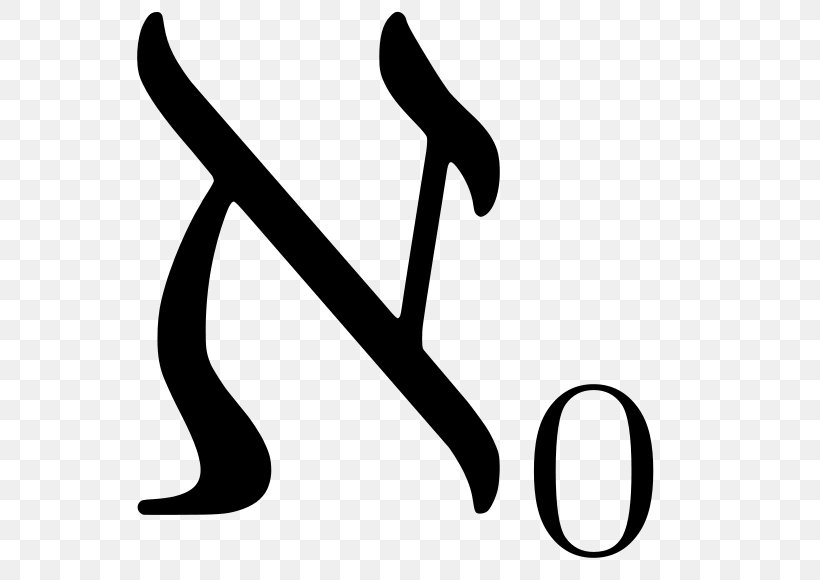
***And we’re just discussing the “smallest” infinity, Aleph Number Alef 0 Cardinality Mathematics Infinity, PNG, 565x580px ... AKA “Aleph nought” or “Aleph zero” or “Aleph null”.  It’s the so-called “countable” infinity, meaning not that you really could count the whole thing, but you could at least get started and make progress, as in “1, 2, 3, 4,…”.  When you turn to, for instance, the infinity of “real” numbers, you can’t even start counting, because between any two non-identical, arbitrarily chosen real numbers, no matter how close they are to each other, there is an uncountable infinity of real numbers between them!
Trying to be positive about meaninglessness, at least on other people’s behalf

For those of you who may not be reading this on the day it comes out, this post is being written on a Saturday morning.  I’m working today, of course, which is why I’m writing a blog post.  I don’t write blog posts on days when I don’t work, other than the occasional (very rare) brief notice I might put up when I’m out sick.  I do that in case anyone is worried about me.

It’s not that weird to think someone might be worried about me, at least if they’re an unusually kind person who worries and cares even about strangers (and rather pathetic ones, at that)

I had a middling day yesterday at the office, and there were some stressful moments that made me, as I often do, just feel that none of anything is worth the effort.  I encountered one of those situations, which seem to happen often, in which I had either to let someone flout the schedule (and my personal need for an officially scheduled break) for their own purposes or otherwise to feel like I’m being the “bad guy”, since in order to enforce the norms which we supposedly have in place, I have to be harsh.  In an office with so much noise and crap, even to be heard entails raising one’s voice, and to get people who aren’t particularly self-disciplined to respect other people’s concerns, you have to take harsh tones.

I don’t like being in either mode.

I had tried, earlier in the day, to do some meditation in my moments of relative inactivity, just to ease a bit of the tension I felt, which‒as is often the case‒was quite severe as the day began and things got moving.  The fact that it was Friday was of no benefit to my mood, unfortunately.  I work today, as you know, so it wasn’t the end of the work week for me.  But even when it is, the weekend is just a time for me to face how utterly alone and disengaged I am, to lie about in my room and try to pass the time by watching YouTube comedy or science videos, doing some reading, and just trying to avoid random noise and other inputs from the world.

I know; it’s all terribly exciting, isn’t it?  Anyway, of course I don’t particularly look forward to weekends, except to getting a break from the stress that interacting with people almost always brings.  I don’t have any casual and/or fun conversations except when I call my sister on the phone once a week.  I only sleep slightly longer on the weekends because I can take two Benadryl before bed, which I can’t do during the week, since it makes me groggy through the next day.  Even that just seems to let me sleep until about 5:30, and usually not without interruption.

Anyway, sorry, I know that’s all very boring.  Depression is boring, I guess.  It would be, of course.  That’s one of the things about it.  But I guess that I share at least some of this stuff about my life with the idea that maybe, just maybe, someone out there will have a brilliant solution, or some resource, or will be friends with some superhero who can come to the rescue of someone who doesn’t happen to be trapped in a literal burning building, but who is very much figuratively so trapped, and is unable to escape on his own.

Ah, well.  Hope is foolish, at least for a creature like me.  I should just get going and embrace the inevitable fire.  Once the superficial nerve endings go, burnt skin doesn’t feel direct pain anymore…though there are deeper nerves and other signals in the body that still sound the alarms of distress right until the very end, even when there is no point.  So, it’s not a good idea to burn yourself severely if you’re going to survive it.  Thus, my recommendation is to embrace it and let it complete its job.

At least, that’s my recommendation for me.  I don’t actually recommend to any of you that you do any such thing.  Frankly, I hope you all have decent lives, with good friends and families whom you love and who love you.  I hope you have jobs that aren’t too stressful but that pay you a decent wage and make you feel productive and useful.  I hope you have activities that you enjoy in your spare time, topics that interest you, and people with whom you can share your interests, if they’re the sorts of interests that can be shared.  Yes, it’s true that I don’t think there is any external meaning to the universe‒at least, I see no evidence or reason for there to be one‒but that’s fine, that’s whatever it is, it doesn’t really change anything.

You may think you couldn’t bear to live in a meaningless universe, but if the universe is meaningless, then you’ve been bearing living in a meaningless universe already, all your life.  Well done.

And if the universe does have some intrinsic and/or extrinsic meaning, but it’s not something any of us understands, that’s okay, too, because then you will have been living in that sort of universe all along.  Again, well done.

If, however, you think you know the meaning of the universe‒and, implicitly, that you know that it has such a meaning‒then I can’t quite give you as much of a “well done”, because I’m all but certain you’re delusional.  I could be wrong about that, and I’m open to evidence and reasoning on the subject, but my Bayesian priors are quite high (or low, depending on how you approach the question).

Still, even then, it’s hard to hold that against you, as long as you’re not using such delusions as an excuse to cause other people suffering or to take things that you have no credible right to have.  If you’re just doing what you can to muddle through, whatever your beliefs, and trying not to do damage if you can help it, well, that’s how this “life” thing is done, I guess.

Keep it up.

reaching-out