
Hello and good morning. It’s Thursday, the 14th of December in 2023 (AD or CE), and it’s the second to last day of Hanukkah. Not that such a thing matters to me, really. I don’t have anyone with whom I’m celebrating this or any other holiday.
I’m not really celebrating anything at all, come to think of it. That seems appropriate. What, really, is there in this world for me to celebrate that isn’t drowned out by all the noise and idiocy and spitefulness and pettiness?
I’m waiting for the second train today, not the first. I was awake well in time for the first train, but there was not really any point in trying to get to that one. It was at least as crowded as the second train has been, and getting to the office an hour earlier just left me puttering around there. Also, it may have contributed to me writing quite a long blog post, yesterday.
I’m not sure if anyone actually read yesterday’s post all the way through. Certainly, no one appears to have left any comments, even on “social” media—although I guess someone might have commented since yesterday afternoon, which was the last time I checked.
I’ve decided to go back to wearing my slightly larger Timberland boots, which—obviously enough—I have neither given away nor discarded. They are simply more comfortable and feel more protective than most of my other shoes or boots.
I haven’t been doing any long-distance walking for a while, but I’ve walked in total 2 to 3 miles a day each day this week, and there doesn’t seem to be any particular problem with the boots. Of course, my back and my legs hurt—a lot—but they almost always hurt, so it’s difficult to attribute that to the boots. I’ve also not been wearing knee or ankle braces at all this week, because they’re irritating me. They probably give me some benefits, of course, but sometimes I just don’t care.
I’ve been trying to eat a somewhat healthier diet this week—heavy on legumes and beans and nuts and stuff and light on breads and cheeses and all that. I haven’t even had any meat at all. So far, it’s given me terrible gastrointestinal discomfort and has made me feel unwell, but I’m hopeful that this is just because of the shift in diet, and that my system will adjust itself. If it doesn’t do so soon, I may give up on the notion.
Basically, I’m trying to do something, almost anything, to improve my overall daily mood and energy and motivation. Because I really don’t feel any interest in or joy regarding much of anything anymore. I haven’t read more than three or four pages of any book this week (in aggregate), fiction or nonfiction. That’s weird for me, and it’s not a good sign. But I cannot seem to conjure any interest.
If you’ve been reading my blog so far this week, you know I said that I would try to find health insurance for which I could sign up and which I could afford, and I have today and tomorrow left to try to meet my deadline.
That’s a good word, “deadline”. But I guess it may be somewhat ironic when discussing health insurance.
Having that task before me really stresses me out; I don’t like it hanging over me, but I also don’t want to do it, particularly when I don’t even want to take care of myself. The only possible silver lining might be that, just maybe, I might be able to check myself into some mental health facility that’s slightly better than some Florida county or state level shit-holes. I doubt it.
I probably ought to be in some mental health place. I’m almost certainly a “danger to myself”, at least for some portion of most days. Not that I have imminent plans, mind you; don’t get all excited and call the local police. I’m cleverer than that.
It’s quite windy and a bit rainy around these parts today, as it was yesterday afternoon. That probably contributes to my back and legs flaring up above their usual baseline. I’m still keeping up with my pull-ups and dips, though I need to get back into doing more crunches. Maybe that would help my GI and back trouble. It might make it worse. It might have no effect whatsoever.
That’s the conundrum, and I cannot really do a case/control, double-blind sort of test to find out clearly what the reality is. It may be that the boots I’m wearing now have never actually caused me any trouble, and that it was merely coincidence that I had flares-up before when wearing them. Or my assessment may have been accurate.
None of it really matters, anyway. I should just walk and walk, as much as I can, and to hell with the pain. It’s not as though resting makes it go away, though pain does make one not want to do much. That’s a biological, organismal thing, though, and it doesn’t necessarily make for the local best decision.
The train will be here in a few minutes, so I’ll wrap up this waste of your time for today. If you’re celebrating Hanukkah, please have a good last few days thereof. Please have a good day and good days in general if you can. If you feel like commenting, please do so. If you are able to “like” a post and wish to do so, please do. If not, it won’t hurt my feelings. I won’t even know it didn’t happen, not in any specific sense. Eight billion people fail to “like” my posts every day, and I hardly even notice most of them.
TTFN


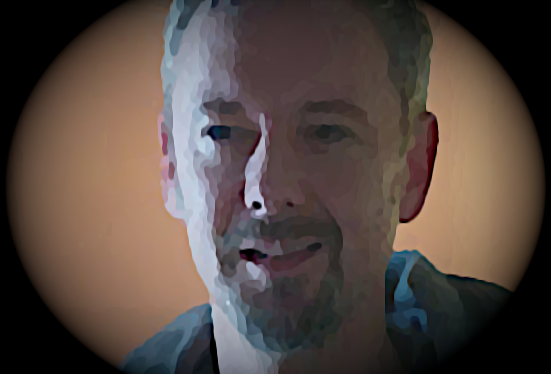


 Robert Elessar