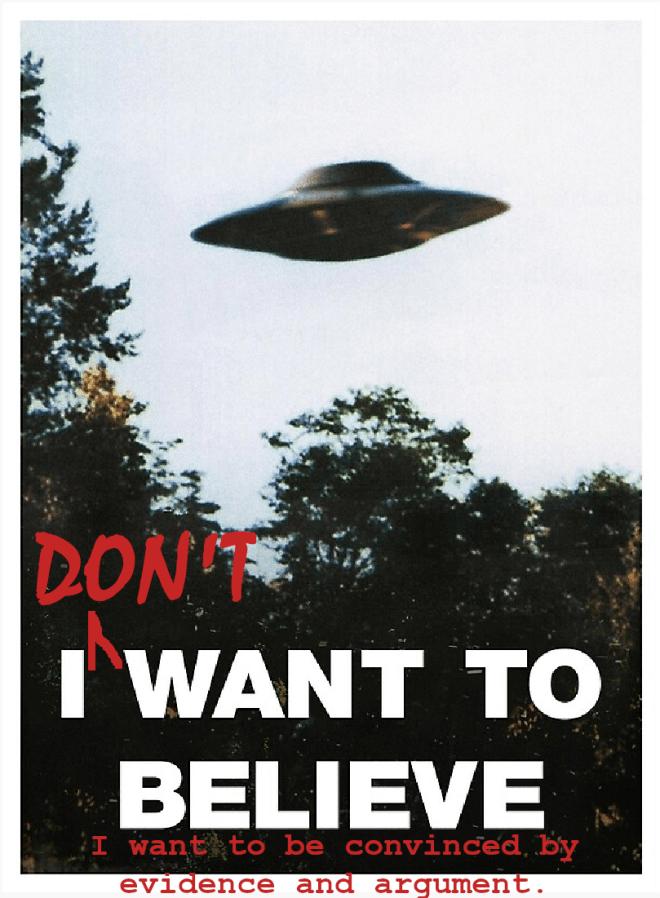
Knock there and ask your blog what it doth know

Hello and good morning.  It’s Thursday.  At least, I think it’s Thursday.  I’m wearing my Thursday trousers and my Thursday boots.  You may think I’m joking, but I’m not; I have a specific pair of each of those things for Thursdays.  The other days of the week are not quite as specific because all my other trousers and shoes are identical one to another, at least in “make and model”, if you will, though some have seen more wear than others.

I don’t like having to choose what to wear anymore, and I don’t want to have to worry about matching colors or styles or anything like that.  So it’s all black, same shirt brand and model, same trousers, underwear, socks, and shoes.

But on Thursdays, I wear a pair of‒get this‒gunmetal gray trousers*.  They are the same brand and “model” as the others, though.  Interestingly, the gray ones don’t hold a crease nearly as well as the black ones do; possibly something about the dyeing process affects the fabric.

Oy, this is boring, huh?  I can’t believe I’ve been writing about my clothes!  The thing I meant to address when starting this post was that I feel mildly unsure about days and dates lately.  I’m not completely lost, of course; I can check my phone and computers and whatnot to confirm the day and the date and the time.  Also, of course, I remember writing in yesterday’s post about how the date numbers were 1-2-3 in order, so it was December 3rd.  And yesterday I did the payroll, which means yesterday was Wednesday**.

There is, however, a circuit or module or subroutine in my brain/mind that seems weaker than it is in many other people:  the feeling of being right (as in “correct factually”, but to a lesser degree, also the feeling of being morally right).  This is not to be confused with the intellectual process of discerning whether something is correct, in either sense.  I’m talking about the feeling, the belief if you will, that one is right, which often has very little to do with actually being right.  One is an intellectual process while the other is an emotion, and emotions are unreliable indicators of truth or guides to action‒but they are powerful***.

This is an important and consequential dichotomy.  It gives rise to the tendency for a particular societal issue, so nicely put by Yeats:  “The best lack all conviction, while the worst / are full of passionate intensity.”

I strongly suspect that it’s not being “the worst” that leads to such passionate intensity, but rather passionate intensity‒that feeling that one is right‒that makes one prone to do horrible things.  If you feel that you are right, you’re more inclined to give yourself license to do whatever you think is “for the greater good”.

I think this is also part of the explanation for OCD****.  Sufferers have some dysfunction in the parts of their brains that produces the feeling of being right, so they have to keep rechecking and can become more and more unsure of more things, developing “rituals” and repetitive behaviors to try to stave off the anxiety of not being able to feel that one has, for instance, turned off the stove, even when intellectually one knows, or at least has good reason to think, one has done so.

I have at least a little of this problem, perhaps best exemplified in my use of mental arithmetic.  I keep track of ongoing sales at an individual and group level in the office, by dollar amount and by what is sold and so on, and I put it up on “the board” to update it as it happens.  Over time, I’ve gotten pretty good at mental arithmetic‒I never was very bad at it‒and I’ve even gotten to the point where, for fun, I will do some algebra and calculus equations in my head, say if I see one as the thumbnail of a YouTube video.

But even though I’m generally confident of my results intellectually, I never feel okay enough not to check my numbers using the functions of, for instance, Excel.  So, I can run many numbers faster in my head than I could using a calculator, but I cannot trust my answers.

At some level, I think this is better than the alternative.  We can probably all think of people who are quite sure of themselves, quite confident in the results of whatever “thought” processes they have gone through, and yet are woefully off-track or unqualified or just fucking wrong.  And we see what such people do to the world, because they are quite comfortable asserting themselves and seizing power and resources, because they feel that they are in some sense correct.

When you feel that you’re right, you don’t tend to check yourself as often as you would otherwise.  You also are less open to criticism and suggestions, because they fly in the face of your feelings.  This phenomenon is nicely explored in the book On Being Certain: Believing You Are Right Even When You’re Not by Robert Burton, MD*****.

I could go on and on and on about this, I’m sure.  But it’s time to draw this to a close for the day.  I will finish with one of my favorite quotes from Radiohead:  “Just ‘cause you feel it doesn’t mean it’s there.”

TTFN


*Why do I use the word “trousers” rather than “pants” when I’m an American?  Well, I watch a lot of British comedy panel shows, to the extent that I find if I say “pants” I feel that I’m talking about underwear, since that’s to what the British term “pants” refers.

**Last week, though, due to the holiday, I did the payroll a day early.  And, of course, I didn’t wear my Thursday pants (trousers) at all last week; I wasn’t going to work, so I just rewore the clothes from the day before.  It wasn’t as though I was planning to interact with anyone else, and indeed I did not.  Still, maybe the holiday has thrown me off a bit.

***For good, sound biological reasons as I always say, but such reasons can easily overshoot usefulness and become detrimental.

****It may also contribute to chronic tendencies toward depression, in which one never feels one is “right” either literally or morally or existentially, and also to the tendency for people with depression to be more prone to be accurate in their self-assessment of things such as, for instance, driving ability.

*****I just realized that “On Being Certain, by Robert Burton” rhymes.

I well believe thou wilt not blog what thou dost not know, and so far will I trust thee.

Hello and, of course, good morning.  It’s Thursday, which you may have savvily guessed‒you are a clever one‒from the fact that I started the post with a variation of “Hello and good morning”.  Also, you’ve probably seen that the title above is some modified Shakespearean quote, though as I write this, I have no idea what that quote will be, other than that it will, with very high probability, be a quote from Shakespeare.

Not much new has happened since yesterday’s post‒not for me, anyway.  There’s plenty of material out there for those who wish to comment on what’s happening in the naked house ape world (said apes sometimes imagine that their “world” is of cosmic importance, but it’s actually not even a flash in the pan as far as the universe is concerned) but I try to avoid commenting on such things here, except to note that, boy, humans can be remarkably stupid.

There was a recent-ish Doctor Who episode in which the bad guy made every human on Earth feel absolutely convinced that they were right, about whatever opinions they might hold.  Predictably, this led to global chaos and destruction.  But wouldn’t it be wonderful if we could do the opposite, or roughly so, to the whole of humanity?  I’m not talking about making people all believe they are wrong about everything; I don’t even know quite how that would manifest itself.  I just mean removing or strongly blunting the sense of feeling right about things.

It’s a reasonably well-attested fact* that people prone to depression, for instance, are not prone to rate their own skills and abilities as worse than they really are but instead are more realistic about them.  This is as opposed to the more “typical” people, not prone to depression, who overestimate their own capabilities, e.g., the notion that, say, ninety percent of people think their driving skills are above the median**.  So, though people who are prone to depression are, well, prone to depression, they are at least less prone to start wars and commit atrocities based on half-baked ideologies.

Oh, and by the way:  to a good first approximation, all ideologies are half-baked.  This isn’t to say that they all are completely wrong.  It’s merely to say that not one of them actually contains “everything you need to know about” whatever.  If they did, it would be painfully obvious to every intellectually honest person.  Intelligent, well-meaning, non-delusional people would be convinced by the ideas as soon as they understood them.  People prone to depression might find consolation and some degree of peace in them.  Atheists would be “converted”.

The notion that any self-contained set of ideas could hold the answers to “life, the universe, and everything” flies in the face of all logic (and few things are more annoying than flies in one’s face).  For crying out loud, it takes hundreds and hundreds of pages to explain rigorously the nature and implications of classical motion, as in Newton’s “laws”, with subsequent improvements by Laplace and Lagrange and Hamilton and so on, and all that is only an approximation, at macroscopic scales, to our best understanding (which is known to be incomplete) of the physical nature of reality.  And that’s not counting electrodynamics and gravity, let alone getting into the strong force and the weak force and so on.

It’s a distressing tendency, this human desire to feel right, to want to think that they know the answers and so don’t have to think about things anymore.  It leads to so much more of the trouble in the world than “simple” evil does.

Psychopaths, I suspect, do far less harm overall than people with normal moral capacities‒good people, so to speak‒who believe that they are right.  “For the greater good” is the kind of sophistry that can, to paraphrase Ayn Rand, fumigate any atrocity, including the slaughter of a continent.

Of course, Rand-sensei fell prey to her own self-created dogma and the personality cult that had grown up around her, leading her to get stuck in some quite dubious conclusions.  This is despite her commendable starting points (i.e., metaphysics:  objective reality, and epistemology:  rational thought).  If only she hadn’t been so dead-set against humility.

Humility****, after all, is not really the belief that you are fundamentally worthless (though that may indeed be true on any sort of cosmic scale), but just the recognition that you are subject to error, like every finite being (and probably most “conceivable” infinite ones), and that, it being error, you will not necessarily know where it lies.  It is, after all, the place in which you are mistaken; if it were glaringly obvious, you might be expected to have noticed it already.  Being wrong feels the same as being right, at least until you realize that you are wrong.

There, I did some broad level commentary on the nature of at least some of the world’s problems.  Let this be my open warning against certainty, especially in the realm of morals, especially when you’re assessing other people.  If you ever find yourself in a situation in which you feel that the suffering and even death of other people is tolerable, or even desirable, in order to achieve some presumed better future world, you should stop and maybe induce a seizure so you can reset your brain.

On the other hand, if you just believe something so much that you’re willing to suffer and/or die yourself, and only yourself, well, that’s on you.  Knock yourself out.

TTFN


*I think this data has withstood the reproducibility crisis in psychology, but correct me if I’m wrong.

**I say median instead of “average” because the average is usually meant to refer to the arithmetic mean, but it is in principle entirely possible for ninety percent of people to be above the mean, but not for any more than fifty percent of people to be above the median, by definition***.

***This is one of those rare cases where it’s fully appropriate to say “by definition”, because it is not merely rhetoric but literally applies, the median being a mathematical term with rigorous meaning.

****I just recognized, while editing, that this is the subject/topic/trigger for what is to be my next song.

“There are times I almost think I am not sure of what I absolutely know…”

Since yesterday was Monday, the 30th of June, it’s almost inevitable that today would be Tuesday, the 1st of July.  And, in fact, that is the case, unless I am wildly mistaken.

If I were to be wildly mistaken about such a thing, it’s rather interesting to consider just how I could come to be so wildly mistaken about something so prosaic and so reliably consistent.  It is from such speculations that—sometimes—ideas for stories begin.

This is not one of those times, however.  I’m not thinking about any kind of story related to that notion at all, though at times I might consider it an interesting takeoff for some supernatural horror tale.  If any of you find yourselves inspired to write a story—of any kind—based on my opening “question”, you should feel free to write that story.  I, at least, will give you no trouble.

These sorts of thoughts also remind me of a post that Eliezer Yudkowsky wrote, and which also appeared as a section in his book Rationality: From AI to Zombies.  I won’t try to recapitulate his entire argument, since he does it quite well, but it was basically a response to someone who had said or written that, while they considered it reasonable to have an open mind, they couldn’t even imagine the sort of argument or situation that could convince them that 2 + 2 for instance was not 4 but was instead, say, 3.

Yudkowsky, however, said that it was quite straightforward what sort of evidence could make him believe that 2 + 2 = 3; it would be the same kind of evidence that had convinced him that 2 + 2 = 4.  In other words, if it began to be the case that, whenever he had two of a thing and added two more, and then he subsequently counted, and the total was always three, well, though he might be puzzled at first, after a while, assuming the change and all its consequences were consistent and consistent with all other forms of counting, he would eventually just internalize it.  He might wonder how he had been so obviously mistaken for so long with the whole “4” thing, but that would do it.

This argument makes sense, and it raises an important point related to what I said last week about dogmatic thinking.  One should always, at least in principle, be open to reexamining one’s conclusions, and even one’s convictions, if new evidence and/or reasoning comes to bear.

That doesn’t mean that all ideas are equally up for grabs.  As Jefferson pointed out about governments in the Declaration of Independence, things that are well established and which have endured successfully shouldn’t be cast aside for light or frivolous reasons.

So, for instance, if you’ve come to the moral conclusion that it’s not right to steal from other people, and you’re pretty comfortable with that conclusion, you don’t need to doubt yourself significantly anytime anyone tries to justify their own personal malfeasance.  Most such justifications will be little more than excuse making.  However, if one should  encounter a new argument or new data or what have you* that really seems to contradict your conclusion, it would be unreasonable not to examine one’s conclusions at least, and to try to do so rigorously and honestly.

There are certain purely logical conclusions that will be definitively true given the axioms of a particular system, such as “If A = B and B = C then A = C”, and these can be considered reasonably unassailable.  But it still wouldn’t be foolish to give ear if some reasonable and intelligent and appropriately skilled person says they think they have a disproof of even that.  They may be wrong, but as John Stuart Mill pointed out, listening to arguments against your beliefs is a good way to sharpen your own understanding of those beliefs.

For instance, how certain are you that the Earth is round, not flat?  How well do you know why the evidence is so conclusive?  Could you explain why even the ancient Greeks and their contemporaries all could already tell that the Earth was round?

How sure are you that your political “opponents” are incorrect in their ideas and ideals?  Have you considered their points of view in any form other than sound bites and tweets and memes shared on social media, usually by people with whom you already agree?  Can you consider your opponents’ points of view not merely with an eye to puncturing them, but with an eye to understanding them?

Even if there’s no real chance that you’ll agree with them, it’s fair to recognize that almost no one comes to their personal convictions for no reason whatsoever, or purely out of perversity or malice.  At the very least, compassion (which I also wrote a little bit about last week) should dictate at least trying to recognize and consider why other people think the way they do.

Sometimes, if for no other reasons, it is through understanding how someone comes to their personal beliefs that one can best see how to persuade them to change those beliefs (assuming you are not swayed by their point of view).

This is a high bar to set when it comes to public reasonableness, I know, but I think it’s worth seeking that level.  Why aim to be anything less than the best we can strive to be, as individuals and as societies?  We may never quite reach our ideals, but we may at least be able to approach them asymptotically.  It seems worth the effort.

But I could be wrong.


*I don’t have any idea what such an argument or such evidence would be, but that’s part of the point.  Presumably, if I were being intellectually honest, and someone raised such a new argument, I would recognize it for what it was.

Dreams of a rational culture

I’m writing this on my mini laptop computer again today, because I got tired of the frustrating process of doing stuff on the smartphone.  Really, writing and texting and everything else via the smartphone is more often than not terribly annoying.  I know Steve Jobs got inspired by Star Trek: The Next Generation and wanted to make some version of a tablet with their touch-screen controls and all, but that was fiction.  If he wanted to make something more useful based on Star Trek, why couldn’t he have put some money into warp drive or something?

Of course, he was mainly a software guy, not actually any kind of physicist or true engineer or something, any more than Elon Musk or Jeff Bezos or Peter Thiel or any of these other successful billionaires and so on are.  Don’t get me wrong; I’m sure they’re all reasonably clever, and they’re decent at business, especially at business that doesn’t require them to manufacture things that require serious production and safety and stress testing and all that.

Well, okay, Musk does make cars that are often quite decent (from what I have seen) and rockets that are sometimes quite impressive (and often not).  But mostly what these really successful business people seem to be good at is marketing, AKA self-aggrandizement.  Likewise for successful politicians.

They don’t actually have to be exceptionally good relative to their competitors, they just have to convince enough people that they’re cool and clever, and that if those people want other people to think that they are cool and clever, they should buy their products or use their services or whatnot.  It’s all rather pathetic on their part, and even more pathetic on the part of the people who faddishly embrace them.

Again, don’t get me wrong; I like things about Amazon, for instance, especially the ability to get books that I never was able to find even in Barnes & Noble or Borders (RIP) or Books-A-Million.  And I publish through Amazon when I publish my own books (or, rather, when I used to do so) because of their reach, not that it did me any particular good—I, unlike the humans to whom I referred earlier, am not a natural self-promoter.

I wish humans were less enamored of having obnoxious, “flashy”, egotistical (often male) tribal leader types and instead focused on competence and level-headedness.  Just imagine if most of our politicians were not interested in bombast and attention and rhetoric and recognition and “importance” and were just mainly interested in doing a good job on behalf of the people who elected (i.e., hired) them.

I don’t know what point I’m trying to make here.  I never plan these posts out ahead of time, so they are very much just whatever pops out of my mind on any given day.  In a way, all of you reading are only slightly more surprised by what you read here than I am by writing it.

Still, I don’t think I’m alone in wishing people would be less flash and more substance.  Then we wouldn’t have brain-worm-dead people like RFK Jr. in charge of the nation’s healthcare and medicine organizations when he is not merely unqualified but is anti-qualified.  Ditto for the one who appointed him (and for the abysmally cowardly congresspeople who approved the appointment and the poor misled people who elected them all).

If people in general were less interested in seeing who “owns” or “destroys” someone else in mere “debate”, but instead were interested in seeking reliable information and solutions together, things would likely be better.  If we want to try to model things in our society after Star Trek, I wish we could try to instantiate some version of Vulcan philosophy and practice.  Mr. Spock is so much more admirable as a character than nearly every other person on the original Enterprise, and Captain Picard in TNG is almost Vulcan in his own character.

We shouldn’t, of course, seek to eliminate emotion; that’s hardly possible.  Emotion is what gives us impetus, and indeed, that may be its entire biological “purpose”.  But we can try to govern our passions (to quote Spock) to make them our faithful servants rather than our capricious and chaotic masters.  This is not impossible by any means.

Not that I am a master of my own emotions, especially my negative ones.  But I do not consider them to be anyone else’s major concern, and certainly no other person is responsible for them or to blame for them.  I try not to let them destroy me, though I am so inclined.  But if we could all put more emphasis on, for instance, Stoic philosophy, on Vipassana and Metta and similar meditation practices and some of the ideas from, for instance, the Tao te Ching, I think all the world would be better.

I guess for now, at least, it’s a pipe dream—whatever it is I’m “dreaming” about, that is.  Frankly, I’m not sure what I’ve written here today, so far, or if there’s any coherence to it at all.  If there is not, I can only apologize at this point, because I have no intention of starting this post over.  Hopefully I’ll be able to get through this day less down and discouraged than I was yesterday*.

The world is terribly annoying and disappointing and, yes. discouraging, and my own personal life is in some ways even more so of all three of those things.  I try not to let it defeat me, but perhaps that very determination to keep playing the stupid game of the stupid human race and the stupid universe is the very thing that should count as being defeated—being fooled into taking part in the pantomime that is “civilization” instead of making my quietus, or perhaps finding some other path.

I guess I have to figure that out for myself, as with most things for most people.  Please try to have a good day if you can.  It would be nice if someone could do so.


*Apparently, I was so plainly depressed that someone (or perhaps “the algorithm” itself) on Threads thought that I might need help, and I got another one of those “someone thinks you’re having trouble and might need someone to talk to” or whatever that message is, along with a link to the mental health/suicide hotline.  Frankly, I’m amazed that I don’t get such suggestions every day, since I spend at least part of each day thinking about dying—and not thinking about it as a passive thing.

Dogmas are a disease, a cancer of the mind. Avoid carcinogenic thinking if you can.

I’m going to try to keep this brief this morning, so even though I brought the mini laptop computer with me when I left work on Friday*, I am writing this on my smartphone.  It does make my thumbs sore, or at least it highlights their inherent soreness and stiffness, but that’s part of what makes me tend to write less.  Or at least, I write more slowly; it is not always easy to get me to write less.

I’m choosing this partly because I am just very tired.  On Friday nights and Saturday nights, I can take a couple of Benadryl and so on to help me sleep‒I know it’s not truly good sleep, but just being unconscious for more than an hour or two at a time is such a relief‒but on work nights that’s no good.  So, especially after the artificially extended sleep on the weekend, I tend to have a bad sleep on…well, on every other night, really, but Sunday is the first such night in the work week.

Another problem, and part of my reason for worse sleep, is that I am having a bit of a flare-up of my back/hip pain, and that makes nearly every effort feel that much harder, including simply trying to sleep‒although that’s a somewhat different type of effort than many others.

So, yeah, if there’s anything noticeably different in my writing style today than in my last handful of blog posts, it may be because of the fact that I’m writing on the smartphone.  It may also be something else entirely, of course, or even a combination of things (this seems most likely).  Just because one idea seems to provide a good explanation‒a good story, if you will‒doesn’t mean it’s right.

That’s a common trap into which I frequently see people fall, and it always annoys me (especially when I’m the person).  Some situation will happen, some occurrence will occur, and someone will propose‒perhaps just to themselves‒some reason, some explanation for the event(s), and it will seem at least somewhat plausible, and at least physically possible, and it doesn’t have any glaring logical inconsistencies.  And that’s where they stop.  In their heads, that will be what they think of as the actual explanation for whatever it is they’re explaining.

Unfortunately, this is actually‒at best‒a hypothesis.

Now, if people just recognized that fact and kept the notion in their heads as a hypothesis, then this would be no problem.  All knowledge about the world is, in principle, provisional**.  There’s nothing wrong with having a hypothesis that you recognize as such.  All good science proceeds from speculation (first triggered and then confirmed or denied by observation and testing).

If one has relatively non-crucial concepts to address, one need not even be particularly bothered about confirming or denying one’s little hypothesis.  One can simply have it, tacitly implied, sitting there in potentia in the process of one’s mind.  Then if, quite by chance, one should encounter data or concepts or arguments that bear on the likelihood of that hypothesis, one can‒sometimes quite unconsciously‒adjust one’s hypothesis, or one can discard or replace it or even find oneself more confident in it.

This is all well and good.  But all too often, humans take their first plausible seeming notion and decide that they must now have the answer.  And then, depending on their emotional connection to the idea, if they encounter disconfirming evidence or argument, they twist away from it, dismiss it, seek out only pseudo-confirming ideas and evidence or even (shudder) just the company of other people who share their epistemologically suspect ideas.

These are such things as conspiracy theories are made on, or even religions (literal or figurative ones, including cultish forms of economic theories and philosophical ideas).  And when one does not update one’s ideas, when one is not aligned with reality, sooner or later, one will collide with it.  When one collides with reality, it’s never reality that is damaged.

If it were only the person who persisted in self deception that got hurt in the crash, it would still be tragic but at least at least it would be tolerable.  But as with literal crashes, the innocent are all too often harmed and made to suffer as a consequence of someone else’s poor judgment.

This is part of why I despise all dogmatic thinking.  I even coined an expression in relation to it:  Spay and neuter your dogmas!

Do not let them propagate.  Dogmas are among the most perilous of meme-plexes because they are so stiff and brittle and they tend to have sharp edges.  But even when they don’t, there is still the problem of going against reality.  One can imagine the real nature of the world as a kind of tunnel or pipe or tube‒in places it is very wide and in places very narrow.  In some regions, a fair amount of variability in course is tolerable within it, but sooner or later, if one is not moving parallel to the course of reality, one will hit a wall.

How bad the collision will be can depend on many factors; one can have a mere scrape, or a glancing blow, or one can have a true “crash and burn” situation.

Those are generally worth avoiding.

Okay, that’s it for today.  I feel a bit grumpy and curmudgeonly right now, largely because of my pain and poor sleep, but sometimes it leads to decent writing.  Whether that’s been the case today, I’ll let you be the judge.  I am not impartial.

Have a good one.


*In case it wasn’t clear, I did not work on Saturday.

**Even the old cogito ergo sum.  And don’t get me started on cogitum ergot hatto.