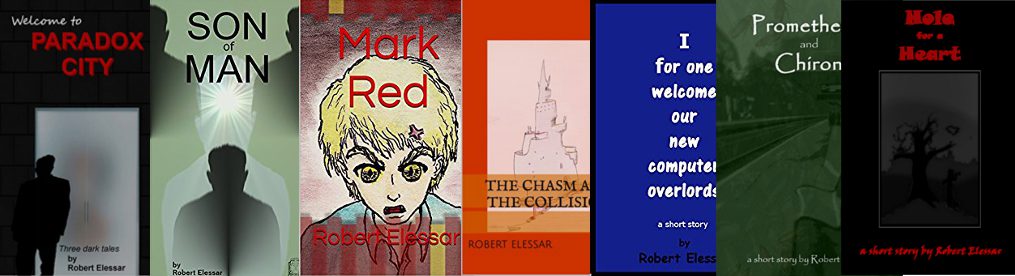
No links to famous people’s works here. They don’t link to ME, after all.

I thought for a moment that someone had been listening to me, because when I started this new Word file from the last blog post I wrote on my mini-laptop computer, it was in Calibri font right from the beginning!  Then I went and closed the earlier file/blog post, and when I had returned to this one, the base font had reverted to Aptos (which I like to call “craptos” because I don’t think it merits a more sophisticated insult).

So, it turns out that no one was listening to me, of course.

It’s Tuesday now, and I’m writing this on my laptop computer as indicated above.  This will probably make it faster to write, but whether it’s any better written than yesterday’s post, I cannot say.  I felt that yesterday’s writing was fairly erratic and disjointed and borderline incoherent, but I often have a difficult time judging how my writing will be perceived by other people.

If it’s fiction, I can only care up to a certain point, because I write fiction that I want to read, so I cannot try to adjust it for others too much.  I can only guess that somewhere out there exists at least one other person whose reading taste is similar to mine, and who might enjoy my stories.  So far, not counting my sister*, I don’t know of more than three people who have read any of my fiction, so it’s hard to tell.

But, of course, though my tastes have been esoteric at times—especially when it comes to my love of relatively deep scientific and mathematical and philosophical reading—I have also enjoyed some massively popular books of certain kinds.  For instance, my very favorite book of all time is The Lord of the Rings (taking it as one large book, as it was initially written), and that’s hardly a rare choice.  Similarly, I’m a great fan of Shakespeare, and it’s not as though no one else ever reads or otherwise enjoys his plays.

There have also been popular series of books for which I waited eagerly and excitedly as each volume came out, including The Second Chronicles of Thomas Covenant, The Belgariad, the various Dragonlance books**, and of course the Harry Potter books.  I’m sure I’ve written here somewhere about how I read Harry Potter and the Half-blood Prince seven times while waiting for Harry Potter and the Deathly Hallows to come out.  All of these books have been quite popular, and I enjoyed them, too.

Then again, I had no interest whatsoever in any of the Twilight books, though I have written about vampires (and a demi-vampire) in one of my own books.  Likewise, I had no interest in Fifty Shades of Grey or the various Dan Brown books, and I haven’t read any new science fiction or fantasy in years, not counting Japanese light novels.

Speaking of that, I am very much impatient for some new volumes in a few light novel series I have read so far, but being light novels, they are much quicker to read than they are to publish.

In any case, I mean to say that just because I write to my own taste doesn’t mean that my stories are particularly esoteric in their nature and character.  I may be an alien in disguise, even to myself, but that doesn’t mean that stories that are bad are going to interest me.  Good stories have at least some degree of universality.  Even the Klingons love Shakespeare!***

My point is that, though I know I am a peculiar bean, I also think there are probably a lot of people (maybe not a majority, but a lot) who would enjoy at least some of my books and short stories.  But I am not good at promoting myself and making other people aware of my work.  This is probably related to my ASD and the related social anxiety, but also to my general self-hatred.  I tried to do a little promoting of my stuff at first, but it quickly became too stressful and irritating for me to tolerate.

So, if anyone out there has it in them—and so desires—to promote my stuff, even if just by sharing links and references in your own social media, that would be appreciated very much.  And while we’re at it, if anyone out there has a quick and easy cure for chronic pain*****, let me know.  Also, I want a unicorn.  (Actually, I want a dragon, but that might be harder to keep safely.)

Well, this post has probably been just as goofy and incoherent as yesterday’s.  My apologies.  That is, unless you like that sort of thing, in which case:  enjoy.  And try to have a good day.


*Not to imply that she doesn’t “count” in some important sense—she most certainly does—but just that it’s difficult to tease out the family relation from the other variables in the mix, so I cannot draw too many conclusions too easily.

**The ones that involved Raistlin, at least.  I didn’t have much interest in stories involving only the other characters of the stories.  Those of you who know those books can probably understand why this is so.

***Indeed, as the Klingon ambassador said in Star Trek VI: The Undiscovered Country****, “You have never experienced Shakespeare until you have read him in the original Klingon.”

****The title itself is a Shakespearean reference, though in the movie, the undiscovered country is peace, whereas when Hamlet said it, he explicitly referred to death as the undiscovered country, one from whose bourn no traveler returns.

*****I don’t want to hear anyone saying “death” because that doesn’t count as a cure.  It makes the problem go away; it doesn’t solve it.  There is a difference.  And, don’t worry, as readers of my plan know, that is my own intended course of action if I cannot reduce my pain enough.

If I have veil’d my blog, I turn the trouble of my countenance merely upon myself

Hello.  Good morning.

I really wished that this would be the Thursday blog post that I would title with the unaltered Shakespeare quote, “The rest is silence”, which is Prince Hamlet’s last line before he dies.  Then maybe I would share a brief clip from the video for the Radiohead song No Surprises, the part where Thom Yorke sings, “I’ll take a quiet life, a handshake of carbon monoxide, and no alarms and no surprises.  No alarms and no surprises.  No alarms and no surprises.  Silent.  Silent.”

Unfortunately, this will probably not be my final fit nor my final bellyache.  I certainly still feel compelled to write this today.  I woke up quite early, as usual, and lay in my room just staring about, wondering if there was any excuse I could give for not going to the office, and whether staying at the house would be in any way better than just going in.  Neither seemed to be the case.  So, finally, I got up, showered, and decided to take an Uber to the train very early.  In fact, I arrived just as the first train of the day was pulling into the station, though I made no attempt to catch that one, since it was functionally impossible.

And now, here I am, sitting and sweating and writing.

A weird thing did happen as I was getting ready to go this morning.  I put in my earphones and pulled up YouTube Music and chose my playlist “Favorite Songs”, with YouTube doing its little self-promotion about some new, unrequested service it now provides or something, in which I had no interest.  Anyway, I tapped the “shuffle playlist” option, and the song/video that came up first was my own song, Schrodinger’s Head.  But the song that began playing was none other than the aforementioned No Surprises.  It continued to play, overtop of my own song’s logo and screen, even when I backed up to the beginning of the song.  It didn’t correct itself until I’d skipped to the next song and then came back, at which point it was my own song that started playing.

That’s a strange glitch.  Does it mean that the program loads “video” and “sound”, at least in YouTube Music, as two separate processes?  I usually just go for the song rather than the video option (when that’s available), but I have always guessed that doing so simply involved the suppression of the video portion of the file in some sense.  But I’ve not ever seen a mixed song and video from different sources.

Not that I’m bothered.  It’s far from insulting if a Radiohead song presents as if it were my own.  Well, it might be insulting to Radiohead, but not to me.

Anyway, I didn’t actually listen to either song at the time.  I realized that what I really wanted was actual silence, and just leaving the earphones in but not playing anything is the closest I can come to that.  Of course, tinnitus means I haven’t experienced full silence for about 15 years, at least not in my right ear, but I can try to come as close as possible.

My pain wasn’t as bad yesterday during the day as it had been on the previous two days, and that’s definitely a good thing, though now it’s acting up more severely again.  That’s not really anything new.

As I stood outside waiting for the Uber, the air was as usual in the morning lately:  stagnant and still in addition to being hot and humid.  But far up and away to the east and south were high clouds, and there was rather frequent lightning to be seen, then and when I was riding to the train.

We used to call that “heat lightning” and I think people imagined it was something different than usual lightning, but my current understanding is that it is the same electrostatic phenomenon, merely much higher in the air (where I suspect the resistivity is lower, though I may be wrong about that…in any case, there would be more cosmic ray bombardment to seed ionization paths for lightning to follow).

Of course, one never hears thunder from heat lightning.  Maybe that’s because it’s so high and far that the sound is thin even to begin with, since sound travels more slowly and less effectively through less dense media.  And then, of course, as it hits the lower atmosphere, trying to enter a denser medium (with faster propagation speeds) it might be unable to penetrate.  Indeed, there might* be a phenomenon analogous to total internal reflection, the process that, among other things, allows fiber optic cables to work with essentially no signal loss.

When light is traveling through a dense medium, like glass or diamond, in which it moves much more slowly relative to its speed through air or vacuum, and it comes to an interface where it would pass out into a much less dense medium‒where it would travel much more quickly‒if it strikes at too shallow an angle, it will not exit its current medium at all, but will instead fully reflect, effectively without any loss.

My first thought was that it was the opposite situation for sound traveling from high, thin air to lower, much denser air.  But then it occurred to me that it’s not the density of the medium that directly causes total internal reflection, or any refraction, really.  It’s the differential speed of propagation that causes refraction and total internal reflection**.  And sound travels more quickly through a denser medium, not less quickly, whereas light does the opposite.  So, comparatively slow sound in thinner, upper air, coming to denser, lower air, might reflect if it arrives at a shallow enough angle.

It’s somewhat like being below the surface of a pool.  We know that sound travels much better and farther in water than air, but if your head is underwater, you may not be able at all to hear people talking who are standing near the pool, and you might not even be able to hear loud ambient music (unless a subwoofer is in contact with the ground/floor and thence to the pool).

I think I’m more or less on track with this as at least part of the explanation for the fact that one never hears the thunder that accompanies very, very high lightning.  Of course, some of it could simply be ordinary attenuation, since the intensity of sound falls off as the square of the distance (as with light, also…this is one of those physical facts of reality that is directly caused by the geometry of three-dimensional space, nothing more esoteric and nothing less profound).  But that doesn’t seem to me to be an adequate explanation for why one never hears the sound of “heat lightning”.

Well, that’s enough ado about nothing for today.  It’s more than I expected or wanted to write.  I mostly just wanted to write some form of goodbye.  But the horrible, terrible, inexorable pressure of habit and routine in someone with a particular type of nervous system can be nearly as potent and irresistible as the laws of reflection and refraction and geometry.  I can only seem to escape such habits when I am forced by external circumstances to do so, but then new habits and routines‒compulsions, really‒take the place of the old ones.  I try to procure useful habits when I can, but one cannot entirely pick and choose such things.

I fear my only escape will happen when I actually die.  Of course, if time and space are fixed and super-deterministic, then even that might not actually be an escape.  As far as my experience goes, it might just lead to me starting over at the beginning, like a video being played on a loop.

Nietzsche actually used that notion (obviously not based in Einsteinian concepts, but it doesn’t have to be) as the basis for a thought-provoking question:  if you knew for certain that, once you die, you would then live your life over and over again exactly as it happened this time around, how would you change your current and future behavior?  Is your life now one that would horrify you to repeat infinitely, or would it be okay?

Inquiring minds want to know, I guess.  Or maybe not.

TTFN

no surprise


*This is just me speculating in real time.  If anyone knows the correct answer, please let me know.

**Thus the frequent demonstrative analogy used to teach about refraction:  a row of soldiers marching side by side coming at an angle to a place where they leave hard, firm ground and enter deep mud, which will tend to change the angle of their movement.  Alternately, one often encounters the story of a lifeguard running across the beach to save someone drowning, needing to judge the best place to enter the ocean to minimize the overall time taken to reach the swimmer.  Too much time in the water slows the lifeguard too much, too much time on land makes the path longer, and thus also slows the lifeguard.  The lifeguard’s path of least time turns out to be exactly analogous to what light does when refracting through differing media.  A brilliant, “for-the-layperson” account of the quantum mechanics behind this is given in Feynman’s QED: The Strange Theory of Light and Matter.

Two Shakespearean Soliloquys

Okay, so, here’s the deal.  The other day…I think it was yesterday…I was playing with my phone, and a new phone mount I’d gotten (they’re very cheap, to my surprise), and I decided to do versions of two of my favorite soliloquys from Shakespeare.  Readers of this blog should not be surprised that I am a HUGE fan of Shakespeare.  Once, while in university, I took two different Shakespeare courses at the same time, and it was the best semester ever.  I had two different versions of the Complete Works of Shakespeare for the two classes, and that was great too, though I had to return them to the NROTC Unit at the end of the semester.

Anyway, it was fun doing the videos, and I uploaded them to YouTube, and I am hereby embedding them below.

The first, the longer of the two, is Hamlet’s most famous soliloquy, which I jokingly said was in response to him having just read The Myth of Sisyphus by Albert Camus.  It fits, if you know the book.  Here it is:

The second is Macbeth’s brief soliloquy, immediately after he learns of his wife’s death, and may even be more famous than Hamlet’s.  Well, probably not.  But it’s more often quoted in its near-entirety than the Hamlet one.  I had Macbeth wear dark glasses because it seemed appropriate to his character at that point.

Anyway, I had such fun doing these that I decided that I want to try “performing” some Shakespeare on my phone and editing it together for YouTube.  I’ve already begun.  I’m starting with Macbeth, which is probably the play that all Shakespeare noobs should start with, since it’s fairly short, has lots of violence and a Darth Vader-like fall into evil (albeit without redemption, alas), and a wonderful bunch of phrases people will recognize that many probably don’t even know came from Shakespeare.  I figure I’ll post one act at a time.  I am not, so far, going to worry about the background, so apologies for that, nor will I worry much about my appearance…there’s only so much I could do about that, anyway*.  But hopefully it’ll be fun, and it’ll be an easily accessible way to enjoy Shakespeare, spoken and “acted” at least facially.

I’ll keep you all “posted” in more senses than one.


*Prison was not kind to me.  What a surprise!