My mistress’ blog posts are nothing like the sun

Hello, good morning, and Happy Thursday!  It’s May 31st, 2018.  Within the next 24 hours or so, this month will disappear over the temporal horizon, never to be encountered again.

さようなら。

As those of you who follow this blog will know, the audio of the first chapter of The Chasm and the Collision is now available, both on my blog (here) and via YouTube (here).  I think it’s turning out well, and the relative speed with which I can come out with the chapter-length audios, compared with my far-from-very-short short stories, appeals to my sense of immediate gratification.  It’s also fun to go back into and engage with my novel in a deep, intimate way.  I certainly recommend to all authors out there that you take the time, at some point, to read your works aloud.  At the very least, this will call your attention to awkward phrasing and word choice; you will learn from the experience.

Many people say of good writing that it comes across as if the writer were speaking.  What I think we usually mean when we say this is that the work comes across as we wish people would when speaking, or when speaking at an idealized best—that it combines, you might say, the best aspects of the written and the spoken.  As a lover of the written language, and of language in general, I think that’s tremendous praise.

Of course, as always—sometimes it feels as though it’s literally always—Unanimity is coming along steadily.  I’ve felt weary on many a recent morning, having problems as I do with chronic insomnia, and have often needed to trick myself into writing my daily quota.  You know that trick, if you’ve been following this blog:  telling myself that I’m going to write at least one page, good or bad, something I can usually do in short order.  I almost always end up writing about three pages instead.

I shudder to think of the volume I’d be able to write if I were to do so full time, given how much I’m able to do in my spare time.  Of course, I’m sure there would be diminishing marginal returns if I wrote too much on any given day, and there might even be a tendency to procrastination, but I think I could work around those issues.  It would, at the very least, be worth doing the experiment.  For that to happen, I need enough of you to buy my stories and spread the word about them for me to be able to quite my day job.  Hint, hint.

This provides a rather brutal segue into a preaching topic, and that is the subject of reviews, ratings, and likes.  I encourage all of you—most of whom, I assume, are writers and/or readers—to take the time to give feedback on works that you read and otherwise consume.  This is particularly valuable for those who are struggling to make a name or have an impact, but even at higher levels it’s useful.  It’s useful for the creator, and it’s also useful for those who are considering exploring the creator’s work.  If you read a book that you bought from Amazon, for instance—or even if you’re perusing a book that you’ve already read elsewhere—take a moment to rate it.  I’m not saying you have to write a review, if you’re not so inclined, though those are certainly useful.  But at least give a star rating.  It takes about a second, maybe, and gives feedback for established works and valuable credibility to newcomers.  Similarly, if you see a video on YouTube that you like, “like” it.  Or if you see something shared on social media—Facebook, Twitter, whatever—please take a moment to give it some feedback.  It costs mere instants of your time, but it is of tremendous use and value to those who create and to your fellow consumers.

Also, if you feel so inclined, take a moment to “like” someone’s blog post.

This all can’t help but come across as self-serving…and I won’t lie, it is self-serving as far as that goes.  But it’s not merely self-serving.  If everyone who reads this post were to commit to giving at least brief feedback to other blogs, to videos, to books, etc., but in order to avoid the appearance of a conflict of interest, they were to decide never to rate any of my work…well, I’d be disappointed, but I’d still feel that I’d achieved something of value.

Silence is worse than derogation.  The opposite of love is not hate, but indifference.  Or, to put it another way, there’s no such thing as bad publicity.

That last sentence is clearly an exaggeration, but it makes a valid point.  I know that Thumper’s mom counseled him that, if you can’t say nothin’ nice, you shouldn’t say nothin’ at all, but in many cases, even a “thumbs-down” can be better than no reaction.  Of course, I do beseech you, in general, to keep feedback civil even when not complimentary, for like Hannibal Lecter, I find discourtesy unspeakably ugly.  But, given that minor caveat, I sincerely ask you all, please, to give feedback and/or reviews on those media of which you partake.

Especially mine.

Well, as Forrest Gump might say, that’s all I have to say about that.  I wish you all well.  In two weeks, I shall post my second installment in the “My heroes have always been villains” series, and before that time I shall no doubt release the audio for chapter 2 of CatC.  In the meantime, I will also continue to write on random subjects on my other blog, Iterations of Zero, so feel free to check that out.

I bid you well, and hope for the best for you all.

TTFN

You stubborn ancient knave, you reverend blog post, we’ll teach you.

There’s not a whole lot new going on this week, but one thing that is new is that I have begun work on the audio release of The Chasm and the Collision, and it’s proceeding swiftly.  The book’s chapter lengths are generally shorter than my short stories, so the audio for chapter one of CatC is going to end up around forty minutes long.  There will undoubtedly be significantly longer future chapters, but I don’t think any of them are as long as, for instance, Hole for a Heart or Ifowonco, so they’ll be coming out rather more rapidly than have my earlier audio tracks.  Also, I’ve developed increasing skill at creating the audio, and that tends to lead to greater efficiency.  Undoubtedly, I’ll continue to make mistakes, and hopefully I will continue to learn and improve over time.  We shall see.

Unanimity continues to lengthen, though its progress has been slow this week, because my motivation, or my energy level, has been poor.  This is explored in my most recent post in Iterations of Zero, which started out as a simple Facebook status, but which rapidly grew too long for efficient use of that venue.  It deals with the problems, and the ongoing and inescapable danger, of suffering from dysthymia and major depression.  I don’t know whether it’s of use to anyone or not.  Fellow sufferers may at least get some reflective value from it, I’m not sure.  Anyway, because of the problem discussed therein, I haven’t written as much this week on Unanimity as I tend to do when at my best.

This is where my ongoing, habitual commitment (which I’ve described here before) kicks in.  Even on those mornings on which I don’t feel like doing much of anything—most mornings, when it comes down to it—I tell myself, “All right, you don’t have to write much, but at least write one page.”  This is a reasonably non-daunting task, since I write very quickly once I get started, and it almost always leads me to write at least two pages, and sometimes more.  It’s easier to keep working once I’ve forced myself to get started.  In fact, it’s often hard to stop, because I don’t want to quit before I’ve reached a good pausing point, from which I’ll be able to pick up again next day, and I also want to complete whatever chain of narrative is prominent in my head that day.

A related ethic has led to the continued production of the aforementioned audio for CatC.  I committed to recording at least some of it every day, and that led rapidly to the complete recording of the chapter.  In fact, it only took two recording sessions.  Now, I’m working on the editing, which, thanks to skills I’ve developed over time, is going more quickly than it would have in the past.

I’ve tacitly decided that I’m going to do my blog series, “My heroes have always been villains,” on a once-a-month basis, on the second Thursday of each month.  If you’re looking forward to the next installment of that series, you now know when you can reliably expect it to come out; I tend to be rather compulsive about plans of that sort, barring events that make me unable to write at all.  These are always possible for anyone, and are more possible for me, given the difficulties I describe in my IoZ post, “A daily game of roulette.”  I wish I could be more optimistic about such things, but to be more optimistic about my optimism would require me to have a more optimistic starting point in the first place.  Instead, my main proactive force, the thing that keeps me pushing forward, is simply a profound and often maddening (to other people, at least) stubbornness.

With that, I think we have enough for this week.  I’ll almost certainly be posting my next audio file before the next regular blog post, and I’ll spread news of that on social media, so notification should be easy to get.  My daily writing continues, as it ought to do (by definition), and the first draft of Unanimity will be finished before long—probably before the end of summer, though certainly not before its beginning.

I hope you all stay well, and try to improve every day, in at least small ways.  If you happen to know someone who struggles with depression—and it’s not possible to have depression without a struggle—please reach out to them and show support.  They are often entirely incapable of helping themselves, because the very part of their being which would do or even motivate that helping is what the illness debilitates.  They may not feel that they’re worth saving, but if you do, then it’s going to be up to you to do it.  It’s said to be difficult to provide psychotherapy for sociopaths because they don’t feel that there’s anything wrong with themselves.  In depression, the problem is a little different:  it can be difficult to help this disease’s victims because they often, quite literally, think that they do not deserve help, and that your time would be vastly better spent on other people and causes.  You should judge for yourself.

TTFN.

A minist’ring angel shall my blog post be

Phew.

I have not been feeling well.  Consequently, I must apologize for the fact that I didn’t post anything on my Iterations of Zero blog this week.  That’s the second time in the last month that I’ve neglected that blog, but I have to say—I hope you’ll trust me on this—that if I had written anything, it probably would have been quite substandard for me (how that compares to anyone else, I’m in no position to judge), and might have veered into true gibberish.  Sunday was a wretched day, and even now I’m still at the tail end of the bug that bit me.  How bad was it?  Let’s just say, when I saw a news story about a minor outbreak of salmonella associated with a particular company’s eggs, I wondered whether I might have gotten a minor dose of it.

For the record, I’m quite sure this was not the case.  Sick though I’ve been, I know that it hasn’t approached salmonella level.

I have, except for that Sunday omission, kept up with my writing and related matters, pretty much to my usual level (though only later review will reveal if quality suffered).  Unanimity, for instance, is proceeding at a steady pace toward its conclusion, though it’s not there yet by any means.  I had no idea when I started writing it that it was going to be so long.  I’m going to need to be absolutely ruthless in the rewrite and editing stage to make sure there’s not just a lot of unnecessary stuff in there.  I don’t feel like there is, but it’s hard to tell while in the thick of things.

Speaking of length, I’m almost done with the final editing of the audio for Hole for a Heart, and I expect to release it onto my blog by the end of this week, to be then adapted for “video” and posted on YouTube.  It’s my longest audio yet, and I’m pretty happy with it.  As always, there are some technical imperfections here and there, but my audio skill is gradually improving.  I hope you’ll enjoy it.

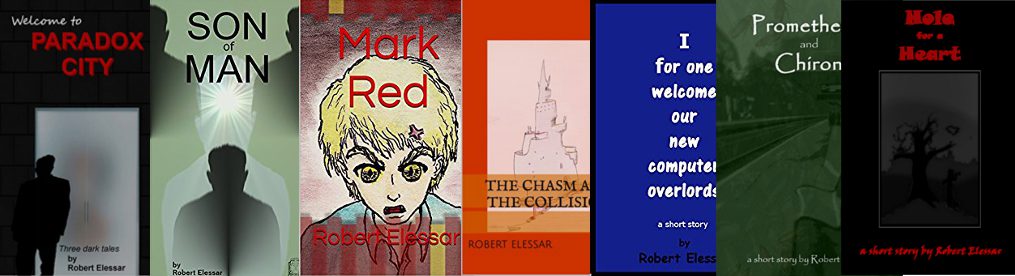
I’ve decided on a slight change of plans with respect to my audio projects.  I had originally intended to go from Hole for a Heart on to the three short stories in Welcome to Paradox City, probably following the order of the book.  Instead, though, I think I’m going to do a chapter-by-chapter reading of The Chasm and the Collision next.  I feel that, now that I’m developing at least a modicum of skill in this area, it’ll be fun to release that story in audio.  I had planned to serialize the book when originally writing it.  I quickly concluded that serialization wasn’t going to work in that case, especially given my personal logistic constraints at the time, but I think it will be fun to serialize it on audio.  I do love the story, I must admit it; I’m quite pleased with the world I created, as well as the characters.  If I can entice more readers into exploring it by rationing out the tale, read aloud, a chapter at a time, well…I think that will be time well spent, and will certainly be enjoyable for me.

I may occasionally intersperse a reading of one of my short stories in the middle, at good pausing points in the book.  That will depend on whether I need a break from the story or not, more than on anything else.  One thing seems certain, each individual chapter of CatC will take less time to produce in audio than any of my short stories so far.

Coming back to Iterations of Zero:  I’ve mentioned before that, partly as a way of making up for having missed (now) two weeks of writing it, I’m planning on re-blogging some articles I wrote before, and originally posted here, but which really are more well-suited for the general-purpose, non-fiction-related IoZ gestalt.  I may edit those articles/posts before republishing them, or I may just throw them out as they are.  We shall see.

With that, I think there’s not much more that needs to be said this week.  Again, the audio for Hole for a Heart should appear here within the next 24 to 48 hours, and subsequently on YouTube.  Most importantly, my original fiction writing will continue at its usual pace, through Unanimity, to a short story immediately after, and thence to my next novel, which is already chewing on the inside of my brain, sensing hungrily the proximity of freedom.  And whither then?  I cannot say.

TTFN

Life’s but a walking shadow, a poor blog post

Hello and good day to you all.

It’s been a reasonably productive week for me, especially considering that I haven’t felt very well.  I didn’t even write an entry for Iterations of Zero last Sunday, but I’m planning on making up for that by publishing two new posts this coming week—one new and one republished from among works that were previously posted here.

On the other hand, Unanimity has been proceeding at an excellent pace.  On Saturday, April 28th, its first draft passed the quarter-million-word mark.  This will be my longest book so far, even after I pare it ruthlessly down in the editing process.  That’s not a bad thing, though—at least I hope it won’t be.  The story will be as long as it must be.  I’m just the messenger; please don’t shoot me (though you can, if you wish, quote MacBeth and call me “Liar and slave!”).  I’m greatly enjoying writing the book, and that has to be my primary criterion for success.  Obviously, I hope that people will read and enjoy the finished product, but even if I knew without any possible doubt that no one would, I think I’d still write it.

The recording of the audio of Hole for a Heart is complete, and the sound-editing process has begun.  I’ve been forced to re-record some of it due to mic malfunctions during the initial reading, which led to terrible static.  Apparently, once or twice while I read, the microphone cord came partly loose.  The result, when looked at on the waveform-layout, is a terrible progression of spikes, and when you listen…well, you won’t listen, because that’s been deleted and re-recorded.  Trust me, you wouldn’t want to hear it.

I did a little more “voice acting” in this story than in its predecessors, because there are more characters interacting, and there’s a bit more drama and emotion in that interaction.  I worry that I might have hammed it up a bit in places, but at least I enjoyed myself.  The story doesn’t have a happy ending, but then again, it’s a horror short story, so it wouldn’t end happily, would it?  Looking back on my published short stories, only one in three seems to have a “happy” ending, and if you go back in time to earlier works, that ratio drops even farther.  My novels, though, are another matter.  They all end up, more or less, with the good guys having triumphed, at least for the time being.

Unanimity will end on a bittersweet note, though.  Oh, of course, the situation will be resolved, and the dangers will be conquered, but the outcome will still be tragic, and the surviving characters will be scarred by their experiences.  This, unfortunately, is just the way things often are—in life as in fiction.

The next novel I plan to write, on the other hand, is going to be much more upbeat, and probably quite a bit shorter.  I’m not sure which of the stories clamoring about in my head will be released after that.  Eventually, I’m going to write a second book, and then a third, in the saga of Mark Red, but I really want to get other things out first before I return to my young demi-vampire and his friend and mentor, the vampire Morgan.  At some point, I expect also to write my prequel to Son of Man, detailing the back story of the character Michael.  That’s a tale that’s been waiting in my head for at least as long as Son of Man waited.

Of course, sooner or later, I’m going to write the story of my beloved characters The Dark Fairy and the Desperado, originally created in idle drawings, and yet other books lie waiting in between.  Thankfully, I write almost every day, unless I’m feeling quite ill.  I’d love to be able honestly to paraphrase Epicurus and say, “When I get a little time, I write books.  If I have any left over, I work to buy food and clothes.”  Unfortunately, in real life, working to make a living takes up a far bigger chunk of my time than writing does.  And then, of course, I have to sleep, alas.

Finally, as I said previously, I am going to start, probably next week, writing my long-planned series on my favorite villains from literature—from novels, to myths, to legends, to comic books, to movies, and beyond.  Often in fiction (and less often, but far too often, in real life), villains are the ones who set a story in motion.  Without Sauron, The Lord of the Rings would not be worth telling, and Harry Potter’s life would be far less gripping (though probably much more pleasant) had there been no Voldemort.  Villains act while the heroes, more or less, simply react, but both of them, when they’re “good”, teach us about the world and about ourselves.  Perhaps more important, reading about them is fun.

On that note, I’ll bring this blog post to a close.  Thank you all for reading, and please be as well as you can possibly be.

TTFN

Author’s note for “Hole for a Heart”

holeforaheartredgreywith frame


Those of you who have followed this blog for more than half a year will already know at least a bit about the origins of my story Hole for a Heart, but there’s still more that can be said, so don’t fear too much in the way of redundancy.

The seed of this story was planted on a bus trip from southern Florida to Ohio, where I was going to visit my parents.  As I’ve described before, while passing through a relatively hilly area of central Florida, I saw, through the west-facing bus window, a tall tree near a highway exit.  Underneath it stood what appeared to be a scarecrow.  The Greyhound moved far too quickly for me to make out any details, and unlike Jon in the story, I did not have the option to stop.  But it was an interesting sight, partly because, like Jon, I couldn’t really see the point of putting up a scarecrow under a tree on a hill near a highway exit.  Neither was it anywhere near Halloween.  I wondered what the story behind it might be.  So, I quickly pulled out my smartphone and jotted down the sight as a possible story trigger.

The actual tale itself didn’t really form until several months later, more or less all at once.  This happened at the beginning of October, just in time for me to finish it and publish a draft on my blog for Halloween.  This happy coincidence helped inspire me to crank away at the tale, though it led me to first publish it in less than ideally polished form.

The protagonist of the story, Jonathan Lama, is named after two people I’ve known.  The first name was given in memory of a friend of mine from work, who died of what I believe was a semi-deliberate drug overdose, and it is his form I see when I think of the character.  The last name is that of someone still living, and who appears to be doing much better, rebuilding a life that had almost been destroyed in a similar fashion.  Quite apart from being a way to give an homage to these two people, I think the combination of one dead and one living person somehow suits the character of Jon (the one in the story), who is in some ways—as his former girlfriend would no doubt say—not actually living his life.  This could, of course, be confabulation on my part; I don’t honestly recall exactly what my thought process was in deciding on the name, except that it certainly was chosen after the two people I just mentioned.

The title of this story is a fairly obvious reference to the state and fate of the “scarecrow” on the hill.  That dead (?) remnant of Joshua Caesar, that scourge of western central Pennsylvania in the late forties and early fifties, is missing its heart, having had it cut out by his vengeful neighbors when they had finally decided to take justice into their own hands.  But that’s not the only reference to which it applies, nor was it the original meaning for the story’s title.  In fact, it’s Jon himself who bears the titular empty cavity in his torso.  Despite being truly gifted and brilliant at his chosen field, Jon has a near-nihilistic ambivalence toward life, toward attempting anything that involves real commitment and stress.  He sees no point in struggling in a world where all lives end, and everyone leaves with exactly that with which they arrived.  This ambivalence had cost Jon the love of his life (who shared a name with the ill-fated former object of Joshua Caesar’s affections), a loss that had further hollowed out his own metaphorical chest.

I like the supernatural elements of this story, and I like the juxtaposition of Jon’s and Joshua Caesar’s two very different personal philosophies.  The latter is a Nietzschean, “the strong and the superior do what they like and are responsible for the greatness of humanity,” point of view, while the former is, as I said, practically nihilistic.  But I think my very favorite elements of this story are the gas station clerk, Matty, and his employer, Mr. McGlynn.  I just find them both quite likeable; I enjoy their conversations with each other and with Jon.  Clearly, Matty is not the very brightest of sparks, but he’s smarter than he seems at first glance, and is earnest and well-meaning in his way.  McGlynn, quite sharp indeed, is in superficial ways like Jon.  He’s content to live a simple life running a gas station next to the interstate, despite probably being capable of more.  But on closer inspection, his attitude is worlds apart from Jon’s.  There’s no despair or sense of meaninglessness in McGlynn’s philosophy of life; he seems to enjoy himself very much, in his way, and he clearly has affection and respect for his young employee, and for his customer.  He does take a mischievous and slightly sadistic satisfaction in telling a story that might horrify both Jon and Matty, but I think he can be forgiven for this.

I would think that, though, wouldn’t I?

As with many of my short stories, this one leaves us all hanging at the end, me included.  I wonder at times just what the new driver of the restored ’97 Mustang will do after he pulls onto the interstate at the end of the tale, and whether this path will take him to Chicago, to seek out a young woman who had, in her own way, stolen Jon’s heart before the story ever began.  More than that, though, I think it would be fun, if we had world enough and time, to follow Matty and McGlynn.  I’d like to visit that gas station, to stop and share conversations with the two of them—perhaps while drinking a cup of gas station coffee—to listen to McGlynn’s tales of local history and legend, while Matty hangs raptly and unabashedly on his words.

I think I’d listen just as enthusiastically.

Since brevity is the soul of wit, and tediousness the limbs and outward flourishes, this blog post will be brief

Greetings, everyone.  I hope you’re having a good day.  This post should be relatively short, but I thought I’d give a few minor updates.

First, as those of you following this blog will already have noticed, I posted the audio for Prometheus and Chiron here yesterday.  I think it turned out reasonably well, and the sound quality overall was a step up from Ifowonco.  As I’ve said before, I think I’m getting better at audio production as I become more used to the process, but I imagine there will always be room for improvement.

Unanimity is coming along well—I haven’t been slacking on it, even though I’ve been working on these audio projects.  It is, however, going to end up being rather longer than I thought it would be, because there are quite a few more things that need to happen before the story is done.  I’m not bored of it by any means; quite the contrary.  But I have been surprised by how quickly it’s grown.  I’m sure the rewriting/editing process is going to be daunting, but then again, it always is.

I’ve decided that, from now on, I’m not going to stop writing new things (i.e., first drafts of stories), even while I’m editing older material—I’ll just set a lower target every day for the new writing during those times.  For instance, right now, when new writing is essentially my entire focus (excluding the audio), I’m writing roughly three pages a day, five days a week (with two days set aside, one for this blog, and for my other one, Iterations of Zero).  Once I need to get into editing Unanimity (after it’s been set aside for Stephen King’s recommended weeks-long resting period), I’ll plan to write only one new page a day, and then spend the rest of my mornings editing.

That’s the plan, anyway.  Of course, we all know what Rabbi Burns (ha!) said about the best laid plans of mice and men and all that, but I’m not too worried about achieving that goal precisely, just in spirit.

Other matter, other matters…

Now that the audio of Prometheus and Chiron has been released, I’m soon going to upload the video version of that audio to my YouTube channel, and I’ll notify everyone here once it’s up.  As before, don’t expect much from the video portion; it’s likely just going to be a still image of the cover of the story.  I just find that YouTube is an incredibly widespread and easily shared venue in which to post something, including audio.  I’ve noticed that quite a few people make similar videos of the audio of podcasts, for instance.  I don’t know about the rest of you, but I often like to go to sleep while listening to a lecture, or discussion, or something of the sort playing on YouTube.  I don’t know how well that would work with my audio—my stories aren’t really designed to ensure restful slumber—but if you think they might, feel free to play them, in either venue.  As I think I’ve said before, I plan on creating audio versions of all my short stories eventually, and then—possibly—releasing audio of at least some of my novels, a chapter at a time.  When that time comes, I’ll gladly take your input on with which book to begin.

There’s not much other news on the writing front this week.  I plan next week to post an author’s note for Hole for a Heart.  That will no doubt rehash some of what I’ve already talked about here when I was writing the story, but it’s going to be far from redundant, I think.  Then I think I really need to get started on my series of explorations of my favorite antagonists from books, stories, graphic novels, comics, movies, etc., under the general heading, “My heroes have always been villains.”  I’ve been intending to do this for a long time—planning it, you might say (see above about plans)—but it’s high time I put it into motion.

That’s about it.  It’s been brief, as I said it would be, but I will post here also just to let everyone know when the Video of the Audio is up, so you won’t feel too short-changed.  In the meantime, try to enjoy (in the northern hemisphere) the slowly developing Spring.  As always, feel free to comment, and thank you for reading.

TTFN!

Prometheus and Chiron – The Audio!

pandccover

Here it is, now, the audio version (read by me) of Prometheus and Chiron.  Feel free to listen, to download, etc., but don’t charge anyone for the privilege.  I think I’m getting steadily better at doing the audio, though I welcome your feedback.

Enjoy!  And if you do enjoy, please do consider buying the e-book on Amazon, here.  It’s only 99 cents.

Author’s note for “Prometheus and Chiron”

pandccover

See on Amazon

Prometheus and Chiron is a more or less straightforward horror story, and its trigger was also straightforward—so straightforward that you might be able to guess it without me telling you, once you’ve read the story.  But I’ll tell you anyway.

One morning, in the waning months of the year, I was nearly alone on the train station platform, waiting for my usual train.  The sun had not yet risen, so it was still quite dark.  As I dithered about (most likely doing some writing or editing), I glanced across the track, and saw a woman standing very still beneath one of the electric lights on the other side.  I looked away for what seemed only a moment, though it could have been quite a bit longer, and when I looked back up, the woman was gone, as though she’d vanished into thin air.

A look down the platform soon revealed that she had simply walked to the other end, for undisclosed reasons of her own.  But her initial silent presence and subsequent seeming vanishment made me think about the possibility of a ghost haunting a railroad platform.  What might have led someone to die in, and then to haunt, such a place?  Under what conditions would such a ghost be visible?  What if it were a ghost that only a certain type of person could see?  This wouldn’t necessarily be a person with psychic abilities (as in my story If the Spirit Moves You, from Welcome to Paradox City) but a person who has certain characteristics, perhaps similar in some special way to the person whose ghost remains.

The story took shape pretty quickly from there.  I don’t recall how long it was before I started writing it, but by the time I did, all the elements were present.  I wanted to deal, of course, with the hellish experience of a spirit being trapped in one place, right where she had died, and the frightening fact of a living person finding himself able to see such a ghost.  But I also wanted to deal with the much realer hell that both of the characters in the story exemplify, one with which I’m familiar on many levels:  as a physician who has treated those with chronic pain and with addiction problems, as a sufferer of chronic pain due to back injury, and as someone who has seen friends and family die as a consequence of addiction.

The ghost-woman trapped at the station represents the classic, purely self-destructive individual that most people probably imagine when they think of drug addicts:  someone who, for whatever reasons, started taking drugs and got hooked on them.  I dealt with this tangentially in Ifowonco, but it’s central to Prometheus and Chiron.  This ghost is a woman whose life was ruined—and ended—by her abuse of narcotics.  Unfortunately for her, at the place she died, a supernatural force was present, one not merely destructive but actively malevolent.

Tommy, on the other hand—the protagonist—is a different breed of addiction victim.  He’s a former Marine, a hard worker, a basically upright citizen and good person, who worked in the construction industry.  Because of an accident on the job, he’s been left with chronic pain from low back and knee injuries.  He’s qualified for disability benefits, but as many people know, these can be woefully limited in the relief they provide.  To cover his cost of living, Tommy has to do at least some paying work now and then, but he has to hide that work from the authorities, so he doesn’t lose his benefits, and he has to treat his pain to be able to function at all.  Unfortunately, the only available medicines capable of dealing with significant chronic pain are opiates…and they come with a series of liabilities, including increasing levels of physical dependence—and the risk of psychological dependence—and consequent, agonizing withdrawal symptoms if one is suddenly deprived of them.  This is a terrible, no-win situation in which all too many well-intentioned people find themselves.

It’s this dependence on opiates, which he shares with the ghost-woman, that allows Tommy to see her, and that, combined with his good heart, makes him vulnerable to the danger he encounters.

The title of this story arrived after I’d almost completed the first draft, but it must have been percolating through my subconscious for some time.  It is, in a way, somewhat pretentious, but I couldn’t help myself; it seemed so appropriate.  It also risks, for those familiar with mythology, giving away the end of the story.  I recognized that possibility but decided that the risk was worth it.

Prometheus and Chiron is shorter than many of my short stories, and it’s fairly concentrated and direct.  Writing it was enjoyable—it almost always is—and more than a little bit cathartic.  It allowed me to express some of the personal horror I experienced while taking prescription pain medications for many years while at the same time suffering through the pain that made them necessary.  (It wouldn’t be too over-simplistic to say that those experiences were a large part of what led to the crashing and burning of my previous life.)

Writing Tommy’s character was a revelatory experience.  Knowing that he was going to be going through some very bad things indeed, I named him after someone I knew—not well, but well enough to know that I didn’t like him much.  However, as I wrote, I realized that my fictional Tommy was a far finer person than my impression of his namesake.  This led me to wonder if, just maybe, the real person had aspects to his character that were also quite admirable, if only on some small scale, and which I was being uncharitable in not recognizing.  I can’t give you an answer to that question, because I only knew the real Tommy briefly and haven’t seen or heard from him in a long time.  Maybe, though, if we all knew the inner workings of other people’s minds as well as we experience imaginary characters through the medium of fiction, we would find at least some sympathy for even the most unpleasant of people.  For me, at least, that’s probably a lesson worth considering.

Enough philosophizing.  Ultimately, Prometheus and Chiron was meant to be, and is, a fairly simple supernatural horror story, and I don’t expect or ask for anyone to care much about it on any other level.  I hope you enjoy it.

From camp to camp through the foul womb of night The hum of either blog post stilly sounds.

Hello, good day, and welcome to April 2018.

For those of you who might have missed my recent updates and posts:  within the last two weeks, I’ve posted the audio for my short story I for one welcome our new computer overlords on my blog here, and I subsequently made it into a video and posted it on YouTube.  The blog post linking to the video is here.

Don’t misunderstand the fact that the story is posted as a video.  Like many others before me, I simply took the audio and added a single video image—the cover of the e-book, floating in a black background—as the video portion of the file.  This is probably a relief for many; you don’t have to go through the misery of watching my ugly mug as I read the story aloud to you.  I posted the audio story in both places and forms to make it more easily accessible, so that more people who might want to listen will find it easy to do so.  It’s just over two hours long, but YouTube lets you start and stop videos in the middle, so you can pick up where you left off, which is convenient.  If you’re the sort of person who likes to listen to bedtime stories—and there are, pleasingly, many adults who do—then you can set the video playing on YouTube as you lie down in bed and listen to it as you make your way off into Slumberland.  I’m told, by relatively disinterested parties, that I do a decent job of reading people to sleep, and I’m also told (hopefully not just to spare my feelings) that this is a compliment.

In the meantime, I’ve returned whole-heartedly to writing Unanimity, and the first draft should/may be done sometime within the next month or two.  Then, of course, the hard and crucial work of rewriting/editing begins, so don’t get too excited.  Unanimity will not be available as beach reading this summer by any stretch of the imagination, though I do hope it will be out in time for you to consume it on a few dark, wintry evenings as 2018 draws to a close and 2019 begins.  It’s the sort of story best read alone in the dark.

Which brings up an interesting, tangential point:  I’ve noticed that, no matter what time of day I’m writing, even if the blinds are wide open on a sunny afternoon, I always feel like I’m working in the deep dark of a silent night, when everyone else is asleep.  I’m not sure why that is, but it’s consistent.  Many times, when I’ve drawn to the close of a stretch of writing and stood up, I’ve been utterly surprised to find that it’s daytime.  It’s probably something to do with the fact that writing is like hypnosis.  I wonder if other writers experience this.

In addition to writing about three pages a day on Unanimity, I’ve also started something I hadn’t really planned to do.  After completing the audio for Ifowonco, I had originally intended to take a break before doing audio for any of my other works, but I’m afraid that I couldn’t hold myself to that plan—or I didn’t want to and didn’t choose to, which amounts to the same thing—and have already almost completed the first “draft” of the audio for Prometheus and Chiron.  Of course, this is a shorter story than is Ifowonco, so it’s not that impressive that I’m already almost done with that draft.

I expect, given how interesting this process has been, and depending on how many people seem to listen, that I’ll ultimately do audio for all my short stories.  This will take a while, even though I don’t have all that many such stories to purvey.  But then, once that’s completed, assuming it continues, it raises another question that seems obvious to me:  will I do the audio for any of my novels?

One thing is quite clear, I would not be doing such audio in single, whole-book form.  I’m happy to listen to full audio books, especially during my commute, but the file size alone of a complete audio book, even a short one, is daunting.  I can’t even estimate what the comparable video size would be, even if the video portion were just a blank screen.  However, I haven’t ruled out the possibility of doing such audio one chapter at a time.  In fact, that might be kind of enjoyable.  I’m a bit nervous, of course, that doing so would expose me to too many imperfections in my prior works, but if I’m honest with myself, I recognize that collision with imperfection as a good thing.  In fact, that alone might be reason enough to do it, even if not a single person in the wide world listened.

Of course, I still haven’t even begun my planned series of blog posts about my favorite villains.  I haven’t forgotten (obviously), it’s just gotten pushed to the back burner because other plans have gripped me and seemed more urgent.  I may, though, start doing them on a monthly, or perhaps bi-weekly basis, once I’ve completed my series of author’s notes on the works I’ve written to date, and that series will soon be complete.

Well, that’s about all that I want to talk about today.  I wish you all the best, and hope that those in the northern hemisphere are at least looking forward to full springtime and the summer that follows.  Do be good to each other.

TTFN.

Author’s note for “I for one welcome our new computer overlords”

ifowonco final

I for one welcome our new computer overlords was the first new short story I wrote after having completed Mark Red, The Chasm and the Collision, and Son of Man.*  Despite what you might think, this was not a story that driven by its title, though that came along shortly after the story began, and I’ll deal with it first.  The title is a direct quote from Ken Jennings, who wrote it as his Final Jeopardy answer when he and his fellow all-time human Jeopardy champion lost to IBM’s Watson computer.  It was a good joke, referring back to an episode of The Simpsons, when news anchor Kent Brockman mistakenly thinks that a space shuttle mission is being attacked by a “master race of giant space ants,” adding, “and I for one welcome our new insect overlords.”  The obvious joke—particularly funny because Brockman’s conclusion is so ridiculous—is about how real people do sometimes, cynically, and in cowardly fashion, try to ingratiate themselves to powerful ruling classes or individuals.

Peter Lunsford, the main character of I for one welcome our new computer overlords, is no coward.  He’s a seemingly simple man—without college education, a widower, a loner, a phone salesman.  But he’s a voracious reader, and even more, he is a deeply thoughtful and intelligent person.  Because of his own experiences with irrationality, even in people he has loved, he pines for the advent of a higher class of mind, which he expects to come from the eventual creation of artificial intelligence.  But he’s by no means a misanthrope.  He laments the senselessness of much human behavior but has an optimistic attitude toward the possibilities inherent in human creativity.  He also has a deep sense of the tragedy of the loss of brilliant people like his wife who, because of the scars of her harsh background, self-sabotaged her future through a fatal drug overdose.  Thus, when Peter wins a nearly billion-dollar lottery jackpot, he uses it to create an educational program and a scholarship fund to help people like his wife avoid the tragic end she met, and to allow at least some of them reach their potential and make great contributions to the world.

The triggers for this story were discussions by neuroscientist, writer, and podcaster Sam Harris, of whom I am a fan.  Harris began to think publicly about dangers that might be posed to humanity by our possible creation of artificial intelligence; he recommended that we think very carefully about such dangers, so we can avoid potentially irreversible errors.  His concerns are shared by such luminaries as Max Tegmark, Elon Musk, and the late, great Stephen Hawking, in contrast to the quasi-Utopian attitudes of such writers and thinkers as Ray Kurtzweil.  Both points of view are worth considering, and it’s an issue I think we should approach with our eyes as wide open as we can possibly get them.  But when contemplating Harris, et al’s concerns, I couldn’t help thinking that, if a truly superior artificial intelligence were to make humans obsolete, would that be such a terrible thing?  Peter Lunsford is my proponent of that perspective.**

I wanted to write a story revolving around those concerns about artificial intelligence, but I didn’t want to write about a cliché takeover of the world by AI—in this, my title is deliberately ironic.  Personally, I suspect that ethics and morality are generally improved by higher intelligence, all other things being equal, so I think that artificial intelligences might be inherently more ethical and reserved than we humans, with all our non-rational evolutionary baggage.  In this, Ifowonco is a story of wish-fulfillment.  It’s my daydream of the possibility that someone winning a truly gargantuan sum of money might use it to deeply positive philanthropic effect, inspiring others to act likewise, then leading, through that beneficial action, to a great leap forward in intelligent life (yes, I would without embarrassment refer to AI as a form of life).

Of course, you can’t say that Ifowonco is a uniformly happy story.  It entails a (non-nuclear) World War III, the rejection of AI by the human race, and of course, Peter Lunsford’s willful self-destructiveness.  Overall, though, it’s optimistic.  Darrell White is my example of a brilliant, world-changing mind springing from the least promising of seeming circumstances, wanting only the opportunity and nurturing that would allow such a mind to flourish.  He and my imagined AIs represent of my personal conviction that reason and morality and vastly more powerful than their antitheses; I cite as evidence for this the fact that civilization continues to exist and grow, even though it’s so much easier to destroy than to create.

In some senses, Ifowonco is the most personal story that I’ve written hitherto.  Of course, any character in a story must be a reflection of some part of the mind of the author—a person incapable of dark thoughts could hardly write a believable villain, for instance.  But Peter Lunsford is the avatar of a large part of my personality, in both his positive and negative character attributes.  Though I’ve had almost twice as much formal education as Peter, that difference is inconsequential because of Peter’s incessant self-education.  There is, in fact, almost no daylight between Peter Lunsford and me (and what little there is must generally be in Peter’s favor).  I would even like to think that, were I to win a prize such as Peter wins, I would choose to do with it something like what he does; in this, also, the story is a form of wish-fulfillment.

Speaking, in closing, of wish fulfillment:  I deliberately made the reality of the second half of the story ambiguous.  Do Darrell White and his creations, and all that comes with them, even exist in this universe?  Or are he and those subsequent beings and events simply a species of dream that Peter has while his brain succumbs to hypoxia?

I know the answer to this question in the universe of the story—and yes, there is a correct answer—but I’m not going to tell you what it is.  I’d rather have you draw your own conclusions.  I think it’s more fun that way, and it may even be a useful tool for personal reflection, bringing us back to that whole question of consciousness that troubles thinkers like Sam Harris.  I’d be intrigued and delighted to hear any of your thoughts on the subject, so feel free to send them my way, either here, or on Facebook, or on Twitter.  I wish you well.


* Just this week I released the audio of this story, now available to enjoy, for free, here on my blog.

** I don’t have the concerns, which Harris does, about the possibility that AI could be highly intelligent and competent but might nevertheless not be conscious, for two reasons:  First, I strongly suspect that consciousness is a natural epiphenomenon of highly complex information processing involving internal as well as external monitoring and response, though I’m far from sure; and second, I can’t be philosophically certain even that other humans are conscious (I think they are, but this extrapolation is based on my own experience and their apparent similarity to me), but it doesn’t seem to matter much for the purposes of their function in the world.