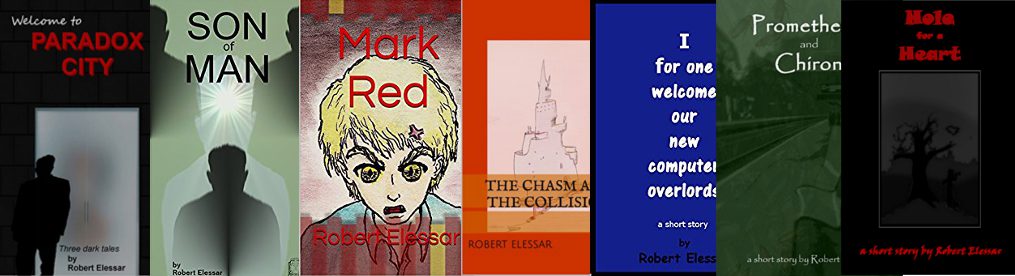
Thou art a boil, a plague sore, an embossed carbuncle in my corrupted blog.

Well, it’s that day of the week again (Thursday), when I write yet another blog post for the entertainment, and occasionally the edification, of those who want to read it.  As I did two weeks ago, I’m breaking up my author’s notes, interspersing them with less specific ramblings on my current, past, and planned writings.  Next week, I’ll continue my author’s note series, with a note on Son of Man.  Once I’ve caught up with the notes up to and including my latest published story, I plan to start periodically posting sample first chapters of my published works, as teasers to get readers interested—or, alternatively, to let them know for certain that they are uninterested—in the books and stories from which they’ll be excerpted.  This should be fun, I think, and will certainly be less work for me on those weeks when I post them.

Right now—so to speak—I’m near the completion of preparing to publish Hole for a Heart.  We at Chronic Publications are still struggling over the final form of the cover design for the story, though the basic design is already confirmed.  As those of you who have read it when it was available here know, it’s a dark story (how atypical for me, right?), but I like it a lot.  Thankfully, that’s more or less universal about my stories, and I can’t stress enough how thankful I am for the fact.  Of course, there are flaws in all of my works, and my earlier ones are less polished than those that follow, but I still enjoy thinking about them, and occasionally rereading them.  This almost always leads me to find errors that were missed in the editing process, as well as stylistic issues that I would now have changed…hopefully to improve upon them.  In the long run, I may create second editions of some books, especially the earlier ones, but that process requires time, of which commodity I am in short supply.  As is often the case (and as I think I’ve mentioned before) I frequently find myself quoting Andrew Marvell to myself: “If we had world enough, and time…”

Alas!

As is the usual case lately, I’ve been having difficulty finding new fiction that grips me enough to read, and I find this terribly depressing (it’s not the fault of the books).  Likewise, because I lost essentially everything I owned seven years ago tomorrow, I don’t have physical copies of all the hundreds of books that I’ve read and reread over the course of my life hitherto—for entertainment, inspiration, and edification.  Over time, I’m gradually trying to re-accumulate at least some of them, mainly in Kindle format, because that way I can carry my library with me wherever I go.  But even with e-book versions, to reproduce my previous library would cost a great deal of money, so it’s a piecemeal process at best.  I’m also always looking for new recommendations, and the other day on his Facebook page, Stephen King gave one for a book called The Chalk Man, by C. J. Tudor.  I looked up the book on Amazon—it’s available on Kindle—and it does look good.  I also like the author’s name, not that such a thing is of great importance.  Still, I can’t help playing word games, and inevitably thought of the fact that if you combined the surnames of the recommendee and the recommender, you’d get the phrase “Tudor King.”

Such are the processes that take place in my mind.

In any case, that book will likely be the next fiction book I purchase, and I’ll try to remember to let you all know how it is, once I’ve read it.

I do find myself able to read nonfiction, and I also use Audible, listening to a great deal of nonfiction on my commute to and from work.  Lately, I’ve been in Steven Pinker mode, a fact at least partially triggered by the recent release of his newest book, Enlightenment Now.  I’m currently visually reading one of his earlier works, The Stuff of Thought, about language and the human mind, and listening to his second most recent book, The Better Angels of Our Nature.  Once that’s done, Enlightenment Now already awaits on my Audible app, and I look forward to it eagerly.

I couldn’t easily exaggerate Pinker’s value as a thinker and writer.  His books are not short, and neither are they diffuse.  He packs a great deal of information and ideas into them, but his writing style and style of thought are exceptional and engaging.  If you want a taste of the enthusiasm and fun he brings to his work, and engenders in those who come to it, watch the following video of his presentation on The Stuff of Thought at Google.  His discussion on the nature of swearing—with numerous examples explained and explored—is both hilarious and thought provoking.


As I think I’ve said before, reading about ideas and concepts, even rather difficult ones, isn’t merely a way for me to pass my time between reading and writing fiction.  Even if it didn’t have any other value (it does), such exploration strengthens the mind’s muscles and makes it more fit and able to perform every task to which one puts it, including the writing of fiction.  Also, I think it improves one’s skill at narrative.  When an author can take a dense and complex subject and write about it in prose that’s both gripping and clear, that style of writing is surely one from which a writer of fiction can learn many lessons.  Some stories are good enough that they can be carried along simply by the power of the plot, even if the prose is awkward, but when one can add to such stories a structure made of language both beautiful and elegant, well…that’s a spicy meatball!

I’m about a hundred years too young to consider comparing myself to someone like Pinker, or to other great writers of fiction and nonfiction alike, but that just means that I can learn a great deal from them in the meantime.  In fact, a writer/reader’s marginal rate of return is probably greatest long before he or she begins to be in the same league as the one who wrote what he or she is reading.  So, I can heartily recommend that writers read books by those who are far better writers than themselves, and as often as possible.

But, also, do read some of my books in between.  I’ll do my best to keep raising my standards.

TTFN

Author’s note for “The Death Sentence”

Welcome to Paradox City Icon

The Death Sentence, physically if not temporally the first story in Welcome to Paradox City, is probably the most obvious of my stories to have been title-triggered.  I don’t recall exactly when I decided to use the phrase as the title for a story, but it surely was at least partly influenced by my having been an involuntary guest of the Florida DOC.  I spent my guesthood mainly in FSP West—the Florida State Prison, west unit.  This was directly adjacent to the big, old-fashioned, main prison building, where Death Row was located.  Roughly once a month while I was there, all activity was shut down and everyone was confined to their quarters for an afternoon—usually a Tuesday, if memory serves—while an execution was carried out*.

The actual origin of the story, however, didn’t take place until I was all but through with the DOC, nearing the end of my time in work release.  I hadn’t completed the first draft of Son of Man at the time, though it was proceeding well.  I don’t recall what led me to take a break to write a short story, but I’d been pleased with Paradox City, and have always enjoyed reading short horror stories, so I decided to write another one, and the notion of The Death Sentence came readily to mind.

The idea arises from a simple play on words, of course:  There is a sentence, in the linguistic sense, obviously not in English, that causes death.  I decided that it would have to be heard to take effect…in other words, if the sentence is spoken aloud, anyone who hears it will die, instantly (except the speaker).

This is, in some ways, a sort of dark wish-fulfillment.  How many of us wouldn’t at least imagine that we’d like to have access to such a potent and untraceable weapon, to remove from the world those who really deserve it, in our own minds at least.  Contrary to the fantasizing, though, I think most people—not everyone, alas—would, if they found such a thing, never willingly use it, except perhaps in self-defense, or in similar circumstances.

There’s strong evidence supporting this conclusion, it’s not just some Pollyanna notion of human benignity.  Many of us occasionally find ourselves in situations in which we could exercise power over our fellow human beings in various malevolent ways, and we almost never do so.  Similarly, though there are at least as many firearms as there are humans in the United States, a truly tiny number of them are ever used against other people.

Of course, as Louis CK has opined, this is partly just because it really sucks getting caught murdering someone, but if the laws against murder were to be repealed, “There would be a lot of murder.”  He was doing a stand-up routine, though, and was probably exaggerating even his own thoughts.  Deliberate, premeditated murder is a rarity, thankfully.  There are people who will do it, though, as we all know.  Some are mentally ill in obvious ways, some are sociopathic in character, some are just supreme assholes.  But what would even a non-psychopath do who had stumbled across a magical sentence that could kill any listener?  It would clearly be untraceable, an impossible crime to solve by any ordinary means.  What sort of person would find the temptation to use it—at least here and there—irresistible?  Again, I think most people would not use it, but maybe someone who was socially awkward, a bit of an outsider, might at least be slightly more inclined…though such a person’s conscience might torment him in the end.

But I didn’t want to write just a simple story of a person who discovers such a power and uses it to get even with those he has perceived to have wronged him, but finally gets his comeuppance, either through the workings of fate or through the dictates of his own guilt.  That could be a good story, but it seemed too obvious to me.  There had to be more to it.

Also, where on Earth would someone find such a sentence?  Probably nowhere that really was on Earth, at least not in the ordinary way.  It certainly wouldn’t be likely to originate anywhere in the human realm.  And it would be unlikely to stand on its own, but would surely be found in some ancient, dreadful tome, full of many such tidbits of terrible, arcane knowledge.  When imagining such a tome, what springs into the mind of any lover of horror literature but the works of H.P. Lovecraft?  I wouldn’t literally want to bring the Necronomicon itself into my story, certainly not in its original version (so to speak), but why not have some related text appear?  And where better for it to appear but in a library, perhaps in some hidden room that isn’t normally accessible by patrons, but which might, at just the right time, be opened for a person of just the right type of mind?

And that was that.  The story, more or less, was born.  Of course, a tome of Lovecraftian nature would not merely be content to have its bearer haplessly—or even willfully—use the power within to kill random or targeted humans.  (It almost goes without saying that such a dark repository of knowledge would have a mind and purposes of its own.)  Why would it bother to do such a thing?  Humans, after all, from the point of view of the gods and demons of the Cthulhu mythos, are as ephemeral as mayflies; a single human life—or even a thousand—brought up short might momentarily entertain such creatures, but could hardly be a matter of importance, worthy of any effort.  There had to be some greater motive, some other purpose, at hand.

Thus, the protagonist (we can hardly call him “hero”) of the story learns, even as he discovers the effect of the single legible, if unintelligible, sentence in this strange but strangely fascinating book, and uses it, that there are other effects to its use beyond simply bringing death to those who hear it.  Gradually, he becomes aware of a deeper, more terrible secret to the book, and to our flimsy, soap-bubble universe, behind which lies the true reality of the dark, Outer Gods…gods which have no need for any human worship.

Of course, no mortal could encounter such information and remain unscathed.  Insanity is one of the most common findings among Lovecraft’s characters, but even that might be mild compared to other fates.  Needless to say, the protagonist of The Death Sentence is not unaffected by his encounter with the book and the titular sentence.  By the end of the story, it’s difficult to say where his new fate will lead him, but it’s unlikely to be a destination that the rest of us would want him to choose.  Unfortunately, we’re not likely to be given a choice.

Now, a little side-note.  It’s fairly common practice among authors to occasionally indulge ourselves by putting people who have really irritated us into stories and having them suffer, or even die.  This betrays a dark part of human nature, no doubt, but it can surely come as no big surprise.  I can think of two occasions in which I have indulged in this practice (I far more often model good people in my stories roughly after real people I’ve known).  The Death Sentence is where one of those occasions occurs.  I’m not going to reveal which of the several deaths in the story it was (you may freely hazard your guesses), but I exculpate myself by saying that this person is among the most odious that it has been my misfortune to encounter…and, remember, I’ve been to prison!  I feel no guilt over killing this person in my story (though in real life, I even feel guilty about killing cockroaches…and I try never to kill spiders, which are, after all, predators on a great many insect pests for whom I have much less pity**.)

This is probably more than really needed to be said about The Death Sentence.  At heart, it’s just a pure, gonzo horror story, written entirely for the fun of giving the reader a harmless thrill; in this, I suppose it’s a bit like building a roller-coaster, but much less expensive.  Still, even the most light-hearted tale can sometimes have benefits besides pure entertainment, and it may be useful for us to imagine what we might do if we were suddenly to uncover a perfect, untraceable, irresistible weapon.  Putting away indulgence in fantasy, I think most people would do far better, be far more restrained, than they might expect of themselves.

Maybe I’m just a Pollyanna after all.


*Florida is one of the last bastions of the death penalty in America, and under Governor Scott (aka Governor Voldemort…if you want to know why some call him that, just google a few photos), it was carried out with almost unprecedented frequency.

**and though I leave them completely alone when I’m out of doors, I am positively enthusiastic about killing ants when they get in the house, especially in the kitchen.  This is partly for practical reasons:  if one ant finds food, she’s going to bring ten thousand of her sisters to come get more of it.  But it’s also simply a fact that, if I were to invade an ant colony, they would do their level best to kill me, so it only seems fair that I kill them if they come into my home.

Oh, that this too too sullied blog post would melt…

Okay, once again I’m taking a week-long break between author’s notes, just to give those who are interested a brief update on my doings.  Next week, I will post the author’s note for The Death Sentence, the first story in my collection Welcome to Paradox City, (unless, for some unforeseen reason, I decide to write it about something else).

As you know, if you follow this blog, I’ve taken a short break from working on Unanimity, my upcoming horror novel, to complete the editing and rewriting of Hole for a Heart, an earlier version of which appeared here.  Like its predecessors, I for one welcome our new computer overlords, and Prometheus and Chiron, the story is benefiting greatly from the process, at least in my eyes.  Hopefully, anyone who ends up having read both versions will agree with me.*

It’s always nice when, upon rereading his or her own story, an author finds himself or herself excited and moved by that work, and this has been true in spades on Hole for a Heart.  I’ve experienced brilliant moments when, going through the rewrite/edits, I found myself getting mildly creeped out.  This is a good thing; it is a horror story, after all.  Of course, it helped that I was doing the work in the early morning, while it was still dark outside, and I was alone.  But still…obviously, I knew what was going to happen in the story, but still found myself at least mildly chilled.  It’s nice that the atmosphere I’d tried to create worked, at least on me.  Whether it will work similarly on other readers remains to be seen, but I have high hopes.

On another subject:  I’ve struggled to find the time to work on my non-fiction-related blog, “Iterations of Zero.”  I did write a brief post there earlier this week, detailing some puzzlement I have about the nature of gravitons, and how they might interact with an event horizon, because I felt compelled to get those thoughts out into the meme-pool, but it’s difficult for me to get all that I want to get done there.  I have three partially written articles languishing in my computer, as well as two full files in the memo app of my smart-phone, stuffed with ideas about which I want to write, issues I want to address, questions I want to raise.  When I say full, I mean it.  The files are as large as is allowed by the memo app…or at least the first one is, and the second is within a hair’s breadth of fullness.

By comparison, the file containing my story ideas (admittedly it’s not the only location for such recorded inspiration) is only one, nearly-full, memo file.**

The main reason that I have trouble getting IoZ as productive as I want it to be is time, that limiting factor on all things, so beautifully lamented by Andrew Marvell in To His Coy Mistress.  I work eleven out of every fourteen days, full time, and my commute is an hour to two hours in each direction.  This transit provides a wonderful opportunity to listen to podcasts and audio-books, but otherwise, those are unproductive hours.

Obviously, I can’t just write while I’m at work.  My boss is about as pleasant and understanding as it’s possible to be while owning and running a business, but his patience would be strained if I were to spend a significant amount of my work time doing things that had no relation to my job.  More pointedly, long before I would reach the threshold of annoying my boss, I would be curtailed by own conscience.  It’s simply not in my nature to be able to freeload while earning a paycheck, and I’m glad that it’s not.

So, my time is limited, and if sacrifices have to be made in my writing, I must regretfully choose to sacrifice the non-fiction, since fiction is my primary calling.  Of course, if enough people buy my books, I may make enough money to write full time, which would not break my heart.  If you’d like to see that happen, please feel free to buy them, and encourage others to do so as well!  ^_^

On yet another note, rewriting my short stories, and listening to audio books has re-ignited my desire to post my own audio recordings of the three short stories I’ve been working on recently.  There’s something special about a book being read by its author; at least there is for me.  I know it isn’t always workable for everyone, but I have a pretty decent reading voice, and I’m frequently told that I sound pleasant on the phone, so I’m not worried about my words grating on the listener’s ears.  Also, it’s just wonderful fun – for me – to read things out loud.  It always has been.  I’ll read books out loud to myself, if I’m enjoying them enough, especially when the dialogue is good, and it’s nice to think of sharing that enjoyment.  I don’t really foresee recording any of my novels, at least not in the immediate future, and definitely not just for posting on the blog.  That kind of work would require remuneration.

On yet another other note:  I don’t recall whether I’ve mentioned this here before, but in recent times I’ve had a real block on reading fiction, which is quite new for me.  Forget finding new stories to read; even stories that I love deeply have been unable to grip my attention, and I am one who reads and rereads his favorite books repeatedly, in true geek fashion.  I read Harry Potter and the Half-Blood Prince seven times between the midnight when I bought it and the time Deathly Hallows was released…and it was by no means the only book I read in that time.  But lately, no fiction, either familiar or new, has been able to hold my attention for long.  My sister, however, recommended the Rick Riordan novels as uniformly enjoyable, and I know that my son loved the ones he read, so I purchased the Kindle version of The Lightning Thief, and so far – admittedly less than a tenth of the way into the book – I’m enjoying it.  I’ve been seriously worried, because I even had to force my brutal way through rereading the first four books of Stephen King’s The Dark Tower series.  Frankly, I skipped a lot of book four, and then I just hung up on book five.  If Stephen King’s magnum opus can’t keep my attention, I’m in trouble.

Reading nonfiction, though, has not been as problematic; I love science books of many kinds, and have recently become enamored with more philosophical, political, and historical works as well.  Interestingly enough, some of my best story inspirations come to me from reading science books rather than as part of reading fiction.  Many of the ideas that appear in The Chasm and the Collision were triggered by my reading of The Fabric of the Cosmos, by Brian Greene.

Well, this post has gone all over the place, and has by no means remained as brief as I expected it to be when I began.  That’s okay, though.  Technically, this is a blog, and as such can function almost as a public diary.  In closing, I repeat that the work on Hole for a Heart is proceeding well, and the story should be available for sale in e-book format within a month, probably sooner.  It’s longish for a short-story, but that seems to be just how I roll.  (At least you’ll know you’re going to be getting your ninety-nine cents worth.)

Then, once that’s out, I shall return in full force to Unanimity, which is getting close to the end.  This is reassuring, since it’s already much longer than I had expected it to be.  These things do happen, I suppose.  Again, it just seems to be how I roll.

I welcome your feedback on this posting, on any others I have written, and even on anything else that might be on your mind.  The comment section below is open, and my Facebook and Twitter accounts are public.  I am a bit socially awkward, but nevertheless, I welcome you to contact me, at least regarding matters that I’ve discussed publicly.  And I also both encourage – and even beg – those of you who have read my work to give reviews, or at least ratings, on Amazon.  It really makes a difference.

Be well, all of you.  That’s an order.

TTFN!


*As part of this editing process, I’ve noticed, or discovered, a fascinating fact and trick:  Changing the font of your writing between edits can help you notice things that need fixing, and which you hadn’t noticed before, in the original font.  This is a fascinating psychological fact, at least about me, and now that I’ve discovered it, I mean to put it to full use from this moment on.

**  I actually posted one of those entries on my Facebook page recently.  It’s the opening paragraph for an eventual story, the trigger for which I can’t currently recall, and for which I have no idea what the story will be.  I like that paragraph a lot, though I can see a few edits that I’d make in structure and wording if I ever do write the story, but first that story has to reveal itself to me.

Author’s note for “The Chasm and the Collision”

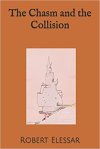
CatC cover paperback

See on Amazon

The Chasm and the Collision is my currently published novel that has the most recent—and what might be thought inauspicious—origins.  I came up with the idea for it while I was an involuntary resident of Gun Club Road, a period lasting eight months.  It was a longer stretch of enforced restriction from most of the sources of intellectual stimulation to which I was used than I think I’ve experienced either before or since.

During that time, thanks to the help of my ex-wife, I was able to keep in contact with my children by calling them two days a week—though the calls were restricted to fifteen minutes at a time, and this was disheartening (though positively luxurious compared to my current interactions).  My children were around eleven and twelve at the time, my son just entering middle school and my daughter in the latter year or so of elementary school. Continue reading

A blog post told by an idiot, full of sound and fury, signifying nothing.

Okay, well, today I’m going to take a brief break from my “Author’s Notes” series, to give you some updates and reflections upon what’s happening in my current writing.  I plan to return to the Author’s Notes next week, with a reflection on “The Chasm and the Collision.”  This one of my most emotion-laden works, and is, perhaps, the closest one to my heart.  At least, it’s the one that bears the greatest personal hope and motivation, though my darker stories are probably more reflective of some aspects of my personality.

Those of you who follow this blog will have noted that, earlier this week, I published “Prometheus and Chiron,” as an e-book for Kindle.  As with “I for one welcome our new computer overlords,” I think it benefited greatly from my decision to re-edit it de novo.  This fact has convinced me more than ever of the wisdom of a suggestion Stephen King gives in his wonderful book “On Writing.”  He recommends that, once you have finished a story, you put it away for a while before beginning the editing/rewriting process.  That way, when you come back to it, you do so with a fresh point of view, and a more objective eye.

Both “Ifowonco” and “Prometheus and Chiron” were subjected to rewriting and editing before I ever posted them here on the blog, and yet when I returned to them, I found that they needed quite a bit of fine-tuning.  This was not specific to the narrative—I was well satisfied with the arcs of both stories, and didn’t change any of those substantial facts.  But the language use, the choice of words—stylistic matters, as well as grammatical ones—bore significant improvement.  This is probably at least partly a result of the fact that, in putting the stories on my blog, I was publishing them informally.  I was happy and eager to receive any feedback, including the pointing out of glaring stylistic problems, grammatical errors, and so on, by blog readers.  This didn’t happen—unfortunately—but I would have welcomed it, and so perhaps I was a bit lazy.  Beyond that, though, it’s simply a fact that I first edited the stories immediately after writing them, and so I was still in the mindset of that initial creative process, not in that of a critic.  The story in both cases was so fresh in my head that it flowed right through the awkward phrasings and poor word choices that I had used, because I knew only too well what I meant to say.  Coming back after a while helped me realize that, while my intention might have been clear to me, the true measure of success is how well that intention is communicated, not how strongly it was felt by the author.

So, I’m pleased with the outcomes of my more recent editing, though I’m sure that both stories—like every other one ever written, probably—could be improved still.  Stories, I think, are never really finished from the author’s point of view; they’re just allowed to go free.

My happiness at putting those two short stories out as e-books has led me to take a short break from “Unanimity” and focus entirely on rewriting “Hole for a Heart” to release it as an e-book.  Then, I shall return to “Unanimity,” and complete it while not working on any other simultaneous fiction projects.  Thankfully—and I am indeed quite thankful for this—I am blessed with the ability easily to return to the state of mind I was last in when writing a story, and am able quickly to jump back into the stream of its creation, without losing the earlier threads.  This is why I was able to write “Son of Man” more than twenty years after I had first started it, with an opening that is almost identical, even in specific phrases, to how I had written it decades in the past.  The story then proceeded, more or less, just I had thought it would back in the nineties.

Of course, even in a story conceived and written in one continuous, unbroken chain of creation, there are always surprises.  That’s one of the great joys of writing fiction.  Characters and events are simulations, of a sort, and they follow the rules you program into them.  Sometimes the interplay of these rules produces outcomes the writer didn’t explicitly imagine or expect when beginning the story, but which are inescapable products of the nature of those characters and events.  This is really quite a wonderful thing, when it happens, and feels nearly miraculous.

Given my plan to focus on it exclusively, I expect that “Hole for a Heart” will be released more quickly on the heels of “Prometheus and Chiron” than the latter was following “Ifowonco.”  I could be wrong.  “Hole for a Heart” is even slightly longer than “Ifowonco,” and is quite a bit longer than “Prometheus and Chiron.”  It may take a lot of work to tighten it up optimally and to shape it into a form for which I’m willing to charge people actual money.

And now, to quote Forrest Gump, “That’s all I have to say about that.”  At least, that’s all I have to say for the moment.  I’m a bit long-winded, in writing if not in person, so I don’t doubt that more will be forthcoming on these topics in the future.  In the meantime, please do consider buying and reading my stories, and if you do, please review them.  In fact, if you write to me and ask, I’d be happy to buy you a copy of any of my short stories—and probably my novels—in return for the promise that you will review them.  I don’t need you to promise to give them good reviews.  You can be brutal and needlessly sadistic, if that’s your preference.  In this, I am fearless, for I suspect that—once one stops weeping—it’s possible to learn more from the feedback of a malicious reviewer than from one who merely sings one’s praises, though the latter is no doubt more pleasant.  This doesn’t mean I want you to say you don’t like the stories if you really do like them, just that you don’t have to butter me up; I’m fat enough already.

I hope you all have a wonderful week.  Try not let politics get you down too much—everything’s ephemeral, after all.

TTFN

Prometheus and Chiron

pandccover

See on Amazon

Tommy—a former Marine, a part-time construction worker, dependent on opiates for the treatment of chronic pain—is waiting for the train home one evening, when he sees a strange, shivering, ill-appearing woman seated on a bench across the track from him. Her presence fills him with dread and revulsion, for no reason he can understand. Even after a month passes, she remains, seated in the same place, always visibly suffering. No one else at the station ever seems to see her at all. But Tommy sees her, and even dreams about her.

And she sees him.

Author’s note for “Paradox City”

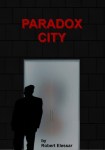
Paradox City Cover2

“Paradox City” is the next story I wrote—or completed, anyway—after I finished the first draft of “Mark Red.”  I say “completed,” because I actually began writing “The Chasm and the Collision” months before I started “Mark Red,” in apparent contradiction to what I wrote in my previous author’s note.  But I had only written what were then the first and second chapters of “CatC,” which were eventually consolidated into one chapter, and had then put them aside.  I also didn’t have them with me while I was a guest of the Florida State Department of Corrections.  My mother, thankfully, had a printout of the chapters, and my intention was to complete that book once I had finished “Mark Red,” when I had worked enough of the rust from my writing gears.  However, the chapters hadn’t arrived yet by the time I finished “Mark Red.”  While I waited, I wanted to be productive and to maintain my daily early-morning writing habits, so I decided to write a short story. Continue reading

Author’s note for “Mark Red”

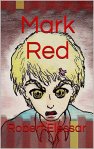
Mark Red Cover

What follows is my first “author’s note” about one of my works, and I’ve decided to begin with “Mark Red,” because it’s my first published book, and the first book I wrote as an adult since medical school.

Ideas for the stories I write tend to arrive in one of two ways.  Often, of course, I simply think of the idea of a story, develop it, often start or even complete writing it, and come up with the title later.  This was certainly the case with “The Chasm and the Collision” and “Son of Man,” as well as with the short stories “If the Spirit Moves You,” “Prometheus and Chiron,” “I for one welcome our new computer overlords,”* and “Hole for a Heart.”  However, at times I come up with a title first, or a particular phrase seems like it might make a good title, and I develop a story to go with the title.  Such is the case with “Paradox City” and “The Death Sentence,” and it is true in spades of “Mark Red.” Continue reading

What freezings have I felt, what blog posts seen!

Hello, ahoy-hoy, good day, and Happy New Year to all.

In my neck of the world, we’re currently suffering through a cold front/cyclone system that’s battering the eastern half of the United States with bitter cold and snow; even here in South Florida it got down to 45 degrees (Fahrenheit), last night, and it may get colder tonight.  That probably doesn’t seem very impressive to anyone who lives almost anywhere else in the US, or in most of Europe, but it’s the coldest it’s been here since I moved to this part of Florida.  Remember, I’m at roughly the same latitude as Egypt here, at least according to a map I saw online.*

As you know, last week we released “I for one welcome our new computer overlords” as a 99-cent short story for Kindle (and yes, that is how I’m capitalizing—or not capitalizing—the title).  I’m very happy with the way it turned out, so I’ve already begun arranging the other two short stories which had previously been posted on this blog.

This brings me to an interesting point:  As some of you know, I’d already recorded myself reading the short story “Prometheus and Chiron” aloud, for eventual placement on the blog, but simply hadn’t edited it yet for that purpose.  Well, now it turns out that my procrastination has served me well, since I’m in the process of doing further editing of the written version of that story.  I can honestly say that “Ifowonco” benefited greatly from that extensive re-editing process, and I think that “Prometheus and Chiron” will likewise benefit.  So, of course, I’m going to need to re-record it, and will then prepare that new version for release on the blog.  I’d like to say, or to imagine, that my subconscious was looking out for me in keeping me from releasing the audio before, but I can’t reasonably or honestly draw that conclusion.  I think it was mainly luck.

In any case, “Prometheus and Chiron” is the short story that will be released next for Kindle, and then on audio on this blog, but it’s going to be at least a little bit before it’s available (though we are already working on a cover design for it).

Speaking of audio—I did a bit of ex temp recording yesterday, speaking my thoughts, stream-of-consciousness style, on the dangers of so-called Regressive/Authoritarian Leftism, and especially on the dangers of virtue-signaling, dogmatism about ideological purity, and the in-fighting, denouncements, victimhood hierarchies, and the general level of shrieking hysteria one finds these days in segments of the left.  Quite apart from the impediment such idiocy presents to real, honest, classical-style liberalism—which has much in common with what might now be called libertarianism—and the contribution it made to the loss of the last election for the Democrats (and the possible loss of coming elections, for similar reasons), I have longer-term, possibly more disturbing worries, and I discussed them in brief…with myself, I guess.  Specifically, I pondered historical occasions when such intolerant and dogmatic leftists achieved power, and how those occasions gave rise to such historical horror shows as the French Revolution’s Reign of Terror, the slaughter of the Czar’s family and the subsequent gulags and purges of Soviet Russia (and the conflicts between Stalin and Trotsky, which led, among other things, to Trotsky’s murder), and of course, the cultural revolution and the millions of deaths associated with Maoism.  I’m not sure how coherent my speech was on that subject—I just didn’t feel like writing about it at the time, even though writing is almost unfailingly more organized than free-associated speech—but I’m going to listen to it, and if it’s good enough, I’ll edit out the hems and haws, the misspeakings, the false starts, and so on, and release the audio on Iterations of Zero.  It’s an interesting experiment, in any case.

I do still intend to make use of audio in the future with some regularity, though I think I’m going to put the video notion on hold for the time being.  Maybe someday I’ll make videos out of my eventual audio files, attaching them to pretty, nature-oriented background scenes, with flowers, and birds, and bees, and sweet little children.  That way you can keep yourself alert by suppressing your urge to vomit, even as you listen to my riveting words spoken in the dulcet tones of my own angelic voice.

Believe me, it’s better than having to look at my face.

Of course, despite all these other projects, “Unanimity” is proceeding well.  Things have begun to fall apart for the main characters, as it were—though of course, they really began to do that near the beginning of the story, but no one realized it until now—and we are approaching various revelations, confrontations, acts of violence, and ultimately the conclusion.  I won’t quite go so far as to say that no one here gets out alive, but no one will get out unscathed.  The book should be released sometime this year, but I’m not sure exactly when, yet.  Much else is happening, currently, so my writing on “Unanimity” is going more slowly than it might otherwise.

Okay, well, that’s about it for announcements this week.  I haven’t yet begun writing my various “author’s notes,” nor have I decided whether I’ll put them on Amazon, but they will be forthcoming here.  Please stay tuned for them, and at the same time, stay warm everyone.

TTFN


*Upon subsequent investigation, I have confirmed that Florida is indeed roughly at the same latitude at Egypt.  In fact, Cairo is 2 degrees farther north than Orlando, Florida (30.04 degrees north, versus 28.53 degrees).  By comparison, the city in which I live is at 25.98 degrees north latitude, which is just south of Okinawa, and level with parts of Morocco, the UAE, and Oman, among other places.

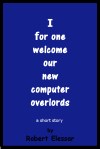
I for one welcome our new computer overlords

ifowonco final

Peter Lunsford, a lonely, book-loving, self-educated and self-destructive salesman, has an abrupt and radical change of fortune. His subsequent actions lead a genius named Darrell White, enabled and inspired by Peter’s choices, to create the world’s first artificial intelligence. Unfortunately, this happens at a time when humanity has devastated itself with global war, and is unprepared to accept the existence of these new and superior minds. These facts will combine to create a future that Peter would not have had the courage to expect, and the implications of which are impossible to foresee.