Author’s note for “Prometheus and Chiron”

pandccover

See on Amazon

Prometheus and Chiron is a more or less straightforward horror story, and its trigger was also straightforward—so straightforward that you might be able to guess it without me telling you, once you’ve read the story.  But I’ll tell you anyway.

One morning, in the waning months of the year, I was nearly alone on the train station platform, waiting for my usual train.  The sun had not yet risen, so it was still quite dark.  As I dithered about (most likely doing some writing or editing), I glanced across the track, and saw a woman standing very still beneath one of the electric lights on the other side.  I looked away for what seemed only a moment, though it could have been quite a bit longer, and when I looked back up, the woman was gone, as though she’d vanished into thin air.

A look down the platform soon revealed that she had simply walked to the other end, for undisclosed reasons of her own.  But her initial silent presence and subsequent seeming vanishment made me think about the possibility of a ghost haunting a railroad platform.  What might have led someone to die in, and then to haunt, such a place?  Under what conditions would such a ghost be visible?  What if it were a ghost that only a certain type of person could see?  This wouldn’t necessarily be a person with psychic abilities (as in my story If the Spirit Moves You, from Welcome to Paradox City) but a person who has certain characteristics, perhaps similar in some special way to the person whose ghost remains.

The story took shape pretty quickly from there.  I don’t recall how long it was before I started writing it, but by the time I did, all the elements were present.  I wanted to deal, of course, with the hellish experience of a spirit being trapped in one place, right where she had died, and the frightening fact of a living person finding himself able to see such a ghost.  But I also wanted to deal with the much realer hell that both of the characters in the story exemplify, one with which I’m familiar on many levels:  as a physician who has treated those with chronic pain and with addiction problems, as a sufferer of chronic pain due to back injury, and as someone who has seen friends and family die as a consequence of addiction.

The ghost-woman trapped at the station represents the classic, purely self-destructive individual that most people probably imagine when they think of drug addicts:  someone who, for whatever reasons, started taking drugs and got hooked on them.  I dealt with this tangentially in Ifowonco, but it’s central to Prometheus and Chiron.  This ghost is a woman whose life was ruined—and ended—by her abuse of narcotics.  Unfortunately for her, at the place she died, a supernatural force was present, one not merely destructive but actively malevolent.

Tommy, on the other hand—the protagonist—is a different breed of addiction victim.  He’s a former Marine, a hard worker, a basically upright citizen and good person, who worked in the construction industry.  Because of an accident on the job, he’s been left with chronic pain from low back and knee injuries.  He’s qualified for disability benefits, but as many people know, these can be woefully limited in the relief they provide.  To cover his cost of living, Tommy has to do at least some paying work now and then, but he has to hide that work from the authorities, so he doesn’t lose his benefits, and he has to treat his pain to be able to function at all.  Unfortunately, the only available medicines capable of dealing with significant chronic pain are opiates…and they come with a series of liabilities, including increasing levels of physical dependence—and the risk of psychological dependence—and consequent, agonizing withdrawal symptoms if one is suddenly deprived of them.  This is a terrible, no-win situation in which all too many well-intentioned people find themselves.

It’s this dependence on opiates, which he shares with the ghost-woman, that allows Tommy to see her, and that, combined with his good heart, makes him vulnerable to the danger he encounters.

The title of this story arrived after I’d almost completed the first draft, but it must have been percolating through my subconscious for some time.  It is, in a way, somewhat pretentious, but I couldn’t help myself; it seemed so appropriate.  It also risks, for those familiar with mythology, giving away the end of the story.  I recognized that possibility but decided that the risk was worth it.

Prometheus and Chiron is shorter than many of my short stories, and it’s fairly concentrated and direct.  Writing it was enjoyable—it almost always is—and more than a little bit cathartic.  It allowed me to express some of the personal horror I experienced while taking prescription pain medications for many years while at the same time suffering through the pain that made them necessary.  (It wouldn’t be too over-simplistic to say that those experiences were a large part of what led to the crashing and burning of my previous life.)

Writing Tommy’s character was a revelatory experience.  Knowing that he was going to be going through some very bad things indeed, I named him after someone I knew—not well, but well enough to know that I didn’t like him much.  However, as I wrote, I realized that my fictional Tommy was a far finer person than my impression of his namesake.  This led me to wonder if, just maybe, the real person had aspects to his character that were also quite admirable, if only on some small scale, and which I was being uncharitable in not recognizing.  I can’t give you an answer to that question, because I only knew the real Tommy briefly and haven’t seen or heard from him in a long time.  Maybe, though, if we all knew the inner workings of other people’s minds as well as we experience imaginary characters through the medium of fiction, we would find at least some sympathy for even the most unpleasant of people.  For me, at least, that’s probably a lesson worth considering.

Enough philosophizing.  Ultimately, Prometheus and Chiron was meant to be, and is, a fairly simple supernatural horror story, and I don’t expect or ask for anyone to care much about it on any other level.  I hope you enjoy it.

From camp to camp through the foul womb of night The hum of either blog post stilly sounds.

Hello, good day, and welcome to April 2018.

For those of you who might have missed my recent updates and posts:  within the last two weeks, I’ve posted the audio for my short story I for one welcome our new computer overlords on my blog here, and I subsequently made it into a video and posted it on YouTube.  The blog post linking to the video is here.

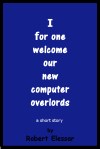
Don’t misunderstand the fact that the story is posted as a video.  Like many others before me, I simply took the audio and added a single video image—the cover of the e-book, floating in a black background—as the video portion of the file.  This is probably a relief for many; you don’t have to go through the misery of watching my ugly mug as I read the story aloud to you.  I posted the audio story in both places and forms to make it more easily accessible, so that more people who might want to listen will find it easy to do so.  It’s just over two hours long, but YouTube lets you start and stop videos in the middle, so you can pick up where you left off, which is convenient.  If you’re the sort of person who likes to listen to bedtime stories—and there are, pleasingly, many adults who do—then you can set the video playing on YouTube as you lie down in bed and listen to it as you make your way off into Slumberland.  I’m told, by relatively disinterested parties, that I do a decent job of reading people to sleep, and I’m also told (hopefully not just to spare my feelings) that this is a compliment.

In the meantime, I’ve returned whole-heartedly to writing Unanimity, and the first draft should/may be done sometime within the next month or two.  Then, of course, the hard and crucial work of rewriting/editing begins, so don’t get too excited.  Unanimity will not be available as beach reading this summer by any stretch of the imagination, though I do hope it will be out in time for you to consume it on a few dark, wintry evenings as 2018 draws to a close and 2019 begins.  It’s the sort of story best read alone in the dark.

Which brings up an interesting, tangential point:  I’ve noticed that, no matter what time of day I’m writing, even if the blinds are wide open on a sunny afternoon, I always feel like I’m working in the deep dark of a silent night, when everyone else is asleep.  I’m not sure why that is, but it’s consistent.  Many times, when I’ve drawn to the close of a stretch of writing and stood up, I’ve been utterly surprised to find that it’s daytime.  It’s probably something to do with the fact that writing is like hypnosis.  I wonder if other writers experience this.

In addition to writing about three pages a day on Unanimity, I’ve also started something I hadn’t really planned to do.  After completing the audio for Ifowonco, I had originally intended to take a break before doing audio for any of my other works, but I’m afraid that I couldn’t hold myself to that plan—or I didn’t want to and didn’t choose to, which amounts to the same thing—and have already almost completed the first “draft” of the audio for Prometheus and Chiron.  Of course, this is a shorter story than is Ifowonco, so it’s not that impressive that I’m already almost done with that draft.

I expect, given how interesting this process has been, and depending on how many people seem to listen, that I’ll ultimately do audio for all my short stories.  This will take a while, even though I don’t have all that many such stories to purvey.  But then, once that’s completed, assuming it continues, it raises another question that seems obvious to me:  will I do the audio for any of my novels?

One thing is quite clear, I would not be doing such audio in single, whole-book form.  I’m happy to listen to full audio books, especially during my commute, but the file size alone of a complete audio book, even a short one, is daunting.  I can’t even estimate what the comparable video size would be, even if the video portion were just a blank screen.  However, I haven’t ruled out the possibility of doing such audio one chapter at a time.  In fact, that might be kind of enjoyable.  I’m a bit nervous, of course, that doing so would expose me to too many imperfections in my prior works, but if I’m honest with myself, I recognize that collision with imperfection as a good thing.  In fact, that alone might be reason enough to do it, even if not a single person in the wide world listened.

Of course, I still haven’t even begun my planned series of blog posts about my favorite villains.  I haven’t forgotten (obviously), it’s just gotten pushed to the back burner because other plans have gripped me and seemed more urgent.  I may, though, start doing them on a monthly, or perhaps bi-weekly basis, once I’ve completed my series of author’s notes on the works I’ve written to date, and that series will soon be complete.

Well, that’s about all that I want to talk about today.  I wish you all the best, and hope that those in the northern hemisphere are at least looking forward to full springtime and the summer that follows.  Do be good to each other.

TTFN.

Author’s note for “I for one welcome our new computer overlords”

ifowonco final

I for one welcome our new computer overlords was the first new short story I wrote after having completed Mark Red, The Chasm and the Collision, and Son of Man.*  Despite what you might think, this was not a story that driven by its title, though that came along shortly after the story began, and I’ll deal with it first.  The title is a direct quote from Ken Jennings, who wrote it as his Final Jeopardy answer when he and his fellow all-time human Jeopardy champion lost to IBM’s Watson computer.  It was a good joke, referring back to an episode of The Simpsons, when news anchor Kent Brockman mistakenly thinks that a space shuttle mission is being attacked by a “master race of giant space ants,” adding, “and I for one welcome our new insect overlords.”  The obvious joke—particularly funny because Brockman’s conclusion is so ridiculous—is about how real people do sometimes, cynically, and in cowardly fashion, try to ingratiate themselves to powerful ruling classes or individuals.

Peter Lunsford, the main character of I for one welcome our new computer overlords, is no coward.  He’s a seemingly simple man—without college education, a widower, a loner, a phone salesman.  But he’s a voracious reader, and even more, he is a deeply thoughtful and intelligent person.  Because of his own experiences with irrationality, even in people he has loved, he pines for the advent of a higher class of mind, which he expects to come from the eventual creation of artificial intelligence.  But he’s by no means a misanthrope.  He laments the senselessness of much human behavior but has an optimistic attitude toward the possibilities inherent in human creativity.  He also has a deep sense of the tragedy of the loss of brilliant people like his wife who, because of the scars of her harsh background, self-sabotaged her future through a fatal drug overdose.  Thus, when Peter wins a nearly billion-dollar lottery jackpot, he uses it to create an educational program and a scholarship fund to help people like his wife avoid the tragic end she met, and to allow at least some of them reach their potential and make great contributions to the world.

The triggers for this story were discussions by neuroscientist, writer, and podcaster Sam Harris, of whom I am a fan.  Harris began to think publicly about dangers that might be posed to humanity by our possible creation of artificial intelligence; he recommended that we think very carefully about such dangers, so we can avoid potentially irreversible errors.  His concerns are shared by such luminaries as Max Tegmark, Elon Musk, and the late, great Stephen Hawking, in contrast to the quasi-Utopian attitudes of such writers and thinkers as Ray Kurtzweil.  Both points of view are worth considering, and it’s an issue I think we should approach with our eyes as wide open as we can possibly get them.  But when contemplating Harris, et al’s concerns, I couldn’t help thinking that, if a truly superior artificial intelligence were to make humans obsolete, would that be such a terrible thing?  Peter Lunsford is my proponent of that perspective.**

I wanted to write a story revolving around those concerns about artificial intelligence, but I didn’t want to write about a cliché takeover of the world by AI—in this, my title is deliberately ironic.  Personally, I suspect that ethics and morality are generally improved by higher intelligence, all other things being equal, so I think that artificial intelligences might be inherently more ethical and reserved than we humans, with all our non-rational evolutionary baggage.  In this, Ifowonco is a story of wish-fulfillment.  It’s my daydream of the possibility that someone winning a truly gargantuan sum of money might use it to deeply positive philanthropic effect, inspiring others to act likewise, then leading, through that beneficial action, to a great leap forward in intelligent life (yes, I would without embarrassment refer to AI as a form of life).

Of course, you can’t say that Ifowonco is a uniformly happy story.  It entails a (non-nuclear) World War III, the rejection of AI by the human race, and of course, Peter Lunsford’s willful self-destructiveness.  Overall, though, it’s optimistic.  Darrell White is my example of a brilliant, world-changing mind springing from the least promising of seeming circumstances, wanting only the opportunity and nurturing that would allow such a mind to flourish.  He and my imagined AIs represent of my personal conviction that reason and morality and vastly more powerful than their antitheses; I cite as evidence for this the fact that civilization continues to exist and grow, even though it’s so much easier to destroy than to create.

In some senses, Ifowonco is the most personal story that I’ve written hitherto.  Of course, any character in a story must be a reflection of some part of the mind of the author—a person incapable of dark thoughts could hardly write a believable villain, for instance.  But Peter Lunsford is the avatar of a large part of my personality, in both his positive and negative character attributes.  Though I’ve had almost twice as much formal education as Peter, that difference is inconsequential because of Peter’s incessant self-education.  There is, in fact, almost no daylight between Peter Lunsford and me (and what little there is must generally be in Peter’s favor).  I would even like to think that, were I to win a prize such as Peter wins, I would choose to do with it something like what he does; in this, also, the story is a form of wish-fulfillment.

Speaking, in closing, of wish fulfillment:  I deliberately made the reality of the second half of the story ambiguous.  Do Darrell White and his creations, and all that comes with them, even exist in this universe?  Or are he and those subsequent beings and events simply a species of dream that Peter has while his brain succumbs to hypoxia?

I know the answer to this question in the universe of the story—and yes, there is a correct answer—but I’m not going to tell you what it is.  I’d rather have you draw your own conclusions.  I think it’s more fun that way, and it may even be a useful tool for personal reflection, bringing us back to that whole question of consciousness that troubles thinkers like Sam Harris.  I’d be intrigued and delighted to hear any of your thoughts on the subject, so feel free to send them my way, either here, or on Facebook, or on Twitter.  I wish you well.


* Just this week I released the audio of this story, now available to enjoy, for free, here on my blog.

** I don’t have the concerns, which Harris does, about the possibility that AI could be highly intelligent and competent but might nevertheless not be conscious, for two reasons:  First, I strongly suspect that consciousness is a natural epiphenomenon of highly complex information processing involving internal as well as external monitoring and response, though I’m far from sure; and second, I can’t be philosophically certain even that other humans are conscious (I think they are, but this extrapolation is based on my own experience and their apparent similarity to me), but it doesn’t seem to matter much for the purposes of their function in the world.

“I for one welcome our new computer overlords” – The Audio!

ifowonco final

Hello there, everyone.

Here, at last, is the audio version of I for one welcome our new computer overlords, read by the author (me).  You are free to listen to it on this site, or to download it to listen at a later time, and even to share the file with your friends.  You are not allowed to charge anyone money, or to otherwise make money, from that process, nor to pass the work off as your own.  Other than that, however, please enjoy.  If anyone does a dance remix, please let me know, I’d love to hear it.

I apologize for the many imperfections in this audio file – there are inconsistencies in volume and tone, which make it clear where I began new recording sessions, and there is also the occasional air sound on the mic.  As I’ve written before, doing this is a learning process, and I expect that my next audio recorded story (probably Prometheus and Chiron), will have somewhat better production values.  Depending on the reception this one receives, there will be at least some delay before I do that; it’s a time-consuming process, and even though P and C is a shorter story than Ifowonco, on this one I must have put in  ten to twenty hours of work for each hour of the final recording (just over two).  I really must get back into full-throttle writing of Unanimity, also.  However, depending on how enthusiastic the reception is for this audio version of Ifowonco, as well as the inscrutable exhortations of my soul, I may turn to my next audio recording sooner rather than later.  I also plan to turn this audio into a video, which will likely just be the audio track, playing over some fixed image – probably the e-book cover, I shouldn’t wonder.

As you may notice, in order to be able to post the audio recording here, I’ve upgraded my site, and you shouldn’t be seeing advertisements on it anymore.  If you do, in the future, they’ll be ads I’ve put up myself.

And speaking of advertising…if you enjoy this audio telling of my story, I encourage you to buy the e-book version for Kindle.  It’s only 99 cents (in America, with equivalent pricing in other territories), and the Kindle app is free and can be used on any smartphone, laptop, desktop, or tablet.  Even though one loses the romance of the paper book, the convenience of being able to carry around an essentially limitless library in your pocket is hard to beat, as even Peter Lunsford admits.  I currently lug 118 volumes around with me wherever I go, and believe me, I’m just getting started.

To purchase, or just to peruse, the story at Amazon, just click on the image of the cover above, or on any of the full or abbreviated instances of the title written in this post (similarly, you can see Prometheus and Chiron by clicking on any of the links attached to its title or abbreviation).

Okay, well, without further ado (and there has been much of it, hopefully not about nothing), here is the audio version of Ifowonco, submitted for your enjoyment:

TTFN!

Now ’tis spring, and weeds are shallow-rooted; Suffer them now and they’ll o’ergrow the blog post.

It’s the third day of Spring in 2018, and I congratulate all those in the northern hemisphere on the upcoming six months of longer daylight than nighttime.

It’s been a productive week, all things considered, though I haven’t quite started writing new material on Unanimity; I’m still engaged in rereading what’s already written, to get myself back into the swing of the story.  I’ve enjoyed that process more than I thought I might.  There were times, when writing it, that the words didn’t flow as easily as I would have wished, but as I’ve frequently rediscovered, such times often produce works that, when read, are superior to those fired by irresistible enthusiasm.  This reinforces the wisdom of so many superb authors, who advise that one should write even when—perhaps especially when—one does not feel the stirrings of the muse.  (I consider reviewing and rewriting to be parts of that process, so I don’t count my recent hiatus for review against my obedience to the recommendation, though it does chafe at me).

Of course, these processes would proceed much more quickly if I were able to devote my full-time efforts to them, but at least the continued need to earn a living by doing other things keeps me involved in many aspects of life that might elude me if I’d been a cloistered writer from the onset of adulthood.  I’ve had a tremendous number of fascinating experiences that have deeply influenced the content and nature of my fiction and my nonfiction, so it’s hard to complain too strenuously.

Still, these things are far from absolute necessities.  Arthur C. Clarke didn’t need to be part of a human race on the cusp of evolving to its next stage and joining the Overmind to write one of the most brilliant works of science fiction in the twentieth century, any more than Einstein needed to have personally experienced the process of traveling near the speed of light to work out Special Relativity.  All fiction is, in some sense, a form of thought-experiment.  This, I think, is one of the reasons storytelling is so ubiquitous and important to humans.

Thus, though I think I can make use of my exposure to so many of life’s vicissitudes, I don’t think it’s a pure necessity, nor do I think it should be an absolute requirement going forward.  That being said, if you want me to work more quickly, and to produce my works in greater number and frequency, I entreat you to please support my work and to spread the word about it, so that I can make my living solely by writing.  I, at least, would certainly not complain.

In addition to rereading Unanimity, I’ve also been working steadily on editing the audio version of I for one welcome our new computer overlords, which should become available within the week.  I have to say, it’s been a surprisingly enjoyable process.  Of course, the work is amateur, but I don’t feel too badly about that, since I’m not going to charge anyone to listen to it.  As with all things, doing this well is a skill, and developing any skill involves trial and error.  Still, it’s been a blast; even the seemingly tedious process of editing out my gaffes and retakes is amusing, and I’ve also been able to use the sound-editing software to introduce a few “dramatic” effects.  Don’t expect too much from this—I don’t want you to think there are going to be sound effects and background music.*  But I was able, for instance, to remove breath sounds (for the most part) from the speech of a character who does not need to breathe when he speaks, and to leave them in during the dialogue of the other characters of the story, at least when they are appropriate to the performance.  That such a thing might be beneficial and even necessary would never have occurred to me before this undertaking.

There are residual flaws that irritate me, and which I can’t correct on this recording without going back and re-doing the whole thing, such as the occasional sound of air striking the microphone when I speak too closely to it.  Some of that can be edited out, but not all of it.  I don’t think it will detract significantly from your listening enjoyment, though, and for future recordings, I’ll take preventive measures against the problem.  Again, it’s been an enjoyable experience, not the least because it’s been a learning process.  The finished product will be about two hours long, and I hereby give permission to download it, if you have that capability, and listen to it at your leisure.  You can also share it, if you like, though obviously you do not have permission to charge anyone for that sharing (as if you would).

That should about do it for this week.  I have to stop somewhere, and usually it’s someplace arbitrary, since I otherwise tend to be the writing equivalent of the Energizer™ bunny.  Next week I plan to post my author’s note for Ifowonco, which will nicely coincide with its audio release, and to follow up subsequently with that for Prometheus and Chiron and then Hole for a Heart.  Then I’ll have caught up with my published works, and should be near completion of Unanimity.  After that, I’ll probably do another short story before beginning my next novel (which is a sort of modern fable, and which I’ll discuss more as it approaches).

Thank you all for reading.  I hope you’ve enjoyed yourselves and continue to enjoy my writing going forward.  As always, your comments are eagerly welcomed.

TTFN!


* I actually dislike it when background music is added to audiobooks.  There’s no music playing in my head when I read a book, and I don’t need sudden bursts of it to heighten the tension in a story performed by a voice actor.  If the writing doesn’t elicit the intended emotion, then that’s its own problem.  Added music just calls attention to the fact, and is a distraction, as far as I’m concerned.

Author’s note for “If the Spirit Moves You”

This author’s note for If the Spirit Moves You is the last one from Welcome to Paradox City, and though it’s the middle story in that small collection, I think it was the last one that I wrote.  It’s also the lightest-hearted story in the book, though it still qualifies as one of “three dark tales,” because its subject matter is ghosts…or the “unquiet dead” as one of the characters in the story asks us to say.

This was not a title-driven story.  The idea for it was triggered by a comment I heard while staying with my parents and my sister for a few months, after having completed Work Release at the tail end of my sojourn with the Florida DOC.  It was October and, as was their wont, my sister and mother had put up many holiday-related decorations in and around the house, including the front lawn.  One morning my sister came in from raking some leaves and she said to my mother that, while she was out front, a ghost fell out of the tree near her.  I knew she was referring to one of the decorations she had put up earlier, but her statement made me think about what might happen if a person were outside and a real ghost fell out of a nearby tree.

Of course, ghosts, as understood in popular culture, aren’t normally prone to falling, so the idea seemed humorous to me.  I wondered under what circumstances a ghost really might be subject to the usual influence of gravity.  I also wondered under what circumstances a person might actually see such a thing happen.

The story didn’t develop right then and there but percolated and fermented and sporulated and incubated and underwent all sorts of other metaphorical processes for quite some time.  Finally, it popped out in more or less complete form:  What if people don’t see ghosts anymore, not because we have come to know that they don’t exist, but because the increasing disbelief in them has deprived them of their power?  If that were the case, and if they realized it, how might they seek to change the situation, so that they could regain their influence.  Also, why would they want to do it?  I thought it would be more interesting, and more fun, if they weren’t trying to accomplish anything sinister, but rather to bring themselves to the attention of the modern world, so they could enlist the aid of modern science in helping to free them from their prison as earthbound spirits.

The purpose of writing this story was just to play with the idea.  I suppose that’s ultimately true of any story at some level, but I also wanted to make this one funny, at least a little.  Thus, the almost slapstick nature of the young ghost’s tumble from the tree while trying to practice hanging himself, and the confused subsequent interaction between him and Edgar Lee, the story’s protagonist, in which each only slowly realizes the other’s nature.

Among many influences on the story, one is my love of manga and anime, a taste I acquired only after I was already in my thirties.  The supernatural stories in manga often have a different kind of sensibility than many traditional Western tales.  This is probably partly because of the cultural heritage of Shintoism, which considered spirits to be integral and essential parts of the world.  Many anime and manga have characters who—unlike nearly all of their fellow modern humans—can see and interact with spirits of one kind or another, good and bad.  This would be just the sort of person who might encounter an inept ghost falling out of a tree.  Thus, Edgar Lee, I decided, had at least some Asian heritage…including a great-grandfather who had, in China, used a peach wood sword to exorcise demons.

I enjoyed combining seemingly contradictory attributes into individual characters in this story.  There’s the inept and clumsy young ghost with a bit of a snarky attitude, who is a fan of James Randi—that rock-star of the skeptical debunker community.  There’s the ghost’s friend and fellow spirit, the instigator of the plan to reawaken belief in and awareness of ghosts, who is painfully PC in his sensibilities and tries to raise consciousness about the inappropriate use of stereotypes regarding the “unquiet dead”.  There’s Edgar’s father, a sober and rational retired electrical engineer who is utterly unsurprised when Edgar discovers his own supernatural ability, and who says, “These things happen.”  And of course, there’s Edgar himself, a struggling copywriter for a PR firm who realizes that he is possibly the last person on Earth who can see ghosts.

This obviously isn’t supposed to be a deep story, though I do try to take it and its characters seriously within their own world.  It’s always harder to be funny than it is to be scary—probably for good, sound, biological reasons—so I rarely write to try to make other people laugh.  In this story, mostly, I was writing to make myself laugh, or at least to smile, while still creating interesting characters with a problem that really would be bad if we were faced with it.  How horrible would it be to be trapped on Earth for eternity, unable to have any effect whatsoever on anything that happens?  Pretty horrible, I’m thinking.

The story makes a nice buffer between the other two in Welcome to Paradox City, neither of which has much humor, and both of which have very non-happy endings.  If the Spirit Moves You ends on a rather optimistic note, and I like sometimes to imagine what sort of events might have followed the story’s conclusion.  I hope that some readers think about such things as well, and that at least a few of them share my bizarre sense of humor and get a modest laugh out of the story.

Finally, a brief word about the title.  The first draft of the story was complete before I even started thinking about what to call it, and that task required a few solid days’ pondering.  I considered and rejected several rather stupid and ham-handed plays on words, including one which turned out already to have been used by a Bugs Bunny cartoon.  Finally, I decided just to go with a slight variant on the dry joke Edgar’s father makes at the end of the story.  He is, probably, my favorite character in the tale, and is partly modeled after my own father; giving him (nearly) the last word as well as the honor of naming the story seemed entirely appropriate.

Nymph, in thy orisons, be all my blog posts remembered

Okay, well, it’s a new week, and a new month, and this is a new blog post…as is probably obvious.  Last week I posted my author’s note for Son of Man, and next week I’m going to write an author’s note for If the Spirit Moves You, the last of the stories in Welcome to Paradox City to receive such a treatment.  I suppose that I’ll subsequently write an author’s note each for the three short stories that have followed, and that are now available in Kindle versions (only 99 cents each, and cheap at twice the price).  I did write about them each on this blog even as they took shape, but there are, nevertheless, further insights to be delivered, for those readers who are interested.

Now, though, having finished the publication of all three of my most recent short stories, I have returned to work on Unanimity.  I’ve been rereading all that I’ve written of it hitherto, just to get back into the swing of the story.  This is, nominally, against Stephen King’s advice in his excellent book On Writing, but I’m doing it only because I took a break to hone those short stories for publication, so I think this case merits an exception to the King’s recommendation.  The rereading has been enjoyable so far, and the book is better than I occasionally felt it was while writing it.  This happens to me quite a lot:  the works that feel forced and inelegant while I’m writing them turn out to be much finer than I expect, and sometimes are better than those which seem to flow more readily—even inexorably—from whatever it is that produces creativity.  This may make perfect sense.  After all, those things in nature that come forward with great speed and power are often rougher in their original shape than more gradual phenomena and require more honing in the end.  I wouldn’t imagine that this is a law of physics, but it is a phenomenon I see in my own creativity.

In addition to resuming my work on Unanimity, I’ve returned to my previous plan and begun audio recordings of my short stories.  Specifically, I recorded the first draft audio of me (!) reading I for one welcome our new computer overlords last week and am now in the process of editing it.  I’m extremely thankful for the amazing advances in technology that allow sound editing to be carried out on more or less any reasonable computer.  I won’t say that my equipment or program is absolute state of the art, but since we’re not dealing here with a musical recording, but with an author reading aloud one of his stories, it’s more than adequate.  When I think of the complex machinations the Beatles and George Martin went through to produce their ground-breaking and innovative musical effects in the sixties, my mind soars.  Just imagine what a modern equivalent of Lennon and McCartney—or of Mozart—could do with the tools available in the early twenty-first century!  As far as I can tell, though, we still await the next arrival of such era-defining genius.

In any case, thanks to that wonderful technology, it shouldn’t be long before the audio version of Ifowonco will be available, and when it is, I shall post it on this blog, free for those who wish to listen at their leisure.  Of course, being compulsive about such things, I shall no doubt follow this with audio versions of Prometheus and Chiron and Hole for a Heart, though I’m not sure how quickly that will happen.  I’ll probably eventually do audio versions for all three of the stories in Welcome to Paradox City as well.  I don’t think, however, that I’ll do so for my novels, at least not in the short term.  I’m a bit disappointed in this prediction, but the time scales are simply too daunting.  The final recording for Ifowonco—a long short story, I’ll admit—will probably be on the order of about two hours long, and production takes much, much longer.  If that length pattern holds, my novels would end up about ten times that duration, and it’s hard for me to see myself sparing the time to produce them anytime soon.  It’s really too bad, because I do enjoy reading books aloud, and I expect my skills at both performance and production to improve with practice.  Unfortunately, given the fact that I also need to work to make a living, recording time inevitably eats into my writing, and that is my first and major calling.  I have so many books to write (and short stories, too), and my time is woefully limited.  One must, it seems, prioritize, and so enterprises of great pith and moment with this regard their currents turn awry and lose the name of action.

Alas!  Poor audio.

It is with no honest regret, though, that I’ll return to Unanimity, and thence to its younger siblings, proceeding at full throttle.  Unanimity isn’t a happy story—what horror novel is?—but I’m definitely happy to write it, and will be just as happy, if not more so, for others to read it.

While you wait for that to be finished, keep your eyes peeled for my next author’s note, and keep your ears pricked up for my upcoming audio releases.  As always, I thank you for reading, I welcome your feedback, and I wish you well.

TTFN

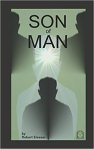
Author’s note for “Son of Man”

Son of man icon

[Spoiler Alert:  Parts of the discussion below reveal aspects of the book that the first-time reader may not want to know…which, I suppose, is the basic definition of “Spoiler Alert”.]

Son of Man is the oldest of my published works—oldest in the sense that it’s the oldest of my story ideas that has been fully written and published.  It is also oldest in the sense that it is the published book I started writing longest ago.  I began it in the nineties, while I was in med school and was living in White Plains, New York.  I don’t recall the exact amount that I wrote at the time; it may have been only the first five or six pages.  But the book as it now exists begins with a scene almost identical to what I wrote then, reconstructed from memory, including the names of the first three characters introduced.  The character Michael was also present in the original idea.  I might have gotten as far as his introduction into the story at the time; certainly, his entrance, and even his initial words, have been fully present in my head for the last two decades. Continue reading

Hole for a Heart

holeforaheartredgreywith frame

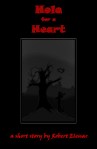
While driving through central Pennsylvania on a road trip from New Jersey to Chicago, Jonathan Lama spies a peculiar pairing on top of an approaching hill:  A huge pecan tree, next to which lurks an out-of-place scarecrow.  Intrigued, and craving a break in his long drive, he pulls off the highway and goes into the nearby gas station.

There, he hears the story of a man named Joshua Caesar, a person of possibly supernatural evil, who terrorized the region almost seventy years before, and was finally brought to rough justice by his neighbors in retaliation for his crimes.  Local legend holds that the figure of the scarecrow is Joshua Caesar’s body—not changing, not decaying, staked out next to the highway for nearly seventy years.

Jon is entertained but of course does not believe the tale.  Then his car suddenly refuses to start, and while he waits for a tow-truck to arrive, stranger things begin to happen…things which lead him to doubt his sanity, and to wonder if, just maybe, the legends of Joshua Caesar’s unchanging scarecrow corpse are actually real.