
It’s Friday now, for those of you who have been drinking heavily in the run-up to the big holidays and have lost track of the days. I’m certainly working today, but I don’t know if the office will be open tomorrow, so I don’t know if I will write a blog post tomorrow. If you’re interested, feel free to check this site in the morning. Or, if you like, you can subscribe, and you’ll be sent emails for new posts. But take that suggestion like a broken barometer: no pressure.
That’s almost all that I feel I have to say. Ordinarily, not having anything to say doesn’t mean I won’t write a post. I’ll just blabber and blather for nearly a thousand words, just to see myself write*. But there won’t be anything of substance.
Probably a good fraction‒perhaps even a significant majority‒of everything you can find on this blog is pointless nonsense. Though, of course, I might contend that everything is pointless nonsense. But here in this blog, you will sometimes find it concentrated, distilled, freeze-dried, and vacuum sealed.
No, I don’t know what some of those things might mean here, metaphorically, any more than you do. I was just saying words that I thought seemed good. I have curious tastes, though, so I’ve no idea what others might think of them.
Anyway, that’s me trying to act all silly and funny and whatnot, as if I might be even slightly happy, so that other people don’t have to worry about me. Well, don’t worry about me. I’m not happy at all, but it doesn’t matter in the slightest, because neither do I. Maybe that’s just the way everything is, or maybe it’s just me. Neither would particularly surprise me.
So, anyway, yeah, I’m not happy, not in any useful sense of the term. John Galt said that happiness is a state of noncontradictory joy, and that’s always seemed to me like a pretty useful definition of the word, though it’s not the only useful one. But I like how it separates joy from happiness. Even people going to the gallows can sometimes joke and laugh, if only as a defense from fear, and in those moments of laughter they may feel joy. But it is perforce transient, and it’s unlikely that they would be willing to say that they were happy**.
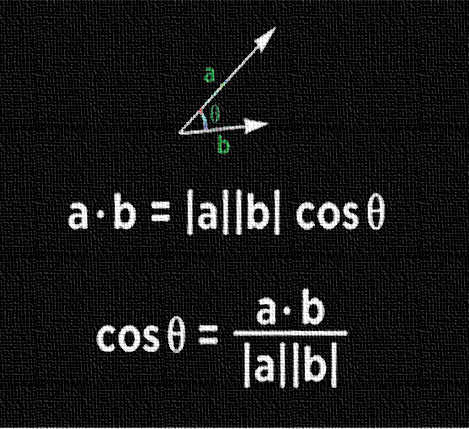
So, in that usage of the word happiness, joy would be necessary but not sufficient for actual happiness. And both might be relatively orthogonal to a state of wellbeing (which is another word that has more than one interpretation). Still, though the dot product of happiness and wellbeing may be surprisingly small***, I don’t think it could be zero.
Yes, I use vector multiplication as metaphors for such things, though honestly, it’s not really even so far separated as to be merely a metaphor. Vectors can be useful for tremendous numbers of things that may seem far afield from each other, from computers and artificial intelligence to physics to biology to economics and ecology.
They can even be of use in psychology, though I don’t know how often they are used therein. I haven’t dived into a lot of more formal psychology recently, though I like the popular works of Daniel Kahneman and of Jonathan Haidt. And Paul Bloom is great fun. But popular works of psychology rarely involve measuring aspects of mental functioning as vectors in a phase space.
Though, as you might have picked up if you’ve read a lot of what I’ve written here, I think it’s useful to think of human behavior and actions as the outcome of a vector sum of all the various “pressures” in the brain/mind, which end up with a resultant that determines what one’s actions will be in that moment.
But, of course, the action itself can feed back on the input vectors, altering them in various ways (maybe their angles, maybe their magnitudes, rarely but possibly their actual sign, which admittedly would just be equivalent to an angle change of 180 degrees, or 𝜋 radians).
Likewise, the state of many of those vectors can change with time. For instance, one could imagine a vector associated with one’s degree of alertness. Such a vector would tend to have greater magnitude in the daytime than late at night in most humans, so it waxes and wanes inherently (though even this is likely a result of input vectors delivered by various aspects of the sensory systems).
But the actions taken as a product of previous moments’ vector additions can affect this vector, too. If a previous resultant led to one having a strong cup of coffee, that might increase the magnitude of the alertness vector, though there would be a delay. Alternatively, if the previous outcome had led to one drinking a significant amount of Wild Turkey 151 on an empty stomach, the alertness vector might soon start decreasing in magnitude.
Okay, I’ve reached the point in the blog post where I’m using vectors to describe the effects of coffee versus whiskey. I think it’s reasonable to bring things to a close now. I hope you all have very good days, by any reasonable measure. If I work tomorrow, I’ll write a post tomorrow. I’ll leave figuring out what effect that will have on your own wellbeing for your consideration.
*Analogous to speaking to hear oneself talk.
**Though I can imagine possible situations in which one might be literally happy even on the way to the gallows. It would be a very brief happiness, nonetheless.
***I doubt that it is, but I also doubt that it is the full, direct product of the magnitudes, as it would be if there were no angular difference at all. Wellbeing, I think, is more complicated than happiness, which is itself by no means simple.


 Robert Elessar