Told you, I did. Saturday it is. Now…there is a blog post.
That means, of course, that I am going to work today.
That’s not because of the fact that it’s Saturday, or because I’m writing a blog post, or even because I told you, though that may have some more causal input. But otherwise the causality is very much: I am going to work + I write blog posts on work days generally + I told you I would ⇒ I am writing a blog post.
It’s apparently been a sticking point in the history of statistics in the twentieth century that no one felt they could definitively infer actual causality by statistical testing (such as with medicine effects and so on) but only association. Of course, this is a root problem in epistemology, not merely in statistics: the question of how we know what we know or if we know what we think we know. I’ve actually been dipping in and out of a book about the science of causality, called The Book of Why by Judea Pearl. It’s good but somewhat dry, and that’s why I’ve had to keep dipping in and out of it between other things.
That latter is just an example of a frustration I’ve experienced throughout my life: I have a hard time not getting distracted from one interesting thing by the next interesting thing, and so I don’t accomplish things I would like to accomplish.
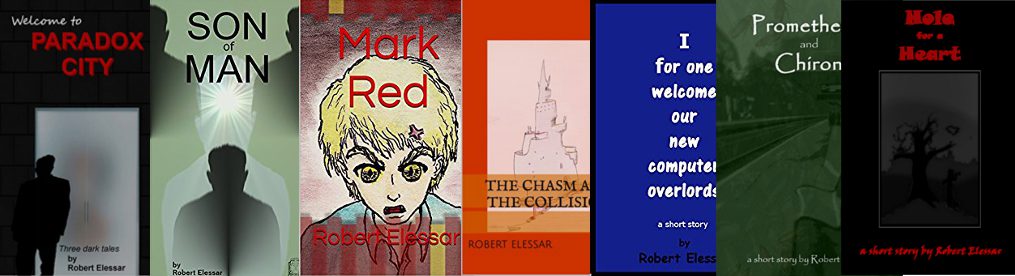
In fact, the range of time from when I went to prison and the years following was a rare period during which I was able to commit to and follow through with (in this case) writing books and short stories, one at a time, finishing one before starting the next, which is the way I need to do things if I am to succeed. And during that same time‒well, this started after prison really‒I practiced playing guitar and ended up writing and producing/performing/recording a total of six songs, four of which are published and streamable on all major platforms.
Since then, though, I have deviated from those habits, at least partly because of the utter lack of impact those things have had. Telling stories while lost and alone to the struggling plants and rare animals in a desert oasis is not very fun. Even though they don’t interrupt, they almost certainly don’t actually understand anything. And they never give any feedback.
I’ve thought to myself many times recently that I wish I could form my own personal Tyler Durden. For those of you who haven’t read or seen Fight Club, I will try to avoid any spoilers, but I will just say that Tyler Durden is Brad Pitt’s character in the movie (and one of the two main characters in both the book and the movie). Those of you who have seen or read it will know what I mean when I say I need or want my own equivalent of Tyler.
In any case, I need to escape somehow. I’m enraged by almost everything nowadays. At least I feel rage. It’s uncertain that rage is truly caused by the things toward which I feel it. They may merely happen to be “there” when I’m prone to that feeling.
See what I mean about the whole causality thing? One can sympathize with the statisticians who felt they could not firmly infer causality from association. Human emotional states give us good reason to be cautious about drawing conclusions too quickly and recklessly. As Radiohead sang, “Just ’cause you feel it doesn’t mean it’s there.” Or, as I like to remind people, just because you infer it doesn’t mean it was implied.
One may feel what seems to be anger toward another person or circumstance, but then it turns out that one’s blood sugar is just low, and the body is secreting all sorts of sympathetic nervous system hormones to trigger the release and creation of glucose in the body. But those hormones also influence the brain, and are associated with fight and flight. The brain may then do its usual associational thing and draw mistaken conclusions about the source or cause of one’s anger.
It reminds me a little bit of the brilliantly acted scene in The Fellowship of the Ring (and the equivalent scene in the book) where Bilbo gets angry and snaps at Gandalf when Gandalf is encouraging him to leave the Ring behind for Frodo. In this case, of course, it is the Ring itself that’s causing Bilbo’s ire, but he feels, at least for a moment, that it is Gandalf’s “fault”.
What point am I making? I don’t know that I am actually coherently making any point at all. But then, I’m thoroughly unconvinced that there’s any true point to anything (though certainly people can find their own internal, subjective meanings). I have more than a little sympathy with (Health Ledger’s) the Joker, who wants to show the schemers how pathetic their attempts to control things really are.
Of course, he is mistaken in one thing (well…almost certainly more than one), and that is his claim that when one upsets the established order and introduces a little anarchy, everything becomes chaos. Everything does not become chaos; everything always has been chaos. Chaos and order are not opposites; order is just a subset of chaos. What we call order is just one of the things chaos does in some places, in some times, in some circumstances.
And chaos doesn’t need agents, anymore than death needs incarnations or servants, or anymore than gravity needs invisible angels to guide the planets in their orbits around the sun. This shit is just the way things happen; it doesn’t require any agency. It simply is.
As for why it is the way it is, well, that is an interesting question. Actually, it’s probably a whole slew of interesting questions. I don’t think any of these are answered in The Book of Why, despite its title, though. It’s just not the sort of thing toward which it is addressed.
Wow, I’m all over the place, which is on brand at least. I’m going to draw this post to a close now. I hope you have a good weekend. If you like football, the SuperBowl is on this Sunday. Actually, it’s on even if you don’t like football. The game is not conditional upon any one person liking football‒although, it requires a certain minimum number of people to like football or else it will stop occurring. But what is that number? Does it vary from moment to moment?
Agh, I need not to get started on questions like that right now. It may be the question that drives us, Neo, but I’m getting too wordy for a Saturday blog post. Hasta luego mis amigos and soredewa mata jikai, minasan.


 Robert Elessar