What a wounded blog, things standing thus unknown, shall live behind me!

HELlo and good morning.  It’s Thursday, the 24th of February, and so it’s time for my weekly blog Post.  This will be the last post for the Month of February in 2022.  At lEaSt, it will be the last Of My usual, wEekly February 2022 blOg posts.  I suppose it’s possible that I might write somethiNg Else and post It or post some more of outlAw’s Mind if anyone’s interested.  But otherwise, probably not.

There’s not really much more to report than there was last week.  I’ve continueD to write on a near-dailY basIs, haviNG completed just a little over five-thousand words again this week.  I don’t have any new vIdeos of me singing to inflict upon you, so that’s probably a good thing.  Sorry about doing all that self-indulgent nonsense.  In fact, yesterday, I came very close just to giving away the guitar I have at the office because its presence was galling, and I felt franKly avErsE to the notion of even trying to make anything Pleasant, let alone beautiful.

Speaking of beauty, or its opposite, or WhAtever, I’ve reached a poiNT IN Outlaw’s Mind where some quite bad thinGs are happening for our main characTer, TimOthy Outlaw.  People in my universes don’t get a very good shaKe from me, It seems, but then, neither do people in my reaL, actuaL life, so that’s not too contradictory.

I’ve continued to have great difficulty finding books that I want to read.  I’ve tried to locate new fiction that looks interesting, but even coMics and manga are hard to concentrate on…or, rather, are things on which I find it hard to concentrate, if I want to trY to avoid ending SEntences with prepositions.  I know, it’s probabLy silly to bother with anything like that—almost nobody does anymore, even writers for Formerly prestigious newspApers, magazines, and jourNals.  I finD It frustrating anD even galling, but I recOgNize—when I’m able To be objective—THat at least some of the rules of grammar are arbItrary, though some are also borN of inherent logic, and the violation of these rules can lead to unclear communication and, I thinK, promote unclear thought.  My emotions mIght be as erratiC ANd troublesome as predicting the motion of a doubLe-pendulum, but my thoughts At leaST seeM coherent.  Maybe that’s why CBT* has never really worked very well for me.  Maybe my neUrology is just fuCked.  For all I know, maybe my tHoughts aren’t actuaLly cOhereNt, and everythinG I writE comes across as gibbeRish to everyone else.  Goodness knows, much of what most everyone else says and does feels lIke gibberish to me.

Of course, even non-fiction—even books about physics or neuroscience or rationality or biology or cosmology, whether I’ve loveD them in the past Or they’re new oNes by authors known or unknown To me—has been providing rapidly diminishing returns of latE.  And it’s not as though I do much of anything else for enjoyment.  eVEN the YouTube algorithm is letting me down, but of course, there was never any reason to thinK that it would do otherwise.

I doN’t think I have that much mOre to say today on this blog or ever at all, for that matter.  I don’t think I’ll be sharing any more of OutlaW’s MInd, but I guess I could change my mind at some point in the Future.  I can’t change It in the paSt, after all, alas.  And, of course, even if I could, we would be subject to the seeming paradoxes of time travel fiction in which a person cHanges things abOUt the past that change the fact that they wouLD change someThing in the past, and so on.  Of couRse, Everettian quantum mechanics allows for waYs around thIs—possibly, though it’s probAbly MAinly irrelevanT to reALity—and even the MCU glimpsed at least a bit Of that in AvengerS: Endgame, when the Hulk pointS out that, if your travel into tHE past, that past now becomes your “future”, and you cannot change your reaL Past by changing your future.

Anyway, that’s just stuff and fluff.  I can’t find even a Modicum of intErest in any of the ongoing MCU Projects, nor any of the Star Wars shows or anything eLsE, reAlly.  I’m juSt wandEring farther and farther into the wasteland now.  I doubt that there is a far side to it.

TTFN

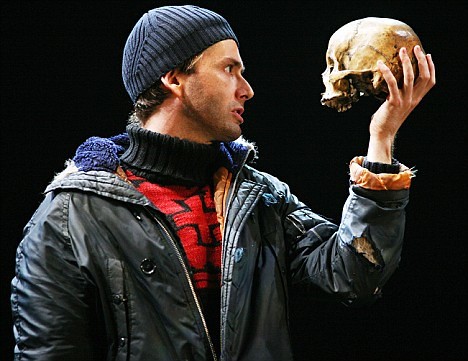
tennant hamlet


*Cognitive Behavioral Therapy.  I don’t have the energy to describe or explain it, but feel free to Google it or look on Wikipedia, or whatever.

Or are you like the painting of a sorrow, a blog without a heart?

Hello.  Good morning.  Thursday.  Blog post.  You can fill in the rest of the verbs, articles, prepositions, adjectives, adverbs, and pronouns for yourselves.

It’s been a moderately productive week; I’ve made more progress than I did the previous week on Outlaw’s Mind—I’ve written just shy of five thousand words since last time.  Things are getting exciting and strange and frightening, and that’s all good in a story, though probably not good in life.

I’ve posted the second portion of Outlaw’s Mind—in draft form, anyway—on my blog, here.  It’s a bit of a lurch from the “cold opening”, because it suddenly shifts backward in time, to Timothy Outlaw’s younger, early adolescent days, gradually setting the stage for the events that happen in the opening, and which will then carry on after.  I haven’t yet reached that opening time again in the story, but I’m getting closer.  There will be a payoff, and hopefully the things that happen in between will be reasonably interesting.  They certainly are strange, and—hopefully—sometimes frightening.

I’ve also been mucking about with my guitar and singing, and I did a new video of me playing and singing Yesterday (of course by the Beatles).  I’ll embed it here, below this paragraph, so if you’re inclined, you can listen.  It’s decent, I think, but of course, you should feel free to judge for yourself.

I may inflict more songs upon you, assuming nothing cuts all my endeavors short—if they could even be truly considered short at this stage in my life.  Sometimes it feels as if it’s been eternal already…and not one of those great, “promised land” style eternals usually.  At this point, both my “experienced happiness” and my “life satisfaction”* are below the mean, I think, and most times they are in the fucking sewer.  I guess that’s what happens when you have an apparently defective brain and a bad personality.  No one is to blame, except possibly me…which would mean that I deserve it, in a sense, so I guess that’s fine.

I’ve considered just posting all the rest of Outlaw’s Mind at once, as it currently stands (up to yesterday, or up until whatever other day follows) so that even if I don’t end up living to finish it, someone else can if they’re interested.  I really doubt that would happen; it would probably just vanish into even greater obscurity than that in which it exists now, despite the supposedly eternal internet (where, contrary to popular sayings of the “what’s on the web is forever” type, the vast majority of things are in practice as ephemeral as the path of a single drop of rain).

But, hey, even Van Gogh only sold one of his paintings in his lifetime and look at him now!  Well, don’t look at him.  He’s dead—he killed himself when he was thirty-seven**.  But his paintings are still great, and his work is loved by countless millions of people.  Not that it does him much good, unless you believe in some afterlife that’s influenced by the esteem someone receives after their death by the world at large.  It seems unlikely.

That’s about it for my report this week; there’s little else to say.  I don’t socialize at all, and don’t really do much for fun, not counting what I’ve mentioned above and watching some videos on YouTube, most of which I’ve seen already.  I still can’t seem to get into any new fiction (or old fiction for the most part, even my favorite books), though there are occasional, brief exceptions.  And I’m running out of interesting non-fiction books to read, too.  I’ve read most of the ones that appeal to me at all.

I honestly don’t know what to do about any of this.  I mean, I have ideas, but they are generally frowned upon, and I don’t like making a nuisance of myself.  For now, I’ll keep doing the Nazgul thing and will merely continue, though often it already seems that every minute is a weariness.  I don’t know how much longer I can do it.

I hope you’re all doing better than I am, and that I haven’t bummed you out too much.  Stay as safe and healthy and happy as you can.

TTFN

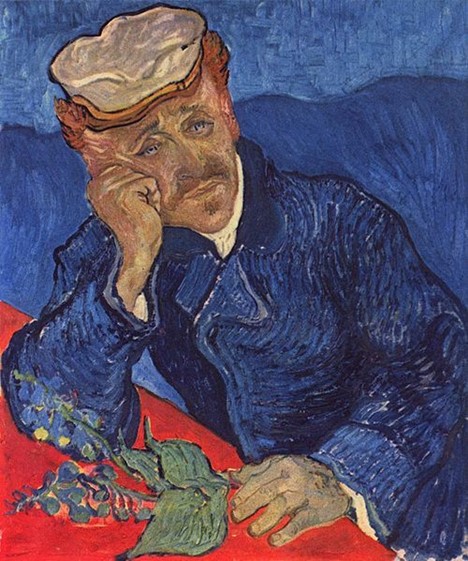
Vincent's doctor


*As described in research that I think was done by Daniel Kahneman and others.

**I’ve already outlived him by fifteen years, but I’m far from sure that it was the right choice.  At least I’ve written and published some stories and a few songs since that age.  I don’t paint as well as Vincent did, of course, but then again, not many in history do or did, so I can’t feel disappointed about that!  Anyway, as far as either happiness or life satisfaction goes, my life since I was 43 has been a poor investment.  At least before then point I saw my kids.

Outlaw’s Mind – 2nd portion

Okay, here’s the next portion of Outlaw’s Mind, as I warned might be coming.  As a reminder, or for those who aren’t aware, the “cold opening” was already published/posted here, and this is now the main part of the story beginning, which goes back in time from the opening.


Timothy Outlaw had always hated his name.

Not his first name.  That was fine.  Even though some people had called him “Timmy” when he was younger, and a few other kids had teased him once or twice about it, he knew that such teasing was not really about the apparent subject matter, but was merely a force looking for an outlet, and if the name had not provided it, something else would have.  Even as a young child, he’d known that.  He understood only too well the internal pressures that could occur within the mind, and how irresistible they could be.  This wasn’t to say that he was fine with the teasing, but very few people teased him more than once or twice.  This was part of his problem.

It was his last name that bothered Timothy so much.  He had no idea where in his ancestry it had arisen, nor had his father, but Timothy wished that whoever it had been had thought things through a bit better.  It was not in Timothy’s nature to seek a legal name change.  Partly this was because he had at best an unpleasant relationship with the court system and all its representatives, but mostly it was because, along with less positive traits, he had inherited from his father a strong sense of loyalty and commitment, especially to his family.

That loyalty had not prevented his father from physically abusing his wife on many occasions, but Timothy understood that this was not because the elder Mr. Outlaw was a bad person.  He simply carried an innate and terrible surplus of anger—or rather, he produced it in copious amounts in his nervous system.  Some men are unusually hairy, some women are born to develop enormous breasts, some children are graced with an inherent love of and skill for music, or for math.  Morris Outlaw had been born with a congenital tendency to feel intense and powerful, undirected anger.  This tendency had led him to lose his wife, finally, even before he was killed in a bar fight by a man who had been carrying a concealed pistol while drinking shots of tequila.

It was a tendency that his son had inherited in an even more purified form.

But Timothy had learned from the object lesson of his father.  He didn’t hate the man—not once he was mature enough to recognize the powerful force that had victimized Morris Outlaw as much as it had those around him—but he resolved not to be like him.  He wanted to be a good citizen, a productive member of society, someone who created more than he destroyed.  And if he were ever to have a family, and children, he wanted to be loved by them, not feared.

This might have sounded both simple and easy, and to most people—certainly to anyone committed to these ideals as Timothy was—they would have been readily achieved.  But even from his earliest days, as long as he could remember, a seemingly endless reservoir of free-floating rage was produced in his being, like pus gathering in some horrible, spiritual abscess, building pressure until it exploded, spewed its infection onto all surrounding matter, and then began to gather again.

This was why he was rarely teased more than once by anyone in school.  Though he did his best never to “start” anything with anyone, if someone started into him…well, they got a taste of what it would be like to try to enter the burrow of a honey badger.  Young Timothy had sent more than one child, older and bigger than he, home or to the doctor, and once to the emergency room.  It was entirely possible that, if he had not been surrounded by other people who were able to step in and overpower him, he would have killed someone—more than one—even at that young age.  He knew this, knew how lucky he had been not to have done such a thing, because when he became possessed by his rages, all reason left him, and he desired nothing more than to savage the target of his fury until it could no longer move…preferably ever again.

His teachers, and the school administrators, and even his mother—marred though her opinion had been by her husband’s example—recognized that this anger was not deliberate.  They had all seen that Timothy was a boy who wanted to be good, who wanted to do well in school, wanted to be a contributing member of society.

But because of his terrible and effectively uncontrollable temper, Timothy had often gotten into trouble.  Diligent at his studies, respectful of his teachers, eager to take part in extracurricular activities, Timothy had nevertheless been sent to the principal, and often suspended from classes, on numerous occasions throughout his educational time.  On many an occasion, while languishing alone at his house while his mother worked and his classmates did whatever they were doing, Timothy had come close to fatal despair.  His mother kept no guns in the house, for more than one reason, and this probably kept Timothy from impulsively taking his own life at a young age.  He hated himself, hated the rages that made him—when they gripped him—not merely wish but yearn for the violent destruction of everyone and everything around him.  In those bleak moments, he told himself that while he had absolutely no right to harm or destroy other people or their property, he surely had that right over himself.  Would it not make sense, then, to bring about his own end rather than potentially to harm other people?  Would that not be the best course of justice?

If he’d had access to a firearm, the impulse toward preemptive self-destruction might have been carried out, since the manner of doing so would have been quick, violent, and irrevocable.  However, on those occasions when he considered more methodical techniques, from pills to razors to nooses, the preparation needed allowed him time to consider the effects his suicide would have.  He imagined his mother finding his dead body—perhaps accompanied by blood, or vomit, or a purpled face—and being stricken with the horror of it, being devastated not merely by the fact that her only son was dead, but also by the simple, traumatic fact of finding a grotesque corpse in her house.

He’d also thought of going to a nearby high overpass, or to leaping from the top of a tall building, but each of these considerations was blocked by the recognition that someone—a passing car or a pedestrian below—would be discomfited, possibly traumatized, possibly even injured by his action.  He did not want to be a burden to anyone, especially not that kind of burden.

Also, he simply did not really, deeply, want to die.  He wanted to live without being the unwilling slave of his terrible, malevolent rage.

That this was painfully clear to all those who knew and cared for him was probably the only reason Timothy was not consigned to juvenile detention early in his teenage years.  Even the strictest and sternest of teachers, school administrators, and other similar adults in authority, could not fail to recognize Timothy’s sincerity when he profusely, sometimes tearfully, apologized for the consequences of one of his outbursts, never deflecting blame from himself, always assuming more than his share of responsibility for any altercation.  When he had sent a boy two years older and a head taller than he to the emergency room for teasing him about the way he walked, Timothy had taken it upon himself to seek out the boy’s family and apologize to them, abjectly and unreservedly, in person.  If he had lived in the culture of the samurai, he might have offered to commit seppuku to demonstrate his sincerity.

It could not honestly be said that the boy’s family were completely disarmed by the act of contrition—they were poorly insured, and medical bills were a supremely unwelcome cost—but there was no doubt that they were impressed.  Also, the shame of their child being a bully toward a smaller boy, and then the added shame of the fact that the smaller boy had sent their healthy youngster to the hospital in a fair fight, made it difficult for them to assume the moral high ground that Timothy offered without reservation.  And, of course, a lawsuit would have been an exercise in absurdity; Timothy and his mother were significantly poorer than this boy’s family.

That event had led to Timothy getting his first girlfriend—the boy in question’s younger sister, roughly the same age as Timothy.  She had, of course, heard of what had happened, and apparently had been morbidly impressed and fascinated by Timothy’s obvious toughness.  He had been terribly surprised when, upon his return to school after a suspension, the girl had approached him, introduced herself, and started to hang around him.

Timothy had always felt unsettled by the cause of his acquaintance with the girl, but it had been difficult for a lonely boy just entering adolescence to ignore her obvious attraction to him.  They never officially declared themselves to be “going out” but it was with this girl—Allison Haskins had been her name and might well still be—that Timothy had shared his first non-maternal kiss, and her still very underdeveloped breasts were the first that he ever touched.

The romance, if that was the right word, had not lasted long.  One afternoon, when Timothy and Allison were walking home from school—this was no longer in the heyday of widespread helicopter parenting, and in any case, no one in Timothy’s neighborhood could afford to indulge in such overprotectiveness—they had seen a boy perhaps a year younger than themselves being accosted by two older boys, who were clearly intimidating him into letting them “borrow” his backpack, which was a very nice, name-brand affair, decorated with images of Lebron James.  It had undoubtedly cost someone in the boy’s family quite a bit of money, more than would normally be spent on such school supplies in that part of the world, and the boy had been near tears, trying to worm his way out from the environs of the bigger boys, but trapped by them against a brick wall.

Part of the reason this brief spectacle had so enraged Timothy was that the younger boy was black and the older ones white; he hated any form of bigotry with stunning fervor, and this was a hatred of which he was not ashamed.  Still, no other combination of people would probably have made a difference.  As soon as it became obvious to Timothy what had been happening, his pulse had begun to pound in his head, time had slowed down, and he had more or less literally seen red.  Not bothering with any kind of warning, Timothy had simply stridden quickly forward and slammed himself bodily, pushing at the same time, into the nearest of the two bigger boys.  It was not in Timothy’s nature to hold back in such circumstances, and the bigger boy had been all but knocked completely off his feet, saved from a backward tumble onto the sidewalk by a collision with his comrade.

The two bigger boys had been too startled to react, and Timothy had shoved again, this time leading the second boy to lose his footing and sit roughly on the pavement, while the bigger one smacked against the wall.  Timothy’s assault was too surprising for them to experience answering anger at first—they had simply been caught by a force of nature, as if a sudden gale had driven them nearly off both their feet, not a slightly smaller boy.

Timothy was not capable of fear in such moments.  The word felt terribly distant, apart from the two boys in front of him, and a slight, high-pitched and faint whine overlaying the background of reality.  The two bigger boys gaped, and Timothy now said, “You leave him the fuck alone or I’ll fucking kill you!”

The two bigger boys had gaped comically.  They were clearly in uncharted territory.

“What are you waiting for?” Timothy had yelled, his voice hoarse, his firsts clenched into tight, pale cudgels at his sides, his elbows slightly bent.  “I’m gonna tear your fucking heads off!”

He began to stride toward the partly unbalanced boys, pulling his arms up and back.

The two boys said not a word, nor did they share a glance.  They fled, the one who had fallen scrambling awkwardly to his feet even as he tried to put one foot in front of the other.  His friend didn’t wait for him, but sprinted on ahead, glancing only back at Timothy, clearly judging him to be quite insane.

Supporting that assessment, Timothy gave a loud, animal howl of fury and took one step after the two boys.  Then he caught himself and, instead of taking off in pursuit, swung his own fist in a hammer blow against the brick wall.  He would not feel the pain of the blow for a while, but it would last for days, and the scraping of the impact drew blood.  The wall, being brick, didn’t notice the impact any more than Timothy noticed the damage to his hand.

After the smacking, sickening sound of Timothy’s fist’s impact with the wall, there followed immediately two gasps.  Timothy turned—whirled, really—and saw Allison and the boy with the backpack looking at him.  The boy looked, if anything, more terrified than he had when being threatened by the other two, though perhaps less aggrieved.  With wide eyes, he looked at Timothy and said, “Thank…thank you,” before turning and running off in the other direction.

Allison’s gasp had been of quite a different character.  She had not seen Timothy enraged in this way before—and to be honest, he felt rather proud of himself for behaving in what was, for him, a somewhat restrained fashion—and surely it was a shock.  But she did not seem to be afraid.  Her face was flushed to the point where she looked feverish, her mouth hung slightly open, and she breathed a bit more heavily than usual.  Timothy saw her lick her lips once, then she stepped up to him and took his right hand, scraped and injured along the line of his folded pinky.

Timothy, his head still pounding and his throat tight and dry, didn’t resist her.  She lifted his hand in both of hers, looking at the injured side of his fist.  Then, to Timothy’s surprise, she kissed it.

With wide eyes and red cheeks, she asked, “Your mom’s not home yet, right?”

Timothy, slowly governing himself, still feeling the urge to take off after the two boys and try to batter them into jelly, said, “Right.”

Allison smiled—a smile that was, in its own way, as frightening as Timothy’s rage.  “Good,” she said.  “Let’s go to your house right now.”  Still holding his fist in her hand, Allison began walking forward.

Timothy, however, did not move with her.  Something about her demeanor troubled him.  Perhaps she just wanted to make sure that he disinfected his hand, in which could only feel a throbbing that wasn’t yet painful.  “Why?” he asked.

Looking back indulgently, Allison smiled again, licked her lips again, and speaking barely above a whisper, she said, “I want you to…to do it with me.”

Timothy had blinked and had felt a shock almost as great as must have been felt by the two boys at whom he’d just charged.  He and Allison had each been thirteen at that time—Allison a month and half away from her fourteenth birthday, and Timothy almost four months from his—and he was almost certain that she was no more sexually experienced than he, which was to say not at all, beyond light petting.  They had never so much as directly touched each other’s genitals, even through clothing, and now she was saying that she wanted to go back to his house and have sex.

If Timothy had been more prone to self-delusion, he might have thought that Allison had been moved by his chivalry, his heroism, that her passion and love had been aroused by his fearlessness and his sense of justice.  But Timothy was an old soul.  He was practiced in trying to know himself, contemptible of self-deception, though as prone to it as anyone else.  When he misled himself about himself, it was more often to his own detriment than to his aggrandizement.  Thus, he saw, with a keenness of perception that would have been more expected in a man in his late thirties, or perhaps in his sixties, that Allison was not feeling the love of a maiden inspired by a brave knight.

She was turned on by his rage.  She was aroused by his natural violence, by the fact not only that he’d been so terrifying to the two bigger boys, but that they’d been right to be terrified.  He understood, or thought he did, that even the fact that he’d been unable to contain himself without violently striking an unyielding wall of brick and mortar had been arousing to her.

“What?” he asked, not wanting to be right, not sure why he was disquieted.

“I want you to…to have sex with me,” Allison repeated, more firmly than before.  “I’m serious.  I want it.  I know it’s gonna hurt…but that’s okay.  I want it.”  Her breath was almost comically heavy, like a comedy skit version of a phone pervert.  Her cheeks seemed to be getting redder by the second.

For Timothy, time had stood still outside him, as he’d had an epiphany, a vision of a possible future that lay before him.

Allison was not frightened of his anger, or if she was, that was part of what she liked about it.  She had approached him after he’d hurt her brother, not because he had impressed her for being able to stand up to a bully, but because he had been so violent and dangerous.  And now, having seen it—in relatively restrained form—firsthand, she wanted to give herself to him.  Or, rather, what she probably wanted was to be taken by him.

He could see and read a possible future of their relationship.  They would go to his house, they would have sex, and she would welcome any associated pain…and if they stayed together, she would reinforce his rage and violence, responding to it with horniness and release.  She might even welcome violence upon herself, who knew?  He’d read that such people existed.  She would encourage and nurture, probably unconsciously, that horrible side of him that he hated, and he would become ever more prone to such violence.

If he were ever to kill someone in rage, she would probably help him bury the body, after wanting to make love in its presence.

Someday the two of them might become some modern equivalent of Bonnie and Clyde.  Someday, he might even kill her…and she would not be completely averse to it at the very end.  And he might end up in prison or, more likely, be killed as his father had been killed, by a stranger in a bar, or perhaps by the police.

He saw all this in an instant, saw it more vividly than the real world before him.  It horrified him—all the more so because he also found it terrifyingly enticing.

“No,” he’d said softly.  “No.  I can’t do that.”  Whether Allison thought he was referring to sex alone, or whether she understood that he was speaking of something larger, Timothy never knew, because he turned around and walked away from her.  They’d never spoken again after that.

As honor, love, obedience, troops of friends, I must not look to have; but, in their stead, blogs…

Hello and good morning, as I’m prone to say.  It’s Thursday, and so it must follow, as the knight the questing beast, that it’s time for my weekly blog post.

Work on Outlaw’s Mind has gone decently this week; I’ve written just over four thousand words since last week’s post, which is a bit on the slow side for me for four days’ work, but at least I’ve been keeping to my “at least one full page a day” rule.  As I think I mentioned last week, I’ve gone back to using the laptop, but I keep wrestling with myself about it.  I don’t know how (or if) I’m going to resolve that conflict, but so far, the feedback is that it doesn’t seem to make much difference whether I write my first draft of a work in longhand or type it into a computer.

Typing is probably just more natural for me for when writing stories; I got my first typewriter (my maternal grandmother’s former one) when I was quite young*, and very soon started writing a fantasy adventure novel on it, which was to be the first book in a series called The Land Ruled by Thunder.  I was pretty influenced by The Chronicles of Narnia at the time, I think, and other epic fantasies.

In any case, for now I’m writing Outlaw’s Mind on the word processor again, but if the urge strikes me, I may write a bit of some upcoming, future possible works on my notebook paper**.  Such efforts usually come to naught, even when I make them, unfortunately.  Then again, all things come to naught eventually.  Supposedly, quantum information is never lost, but that’s not of much practical use in most situations.  At least there’s some hope that the black hole information paradox may have been resolved or may be on its way to being resolved.  Such things matter to me far more than the Oscar nominations, or the idiocy of politicians and celebrities, or any trends in fashion or electronics, or whatever.  The only trend that ultimately matters—the one that will dominate and make irrelevant all others—is the Second Law of Thermodynamics.  Still, in the meantime, some stories and music can be pleasant ways to while away the fleeting eons before the heat death of the universe.

As many of you already know, I posted the “cold opening” of Outlaw’s Mind, in draft, on my blog earlier this week.  So far, the response has been good, and is much appreciated (by me, in case you were wondering).  The subsequent part of the story shifts time, setting, and tone quite a bit, so I may soon post at least some of that, just so people can get the idea.  This may also be the only way to get more than a handful of people to read any bits of my stories—it’s so hard to capture people’s interest enough to get them to want to buy and read a book or short story you’ve written, even if they would enjoy it very much.  And I’m not good at self-promotion.

I want to thank the people who said kind things about my video of me playing Help.  I’ve been trying to work on and record some other videos, practicing the songs I like to play with that in mind, but sometimes it feels to me that the more I practice a song, the less I like how it sounds.  However, I have also been fiddling with my guitar(s)’ tone knobs and trying different picks, so it may be just that I’ve moved away from what was working before.  We’ll see how everything goes, but if I do something that’s worth sharing, I’ll share it here (via YouTube)***.  I’m working on Sorry Seems to be the Hardest Word; And I Love Her; Here, There, and Everywhere; Desperado; Yesterday; Lucky; Here Comes the Sun; and Karma Police for the moment.

I could probably do Creep easily enough already.  It only has three main chords, not counting sus-4s and minor drops, but as Jonny Greenwood apparently said about the song, when just played with one guitar and chords, it lacks a bit of punch, which is a shame given the emotional intensity of the song.  He added serious punch to it with his violent guitar surprises before (which sound at first like some particularly aggressive percussion instrument) and during the chorus.  Fake Plastic Trees is nice even with just guitar and voice, though, so maybe I’ll do that.  It’s also not very complicated or difficult.  We’ll see.  No matter what, it all will probably sound exceptionally mediocre when I do it, anyway, so maybe I shouldn’t worry.

That’s about all I have that’s worth sharing, if even that is worth it.  I have nothing to report in my “personal” life because I have no personal life, so that makes things easy.  And this blog is by far the most social thing I’ve done in years.

I hope you’re all feeling and doing and being well.  You certainly deserve it, for having the endurance and good will to read my blog!

TTFN

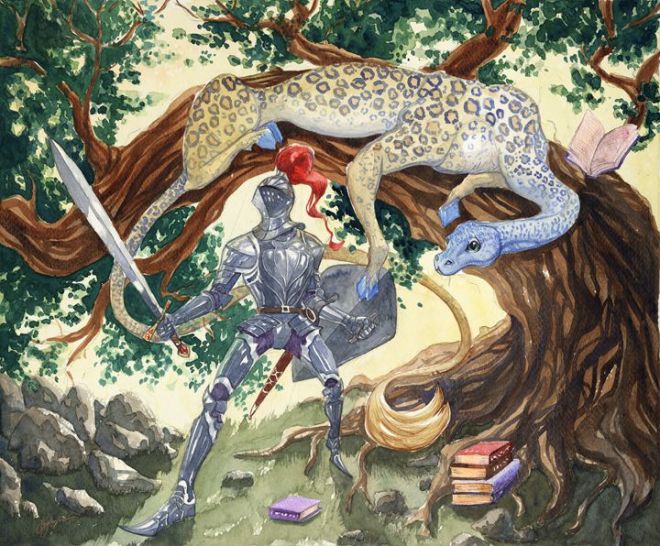
knight 2 questing beast


*I think I was around eleven years old, but I’m not certain.  It was around that time, anyway.

**Maybe I’ll play around with Dark Fairy and the Desperado.

***If I do any Eagles songs, I’ll probably just have to share them here.  The Eagles tend to block such things on YouTube, even if one’s channel isn’t monetized, which mine certainly isn’t.  Other groups, including the Beatles, will simply “run ads” on the video and collect the money thus generated, which to me is a bonus.  I love the idea of making even a tiny bit of money for people like Radiohead and the Beatles.  That may seem weird, but then again, I’m weird.  You might even say, “I’m a creep.  I’m a weirdo.  What the hell am I doing here?  I don’t belong here.”

Outlaw’s Mind “cold opening”

As I mentioned previously, here is the draft of the “cold opening” to Outlaw’s Mind, to see what everyone thinks, so far.  Please, feel free to give feedback below if you’re interested.

I want to point out that, right after this, we go back in time to Timothy’s youth, and only work our way to this stage of the story gradually.  In fact, I haven’t written that far yet.  So, maybe, if readers show interest, I’ll soon post some of the subsequent portions of the draft.  Let me know what you think, please.

Outlaw’s Mind

by

Robert Elessar

Timothy Outlaw was quite surprised when he saw flashing lights and heard a brief siren through the front window of the upstairs apartment in which he lived.  His was a quiet neighborhood, not truly middle-class perhaps, but certainly not poverty-stricken, and every family or individual he knew on the street was a solid, sensible, positive part of the community…at least as far as he knew.

When he first saw the lights, looking up from the laptop in front of him on his kitchen table, Timothy worried that some neighbor might have suffered a heart attack.  But then a second, and then a third set of lights appeared, he heard the very brief boop of a siren, as of some emergency vehicle prodding someone else out of its way, and he thought he heard voices, one of which seemed to come from a two-way radio.

He walked to his front window, which looked down onto the front lawn of the duplex in which he lived, and he saw, to his astonishment, three police cars and an ambulance, pulled rather haphazardly into and around the property next door.

The ambulance he could just barely consider expectable.  The couple who lived in the house next door—much smaller than the formerly one-family dwelling in which Timothy lived—were retired, albeit recently.  Health problems were more common as people got older, and Timothy thought he’d heard that heart attacks were particularly frequent among the recently retired, though he couldn’t be sure that was right.  But police cars?  Maybe one police car, they often came along with an ambulance, at least until it was clear what had happened.  But three?  Three police cars?  At the Rosencrantz’s house?

Timothy didn’t like to associate himself even in a peripheral way with troubling events, but this was too much, too close to home.  He wanted to see at least generally what was going on.  The weather was still warm enough that he didn’t think he needed a jacket, so he simply went to the side door that opened on to the long stairway down to the side of the house.  This was on the other side from the Rosencrantz’s place, but he could still see the multiple blinking flares from the emergency vehicles, reflecting off windows and the sides of houses in the early night.

As he came around to the front of the house on the narrow concrete walkway, he saw that his downstairs neighbor, Bernice, was walking back into the yard, a sweater pulled around her shoulders.  She hunched, rather theatrically, against what seemed to Timothy to be a mild and rather pleasant breeze.  Then again, maybe she was hunched against something else.

She saw Timothy even as he saw her, and she nodded.  She appeared to try to give a greeting smile, but it came out as a grimace.

“Hi, Tim,” she said.

“Hi,” Timothy responded.  He didn’t really like the shortened version of his name, but he strove never to make much of it.  “What’s going on?”

“Oh, nothing,” Bernice replied, coming closer to him and standing at an angle, where she could converse with him while watching the lights and vehicles and people in the neighboring yard.  “I thought I’d go over and see if there was anything I could do to help, but I guess it’s too late for that.”  Bernice was a recently divorced LPN, with long ER and ICU experience, so it wasn’t unreasonable of her to offer to assist even trained EMTs and police officers.  But that hadn’t really been the substance of Timothy’s inquiry.

“But what happened?” he asked.  “Are Mr. and Mrs. Rosencrantz all right?”

“Ah,” Bernice said, though Timothy honestly couldn’t see how she couldn’t have known what his question was about.  “That.  Well…I guess I would have to say no on both counts.”

Irritated by her evasiveness, but able to keep it under good control thanks to recently acquired practices and habits, Timothy said, “What do you mean?”

“Well,” Bernice said, sounding both weary and sad, with a hint of the cynical undertone that so many career nurses developed, “from what I can gather, it looks like Mrs. Rosencrantz is dead…and Mr. Rosencrantz is the one who killed her.”

“What?” Timothy said.  “Are you…you can’t be serious.”  He knew, though, that no matter how jaded she might be, Bernice would never joke about such a thing.

“I wish I wasn’t,” she said.  “But I know one of the cops, there…he’s come into the ER when I’ve been working a couple of times.  He said they got a call from Mr. Rosencrantz a little while ago saying that he’d…well, that he’d just lost his temper with his wife over something and had bashed her head in with a metal knife holder.  Didn’t stab her, nothing like that, just beat her in the head with the holder.  Then, I guess, he called 911, but it looks like it’s too late for her.”  She sighed.

“Holy shit,” Timothy said softly.

“Yeah, you can say that again,” Bernice replied, nodding sadly.

Timothy could barely gather his thoughts.  He couldn’t quite comprehend the notion of his neighbor, a small, slightly stout man with a sardonic sense of humor and a comically jaded attitude suddenly losing his temper and beating his wife to death with a blunt object.  The two had occasionally bickered, even within the range of Timothy’s hearing, but it had been almost a theatrical kind of bickering.  It had always seemed to Timothy that, on those occasions when the Rosencrantz’s were fighting, they were doing so mainly out of a sense of obligation, as if it were a required part of being a recently retired couple, but not because they disagreed about anything of any depth.

And Mr. Rosencrantz looked like a man who had more likely been the target of bullying in his young life—and perhaps even in his adult life—than to be the instigator of violence, even if he were provoked severely by a sharp-tongued wife…which had not been a very accurate description of Mrs. Rosencrantz.

It wasn’t that Timothy couldn’t imagine people being violent, even to those closest to them.  Quite the contrary, he knew of such things only too well.  But he thought that there were certain types of people who were the ones who might one day lash out destructively, and other types who simply were not.  It appeared he had mis-classified Mr. Rosencrantz.

He watched for a bit, Bernice standing silently next to him.  He saw the two EMTs come out through the front door of the small house, a stretcher rolling between them, on which lay a small figure in a black plastic bag.  Timothy hadn’t ever really noticed just how tiny and frail Mrs. Rosencrantz had been—her physical presence had always been one of great energy, so one never felt that she was anything but large—but seeing what was clearly her form lying on the stretcher, pushed easily by the two emergency workers, who didn’t even need to make any special maneuvers to bring their burden down the few stairs from the front porch, that point was driven home.

With that, he felt a wave of anger begin, a judgmental contempt for Mr. Rosencrantz.  It was such the mark of a bully, for someone who was small and weak in one way or another to seek out those who were smaller and weaker to victimize.  Who knew, perhaps Mr. Rosencrantz had committed spousal abuse many times over the years but had been able to keep it contained and hidden enough that he didn’t get caught.  Timothy hated such a thought.  Poor Mrs. Rosencrantz, trapped in her marriage by tradition and fear, might never have said or done anything to stop it.  Timothy had no disdain for her, or for anyone in such a situation.  He understood how the threat of violence, how someone else’s rage, could be so frightening as to rob one even of rational self-preservation.

No, the blame was—always—on the perpetrator.  Timothy had no patience, no pity, no sympathy for people who committed acts of violence upon others.  This was not because he couldn’t understand their actions.  He could understand them only too well.  He had demons of his own that would surely have caused little Mr. Rosencrantz, the victimizer of a littler, frailer woman, to jump back in terror, and possibly flee screaming, if they were made manifest before him.

They were trying to manifest themselves now.  Timothy recognized it, the surging heat in his head, the decreased focus of his thoughts, the ache of his own fists, which wanted to bunch into cudgels and beat little Mr. Rosencrantz until he couldn’t move, couldn’t even be recognized, for his horrible crime and betrayal.

But Timothy recognized those feelings, and he knew what to do.  Without even needing to close his eyes anymore, he embraced his emotions, his anger, his hatred, cuddled them like a big, lovable pet, solidified them…and then, with the words “scatter to the winds,” he lifted them up through the top of his head and let them do just that.  The physical aspects of his anger—the tension, the faster heartbeat, the widened pupils—would take a few moments to re-settle, but his anger itself, the emotion, the thought of it, behaved just as though it had been a bag of leaves torn open in a gale.  Timothy could almost see little autumn shapes, sculpted from unnecessary emotion, fluttering and swirling about one another, reduced to impotent, disorderly remains, to decay on the lawns of the neighborhood.

Bernice, on the other hand, seemed to have no such technique for assuaging her own emotions.  Not looking away from the two EMTs as they rolled the late Mrs. Rosencrantz up to the rear of their ambulance—which would not be needing its sirens—she said, “I can’t believe that little piece of shit did that.  The piece of shit.  And Mabel was such a sweet lady, too.”

Timothy realized just then that he had never known Mrs. Rosencrantz’s first name.  And though she had not ever struck him as saintly, he didn’t think the word “sweet” was too great an exaggeration, especially at a moment like that.

Sweetness, however, did not seem to be the mode in which Bernice was settled.  As the EMTs lifted their stretcher and its occupant up into the ambulance, she muttered, “I’d like to get that little bastard in one of my ER cubicles, and get some central line kits, and catheters, and suture sets, and everything else.  I’d put him on IV fluids and even intubate him if I had to, but I’d see how long I could keep him alive and wishing he was dead.  Piece of shit.”

Timothy’s mouth dropped.  He’d never heard Bernice talk in such a way, and it shocked him tremendously.  He wondered if Bernice—whose own marriage had ended less than a year before, but had no doubt been deteriorating for a long time before that—had personal experience with spousal abuse.  Surely that was it.  What else could explain such frankly horrific sentiments from a woman whose calling was care and healing?

Timothy felt that he ought to say something to her, but he didn’t know what it should be.  Before he could even mouth something mindless and banal, though, two policemen walked through the front door of the Rosencrantz’s house, with the small form of the man in question—not much bigger than his wife had been—between them, handcuffed, head down, and with tears noticeably streaming down his face, glinting in the porch light and the streetlights.  He certainly looked contrite.  He looked devastated.  Timothy could well believe that the man was as shocked by his own actions as anyone else would be, and that he would never stop feeling their horror for the rest of his life.

Bernice, however, had no apparent sympathy for him, any more than Timothy had at first felt.  As the somber-looking officers guided their charge toward one of the cars, Bernice suddenly yelled out, “You piece of shit!  How could you?  You son of a bitch!”

The officers escorting Mr. Rosencrantz stopped briefly, apparently surprised, despite their usual occupation, at the epithets being hurled.  Mr. Rosencrantz did not look up, but instead lowered his head even further, and sobbed audibly.

Far from being moved by this—at least in any benign direction—Bernice doubled down, yelling, “Yeah, you’d better cry, you shit!  I hope you get raped in prison, you bastard!  I hope you’re made into some big thug’s bitch!”

Timothy, thoroughly caught by surprise in the face of Bernice’s uncharacteristic anger, when she’d seemed merely grim and sad at first, didn’t have any idea what to say.

Now a new person appeared in the doorway of the house, as the officers began to move Mr. Rosencrantz along again.  This was another policeman, but based on his age and his uniform, he must have been of higher rank than the other two.  He looked quite surprised as he came out to stand on the small porch, and he looked first over at Timothy and Bernice, then around the street.  Only when following his gaze did Timothy notice that quite a few other neighbors had come out into the open to watch the proceedings.  One man, the neighbor on the other side of the Rosencrantz’s house, was nodding his head vigorously in response to Bernice’s words, and Timothy thought he heard the man mutter “Damn right.”  In the glow of the streetlamps and the porch lights, the man’s face looked almost demonic.  His expression would not have been out of place on a member of the Spanish Inquisition.  Clearly, he agreed with Bernice’s sentiments.

The new, senior officer, quickly assessing the situation, called out in Timothy’s direction, “Take it easy, Nurse Bernice.  That sort of thing isn’t helping anyone.”

Timothy had time to realize that this must be the cop that Bernice knew from the ER, before the nurse—whom the officer had clearly been trying cleverly to remind of her usual role as a caregiver—spat out, “There’s nothing that can help anyone here!  The only thing I want to help is to help give him a lethal injection!  I’m happy to volunteer!”

The Rosencrantz’s opposite neighbor chuckled evilly in response to this proposal, and more clearly than before, he said, “I’ll be a witness.”

The officer, clearly irritated, glowered and looked from Bernice to Timothy.  “Hey, sir,” he said, “why don’t you take Nurse Bernice inside.  This isn’t good, she’s only hurting herself, and the situation’s already bad enough.”

Surprised at being thus addressed, and thoroughly unused to being the calm one in any situation, it took a moment for Timothy even to respond.  Finally, he said, “Right.  Right.”  Turning to Bernice, he tentatively put a hand on her shoulder and said, “He’s right, Bernice.  Let’s go inside.”

Bernice’s gaze snapped up to Timothy with a speed that startled him, and he almost drew his hand away in fear.  He half expected her to begin shouting at him, but she just glared.

“Come on,” Timothy said.  “It’s not worth it.”

This seemed to have some effect, and Bernice’s face calmed just a bit, as she said, “You’re right.  You’re right…he’s not worth it.”

Not bothering to correct Bernice’s slight misquote, Timothy said, “Come on,” and he turned, gently pressuring Bernice to do so also.  She went along, not enthusiastically, and Timothy added, “Do you want to come up to my apartment and have a Coke or something?”  He wished he could have offered her a beer or a glass of wine—or even a shot of whiskey—but he did not use alcohol nor keep it around.

Bernice, trudging along beside Timothy, seemed to consider his offer, but then she said, “No, I don’t think so.  I don’t think I need to be around other people right now.  I feel like I need to hurt somebody, and there’s no point in having a target, especially not a nice guy like you.”

As they drew level with the front door of the house—the entrance to Bernice’s ground-floor apartment—Timothy took his hand away.  Bernice headed for her door but seemed to catch herself.  Her shoulders, her posture, her manner, were all so stiff and tense that Timothy half expected her to loose a barrage of obscenities upon him for pulling her away.  Instead, though, with clear significant effort, she said, “Thank you, though.  I appreciate the offer.”

Relieved, impressed, and rather goofily proud of himself, Timothy said, “You’re welcome.  Any time.”

Bernice seemed about to turn around and head back to the door, but she stopped, looking disturbed and puzzled, though still glowering.  “I’m sorry,” she said.  “This really isn’t like me.  I’m just so angry.”

Timothy did not have to lie to respond, “Don’t worry about it.  I understand, believe me.”

Apparently, his thorough sincerity was successfully conveyed, for Bernice looked more relaxed, as well as a bit grateful, as she nodded and said, “Thanks.  Good night.”

She turned and walked into her apartment.  She closed the door with perhaps just a bit more force than was necessary, but only just.

Before rounding the corner to the stairs up to his apartment, Timothy heard a voice call out, “Thank you, sir!”

He turned, surprised, to see the senior officer still standing on the porch, clearly looking at him.  Not used to being on polite, let alone good, terms with members of law enforcement, Timothy stammered, “Pardon?”

The officer chuckled, clearly recognizing Timothy’s discomfort.  “I said, thank you.  That was well done, and it was really helpful.  I appreciate it.”

Timothy, both utterly wrong-footed and remarkably proud in an almost kindergartenish way, said, “It’s my pleasure.  I’m…I’m sure your job must hard enough without…without people making it worse.”

The officer nodded somberly, and he said, “That it is.”  He tipped a two-fingered salute to the brim of his cap, a gesture that made Timothy’s pride and gratitude swell even more than they had so far, then turned and walked into what must be a crime scene investigation.  Though apparently there was no mystery involved in what had happened, Timothy guessed that thoroughness was an absolute requirement, particularly in cases of suburban homicides.

As he almost floated up the stairs to his apartment, Timothy was ashamed of himself for feeling such joy in the face of the terrible tragedy, but he couldn’t help it.  This new technique Dr. Putnam had taught him was the greatest thing he’d ever found in his life.

It was too bad Mr. Rosencrantz hadn’t known it.  If he had, his wife might still have been alive, and he might not have been facing the possibility of spending the rest of his life in prison.

And folly, doctor-like, controlling skill, and simple blog miscalled simplicity

Hey, everybody.  I’m really feeling tired and worn out today, so I’m not going to say very much in this post.  This time, I think I really mean it.  There’s not much to report, anyway.  I’m not sure there ever is.

I’ve written about 3000 words on Outlaw’s Mind this week so far, but I had to go back to the computer to do it; the longhand project was encountering some problems.  I’m afraid my handwriting has degenerated beyond even its former, maddeningly messy form, hard though that may be to believe for those who have seen my curse-ive before.  Also, it’s become more difficult and slower for me to do.  Some of this may just be due to lack of recent practice, but it was very frustrating, and so I abandoned that noble idea.

I did some recording (on video) of myself playing some songs on guitar, and singing along, for practice and self-evaluation purposes, and one of them—the Beatles song Help—turned out reasonably well, so I decided to share it on YouTube.  I’ve embedded it here:

I also am taking a break from my antidepressant.  It doesn’t seem to be doing much good, and it’s been having some irritating side-effects.  I know it’s not usually a good idea to change one’s medical regimen without consulting one’s doctor, but since I am the one who “prescribed” it, and since I am the only doctor I’m seeing anymore, I guess that criterion is met.  We’ll see how it goes.

Other than that, there’s not much to say.  Life, as John Mellencamp said*, goes on, long after the thrill of living is gone.

I hope you’re all doing much better than I am, and that you’re staying warm, staying safe, and staying healthy.  Maybe next week I’ll write more.  Maybe not.  I don’t know.

TTFN

empty man


*I’ve probably even quoted the line many times before, but I don’t feel like checking.

Therefore, since brevity is the soul of wit, and tediousness the limbs and outward flourishes, I will be brief. Your noble blogger is mad.

Hello again and good morning again.  It’s Thursday again, and so, once again, it’s time for my weekly blog post.  Again.

I’m pleased to be able to report that I’ve done a bit of new writing this week.  I finished rereading Outlaw’s Mind last Saturday, and then Monday morning I got my clipboard and some high-quality notebook paper, and I started to write.  One thing that helped me do it was remembering my old strategy, which was to say to myself that I was going to write at least just one page.  If I didn’t write more, that was fine.  Even when writing by hand, one page isn’t all that much—something like four hundred to six hundred words, I think, given my handwriting.

As is usual, I’ve written more than that, totaling just around six pages in the last three days.  That’s not as fast as I write when I type, which I can do almost at the speed of thought, but that may be beneficial.  I think I sometimes tend to write too much when I type.  Unanimity may be a good example—a story that became over half a million words long before I finished it.  Probably, had I written it by hand, it would have been at least slightly shorter.  But maybe not.  I tried to shorten it as I was editing, but there were no actual bits of the story that I felt willing to take out.

I’ve been thinking about maybe putting some of Outlaw’s Mind up here on my blog, in its current, quite rough draft form, just to give a teaser and possibly to get reactions from people.  I may have mentioned this notion before; I know I tend to repeat myself and run off at the keyboard.  Anyway, I was thinking of posting the “cold opening”, as it were, first (I don’t think I’ve already done that, have I?).  Of course, after that opening, the story goes very much back in time to tell of things that led up to the events in the opening.

If anyone would like me to do that, and would like to read it, please leave a comment here, on this post.  Again, I reiterate, comments on Facebook or Twitter may never be seen (by me, anyway).  I don’t often check even Twitter for reactions*, and Facebook gives me terrible stress and tension even to click in and zip through looking for comments and responses, as well as to see what people I care about are doing.  I feel that, at any time, someone is going to ambush me with an instant message, and I won’t have any idea how to reply to it, and so I’ll quickly pretend that I didn’t see it, and try to remember to come back later, all the while feeling terribly guilty about not immediately taking part in a conversation—even though, morally at least, one shouldn’t feel obligated to talk at any given time, just because someone else wants to.  But it’s hard when it’s people who matter to you.

This is one of the reasons I don’t answer my phone, and I don’t even promise to respond to voicemails (I say I will if it’s interesting enough, but that’s quite a high bar to clear).

Email is nicer.  I tend to like email.  And comments here are not too bad, because I’m always getting on WordPress for one reason or another (often to read other people’s blogs), and interactions are more measured, thoughtful, and in-depth.  Usually.  They are also not expected to take place in “real time”.

Anyway, that’s about it as far as my life goes.  I do my fiction writing in the morning.  I diddle around on the guitar for a short time after that most days, but as those of you who have seen my videos know, my playing and singing are nothing** to write home about.

I try to find fiction that I can enjoy reading, but it seems to get harder all the time—which is a truly dreadful thing, to me.  At least I can usually find non-fiction that engages me, especially about science and a bit of math and philosophy, and to some degree psychology, especially about Asperger’s/Autism Spectrum Disorder, which I’m trying to learn much more about to confirm or deny my self-suspicions.  I’m pretty well along toward the “confirm” end of the spectrum, if you’ll pardon the pun, but I am always leery of confirmation bias.  As I once wrote on an altered version of the old X-files poster from Mulder’s office, “I don’t want to believe.  I want to be convinced by evidence and argument.”

Anyway, I know that’s all boring, so I apologize.  I never do have anything much of value to say or to do.  I’m sure the oxygen (and nutrients) I consume could better be used elsewhere, and my carbon-compound contribution and other entropic effluvia merely push the universe—and more locally, the planet—toward its endpoint slightly more quickly.

The villainous part of me likes that.  But the rest of me just feels ever-increasing self-loathing.  It’s very amusing.

I hope you’re all doing reasonably well—or better yet, as well as you possibly can—this year so far.  Take care of yourselves, and each other.  What better things do you have to do?

TTFN

venus


*I mostly just enjoy seeing amusing Tweets.  240 characters isn’t enough for anything more.  It plainly is not enough for any intelligent conversion, discussion, or debate.

**Should I have written “nothings” there since I was mentioning two subjects?  Or is “nothing” always singular, since there is only one, ultimate, nothing, which means none of each and every possible thing, as in set theory, in which there is only and exactly one “empty set”.

To sleep: perchance to dream: ay, there’s the blog

Hello.  Good morning.  Thursday.  Blog post.  You know the drill.  Or at least, you get the idea.

I don’t really have much to say or report.  I did a quick, off-the-cuff post on Tuesday about a subject that has been frustrating me more and more (the relief for which I am less and less suspicious will ever arrive, for me at least), but I don’t know that I have anything to add to it.  If anything occurs to me, and I have the energy to try to convey it, then that’s what I’ll try to do.

I’ve stalled out on reading the last 14 pages of Outlaw’s Mind so far, after having read up to that point by Monday or Tuesday.  This is after having optimistically* taken paper and a clipboard home over the weekend hoping** I’d make short work of finishing the reread and then getting on with writing.  I like the story, and I know where I want it to go and, as they say, the rest is just scratching and scribbling.  Instead, I did essentially nothing at all this weekend—apart from throwing away a bunch of the things I own because I can’t see any point in having them and they were just annoying; and preparing some other things to bring in to give “to the office” so to speak.

I wish I could say that the weekend of doing nothing was at least restful, but if anything, I felt more tired after it than I did at the beginning, not that I expect I would have felt less tired if I’d worked all weekend or anything in between.  The last time I remember waking up feeling rested was sometime in the mid-nineties (which, I just realized, is half of my life ago).  If anything, I tend to feel worse early in the day, but I wake up very early whether I feel rested or not***, so it’s quite frustrating.

Basically, I’m just tired, and getting more so (or so it seems to me) as the future becomes the present and then the past.  And I’m alone.  It’s hard to see this becoming gradually more so as time passes quite in the same way tiredness does, but I feel more alone all the time—ever more like an alien or a changeling who really doesn’t belong here, nor has any purpose here, and who has no realm or planet to which to return.  No respite appears available, and more and more, the only viable escape seems like oblivion—which would not be a relief, obviously, since relief is a state of mind and oblivion is the lack of any states of mind, but it would at least mean cessation.

There’s a moving episode in the 5th season of modern Doctor Who called “Vincent and the Doctor” in which the Doctor meets Vincent Van Gogh, and after they defeat an alien together (of course), the Doctor brings poor Vincent to a future museum so he can see and learn that he would eventually become a beloved, respected, nearly worshipped artist, one of the greatest of all time.  It may sound silly, and in a sense, it is, but it’s actually very moving—well-written, superbly acted, beautifully filmed and directed, and if your eyes are dry after the scene with Vincent in the museum, I don’t know what to think of you.

But of course, the saddest part is that, on returning him home, and then coming back to the “present”, the Doctor (and Amy Pond) discover, not to the Doctor’s surprise, that Vincent still killed himself, only a few weeks or months after their meeting, just as always.  The Doctor makes a lovely, and I think insightful, little “speech” about how the good things in life can’t necessarily correct or eliminate the bad things, but that the bad things don’t necessarily spoil the good things.  Vincent was still ill with whatever mood disorder and possible “neuro-divergence****” he’d always had in his own time; that hadn’t changed.

Still, it would be nice to imagine Van Gogh having been shown just how revered and admired his work would one day be, albeit not within his lifetime.  In the real world, he never had so much as a hint or probably even much of a fantasy that such a thing might happen.  It would be nice for any artist, or anyone, really, to learn that his (or her) work and life deeds had been important, and to see some of the ways in which it was so.  But it wouldn’t change much in the here and now…and it’s always now.

And sometimes “now” seems to go on forever and it can be so, so very exhausting.

I wish I could rest until I felt rested, and if that’s impossible, then just keep resting.  Making one’s quietus with a bare bodkin is an intimidating prospect with a comparatively high wall of activation energy.  But the wall is not constant, and at certain times, in certain states, in certain circumstances, the barrier becomes lower, and it may then be surmounted.

TTFN

to sleep


*I know, what the hell was going on in my head that I would be optimistic about such things?

**Hope is always foolish.

***Which I guess should go without saying, since I just said I haven’t felt rested after a night’s sleep, or anything else, since the mid-nineties.  Duh.

****He only too clearly didn’t see and experience the world quite the same way anyone else did or does.

Let the doors be shut upon him, that he may blog the fool no where but in’s own house.

Hello and good morning.  It’s Thursday again.  I thought for a moment that it was 1/12/2022, but that was yesterday.  I liked it because it was a date full of 2s (even though there were 1s, there were 2 of them, so that added to a 2 in my book) and of course, today is the second Thursday of the year and of the month, and thus this is my second blog post of the year.  It would have been nice to have that match up, but alas, it was not to be.

Tuesday was an interesting date if you write it in a European order:  11/01/2022.  It’s an almost palindrome, but with the right side of the mirror having doubled the values on the left side.  This makes me imagine some quantum mechanical system or some higher-dimensional theory in which there are two versions of certain particles or forces, but with all things reflected in some variant of CPT, with one always having some quantity twice that of the other.  I have no idea if this could apply to anything in reality.  Maybe it’ll explain the whole neutrino question, or the muon anomaly, or the nature of dark matter or dark energy.

I highly doubt it.

I forgot to mention last week that I had done a sort of video* of me playing American Pie (and singing) and had posted it on YouTube.  Here it is.

I don’t quite like how the audio turned out (except at the end).  I was trying to combine multiple simultaneous recording sources, and that was a nice idea, but I ended up doing the mixing and reverb in a way that doesn’t sound ideal.  It also creates the illusion that I actually miss an occasional note while singing, and we all know that cannot be accurate**.

I bring this up because yesterday I did another “sort of” video (see previous footnote), but I did a better job with the multiple sound inputs and the reverb and so on, so that audio came out better.  We live and learn, I suppose.

Here’s the other video, of me playing and singing Hallelujah, and I think you’ll agree the sound here is better.  Try not to look at me, at least if you have food in your stomach.

I don’t like to be a “Like and Share” whore, particularly since I wrote a song with that very title in a rather disapproving tone (though it was not so much about liking and sharing per se as the psychologically damaging culture associated with living by one’s “likes”).  Nevertheless, I do ask if you like those videos you might “Like” them, as with this blog.  This is purely to boost my self-esteem, which should be an easy enough task; there’s way more room to go up than down.  Also, if you want to subscribe, certainly feel free to do so, and of course, I welcome comments.  If you want to support my work financially, though, I have no Patreon or Cup of Joe*** set up, but you can always buy my books/stories.  The Kindle editions are not expensive.  Or tell your friends about them, if they like fantasy/sci-fi/horror.

Speaking of books/stories…

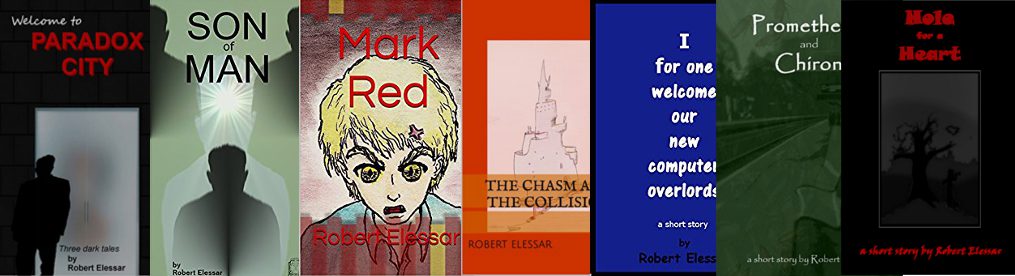
I’m nearly done with my reread of Outlaw’s Mind so far and should soon be back to writing more of it.  I’m enjoying the reread, and that should hopefully help my enthusiasm.  The good thing about working on what had started as a short story but has morphed into a novel is that it will probably be a reasonably short novel, which is a novel thing for me.  Ha ha.  It will have significant tie-ins to my eventual novel Changeling in a Shadow World, which may end up being a series or at least a multi-volume story.  As I think I’ve mentioned previously, that series will have at least a peripheral connection to The Chasm and the Collision, though no characters from CatC will appear in it.

In general, all my works appear within the same Omniverse****, not just because they’re all written by me, and its components can sometimes interact with each other.  In fact, those who are paying attention will notice that Hole for a Heart and Unanimity are literally in the same world, with the latter taking places slightly earlier than the former.  Don’t believe me?  Just read.

Inspired by a few YouTube videos, I bought two fiction books this week.  The first was Revival by Stephen King, which I’d avoided as not seeming like my kind of story.  But a video reviewer rating his favorite books described it briefly (without spoilers) and made me realize that it might be just my kind of Stephen King book after all.  I’ve already finished it*****, and it was quite good—above-average King.

I had mentioned and recommended another book that I’d read a while back to someone at work, as being very unusual, quite creepy, and rather disturbing.  Then, that very lunchtime, as I watched the Stephen King review video, the YouTube algorithm posted a video about that very book.  This isn’t as weird a coincidence as one might think, because I had been following similar videos about similar books.  The book is House of Leaves, by Mark Danielewski, and with this reinforcement, I ordered a physical copy, and have already started reading it.  It’s as good, and as weird, as I remember.

By the way, the video I saw was titled, “Is House of Leaves the scariest story ever?”.  My answer is, “No,” but it is scary at many points, and it is disturbing (not in a gross or gory way, but in the sense of giving the reader the urge to quote the 12th Doctor in saying, “Three-dimensional Euclidean geometry has been torn up, thrown in the air, and snogged to death!  My grasp of the universal constants of physical reality has been changed…forever.”), and it does leave one feeling “What the Hell?” quite often, but in a good way (if you like horror).

That’s about it for now.  I expect to restart work on Outlaw’s Mind as early as this weekend, if I can summon the discipline and drive.  In the meantime, I hope you’re all well and enjoying your new year.  I’ll leave you with the very pleasing news that 2/22/2022 is a Tuesday.  How cool is that?

TTFN

house of leaves

This is a sample of the interior of the book House of Leaves


*By “sort of”, I don’t mean that it’s not really a video.  It’s clearly a video.  But the video portion is not worth any attention.

**This is sarcasm, of the self-derogatory sort.  I hadn’t tried playing and singing that whole song in one go before, so I’ll cut myself a tiny amount of slack, but not much.

***Or whatever that thing is.

****My original term was Metaverse, then Mark Fuckerberg stole the term, even though I’d thought of it at least a decade before Facebook even existed.  I could still use it, of course, but it’s tainted now.  Anyway, Omniverse is probably better, I just need to get used to it.

*****My first new fiction read in quite some time.

O heaven! that one might read the blog of fate, and see the revolution of the times.

Hello and good morning.  It’s Thursday, and so—as inevitable as death or at least as inevitable as taxes—it’s time for my weekly blog post.  This will be the last blog post of 2021 AD, a year many of us will not be sad to see the back of.  Indeed, you can see that I feel so strongly about this that I’m even willing to end a sentence with a preposition.

New Year happy

It’s New Year’s Eve eve today, if you will, though there is no such official holiday.  It’s not even an informal one like Devil’s Night, the night before Halloween*, itself an “Eve” holiday, though that’s often forgotten—and rightly so in my opinion, since Halloween is much more fun than most other holidays and certainly far more widely celebrated than All Hallows Day.

There’s nothing inherently special about New Year’s Day (or Eve).  It’s an arbitrarily chosen time for us to restart our calendar year because we have to do it some time.  It’s not like the solstice- and equinox-based celebrations I’ve discussed before, which have legitimate, astronomical bases and are objectively interesting moments in the Earth’s orbit.

New Year doesn’t even always happen at the same place in the planet’s orbit.  It can’t.  For one thing, it’s celebrated hourly for 24 hours over the course of that day, depending upon when midnight arrives in a given time zone.  This is a perfectly reasonable way to do things, of course, but it means that the holiday itself is smeared out along the planet’s orbital path even on a given year.  And, of course, since the orbital length is not an integer number of days**, the celebration of New Years smears out in another way over the course of time, to jump back a day every fourth year, but not on years that are multiples of a hundred, except YES on years that are multiples of four hundred (I think that was it), and so on with all the corrections used by the modernized Gregorian Calendar to try to keep the year reasonably aligned with the seasons and with the solstices and equinoxes mentioned above.

All of which is, of course, quite fascinating from a scientific and cultural point of view, but really, the holiday is about a chance for renewal, a symbolic rebirth or at least a new beginning, like starting a new iteration of a game, with the scoreboard is set back to zero, so it’s possible for anyone to win by the end.

I don’t know where people get these ideas.

Of course, we cannot literally start over, nor would most of us want to if we could, since almost everyone has made at least some progress that they wouldn’t care just to throw away.  Much of our identity in any given moment is dependent upon our memory of the past.  But it can be useful, and sometimes heartening, to embrace the notion of a restart point for at least some things in our lives, such as diet and exercise and other difficult habit-based situations.

I have been embracing something like that notion in that I’ve been rereading what I’d written so far of Outlaw’s Mind, to try to get back into the flow of the story.  The process has been slow, since I haven’t been reading very much every day—I’ve been very tired mentally and emotionally, and even physically, and just in general very discouraged.  I’ve not really been looking forward to even seeing the new year arrive, to be honest.  I have no good reason to think that it will entail anything other than continuing mental, social, physical, and emotional disintegration, which have been the hallmarks of my last nine or ten years at least, and have accelerated recently.

Still, I have been reading the story, without doing any editing, and I do enjoy it.  I usually enjoy reading my stories.  That makes one person.  So, I think it will be a useful exercise and will help me then to move forward with the story thereafter.  I’m feeling tempted again to try to write it out longhand when the time comes.  I have some lovely high-quality notebook paper to use for that now if I have the nerve.

I haven’t been thinking much about Changeling in a Shadow World this week, but that’s fine.  There’s only so much one can do prior to starting to write the thing, and I’m not going to start that before Outlaw’s Mind is done.  I had a couple of fun and rather silly ideas for short stories in the last week, which I jotted into the notebook app on my phone.  They are technically horror story ideas, but one at least is a sort of crude, dark-comedy type horror story idea.  I don’t know if I’ll ever write it, but it’s a fun notion, and involves a mutated and/or genetically engineered form of gonorrhea, among other things.  The other is a bit less sophomoric in character, but it’s quite a bit darker, too, at least in philosophical implications.  If those ever happen, you’ll be welcome to read them.

In the meantime, despite my apparent cynicism, I do in fact wish you all a very Happy New Year, both in terms of your celebration thereof, which I hope you’ll share with your beloved families and friends to the degree that you can do so safely, as well as in terms of the upcoming year.  I won’t quote John Lennon*** and say, “It can’t get no worse”, since it can always get worse, but I will say that, given human drive and persistence, and the fact that, contrary to some appearances, a great many very smart and disciplined and optimistic people are working to improve things at all levels, there are at least good odds that a lot of things are going to improve in the upcoming year.

It’s not something to take for granted, since it will always be easier to destroy than to create, but those smart, creative optimists are pretty frikking impressive sometimes.  The James Webb telescope is out there now, in its position in the Lagrange point, and it’s steadily working toward eventually giving us the deepest, most amazing views of the cosmos we’ve yet had.  And there’s nothing arbitrary about that.

TTFN

New Year


*Celebrated by some people in the region in which I grew up by setting random fires.

**Not a whole number of days, I guess, would be more precise.  An integer number might imply that it would be possible for an orbit to last a negative number of days, there being as many negative integers as positive ones, and it’s hard to see how that would make any sense at all.  I suppose one might imagine a science fiction story—perhaps involving The Doctor—in which a planet’s orbit around its sun carries its inhabitants backward in time instead of forward.  For them, the End of the World would indeed be predictable—the birth of their solar system and ultimately of the universe itself.

***In his backup lyric from the song It’s Getting Better All the Time.