
Well, it’s Tuesday the 2nd (of December) and that two/Tue coincidence has to be worth something doesn’t it? I suppose it would be better if this were February (the 2nd month), but perhaps it’s enough to note that the difference between the official number of this month (12) and its nominative number (10) is 2. Anyway, having two twos might make more “sense” than having three of them.
Is that important? Almost certainly not. In 56 years of time and space, I’ve never encountered anything that was truly and objectively “important”. But it is the sort of thing that engages my (admittedly rather odd) aesthetic sense, and this is my blog*, so I will indulge myself.
Anyway, it’s the second day of the work week, and I’m going to work. The reason I go to work is, at root, nominally to keep myself alive and “thriving”, so I can…what? Keep working? I don’t have any other, deeper or longer-term reasons. It’s fairly absurd when you think about it. It’s a self-referential, almost tautological, ouroboros-like situation.
By the way, I don’t see any reason to think that this state of affairs is the product of some conspiracy‒centuries or even millennia long as it would have to be‒by the powerful to keep the masses toiling away for their benefit. For one thing, as we can all plainly see (I hope) the powerful are at least as idiotic and moronic and clueless as anyone else, and they probably tend to be less self-critical, so they are more prone to do really stupid things without anyone protecting them from their own stupidity.
They no more really, actually control anything‒including themselves‒than a queen bee (or ant or termite) runs its hive/hill/colony. The queen just happens to be the breeding female. And even that is not a role based on any merit, other than being capable of developing active ovaries. The queens are “chosen” randomly, as far as we can tell.
It’s all just shit that happens in a region of spacetime in which entropy is moving from low to high, as it tends to do, but in which there’s enough movement involved in the process to allow for locally highly complex phenomena based on carbon’s extraordinarily fecund chemistry, which occasionally forms self-replicating molecules that undergo natural selection.
But people tell stories about things. It’s one of our strongest attributes, and it serves in us roughly the same “purpose” as the various pheromone trails and hive dances in the aforementioned ants and bees and termites. Our stories allow us to act in concert with many other people, on a scale that puts even the social insects to shame.
We often believe that our stories are true, at least to some degree. And some of them, in a limited sense, really are “true”. But most of them are just stories, made up “just so” explanations of things we either haven’t figured out or that have a nature too complicated or too daunting for us to want to face them as they are.
As someone who has a penchant for creating stories, I can tell you, it’s quite easy to make up plausible-seeming, internally consistent tales about worlds and characters and events, real or otherwise, that have little to do with reality other than that it is a fact of reality that I made up those stories.
I consider all religions and all their related tales to be part of this phenomenon. This is not an insult to them per se, and the tendency for people to take it as an insult or an attack belies the faith such people claim to have in their religions. But people who really think a particular thing is true don’t have to defend it with anger, let alone violence.
Imagine if the classical physics people had crucified Planck for solving the “ultraviolet catastrophe” by positing that only certain chunks (quanta) of energy can be produced, or if they had burned Einstein at the stake for not only showing that light comes in such quanta but that matter is also finely divided***.
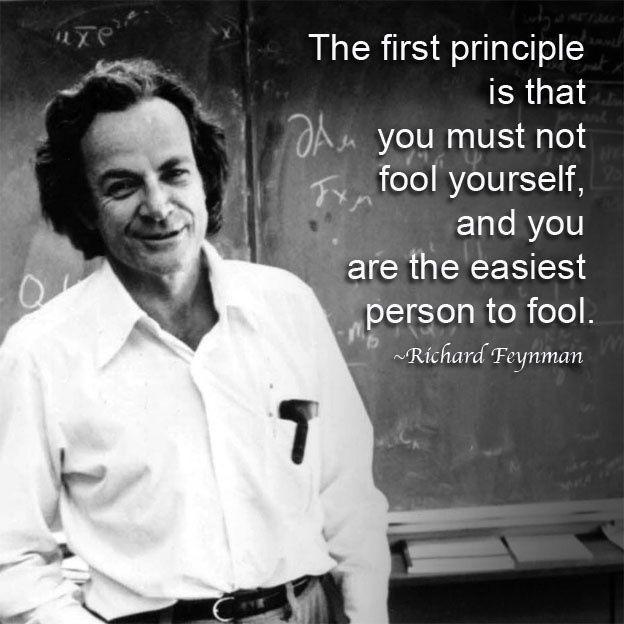
Science does also work with stories. Every hypothesis is a story, and some of them can seem extremely compelling. Some of them we really want to think are true. And that’s why, ideally, science takes every such story and pokes the hell out of it, trying to show if and where it’s wrong, where it’s internally inconsistent, where it doesn’t match what actually seems to happen in the world. It’s not perfect, but it does improve in an incremental, ratchet-like fashion, at least as long as we hold to the rigorous, ruthless, but honest criticism of those stories.
With that, I’ll draw the main body of this post to a close. I have no idea why I’ve written what I’ve written, or at least I don’t know very well. I doubt there’s any internal consistency or coherence to it, but I guess that supports my point.
Please try to have a good day.
[Aside: a thought occurred to me yesterday that, as we approach the era of humane, lab-grown meat derived from animal stem cells, what, if any, would be the moral implications of using human stem cells, taken from a volunteer‒I’m willing‒to grow meat in the lab and have people eat it? There’s no risk of parasites or infections, assuming reasonable genetic screening, such as might explain an evolved revulsion for cannibalism. There’s no one being harmed. What do you think? I’m not concerned with whether you feel it’s somehow “icky”; that’s just misfiring evolution-based taboos. Do you think there is any moral reason not to grow and eat such meat? If so, what are they?]
*There are many others like it**, but this one is mine.
**Are they really like it, though? You tell me.
***These are two of the things Einstein demonstrated during his annus mirabilis (i.e., “miraculous ass”***) in 1905, the same year he published his paper introducing special relativity.
***That’s not really what it means.

 Robert Elessar