Full fathom five thy blogger lies; of his bones are coral made

Hello and good morning.  It’s Thursday, March 10th, 2022, the second Thursday in March, and it’s time again for my weekly blog post.

As those who follow this blog know, I posted the 4th part of Outlaw’s Mind earlier this week.  If you haven’t seen it, you can feel free to go and read it here.  If you haven’t read any of it, and you’re interested, the first part is here, and you can see the listing of all the “parts” here.

I call them “parts” because they really aren’t chapters.  As I break them up, chapters tend to be longer in most cases, but I haven’t assigned chapters yet in this story.  I often don’t do that until the story is finished, after I’ve trimmed and adjusted things.  This story is being posted in very raw form, and if it’s rough and not as good as it might be because of that, I apologize.  I do appreciate those of you who read it, and I hope you enjoy it.

I’ve done a decent amount of writing on it this week—about 6500 words—the single biggest chunk last Saturday morning, when I cranked out a ridiculous two thousand words in under an hour.  I have no idea how to explain that.  It may very well be crap because of it, I’m not sure.

I don’t honestly know whether any of my writing is anything other than crap from anyone’s point of view but mine.  I’m not fishing for compliments; nor am I fishing for insults*.  I just honestly don’t know.  I don’t know very well how people react to anything I do, frankly.  People in general are confusing to me, sometimes even people I’ve known my whole life.  I do know that, for the most part, they don’t like having me around much.  Can’t blame them; I feel the same way about myself.

I haven’t done anything new, musically, but I did re-figure out the chords and specific melodies of my song Come Back Again (which is available to listen on YouTube if anyone is interested).  I hadn’t written down the chords except the basic opening ones originally, and when I happened upon a sheet with a few of those the other day, I figured I’d write out the melodies as they are and refigure those chords—maybe even change them some from the original, though I don’t think I did.  I’ve never been completely happy with how the song turned out as I arranged and “mixed” it before, but there are things about it that I like**.  It’s maybe too slow, and it’s certainly a bit gloomy, but then again, I’m a bit gloomy…in the same sense that the Pacific Ocean is a bit damp.

I’ve been trying to get into somewhat better walking condition, trying to work through calluses and blisters to get ready for a near-epic undertaking that I have tentatively planned.  I’ve been going slightly farther each day (with a few days off to let blisters settle out), and last night I walked about three and a half miles after work.  Once I’ve gotten up to about six miles at a pop without new blisters (no pun intended) or soreness, I think I’ll be pretty much physically ready for my undertaking, though there will be other preparations needed beyond that.

I’ll be saying/writing more about it as time goes on, and when it happens, I mean to make YouTube videos and will of course share them here and via my few anti-social media channels.  I don’t know whether anyone will even notice, but I hope to make it a useful process, perhaps calling attention to some charities or other.  My favorite one so far, and the one linked to my Amazon Smile account, is Reading Is Fundamental.  I remember their public service messages from when I was kid, and I agree entirely with their title.

I’ve said it over and over again, in various places and times:  I think written language is the lifeblood of civilization.  Almost everything good that we’ve done on any kind of scale, and any durable progress we’ve made, has depended on written language in one form or another.  As Carl Sagan put it, “Writing is perhaps the greatest of human inventions, binding together people who never knew each other, citizens of distant epochs.  Books break the shackles of time.  A book is proof that humans are capable of working magic.”

We watch videos of people all over the internet and web, and see stories told in movies and TV shows, but with a book, we can hear the words and thoughts of other people speaking directly in our minds, even ones who lived a very long time ago, in a galaxy that was then far, far away…certainly on any human scale***.  Through writing we can store memory and experience and understanding that can endure and build over the course of millennia.  We can step outside our parochial concerns—and all of our daily concerns are, finally, parochial, as is all politics, and social movements, and fashion trends, and all else that seems to grab people’s attention so very strongly.

That’s about all I have for this week, I suppose.  It’s probably actually more than I have, frankly, since I haven’t really said anything of substance, and I’ve probably wasted your time.  Apologies for that.  I hope you’re doing well otherwise, though.

TTFN

sunken-ships-5


*Hopefully that’s obvious, at least.

**I’m fond of the lines, “Only meeting strangers; always losing friends.  Every new beginning always ends”, because it is self-evidently and logically true when you think about it.

***After all, the Earth orbits the sun, the sun orbits the center of our galaxy, and our galaxy is moving even relative to the cosmic microwave background, towards the Andromeda galaxy, and of course, the universe itself is expanding.  The Galaxy Song, by Eric Idle/Monty Python gives a nice rundown of just how much motion that is, over how great a scale.  The last bit about the expansion of the universe being limited by the speed of light isn’t quite correct, but it’s not a substantive error as far as the song goes.

Outlaw’s Mind – Part 4

Timothy’s injured hand was able to write, but it was difficult and painful.  This was not quite as bad a problem as it might otherwise have been, because Timothy was suspended from school for two weeks due to his outburst.  He might have faced worse; he might have faced complete expulsion, had it not been for Mrs. Gibson going to bat for him, for the fact that he was otherwise an excellent and motivated student, and that his mother was able to bring up the fact that his outbursts were thought—by Dr. Putnam, at least—to be medical in nature.  It helped that Earl had not been seriously injured.  His personal soreness lasted a much shorter time than Timothy’s did.

Timothy’s schoolwork was brought to his home—not by Earl, but by another student who was more an acquaintance than a friend—and so he was able to avoid falling behind during the period of his suspension.  He dedicated himself obsessively with doing at least as good a job on all the studying and homework while he was on suspension as he would have done when in school.  Partly this was done as penance.  He found the writing quite painful, and this pain served, in his own mind, as a punishment for his inability to control himself, to keep from lashing out at Earl.  It was not the only cost he paid for that, but it was the most immediate one.  He relished it, and this embrace of his own discomfort, if it did nothing else, at least made sure that he returned to school eventually with work that earned nearly uniform “A” grades.

His appointment with Dr. Putnam happened during his suspension, which would officially run out the following day, with Timothy returning to school the next Monday.  He arrived at the doctor’s office with his brace on, though at home he sometimes eschewed it, welcoming the pain thus caused.  Despite Dr. Putnam’s statements about how he sometimes ran a little late, Timothy was brought back to the exam room a few minutes before two.  His mother had not accompanied him; she’d already lost too much time at work, and Timothy was more than confident in taking the bus.  The city was hardly a hotbed of crime, particularly toward teenage boys during the day, but even if it had been…well, woe betide any but the most hardened criminal who would have tried to interfere with Timothy’s hopeful trip.

And it was a hopeful trip for him, despite the failures of the pheochromocytoma workup.  Timothy hated his temper, hated the dark force of anger that episodically arose within him, beyond even his best attempts to control.  It had always felt, to him—once he’d gotten old enough to think about it in such terms—to be a force rather than a state of his own mind.  He felt ordinary frustrations on a day-to-day basis just as much as any other boy in a single parent home.  Yet, oddly enough, these almost never instigated his uncontrollable rages.  He had always complained as much as any child when told that it was bedtime, when told to clean his room, and he was irritated by such requirements as much as the next child.  He’d thrown his share of minor tantrums over toys his mother refused to buy, pets he was not allowed to have, and all the typical, “character-building” deprivations of a typical childhood.  These had almost never devolved into explosions of the extreme rage that led him to lose control of his reactions and seek to cause utter destruction.

Over the years, he thought he began to recognize some hint of a pattern in his furies, a common factor in most, but not all, of the instances in which his rage became a physical force that overwhelmed his ability to control himself.  These were almost always in response to a perceived situation of victimization or injustice.  The case of the two bullies trying to steal the backpack from the younger boy, which had led to his breakup with Allison, was almost prototypical in character.  He later came to suspect that his attack on Earl had not really been triggered by the teasing Earl had done with his name, but by the fact that he had done so to try to impress the other group of boys nearby, victimizing Timothy—if only in the most minor of ways—to try to seem cool or funny to other high school boys.

Timothy’s recognition of this pattern, though, was years in the future.  As he sat in the exam room, waiting for Dr. Putnam to arrive to remove his itching stitches, he was just hoping that the doctor might find some other physical cause to explain his problem, preferably something that could be treated.

Dr. Putnam walked into the exam room at seven minutes after two—Timothy confirmed this by looking at the cheap K-mart watch he wore then, and which had not suffered any damage in his outburst because it was on his left wrist.  This was impressive, especially since the waiting room outside had been fairly packed with patients waiting to see either Dr. Putnam or his partner.

“Afternoon, Timothy,” the doctor said as he walked into the room, holding a medical chart.  “It’s good to see you.”  As he walked up to stand near Timothy, a thought seemed suddenly to occur to him and he asked, “Actually…do you prefer to be called Timothy, or would you rather it be Tim, or something else?”

Adults rarely asked such things, even of teenagers, so Timothy was mildly surprised.  “Um…well, to be honest, I kind of like just Timothy better than Tim or anything else.  Is that okay?”

“Of course, it is,” Dr. Putnam replied.  “You’re the patient, and it’s your name.  Heck, if you prefer a bit more formality, I’ll be happy to call you Mr. Outlaw.”

Timothy grimaced and replied, “Please, no.  I…that always sounds like it’s supposed to be some stupid TV show or comic book character or something.”

Dr. Putnam gave only a mild chuckle and replied, “I suppose you could see it that way.  And I will respect your wishes.  So, Timothy…how’s the arm?”

Timothy shrugged, holding his right forearm up for the doctor to look at it, regarding it himself as well as he said, “It’s fine, I guess.  I mean, the cuts are all fine, that’s for sure.  They itch and stuff, but even that’s getting better.”

“How about your hand?” Dr. Putnam asked, tilting his head.  “I had a look at the X-ray reports when the hospital sent over your records.  That had to have hurt quite a lot.  I imagine it still does.”

Timothy contemplated his hand, the back of which was marred with the greenish-turning-yellow residua of fairly extensive former black-and-blue patches.  “Oh.  Yeah,” he said, sounding quite dismissive even to his own ears.  “It hurts, especially if I bump it on something.  And writing hurts, too.  But that’s a good thing.”

“Why do you say that?” Dr. Putnam asked, eyeing Timothy quite sharply.

Timothy felt embarrassed, for reasons that weren’t clear to him.  “Do you think that’s wrong?” he asked in return.  “I mean…do you think that’s weird?”

“Not necessarily,” Dr. Putnam replied.  “I can think of many ways in which pain can be and is a good thing.  But I’m curious as to why you think so.”

“Oh,” Timothy said.  “Well…I guess it’s sort of like…like punishment, I guess.  I mean, partly, it’s just…it’s just what I deserve for what I did.  But also…I don’t know, maybe if it hurts enough, I won’t…won’t lose my temper like I did.”

“I see,” Dr. Putnam responded, nodding and smiling.  “So, you’re hoping for some Pavlovian conditioning, is that it?”

Timothy had not known what the man had meant.  If he’d been exposed to the concept before that day, he could not recall it.  “Some what?” he asked.

“Sorry,” Dr. Putnam said with a shake of his head.  “I’m sure they haven’t covered that yet in your biology classes.  Or perhaps it would be psychology.  But there was a scientist named Pavlov, and he demonstrated a thing called conditioned reflexes when he trained dogs to salivate…to drool…whenever he rung a particular bell.”

Timothy, confused, asked, “How would he do that?”

“Well, for quite a long time, he rang that bell whenever he was bringing the dogs food.  Dogs’ mouths water when they anticipate eating something good—just like people.  But pretty soon, with the bell always being there, just ringing the bell would trigger the drooling, even if there was no food coming.”

“Huh,” Timothy said, not quite getting the connection to his own situation.  “That’s…interesting.”

Dr. Putnam smiled, and Timothy felt certain that the man recognized his confusion.  “Well, that idea laid the groundwork for a…a framework of approach called ‘behaviorism,’ with the idea that all behaviors of all complex organisms are just such conditioned reflexes, and that they can be modified by the application of controlled rewards and punishments…reinforcement, treats, the giving and taking away of treats and the like.  They did a lot of work with pigeons, interestingly enough, but they were convinced that every animal, including humans, acts as it does because of all those conditioned responses.  And that behaviors can be encouraged or discouraged by careful and consistent application of rewards and punishments.

“So, I was saying, it sounds like you’re thinking along those lines.  If you focus on the pain in your hand as the outcome of your rage, then—so the theory goes—you’ll be less likely to lose your temper in the future.”

Timothy brightened.  “Yeah,” he said, “that’s kinda what I was thinking.  Does it…well, I mean, if these guys all study this kind of stuff, does it work, that reward and punishment stuff?”

Dr. Putnam pursed his lips slightly, bobbed his head and shrugged, replying, “Well…sometimes, and to a certain extent, depending on what the cause of a behavior is.  But it turns out that the behaviorists were a bit too simplistic.  The causes of behavior are a lot more complicated than they thought.  Though, of course, rewards and punishments do have effects, there’s no doubt about that.  But they’re nothing like as absolute as they thought them to be.”

Timothy, feeling slightly glum in response to this revelation, asked, “So…what can make a difference?”

“Well, that would depend on what’s causing the problem,” Dr. Putnam said.  “Here, let’s start getting your stitches out, and we’ll talk more about it while I do it.”

Timothy had already taken his brace off and hadn’t put any dressing on the wounds already for several days, the cuts having closed over quickly and cleanly thanks to the speed of healing in his still-growing body.  Dr. Putnam grabbed a small paper-and-plastic kit of some kind from a cupboard.  It looked vaguely similar to a microwaveable meal.  Then the doctor had wheeled a portable, adjustable table up in front of Timothy and raised it to a level at which Timothy could comfortably rest his forearm, which he did after the doctor laid out a white paper sheet.  Dr. Putnam next wheeled a rolling stool up in front and, after donning a pair of latex gloves, he peeled open his little kit, which contained some gauze, a pair of tweezers, and a pair of scissors.

“Is that, like, a ready-made thing for taking out stitches?” Timothy asked.

“Exactly,” Dr. Putnam replied.  “It’s called a suture removal kit…which is almost exactly what you said.”

As the doctor reached out to pull Timothy’s arm gently toward him, Timothy asked, “Do you just…throw it away once you’re done with it?”

“More or less,” Dr. Putnam replied.  “It may seem a little wasteful, but the benefit of avoiding the spread of infection outweighs the cost.”

“Oh.  I guess that makes sense,” Timothy commented.

Dr. Putnam examined Timothy’s arm quickly but thoroughly, declaring that all the wounds looked as though they were healing beautifully.  Then, starting with the largest of the cuts, he began carefully snipping the sutures and pulling them out.  It felt strange to Timothy, but it was not uncomfortable, and certainly not painful, so he didn’t flinch even with the first suture removed.

After taking out several, and not looking up from his work, Dr. Putnam asked, “I was wondering if you’d ever heard of Charles Whitman, the Texas Tower shooter.”

“I don’t think so,” Timothy replied.  Then unable to hold back a true and deep puzzlement, he asked, “Why would…why would someone shoot a tower?”

This brought a larger laugh than had Timothy’s earlier comment about his name, and Dr. Putnam said, “No, sorry.  He didn’t shoot a tower, he shot from a tower.  He was a man who, more or less out of the blue, one day went up into a tower at a university and, with a rifle, started shooting random people on the ground.  He was a good shot—I think he’d been a Marine—so he hit quite a few.  If memory serves, I think he killed about fourteen or fifteen people, and wounded many others, before the police finally killed him.”

“Holy crap,” Timothy said, carefully avoiding profanity in front of the doctor.  “So, he was like those school shooter people, huh?  At that one high school?”

“A little bit,” Dr. Putnam said, pulling another suture.  “But this man had been a relatively well-adjusted adult, not a…well, not a poorly socialized high school loner.  And he apparently left a note, talking about how he’d been having headaches and increasing fits of uncontrollable rage developing over recent time.  He’d…well, he’d killed his wife and mother before shooting people from the tower, it turned out, but he couldn’t understand, himself, why he’d done it, and why he was doing what he was doing.  He requested that his body be examined after his death, especially his brain—he was pretty sure he was going to be killed, I guess.  And he was right.”

“Wow,” Timothy said, thinking with horror—and with slight anger—at what the man had done, particularly at the notion of killing his mother.  Timothy had a powerful sense of loyalty to his mother, since she was the one who raised him, and he strongly disliked anyone who disrespected a mother.

“Yes,” Dr. Putnam said.  He was now well over halfway done with the suture removal.  “Well, the investigators followed his request, and they found that he had a brain tumor—I forget what type—that was pressing against a part of his brain called the amygdala.  The name’s not really important, but what matters is that this particular part of the brain regulates things like fear and hostility…anger and aggression.  So, it was pretty clear that the tumor was probably the cause of his increasing fits of uncontrollable anger, and what finally made him kill all those people.”

“Wow,” Timothy said.  Then, suddenly, it occurred to him that Dr. Putnam wasn’t telling him this story just out of desire to share an interesting and morbid tale.  After all, it didn’t seem like the sort of thing most doctors would discuss with their patients, especially young patients.  Timothy made what he thought should have been the obvious connection from the first, and he asked, “Wait, do you think I might have a brain tumor?  That…that that’s what might be making me get so mad all the time?”  He had already become used to the notion of tumors when dealing with the search for the pheochromocytoma, so he was not resistant to the idea of some other kind in his body, though if he were honest with himself, the notion of a tumor in his brain was more disquieting than that of one in his body.

Dr. Putnam paused in the process of the suture removal, and he looked Timothy directly in the eye.  “Well,” he said, “I think it’s something we should consider.  I mean…you tell me.  Do you think you have a tumor?”

Timothy thought this was a ridiculous question.  Dr. Putnam was the doctor, not him.  How should he know if he had a tumor?  “I don’t know,” he said.  “I mean, how could I tell?”

“Well, the only way to tell for sure is to look,” Dr. Putnam replied, now returned to the removal of the last few stitches.  “But have you had any unusually bad headaches, vision changes, any…local weakness or sensory weirdness?”

Timothy didn’t really know what might constitute “sensory weirdness,” but he said, “I don’t know.  I don’t think so.  I mean, I get headaches every now and then, but nothing especially bad.  And I haven’t had anything going on with my…my vision, I guess.  Not that I’ve noticed.  I don’t wear glasses or anything.”

Dr. Putnam finished with the last suture, had Timothy lift his arm, wrapped all but the metal implements up in the white drape and brought them over to the large, red metal waste receptacle, into which he threw them.  The metal implements he dumped into a curious container on the wall, which was also red.  Then he turned back to Timothy and said, “Well…maybe it’s not a tumor.  Which, I suppose would be a good thing, when you get right down to it.  No one really wishes for a brain tumor.”

Timothy wasn’t so sure he agreed.  “But a tumor could be taken out,” he said, unable to disguise the hopefulness in his voice.  “I mean…if my bad temper is caused by a tumor, they could take it out, and then I wouldn’t…wouldn’t hurt anyone anymore.”

Dr. Putnam regarded him seriously for a moment, then said, in a subdued voice, “Hurting other people worries you a lot more than hurting yourself, doesn’t it?”

“Sure, of course,” Timothy replied, surprised that anyone would have to ask such a question.  “I mean…it’s kind of up to me if I hurt myself, right?  I mean, it’s my body, I’m the one who’s gonna be in pain, so…so if I hurt myself, it’s my problem.  But if I hurt someone else…I mean, that’s not right.  It’s…I can’t just go around hurting other people.”

After the tiniest of pauses, Dr. Putnam asked, “Have you hurt other people?”

Timothy recalled that his mother had deflected the conversation in the ER away from the fact that he’d attacked Earl, and made it seem as though the only thing he’d done had been to hit the door.  Even at the time, Timothy had suspected that Dr. Putnam had recognized that more had gone on than was being revealed, and he didn’t see any need to hide his shame.  He also didn’t think he deserved to have it hidden.

“Yeah,” he replied, looking down.  “I mean…I didn’t hurt him badly or anything, I don’t think, but I hit my friend Earl…hard.  I hit him a bunch of times before the gym teacher started coming over and I was able to…to stop myself and to run over and hit the window instead.”

“Did you want to hurt your friend?” Dr. Putnam asked.

“No,” Timothy replied emphatically.  Then, being more honest with himself, and more careful, he added, “Well, I mean…when it was happening, I wanted to hurt him.  I mean, I wanted to hurt almost anything.  I felt like I wanted to…to just hurt and break anything, everything.  I wanted to…to break the whole world if I could, sort of.  But that was only while I was…while I was flipping out.  I’ve never really ever wanted to hurt him.  I mean, he’s my friend, right?”

“Of course,” Dr. Putnam said.  He smiled.  “Believe it or not, that’s reassuring.  There are people out there who wouldn’t care whether they hurt other people, who sometimes actually enjoy hurting other people.  They’re called sociopaths.  They use pain and fear in other people as a tool, to get what they want.  But your situation is very different.  It seems clear to me that you’re a normal, even an unusually good-hearted, young man who has this…this anger problem as a kind of…a bug of some kind.  A factory defect, say.”

Timothy, a little slow at following Dr. Putnam’s point, said, “And you think it might be because of a brain tumor?”

Dr. Putnam shrugged and replied, “Well…maybe.  But there are lots of other things around that can have similar effects.  You’ve already ruled out the pheochromocytoma notion, I see, but that was always a bit of a zebra, anyway.”

This made no sense to Timothy.  “A zebra?” he said, wondering if maybe it was Dr. Putnam who had a brain tumor.

Smiling indulgently, Dr. Putnam said, “That’s a bit of medical short-hand.  When you hear hoof-beats coming down the road—in America, at least—if you look for their source, you expect to find a regular horse, not a zebra.  It’s a way of saying that common things are…well, common.  It’s a rule of thumb to keep us from getting too excited about possible wild tangents and carried away with the prospect of diagnosing exotic illnesses…which we sometimes do, especially early in our medical careers.  Most of the time, though, the ordinary, run-of-the-mill diagnoses are the right ones.  But of course, every now and then, there’s a slip-up at the zoo, and the zebras get loose, so you can’t rule them out entirely.  But you have to weigh your estimates based on how common things are…and how one illness or process can masquerade as another.”

“Oh,” Timothy said.  He thought he followed most of Dr. Putnam’s point but was far from sure.

Dr. Putnam seemed to realize that Timothy wasn’t keeping up with him quite as well as he might, and he stepped forward, patting Timothy on the shoulder before saying, “The point I’m making is, there are numerous things that could be causing your problems.  Among the most common, for instance, depression can often present as anger and irritability.  So can thyroid disease…though Dr. Barrett ruled that last one out pretty well with your blood tests.  And of course—perhaps most common of all—some drugs can cause fits of extreme anger.  So, I know they’ve gone over this with you before, but I want to get it straight from the horse’s mouth…or the zebra’s mouth, if you prefer.  Do you use any drugs?  Remember, everything you say is confidential between you and me, even from your mother, even from police.  Unless you’re planning a murder, of course, which I seriously doubt.  But…have you used any recreational drugs, especially cocaine, or amphetamines?”

Timothy, not bothered by the question, was able to shake his head and honestly reply, “No way.  I haven’t even tried to sneak a beer or anything.  I mean, mom doesn’t drink, because of my dad and all, and…well, because of my dad and because of me, I don’t want to screw around with anything that might make my temper worse.  I’m really scared about that.”

Dr. Putnam smiled.  “I think that’s a wise attitude,” he said.  “Until we know more about what’s going on—if we figure it out—I think it would be very sensible for you to stay away from all drugs.  Certainly, illicit drugs.  Perhaps, in the future, there might be a place for modest amounts of medical quality marijuana, which might be useful in taking the edge off things, but…well, for now, even that particular generally benign substance should probably be avoided.”

Timothy was mildly surprised to hear even such a guarded endorsement of weed, but he didn’t dwell on it.  Instead, he asked, “So, what do you think we should do?”

“Well, first I’m going to do a quick neuro exam, just to see if there’s any signs of anything focal, then we’ll decide what step to take next.”  After saying this, Dr. Putnam proceeded to do a thorough set of checks on everything from how Timothy responded to lights in his eyes, to looking back and forth and up and down, checking his strength—he gave the grip strength a pass, he said, because of the state of Timothy’s right hand—checked his hearing, his peripheral vision, his reflexes in places Timothy hadn’t known there were reflexes, tested his ability to feel even light touches with a tiny plastic string on the bottom of his feet, his arms, his hands, his face…numerous things, the purpose for some of which Timothy couldn’t readily guess.

Then, smiling slightly, Dr. Putnam said, “Well, you’ve certainly got no focal neurologic deficits.  Meaning, your exam is as good as a human could hope for.  It doesn’t rule out a tumor, but it means that if there is one, it’s probably small.  Which is good.  And I already know that your blood work is as normal as can be.  So, I think the next step is to set you up for an MRI.”

Timothy had heard the term but wasn’t too sure what it meant.  “What’s that?” he asked.

“Well, it’s a little bit like the X-rays, in that it lets us see inside your body, but it’s much more sophisticated.  It uses very strong magnetic fields and radio waves to take images inside your body…inside your brain, in this particular case.”

“Really?” Timothy asked, honestly curious.  “How does it do that?”

Dr. Putnam tightened his lips a bit, then smiled mischievously before answering, “To be honest, I don’t really understand it myself.  It’s something to do with quantum mechanics, and physics wasn’t my best subject as an undergrad.  But it definitely does work.  We can get incredibly detailed pictures of the insides of almost any part of a person’s body with it.  Way better then X-rays.”  He paused a moment, then asked, “You’re not claustrophobic, are you?”

Timothy, wanting to be clear and honest, said, “I…I know a phobia is a fear thing, but I don’t know which one that is.”

“A fear of enclosed spaces,” Dr. Putnam said.

“Oh,” Timothy said.  “Well then, no.  Not as far as I know, anyway.  I mean, I don’t get in places like that for fun or anything, but I don’t think I’ve ever been bothered by them much.”

“Good,” Dr. Putnam said.  “That’s good.  That’ll make things easier.”

“Why?” Timothy asked.

“Oh, sorry,” Dr. Putnam said, “I didn’t realize I might’ve been a bit cryptic there.  To do an MRI, you have to be kind of slid into a pretty narrow…tube, I guess, is the word.  That’s to get the magnetic field particularly strong, I guess.  Claustrophobic people can find it problematic.”  After a moment of watching Timothy absorb this information, he said, “The only other problem is, it’s a bit loud.”

“Huh,” Timothy said, honestly more intrigued than worried.  “That’s weird.”

“It is, a little,” Dr. Putnam agreed with a laugh.  “I don’t know why it has to be so noisy, but I guess it really has to, because they always are.”

Little else of significance was said during that office visit.  As Timothy left, Dr. Putnam’s office staff set him up for an appointment at a nearby MRI place, giving him a sheet with the location and the date of his appointment.  Timothy noted that it was the following Wednesday, at two in the afternoon.  Which meant he was going to miss still more school.  He was glad that he’d worked hard on the assignments that had been sent home for him, so he was well-prepared to keep up.  It was mildly irritating to have to miss school again, but if it could give him any clues about why he lost his temper so much, it was worth it.  Even the prospect of brain surgery—which he was more than intelligent enough to realize would surely be the treatment of choice for a brain tumor—seemed far from worrisome.

In fact, that weekend, as he passed the time at home reading ahead on his schoolwork, as well as watching TV and movies, he went to some medical sites on the still-young internet, trying to see what he could learn about brain tumors.  What he learned didn’t really help him much; it was far too general.  Then he researched the “Texas Tower Shooter” Dr. Putnam had mentioned.  He couldn’t recall the man’s name, but that title alone brought him to places where he could find out enough.  It wasn’t Wikipedia, of which he would become a contributing fan later in his life, but there were some true crime sites already in existence, and he was able to get at least a rough idea of what the man in question had done.

He supposed he should have been sympathetic with Charles Whitman, the shooter.  After all, the man really had been the victim of a brain tumor and had led a previously relatively normal and useful life, at least by the account Timothy read.  However, rather than feeling sympathy or pity, Timothy found himself becoming angry, even disgusted by the man.  Whitman had killed his wife and his mother before going up into the tower to start killing strangers…and had written some kind of note, which was effectively a suicide note.  So, he had known that he was going to die.  He had expected to die.

And this was what irritated Timothy, what had irritated him about the high school shooters in Columbine…and it worse than irritated him, it disgusted him, it filled him with vindictive ire.  These people had known that they were likely to die, they had planned to die.  But if they were willing to die, why the hell hadn’t they just killed themselves, which they could have done without harming, without killing, all those other, innocent people?  They had been prepared to die, had been willing to die themselves, so there was absolutely no excuse for not simply killing themselves and saving the horrible steps in between.  Timothy fantasized about being able to bring such people back to life and submitting them to torture, while screaming at them, “Why didn’t you just kill yourselves, you selfish pricks?  You want to die now, don’t you?  Well, you don’t get to.  This is for what you did to everyone else!”

He tried not to think too explicitly about what he would like to do to them, because it got his anger going, and that wasn’t a good thing.  Righteous—and even self-righteous—anger was far more insidious and tempting, far harder to keep under control, Timothy was to find, than spiteful or selfish anger.  That made it particularly dangerous.  It was only too easy to give yourself free rein if you were able to think of your victim as evil, as deserving of punishment.  But ultimately, he decided early on, that was just an excuse people gave themselves.  It was one he could not afford.

The example of the Texas Tower Shooter did clarify one thing to Timothy about himself, giving him a very important determination:  if he were ever to come to the point where he thought he was not going to be able to control himself enough to avoid killing, or even just hurting, a bunch of innocent people…if that state ever seemed inescapable, then he would just kill himself, as all those other suicide murderers should have done if they’d had any balls at all.  If he was ever so angry that he had to kill just anyone, then the choice of who that anyone should be was obvious.

It would be him.

This tempest will not give me leave to ponder on blogs would hurt me more

Okay, well, hello and good morning, everyone—everyone who’s reading this, anyway.  It’s Thursday again, and so it’s time for my weekly blog post.  It’s March, also, but I don’t think there’s any such thing as “Marchly” blog posts.  March is the month in which Spring begins (in the northern hemisphere), so that’s nice.  It is if you like Spring, anyway, and most people do…for good, sound, biological reasons.

I’ve been slightly less productive on Outlaw’s Mind this week than I was last week, having written only a little over 4000 words this week…4153, to be exact.  This is mainly because I didn’t work last Saturday, so I didn’t write anything in the morning that day.  It turns out I’ve been writing about a thousand words a day, lately (plus some additional fractional number on average, which can’t apply to real words per se, so I won’t figure it exactly…readers can feel free to do the division for themselves if they like).

The story is progressing nicely.  Or, rather, it’s progressing well.  It’s not very “nice” right now; in fact, Timothy is going through what will probably end up being the worst thing to happen to him so far.  That’s the way it goes with stories; you have to torment the protagonist.  Ease and comfort don’t exactly make for gripping reading, unfortunately.

It’s probably a universal fact of life—again, for good, sound, biological reasons—that fear and suffering and discomfort are much more engaging than any achieved joy or experienced satisfaction.  The Buddhists are probably right, that life is fundamentally characterized by suffering, and it’s not unreasonable just to want to get off the ride—by meditation or by other means.

Though, of course, there is in most creatures most of the time a terribly strong drive not to get off the ride—yet again, for good, sound, biological reasons.  That’s even without Hamlet’s lamented dread of what dreams may come.  Even if you’re convinced that the reason no traveler ever returns from the bourne of that undiscovered country is that there’s no place from which to return and there’s no one to do the returning once you go there—and certainly no suffering—nevertheless the dread of it remains, as does the addictive clinging to the maladaptive habit that is life.  It’s terribly frustrating.

I’m being slightly melodramatic here.  I apologize.  I’m frustrated by a great many things—stupidity (my own and that of others), events in the outside world, events in my life, events in my inside world, the nature of my inside world, and so on—and this blog is pretty much my only venue for expressing those frustrations.  It’s not like I can talk to anyone about them.

I mean, it’s physically possible to talk about them, don’t get me wrong, but physical possibility is not a dispositive fact.  After all, it’s physically possible for a person to run full tilt at a brick wall and quantum tunnel through it.  But that’s so improbable that you’re probably waaaaay more likely to win every lottery in the world on the same day…without even playing any of them deliberately*.  But, in principle, it could happen the next time you don’t look where you’re going.

If such tunneling became, somehow, much more likely, perhaps because some omnipotent being had tweaked the nature of quantum interactions, I suspect that the universe as we know it would fall apart.  For one thing, fusion reactions would happen way too easily (I think) if tunneling were so much more likely, and maybe every form of “ordinary” matter would accumulate locally into massive atomic nuclei—little bits of neutron-star matter everywhere, accompanied by all the local equivalents of supernova explosions that would happen as protons converted into neutrons, and positrons and neutrinos went flying everywhere…dogs and cats living together…mass hysteria!  But, again, this is just speculation and silliness.  The point is, there are easier ways to get through walls.

Actually, I don’t think that was the point.  Oh, well.

Anyway—as you could probably guess—I have a very difficult time having normal conversations.  I have a pretty difficult time having even abnormal conversations.  So please forgive me if I express myself here, at least a little bit.  You’re the one reading it.  No one’s forcing you to do so**.

I did post the third part of Outlaw’s Mind here earlier this week, and if you’re reading it, I hope you’re enjoying it.  I guess I’ll probably continue to post it for now.  It astonishes me that I ever thought this was going to be a short story, or even just a novella.

I’m trying to force myself to read fiction again, so I’ve again gotten the Kindle versions of a few “light novels”, such as are popular—so I gather—with young people in Japan.  They tend to be short books, which helps, but they’re often too short…they’re almost always serial stories, and that gets frustrating, because there’s no resolution in any given volume.  It’s also somewhat dispiriting to get to the end of a story, or the end of a volume, anyway, and have to face the fact that, no, I’m not some Japanese high school student who has friends and romances and interactions and peculiar occurrences in his or her life.  I’m just still me, which is surely not something for which anyone would wish.

Oh, well, whataya gonna do?  I hope you’re all doing well, and feeling well, and minimizing your suffering and all that stuff.  If so, keep it up.

TTFN

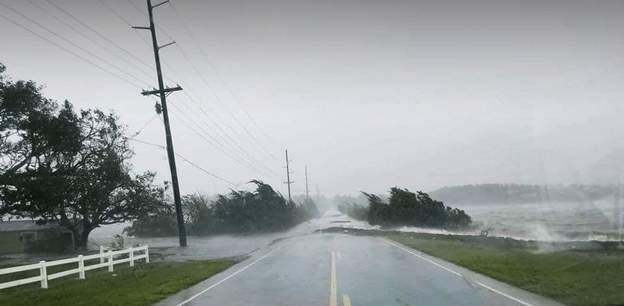
stormy road


*I haven’t worked the numbers at all—I’m not sure how one would even determine the odds of accidentally winning lotteries without having deliberately played them, and I don’t have the necessary skills to calculate the rough rates of macroscopic quantum tunneling, though that, at least, can be done—so I may be wrong about the comparison.  But I don’t think I am.

**I hope.  Please, if someone is threatening you or otherwise coercing you to read my blog, try to find a way to alert the “authorities”, or leave a message in the comments below.  It doesn’t have to be an obvious message, in case you’re being monitored.  Goodness knows I’ve sent coded messages in blog posts, apparently ones that are so obscure that no one even notices that they exist, like last week.

Outlaw’s Mind – Part 3

Okay, here it is, the third part of Outlaw’s Mind, for anyone who is interested in reading more.


It was shortly after that incident that Timothy had finally allowed the school counselor to talk him into seeking some form of medical help for his problem.  That counselor, a pleasant but serious woman in her forties known to him only as Mrs. Gibson, had recognized—after quite a few sessions with the troubled young man—that he was not a case of the youthful signs that predicted a future of sociopathy, or antisocial personality disorder.  She had quickly discerned that he was more troubled by his rage than those around him were, that he wanted to behave well, that he wanted to accomplish a good life.  But his rage, as he had awkwardly explained to her, seemed to have a life of its own.  He even sometimes woke up from dreams feeling furious, not able to recall what had triggered it, but unable to dismiss it.  He was, when younger, a somewhat artistically expressive youth; he drew pictures and occasionally even made clay sculptures, amateurish on both counts, but nevertheless pleasing to him.  When he woke up in the night consumed by unreasonable anger, his only recourse was often to destroy these minor works of his own art, damaging himself so that he wouldn’t damage anyone else.

Mrs. Gibson had recognized that this anger might well be fundamentally biological, that it might literally have a life of its own within him.  This idea had thrilled Timothy, as it matched his own experience of the anger he’d inherited, with accrued compound interest, from his father.  Thus, after his disturbing epiphany with Allison, he went to see Mrs. Gibson again.  She spoke to him of a type of tumor—not cancerous, but dangerous—that she’d heard of, called a “pheochromocytoma”.  He had asked her to write the word out for him, so he could do research of his own.  With real pride in her eyes, she had done so, and had then referred him to an endocrinologist she knew through her family, calling the doctor’s office that day while Timothy was in the office.

Timothy’s mother had been leery of this at first.  She feared the expenses entailed in serious medical workup, let alone in treatment, but thanks to Mrs. Gibson’s connection and recommendations—and, it seemed, the doctor’s fascination with the possibility of treating such a young man with such a rare condition—the endocrinologist had assured Mrs. Outlaw that he would accept whatever payment her insurance company offered, meager though it was.

A further hurdle of getting a referral from a primary physician, something required by the insurance company to Timothy’s tremendous irritation, had been eased by the neurologist getting him a quick appointment with a general internist of his acquaintance, who quickly evaluated Timothy, found him grossly healthy, and wrote a clear and convincing referral to the endocrinologist, as though he had been caring for Timothy for years.

When Timothy first met Dr. Barrett, the doctor sat him down, checked him over, checked his blood pressure and pulse rate, looked at the EKG that the primary doctor had done, and then sat down to go over what Mrs. Gibson had told him about Timothy’s past.  Timothy had granted her permission, in writing, to do so.

Dr. Barrett had explained to Timothy that a pheochromocytoma was a type of tumor of neuroendocrine origin, that secreted large amounts of “catecholamines” such as epinephrine and norepinephrine, the former also known as adrenalin, often in bizarre, pulsatile fashion.  He told Timothy that often people afflicted with these tumors had baseline high blood pressure and frequent headaches, neither of which Timothy had, but that they were by no means universal, and in any case, Timothy was very young and otherwise healthy.  He might tolerate physical processes now that would later produce much more glaring symptoms and signs if left untreated.

Timothy had felt that his personal symptoms and signs were more than catastrophic enough.

Dr. Barrett had seemed utterly confident that they would find the evidence of one of these “benign” tumors, given Timothy’s history, and he’d seemed almost insultingly happy about it.  Timothy forgave him this, though, because one thing the doctor had made clear to Timothy was that most of the time, correcting a pheochromocytoma was simple:  the tumor was surgically removed.

Timothy had fantasized longingly about being admitted to the hospital, prepped, fearlessly interacting with the staff, eager to have an operation, and he fantasized about awakening afterward to a smiling, handsome, soap-opera surgeon who told him the tumor had been removed and he was cured.

Alas, this was not to be.

Timothy had joyfully submitted to blood tests and had even been happy to spend a good portion of one weekend at home so that he could do a twenty-four-hour urine collection.  This, the endocrinologist explained, was to measure catecholamine breakdown products.  As the doctor had explained—and as Timothy confirmed in his own research, using the then-early internet as well as the public library—at any given moment, the various adrenalin-related chemicals in the blood of a person with a “pheo” might be well within normal range, and so the blood test, while necessary, was far from sensitive.

Unfortunately, when Timothy had gone back to Dr. Barrett, the man had been disappointed to report that the levels were normal.  He had obviously been able to see how crestfallen Timothy was, because he had hastily assured him that, especially in such a young person, the frequency and amount of the secretions were not likely to be as obvious as they were in a typical patient.

Dr. Barrett commissioned a second, then a third, twenty-four-hour urine collection.  The Outlaws’ insurance plan had refused at first to cover either of them, had been cajoled and pressured finally into covering the second, but had stubbornly insisted that the third was not medically necessary nor indicated.  Dr. Barrett had, with some sorrow and obvious sympathy, covered the price of this one out of his own pocket.  He had met with Timothy for a final time, trying to reassure him with the knowledge that at least he knew that his endocrine system was normal, based on all the tests they had done.

This had not reassured Timothy.  A problem that could not be detected could not be removed.

In the weeks following this failure, Timothy’s temper was, if anything, worse than before.  He got in several fights at school, avoiding major trouble mainly because he’d been held back by groups of other students as soon as he’d shown that he was going to continue attacking even once it was clear that he had the upper hand.  This had, on each occasion, been carried out by older boys, and even they had seemed afraid to try to restrain Timothy singly.  He was not physically imposing, a slim, average-height fourteen-year-old, but when his rage gripped him…

One of his friends from the time, a boy named Earl Walla, had told him after one occasion, “Tim, when you get pissed off, it’s freaking scary.  I mean, I don’t even have to see your face.  It’s like I can feel it coming off you, like you’re possessed or something.”

“That’s stupid,” Timothy had told him, feeling a chill go down his back, nevertheless.

Timothy had lost that friendship not long after.  Earl, though a nice enough boy, was of course subject to the usual teenage frailties of wanting to seem cool and jaded to other boys, and to girls.  One day, when PE class was outdoors, and the boys were doing laps and sprints around the track, Earl had made a point of saying, within easy hearing of a group of other boys that he had apparently deemed cool, “Hey, I saw this rerun on TV the other day, and I realized what you’re missing.”

Timothy, utterly puzzled, and breathing rapidly from a recent wind sprint, just said, “What?”

“It was that stupid old show, Lassie.  I realized, what you need is a collie dog, like that one,” Earl had said.

His hands on his knees, holding himself slightly bent over as he caught his breath, Timothy had asked, “Why would I need a dog?”

“Not just a dog, a Lassie dog.  The kid who owns Lassie was named Timmy, just like you.”

Timothy had closed his eyes, irritated.  “I don’t like being called Timmy,” he said.

“Why not?” Earl had asked.  “That kid’s famous, or he was anyway.  He’s probably rich, too, if they’re still showing that show on reruns.”

“I don’t like it,” Timothy had said.  “I’m not ‘Timmy’.”

If Earl had heard the early warning signs in his friend’s voice, he had not paid attention to it, perhaps because one of the nearby boys had chuckled appreciatively when he’d first suggested the Lassie association, with its diminutive version of Timothy’s name.

“Okay, okay,” he said, in a mock-placating tone, obviously still poking fun at his friend in what should have been a typical, traditional, and harmless bit of male bonding camaraderie.  “Well, how ‘bout this.  There was this old singer in the sixties called Tiny Tim.  He sang this song called ‘Tiptoe Through the Tulips’.  What do you think about Tiny Tim?”

A few of the other boys had laughed a bit more loudly, one of them mumbling “Tiny Tim” in appreciation.

Timothy, however, had not been amused.  He had looked up from under his brow at his grinning friend, feeling his head begin to pound, the fatigue of the run quickly dropping away.  “Don’t call me that,” he had growled.

Earl had not heeded the danger, or he been distracted from it by the response to his comments from the other boys.  If Timothy’s anger was indeed a palpable force on prior occasions, Earl was oblivious to it that day.  At least for the moment.

“Come on!” he’d said, laughing at his own ideas.  “It could be one of those retro things, something that’s cool now because it’s so dorky.  You could go on tour.”  Then, glancing back at the other boys to confirm their approval, he broke into a silly little dance on the balls of his feet, his arms cocked at the elbows, his index fingers making rings with his thumbs and his pinkies extended, and he sang in a high falsetto that was quite a good impression of the original singer, Tiny Tim, “Tiptoe…through the tulips…by the ocean…”

That was as far as he got.

Earl was probably lucky that Timothy—for no particular reason—targeted his stomach rather than his chin or face, because Timothy exploded upward, striking Earl with the force of his entire body behind the blow.  It struck Earl in the belly, just below his ribs, and it lifted him off the ground a few inches.  If Timothy had landed an uppercut with that force, he might have broken Earl’s jaw…or his neck.

Timothy considered none of this at the time.  Even before Earl had begun to fall over, his breath knocked out of him by the blow, Timothy’s left hand had followed up with a blow to his friend’s exposed side.  This was later found to have caused minor rib fractures in the floating ribs.

Earl was unable to yell in pain, his wind still knocked out of him, but he had fallen to the ground, bent in half.

With no particular thought behind the decision, Timothy had chosen to continue punching rather than to kick his friend’s now-horizontal form, and this might well have saved the boy from far worse injury than he ended up receiving.  He swung downward with his right hand, striking Earl in the rear of his right shoulder.  It sounded like a drum thanks to the resonance of Earl’s lungs.

The boys who had laughed at Earl’s comments had jumped to their feet, but they said nothing, simply stared in shock at Timothy laying into Earl.

Earl had balled up automatically as he had fallen, and Timothy continued to pummel at his back, one blow near the spine, another more on the side, one or two falling frighteningly close to Earl’s neck.

Finally regaining his breath, but clearly not able actively to resist, Earl had yelled, “Stop!  Stop!  I’m sorry, Timothy, I’m sorry!  Please, stop!”

Timothy heard tears in his friend’s voice.  Earl was bawling like a grade-schooler, bunched up like a fetus, and begging Timothy for mercy before the eyes of the boys he’d clearly been trying to impress.  Timothy recognized this, knew that he was overreacting, knew that the nearby boys were right to be gaping at him in undisguised shock and impotent horror.  And he wanted to keep beating on his friend.  He wanted to beat him bloody.  He wanted to beat him to death.

It was the spectacle of Earl’s utterly conquered tears that had prevented this, more than the sound of the gym teacher yelling in fear and anger as he rushed toward them.  Timothy, his rage still mostly in control of his actions, stood up, did not wait for the teacher to get close, did not obey any commands but those of his own ire.  He screamed aloud, a guttural, primal sound of ancient fury, and he took several strides toward the school.

There was a door nearby—it was not the one they had used to exit the school, but was a single door, perhaps there for teachers’ access or for emergency purposes.  It was metal, but with a pane of what was presumably safety glass in it.

Timothy, hating the world, hating Earl, hating himself, swung at the glass.  Whatever it was made of wasn’t quite strong enough, for it spiderwebbed in response to his blow.  This time, bones broke in Timothy’s hand, but he didn’t feel them any more than he’d felt the brick wall.  He swung again, and this time his fist went through the safety glass.  Though not ordinary window material such as would have been in a house, the broken edges were still sharp, and Timothy suffered several lacerations in his forearm both as he put his hand through the pane and as he pulled it out to try to strike again.  One of these cuts must have been over a decent-sized blood vessel, since it immediately started to bleed copiously.

Timothy was no more forestalled by this than he had been by pain in his hand.  Indeed, a tiny but serious part of him thought, “That’s good.  Maybe I’ll bleed to death.  I deserve it.”

Then the gym teacher, who was also the school’s wrestling coach—Timothy could never remember his name in later years—had seized him from behind, put him in a full nelson long enough to calm him down, and had tried at the same time to put direct pressure on Timothy’s wound, clearly unfazed by the direct contact with a student’s blood even in that era of HIV and Hepatitis.  Even as he had held Timothy in place, despite howls and shrieks and a flailing of legs, the gym teacher had yelled for someone to call 911.

Timothy had been brought to the emergency room, calmed significantly by shock and—just possibly—by a modest amount of blood loss.  The coach/gym teacher had controlled his bleeding well enough until the EMTs had arrived, then they had put a compressive dressing on it and sped him along to the hospital.  There it was discovered that, despite the amount of bleeding, no truly major blood vessels had been damaged, so Timothy would not require surgery.  He did need stitches, though…twenty-eight of them, spread over four different cuts, a few other minor ones simply requiring ordinary bandages.

These were likely to heal faster than the bones of his right fist.  X-rays—done in the ER, after his mother had finally arrived from work, having given approval for the stitches over the phone, and the urgency being strong enough for the ER docs to go ahead—revealed that he had simple fractures in two his metacarpals and in the first phalanx of his pinky.  Timothy, who learned the meaning of the bone names later, wondered whether the pinky fracture had happened at that earlier time when he’d smashed his fist against the brick wall.

He asked the ER doctor whether it could have been an older fracture, and she told him she doubted it.  There was no sign of any healing having taken place in it—no callus formation, as she called it—so it seemed to have happened at the same time as the others.  In retrospect, this would have become obvious to Timothy, for the pain, and its duration, of the recovery from this new injury was far worse than had been that following his hammer blow to a much harder surface.

Thankfully, none of the fractures was displaced, so treatment would be supportive, and no cast was recommended, though a brace of sorts was made, which could be taken off to bathe, but which the ER doctor recommended Timothy leave on at most other times.

As things were preparing to wrap up for Timothy’s discharge from the ER, the doctor had asked his mother if she wanted a prescription for some pain medicine for Timothy, but his mother had fervently shaken her head, and had acted somewhat insulted.  Timothy would come to curse that decision, but he also found himself glad of the pain his injury caused him.  As before, he felt that he deserved it.  This self-spite, however, did nothing to reduce his tendency to rage; it anything it worsened it.

While they were being given discharge papers, Timothy’s mother looking quite weary as she tried to focus on the necessary information, a voice had called from the side, “Timothy Outlaw, is that you?”

Both Timothy and his mother had looked up in surprise.  The ER nurse doing their discharge just glanced up and smiled as a tall, balding man in horn-rimmed glasses and a long, white coat approached.  Timothy could not recall the man’s name—though he was impressed that the man had recalled his—but he recognized this as the primary care doctor who had been willing to give the rubber-stamp referral to the endocrinologist.

“Oh, uh, hi, doctor…” Timothy had stammered.

“Putnam,” the man had replied.  “I’m Dr. Putnam.  Not sure if you remember me…”

“Sure, I do,” Timothy had said.  He held up a hand to wave, but it was his right hand, so his injury and dressing were prominently displayed.

“What happened?” Dr. Putnam asked with a sardonic smile.  “Did you get into a fight at school?”  He was speaking in a jocular tone, but Timothy thought his eyes looked too sharp for a casual inquiry.

Before Timothy could respond, his mother jumped in.  Timothy judged her to be embarrassed—he supposed she probably recognized Dr. Putnam as well as he now did—for she said, “No, actually, he got in a fight with a door at school.  Well…the window of a door, anyway.”

Dr. Putnam raised an eyebrow, and Timothy thought that the man suspected that his mother was not being completely forthcoming.  Apparently weighing his further inquiry to avoid discomfiting Timothy’s mother, he simply asked, “How on earth did that happen?”

Timothy felt embarrassed, could even feel the heat in his own face, but he decided to continue with his mother’s minor fiction and replied, “Well…I got really mad about something one of my friends said, and I…I kind of just punched the door.  The window, I mean.”

“Good lord,” Dr. Putnam had said.  Looking at Timothy’s bandaged and braced hand, he said, “You must have hit it pretty hard.”

“Yeah,” Timothy said, his voice barely audible even to himself.

His mother, on the other hand, took this point up with greater enthusiasm.  “Oh, yes,” she said.  “He broke the window…and it was some kind of plexiglass, apparently.”  Looking with motherly contempt at her son, she added, “Twenty-eight stitches and three fractures.  That’s in him.  I only hope the school doesn’t bill us for the window.  That wouldn’t be covered by insurance.  If they do, I can promise you that you’re going to pay for it out of your allowance and any after-school job you might get, with interest added for my trouble.”  Timothy thought that she was being quite serious.

Dr. Putnam’s eyebrows drew down in concern, and with a tilt of his head, he looked at Timothy and asked, “How did things go with Dr. Barrett?  Any…well, not good news exactly, but any revelations?”

Timothy hung his head, somehow ashamed that Dr. Barrett’s and Mrs. Gibson’s speculations had been incorrect.  He didn’t say anything, but let his mother reply, “None.  Not a thing.  He peed into a jug for twenty-four hours on three separate weekends, and I don’t know how many blood tests they did, but they didn’t find anything.  Not a trace of one of those stupid theological tumors or whatever they are.”

Timothy knew that his mother was merely pretending not to know the name of the tumor that had been speculated as possibly causing his fits of fury.  She had done a fair amount of research on it herself, wondering aloud whether such things could be genetic and whether one might have explained the behavior of her son’s father, the cause of his eventual untimely death.  Her mispronunciation was an act of defiance and contempt at the fact that her hope—both current and retroactive—had been dashed.

Dr. Barrett, instead of correcting Timothy’s mother, had laughed strongly in response to it, drawing an answering smile from her.  It was clear that he understood the reason for her renaming of the negated diagnosis.  Then, still smiling, he had said, “So, I guess there’s still no clear cause of the outbursts, then?”

Timothy was impressed that the man, who had after all been only barely involved in his previous care, recalled his case so clearly.

His mother, weary and exasperated, said, “Nope.  Nothing.  I guess he’s just got a rotten temper.”

Timothy again looked down, but not before he noticed Dr. Putnam regarding him sympathetically.  The man’s voice was soft and empathic as he said, “Well…maybe.  But I’d like to think of that as a diagnosis of exclusion.  It’s pretty unusual for someone to have such a forceful temper that they break a window and their own arm over something a friend said.  A girlfriend, maybe, but a high school pal?  That seems more unlikely.”

“What is it then?” Timothy’s mother said, her voice conveying no hope at all.

“I’m not sure,” Dr. Putnam had said.  “But I think I might have some ideas.  Do you think…well, would you mind Timothy coming to see me at my office?”

Timothy’s mother sighed and said, “I don’t know.  How are we going to justify it?  I don’t want to have to fight with the insurance company.  I can barely afford the food he eats.”  Timothy knew this to be an exaggeration; he and his mother were not quite so on the verge of poverty as she was pretending, but they were far from comfortably well off.

“Well, for starters, we can have it just serve as an ER follow-up visit,” Dr. Putnam replied.  He turned to the nurse, who had patiently stood waiting, an indulgent smile on her face, while the doctor had spoken with the two living members of the Outlaw family.  “Emma,” he said, “have they made any appointments for follow-up?”

“No, Dr. Putnam,” she said.  “We were just going to have him come back to the ER for suture removal.”

“Oh, no, that’s no good,” Dr. Putnam had said playfully.  “No offense, but there’s no way to know how long he’ll have to wait when he comes back.  I sometimes get a little behind schedule in the office, but not as badly as someone with a follow-up is going to face in the ER.  Wouldn’t you say?”

“It depends on how busy the day is,” the nurse had replied, smiling, clearly fond of Dr. Putnam.  “But, yeah, it can be a wait sometimes.”

“All right, then,” Dr. Putnam said.  “Since I am, officially, young Mr. Outlaw’s primary doctor of record, why don’t you set him up with an appointment in my office?  Tell them I told you to work him in.”

“I’d be happy to,” the nurse—Emma, apparently—said.  “Why don’t I do that right now?”

“Thank you very much,” Dr. Putnam said.

As the nurse went around the desk to call Dr. Putnam’s office, Timothy’s mother said, “Are you sure this isn’t a bother?  I mean, we’re already taking you away from your work here.”

Dr. Putnam looked honestly startled by her comment, then he gave a quick laugh and said, “No, not at all.  Actually, I just finished admitting a patient of mine for what is, I suspect, nothing too severe, but we can’t be too careful.  Otherwise, this is my afternoon off.  I’m not even supposed to be on call, but…well, you can take the doctor out of the hospital, but you can’t get the hospital out of the doctor.  Or something like that.”

Timothy’s mother had laughed, clearly drawn in more by the doctor’s demeanor than his words.  The man positively radiated warmth and compassion, rather the opposite of the way Earl had described Timothy when he was angry.  How Timothy wished he could have that attribute rather than the one he possessed.  There were no doubt many teenage boys who would have thought that being utterly terrifying to those around them—even only upon occasion—was a wonderful thing.  Timothy knew better.  He knew that fear and anger made people distant, kept a person lonely, and only drew in twisted people like Allison, more frightening in her way than Timothy himself.

He would go on to develop a serious “man-crush” on Dr. Putnam, as he was sure many others had before him—and eventually to consider him a friend and one of his only confidants.  Without Dr. Putnam, he might well have met an end similar to that of his father, but probably at a younger age.

He would later come to suspect that this might have been the better fate…but that would be much later.

Emma came back from around the desk and told them that Timothy had an appointment for two weeks from that coming Thursday, at two in the afternoon.  Dr. Putnam gave this his strong approval, told Timothy that he looked forward to seeing him, and then bid the trio of Timothy, his mother, and the nurse goodbye.  They all watched him go rather breathlessly, like fans who’d just met a celebrity.

What a wounded blog, things standing thus unknown, shall live behind me!

HELlo and good morning.  It’s Thursday, the 24th of February, and so it’s time for my weekly blog Post.  This will be the last post for the Month of February in 2022.  At lEaSt, it will be the last Of My usual, wEekly February 2022 blOg posts.  I suppose it’s possible that I might write somethiNg Else and post It or post some more of outlAw’s Mind if anyone’s interested.  But otherwise, probably not.

There’s not really much more to report than there was last week.  I’ve continueD to write on a near-dailY basIs, haviNG completed just a little over five-thousand words again this week.  I don’t have any new vIdeos of me singing to inflict upon you, so that’s probably a good thing.  Sorry about doing all that self-indulgent nonsense.  In fact, yesterday, I came very close just to giving away the guitar I have at the office because its presence was galling, and I felt franKly avErsE to the notion of even trying to make anything Pleasant, let alone beautiful.

Speaking of beauty, or its opposite, or WhAtever, I’ve reached a poiNT IN Outlaw’s Mind where some quite bad thinGs are happening for our main characTer, TimOthy Outlaw.  People in my universes don’t get a very good shaKe from me, It seems, but then, neither do people in my reaL, actuaL life, so that’s not too contradictory.

I’ve continued to have great difficulty finding books that I want to read.  I’ve tried to locate new fiction that looks interesting, but even coMics and manga are hard to concentrate on…or, rather, are things on which I find it hard to concentrate, if I want to trY to avoid ending SEntences with prepositions.  I know, it’s probabLy silly to bother with anything like that—almost nobody does anymore, even writers for Formerly prestigious newspApers, magazines, and jourNals.  I finD It frustrating anD even galling, but I recOgNize—when I’m able To be objective—THat at least some of the rules of grammar are arbItrary, though some are also borN of inherent logic, and the violation of these rules can lead to unclear communication and, I thinK, promote unclear thought.  My emotions mIght be as erratiC ANd troublesome as predicting the motion of a doubLe-pendulum, but my thoughts At leaST seeM coherent.  Maybe that’s why CBT* has never really worked very well for me.  Maybe my neUrology is just fuCked.  For all I know, maybe my tHoughts aren’t actuaLly cOhereNt, and everythinG I writE comes across as gibbeRish to everyone else.  Goodness knows, much of what most everyone else says and does feels lIke gibberish to me.

Of course, even non-fiction—even books about physics or neuroscience or rationality or biology or cosmology, whether I’ve loveD them in the past Or they’re new oNes by authors known or unknown To me—has been providing rapidly diminishing returns of latE.  And it’s not as though I do much of anything else for enjoyment.  eVEN the YouTube algorithm is letting me down, but of course, there was never any reason to thinK that it would do otherwise.

I doN’t think I have that much mOre to say today on this blog or ever at all, for that matter.  I don’t think I’ll be sharing any more of OutlaW’s MInd, but I guess I could change my mind at some point in the Future.  I can’t change It in the paSt, after all, alas.  And, of course, even if I could, we would be subject to the seeming paradoxes of time travel fiction in which a person cHanges things abOUt the past that change the fact that they wouLD change someThing in the past, and so on.  Of couRse, Everettian quantum mechanics allows for waYs around thIs—possibly, though it’s probAbly MAinly irrelevanT to reALity—and even the MCU glimpsed at least a bit Of that in AvengerS: Endgame, when the Hulk pointS out that, if your travel into tHE past, that past now becomes your “future”, and you cannot change your reaL Past by changing your future.

Anyway, that’s just stuff and fluff.  I can’t find even a Modicum of intErest in any of the ongoing MCU Projects, nor any of the Star Wars shows or anything eLsE, reAlly.  I’m juSt wandEring farther and farther into the wasteland now.  I doubt that there is a far side to it.

TTFN

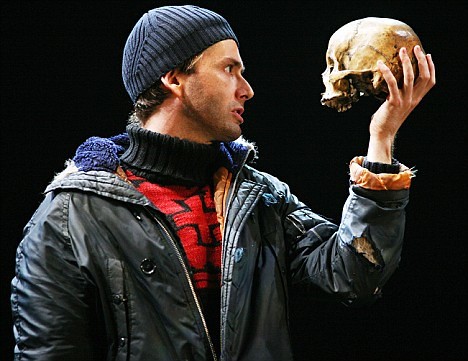
tennant hamlet


*Cognitive Behavioral Therapy.  I don’t have the energy to describe or explain it, but feel free to Google it or look on Wikipedia, or whatever.

Or are you like the painting of a sorrow, a blog without a heart?

Hello.  Good morning.  Thursday.  Blog post.  You can fill in the rest of the verbs, articles, prepositions, adjectives, adverbs, and pronouns for yourselves.

It’s been a moderately productive week; I’ve made more progress than I did the previous week on Outlaw’s Mind—I’ve written just shy of five thousand words since last time.  Things are getting exciting and strange and frightening, and that’s all good in a story, though probably not good in life.

I’ve posted the second portion of Outlaw’s Mind—in draft form, anyway—on my blog, here.  It’s a bit of a lurch from the “cold opening”, because it suddenly shifts backward in time, to Timothy Outlaw’s younger, early adolescent days, gradually setting the stage for the events that happen in the opening, and which will then carry on after.  I haven’t yet reached that opening time again in the story, but I’m getting closer.  There will be a payoff, and hopefully the things that happen in between will be reasonably interesting.  They certainly are strange, and—hopefully—sometimes frightening.

I’ve also been mucking about with my guitar and singing, and I did a new video of me playing and singing Yesterday (of course by the Beatles).  I’ll embed it here, below this paragraph, so if you’re inclined, you can listen.  It’s decent, I think, but of course, you should feel free to judge for yourself.

I may inflict more songs upon you, assuming nothing cuts all my endeavors short—if they could even be truly considered short at this stage in my life.  Sometimes it feels as if it’s been eternal already…and not one of those great, “promised land” style eternals usually.  At this point, both my “experienced happiness” and my “life satisfaction”* are below the mean, I think, and most times they are in the fucking sewer.  I guess that’s what happens when you have an apparently defective brain and a bad personality.  No one is to blame, except possibly me…which would mean that I deserve it, in a sense, so I guess that’s fine.

I’ve considered just posting all the rest of Outlaw’s Mind at once, as it currently stands (up to yesterday, or up until whatever other day follows) so that even if I don’t end up living to finish it, someone else can if they’re interested.  I really doubt that would happen; it would probably just vanish into even greater obscurity than that in which it exists now, despite the supposedly eternal internet (where, contrary to popular sayings of the “what’s on the web is forever” type, the vast majority of things are in practice as ephemeral as the path of a single drop of rain).

But, hey, even Van Gogh only sold one of his paintings in his lifetime and look at him now!  Well, don’t look at him.  He’s dead—he killed himself when he was thirty-seven**.  But his paintings are still great, and his work is loved by countless millions of people.  Not that it does him much good, unless you believe in some afterlife that’s influenced by the esteem someone receives after their death by the world at large.  It seems unlikely.

That’s about it for my report this week; there’s little else to say.  I don’t socialize at all, and don’t really do much for fun, not counting what I’ve mentioned above and watching some videos on YouTube, most of which I’ve seen already.  I still can’t seem to get into any new fiction (or old fiction for the most part, even my favorite books), though there are occasional, brief exceptions.  And I’m running out of interesting non-fiction books to read, too.  I’ve read most of the ones that appeal to me at all.

I honestly don’t know what to do about any of this.  I mean, I have ideas, but they are generally frowned upon, and I don’t like making a nuisance of myself.  For now, I’ll keep doing the Nazgul thing and will merely continue, though often it already seems that every minute is a weariness.  I don’t know how much longer I can do it.

I hope you’re all doing better than I am, and that I haven’t bummed you out too much.  Stay as safe and healthy and happy as you can.

TTFN

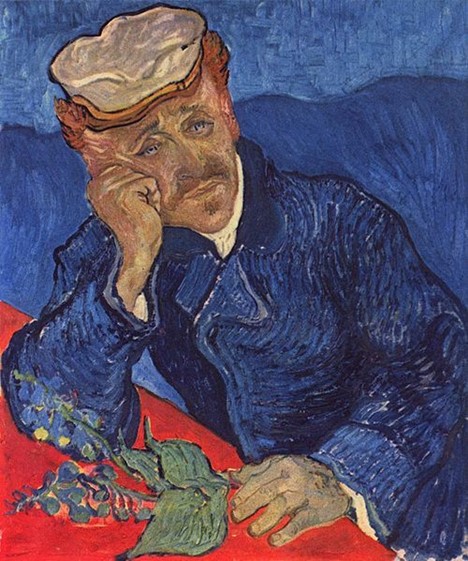
Vincent's doctor


*As described in research that I think was done by Daniel Kahneman and others.

**I’ve already outlived him by fifteen years, but I’m far from sure that it was the right choice.  At least I’ve written and published some stories and a few songs since that age.  I don’t paint as well as Vincent did, of course, but then again, not many in history do or did, so I can’t feel disappointed about that!  Anyway, as far as either happiness or life satisfaction goes, my life since I was 43 has been a poor investment.  At least before then point I saw my kids.

Outlaw’s Mind – 2nd portion

Okay, here’s the next portion of Outlaw’s Mind, as I warned might be coming.  As a reminder, or for those who aren’t aware, the “cold opening” was already published/posted here, and this is now the main part of the story beginning, which goes back in time from the opening.


Timothy Outlaw had always hated his name.

Not his first name.  That was fine.  Even though some people had called him “Timmy” when he was younger, and a few other kids had teased him once or twice about it, he knew that such teasing was not really about the apparent subject matter, but was merely a force looking for an outlet, and if the name had not provided it, something else would have.  Even as a young child, he’d known that.  He understood only too well the internal pressures that could occur within the mind, and how irresistible they could be.  This wasn’t to say that he was fine with the teasing, but very few people teased him more than once or twice.  This was part of his problem.

It was his last name that bothered Timothy so much.  He had no idea where in his ancestry it had arisen, nor had his father, but Timothy wished that whoever it had been had thought things through a bit better.  It was not in Timothy’s nature to seek a legal name change.  Partly this was because he had at best an unpleasant relationship with the court system and all its representatives, but mostly it was because, along with less positive traits, he had inherited from his father a strong sense of loyalty and commitment, especially to his family.

That loyalty had not prevented his father from physically abusing his wife on many occasions, but Timothy understood that this was not because the elder Mr. Outlaw was a bad person.  He simply carried an innate and terrible surplus of anger—or rather, he produced it in copious amounts in his nervous system.  Some men are unusually hairy, some women are born to develop enormous breasts, some children are graced with an inherent love of and skill for music, or for math.  Morris Outlaw had been born with a congenital tendency to feel intense and powerful, undirected anger.  This tendency had led him to lose his wife, finally, even before he was killed in a bar fight by a man who had been carrying a concealed pistol while drinking shots of tequila.

It was a tendency that his son had inherited in an even more purified form.

But Timothy had learned from the object lesson of his father.  He didn’t hate the man—not once he was mature enough to recognize the powerful force that had victimized Morris Outlaw as much as it had those around him—but he resolved not to be like him.  He wanted to be a good citizen, a productive member of society, someone who created more than he destroyed.  And if he were ever to have a family, and children, he wanted to be loved by them, not feared.

This might have sounded both simple and easy, and to most people—certainly to anyone committed to these ideals as Timothy was—they would have been readily achieved.  But even from his earliest days, as long as he could remember, a seemingly endless reservoir of free-floating rage was produced in his being, like pus gathering in some horrible, spiritual abscess, building pressure until it exploded, spewed its infection onto all surrounding matter, and then began to gather again.

This was why he was rarely teased more than once by anyone in school.  Though he did his best never to “start” anything with anyone, if someone started into him…well, they got a taste of what it would be like to try to enter the burrow of a honey badger.  Young Timothy had sent more than one child, older and bigger than he, home or to the doctor, and once to the emergency room.  It was entirely possible that, if he had not been surrounded by other people who were able to step in and overpower him, he would have killed someone—more than one—even at that young age.  He knew this, knew how lucky he had been not to have done such a thing, because when he became possessed by his rages, all reason left him, and he desired nothing more than to savage the target of his fury until it could no longer move…preferably ever again.

His teachers, and the school administrators, and even his mother—marred though her opinion had been by her husband’s example—recognized that this anger was not deliberate.  They had all seen that Timothy was a boy who wanted to be good, who wanted to do well in school, wanted to be a contributing member of society.

But because of his terrible and effectively uncontrollable temper, Timothy had often gotten into trouble.  Diligent at his studies, respectful of his teachers, eager to take part in extracurricular activities, Timothy had nevertheless been sent to the principal, and often suspended from classes, on numerous occasions throughout his educational time.  On many an occasion, while languishing alone at his house while his mother worked and his classmates did whatever they were doing, Timothy had come close to fatal despair.  His mother kept no guns in the house, for more than one reason, and this probably kept Timothy from impulsively taking his own life at a young age.  He hated himself, hated the rages that made him—when they gripped him—not merely wish but yearn for the violent destruction of everyone and everything around him.  In those bleak moments, he told himself that while he had absolutely no right to harm or destroy other people or their property, he surely had that right over himself.  Would it not make sense, then, to bring about his own end rather than potentially to harm other people?  Would that not be the best course of justice?

If he’d had access to a firearm, the impulse toward preemptive self-destruction might have been carried out, since the manner of doing so would have been quick, violent, and irrevocable.  However, on those occasions when he considered more methodical techniques, from pills to razors to nooses, the preparation needed allowed him time to consider the effects his suicide would have.  He imagined his mother finding his dead body—perhaps accompanied by blood, or vomit, or a purpled face—and being stricken with the horror of it, being devastated not merely by the fact that her only son was dead, but also by the simple, traumatic fact of finding a grotesque corpse in her house.

He’d also thought of going to a nearby high overpass, or to leaping from the top of a tall building, but each of these considerations was blocked by the recognition that someone—a passing car or a pedestrian below—would be discomfited, possibly traumatized, possibly even injured by his action.  He did not want to be a burden to anyone, especially not that kind of burden.

Also, he simply did not really, deeply, want to die.  He wanted to live without being the unwilling slave of his terrible, malevolent rage.

That this was painfully clear to all those who knew and cared for him was probably the only reason Timothy was not consigned to juvenile detention early in his teenage years.  Even the strictest and sternest of teachers, school administrators, and other similar adults in authority, could not fail to recognize Timothy’s sincerity when he profusely, sometimes tearfully, apologized for the consequences of one of his outbursts, never deflecting blame from himself, always assuming more than his share of responsibility for any altercation.  When he had sent a boy two years older and a head taller than he to the emergency room for teasing him about the way he walked, Timothy had taken it upon himself to seek out the boy’s family and apologize to them, abjectly and unreservedly, in person.  If he had lived in the culture of the samurai, he might have offered to commit seppuku to demonstrate his sincerity.

It could not honestly be said that the boy’s family were completely disarmed by the act of contrition—they were poorly insured, and medical bills were a supremely unwelcome cost—but there was no doubt that they were impressed.  Also, the shame of their child being a bully toward a smaller boy, and then the added shame of the fact that the smaller boy had sent their healthy youngster to the hospital in a fair fight, made it difficult for them to assume the moral high ground that Timothy offered without reservation.  And, of course, a lawsuit would have been an exercise in absurdity; Timothy and his mother were significantly poorer than this boy’s family.

That event had led to Timothy getting his first girlfriend—the boy in question’s younger sister, roughly the same age as Timothy.  She had, of course, heard of what had happened, and apparently had been morbidly impressed and fascinated by Timothy’s obvious toughness.  He had been terribly surprised when, upon his return to school after a suspension, the girl had approached him, introduced herself, and started to hang around him.

Timothy had always felt unsettled by the cause of his acquaintance with the girl, but it had been difficult for a lonely boy just entering adolescence to ignore her obvious attraction to him.  They never officially declared themselves to be “going out” but it was with this girl—Allison Haskins had been her name and might well still be—that Timothy had shared his first non-maternal kiss, and her still very underdeveloped breasts were the first that he ever touched.

The romance, if that was the right word, had not lasted long.  One afternoon, when Timothy and Allison were walking home from school—this was no longer in the heyday of widespread helicopter parenting, and in any case, no one in Timothy’s neighborhood could afford to indulge in such overprotectiveness—they had seen a boy perhaps a year younger than themselves being accosted by two older boys, who were clearly intimidating him into letting them “borrow” his backpack, which was a very nice, name-brand affair, decorated with images of Lebron James.  It had undoubtedly cost someone in the boy’s family quite a bit of money, more than would normally be spent on such school supplies in that part of the world, and the boy had been near tears, trying to worm his way out from the environs of the bigger boys, but trapped by them against a brick wall.

Part of the reason this brief spectacle had so enraged Timothy was that the younger boy was black and the older ones white; he hated any form of bigotry with stunning fervor, and this was a hatred of which he was not ashamed.  Still, no other combination of people would probably have made a difference.  As soon as it became obvious to Timothy what had been happening, his pulse had begun to pound in his head, time had slowed down, and he had more or less literally seen red.  Not bothering with any kind of warning, Timothy had simply stridden quickly forward and slammed himself bodily, pushing at the same time, into the nearest of the two bigger boys.  It was not in Timothy’s nature to hold back in such circumstances, and the bigger boy had been all but knocked completely off his feet, saved from a backward tumble onto the sidewalk by a collision with his comrade.

The two bigger boys had been too startled to react, and Timothy had shoved again, this time leading the second boy to lose his footing and sit roughly on the pavement, while the bigger one smacked against the wall.  Timothy’s assault was too surprising for them to experience answering anger at first—they had simply been caught by a force of nature, as if a sudden gale had driven them nearly off both their feet, not a slightly smaller boy.

Timothy was not capable of fear in such moments.  The word felt terribly distant, apart from the two boys in front of him, and a slight, high-pitched and faint whine overlaying the background of reality.  The two bigger boys gaped, and Timothy now said, “You leave him the fuck alone or I’ll fucking kill you!”

The two bigger boys had gaped comically.  They were clearly in uncharted territory.

“What are you waiting for?” Timothy had yelled, his voice hoarse, his firsts clenched into tight, pale cudgels at his sides, his elbows slightly bent.  “I’m gonna tear your fucking heads off!”

He began to stride toward the partly unbalanced boys, pulling his arms up and back.

The two boys said not a word, nor did they share a glance.  They fled, the one who had fallen scrambling awkwardly to his feet even as he tried to put one foot in front of the other.  His friend didn’t wait for him, but sprinted on ahead, glancing only back at Timothy, clearly judging him to be quite insane.

Supporting that assessment, Timothy gave a loud, animal howl of fury and took one step after the two boys.  Then he caught himself and, instead of taking off in pursuit, swung his own fist in a hammer blow against the brick wall.  He would not feel the pain of the blow for a while, but it would last for days, and the scraping of the impact drew blood.  The wall, being brick, didn’t notice the impact any more than Timothy noticed the damage to his hand.

After the smacking, sickening sound of Timothy’s fist’s impact with the wall, there followed immediately two gasps.  Timothy turned—whirled, really—and saw Allison and the boy with the backpack looking at him.  The boy looked, if anything, more terrified than he had when being threatened by the other two, though perhaps less aggrieved.  With wide eyes, he looked at Timothy and said, “Thank…thank you,” before turning and running off in the other direction.

Allison’s gasp had been of quite a different character.  She had not seen Timothy enraged in this way before—and to be honest, he felt rather proud of himself for behaving in what was, for him, a somewhat restrained fashion—and surely it was a shock.  But she did not seem to be afraid.  Her face was flushed to the point where she looked feverish, her mouth hung slightly open, and she breathed a bit more heavily than usual.  Timothy saw her lick her lips once, then she stepped up to him and took his right hand, scraped and injured along the line of his folded pinky.

Timothy, his head still pounding and his throat tight and dry, didn’t resist her.  She lifted his hand in both of hers, looking at the injured side of his fist.  Then, to Timothy’s surprise, she kissed it.

With wide eyes and red cheeks, she asked, “Your mom’s not home yet, right?”

Timothy, slowly governing himself, still feeling the urge to take off after the two boys and try to batter them into jelly, said, “Right.”

Allison smiled—a smile that was, in its own way, as frightening as Timothy’s rage.  “Good,” she said.  “Let’s go to your house right now.”  Still holding his fist in her hand, Allison began walking forward.

Timothy, however, did not move with her.  Something about her demeanor troubled him.  Perhaps she just wanted to make sure that he disinfected his hand, in which could only feel a throbbing that wasn’t yet painful.  “Why?” he asked.

Looking back indulgently, Allison smiled again, licked her lips again, and speaking barely above a whisper, she said, “I want you to…to do it with me.”

Timothy had blinked and had felt a shock almost as great as must have been felt by the two boys at whom he’d just charged.  He and Allison had each been thirteen at that time—Allison a month and half away from her fourteenth birthday, and Timothy almost four months from his—and he was almost certain that she was no more sexually experienced than he, which was to say not at all, beyond light petting.  They had never so much as directly touched each other’s genitals, even through clothing, and now she was saying that she wanted to go back to his house and have sex.

If Timothy had been more prone to self-delusion, he might have thought that Allison had been moved by his chivalry, his heroism, that her passion and love had been aroused by his fearlessness and his sense of justice.  But Timothy was an old soul.  He was practiced in trying to know himself, contemptible of self-deception, though as prone to it as anyone else.  When he misled himself about himself, it was more often to his own detriment than to his aggrandizement.  Thus, he saw, with a keenness of perception that would have been more expected in a man in his late thirties, or perhaps in his sixties, that Allison was not feeling the love of a maiden inspired by a brave knight.

She was turned on by his rage.  She was aroused by his natural violence, by the fact not only that he’d been so terrifying to the two bigger boys, but that they’d been right to be terrified.  He understood, or thought he did, that even the fact that he’d been unable to contain himself without violently striking an unyielding wall of brick and mortar had been arousing to her.

“What?” he asked, not wanting to be right, not sure why he was disquieted.

“I want you to…to have sex with me,” Allison repeated, more firmly than before.  “I’m serious.  I want it.  I know it’s gonna hurt…but that’s okay.  I want it.”  Her breath was almost comically heavy, like a comedy skit version of a phone pervert.  Her cheeks seemed to be getting redder by the second.

For Timothy, time had stood still outside him, as he’d had an epiphany, a vision of a possible future that lay before him.

Allison was not frightened of his anger, or if she was, that was part of what she liked about it.  She had approached him after he’d hurt her brother, not because he had impressed her for being able to stand up to a bully, but because he had been so violent and dangerous.  And now, having seen it—in relatively restrained form—firsthand, she wanted to give herself to him.  Or, rather, what she probably wanted was to be taken by him.

He could see and read a possible future of their relationship.  They would go to his house, they would have sex, and she would welcome any associated pain…and if they stayed together, she would reinforce his rage and violence, responding to it with horniness and release.  She might even welcome violence upon herself, who knew?  He’d read that such people existed.  She would encourage and nurture, probably unconsciously, that horrible side of him that he hated, and he would become ever more prone to such violence.

If he were ever to kill someone in rage, she would probably help him bury the body, after wanting to make love in its presence.

Someday the two of them might become some modern equivalent of Bonnie and Clyde.  Someday, he might even kill her…and she would not be completely averse to it at the very end.  And he might end up in prison or, more likely, be killed as his father had been killed, by a stranger in a bar, or perhaps by the police.

He saw all this in an instant, saw it more vividly than the real world before him.  It horrified him—all the more so because he also found it terrifyingly enticing.

“No,” he’d said softly.  “No.  I can’t do that.”  Whether Allison thought he was referring to sex alone, or whether she understood that he was speaking of something larger, Timothy never knew, because he turned around and walked away from her.  They’d never spoken again after that.

As honor, love, obedience, troops of friends, I must not look to have; but, in their stead, blogs…

Hello and good morning, as I’m prone to say.  It’s Thursday, and so it must follow, as the knight the questing beast, that it’s time for my weekly blog post.

Work on Outlaw’s Mind has gone decently this week; I’ve written just over four thousand words since last week’s post, which is a bit on the slow side for me for four days’ work, but at least I’ve been keeping to my “at least one full page a day” rule.  As I think I mentioned last week, I’ve gone back to using the laptop, but I keep wrestling with myself about it.  I don’t know how (or if) I’m going to resolve that conflict, but so far, the feedback is that it doesn’t seem to make much difference whether I write my first draft of a work in longhand or type it into a computer.

Typing is probably just more natural for me for when writing stories; I got my first typewriter (my maternal grandmother’s former one) when I was quite young*, and very soon started writing a fantasy adventure novel on it, which was to be the first book in a series called The Land Ruled by Thunder.  I was pretty influenced by The Chronicles of Narnia at the time, I think, and other epic fantasies.

In any case, for now I’m writing Outlaw’s Mind on the word processor again, but if the urge strikes me, I may write a bit of some upcoming, future possible works on my notebook paper**.  Such efforts usually come to naught, even when I make them, unfortunately.  Then again, all things come to naught eventually.  Supposedly, quantum information is never lost, but that’s not of much practical use in most situations.  At least there’s some hope that the black hole information paradox may have been resolved or may be on its way to being resolved.  Such things matter to me far more than the Oscar nominations, or the idiocy of politicians and celebrities, or any trends in fashion or electronics, or whatever.  The only trend that ultimately matters—the one that will dominate and make irrelevant all others—is the Second Law of Thermodynamics.  Still, in the meantime, some stories and music can be pleasant ways to while away the fleeting eons before the heat death of the universe.

As many of you already know, I posted the “cold opening” of Outlaw’s Mind, in draft, on my blog earlier this week.  So far, the response has been good, and is much appreciated (by me, in case you were wondering).  The subsequent part of the story shifts time, setting, and tone quite a bit, so I may soon post at least some of that, just so people can get the idea.  This may also be the only way to get more than a handful of people to read any bits of my stories—it’s so hard to capture people’s interest enough to get them to want to buy and read a book or short story you’ve written, even if they would enjoy it very much.  And I’m not good at self-promotion.

I want to thank the people who said kind things about my video of me playing Help.  I’ve been trying to work on and record some other videos, practicing the songs I like to play with that in mind, but sometimes it feels to me that the more I practice a song, the less I like how it sounds.  However, I have also been fiddling with my guitar(s)’ tone knobs and trying different picks, so it may be just that I’ve moved away from what was working before.  We’ll see how everything goes, but if I do something that’s worth sharing, I’ll share it here (via YouTube)***.  I’m working on Sorry Seems to be the Hardest Word; And I Love Her; Here, There, and Everywhere; Desperado; Yesterday; Lucky; Here Comes the Sun; and Karma Police for the moment.

I could probably do Creep easily enough already.  It only has three main chords, not counting sus-4s and minor drops, but as Jonny Greenwood apparently said about the song, when just played with one guitar and chords, it lacks a bit of punch, which is a shame given the emotional intensity of the song.  He added serious punch to it with his violent guitar surprises before (which sound at first like some particularly aggressive percussion instrument) and during the chorus.  Fake Plastic Trees is nice even with just guitar and voice, though, so maybe I’ll do that.  It’s also not very complicated or difficult.  We’ll see.  No matter what, it all will probably sound exceptionally mediocre when I do it, anyway, so maybe I shouldn’t worry.

That’s about all I have that’s worth sharing, if even that is worth it.  I have nothing to report in my “personal” life because I have no personal life, so that makes things easy.  And this blog is by far the most social thing I’ve done in years.

I hope you’re all feeling and doing and being well.  You certainly deserve it, for having the endurance and good will to read my blog!

TTFN

knight 2 questing beast


*I think I was around eleven years old, but I’m not certain.  It was around that time, anyway.

**Maybe I’ll play around with Dark Fairy and the Desperado.

***If I do any Eagles songs, I’ll probably just have to share them here.  The Eagles tend to block such things on YouTube, even if one’s channel isn’t monetized, which mine certainly isn’t.  Other groups, including the Beatles, will simply “run ads” on the video and collect the money thus generated, which to me is a bonus.  I love the idea of making even a tiny bit of money for people like Radiohead and the Beatles.  That may seem weird, but then again, I’m weird.  You might even say, “I’m a creep.  I’m a weirdo.  What the hell am I doing here?  I don’t belong here.”

Outlaw’s Mind “cold opening”

As I mentioned previously, here is the draft of the “cold opening” to Outlaw’s Mind, to see what everyone thinks, so far.  Please, feel free to give feedback below if you’re interested.

I want to point out that, right after this, we go back in time to Timothy’s youth, and only work our way to this stage of the story gradually.  In fact, I haven’t written that far yet.  So, maybe, if readers show interest, I’ll soon post some of the subsequent portions of the draft.  Let me know what you think, please.

Outlaw’s Mind

by

Robert Elessar

Timothy Outlaw was quite surprised when he saw flashing lights and heard a brief siren through the front window of the upstairs apartment in which he lived.  His was a quiet neighborhood, not truly middle-class perhaps, but certainly not poverty-stricken, and every family or individual he knew on the street was a solid, sensible, positive part of the community…at least as far as he knew.

When he first saw the lights, looking up from the laptop in front of him on his kitchen table, Timothy worried that some neighbor might have suffered a heart attack.  But then a second, and then a third set of lights appeared, he heard the very brief boop of a siren, as of some emergency vehicle prodding someone else out of its way, and he thought he heard voices, one of which seemed to come from a two-way radio.

He walked to his front window, which looked down onto the front lawn of the duplex in which he lived, and he saw, to his astonishment, three police cars and an ambulance, pulled rather haphazardly into and around the property next door.

The ambulance he could just barely consider expectable.  The couple who lived in the house next door—much smaller than the formerly one-family dwelling in which Timothy lived—were retired, albeit recently.  Health problems were more common as people got older, and Timothy thought he’d heard that heart attacks were particularly frequent among the recently retired, though he couldn’t be sure that was right.  But police cars?  Maybe one police car, they often came along with an ambulance, at least until it was clear what had happened.  But three?  Three police cars?  At the Rosencrantz’s house?

Timothy didn’t like to associate himself even in a peripheral way with troubling events, but this was too much, too close to home.  He wanted to see at least generally what was going on.  The weather was still warm enough that he didn’t think he needed a jacket, so he simply went to the side door that opened on to the long stairway down to the side of the house.  This was on the other side from the Rosencrantz’s place, but he could still see the multiple blinking flares from the emergency vehicles, reflecting off windows and the sides of houses in the early night.

As he came around to the front of the house on the narrow concrete walkway, he saw that his downstairs neighbor, Bernice, was walking back into the yard, a sweater pulled around her shoulders.  She hunched, rather theatrically, against what seemed to Timothy to be a mild and rather pleasant breeze.  Then again, maybe she was hunched against something else.

She saw Timothy even as he saw her, and she nodded.  She appeared to try to give a greeting smile, but it came out as a grimace.

“Hi, Tim,” she said.

“Hi,” Timothy responded.  He didn’t really like the shortened version of his name, but he strove never to make much of it.  “What’s going on?”

“Oh, nothing,” Bernice replied, coming closer to him and standing at an angle, where she could converse with him while watching the lights and vehicles and people in the neighboring yard.  “I thought I’d go over and see if there was anything I could do to help, but I guess it’s too late for that.”  Bernice was a recently divorced LPN, with long ER and ICU experience, so it wasn’t unreasonable of her to offer to assist even trained EMTs and police officers.  But that hadn’t really been the substance of Timothy’s inquiry.

“But what happened?” he asked.  “Are Mr. and Mrs. Rosencrantz all right?”

“Ah,” Bernice said, though Timothy honestly couldn’t see how she couldn’t have known what his question was about.  “That.  Well…I guess I would have to say no on both counts.”

Irritated by her evasiveness, but able to keep it under good control thanks to recently acquired practices and habits, Timothy said, “What do you mean?”

“Well,” Bernice said, sounding both weary and sad, with a hint of the cynical undertone that so many career nurses developed, “from what I can gather, it looks like Mrs. Rosencrantz is dead…and Mr. Rosencrantz is the one who killed her.”

“What?” Timothy said.  “Are you…you can’t be serious.”  He knew, though, that no matter how jaded she might be, Bernice would never joke about such a thing.

“I wish I wasn’t,” she said.  “But I know one of the cops, there…he’s come into the ER when I’ve been working a couple of times.  He said they got a call from Mr. Rosencrantz a little while ago saying that he’d…well, that he’d just lost his temper with his wife over something and had bashed her head in with a metal knife holder.  Didn’t stab her, nothing like that, just beat her in the head with the holder.  Then, I guess, he called 911, but it looks like it’s too late for her.”  She sighed.

“Holy shit,” Timothy said softly.

“Yeah, you can say that again,” Bernice replied, nodding sadly.

Timothy could barely gather his thoughts.  He couldn’t quite comprehend the notion of his neighbor, a small, slightly stout man with a sardonic sense of humor and a comically jaded attitude suddenly losing his temper and beating his wife to death with a blunt object.  The two had occasionally bickered, even within the range of Timothy’s hearing, but it had been almost a theatrical kind of bickering.  It had always seemed to Timothy that, on those occasions when the Rosencrantz’s were fighting, they were doing so mainly out of a sense of obligation, as if it were a required part of being a recently retired couple, but not because they disagreed about anything of any depth.

And Mr. Rosencrantz looked like a man who had more likely been the target of bullying in his young life—and perhaps even in his adult life—than to be the instigator of violence, even if he were provoked severely by a sharp-tongued wife…which had not been a very accurate description of Mrs. Rosencrantz.

It wasn’t that Timothy couldn’t imagine people being violent, even to those closest to them.  Quite the contrary, he knew of such things only too well.  But he thought that there were certain types of people who were the ones who might one day lash out destructively, and other types who simply were not.  It appeared he had mis-classified Mr. Rosencrantz.

He watched for a bit, Bernice standing silently next to him.  He saw the two EMTs come out through the front door of the small house, a stretcher rolling between them, on which lay a small figure in a black plastic bag.  Timothy hadn’t ever really noticed just how tiny and frail Mrs. Rosencrantz had been—her physical presence had always been one of great energy, so one never felt that she was anything but large—but seeing what was clearly her form lying on the stretcher, pushed easily by the two emergency workers, who didn’t even need to make any special maneuvers to bring their burden down the few stairs from the front porch, that point was driven home.

With that, he felt a wave of anger begin, a judgmental contempt for Mr. Rosencrantz.  It was such the mark of a bully, for someone who was small and weak in one way or another to seek out those who were smaller and weaker to victimize.  Who knew, perhaps Mr. Rosencrantz had committed spousal abuse many times over the years but had been able to keep it contained and hidden enough that he didn’t get caught.  Timothy hated such a thought.  Poor Mrs. Rosencrantz, trapped in her marriage by tradition and fear, might never have said or done anything to stop it.  Timothy had no disdain for her, or for anyone in such a situation.  He understood how the threat of violence, how someone else’s rage, could be so frightening as to rob one even of rational self-preservation.

No, the blame was—always—on the perpetrator.  Timothy had no patience, no pity, no sympathy for people who committed acts of violence upon others.  This was not because he couldn’t understand their actions.  He could understand them only too well.  He had demons of his own that would surely have caused little Mr. Rosencrantz, the victimizer of a littler, frailer woman, to jump back in terror, and possibly flee screaming, if they were made manifest before him.

They were trying to manifest themselves now.  Timothy recognized it, the surging heat in his head, the decreased focus of his thoughts, the ache of his own fists, which wanted to bunch into cudgels and beat little Mr. Rosencrantz until he couldn’t move, couldn’t even be recognized, for his horrible crime and betrayal.

But Timothy recognized those feelings, and he knew what to do.  Without even needing to close his eyes anymore, he embraced his emotions, his anger, his hatred, cuddled them like a big, lovable pet, solidified them…and then, with the words “scatter to the winds,” he lifted them up through the top of his head and let them do just that.  The physical aspects of his anger—the tension, the faster heartbeat, the widened pupils—would take a few moments to re-settle, but his anger itself, the emotion, the thought of it, behaved just as though it had been a bag of leaves torn open in a gale.  Timothy could almost see little autumn shapes, sculpted from unnecessary emotion, fluttering and swirling about one another, reduced to impotent, disorderly remains, to decay on the lawns of the neighborhood.

Bernice, on the other hand, seemed to have no such technique for assuaging her own emotions.  Not looking away from the two EMTs as they rolled the late Mrs. Rosencrantz up to the rear of their ambulance—which would not be needing its sirens—she said, “I can’t believe that little piece of shit did that.  The piece of shit.  And Mabel was such a sweet lady, too.”

Timothy realized just then that he had never known Mrs. Rosencrantz’s first name.  And though she had not ever struck him as saintly, he didn’t think the word “sweet” was too great an exaggeration, especially at a moment like that.

Sweetness, however, did not seem to be the mode in which Bernice was settled.  As the EMTs lifted their stretcher and its occupant up into the ambulance, she muttered, “I’d like to get that little bastard in one of my ER cubicles, and get some central line kits, and catheters, and suture sets, and everything else.  I’d put him on IV fluids and even intubate him if I had to, but I’d see how long I could keep him alive and wishing he was dead.  Piece of shit.”

Timothy’s mouth dropped.  He’d never heard Bernice talk in such a way, and it shocked him tremendously.  He wondered if Bernice—whose own marriage had ended less than a year before, but had no doubt been deteriorating for a long time before that—had personal experience with spousal abuse.  Surely that was it.  What else could explain such frankly horrific sentiments from a woman whose calling was care and healing?

Timothy felt that he ought to say something to her, but he didn’t know what it should be.  Before he could even mouth something mindless and banal, though, two policemen walked through the front door of the Rosencrantz’s house, with the small form of the man in question—not much bigger than his wife had been—between them, handcuffed, head down, and with tears noticeably streaming down his face, glinting in the porch light and the streetlights.  He certainly looked contrite.  He looked devastated.  Timothy could well believe that the man was as shocked by his own actions as anyone else would be, and that he would never stop feeling their horror for the rest of his life.

Bernice, however, had no apparent sympathy for him, any more than Timothy had at first felt.  As the somber-looking officers guided their charge toward one of the cars, Bernice suddenly yelled out, “You piece of shit!  How could you?  You son of a bitch!”

The officers escorting Mr. Rosencrantz stopped briefly, apparently surprised, despite their usual occupation, at the epithets being hurled.  Mr. Rosencrantz did not look up, but instead lowered his head even further, and sobbed audibly.

Far from being moved by this—at least in any benign direction—Bernice doubled down, yelling, “Yeah, you’d better cry, you shit!  I hope you get raped in prison, you bastard!  I hope you’re made into some big thug’s bitch!”

Timothy, thoroughly caught by surprise in the face of Bernice’s uncharacteristic anger, when she’d seemed merely grim and sad at first, didn’t have any idea what to say.

Now a new person appeared in the doorway of the house, as the officers began to move Mr. Rosencrantz along again.  This was another policeman, but based on his age and his uniform, he must have been of higher rank than the other two.  He looked quite surprised as he came out to stand on the small porch, and he looked first over at Timothy and Bernice, then around the street.  Only when following his gaze did Timothy notice that quite a few other neighbors had come out into the open to watch the proceedings.  One man, the neighbor on the other side of the Rosencrantz’s house, was nodding his head vigorously in response to Bernice’s words, and Timothy thought he heard the man mutter “Damn right.”  In the glow of the streetlamps and the porch lights, the man’s face looked almost demonic.  His expression would not have been out of place on a member of the Spanish Inquisition.  Clearly, he agreed with Bernice’s sentiments.

The new, senior officer, quickly assessing the situation, called out in Timothy’s direction, “Take it easy, Nurse Bernice.  That sort of thing isn’t helping anyone.”

Timothy had time to realize that this must be the cop that Bernice knew from the ER, before the nurse—whom the officer had clearly been trying cleverly to remind of her usual role as a caregiver—spat out, “There’s nothing that can help anyone here!  The only thing I want to help is to help give him a lethal injection!  I’m happy to volunteer!”

The Rosencrantz’s opposite neighbor chuckled evilly in response to this proposal, and more clearly than before, he said, “I’ll be a witness.”

The officer, clearly irritated, glowered and looked from Bernice to Timothy.  “Hey, sir,” he said, “why don’t you take Nurse Bernice inside.  This isn’t good, she’s only hurting herself, and the situation’s already bad enough.”

Surprised at being thus addressed, and thoroughly unused to being the calm one in any situation, it took a moment for Timothy even to respond.  Finally, he said, “Right.  Right.”  Turning to Bernice, he tentatively put a hand on her shoulder and said, “He’s right, Bernice.  Let’s go inside.”

Bernice’s gaze snapped up to Timothy with a speed that startled him, and he almost drew his hand away in fear.  He half expected her to begin shouting at him, but she just glared.

“Come on,” Timothy said.  “It’s not worth it.”

This seemed to have some effect, and Bernice’s face calmed just a bit, as she said, “You’re right.  You’re right…he’s not worth it.”

Not bothering to correct Bernice’s slight misquote, Timothy said, “Come on,” and he turned, gently pressuring Bernice to do so also.  She went along, not enthusiastically, and Timothy added, “Do you want to come up to my apartment and have a Coke or something?”  He wished he could have offered her a beer or a glass of wine—or even a shot of whiskey—but he did not use alcohol nor keep it around.

Bernice, trudging along beside Timothy, seemed to consider his offer, but then she said, “No, I don’t think so.  I don’t think I need to be around other people right now.  I feel like I need to hurt somebody, and there’s no point in having a target, especially not a nice guy like you.”

As they drew level with the front door of the house—the entrance to Bernice’s ground-floor apartment—Timothy took his hand away.  Bernice headed for her door but seemed to catch herself.  Her shoulders, her posture, her manner, were all so stiff and tense that Timothy half expected her to loose a barrage of obscenities upon him for pulling her away.  Instead, though, with clear significant effort, she said, “Thank you, though.  I appreciate the offer.”

Relieved, impressed, and rather goofily proud of himself, Timothy said, “You’re welcome.  Any time.”

Bernice seemed about to turn around and head back to the door, but she stopped, looking disturbed and puzzled, though still glowering.  “I’m sorry,” she said.  “This really isn’t like me.  I’m just so angry.”

Timothy did not have to lie to respond, “Don’t worry about it.  I understand, believe me.”

Apparently, his thorough sincerity was successfully conveyed, for Bernice looked more relaxed, as well as a bit grateful, as she nodded and said, “Thanks.  Good night.”

She turned and walked into her apartment.  She closed the door with perhaps just a bit more force than was necessary, but only just.

Before rounding the corner to the stairs up to his apartment, Timothy heard a voice call out, “Thank you, sir!”

He turned, surprised, to see the senior officer still standing on the porch, clearly looking at him.  Not used to being on polite, let alone good, terms with members of law enforcement, Timothy stammered, “Pardon?”

The officer chuckled, clearly recognizing Timothy’s discomfort.  “I said, thank you.  That was well done, and it was really helpful.  I appreciate it.”

Timothy, both utterly wrong-footed and remarkably proud in an almost kindergartenish way, said, “It’s my pleasure.  I’m…I’m sure your job must hard enough without…without people making it worse.”

The officer nodded somberly, and he said, “That it is.”  He tipped a two-fingered salute to the brim of his cap, a gesture that made Timothy’s pride and gratitude swell even more than they had so far, then turned and walked into what must be a crime scene investigation.  Though apparently there was no mystery involved in what had happened, Timothy guessed that thoroughness was an absolute requirement, particularly in cases of suburban homicides.

As he almost floated up the stairs to his apartment, Timothy was ashamed of himself for feeling such joy in the face of the terrible tragedy, but he couldn’t help it.  This new technique Dr. Putnam had taught him was the greatest thing he’d ever found in his life.

It was too bad Mr. Rosencrantz hadn’t known it.  If he had, his wife might still have been alive, and he might not have been facing the possibility of spending the rest of his life in prison.

And folly, doctor-like, controlling skill, and simple blog miscalled simplicity

Hey, everybody.  I’m really feeling tired and worn out today, so I’m not going to say very much in this post.  This time, I think I really mean it.  There’s not much to report, anyway.  I’m not sure there ever is.

I’ve written about 3000 words on Outlaw’s Mind this week so far, but I had to go back to the computer to do it; the longhand project was encountering some problems.  I’m afraid my handwriting has degenerated beyond even its former, maddeningly messy form, hard though that may be to believe for those who have seen my curse-ive before.  Also, it’s become more difficult and slower for me to do.  Some of this may just be due to lack of recent practice, but it was very frustrating, and so I abandoned that noble idea.

I did some recording (on video) of myself playing some songs on guitar, and singing along, for practice and self-evaluation purposes, and one of them—the Beatles song Help—turned out reasonably well, so I decided to share it on YouTube.  I’ve embedded it here:

I also am taking a break from my antidepressant.  It doesn’t seem to be doing much good, and it’s been having some irritating side-effects.  I know it’s not usually a good idea to change one’s medical regimen without consulting one’s doctor, but since I am the one who “prescribed” it, and since I am the only doctor I’m seeing anymore, I guess that criterion is met.  We’ll see how it goes.

Other than that, there’s not much to say.  Life, as John Mellencamp said*, goes on, long after the thrill of living is gone.

I hope you’re all doing much better than I am, and that you’re staying warm, staying safe, and staying healthy.  Maybe next week I’ll write more.  Maybe not.  I don’t know.

TTFN

empty man


*I’ve probably even quoted the line many times before, but I don’t feel like checking.