
It’s Tuesday, the thirteenth day of the month of June.
I was going to try to avoid any commentary about the number two today—it gets to be two much, sometimes—but I do just want to start by saying that, if you subtract the digits in today’s date, the difference is two.
You could also, if you’re leaving out the first two digits of the year, look at 6-13-23 and say, “To get six, first you take one three, then a second three, and there you have six”. I know, depending on how you read it (e.g. one three plus two threes), you might actually come out with nine, but that’s the risk you take with numerological interpretations.
This should hopefully alert any who might be susceptible that they should not to give credence to numerology or any other similar detected “codes” in unrelated things, like the old Bible code nonsense and so on. The fact is, if you’re looking for patterns, especially if you’re not too picky about what patterns you seek, you can almost always find some. It can be fun, but don’t fool yourself into thinking that there actually was some hidden message in the text or the number in the first place. It’s all, almost certainly, in the eye (and mind) of the beholder.
Don’t feel too bad if you have occasionally fallen for such things. No less than Isaac Newton himself, among the mightiest of minds the planet has yet known, got sucked into the whole notion of looking for hidden messages in the Bible.
Now, admittedly, he didn’t have the background of genius predecessors that we have nowadays from whom to learn lessons about signal and noise. And though he worked out far better ways to calculate pi (than Archimedes’s method of exhaustion) and similar matters using infinite series, it may not have occurred to him that, since pi was an infinite, non-repeating number, if one looked far enough, long enough, one could find any given finite sequence of numbers one might want within it. And that, of course, can be converted into any given sequence of letters, or whatever, using whatever translational code or cypher one might want.
I’m pretty sure I’m correct about that, but please correct me if there’s a flaw in my reasoning. There’s certainly a ceiling*.
It’s a bit like the wonderful “Library of Babel”, based on a short story by Jorge Luis Borges, in which the algorithm can generate every possible string of letters in the modern version of the Latin alphabet, (AKA the English alphabet). Using the program, you can search for any expression possible in the library. In principle, it encodes everything that could ever be written (up to a certain length), though they are not generated until you search. In other words, every paragraph (or at least subparagraph) in this blog post is already, at least implicitly, written there.
Of course, the vast majority of what’s in there is utter gibberish, mere random collections of letters and spaces and so on that would mean nothing to anyone. But it’s sobering to think sometimes that, in potential, everything that could possibly be written could be generated somewhere in that computer code. Does that mean that it is, in a sense, already written? I suppose if one is a mathematical Platonist, one would probably be forced to say that it is there, in a real, albeit fuzzy-ish, sense.
This is nothing new. It’s like the old notion of an infinite number of monkeys writing on an infinite number of typewriters. Eventually, not only will they produce the works of Shakespeare, but they will produce every possible work that could be produced by typing in this alphabet and associated characters. Indeed, if there really is an infinite number of monkeys and typewriters, they will produce each possible work an infinite number of times—in fact, they already will have done so, and will continue to do so, over and over again (usually in different places by different monkeys) forever.
Still, the vast majority of what they produce will be gibberish. You’d have to look for a long time to find a bit of writing that is even arguably coherent, and much longer if you sought something specific.
It’s a bit like the “level one multiverse” implicit in a spatially infinite universe in which in any given region there are only a finite (however large) number of possible quantum states: everything possible will be instantiated not just somewhere, but an infinite number of times.
To think about such things in “smaller” terms: if you have an infinite number of decks of cards (no jokers), and they are all shuffled—each random sorting being one of 52! (approximately 8.06581752 x 1067) possible orderings—there will still be only a finite number of ways to order them. It’s a big number! Don’t, get, me, wrong! It’s BIG! It’s so big you can know to a mathematical confidence much more than secure enough that you could comfortably bet your life on it** that if you shuffle a deck thoroughly it will be in an order that has never existed before in the world.
But the number of possible orderings of shuffled decks is no closer to infinity than is the number one. So in an infinite collection of shuffled decks, every possible sorting will appear an infinite number of times.
In fact, if you think about it, every possible ordering will somewhere be sitting next to multiple iterations of identical orderings, somewhere in that infinite selection (say if you had your decks all floating in some 3-D matrix). Depending on how many duplicates you want to find you may need to “look” farther and farther, but even if you want a huge number of duplicate shufflings next to each other, if the space of shuffles is infinite, and is sorted randomly, you will be able to find that group somewhere.
It may even be the case—and here I’m not on completely certain ground, so any mathematicians out there please give me some feedback—that you can find a “region” in which there are an infinite number of repeated shufflings “next to” each other. How could this be possible, when the set of decks itself is only infinite? Well, infinity is weird, and strange things happen when you’re contemplating it***.
Perhaps thinking of a similar but more straightforward notion might help.
Of all the integers, only every tenth one is a multiple of ten, so there should be only one out of ten integers that meet that criterion of being a multiple of ten, if you’re looking for them. Yet, the number of multiples of ten is equal to the number of integers in total! If you don’t believe me, just knock the final “zero” off each multiple of ten and take a look. You will have reconstructed the original integers! So in any infinity, you may be able to find an infinite subset—say all on one row if your infinity is grouped in rows and columns and levels—that meets any given criterion or criteria, depending on how you sort it.
This fact is part of what gives rise to the so-called “measure problem”, which I won’t address just now, but to which I have linked.
I could go on and on about this—almost by definition—but I don’t have any intention of writing an infinite blog post, even if such a thing were possible in a universe in which entropy is always increasing. But it can be fun to think about arrangements of letters and numbers, and information, and signals versus noise.
Unfortunately, after thinking about it, one can sometimes find the ordinary bits of everyday life rather silly and pointless and even worthy of despair—“the pale deaths that men miscall their lives”. Maybe that’s part of why some great mathematicians were psychologically troubled. Gödel, for instance, starved to death because he wouldn’t eat any food not prepared by his wife; he feared being poisoned, and eventually she either got sick or died (I don’t recall which).
His logic doesn’t seem very good—if you’re avoiding dying by poison but thereby inevitably die of starvation when your wife can no longer cook for you, you’re clearly not protecting yourself, except perhaps from a painful poisoning death, instead gaining a comparatively peaceful death by starvation.
Anyway, they say genius and madness are related. They would say that, wouldn’t they, since they understand neither state. But you lot are much smarter than they are. And therefore, I hope you have a good, albeit finite, day.
*Ba-dump-bump.
**And you bet your life on MUCH riskier things every day, numerous times per day, make no mistake about that.
***And we’re just discussing the “smallest” infinity, 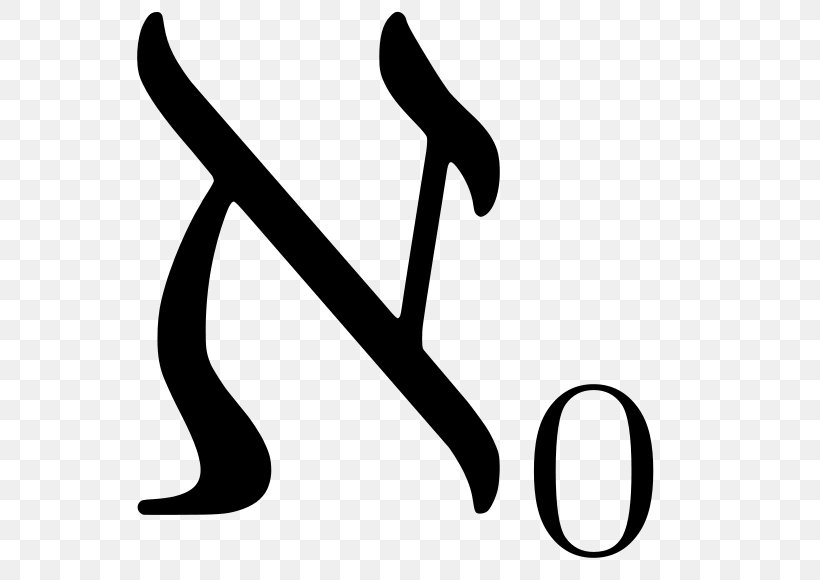 AKA “Aleph nought” or “Aleph zero” or “Aleph null”. It’s the so-called “countable” infinity, meaning not that you really could count the whole thing, but you could at least get started and make progress, as in “1, 2, 3, 4,…”. When you turn to, for instance, the infinity of “real” numbers, you can’t even start counting, because between any two non-identical, arbitrarily chosen real numbers, no matter how close they are to each other, there is an uncountable infinity of real numbers between them!

 Robert Elessar
Robert, I am amazed at the range of topics you write about – and with a lot of knowledge and authority! Thanks, it always makes me think!
You’re very kind, thank you.
There is an old book called ‘infinity and the mind’ on this subject. It’s quite good.
I need to look that up! Thank you very much.