
Hello and, of course, good morning. It’s Thursday, which you may have savvily guessed‒you are a clever one‒from the fact that I started the post with a variation of “Hello and good morning”. Also, you’ve probably seen that the title above is some modified Shakespearean quote, though as I write this, I have no idea what that quote will be, other than that it will, with very high probability, be a quote from Shakespeare.
Not much new has happened since yesterday’s post‒not for me, anyway. There’s plenty of material out there for those who wish to comment on what’s happening in the naked house ape world (said apes sometimes imagine that their “world” is of cosmic importance, but it’s actually not even a flash in the pan as far as the universe is concerned) but I try to avoid commenting on such things here, except to note that, boy, humans can be remarkably stupid.
There was a recent-ish Doctor Who episode in which the bad guy made every human on Earth feel absolutely convinced that they were right, about whatever opinions they might hold. Predictably, this led to global chaos and destruction. But wouldn’t it be wonderful if we could do the opposite, or roughly so, to the whole of humanity? I’m not talking about making people all believe they are wrong about everything; I don’t even know quite how that would manifest itself. I just mean removing or strongly blunting the sense of feeling right about things.
It’s a reasonably well-attested fact* that people prone to depression, for instance, are not prone to rate their own skills and abilities as worse than they really are but instead are more realistic about them. This is as opposed to the more “typical” people, not prone to depression, who overestimate their own capabilities, e.g., the notion that, say, ninety percent of people think their driving skills are above the median**. So, though people who are prone to depression are, well, prone to depression, they are at least less prone to start wars and commit atrocities based on half-baked ideologies.
Oh, and by the way: to a good first approximation, all ideologies are half-baked. This isn’t to say that they all are completely wrong. It’s merely to say that not one of them actually contains “everything you need to know about” whatever. If they did, it would be painfully obvious to every intellectually honest person. Intelligent, well-meaning, non-delusional people would be convinced by the ideas as soon as they understood them. People prone to depression might find consolation and some degree of peace in them. Atheists would be “converted”.
The notion that any self-contained set of ideas could hold the answers to “life, the universe, and everything” flies in the face of all logic (and few things are more annoying than flies in one’s face). For crying out loud, it takes hundreds and hundreds of pages to explain rigorously the nature and implications of classical motion, as in Newton’s “laws”, with subsequent improvements by Laplace and Lagrange and Hamilton and so on, and all that is only an approximation, at macroscopic scales, to our best understanding (which is known to be incomplete) of the physical nature of reality. And that’s not counting electrodynamics and gravity, let alone getting into the strong force and the weak force and so on.
It’s a distressing tendency, this human desire to feel right, to want to think that they know the answers and so don’t have to think about things anymore. It leads to so much more of the trouble in the world than “simple” evil does.
Psychopaths, I suspect, do far less harm overall than people with normal moral capacities‒good people, so to speak‒who believe that they are right. “For the greater good” is the kind of sophistry that can, to paraphrase Ayn Rand, fumigate any atrocity, including the slaughter of a continent.
Of course, Rand-sensei fell prey to her own self-created dogma and the personality cult that had grown up around her, leading her to get stuck in some quite dubious conclusions. This is despite her commendable starting points (i.e., metaphysics: objective reality, and epistemology: rational thought). If only she hadn’t been so dead-set against humility.
Humility****, after all, is not really the belief that you are fundamentally worthless (though that may indeed be true on any sort of cosmic scale), but just the recognition that you are subject to error, like every finite being (and probably most “conceivable” infinite ones), and that, it being error, you will not necessarily know where it lies. It is, after all, the place in which you are mistaken; if it were glaringly obvious, you might be expected to have noticed it already. Being wrong feels the same as being right, at least until you realize that you are wrong.
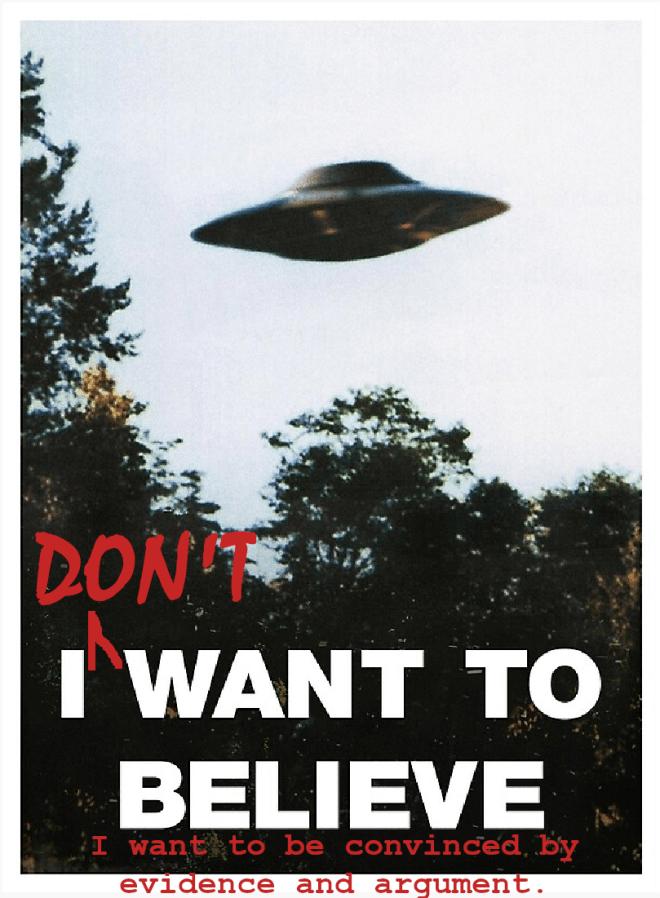
There, I did some broad level commentary on the nature of at least some of the world’s problems. Let this be my open warning against certainty, especially in the realm of morals, especially when you’re assessing other people. If you ever find yourself in a situation in which you feel that the suffering and even death of other people is tolerable, or even desirable, in order to achieve some presumed better future world, you should stop and maybe induce a seizure so you can reset your brain.
On the other hand, if you just believe something so much that you’re willing to suffer and/or die yourself, and only yourself, well, that’s on you. Knock yourself out.
TTFN
*I think this data has withstood the reproducibility crisis in psychology, but correct me if I’m wrong.
**I say median instead of “average” because the average is usually meant to refer to the arithmetic mean, but it is in principle entirely possible for ninety percent of people to be above the mean, but not for any more than fifty percent of people to be above the median, by definition***.
***This is one of those rare cases where it’s fully appropriate to say “by definition”, because it is not merely rhetoric but literally applies, the median being a mathematical term with rigorous meaning.
****I just recognized, while editing, that this is the subject/topic/trigger for what is to be my next song.

 Robert Elessar